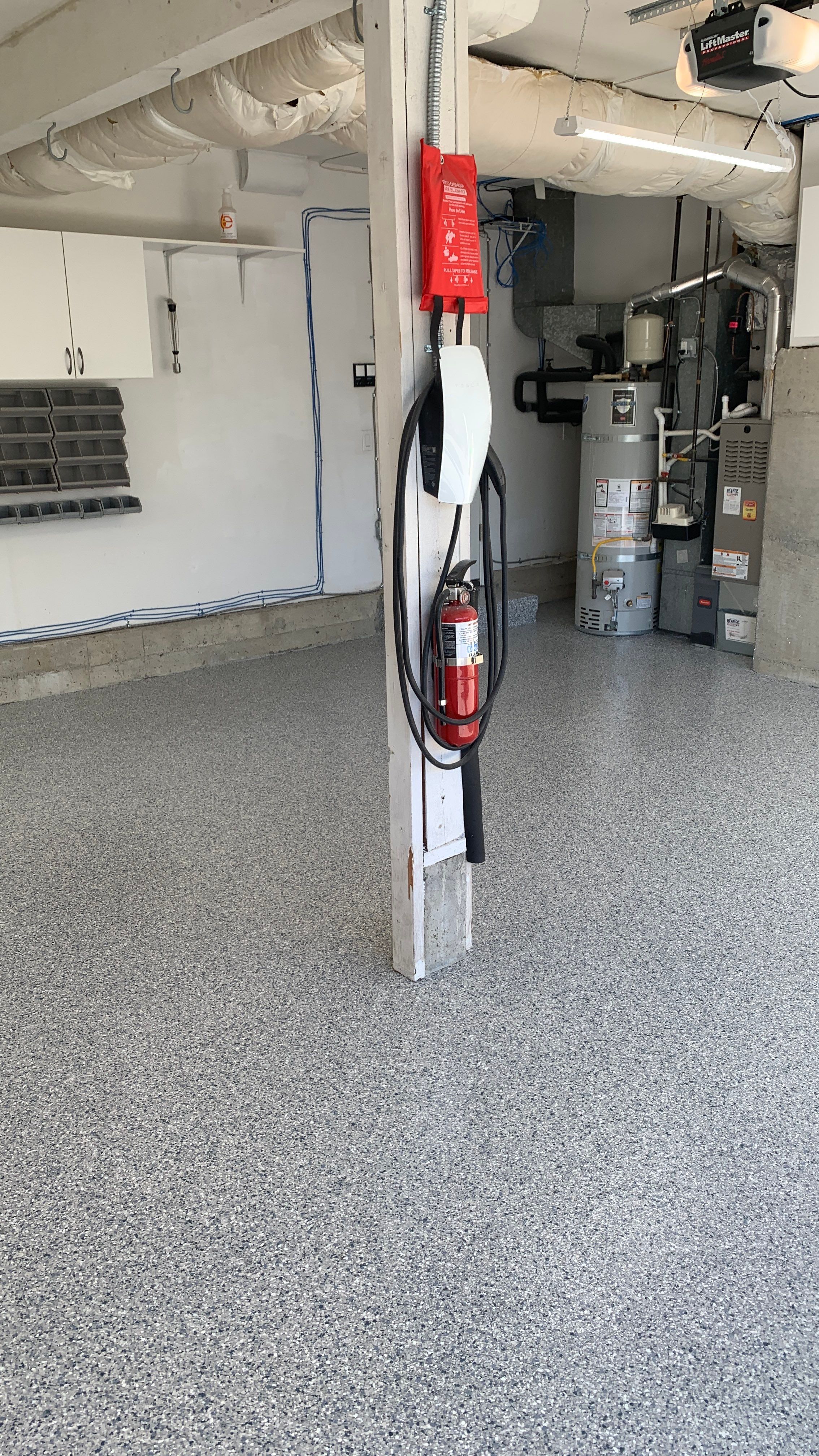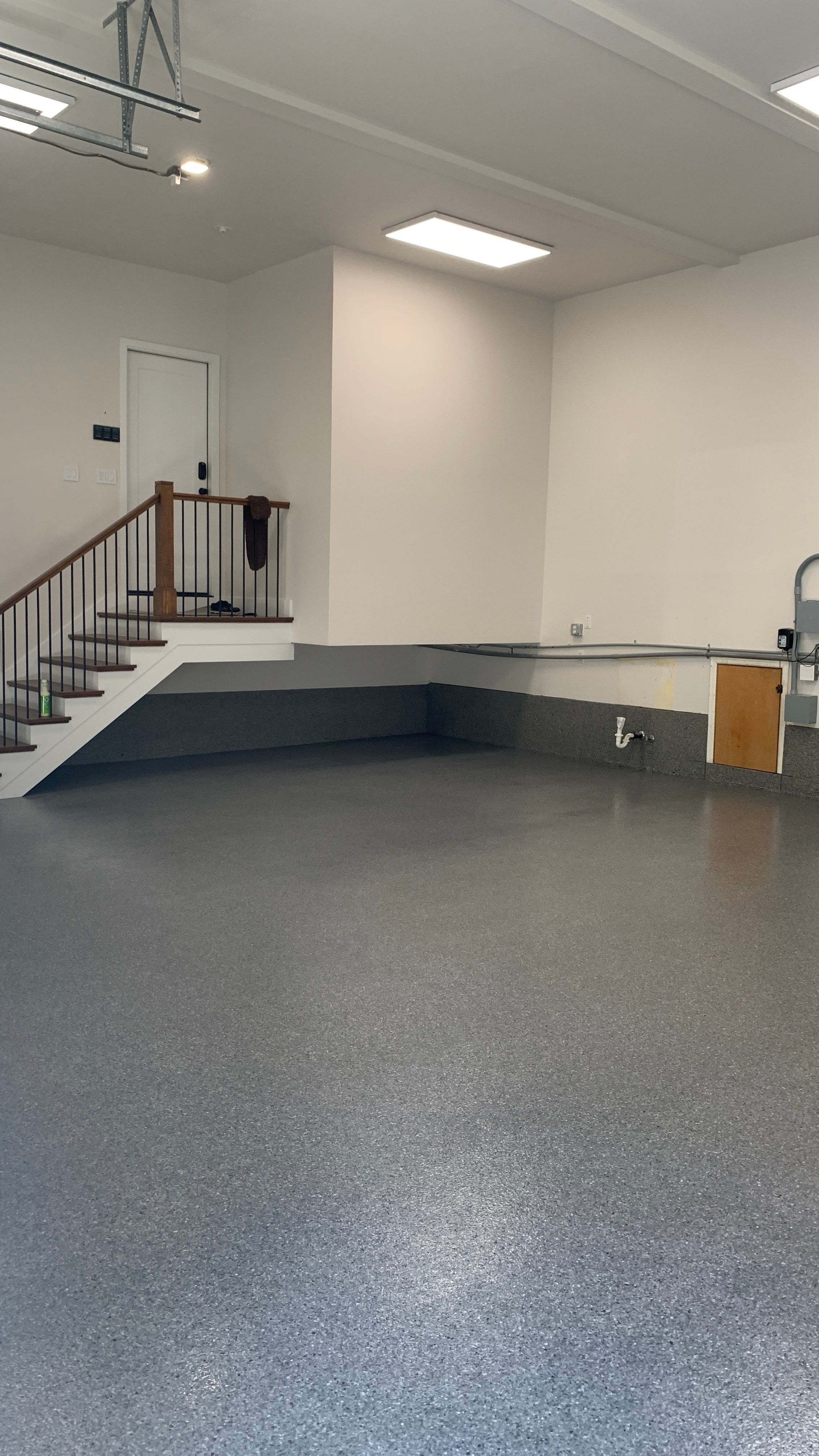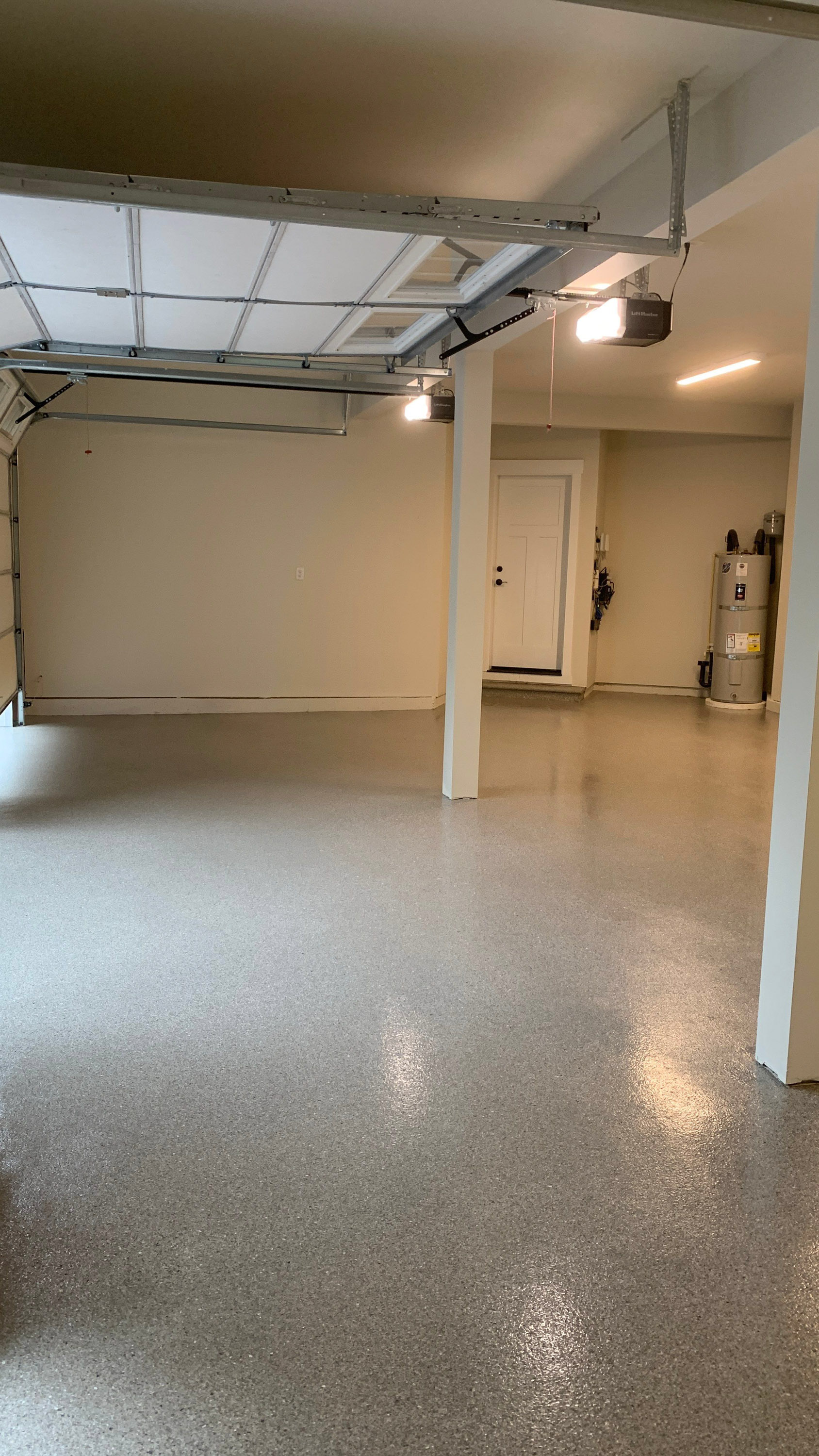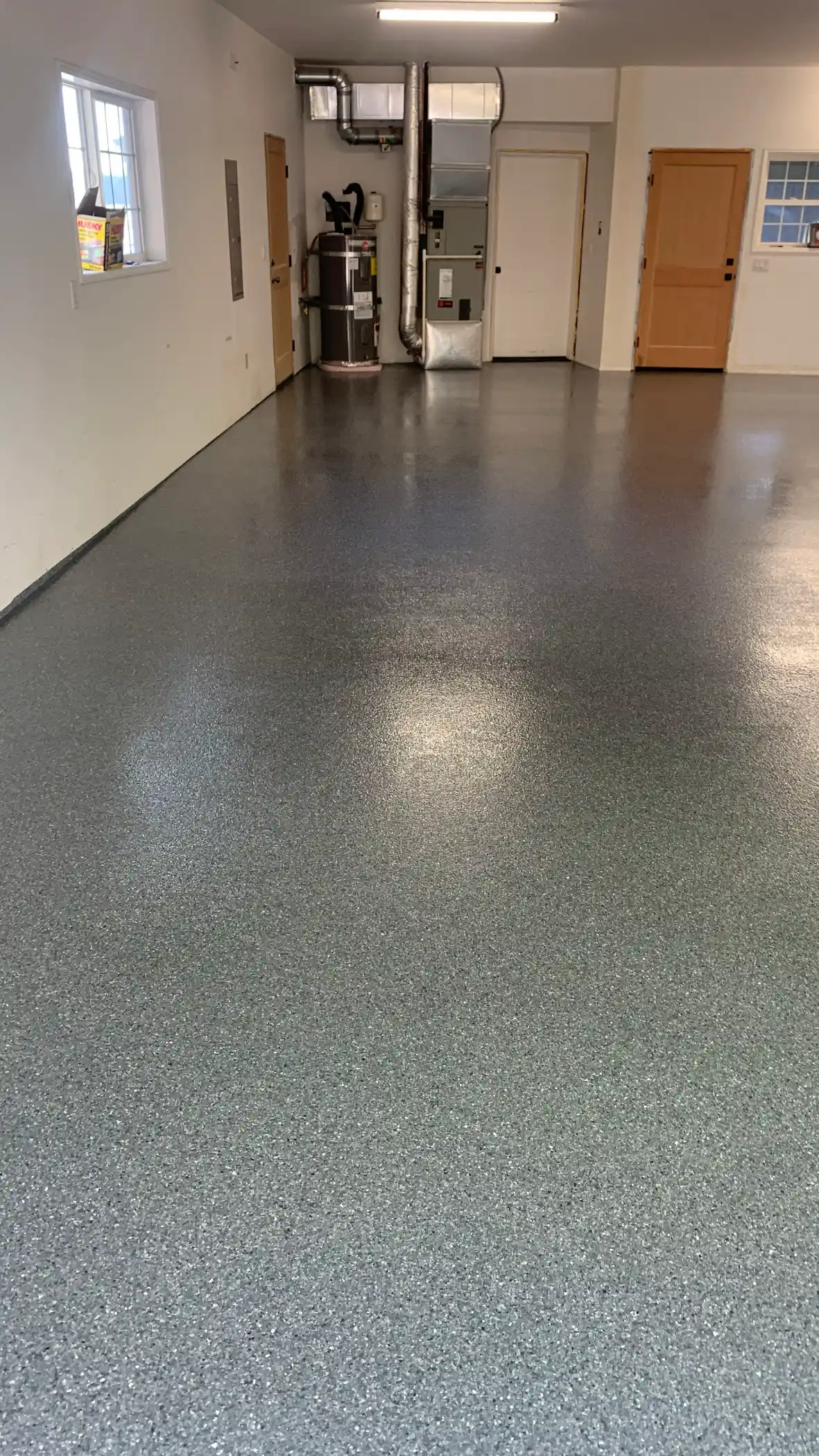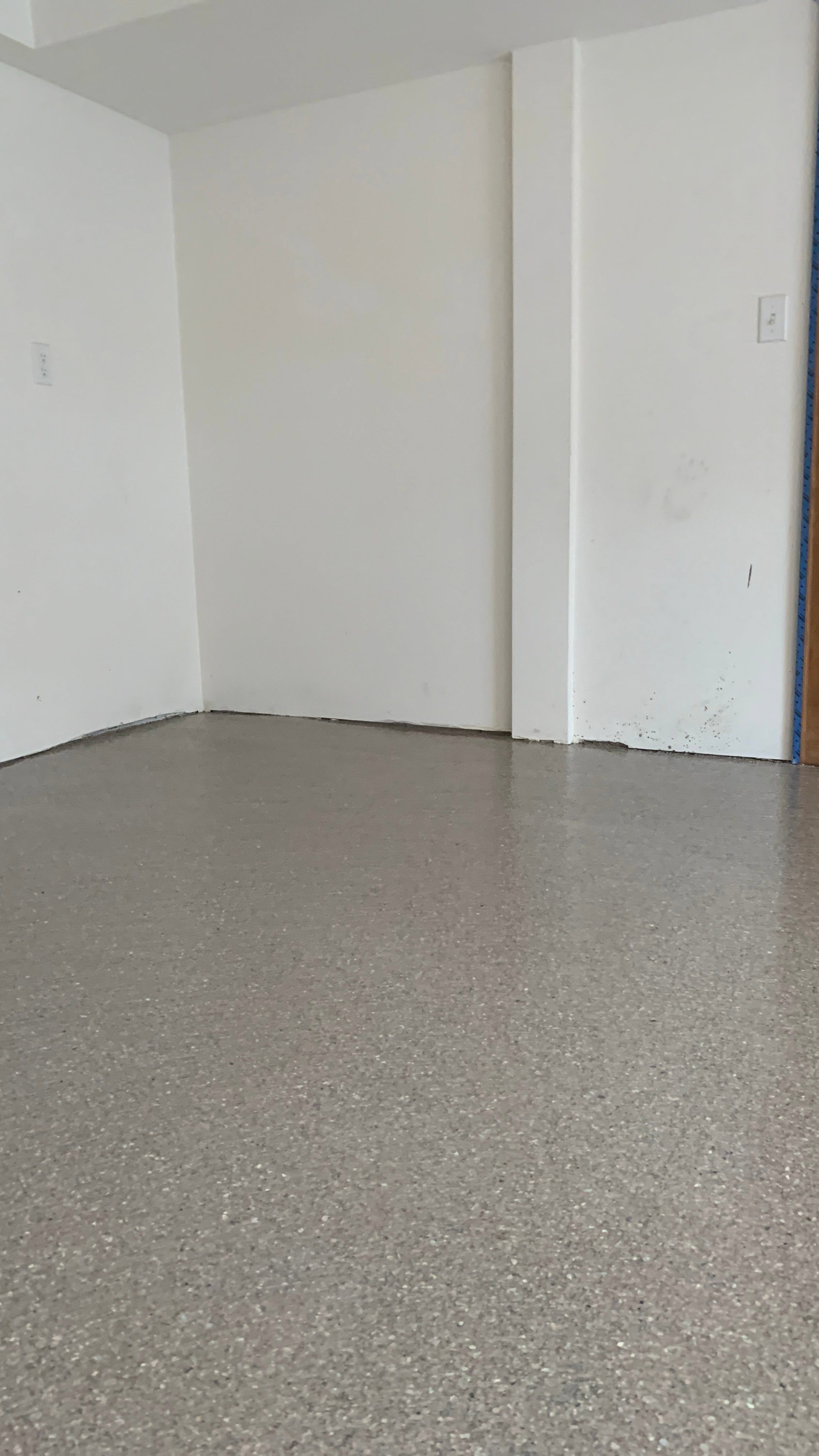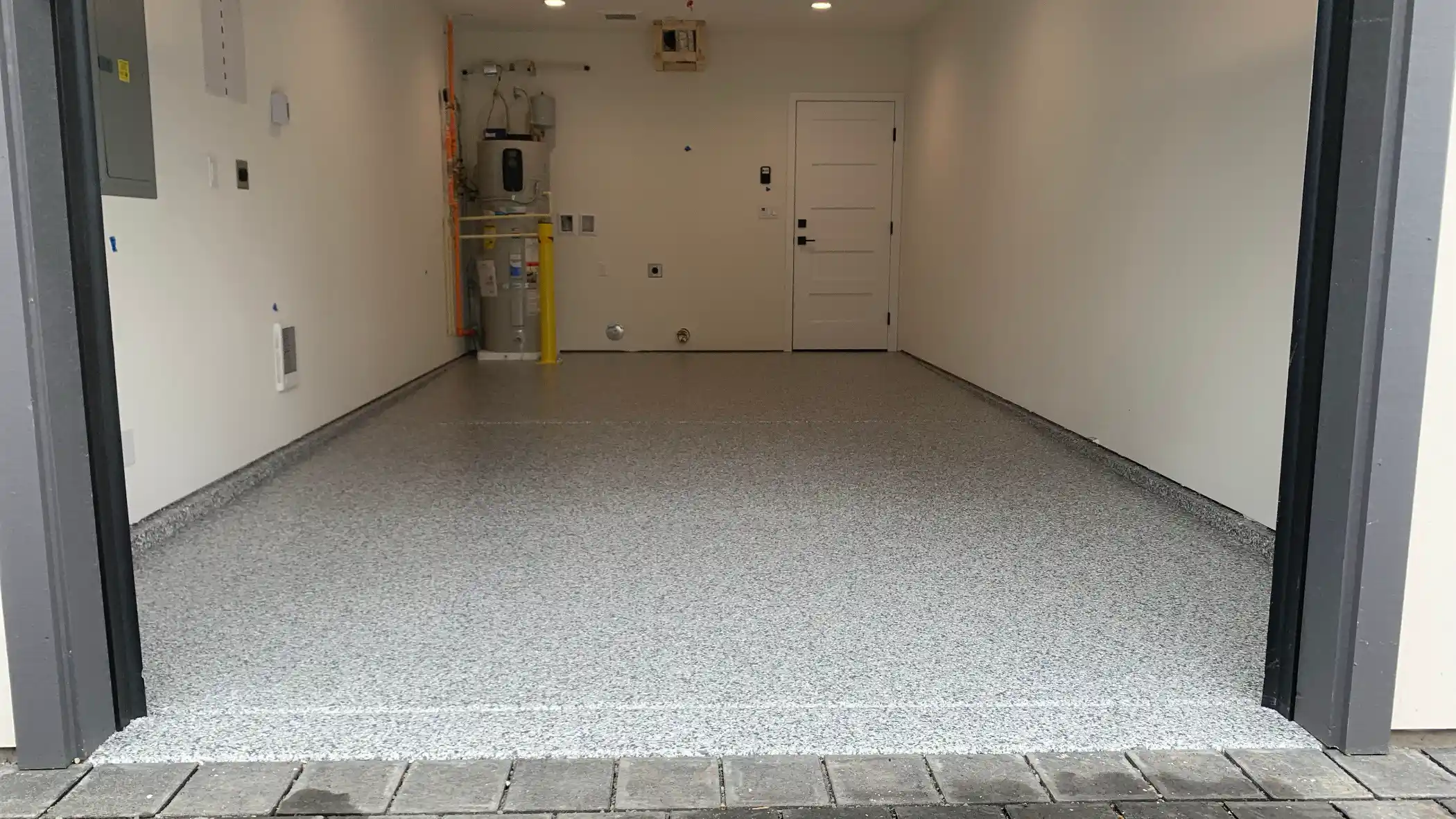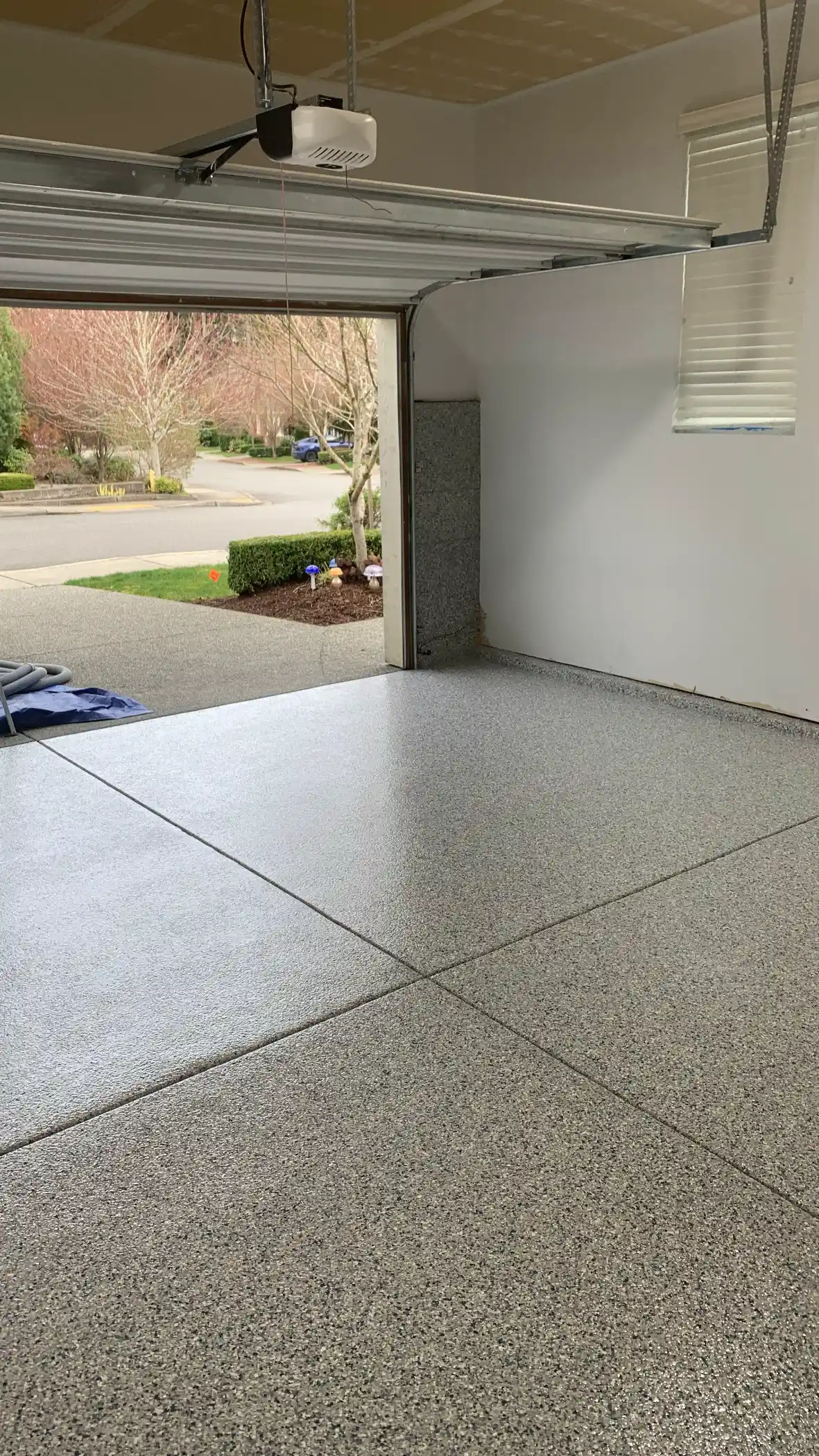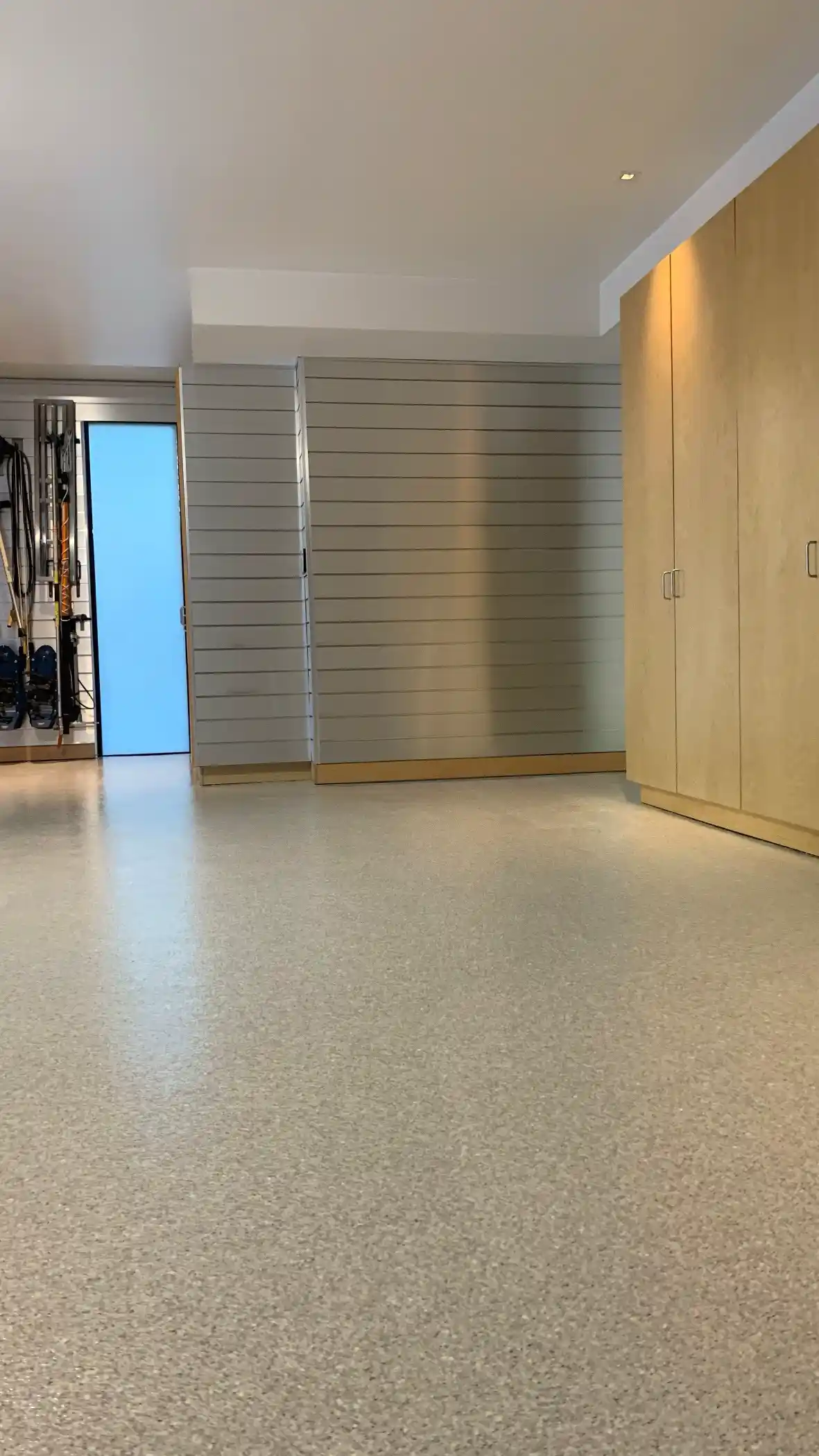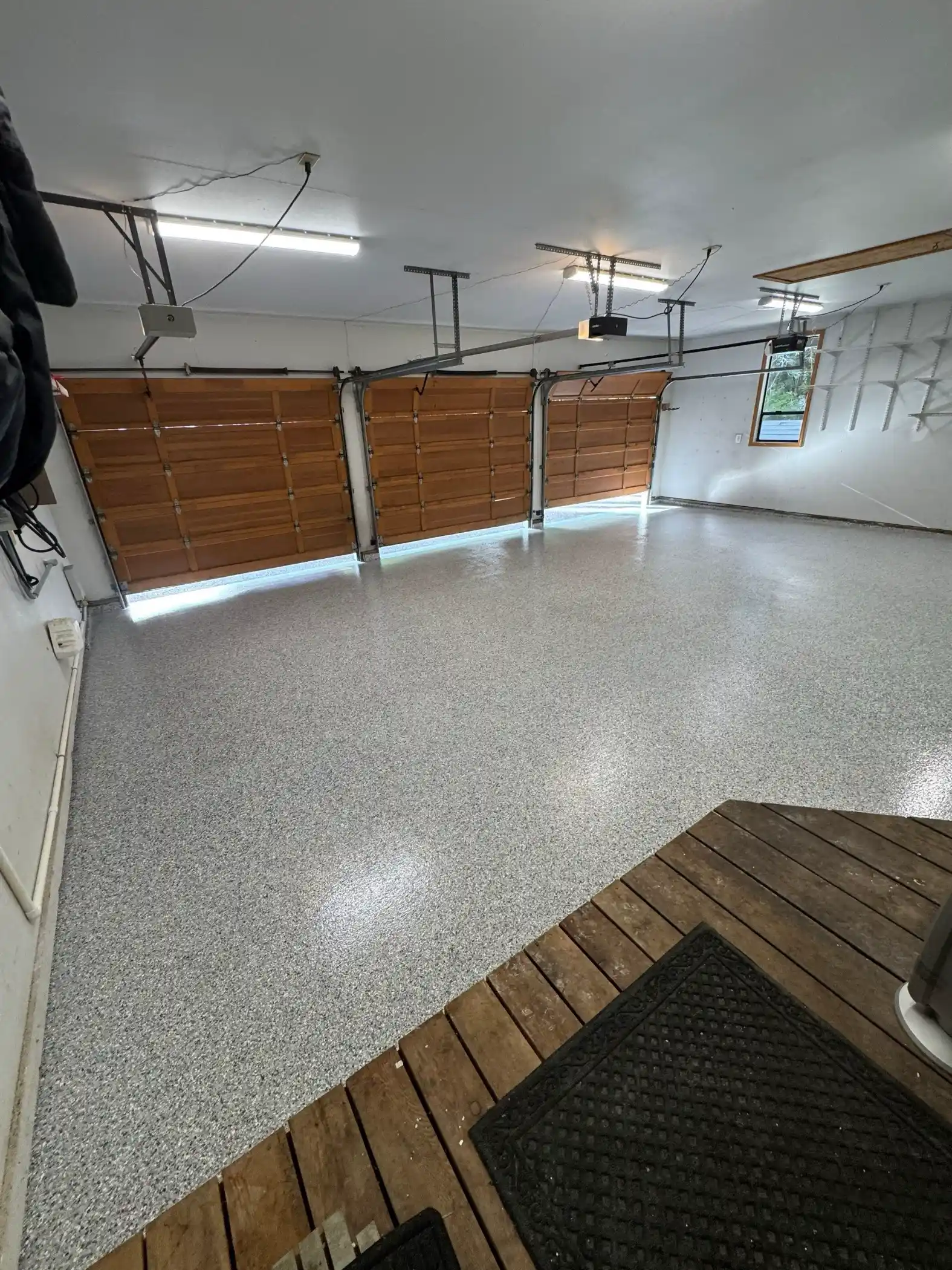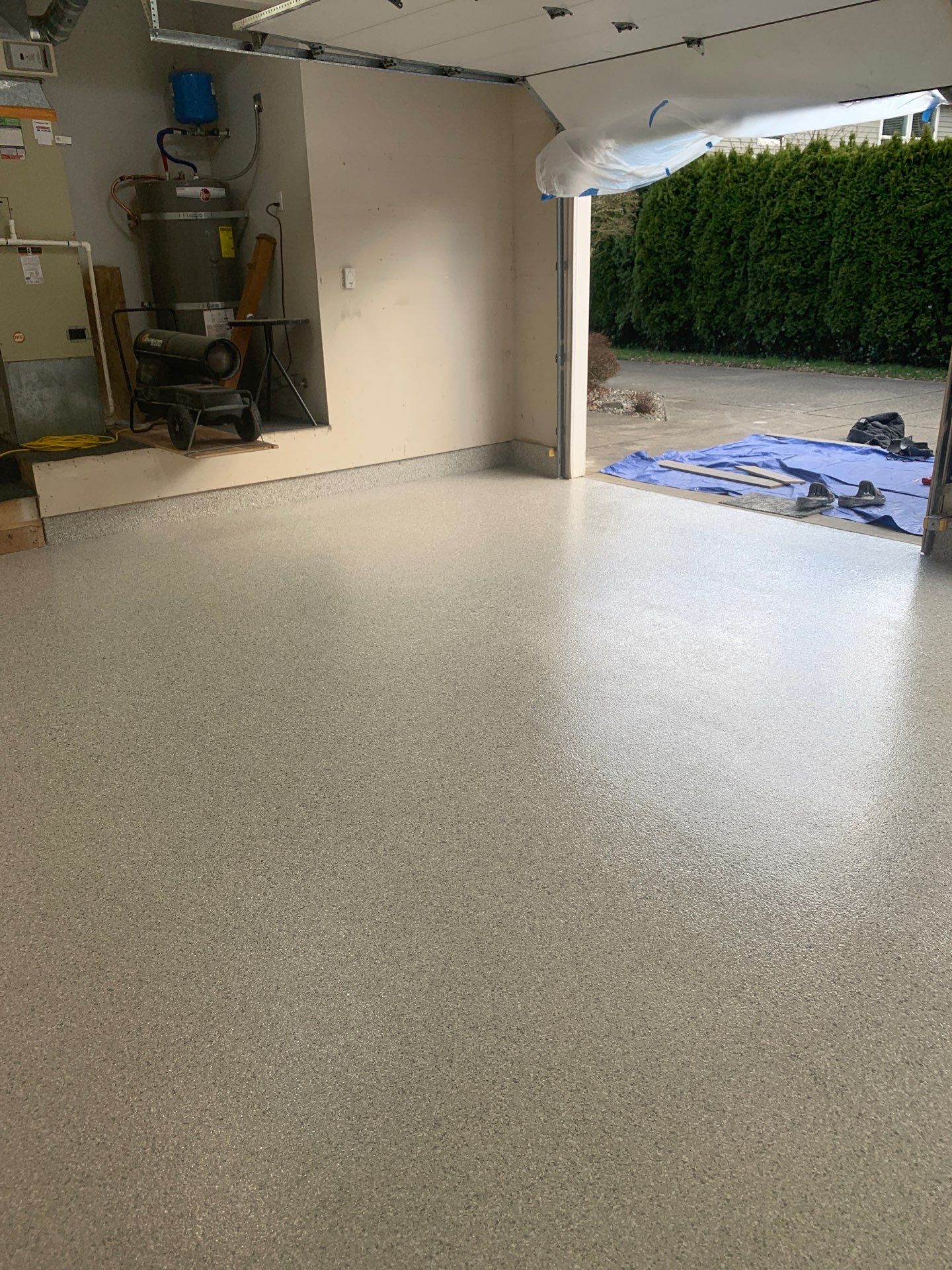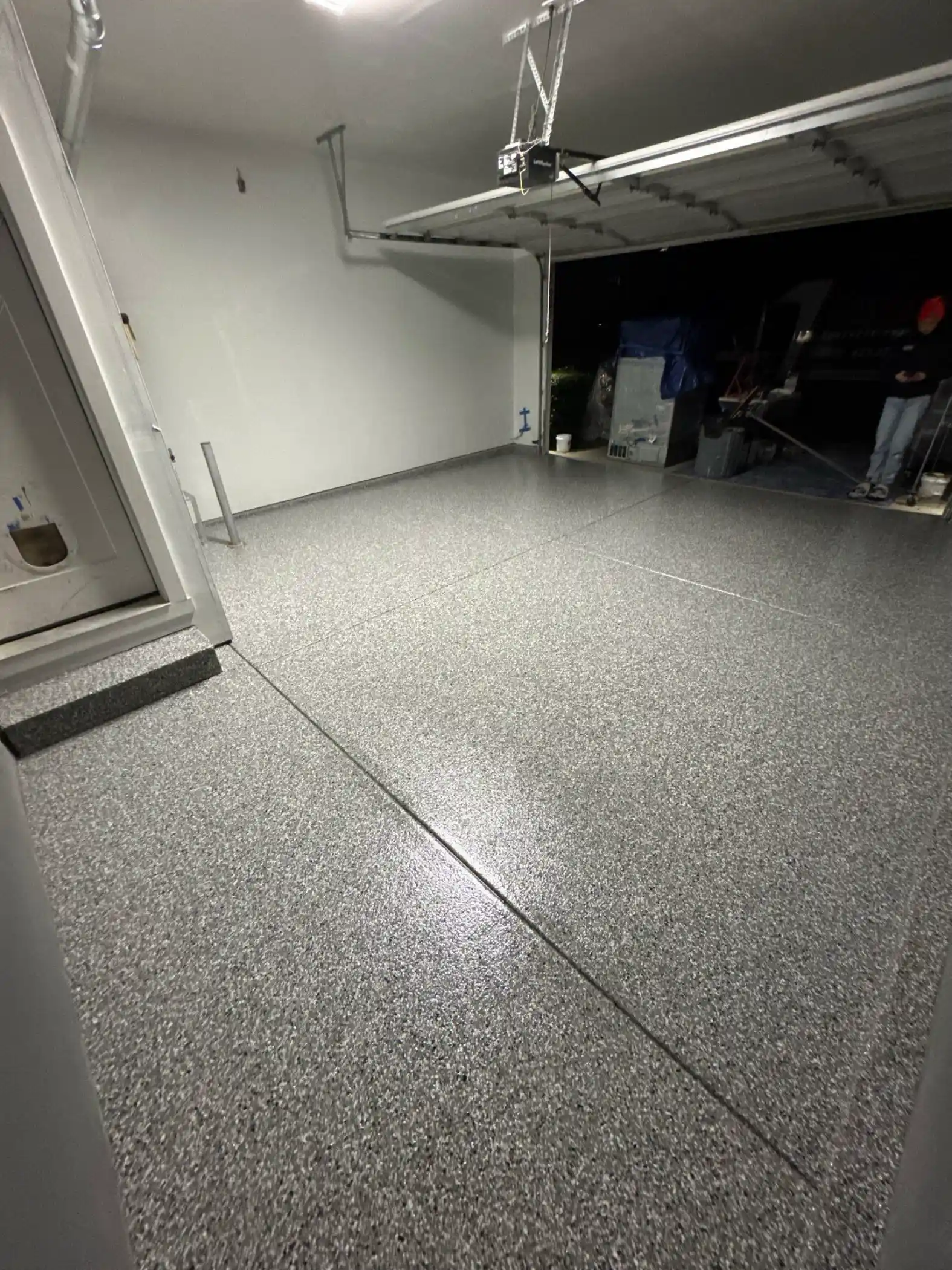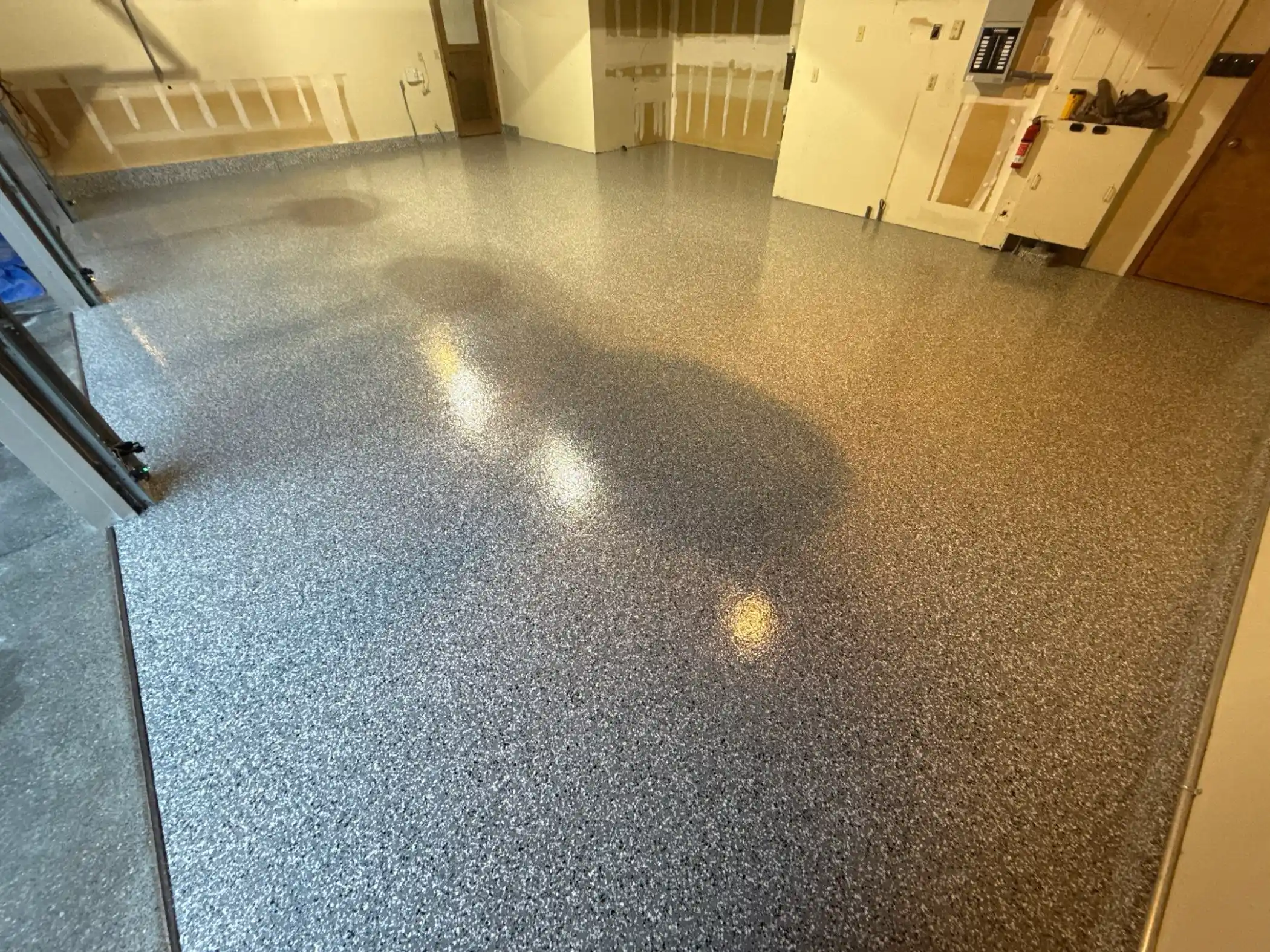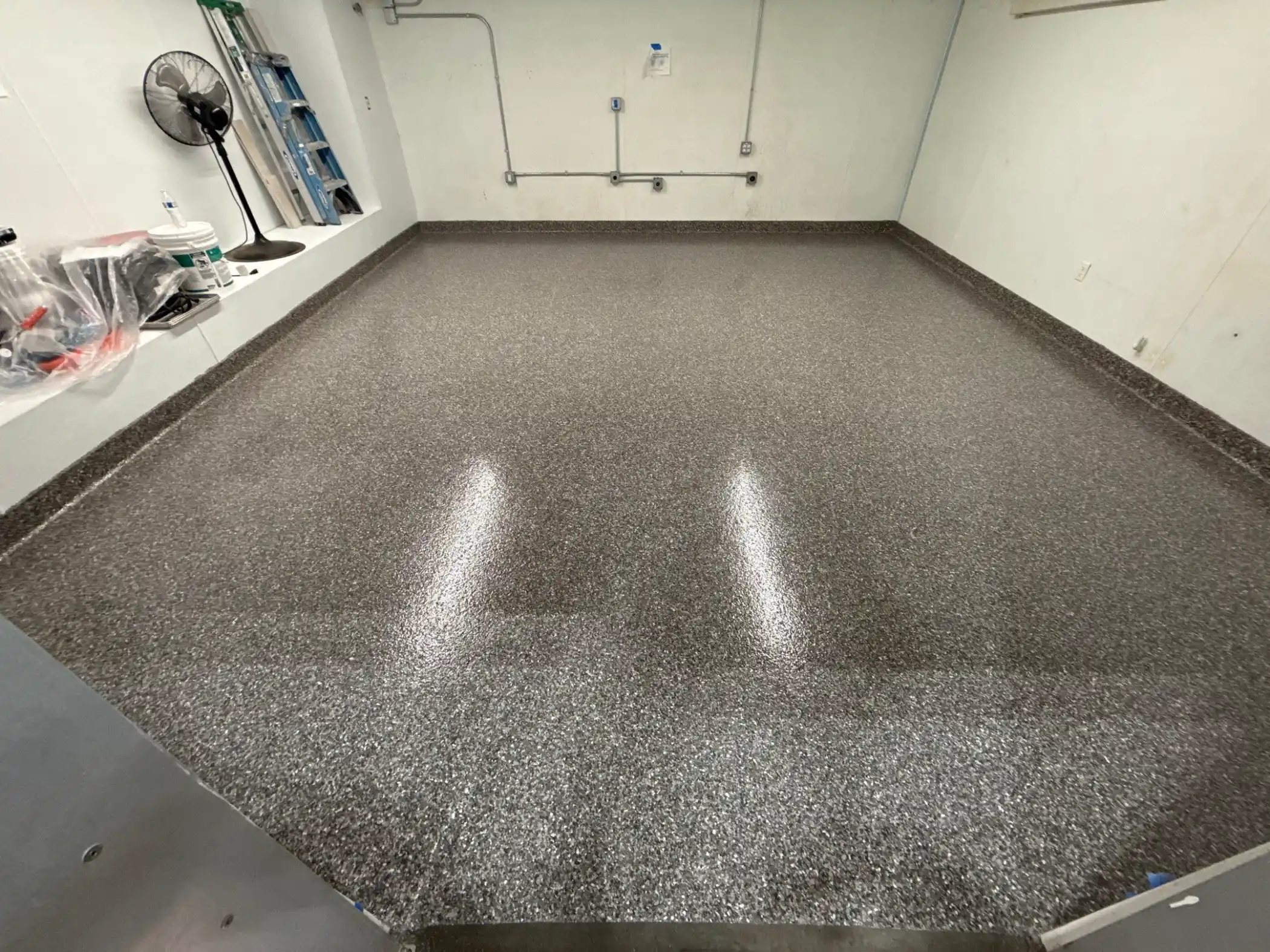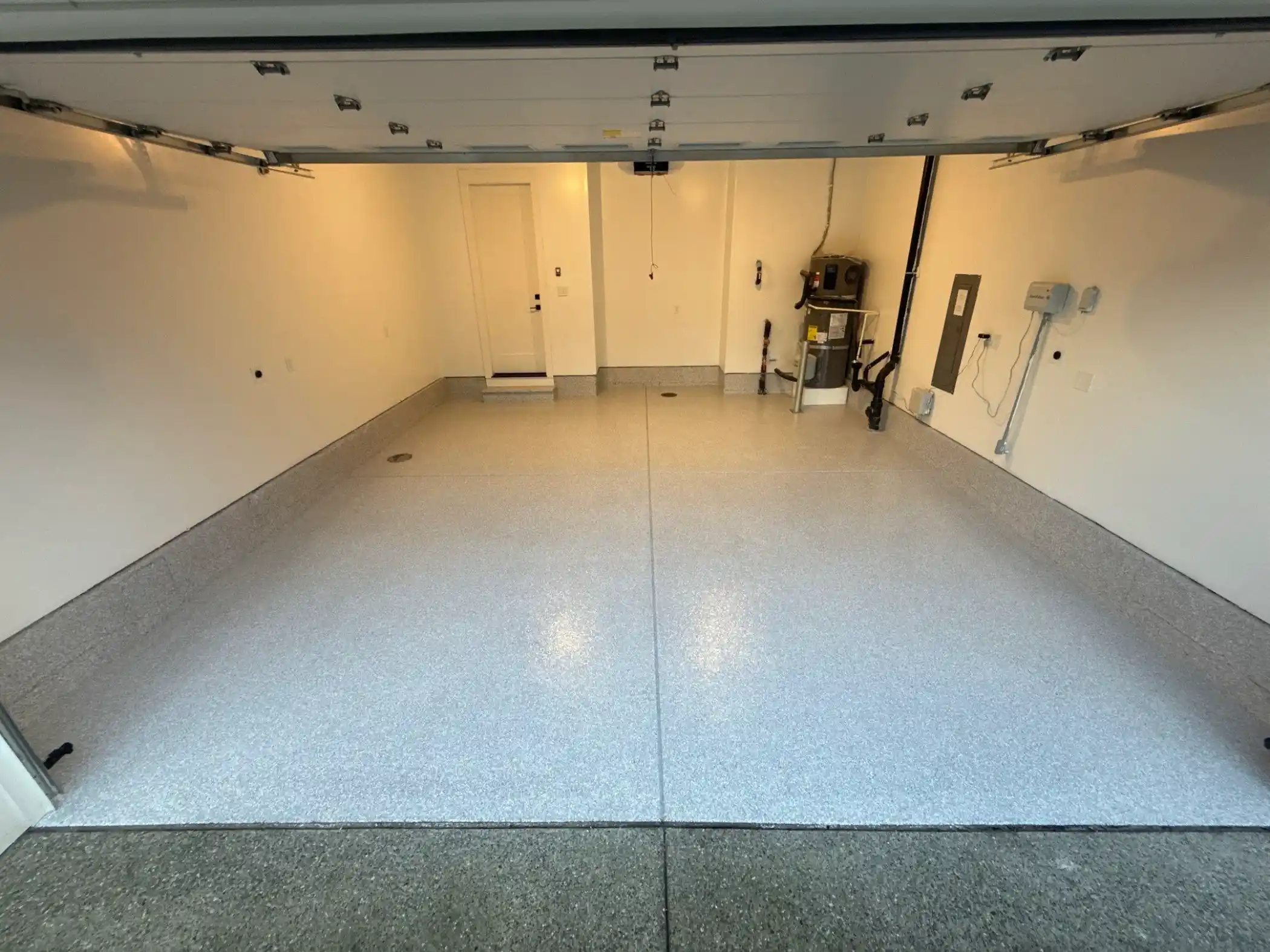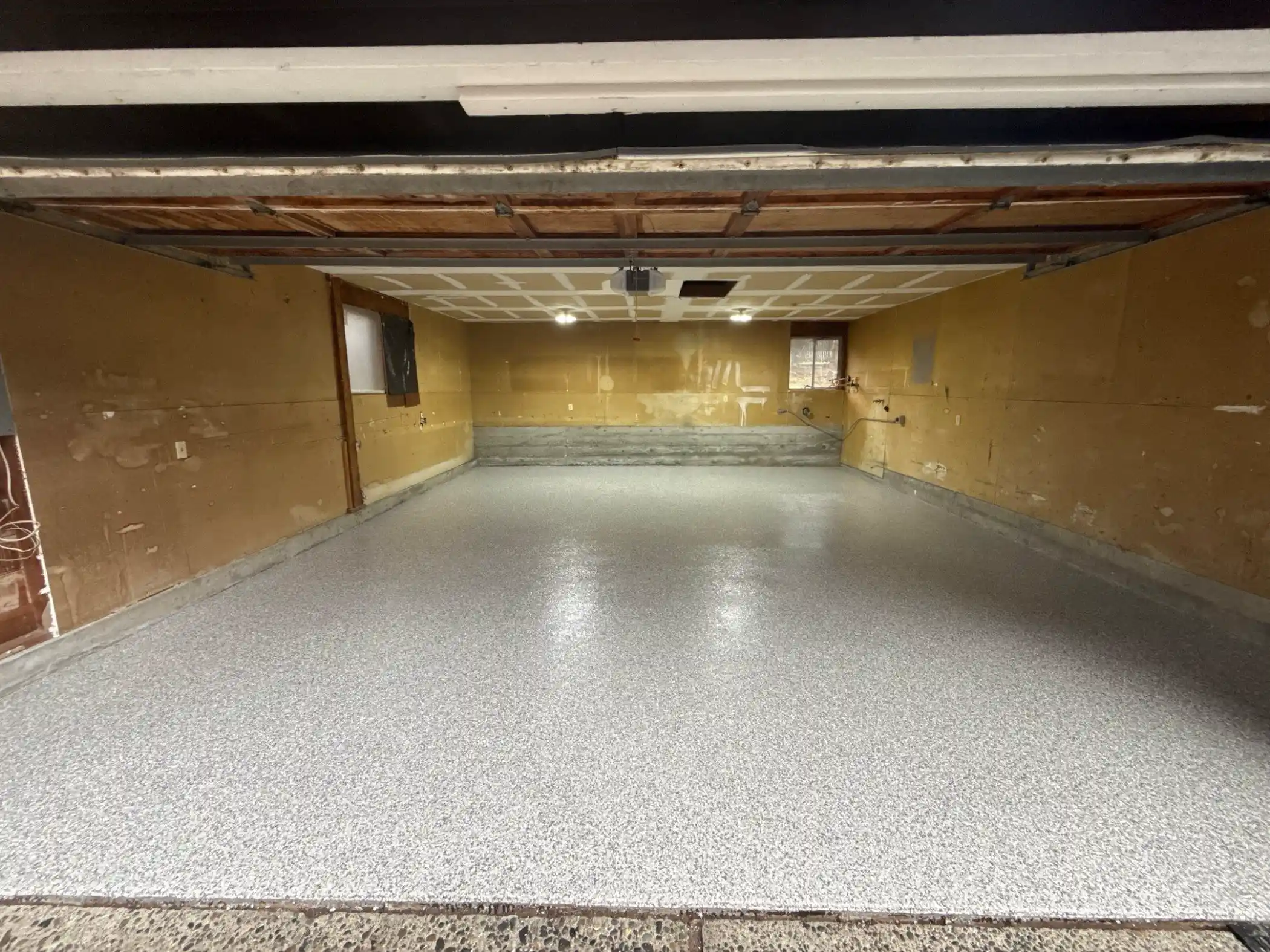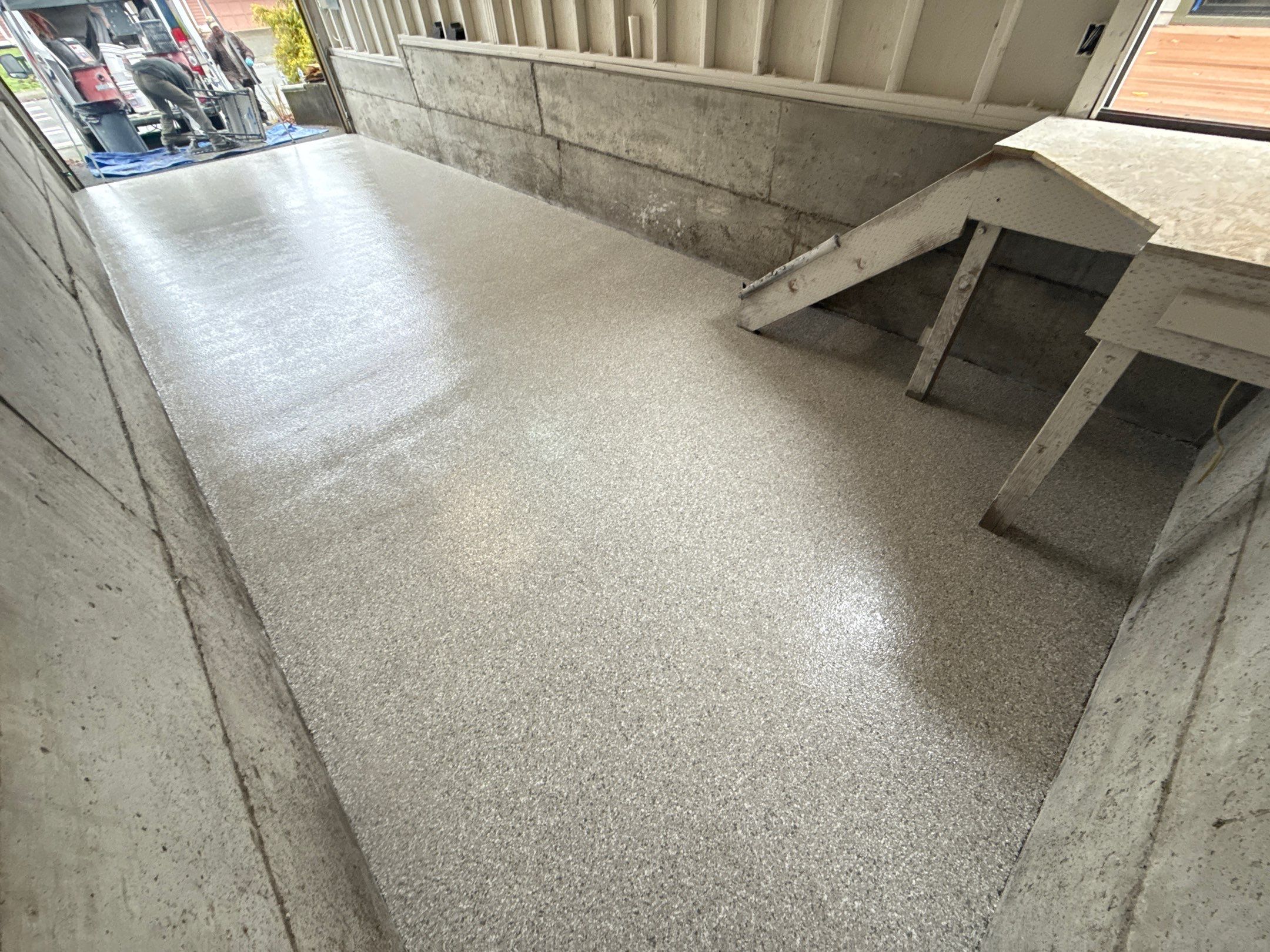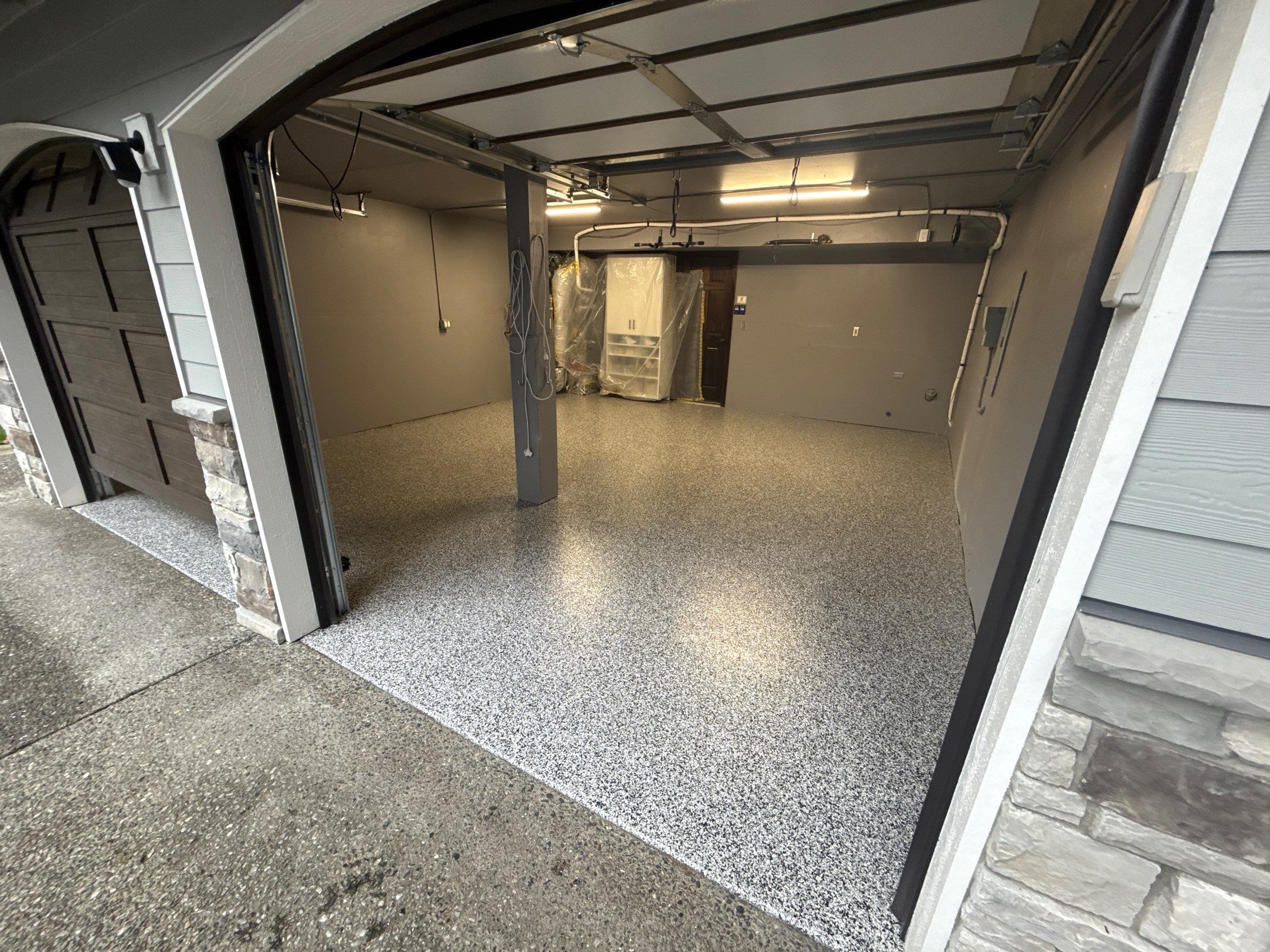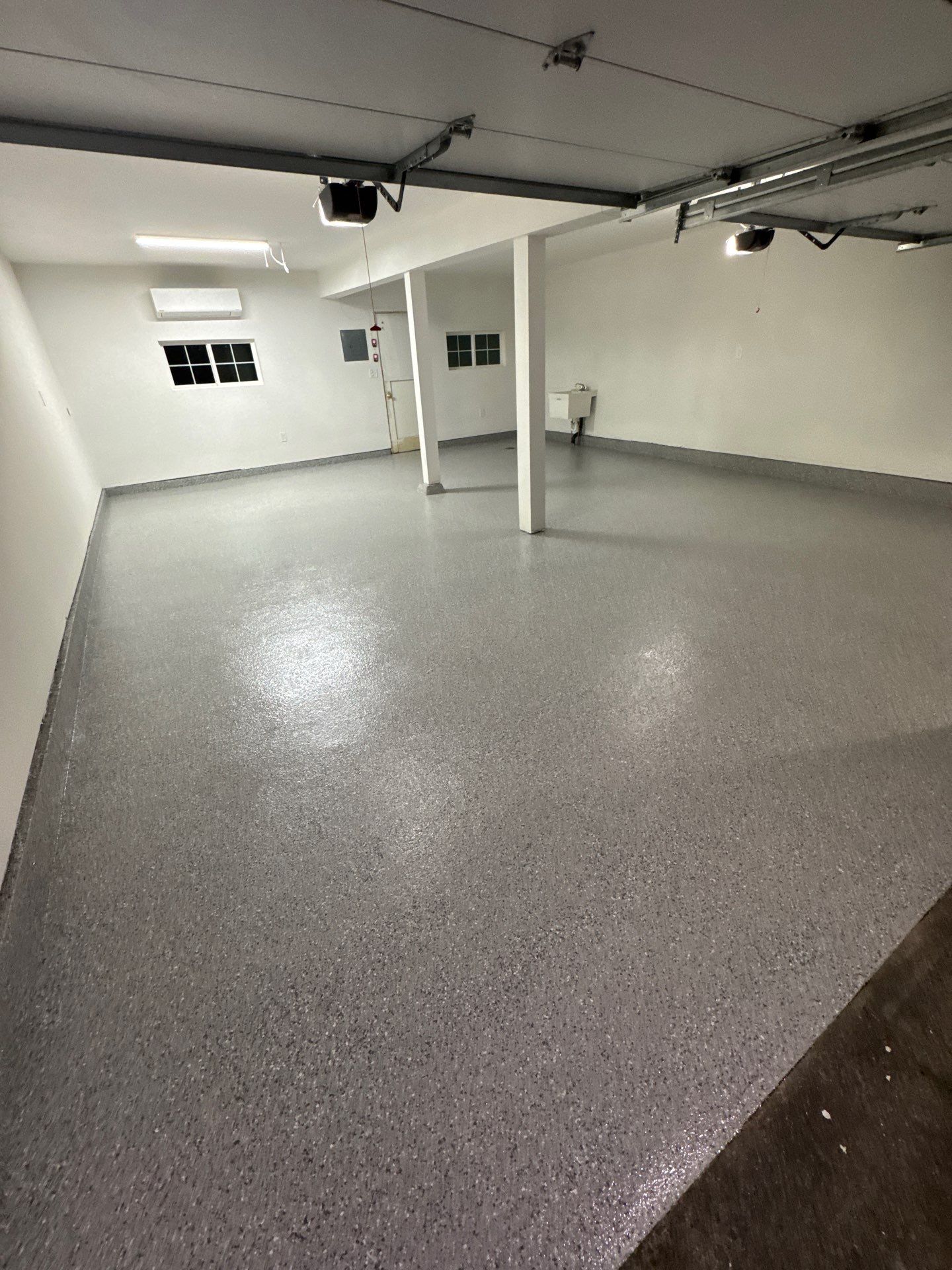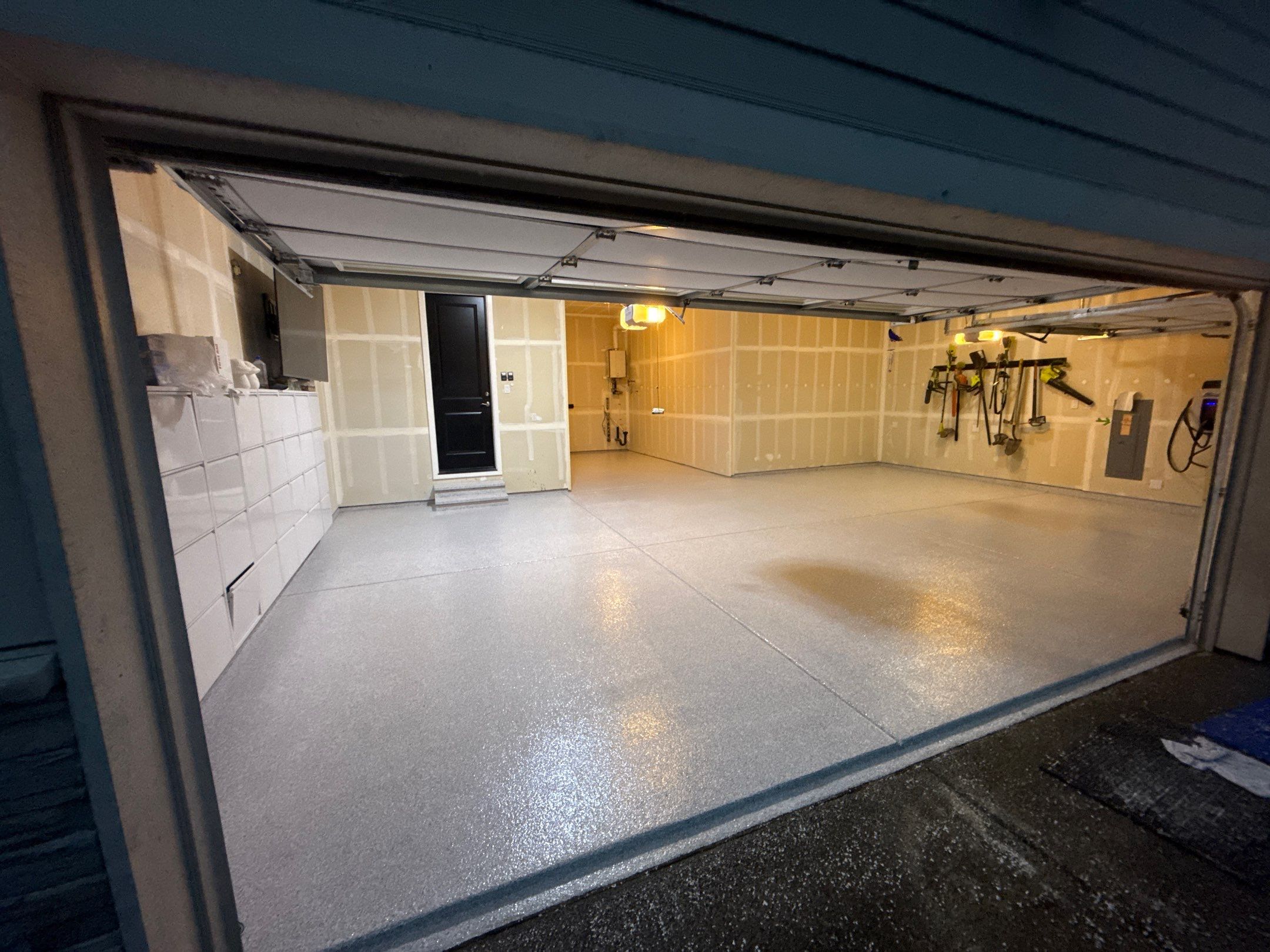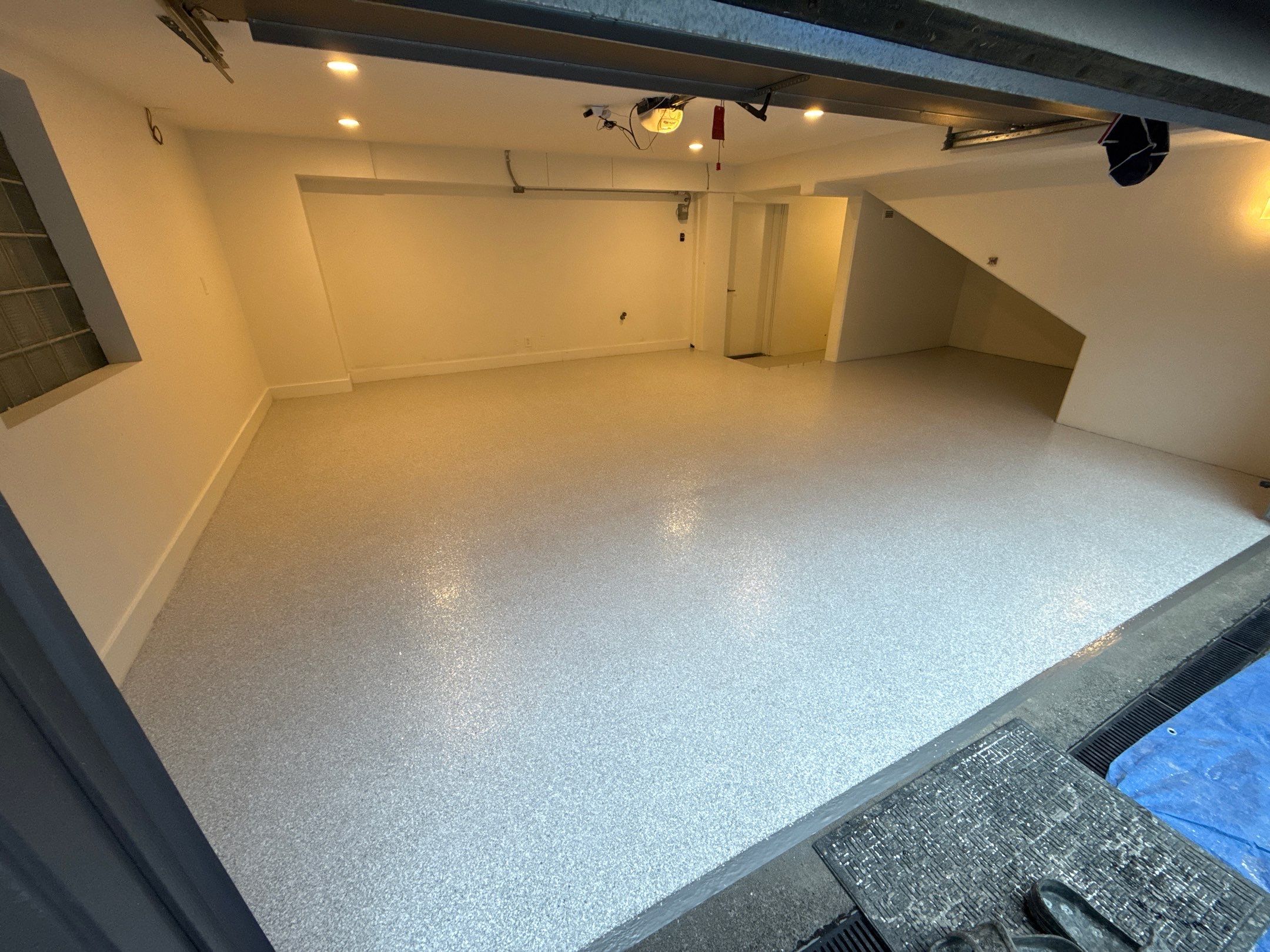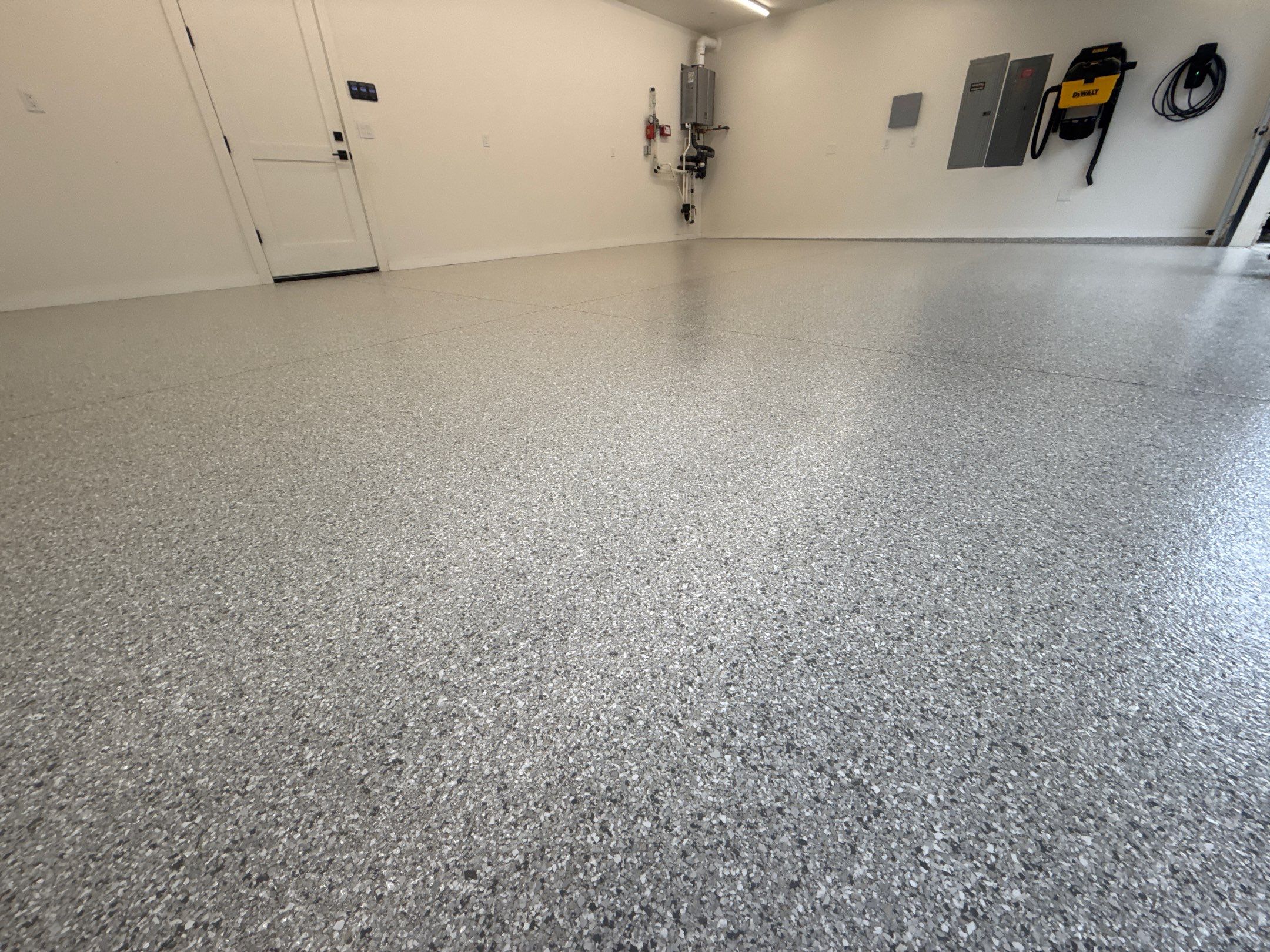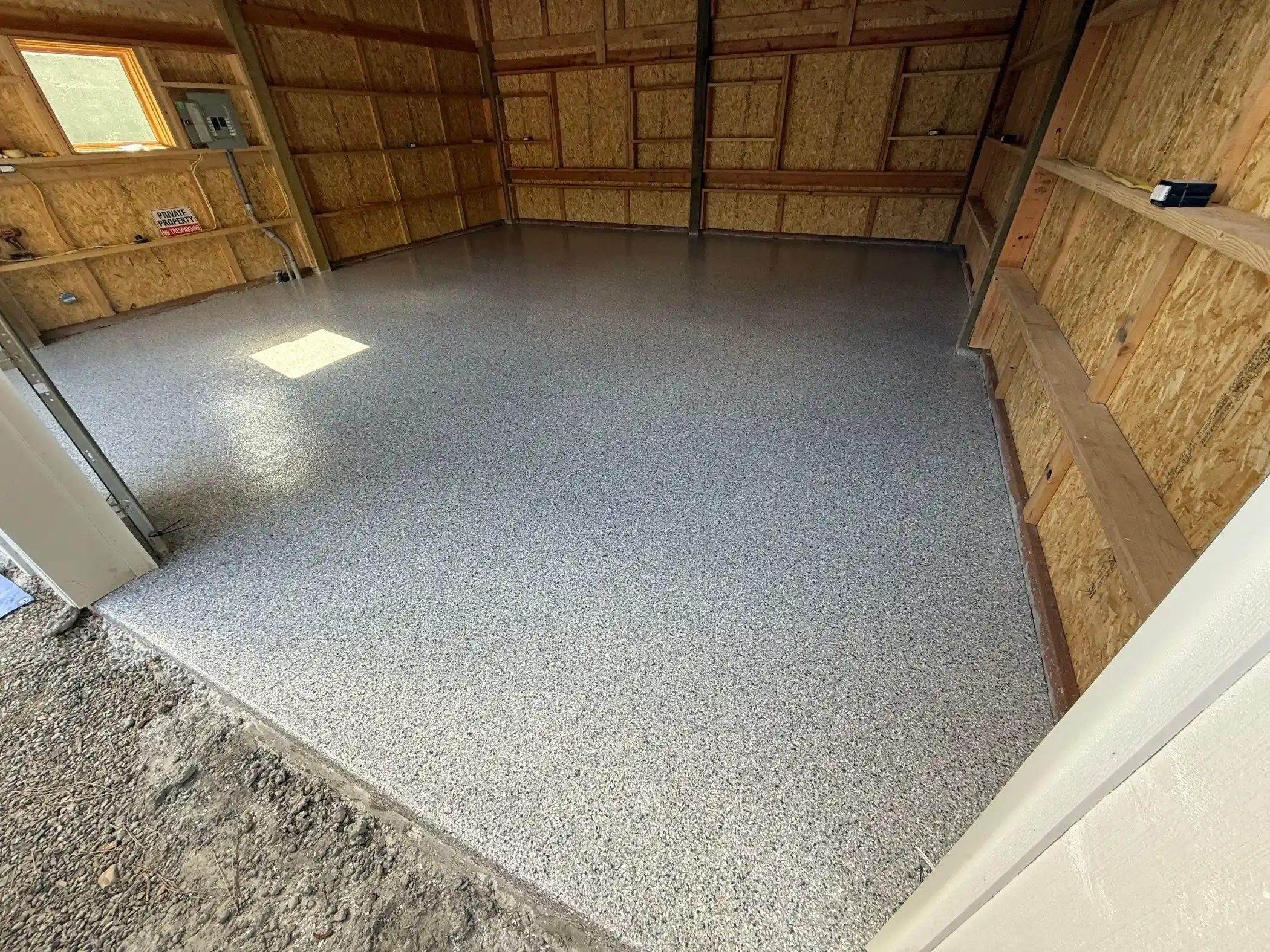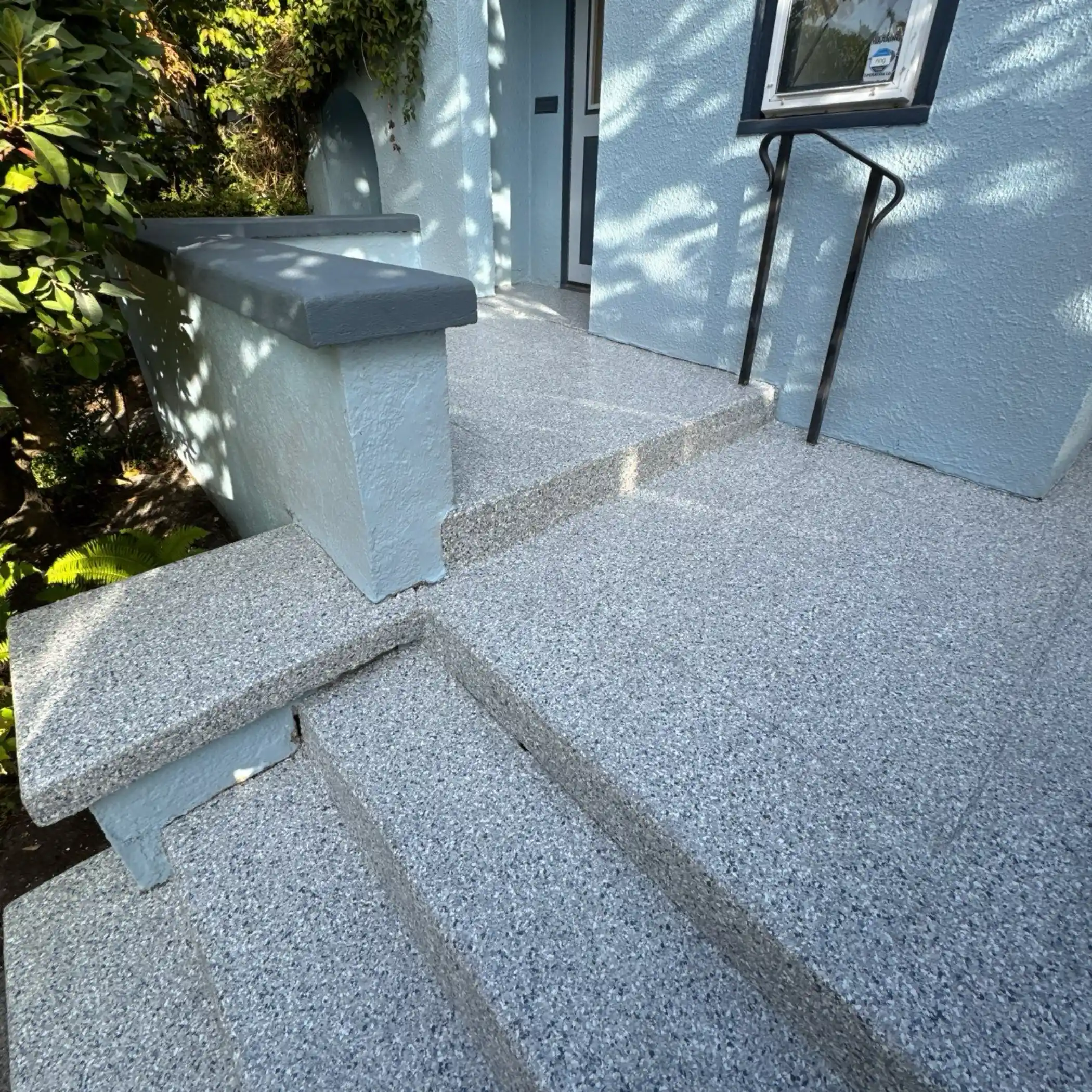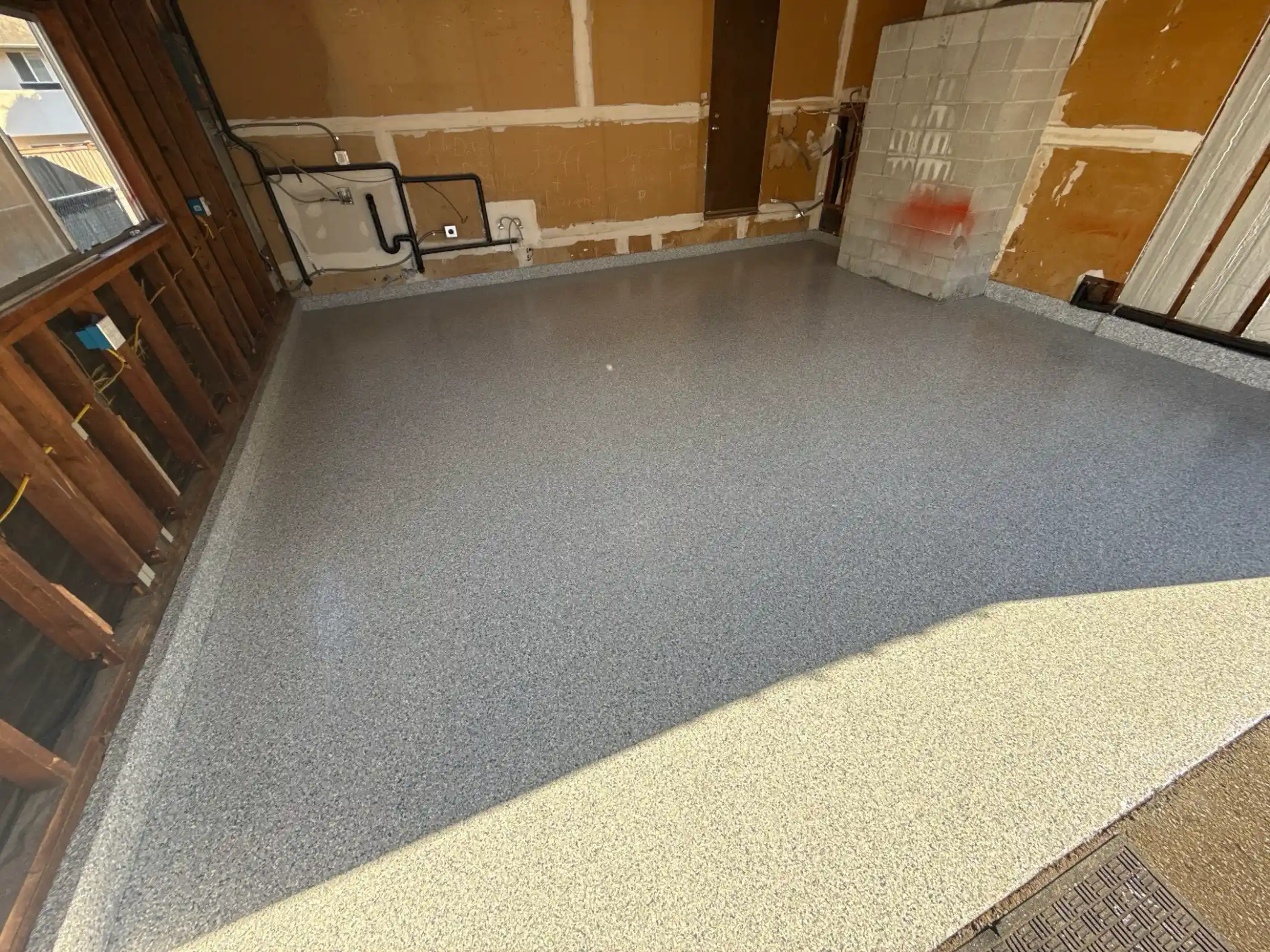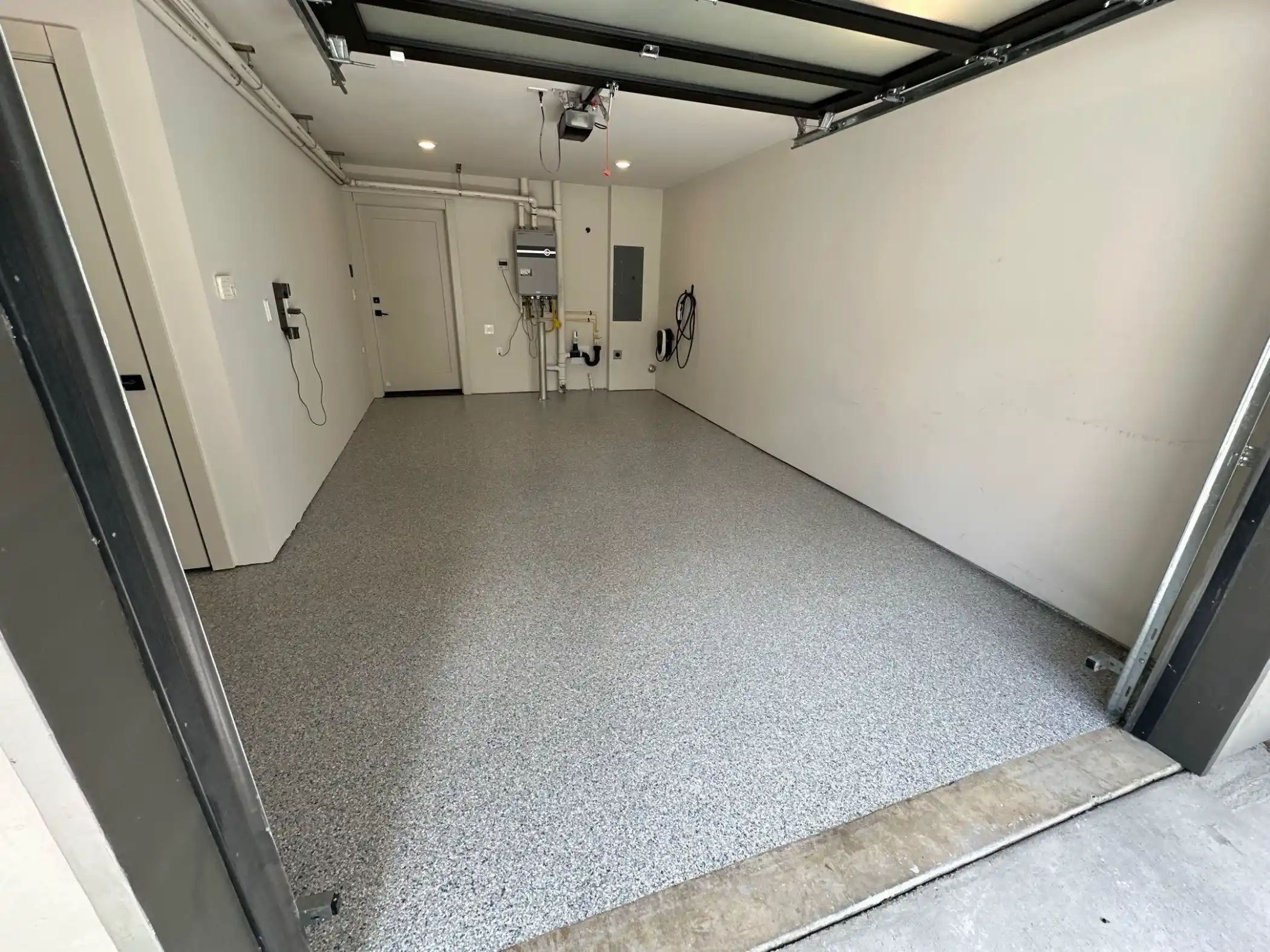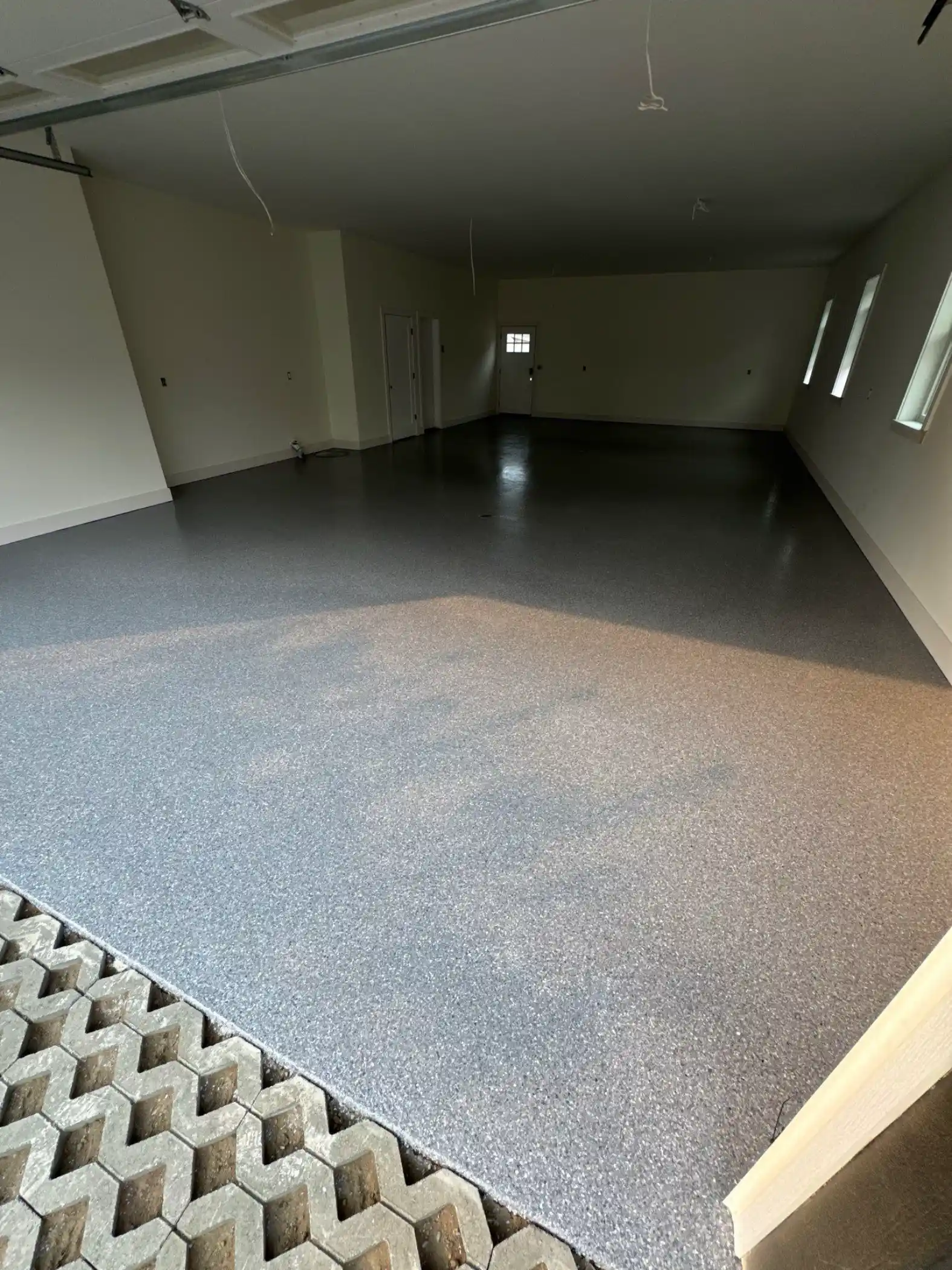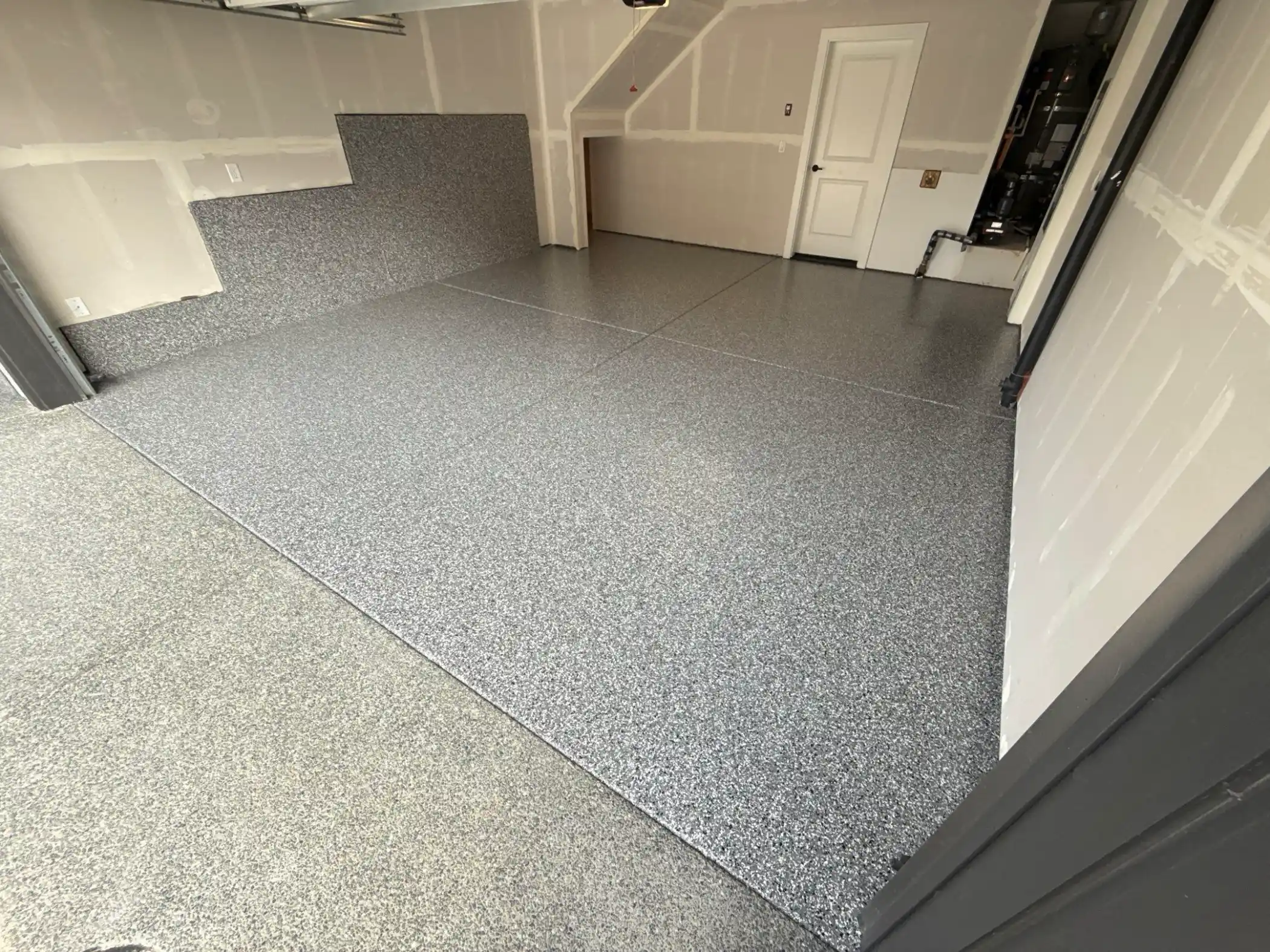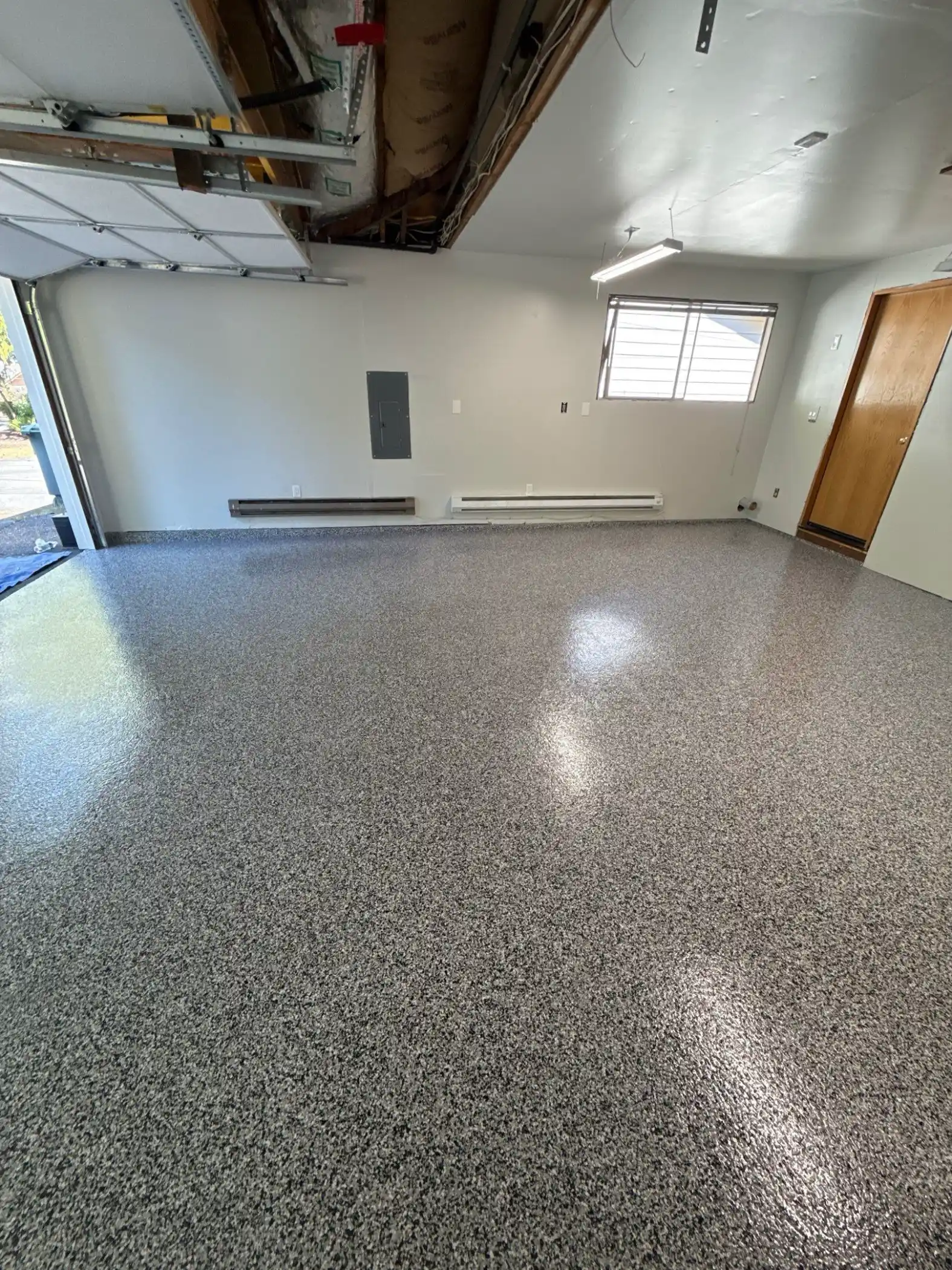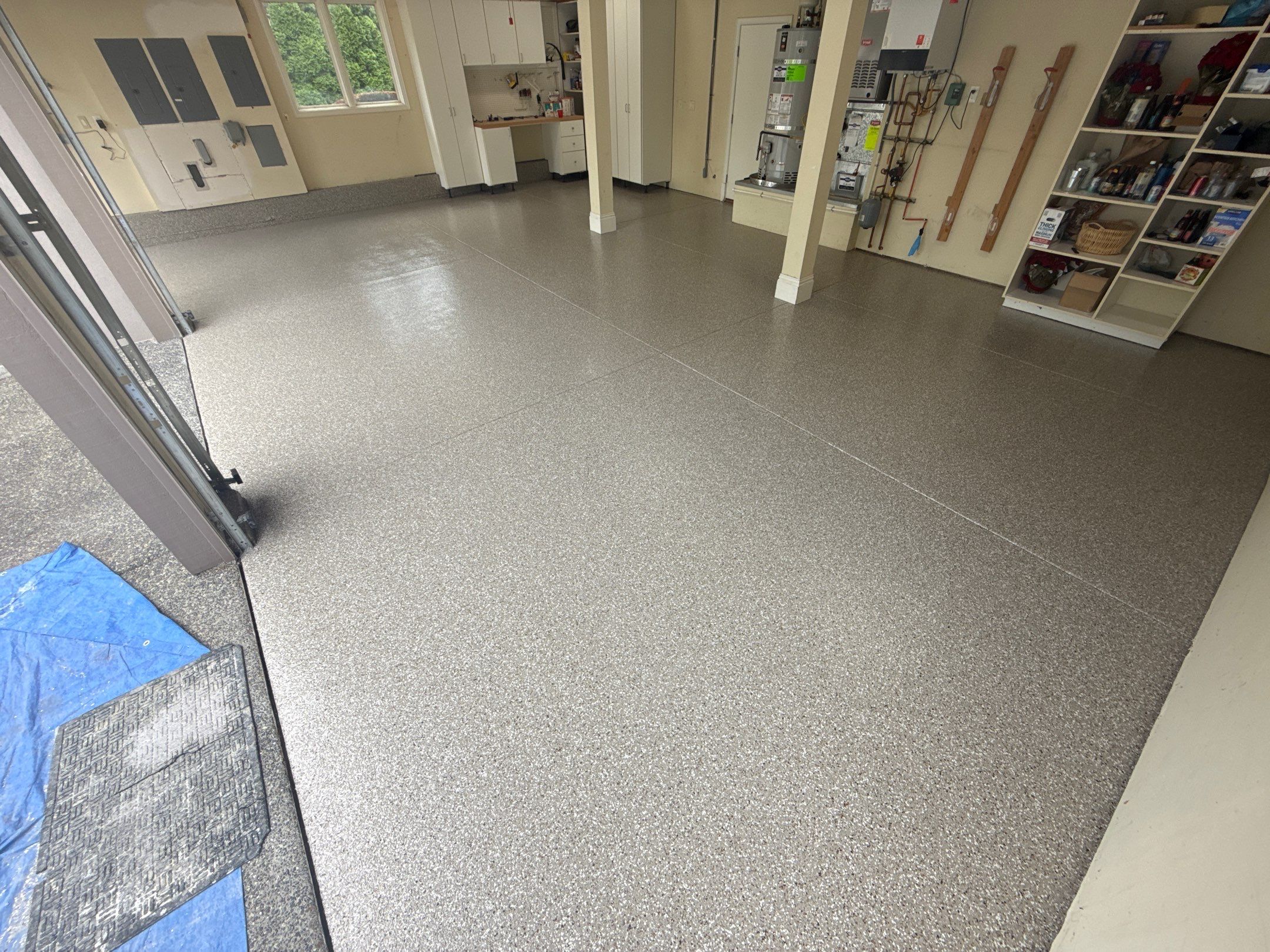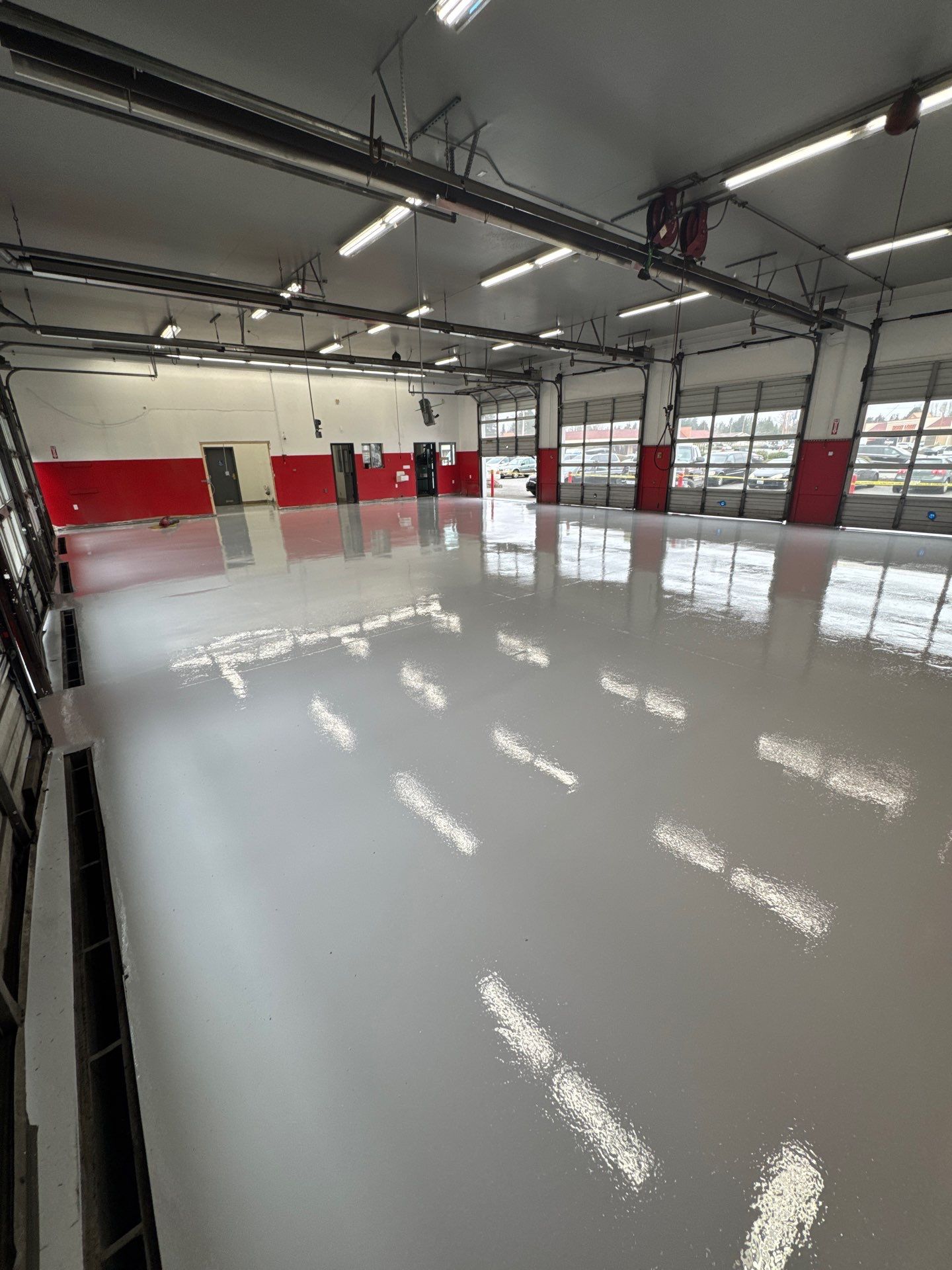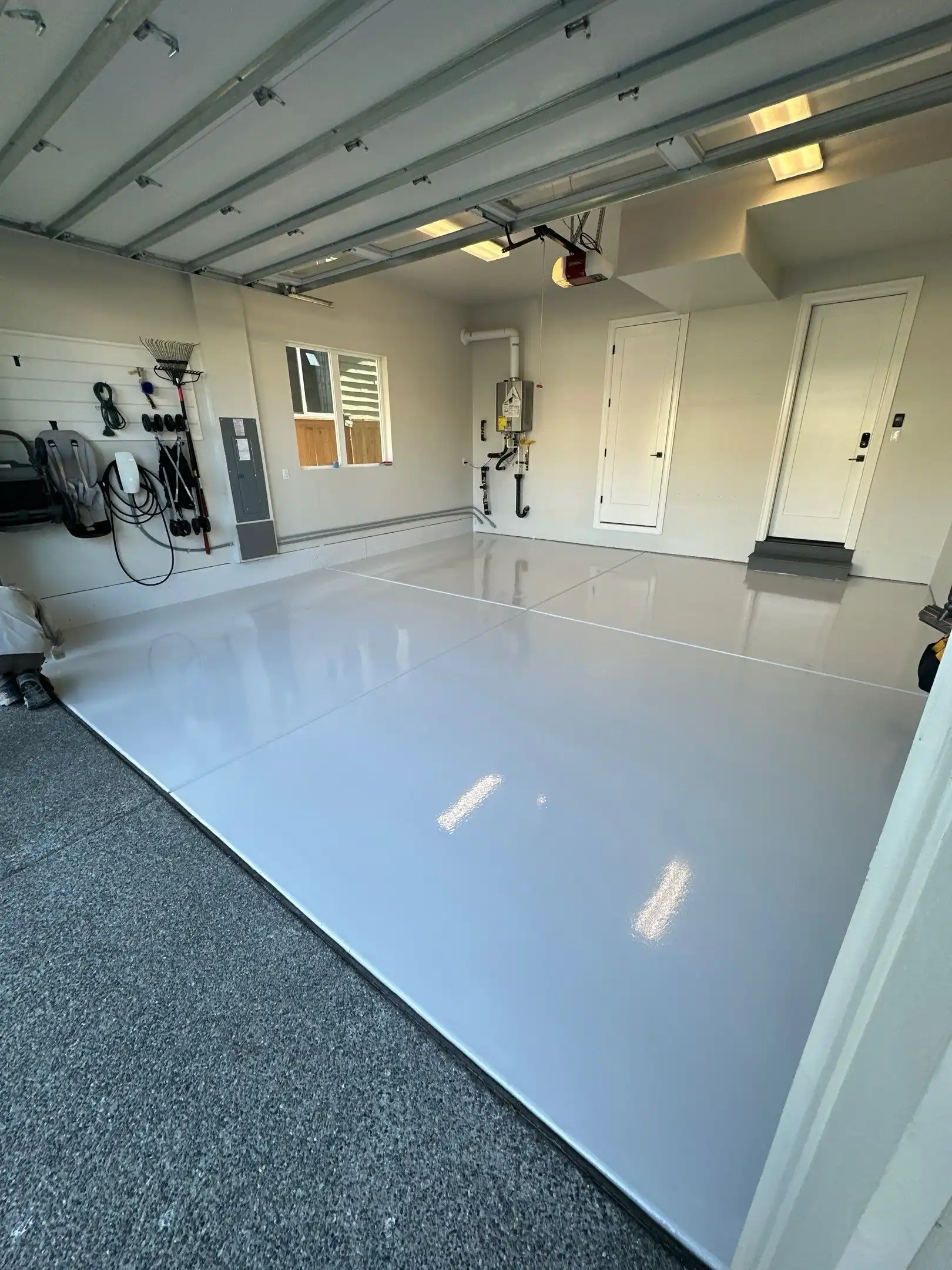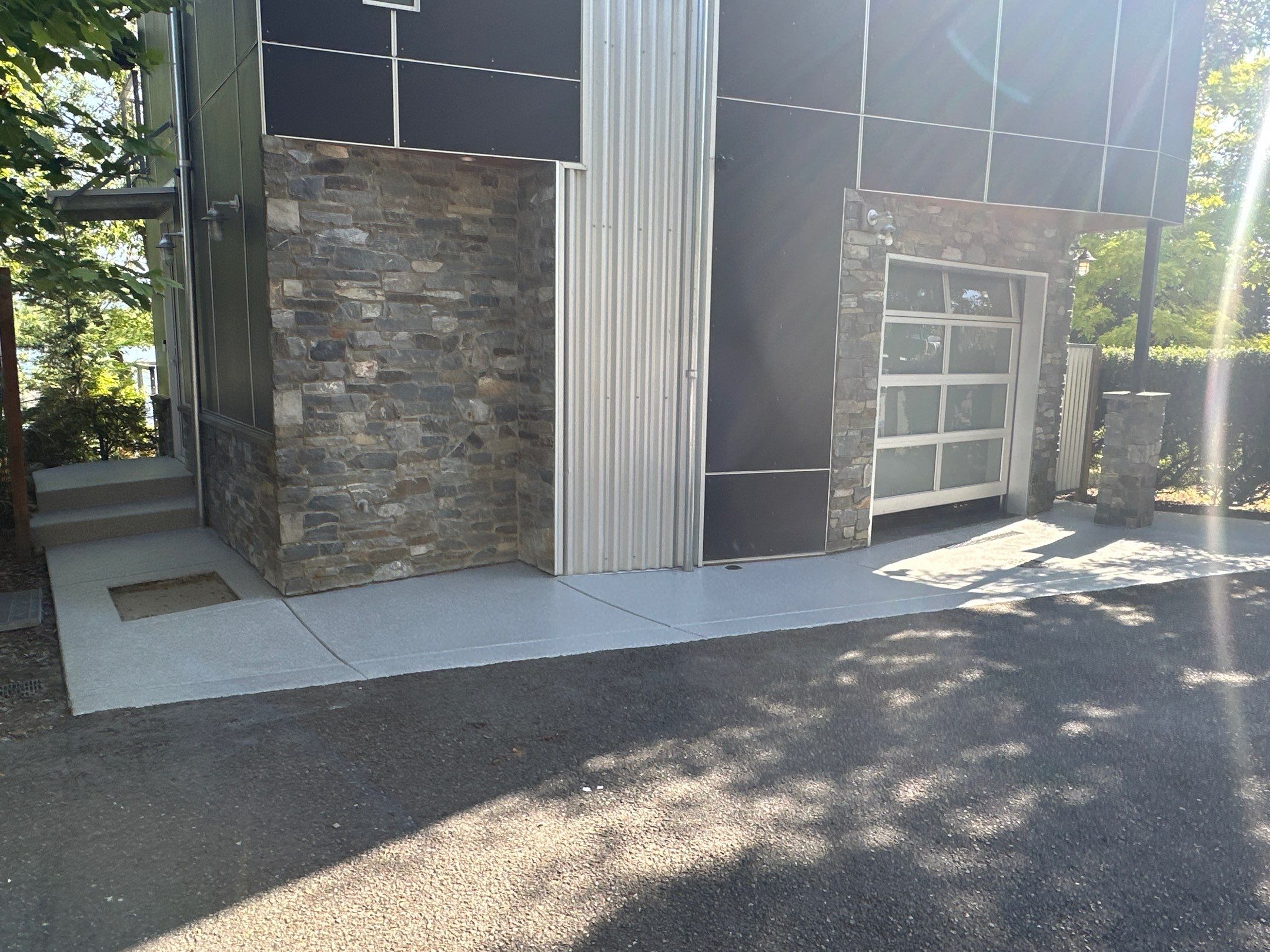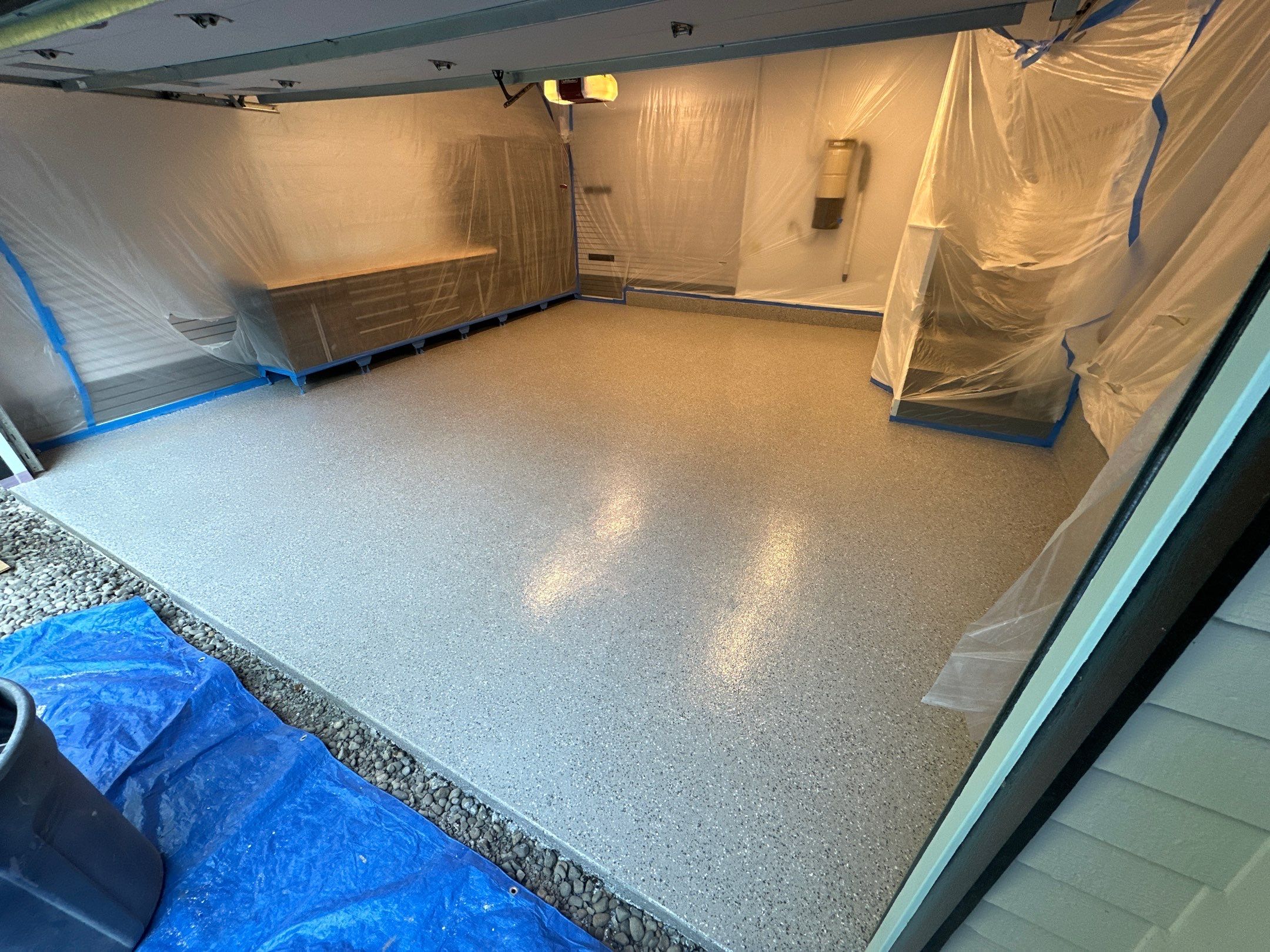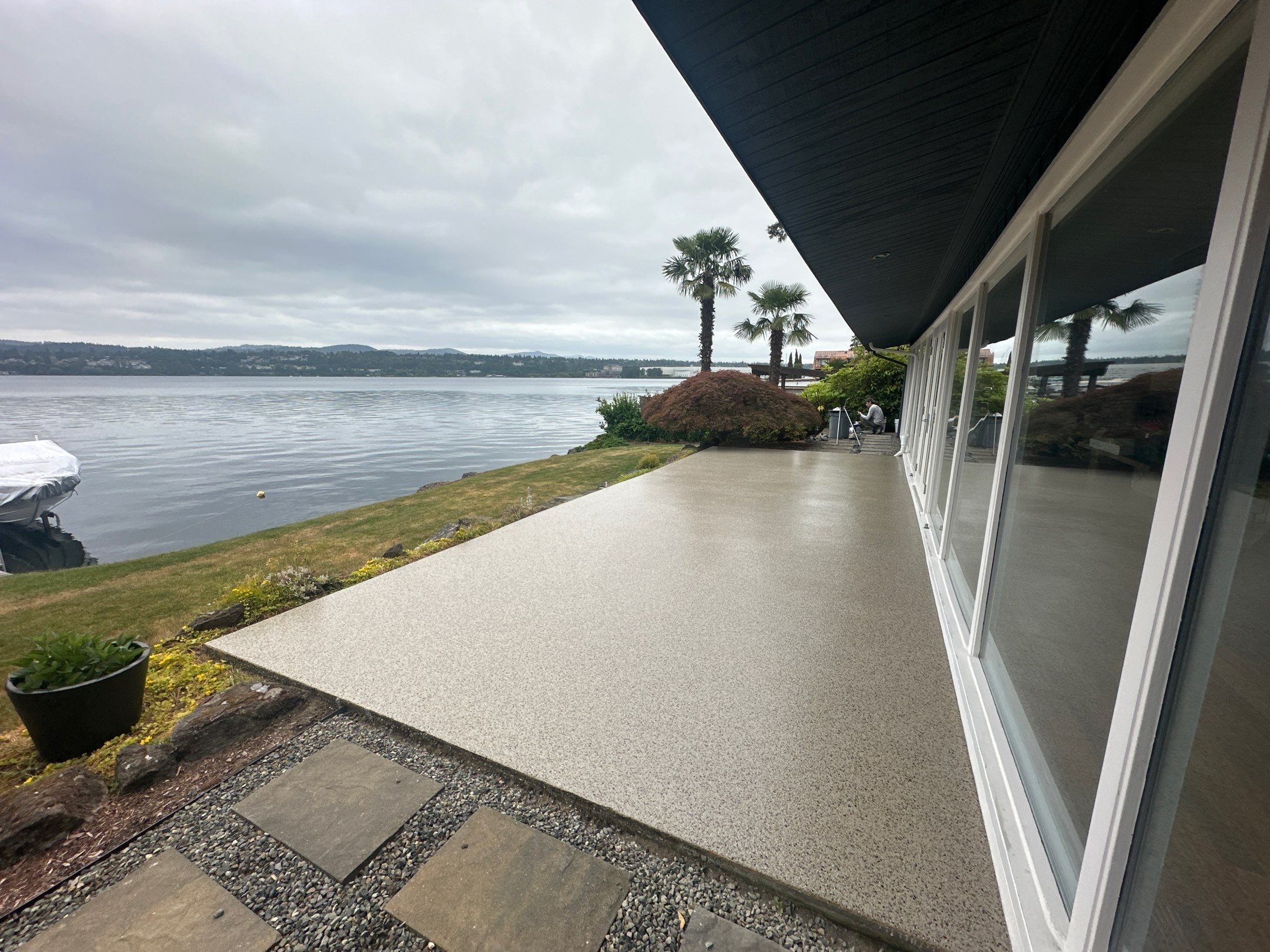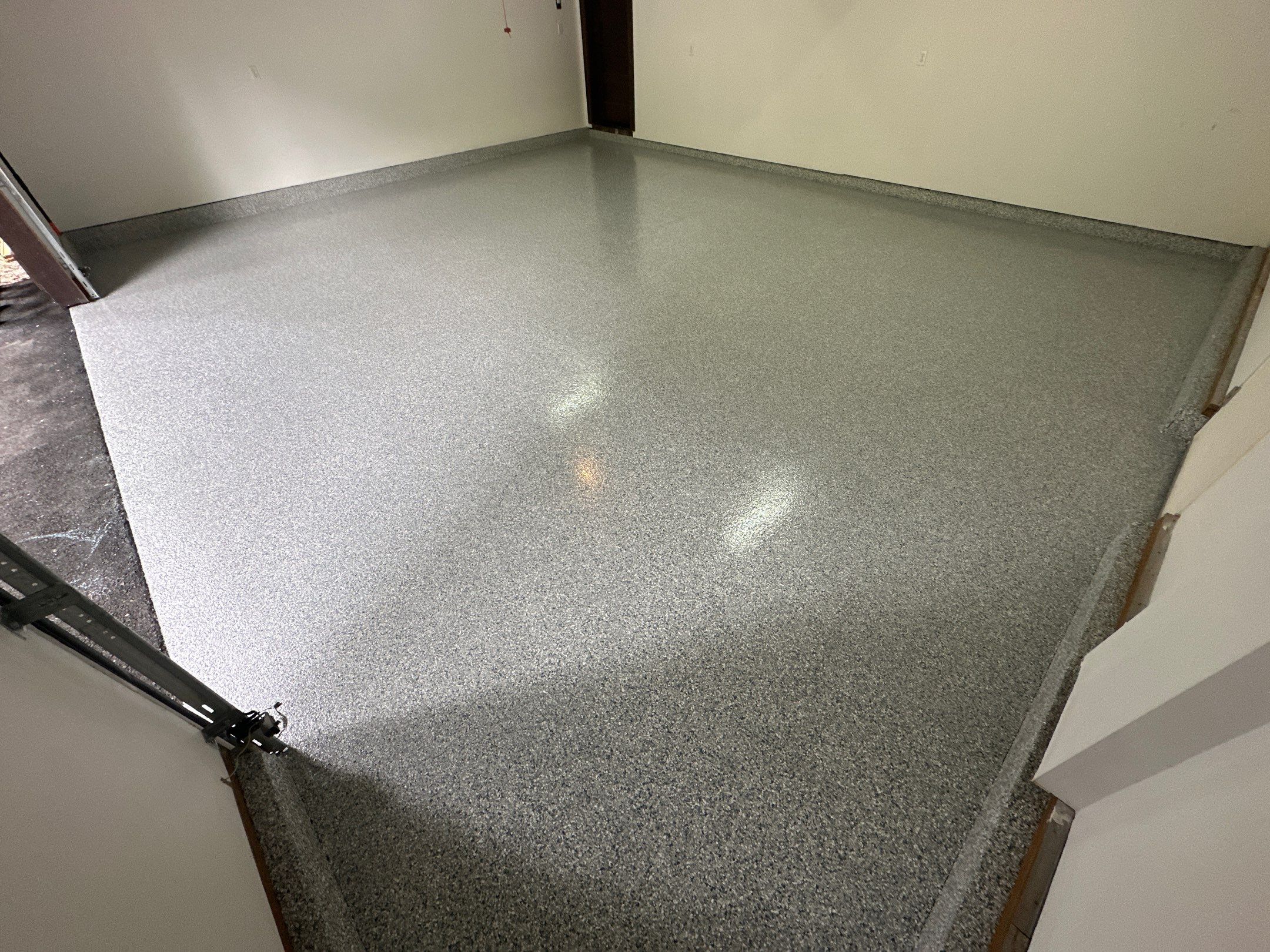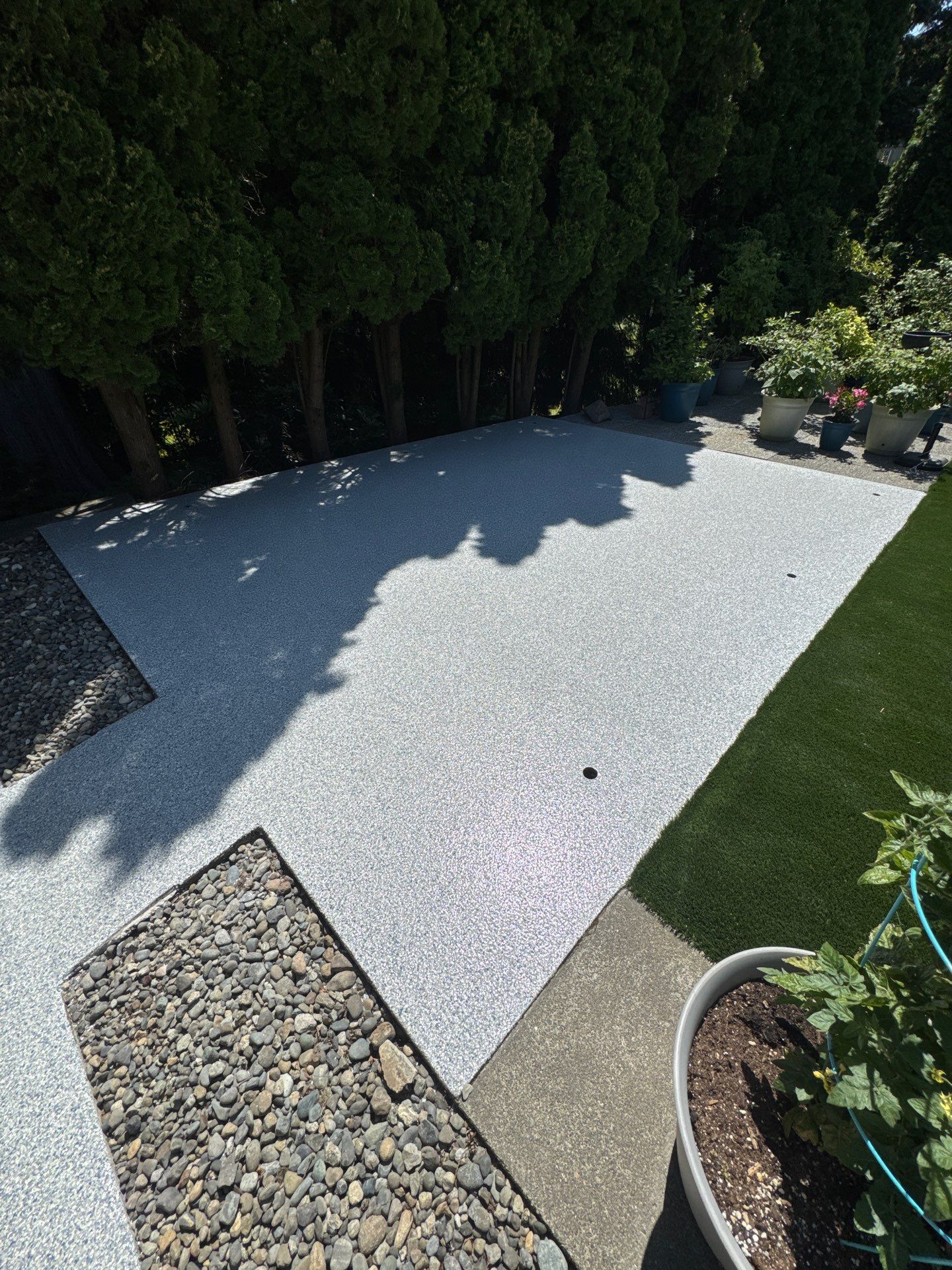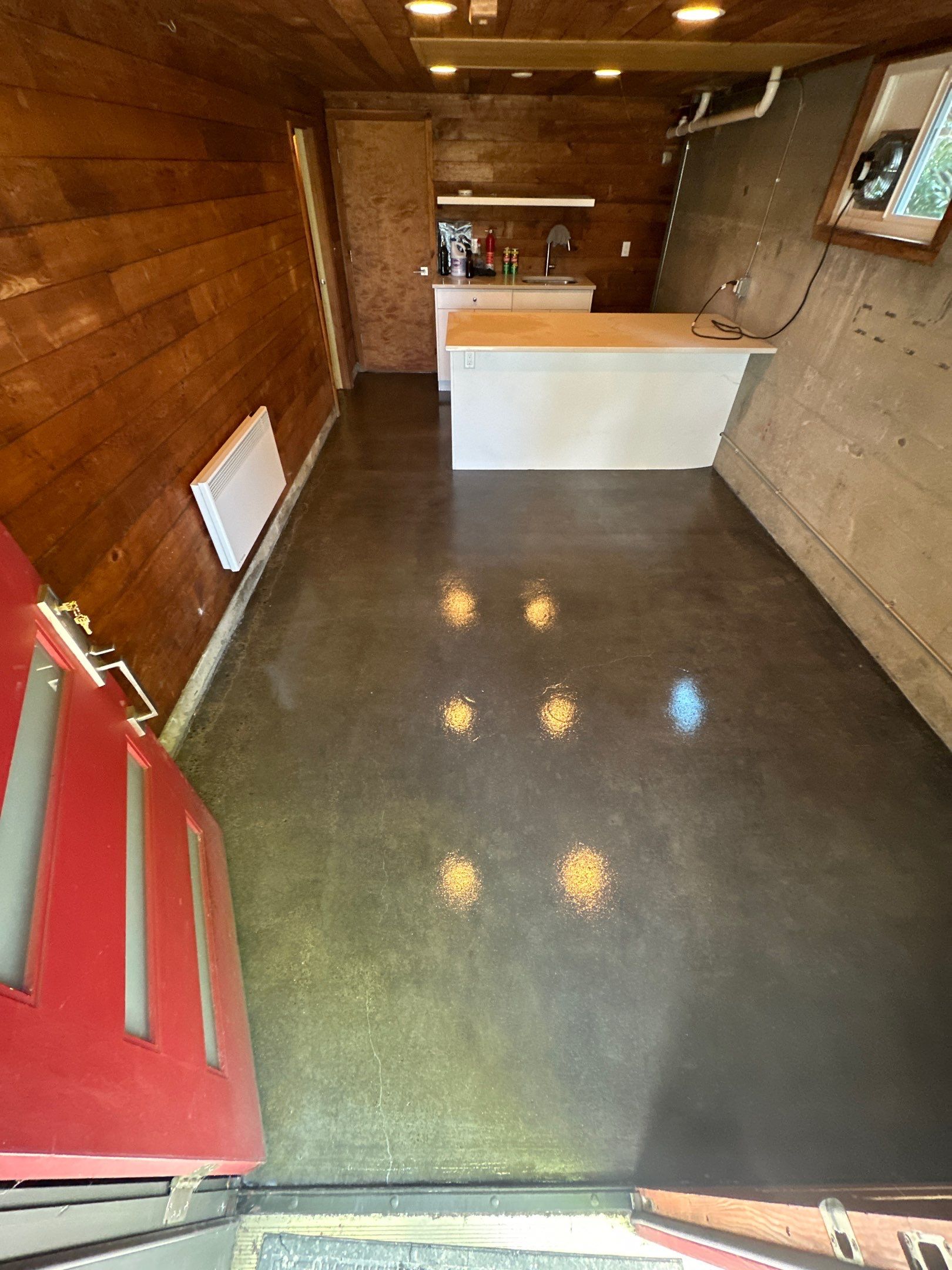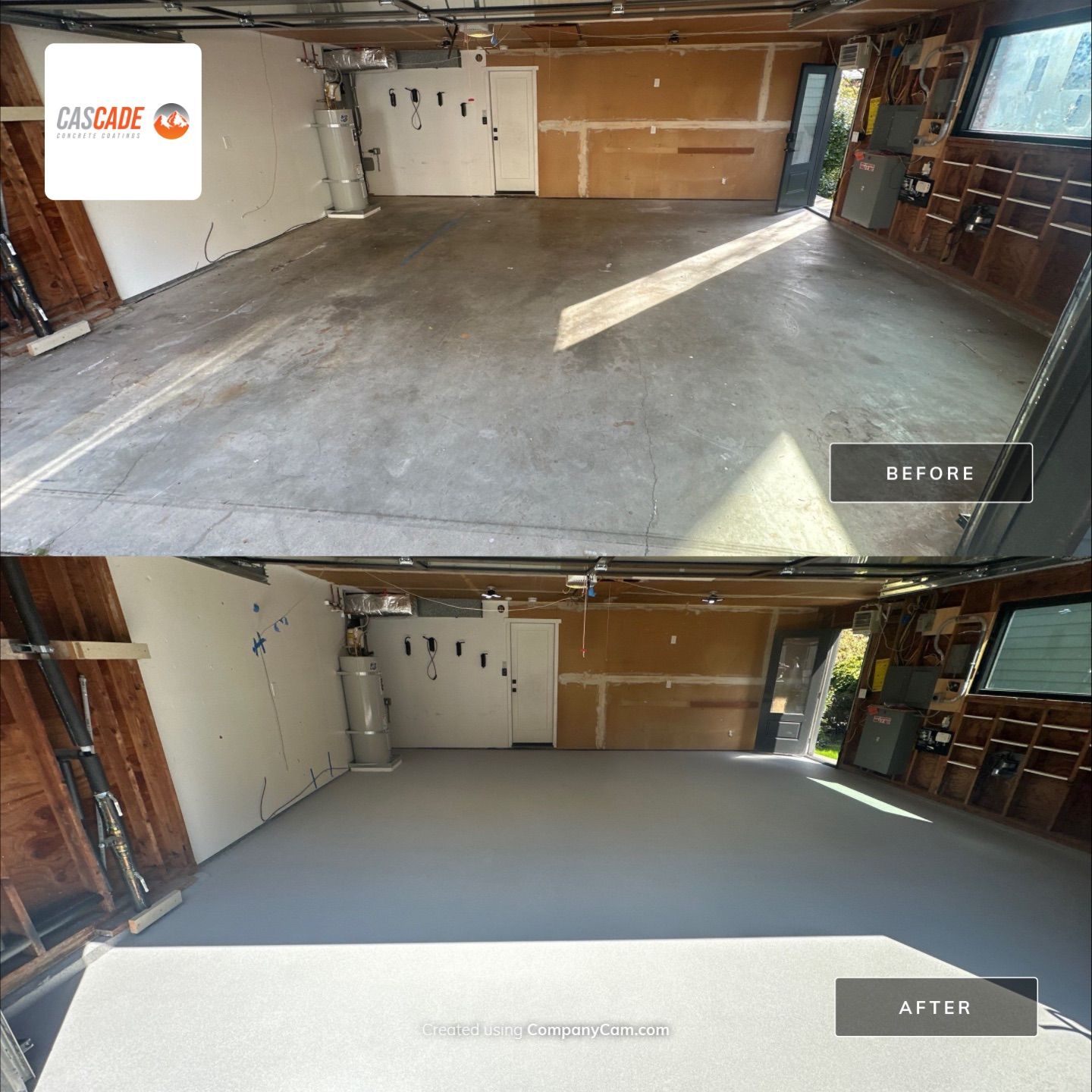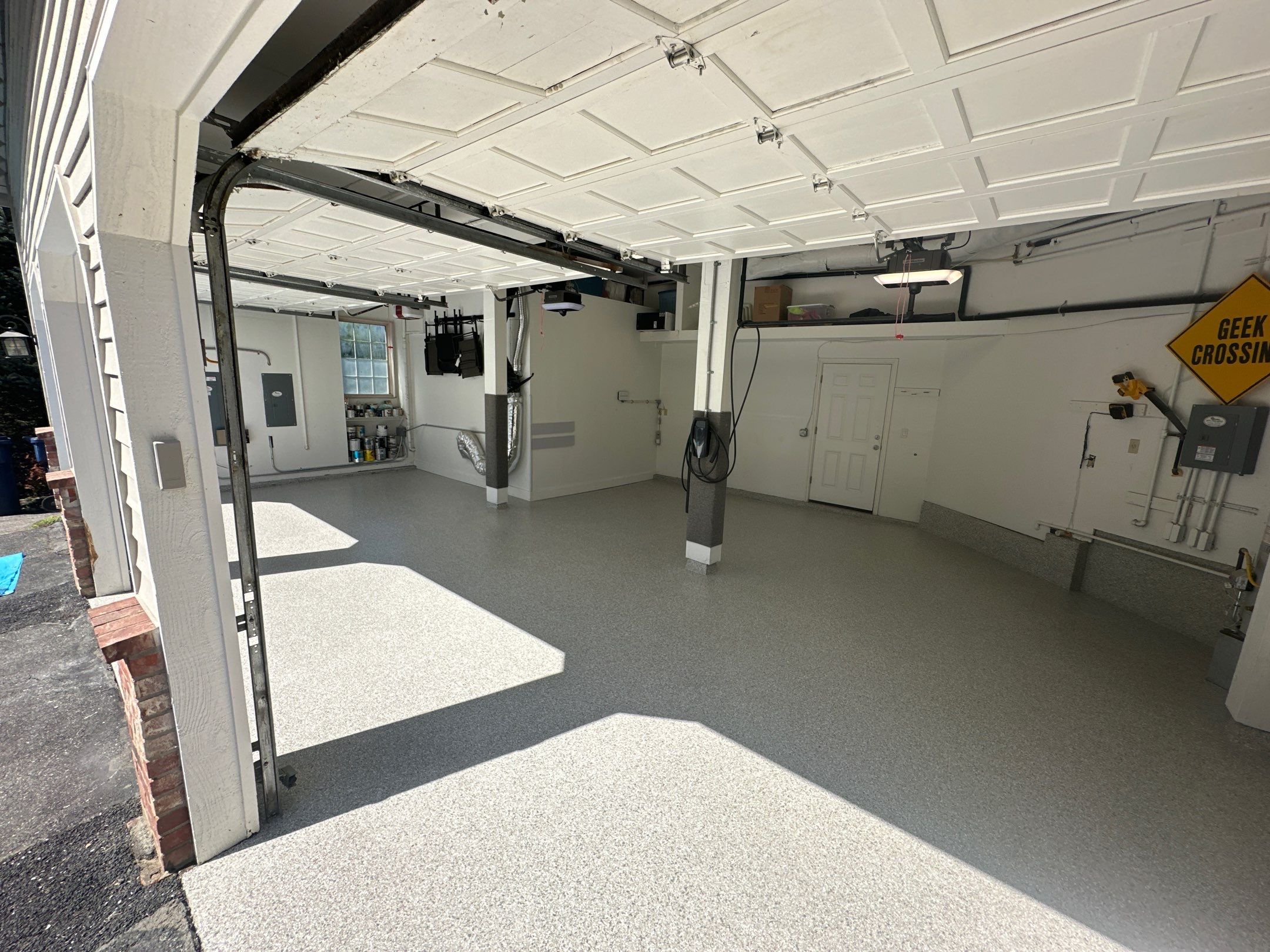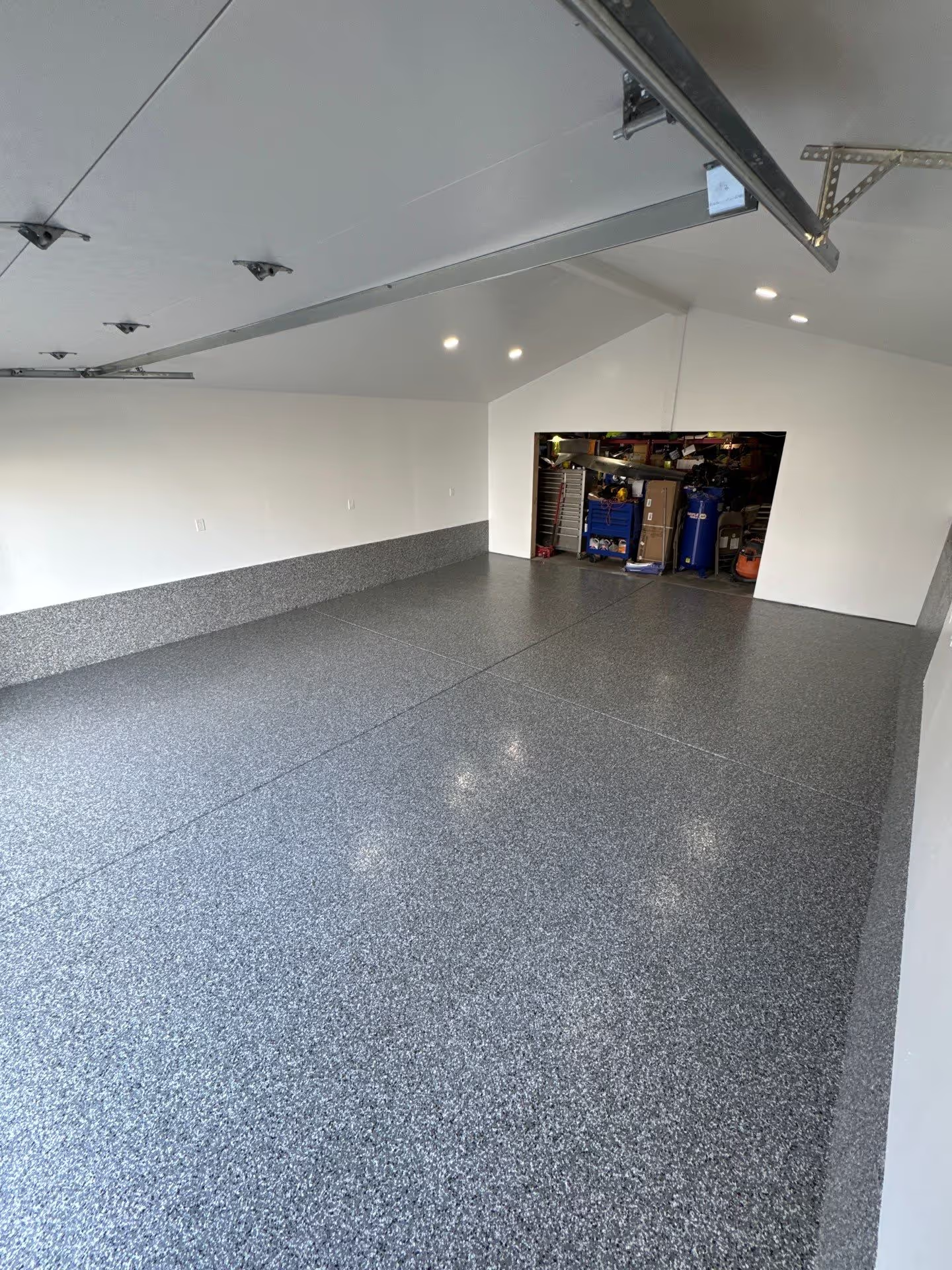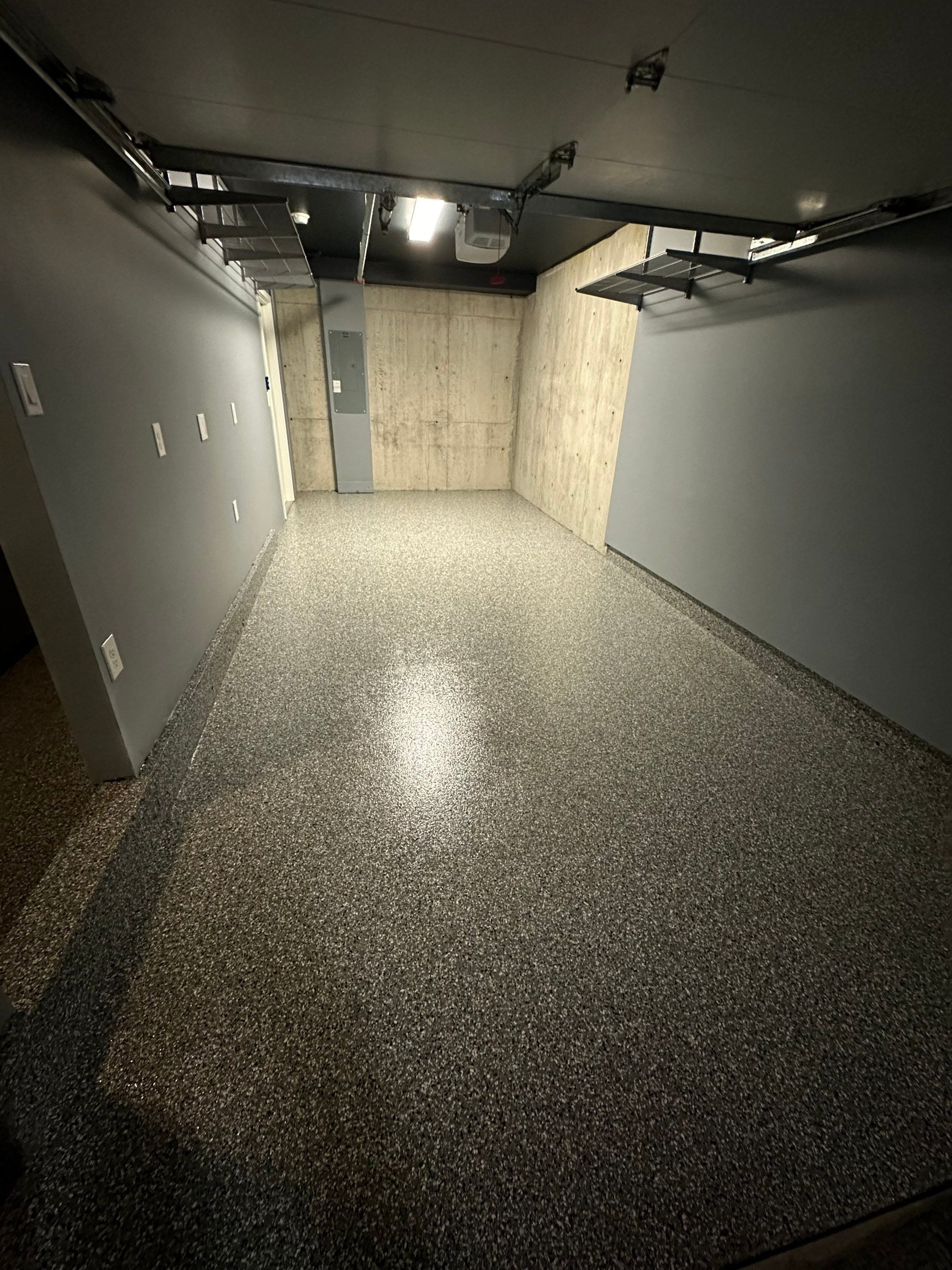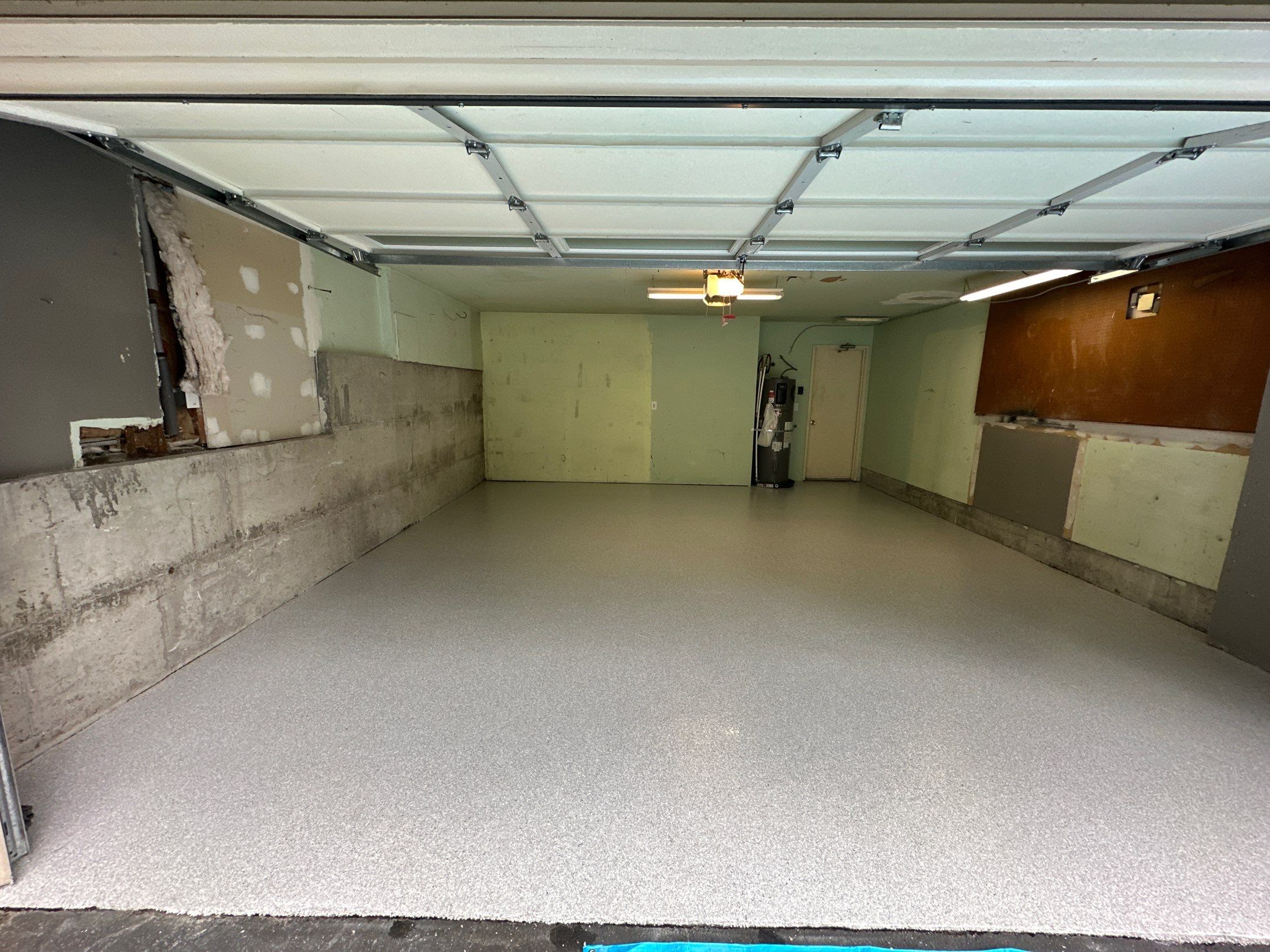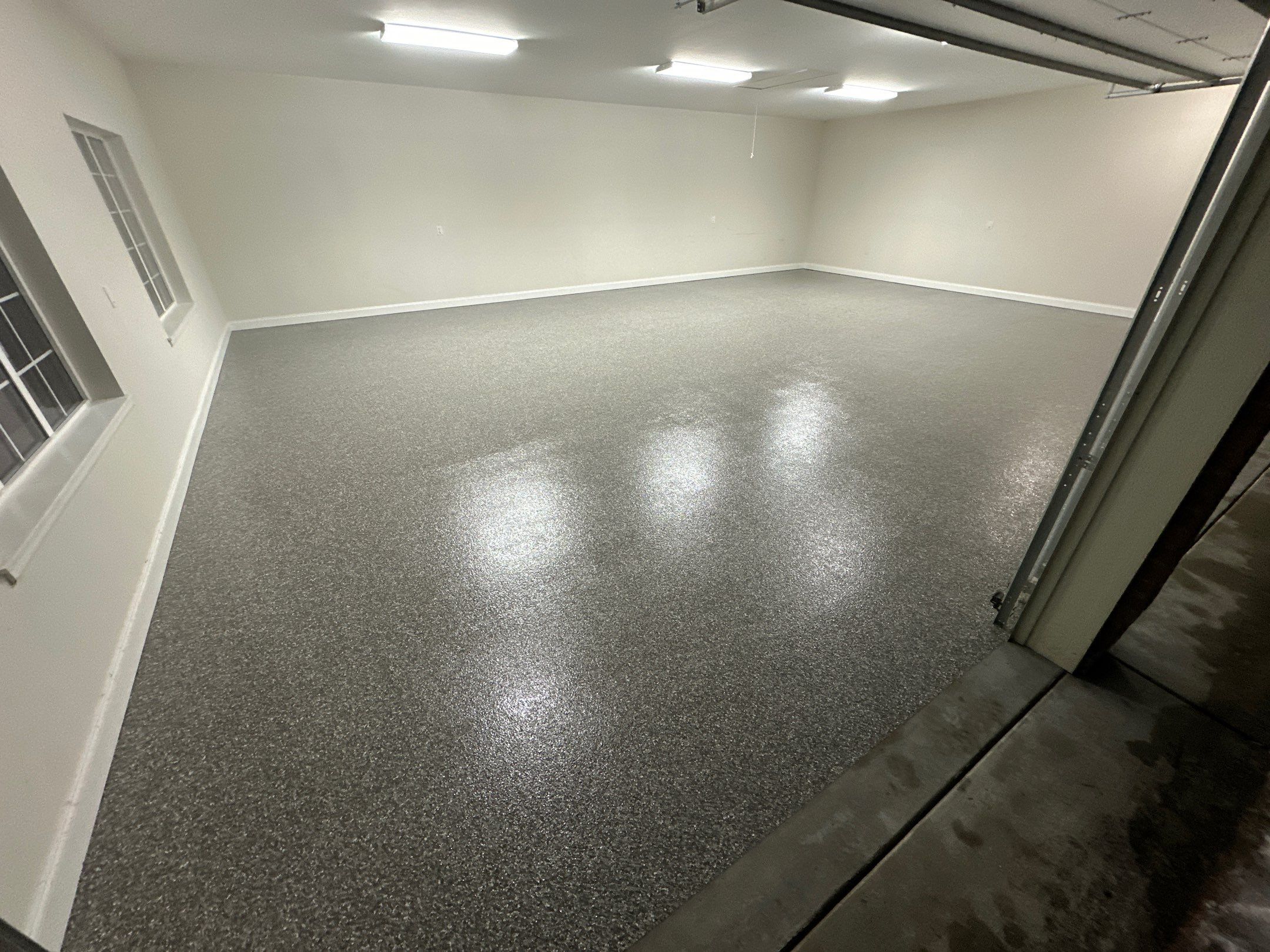
A modern Woodinville garage with clean white walls and saw-cut joints, moisture tested twice and coated in Tidal Wave polyurea in one day in December 2025.
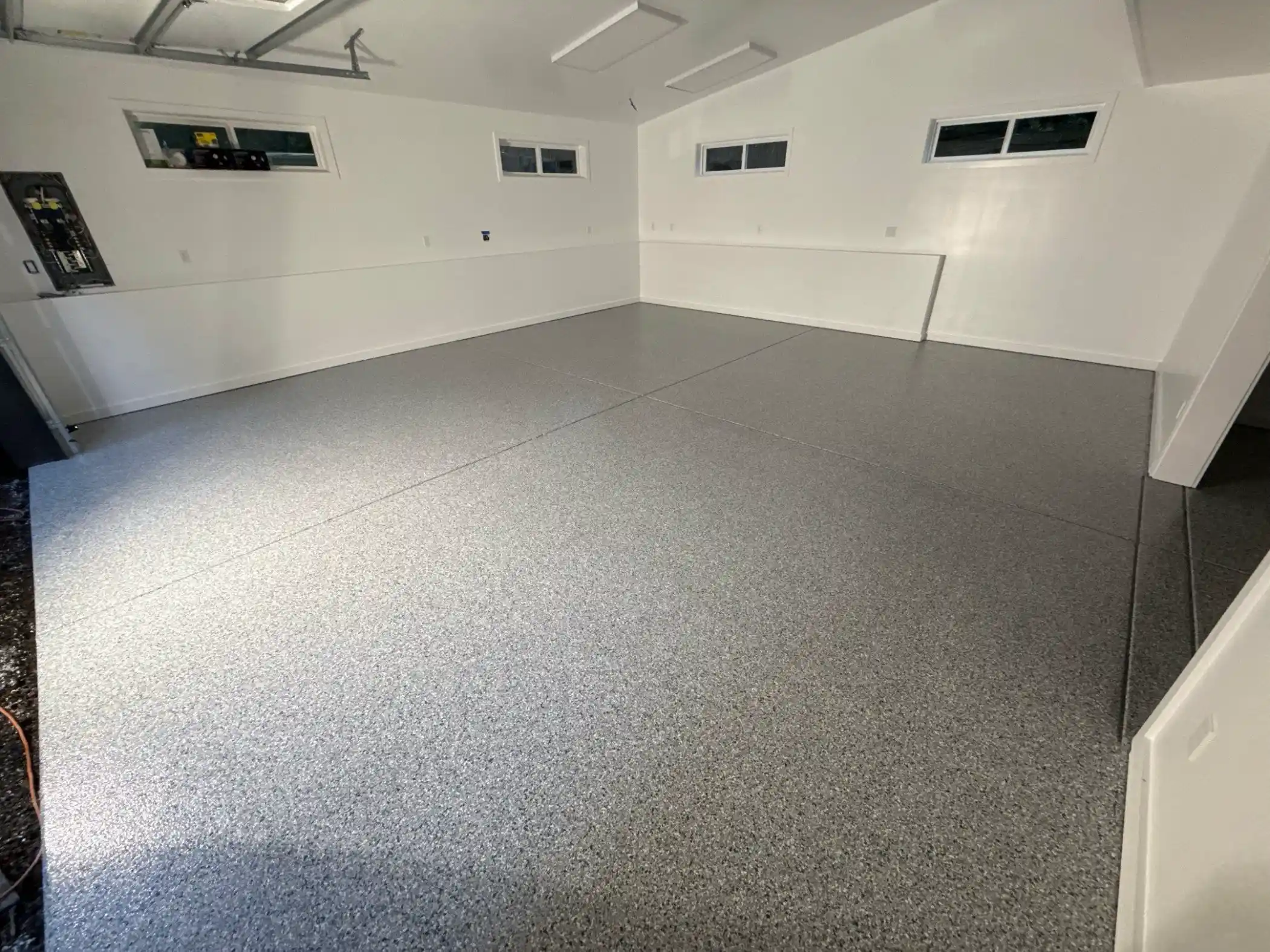

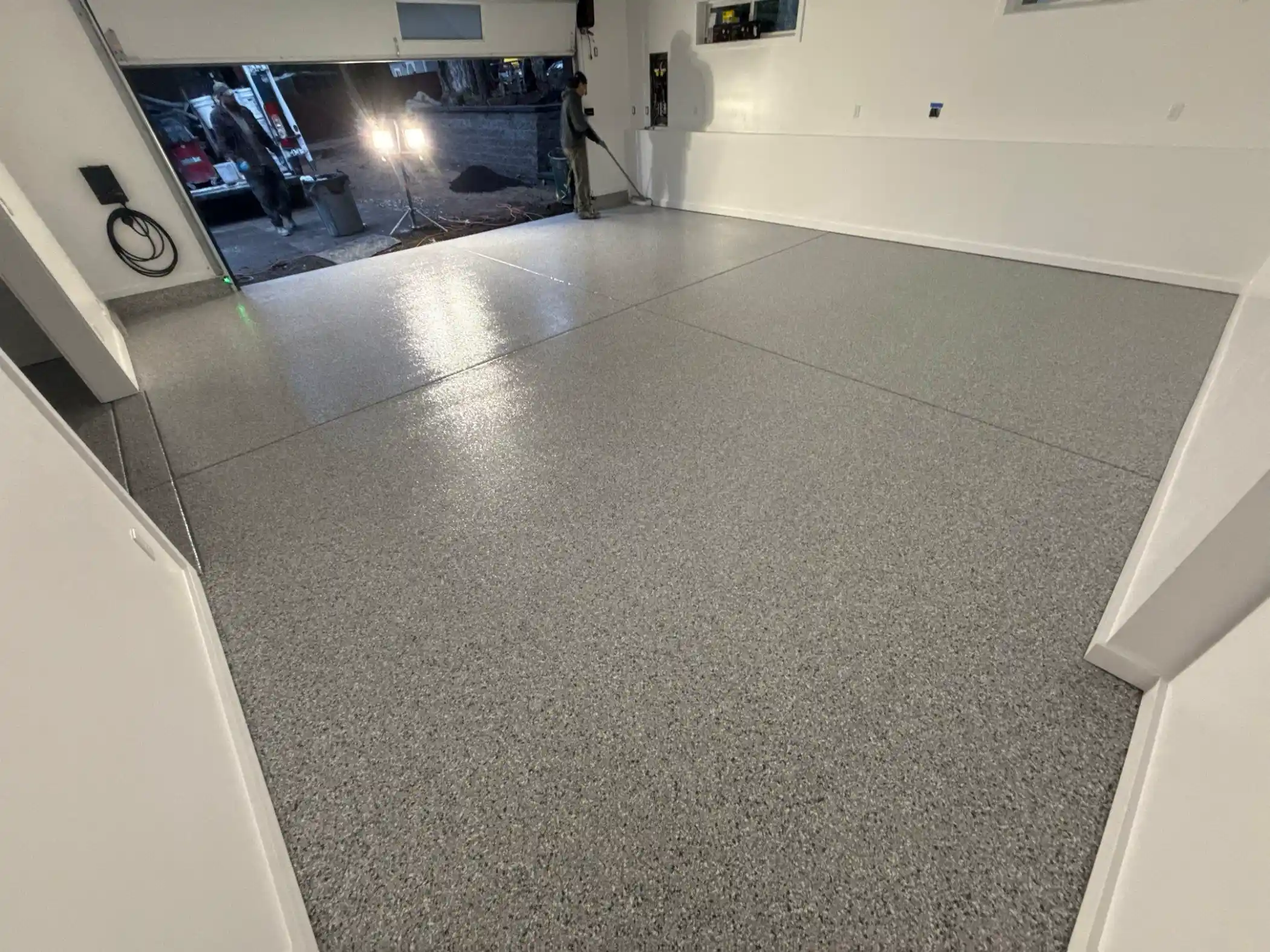

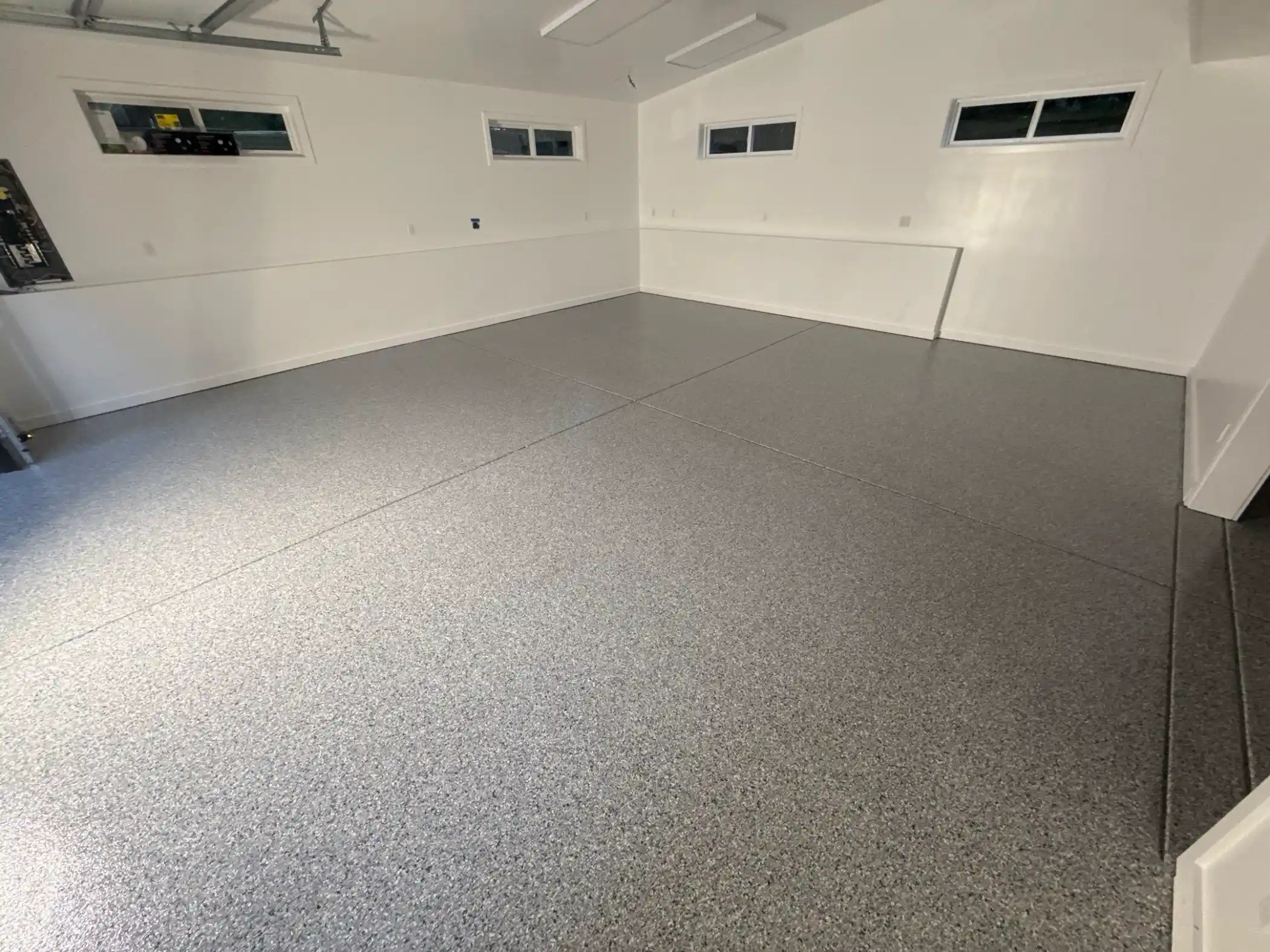
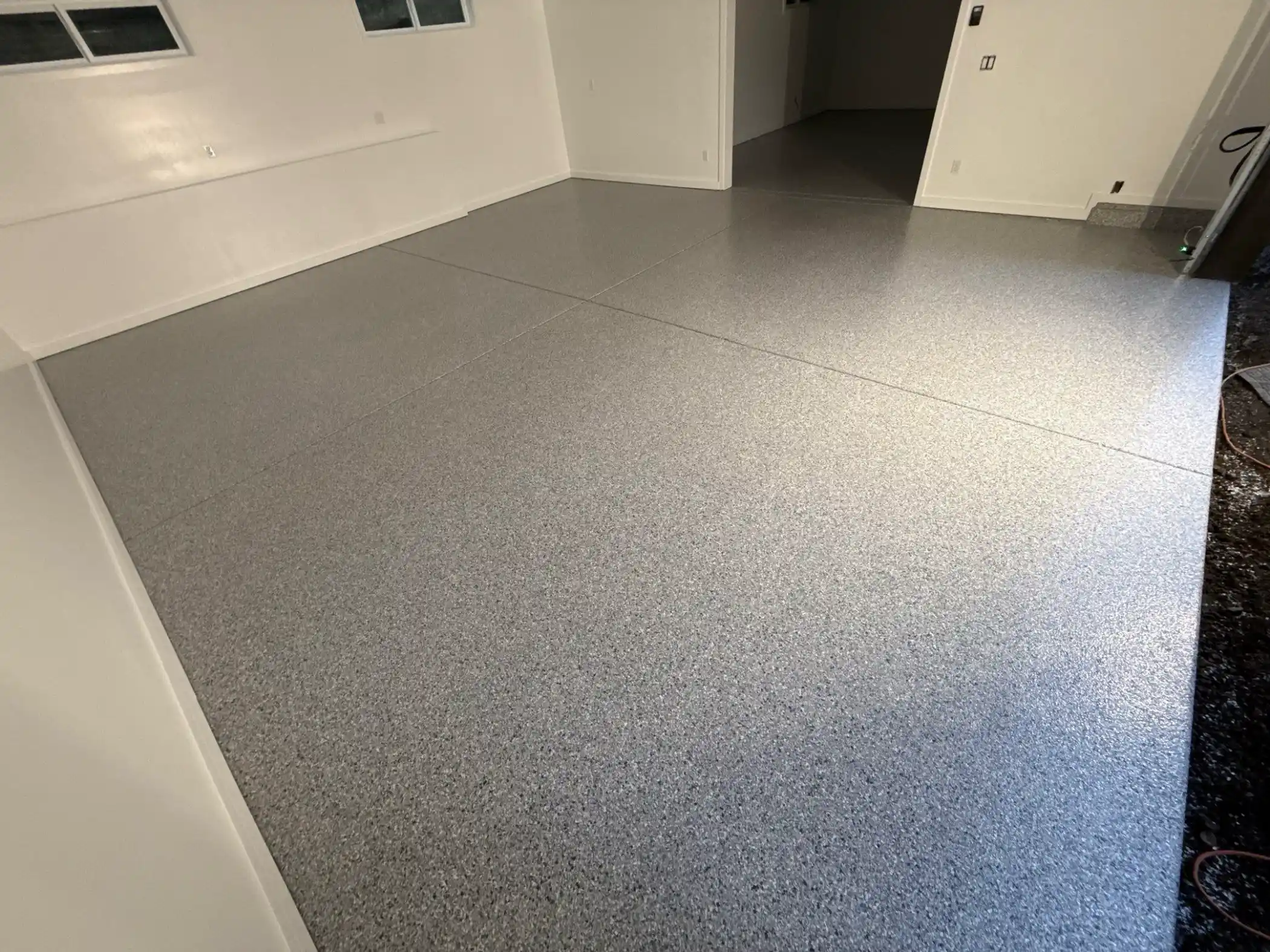
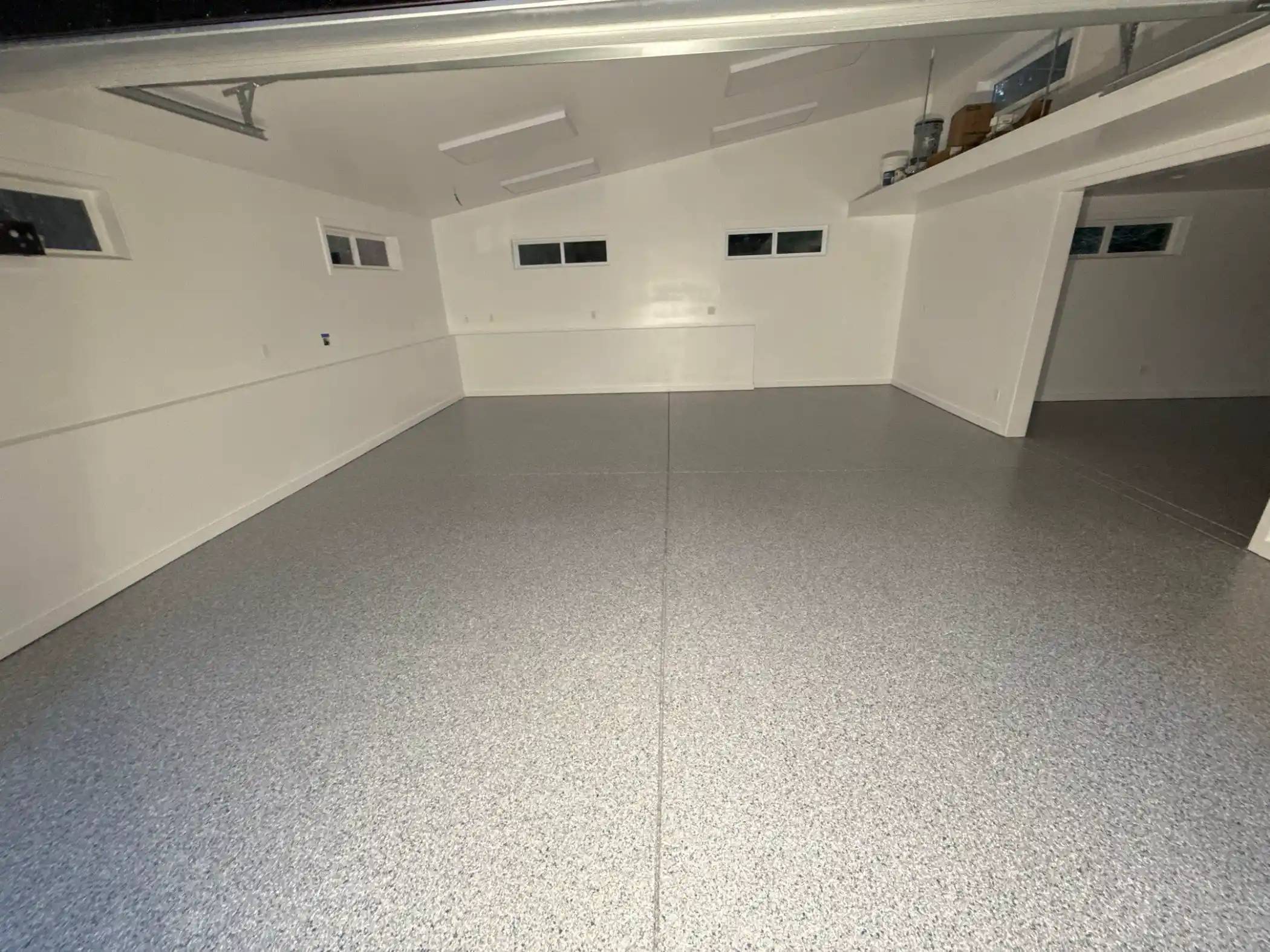
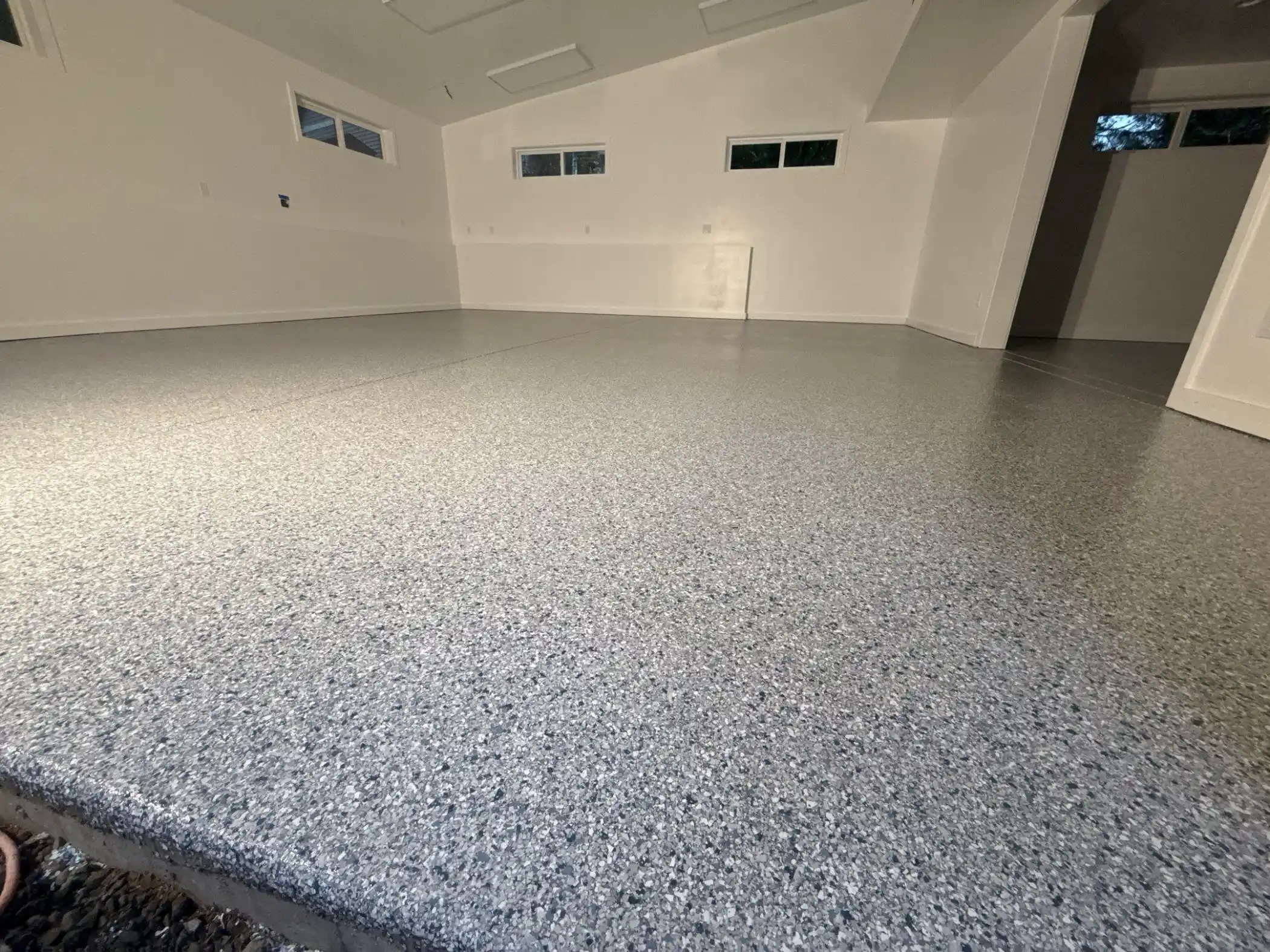
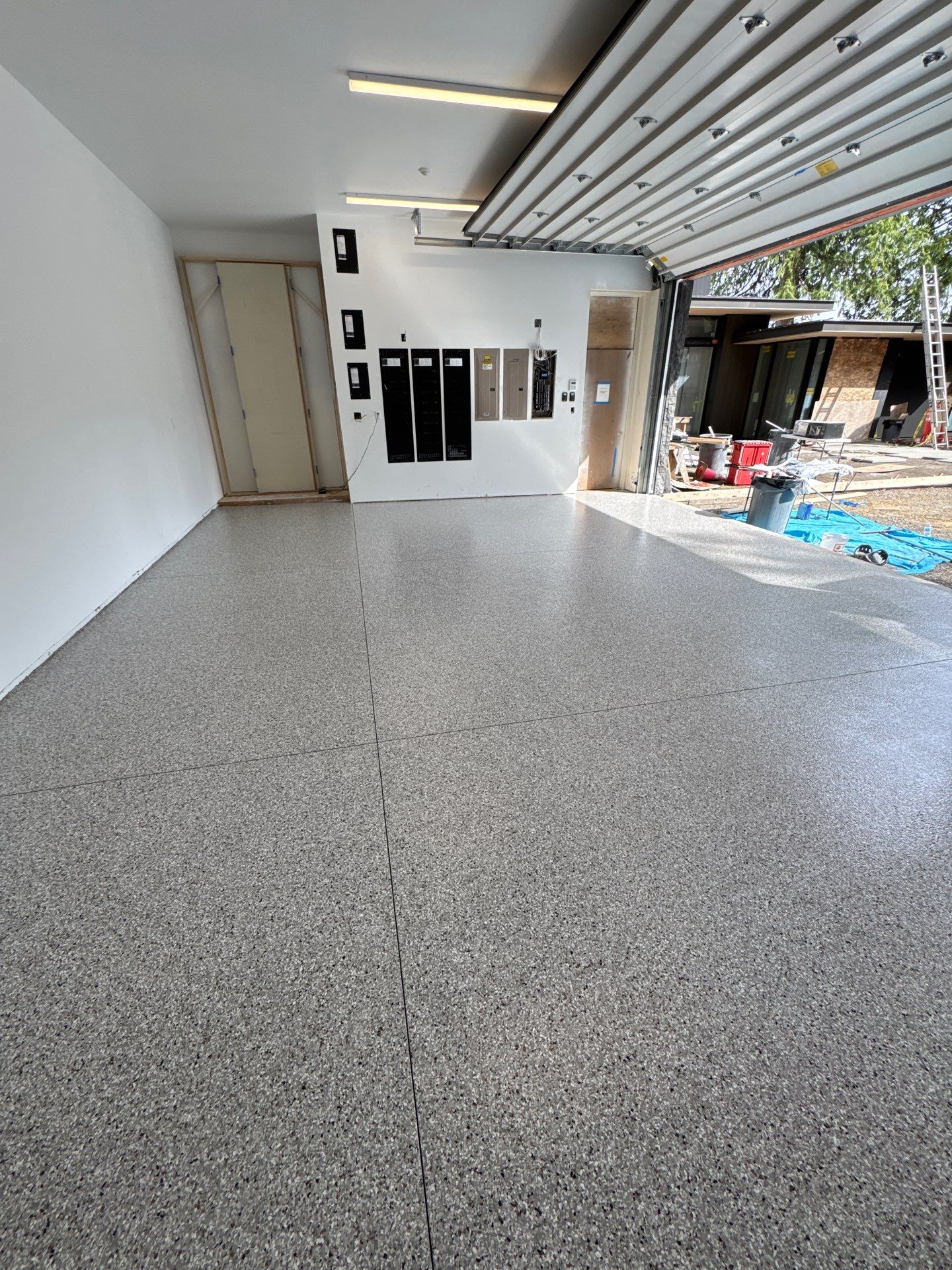
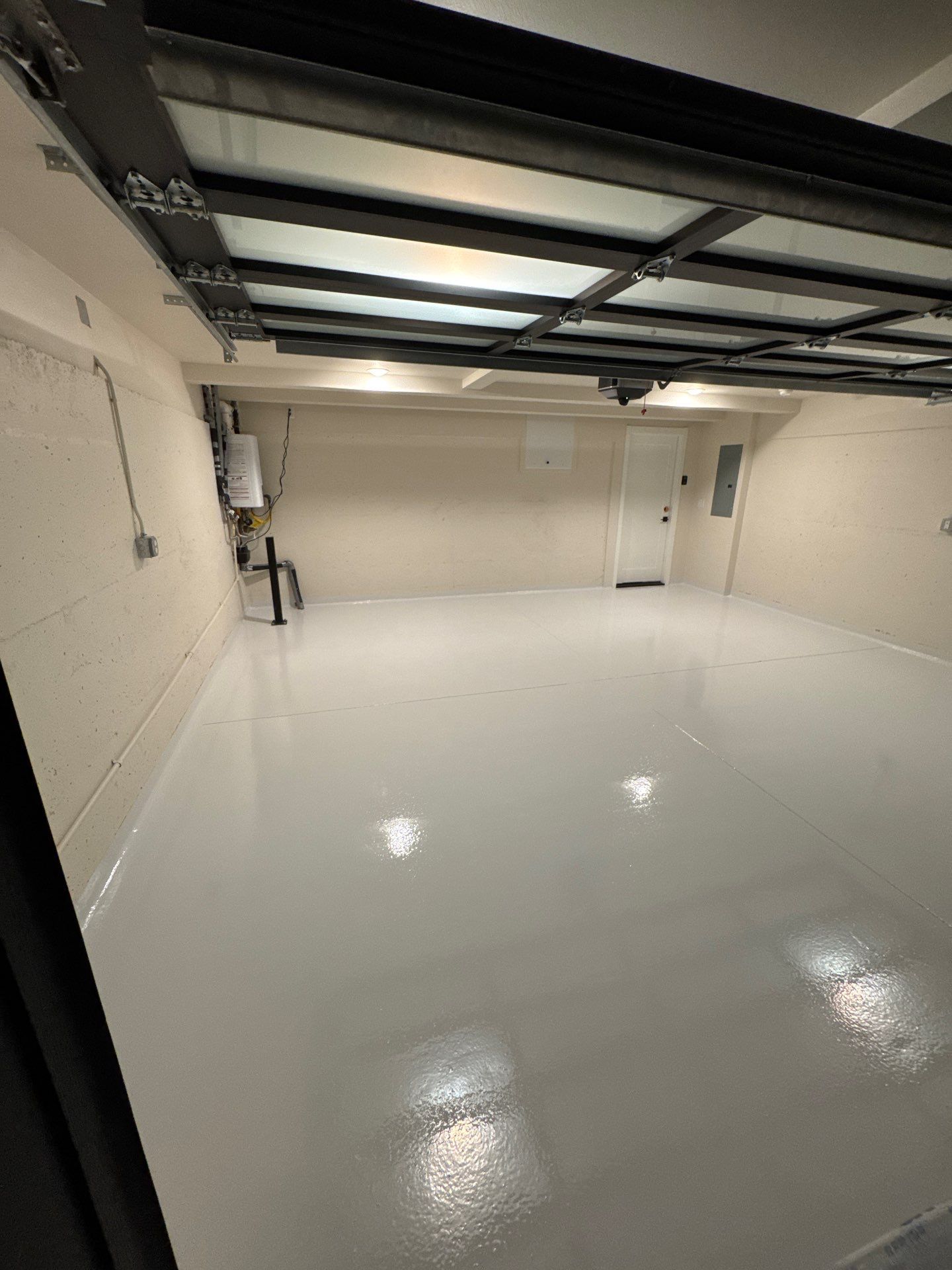
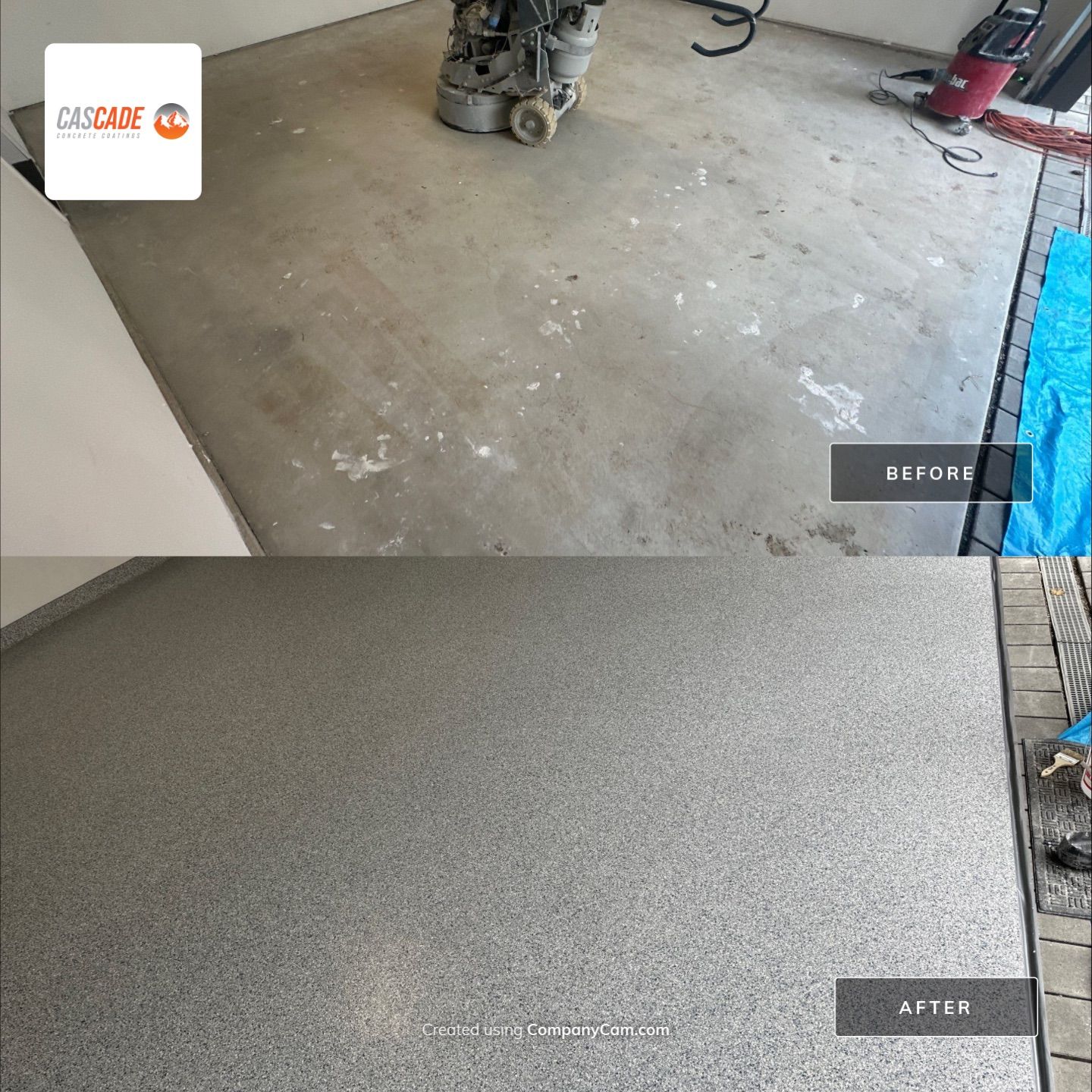
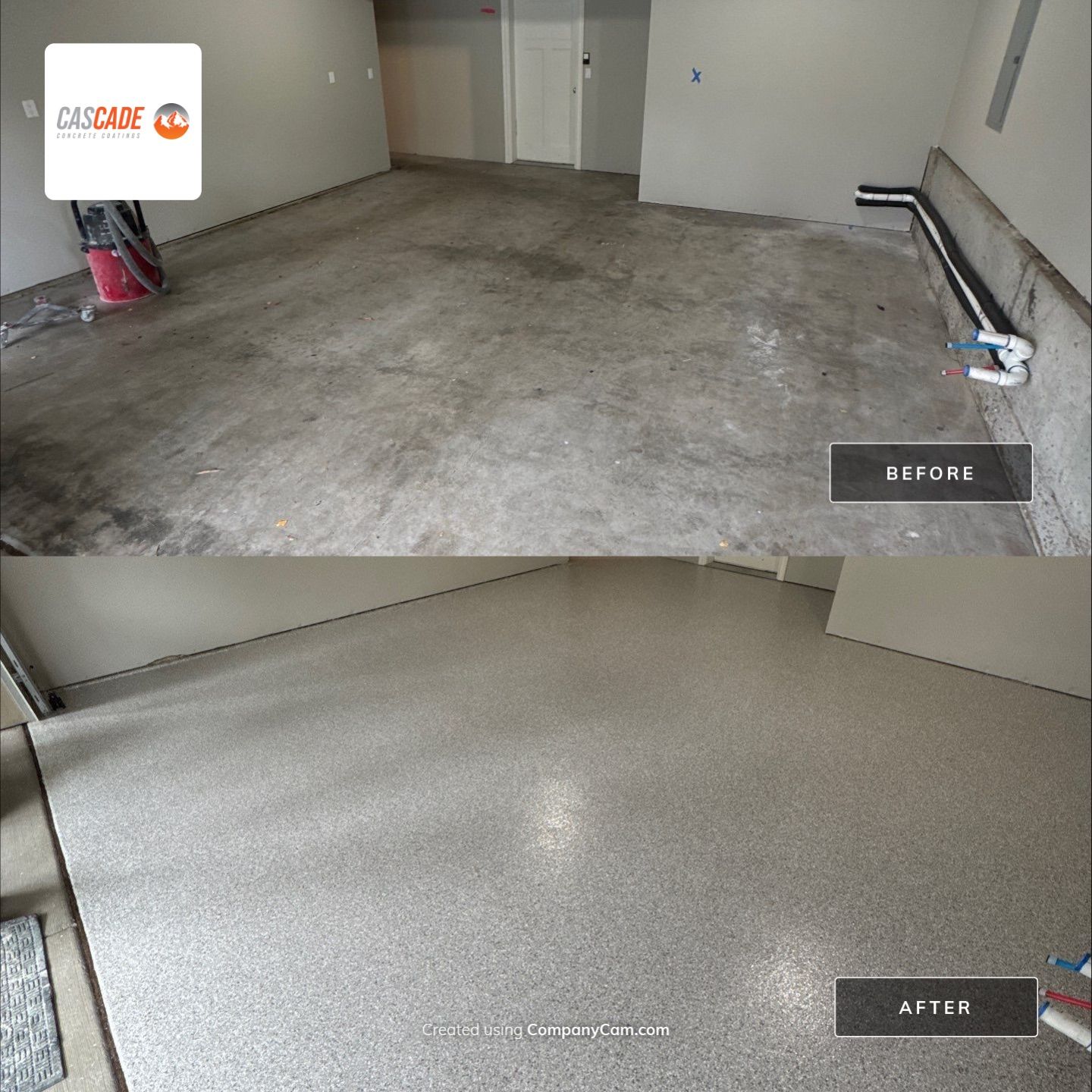
Everything about this Woodinville house is clean lines. Blue lap siding, a flat black garage door with a strip of windows, white walls and a row of high clerestory windows inside the garage. The concrete floor was the one thing that did not fit. It was gray, dusty and marked from construction, with straight saw-cut control joints running across it.
In December 2025 Cascade installed a garage floor coating in Woodinville with Certified Penntek polyurea in Tidal Wave flake. One day, finished under work lights as the short winter afternoon ran out.
The free consultation was in November 2025. Moisture readings came in at 4.8% and 4.3%. A few days before install, the crew came back and tested again: 4.9% and 5.1%.
Why bother? Winter changes concrete. Rain, cold and a closed-up garage can all move the numbers. Cascade tests every slab at the consult, and on this job the second round confirmed the plan right before the coating went down.
The control joints were kept as clean straight lines through the finished floor. On a modern house they read like part of the design, a grid that matches the panels of the door and the windows above.
Tidal Wave Evolution mixes white, gray and navy chips. With blue siding outside and bright white walls inside, the hint of navy ties the garage to the rest of the house. It is calm enough for a minimalist space and busy enough to hide winter grime.
From November to March, cars come home wet and gritty. Bare concrete soaks that water up, along with whatever came off the road. The Penntek polyaspartic topcoat is non-porous. Oil, salt, gas and grease stay on the surface and wipe off, and the topcoat resists hot tire pickup.
Under that, the polyurea holds a chemical bond of over 1,300 PSI. Before the coating comes up, the concrete will come up. The floor is backed by a limited lifetime warranty from Penntek, which has dealers in 200 markets, so the floor can be serviced for decades. Watch the customer testimonial video to hear from a homeowner, or read our post on coating concrete in winter.
Woodinville winters are mostly wet, not frozen, but cold snaps happen and the days are short. A careful winter install comes down to testing the slab, checking conditions and planning the day. Cascade is based in Woodinville, so a December job here is close to home. See more of our Woodinville garage floor coatings, or compare with a larger Woodinville garage done in Pebble Beach. A 12-month maintenance calendar covers what to do each season once your floor is in.
Concrete moisture moves with the weather. A second reading close to install day confirms the slab still matches the plan from the consultation.
They stay visible as clean straight lines. The crew keeps them crisp so the floor reads as an even grid instead of a smeared seam.
The polyaspartic topcoat is non-porous, so salty water, sand and road film sit on top. A squeegee and a mop clear it, and nothing soaks into the concrete.
Thinking about a winter install? Book a free in-home quote or call 425-226-6085.
Here's just a few of our previous projects.