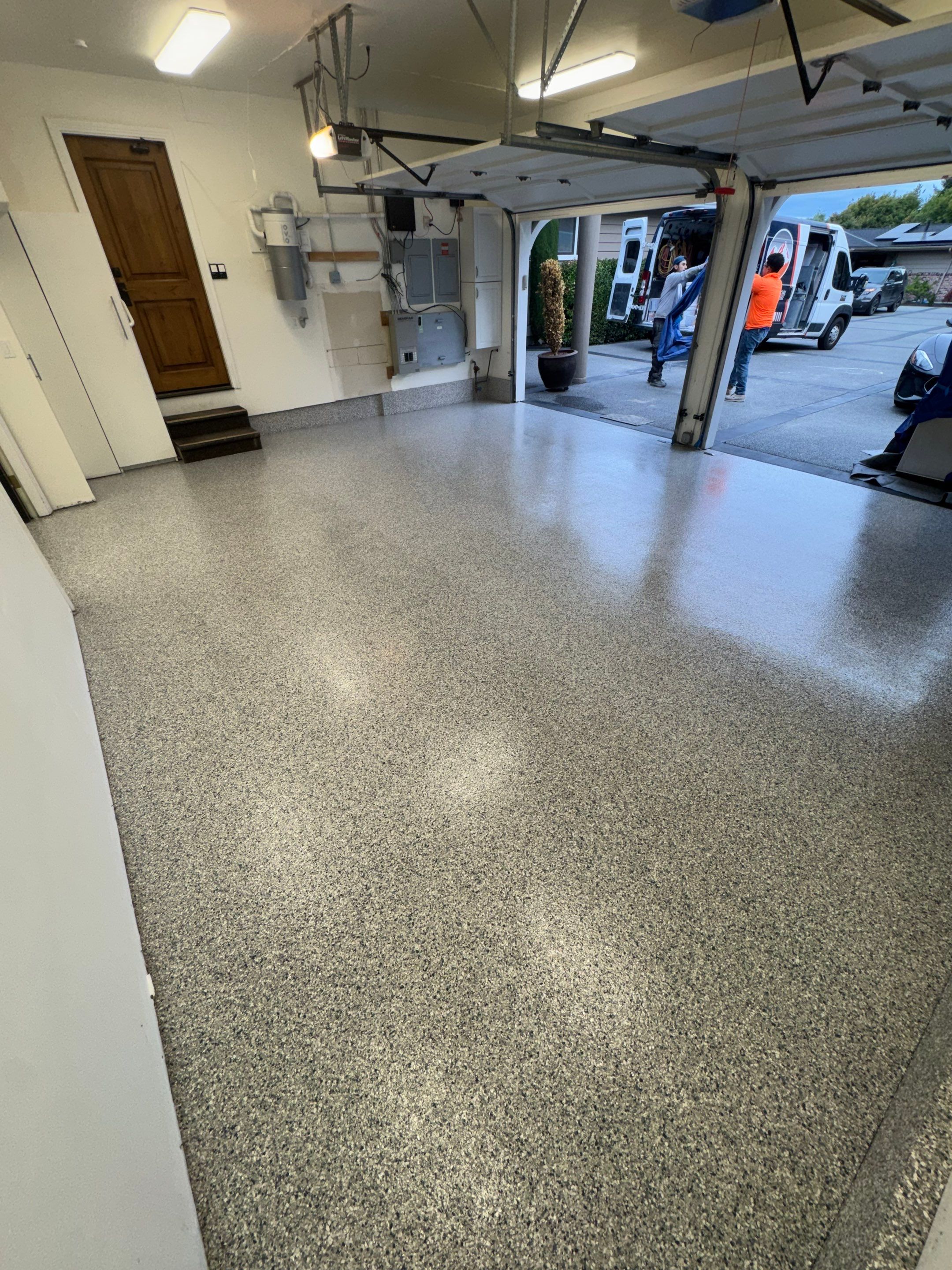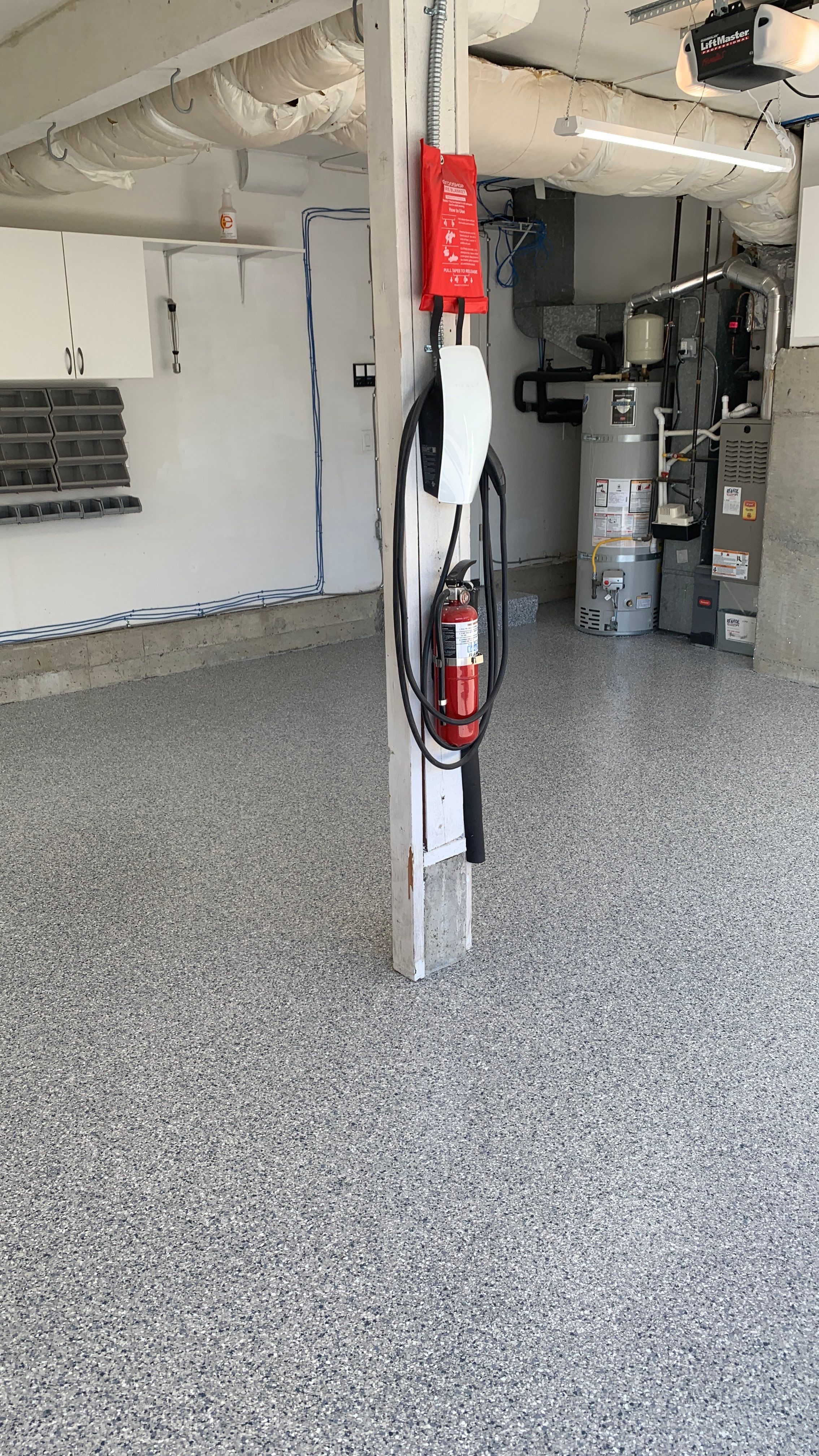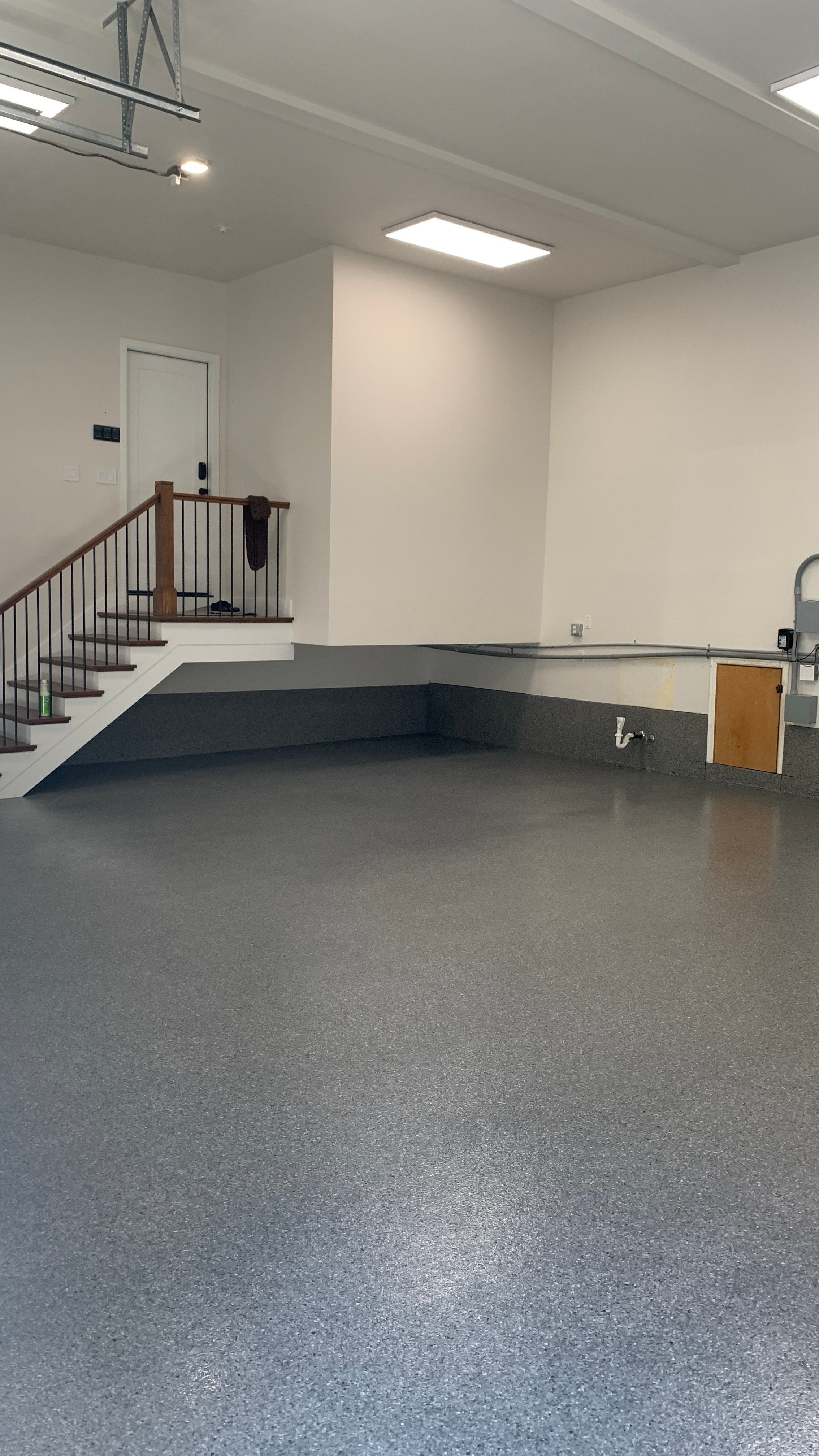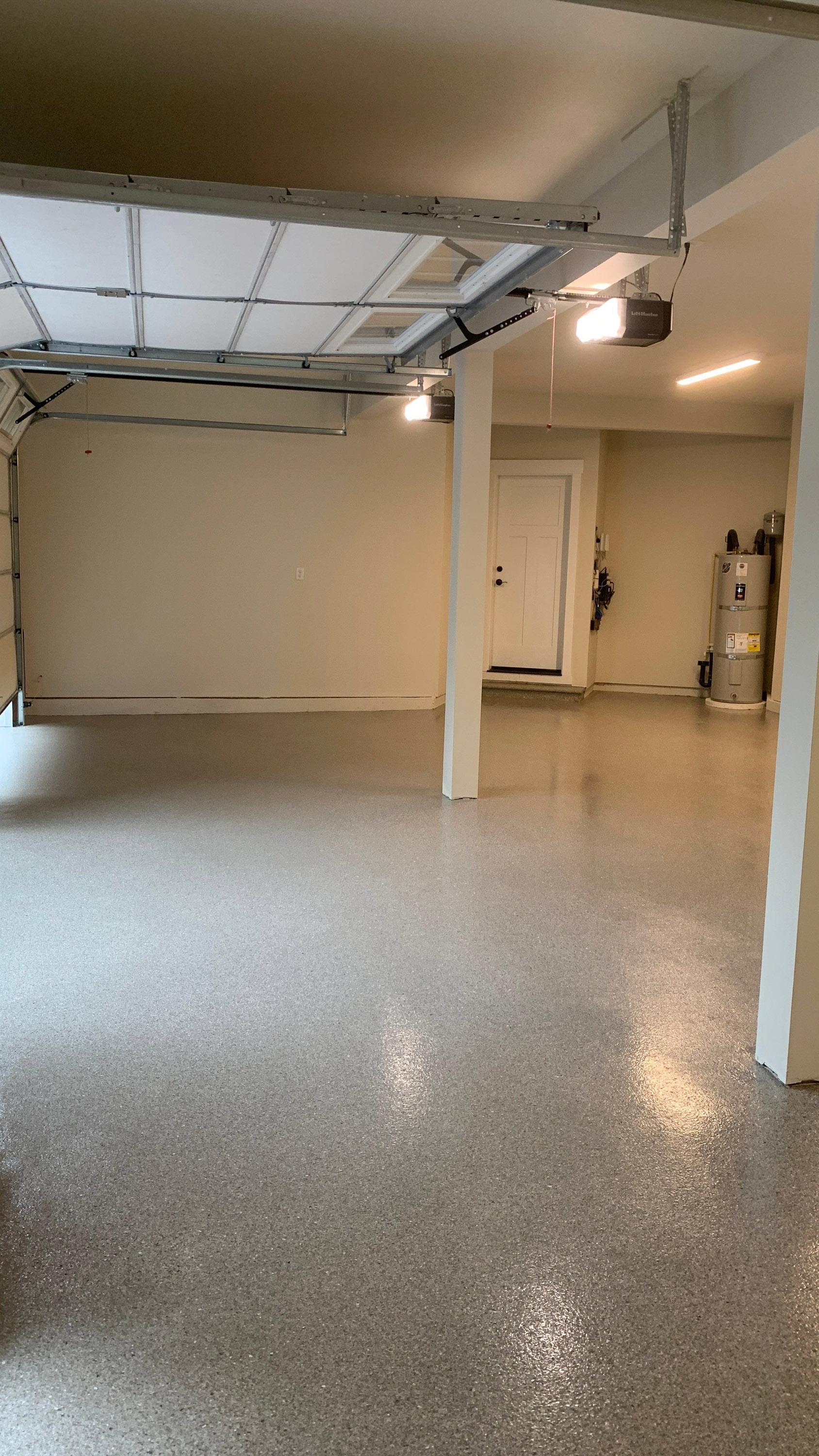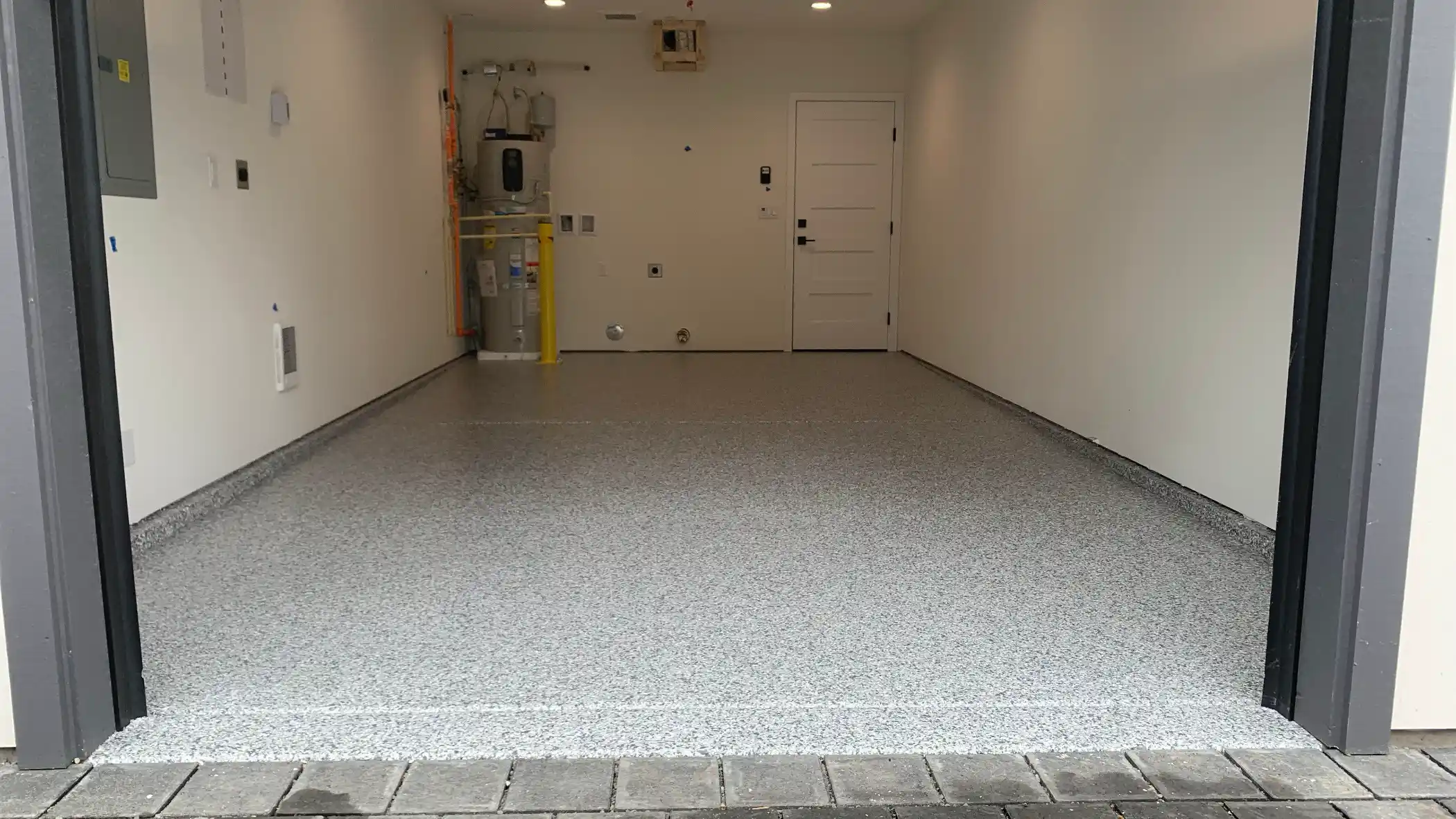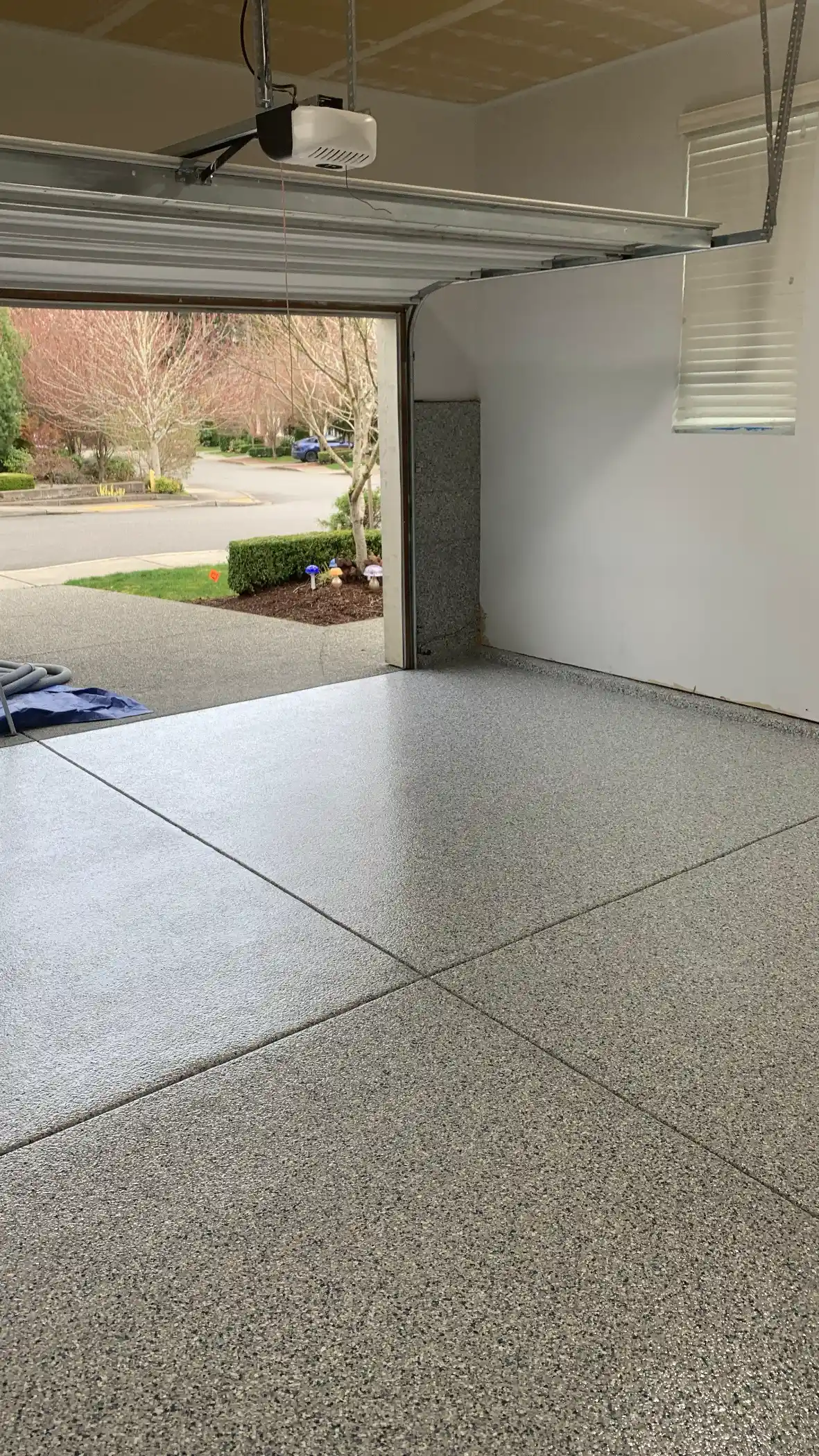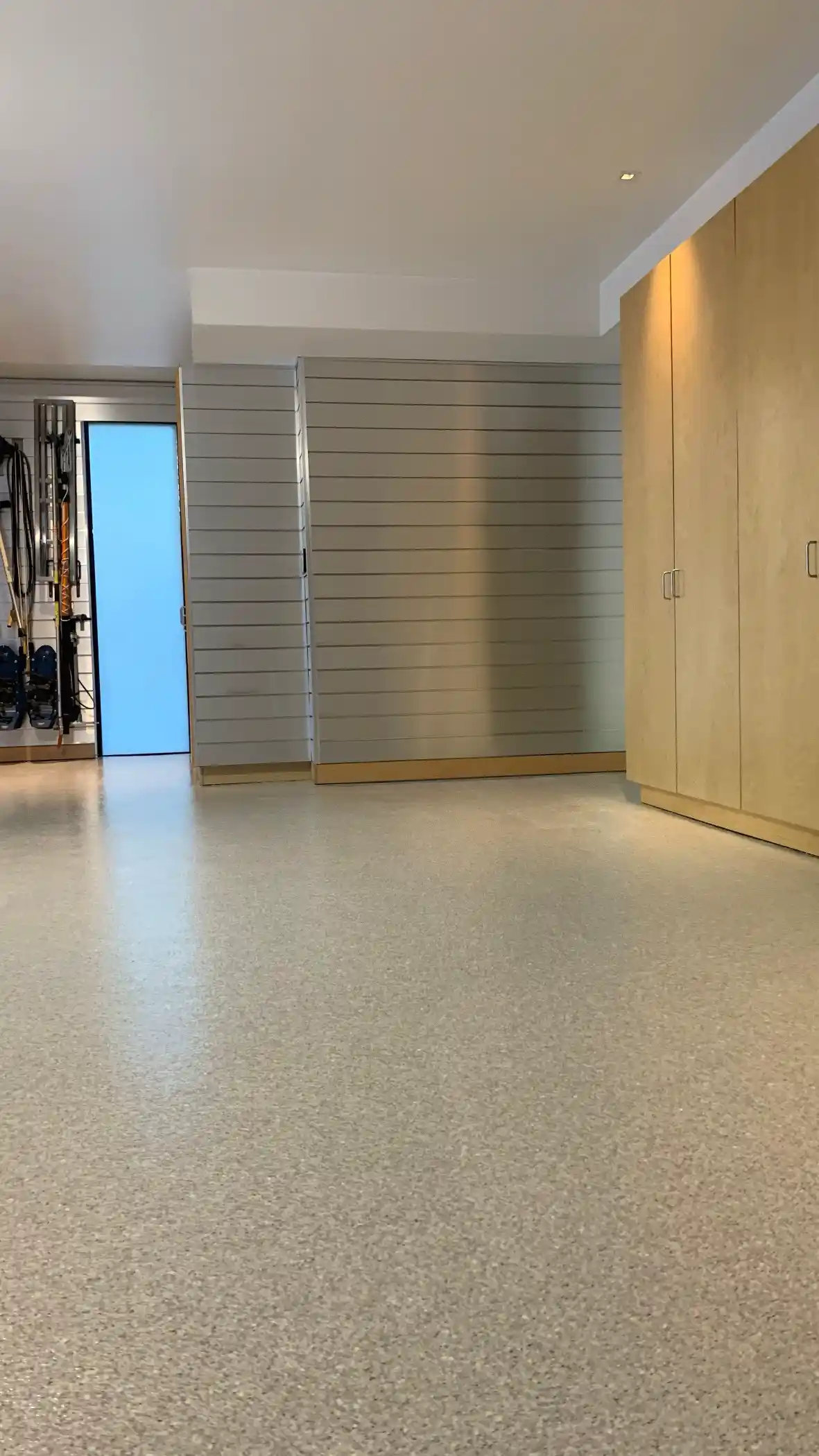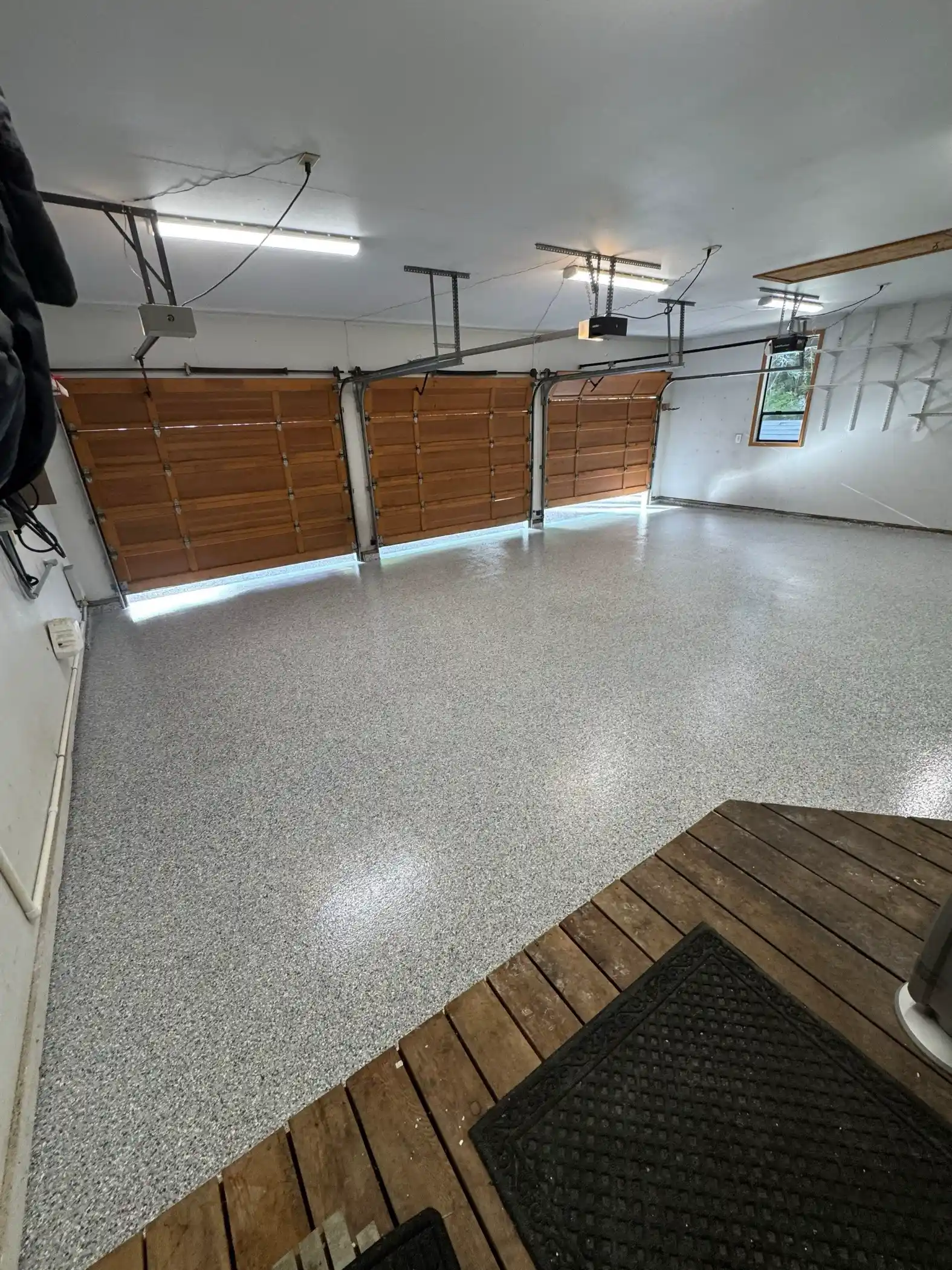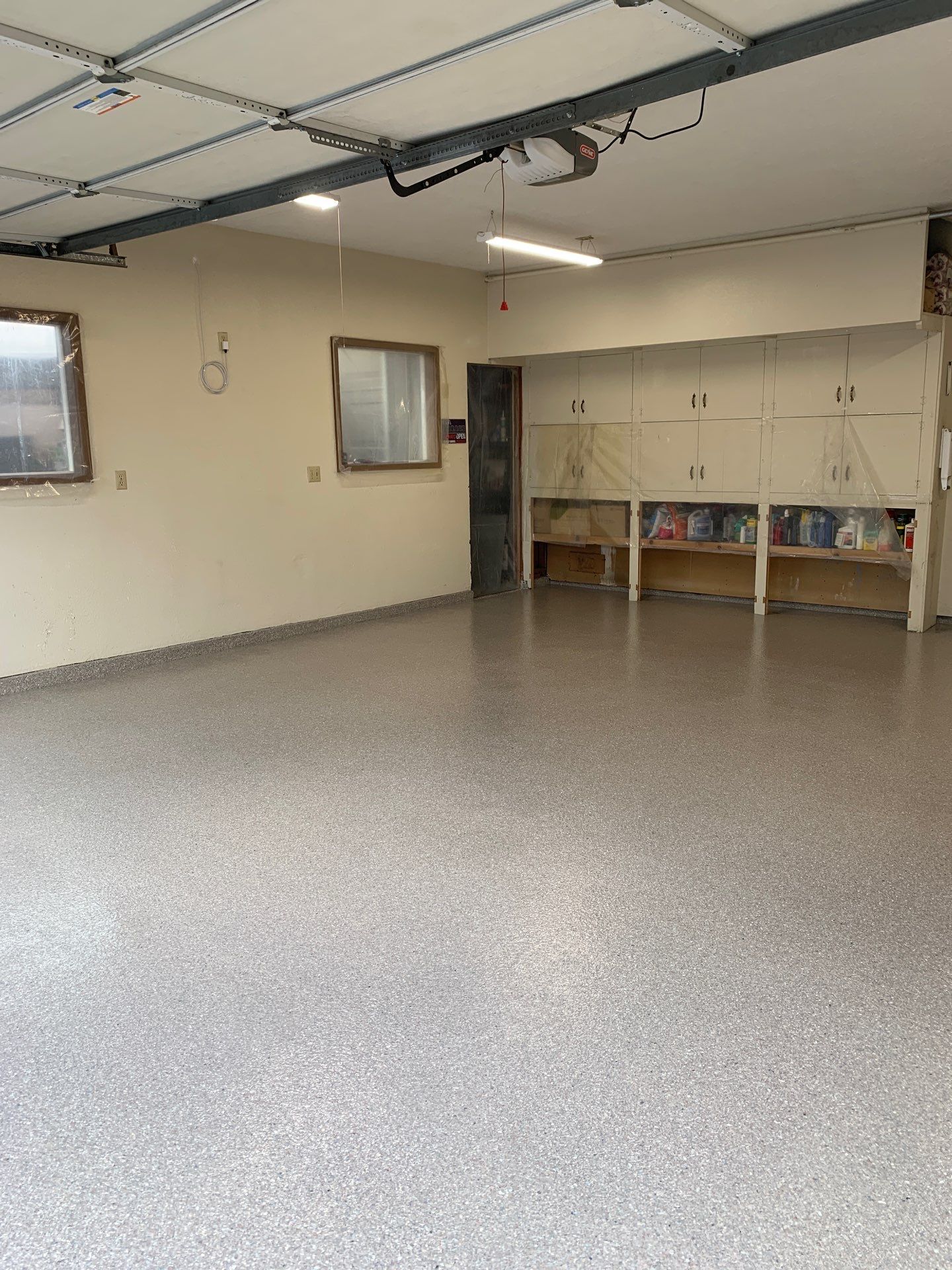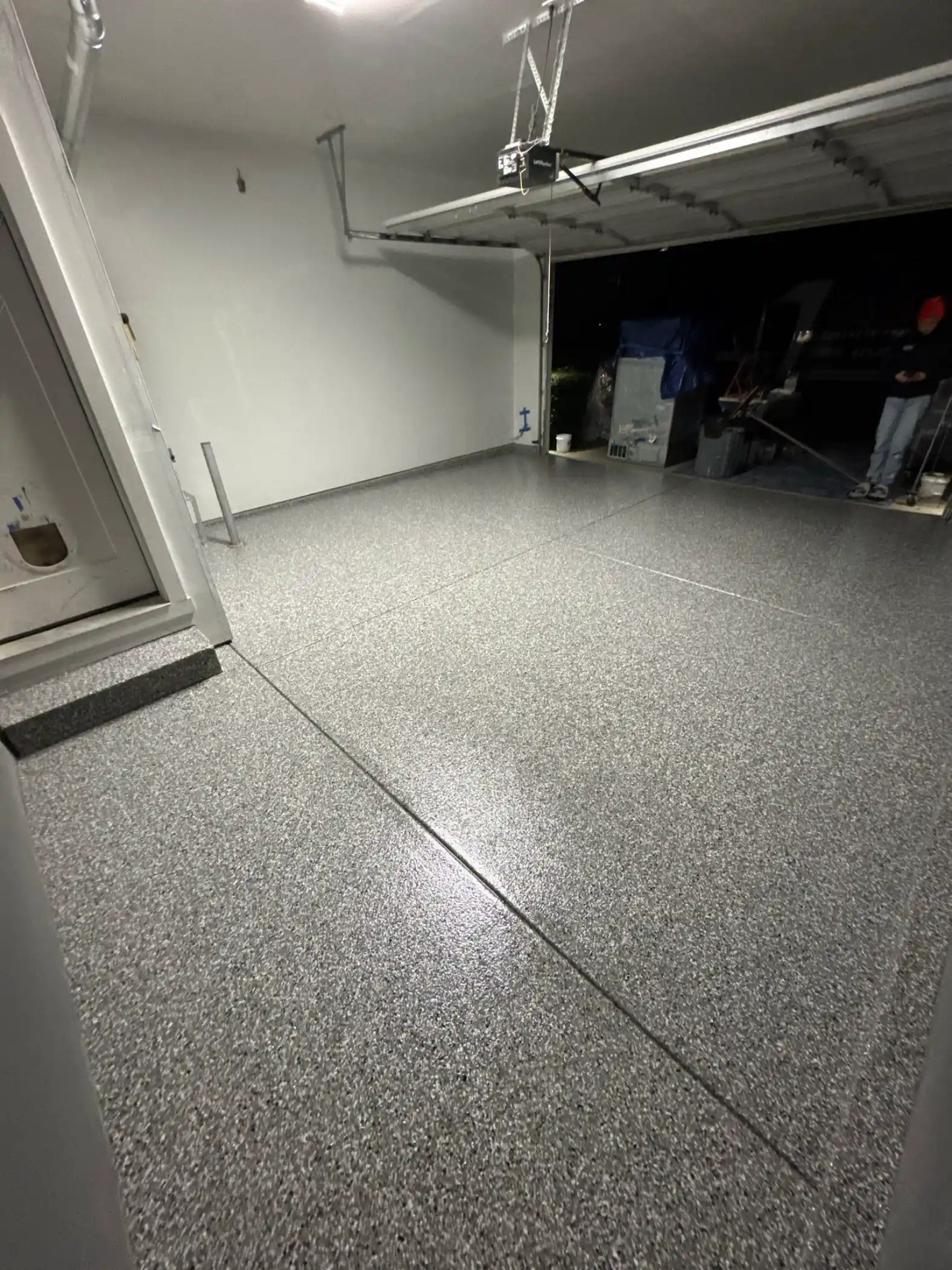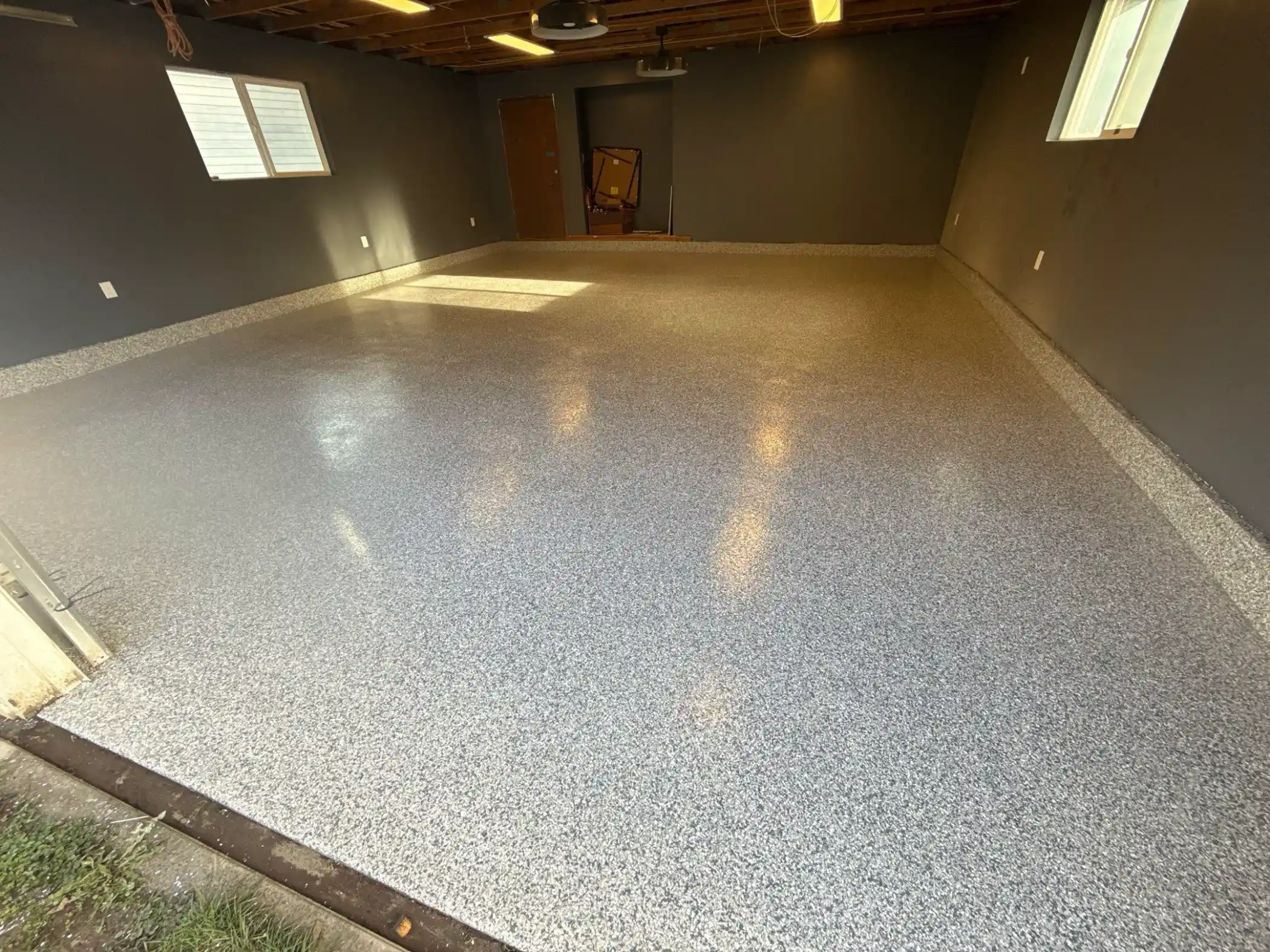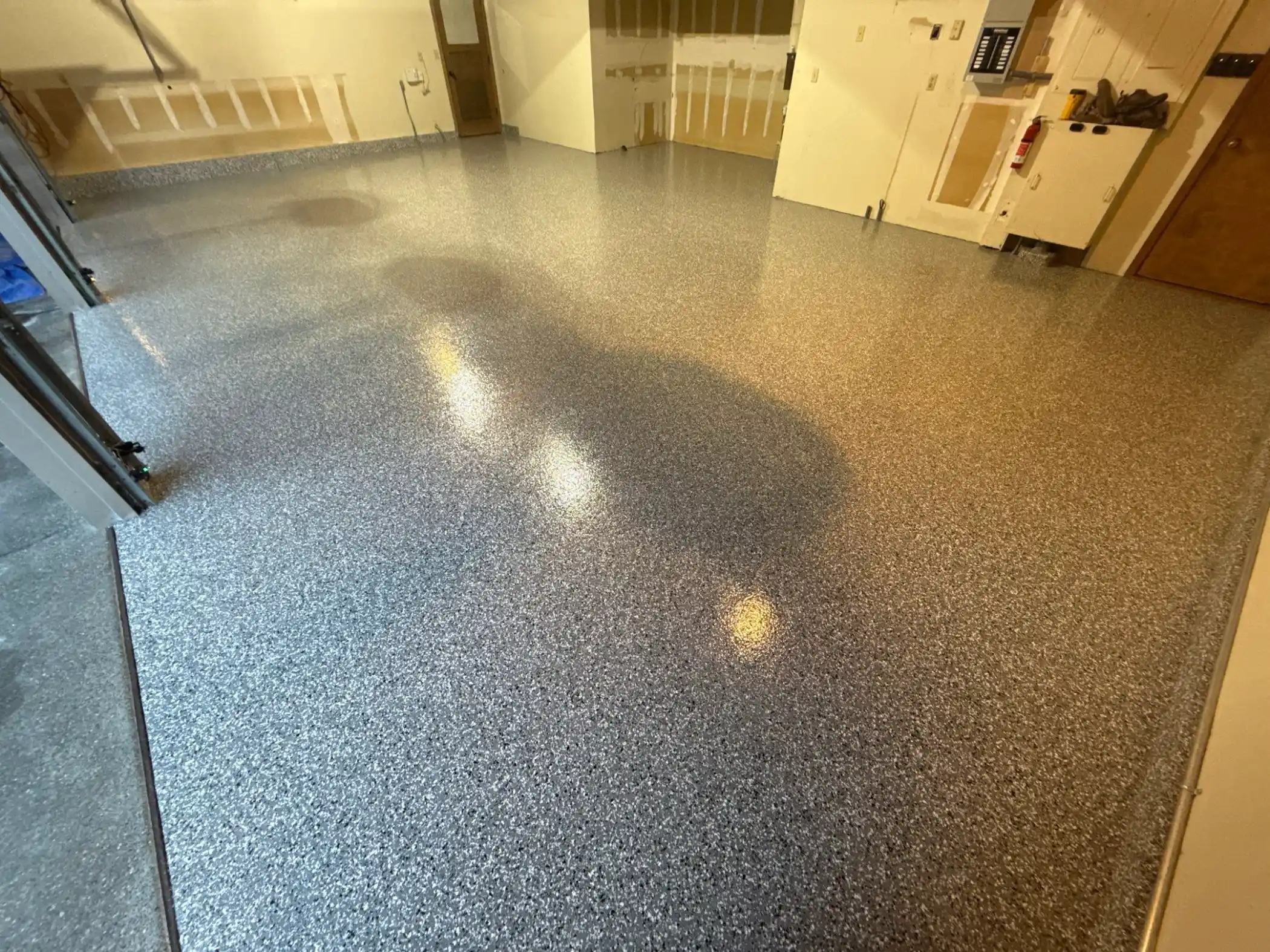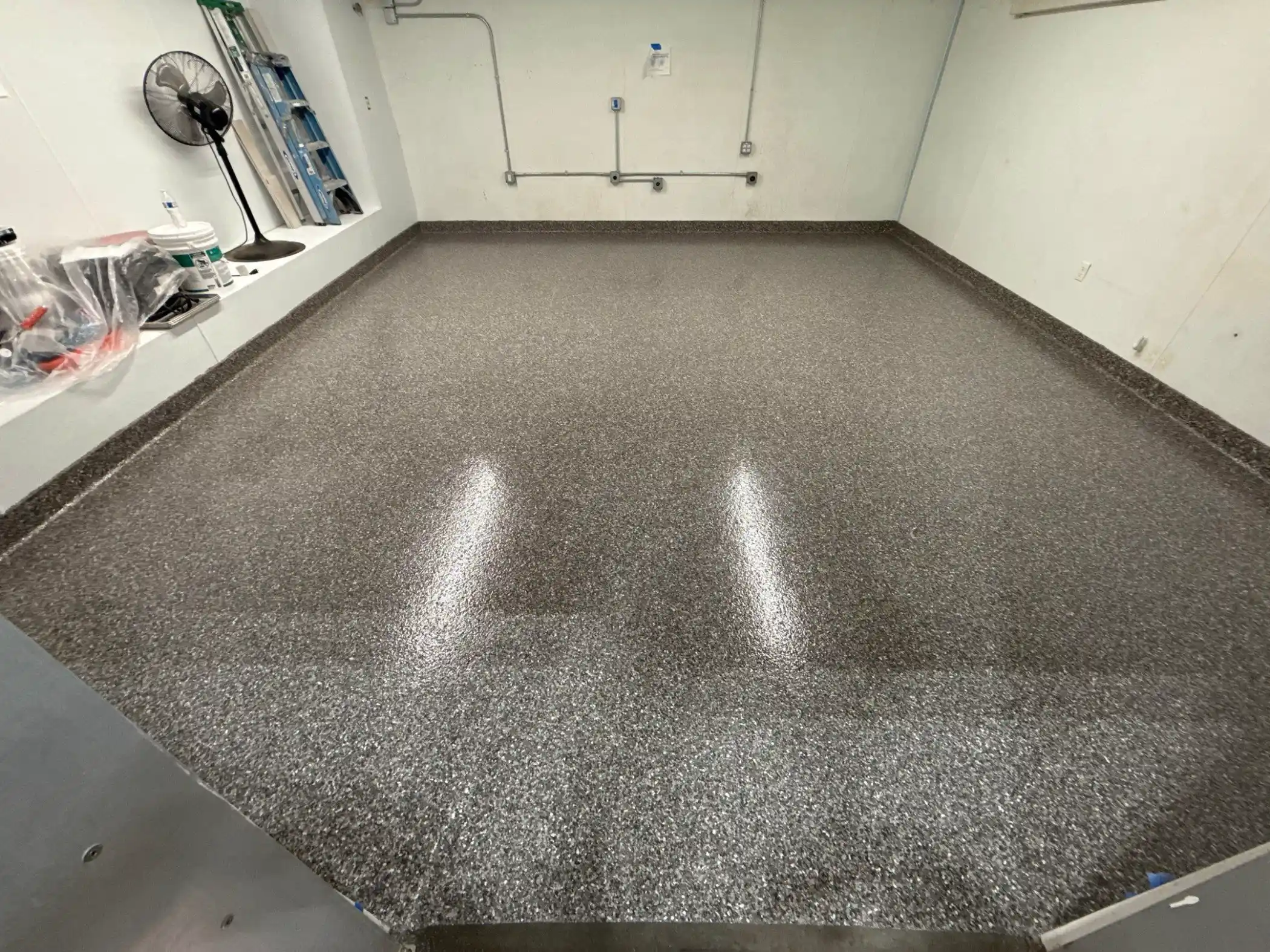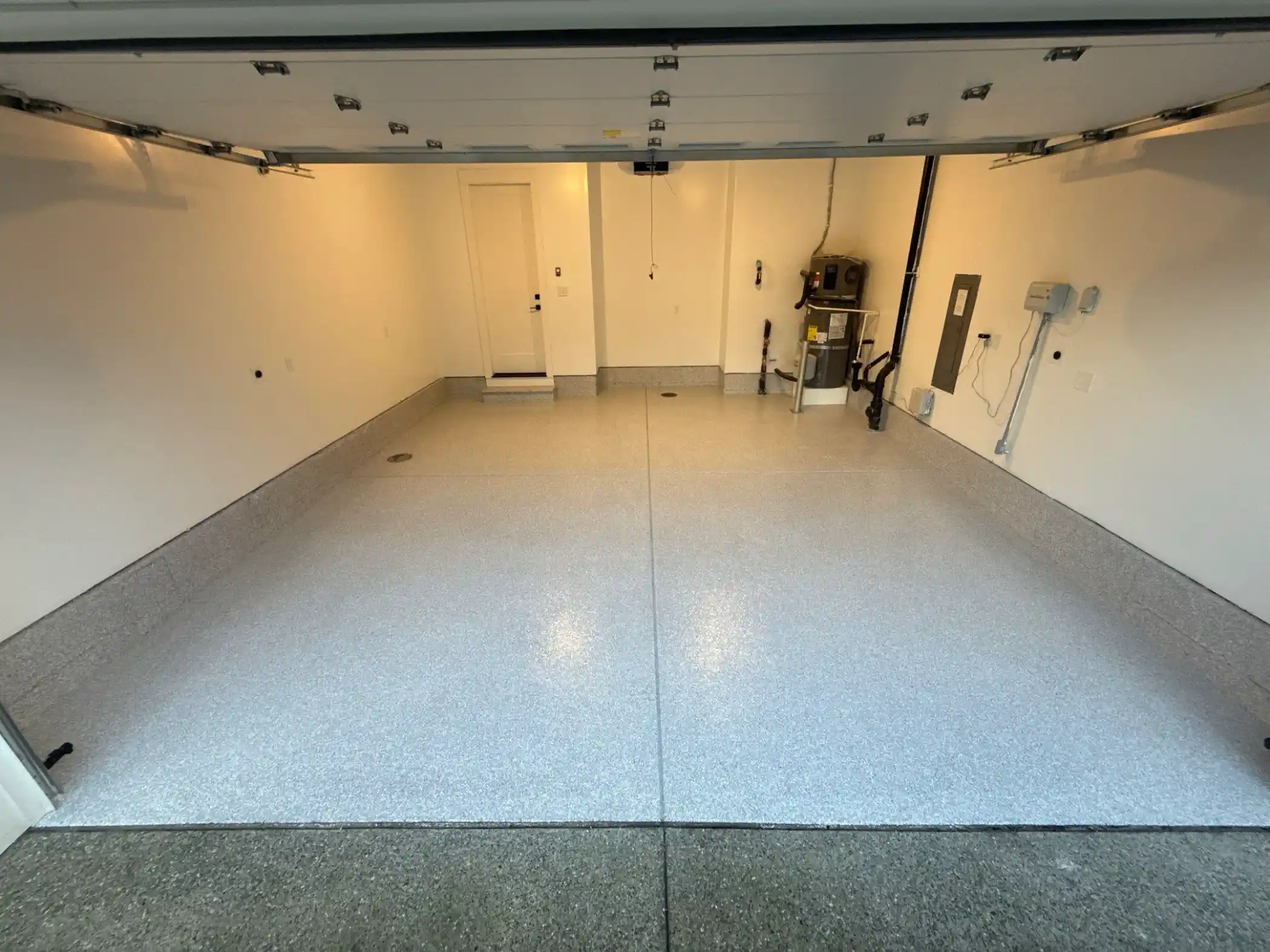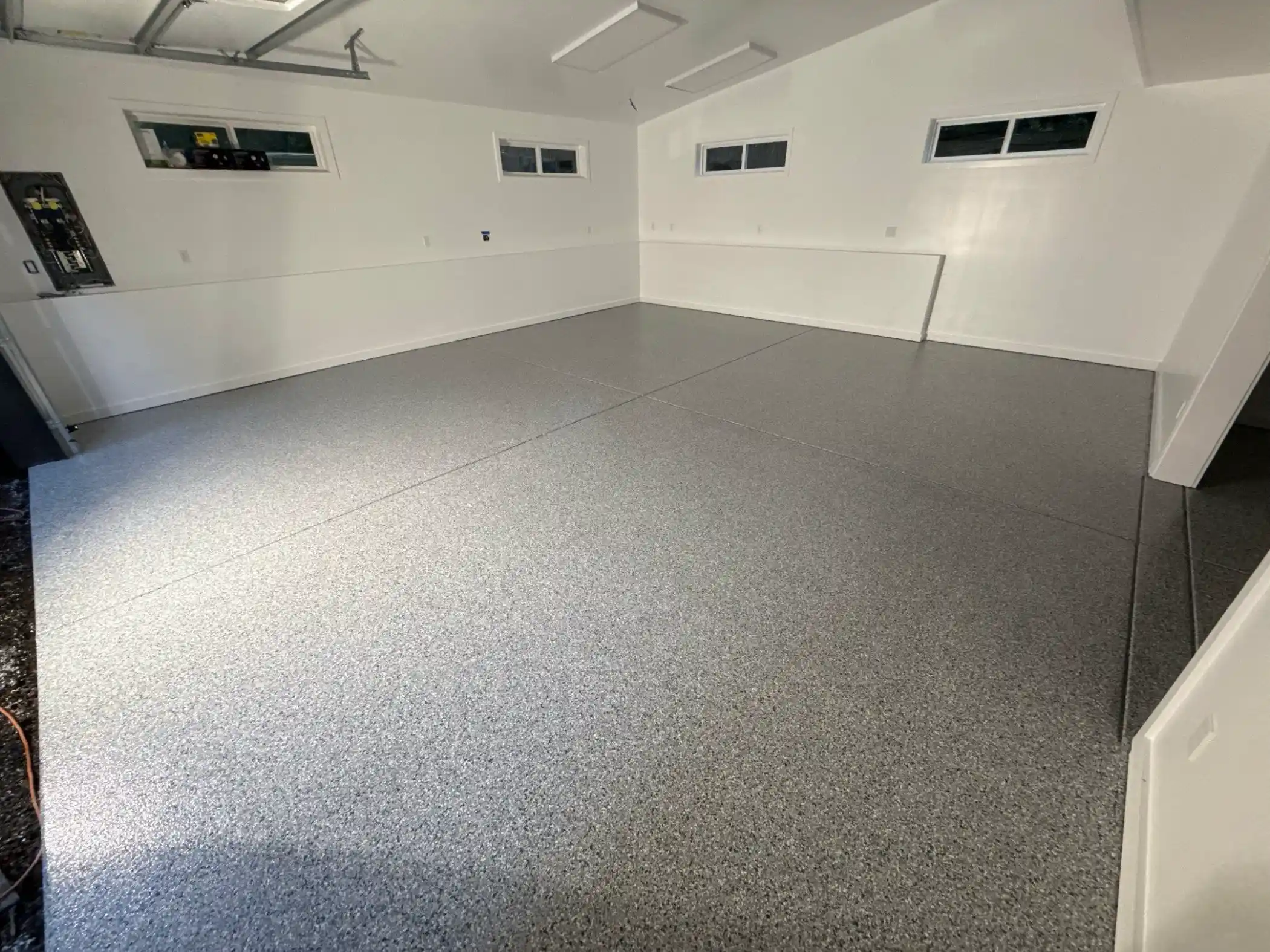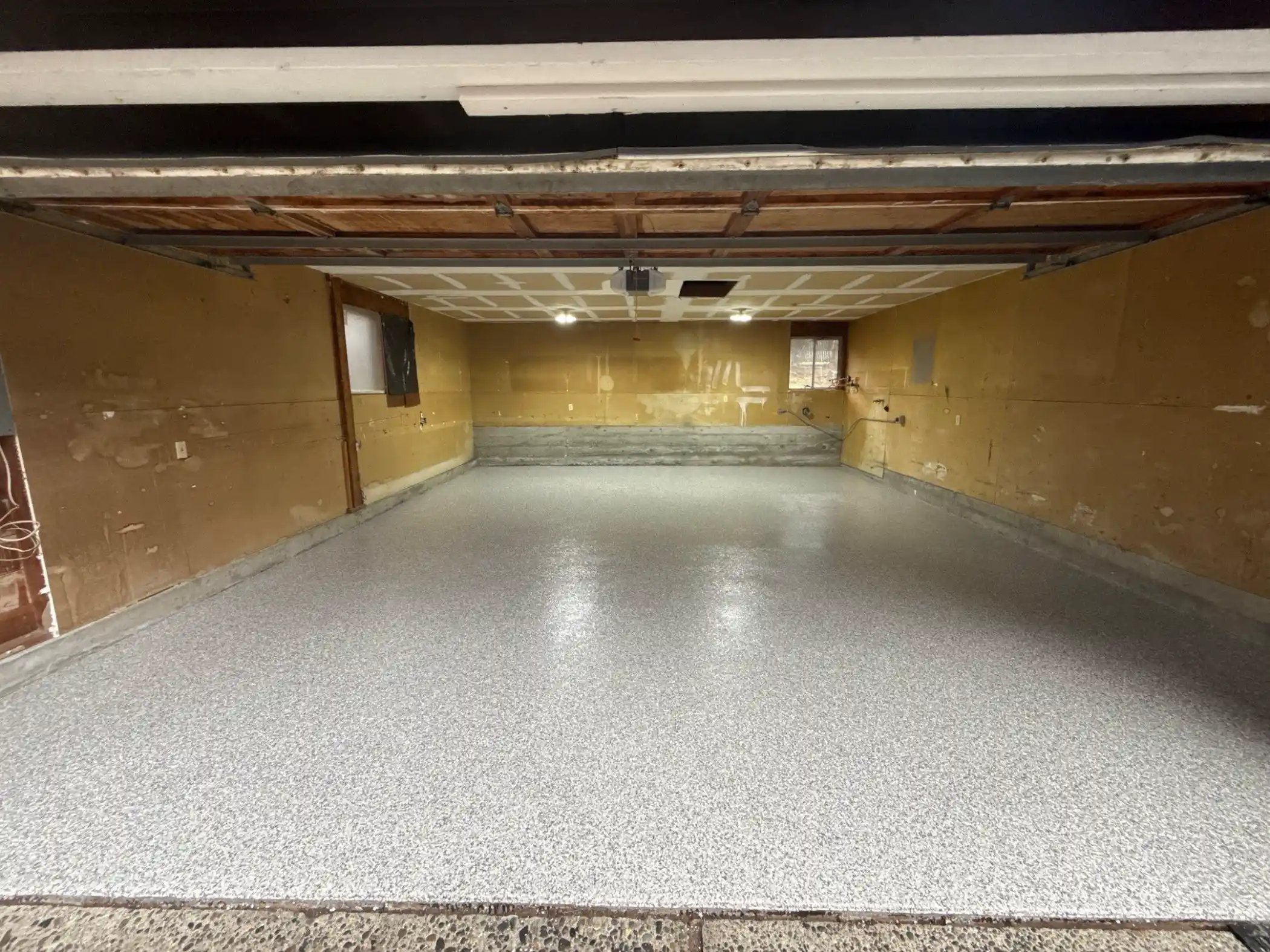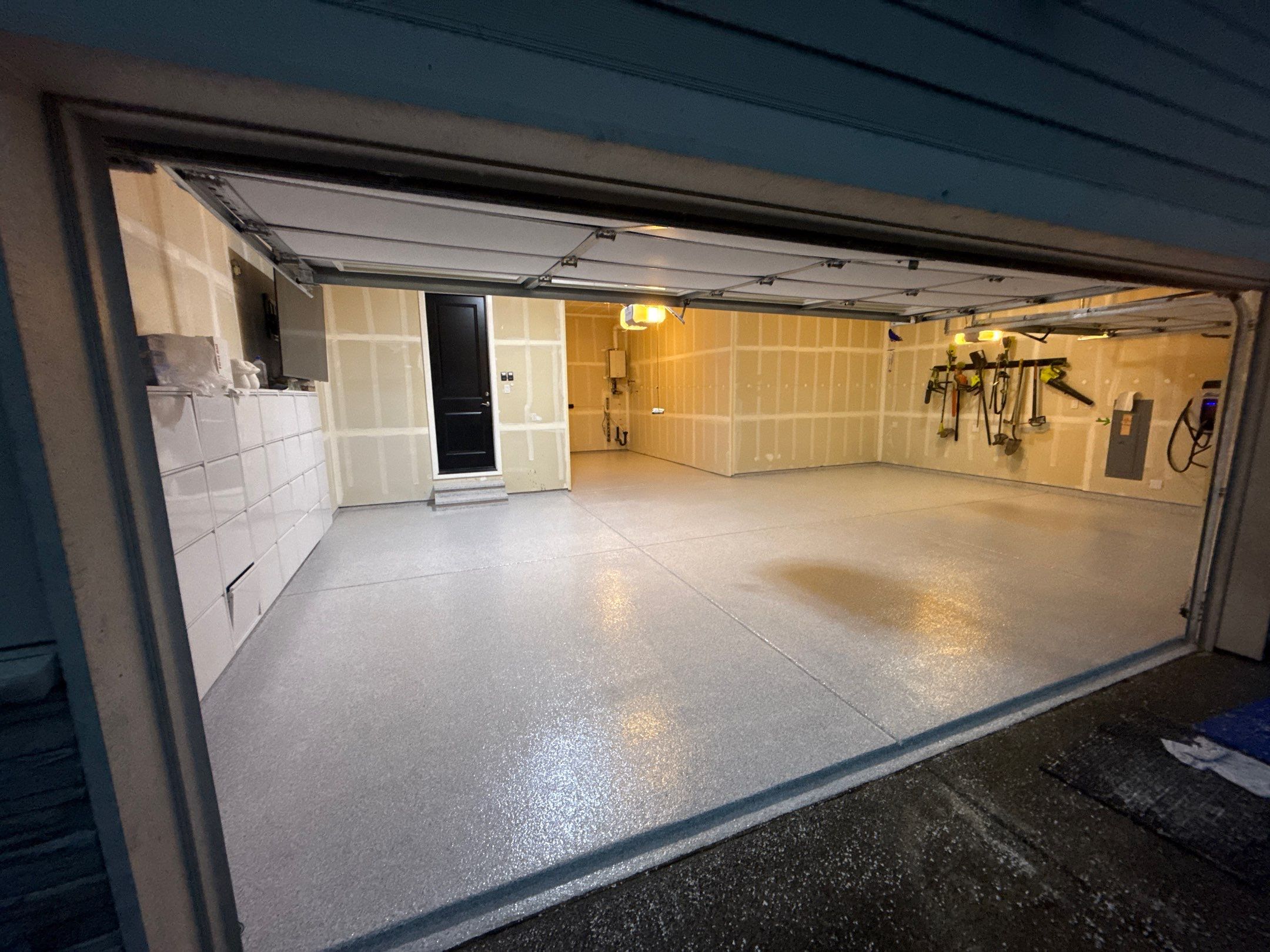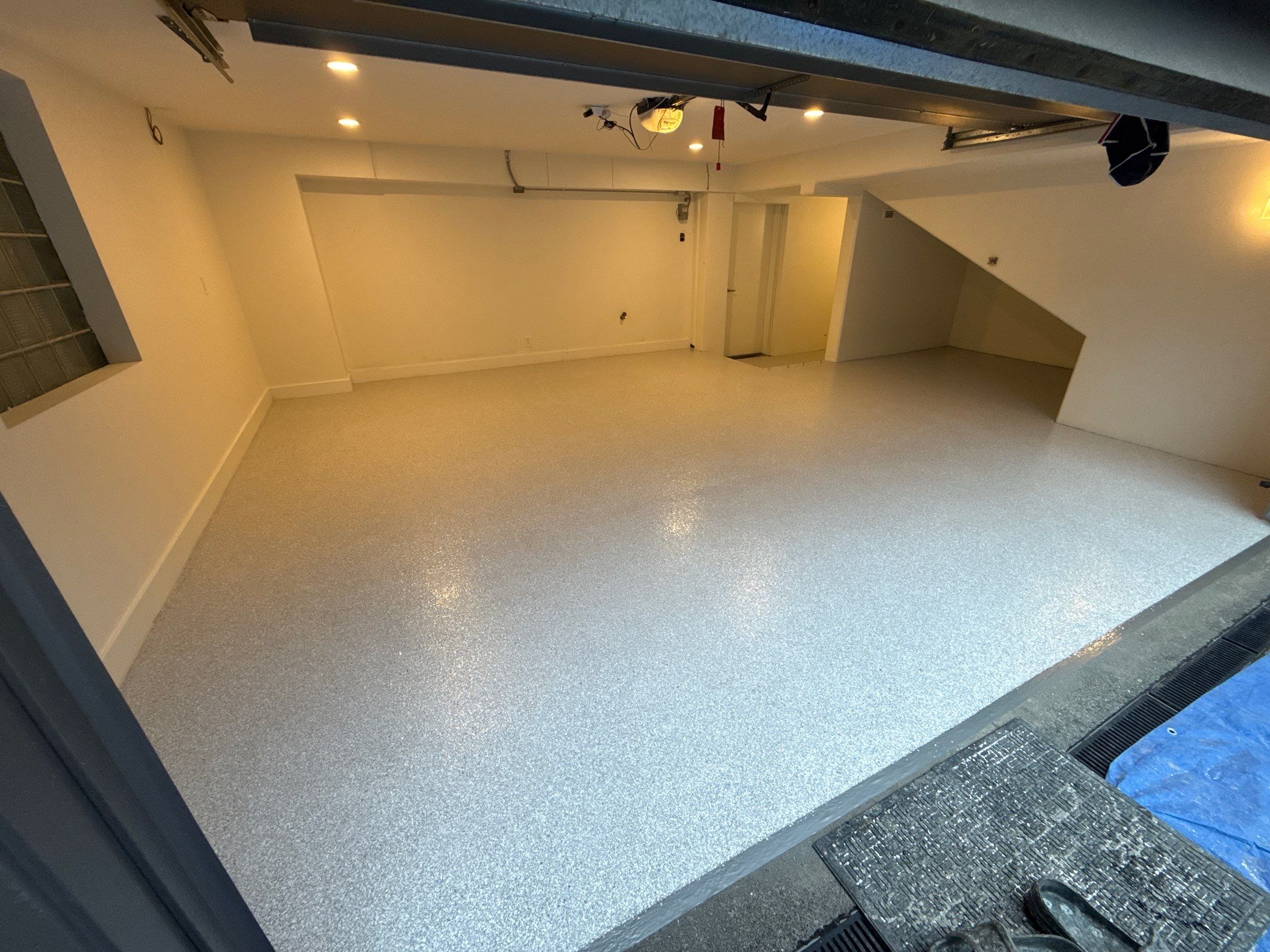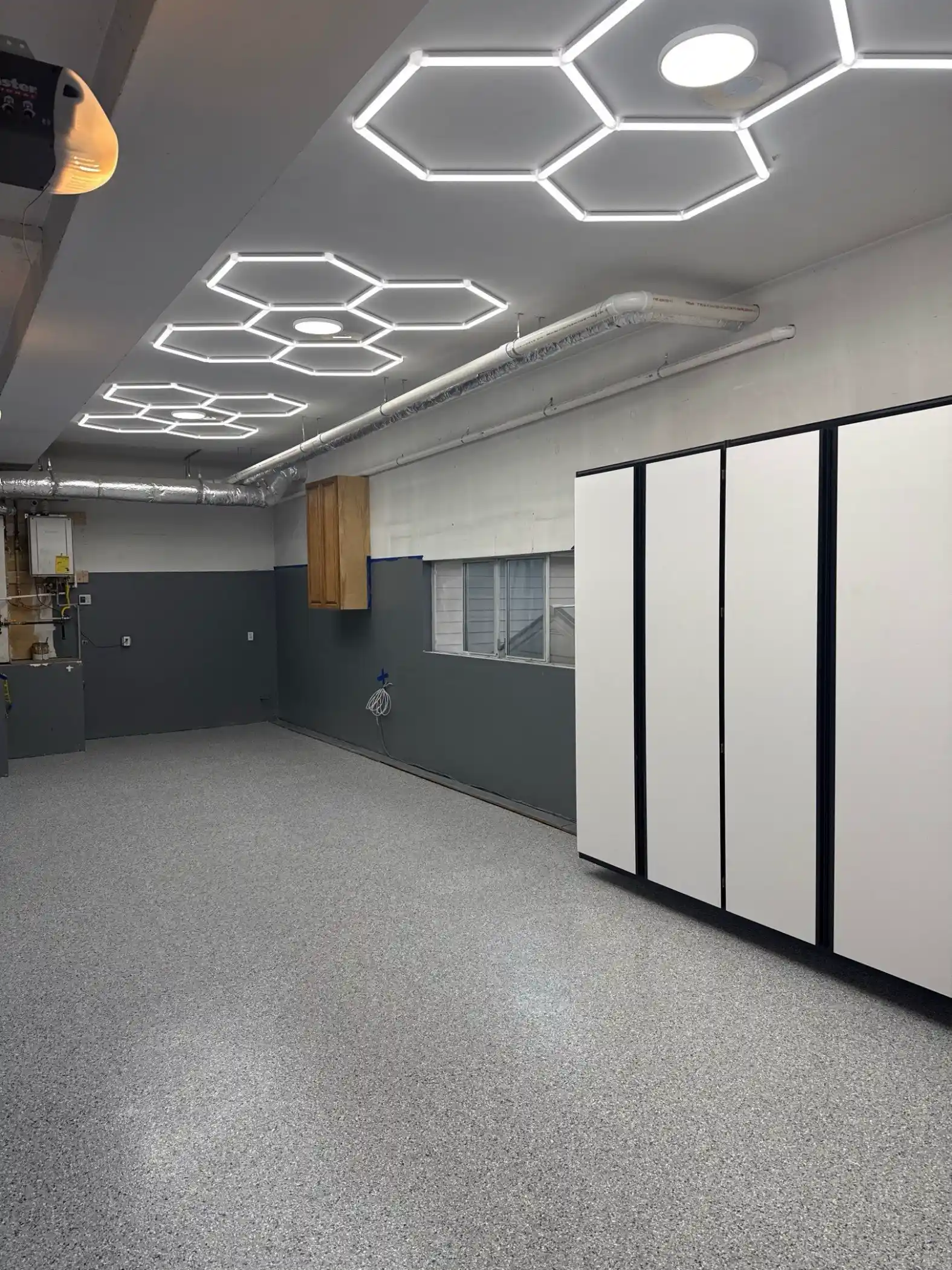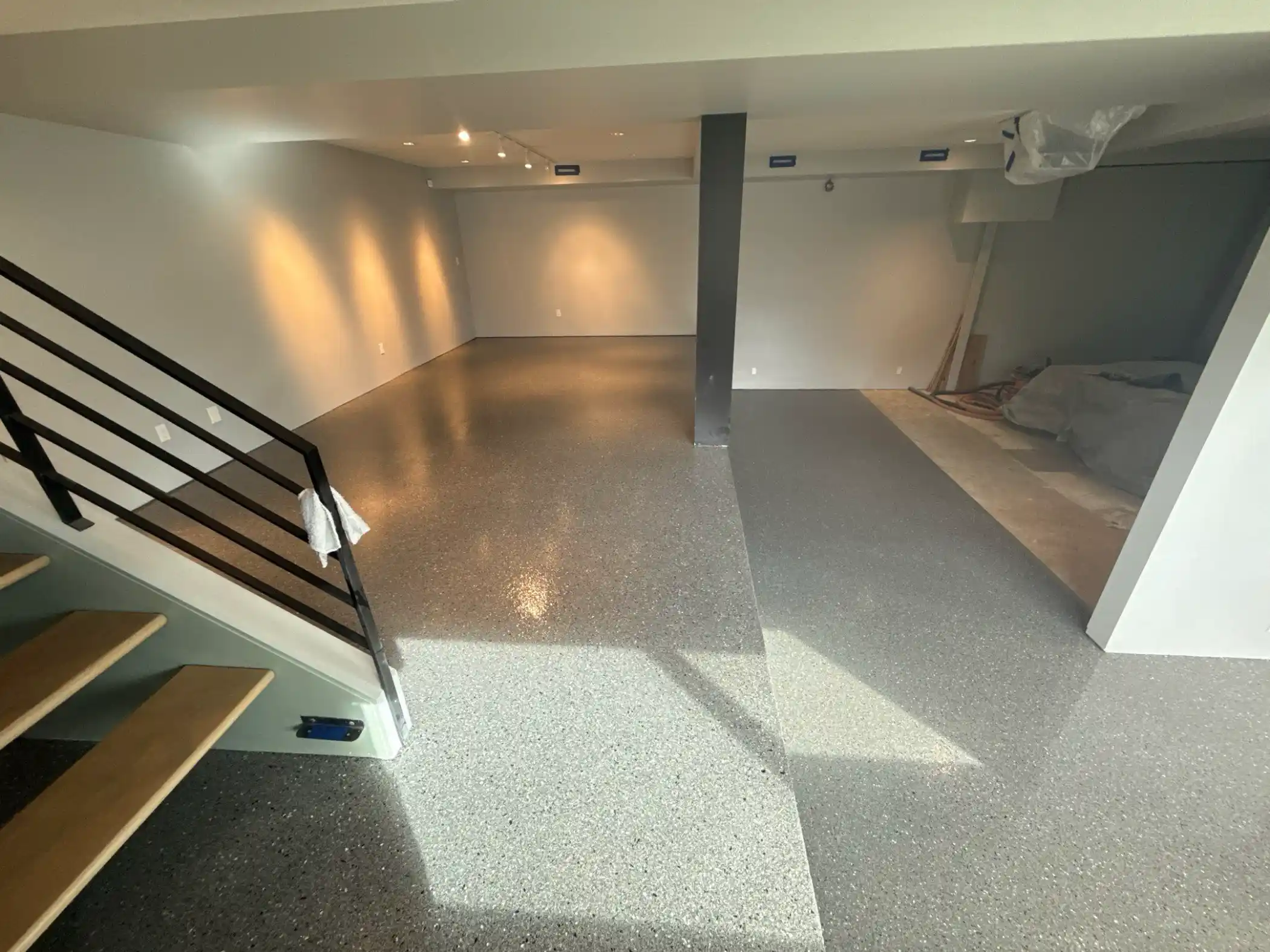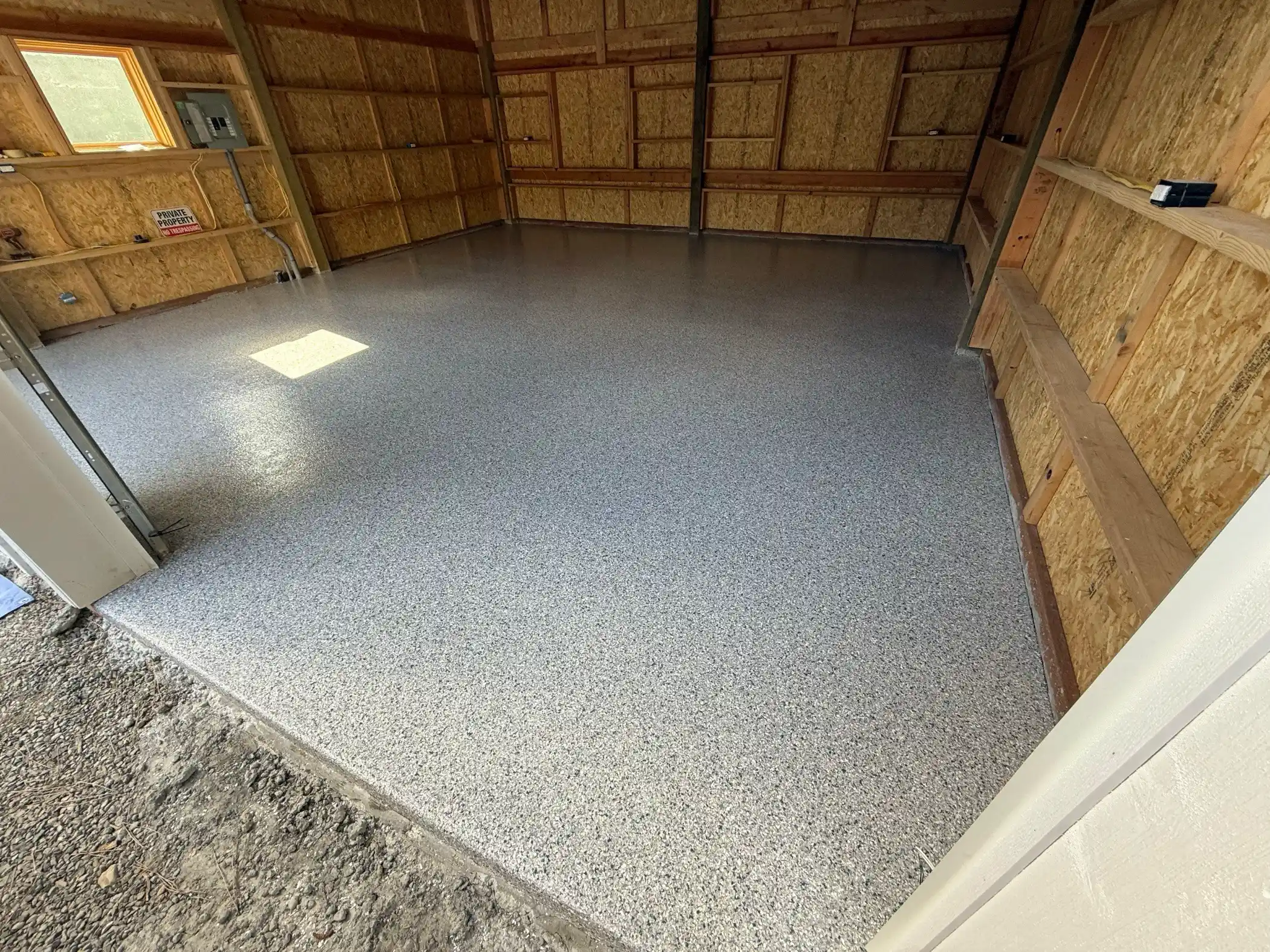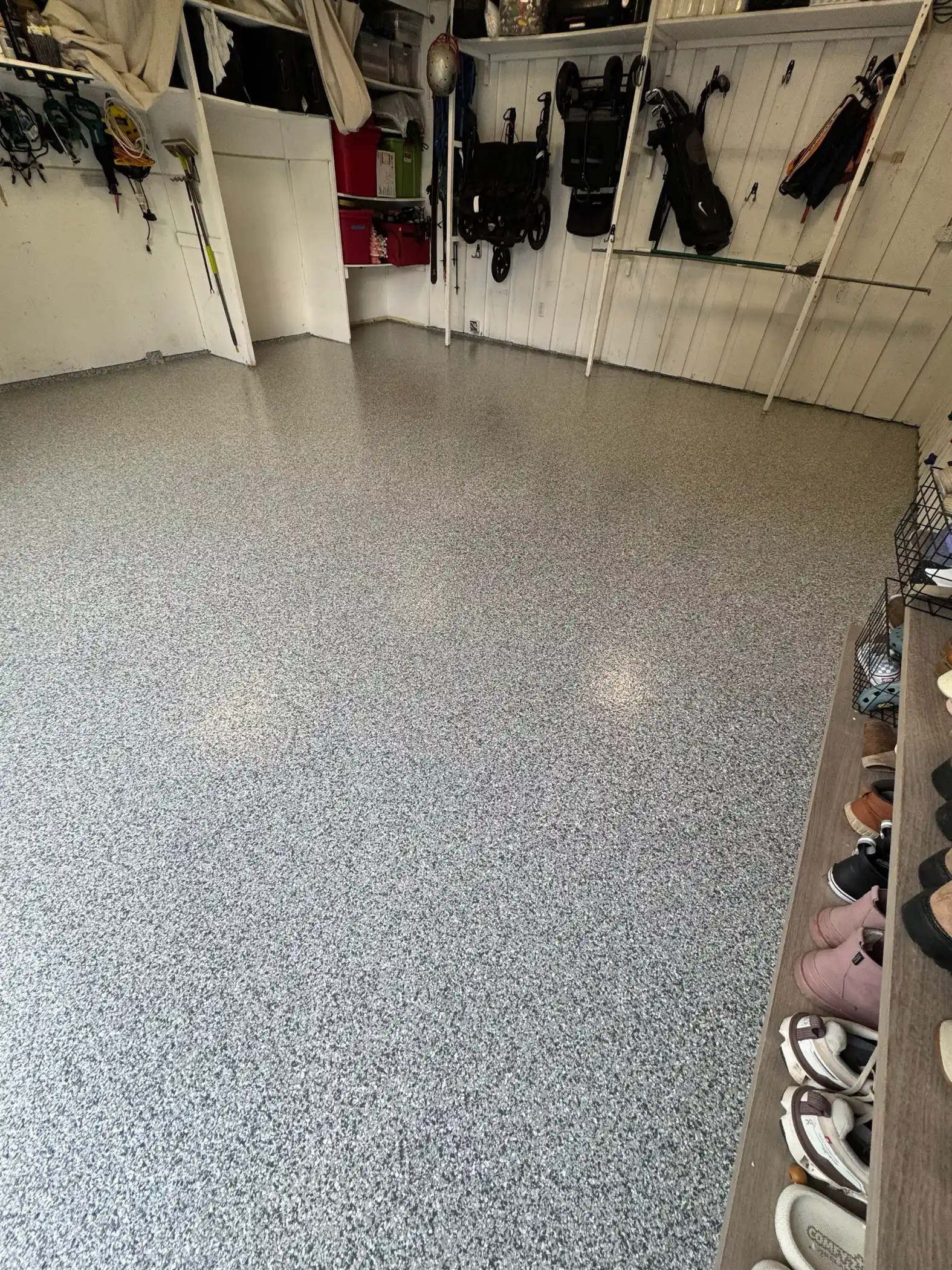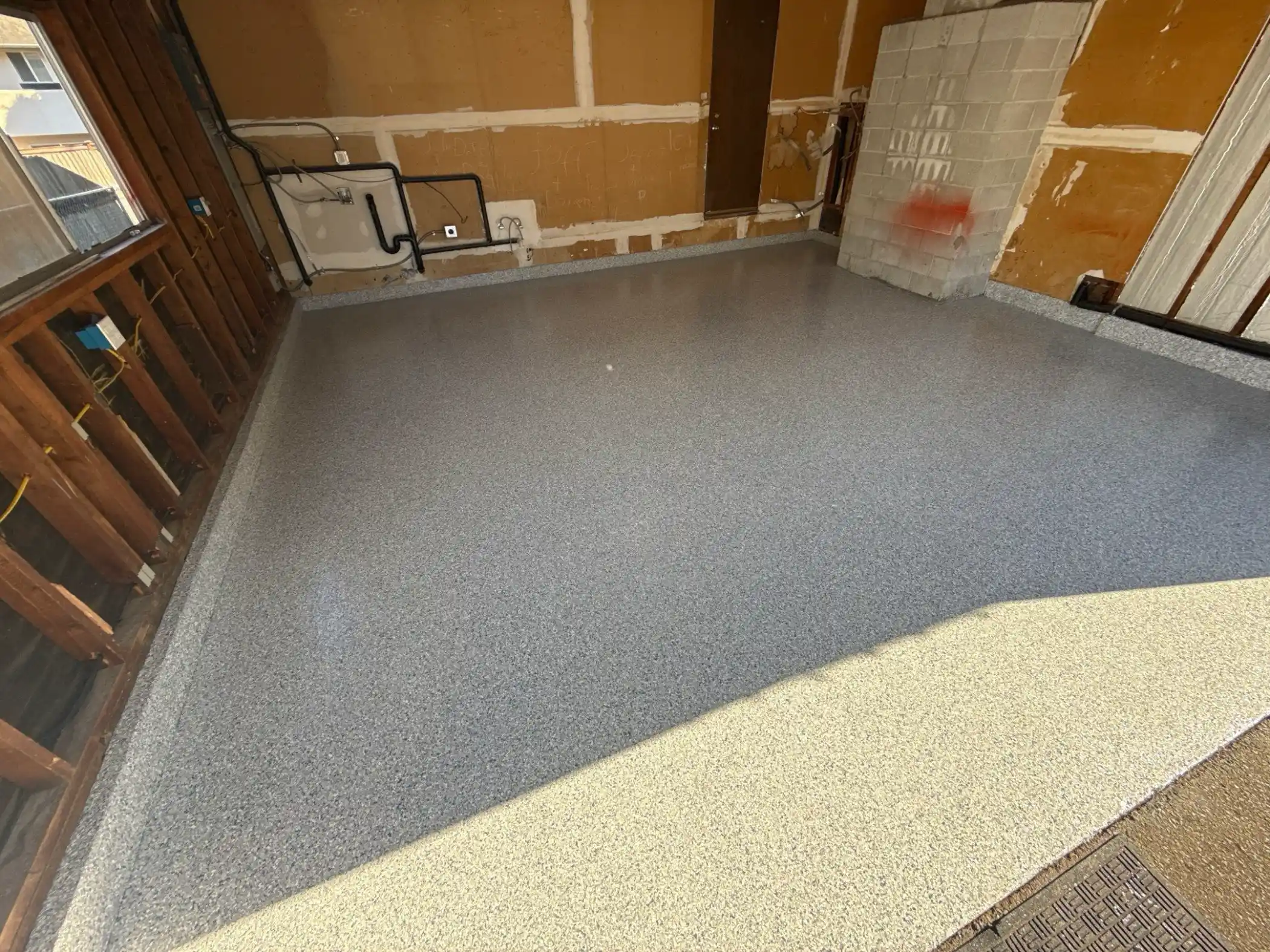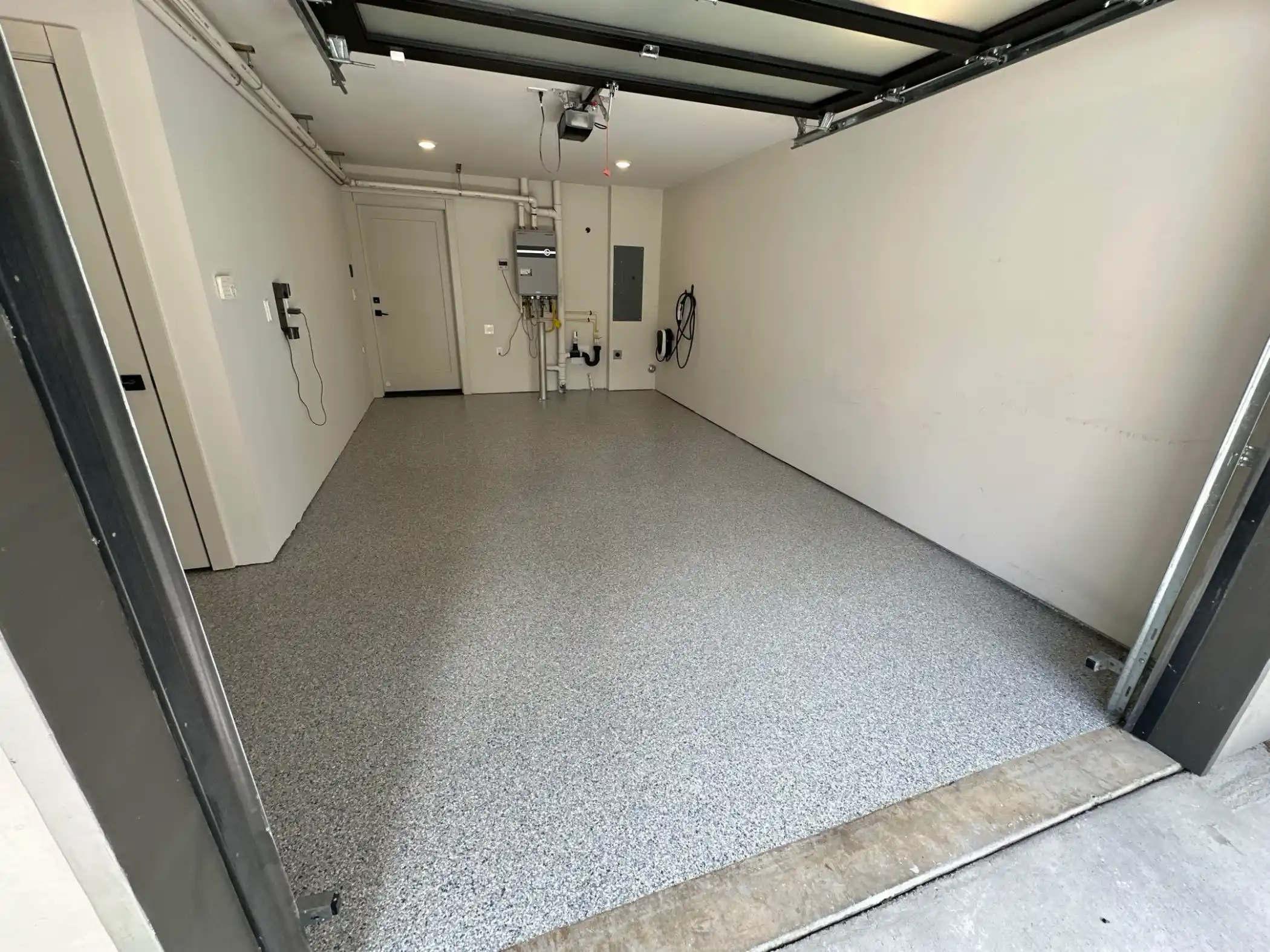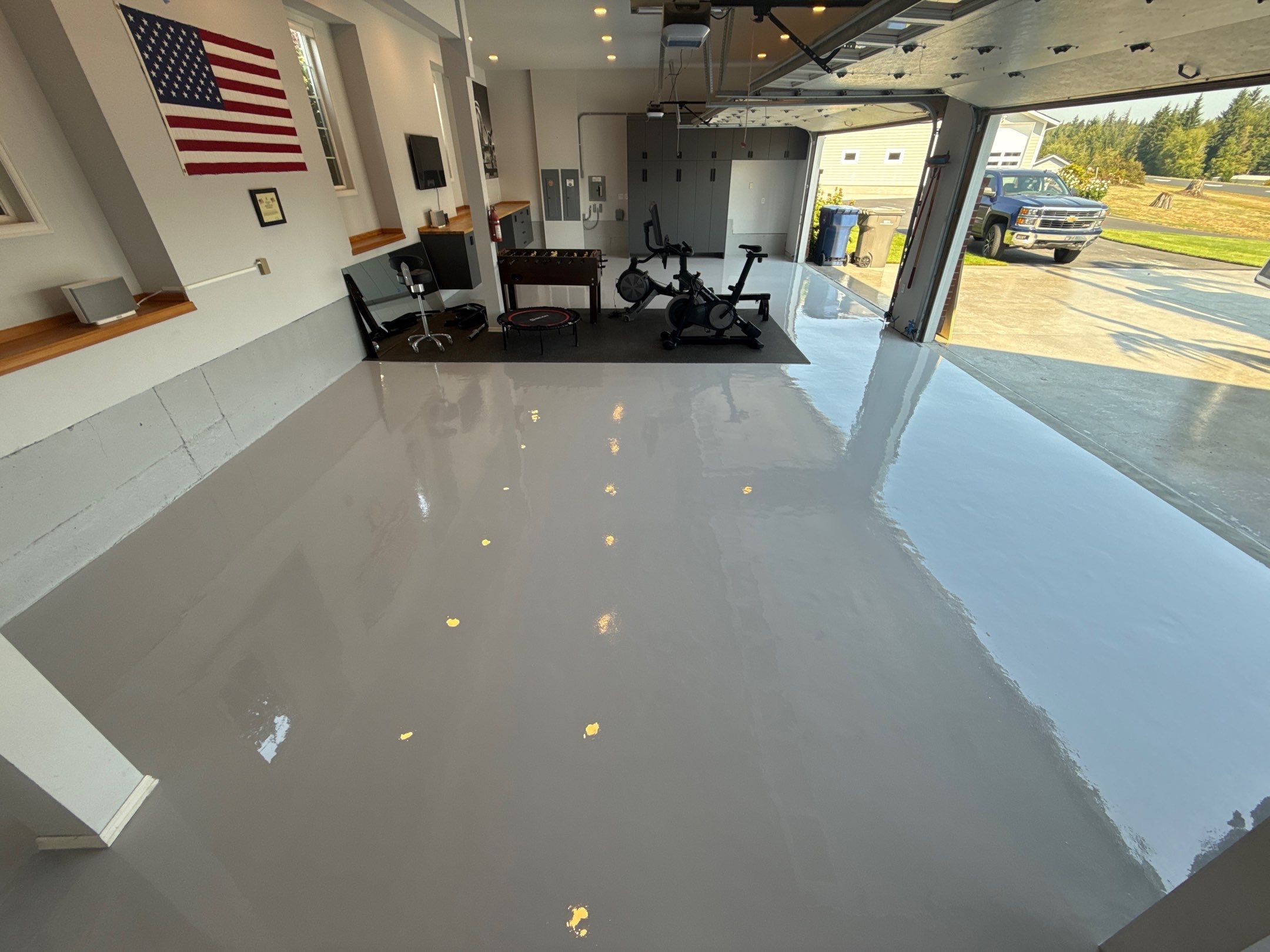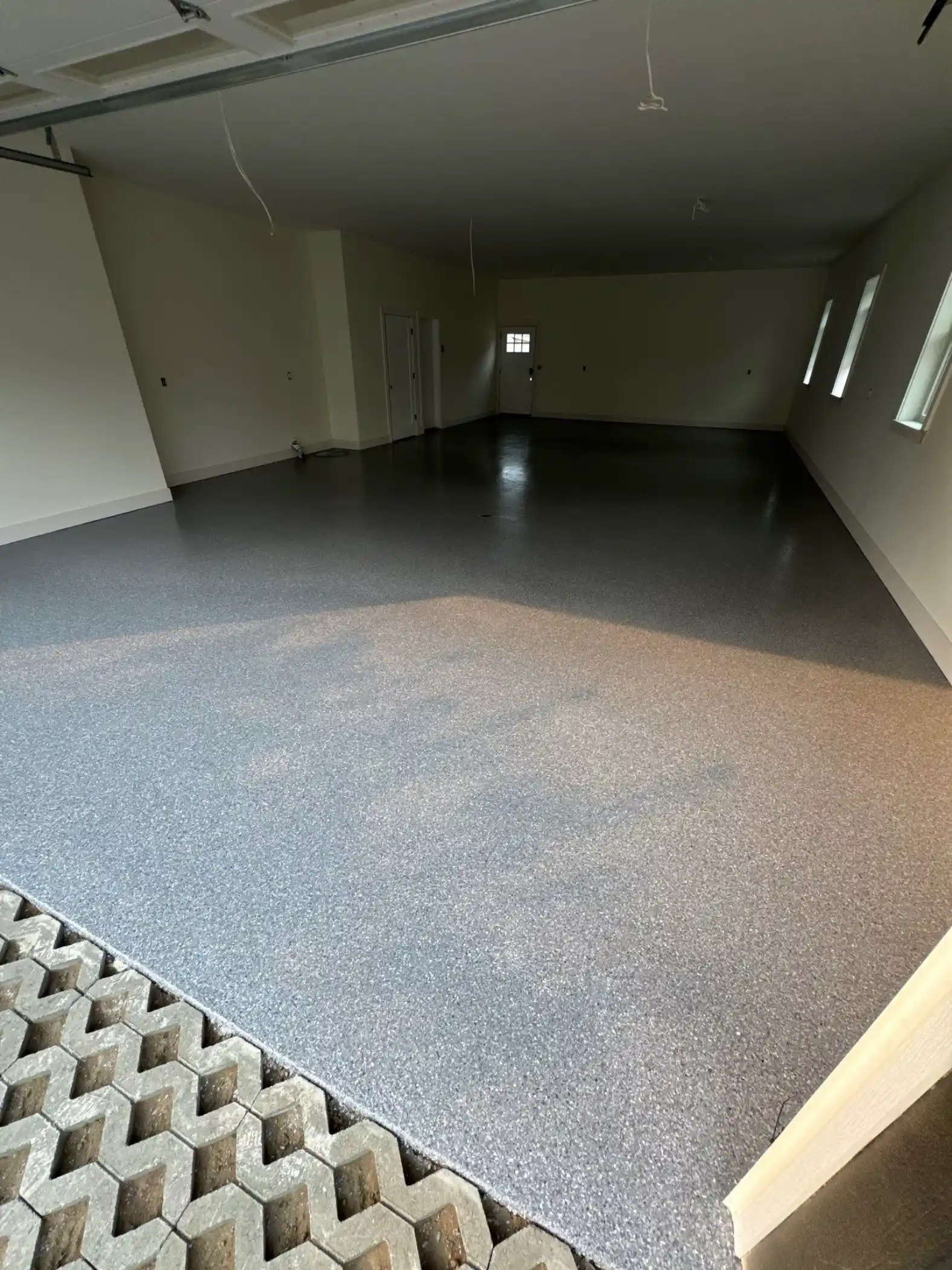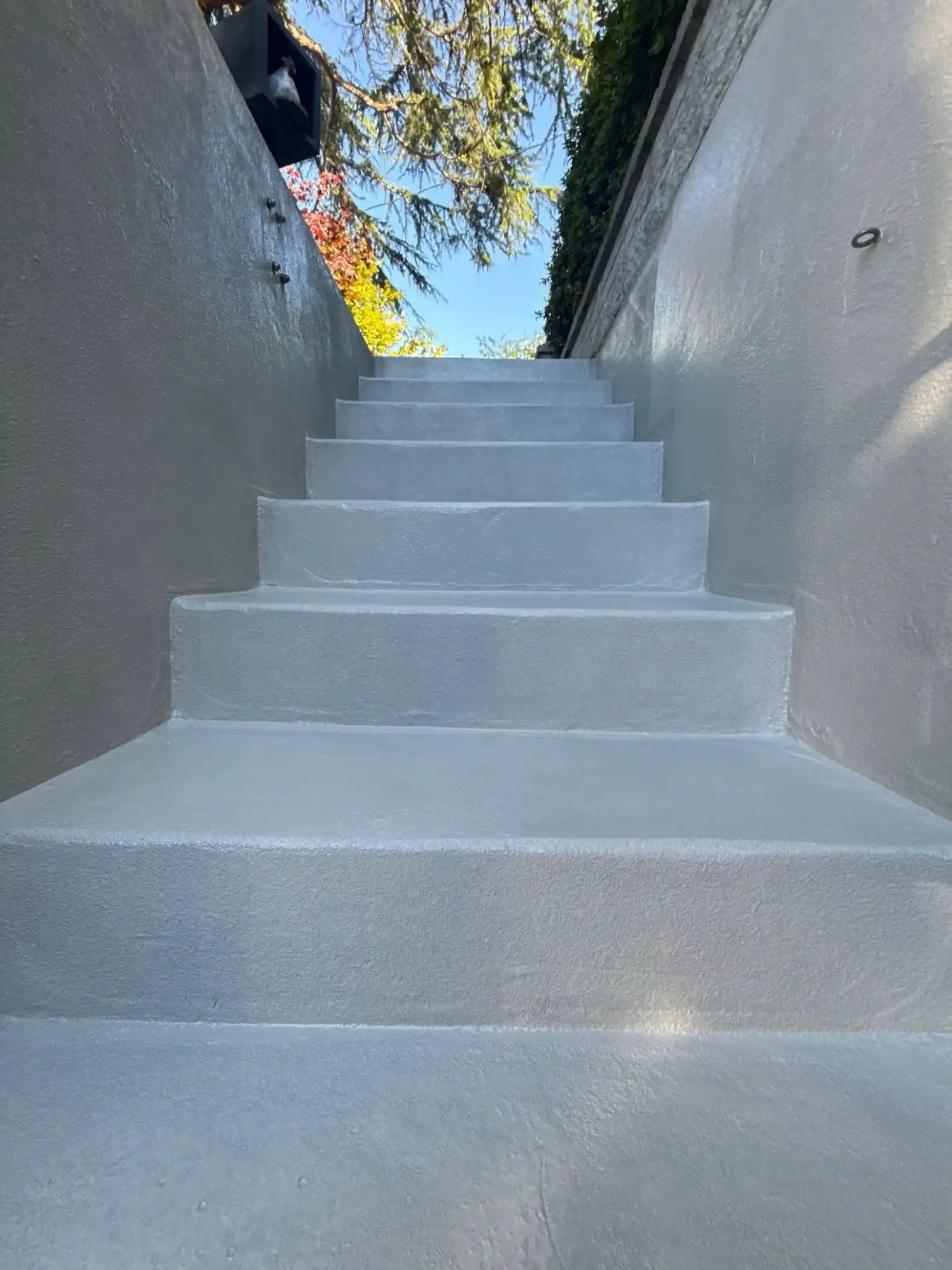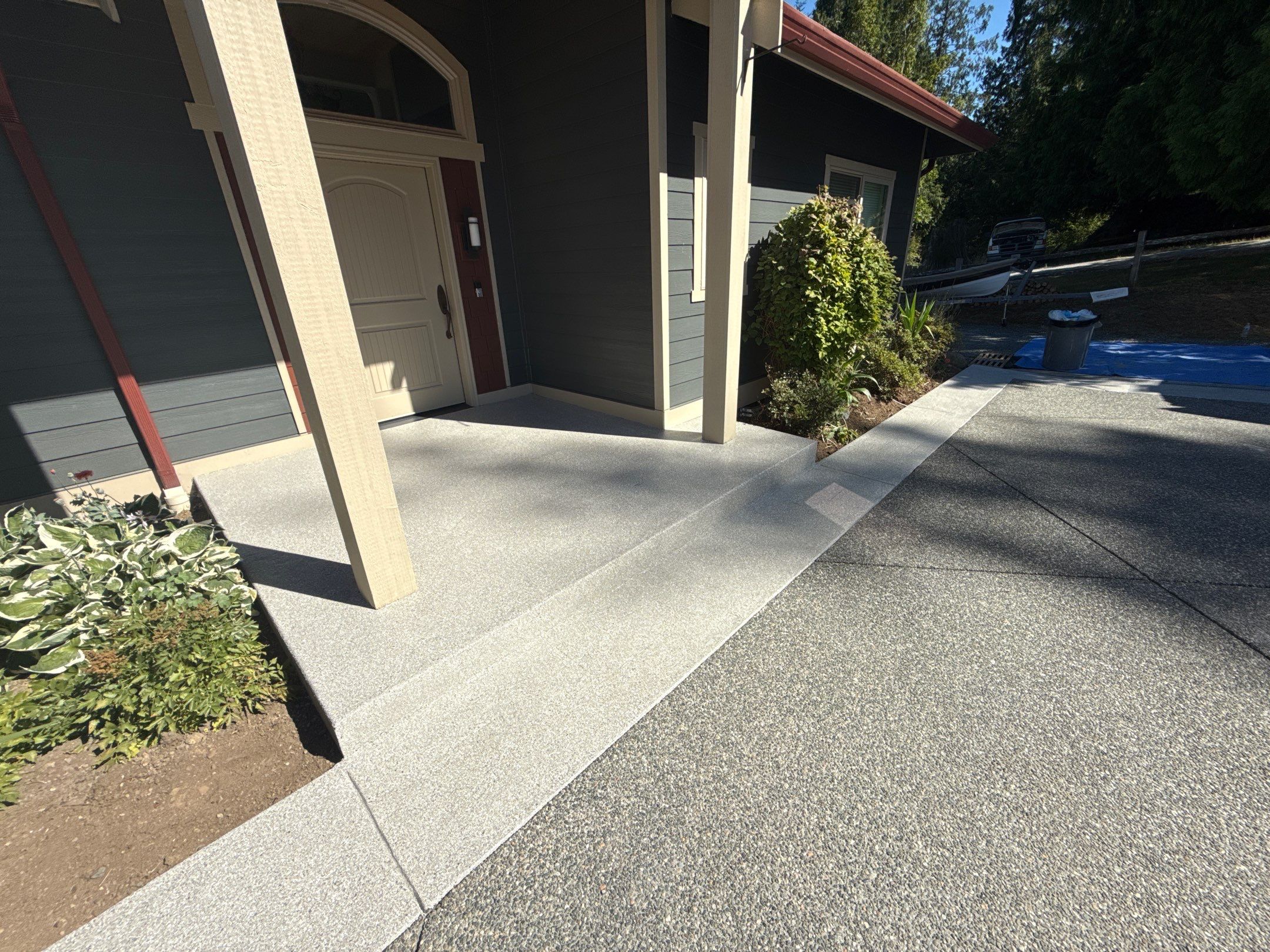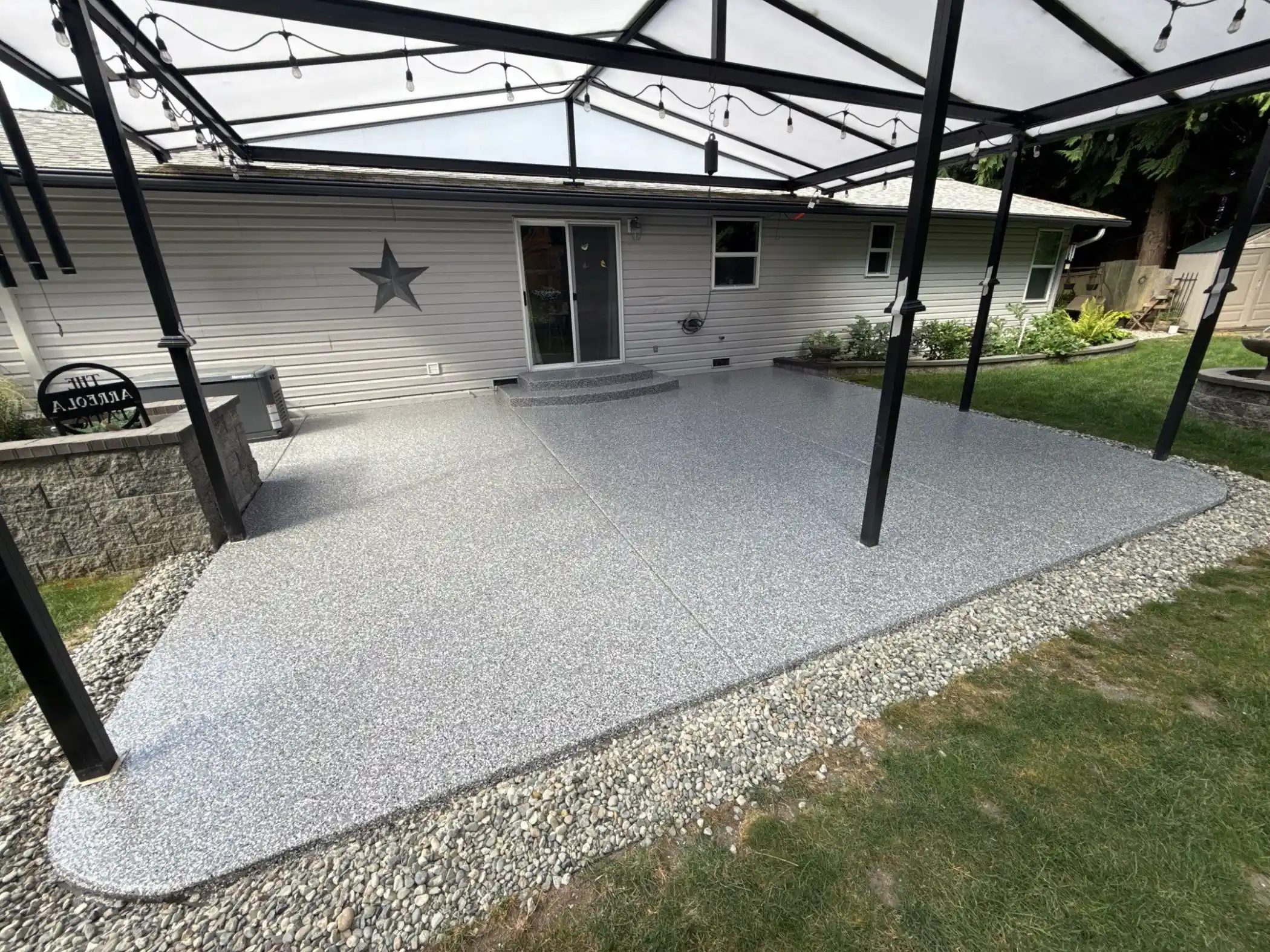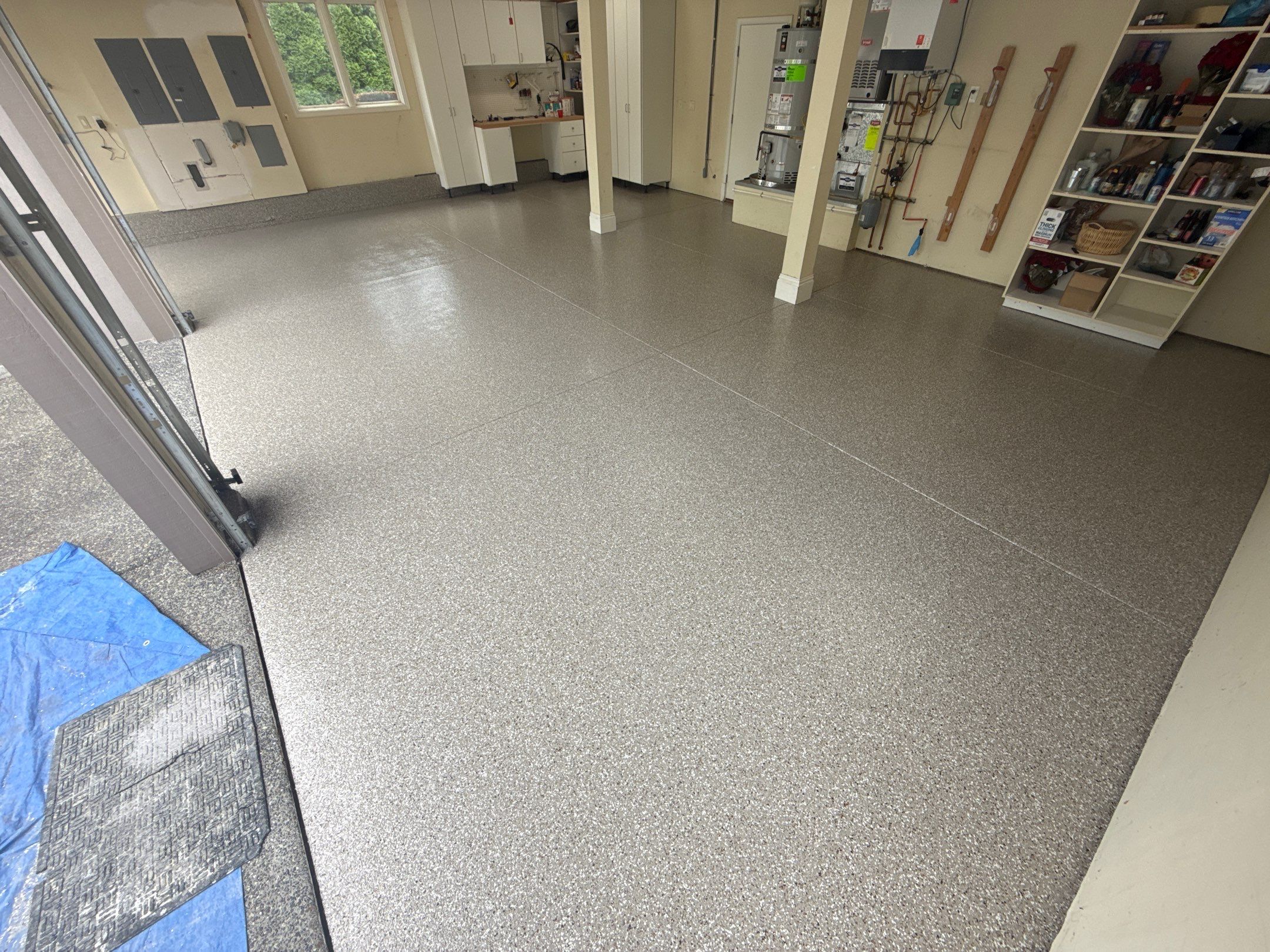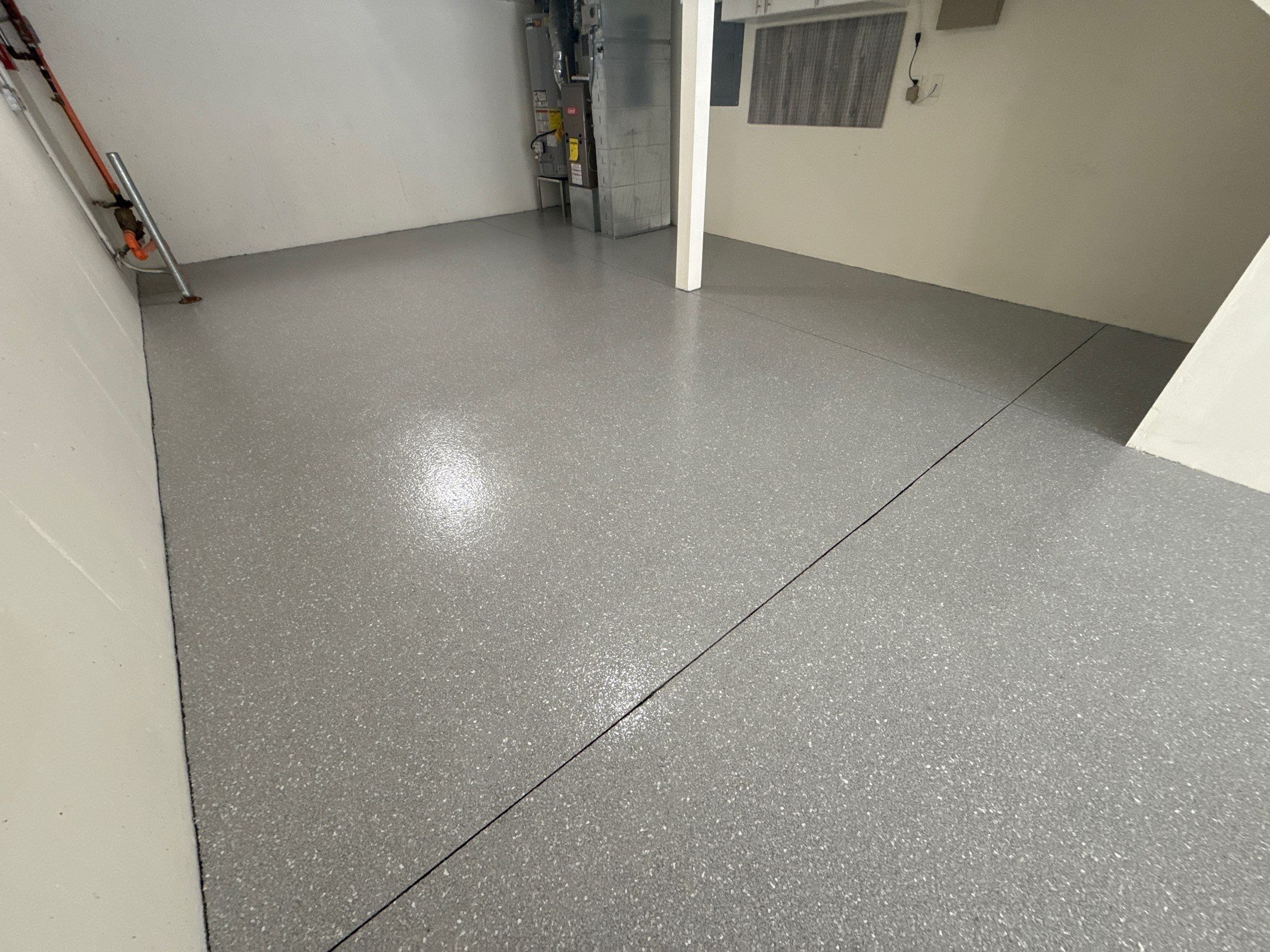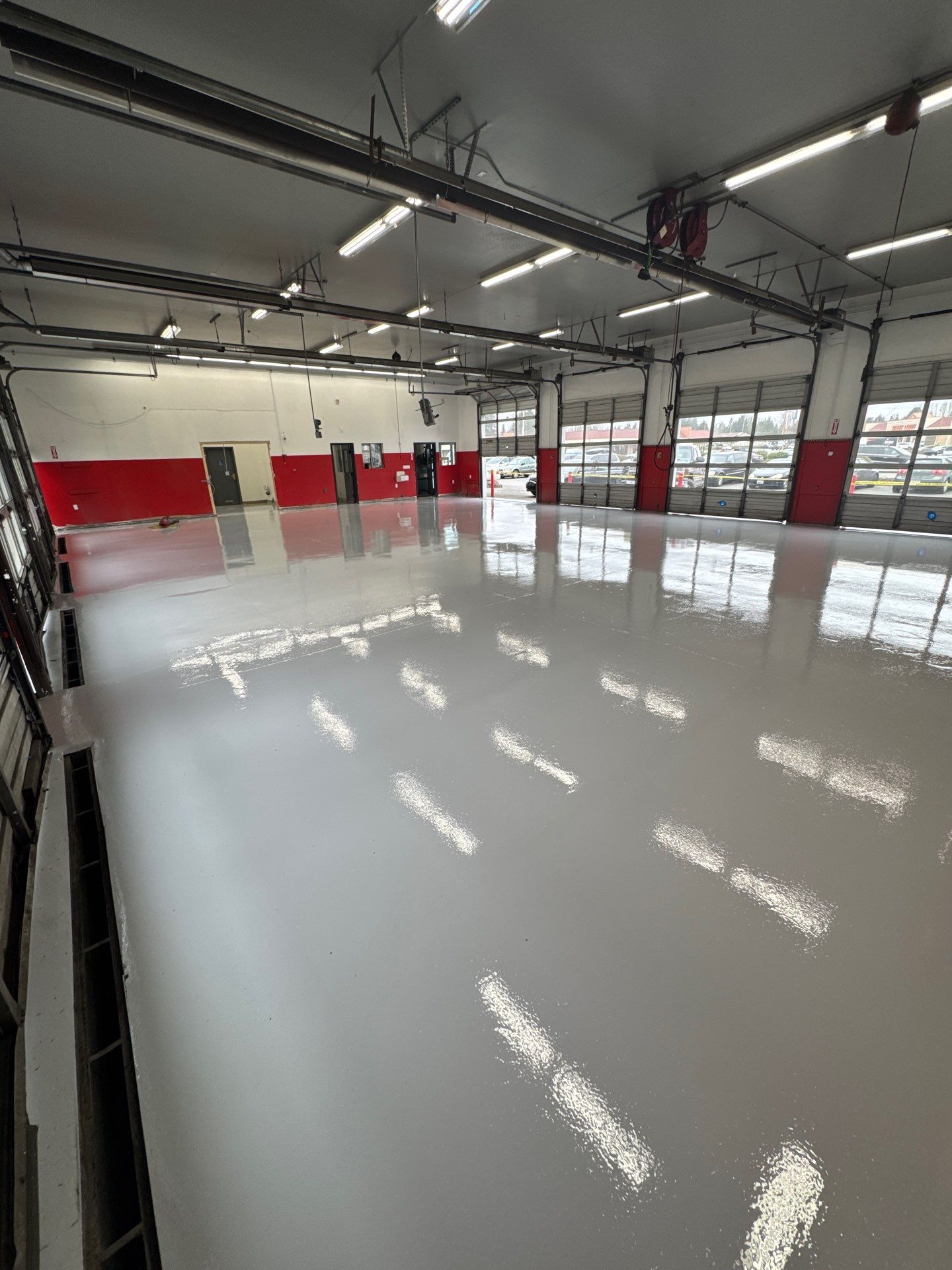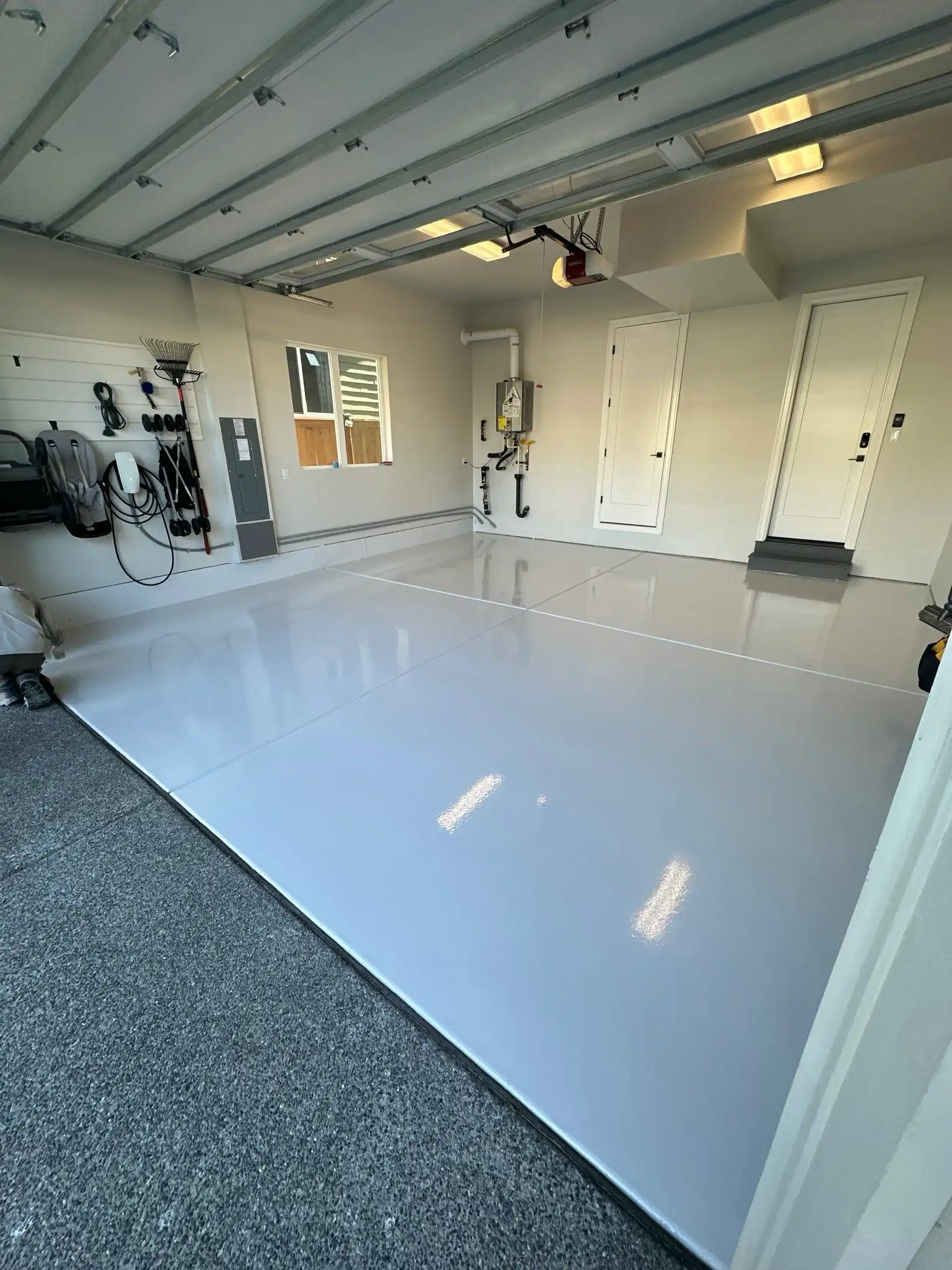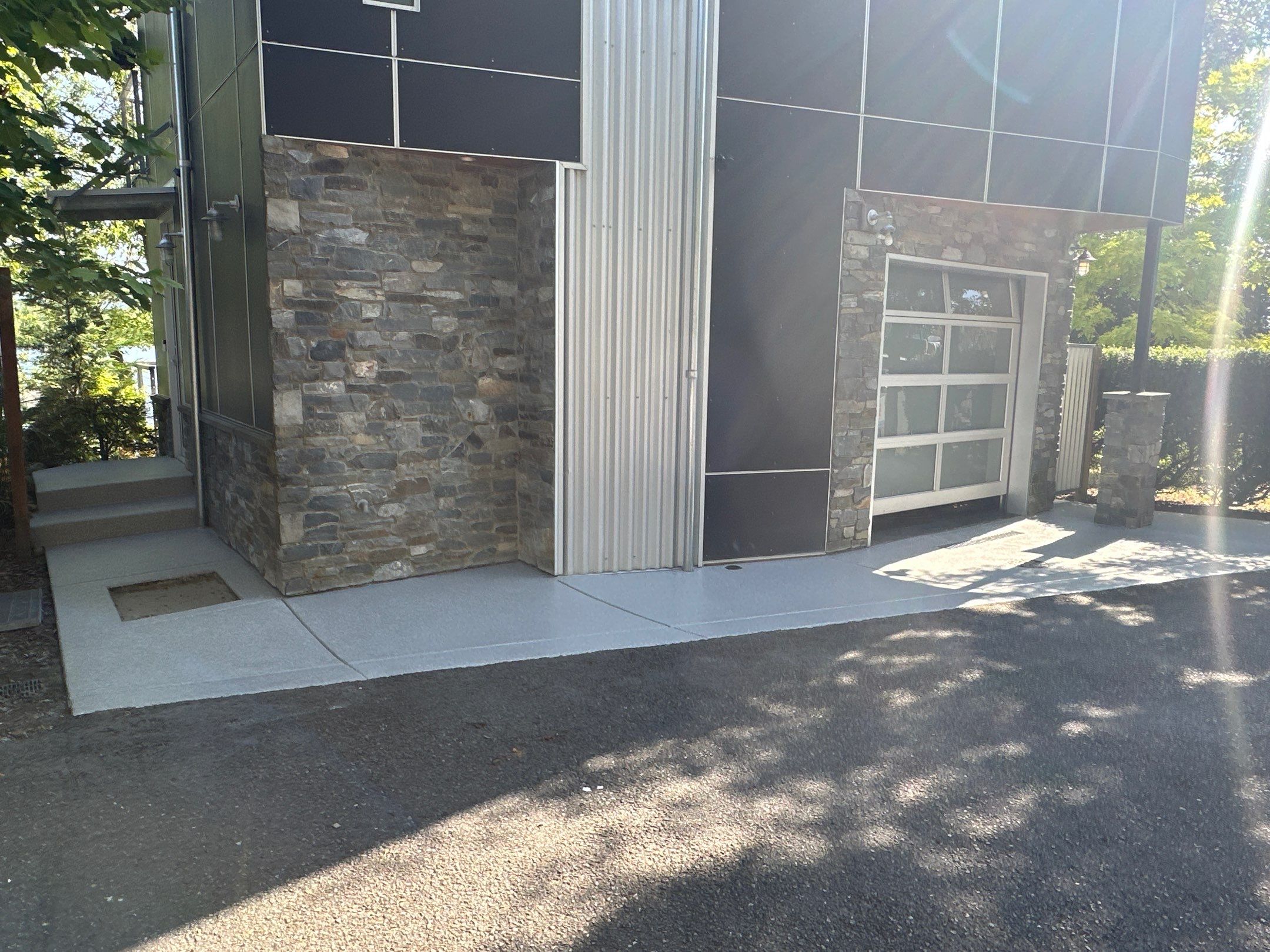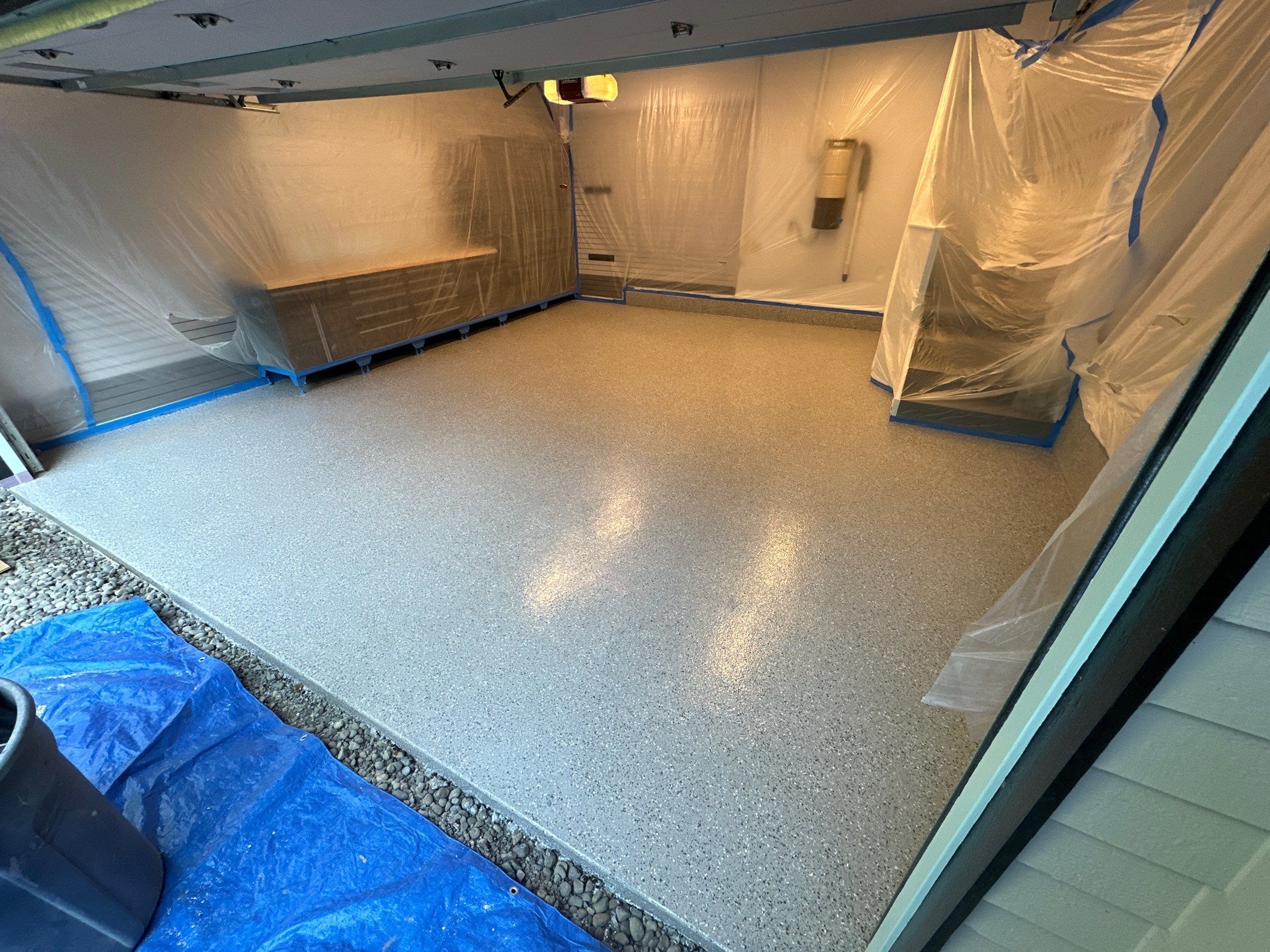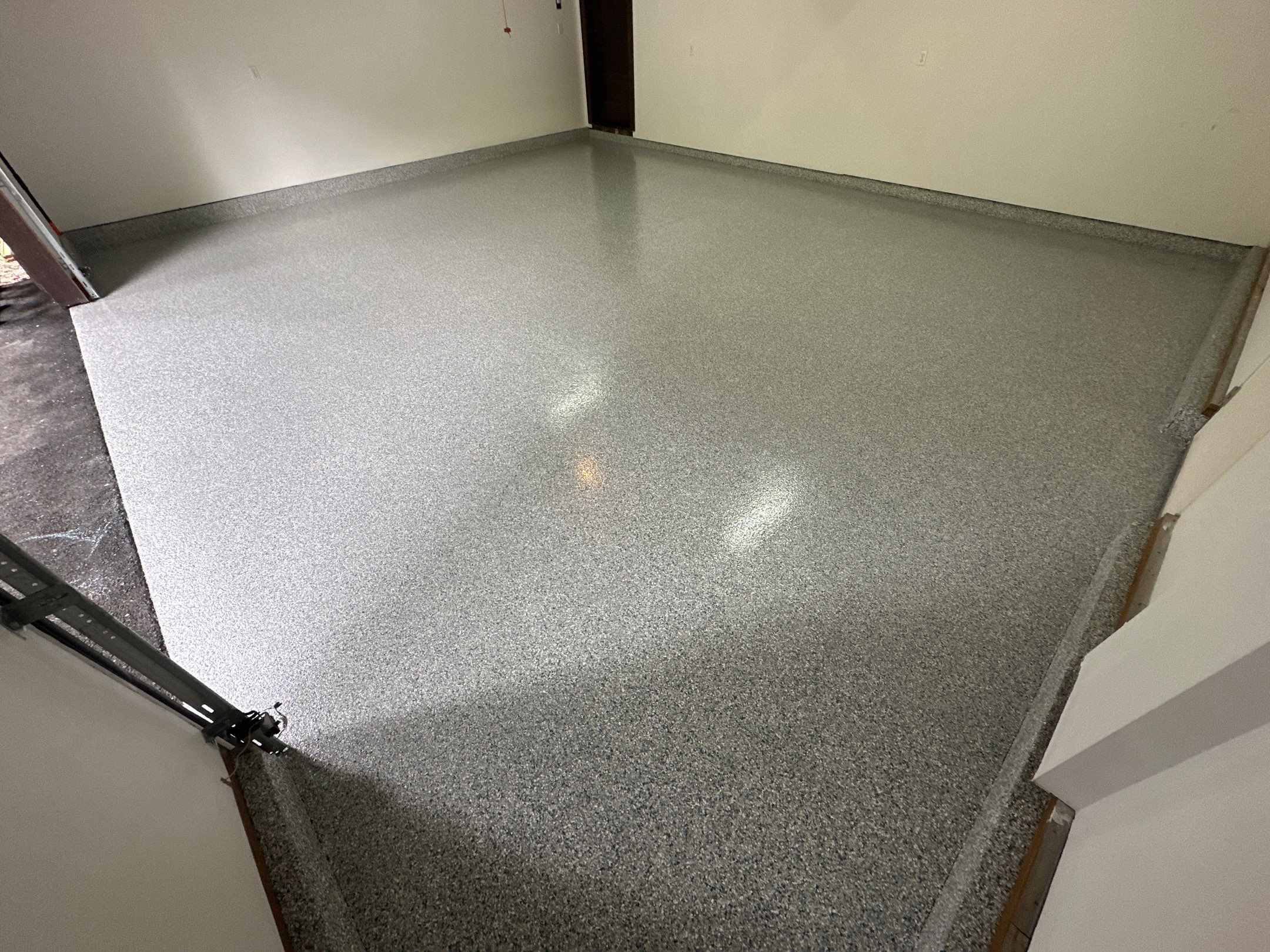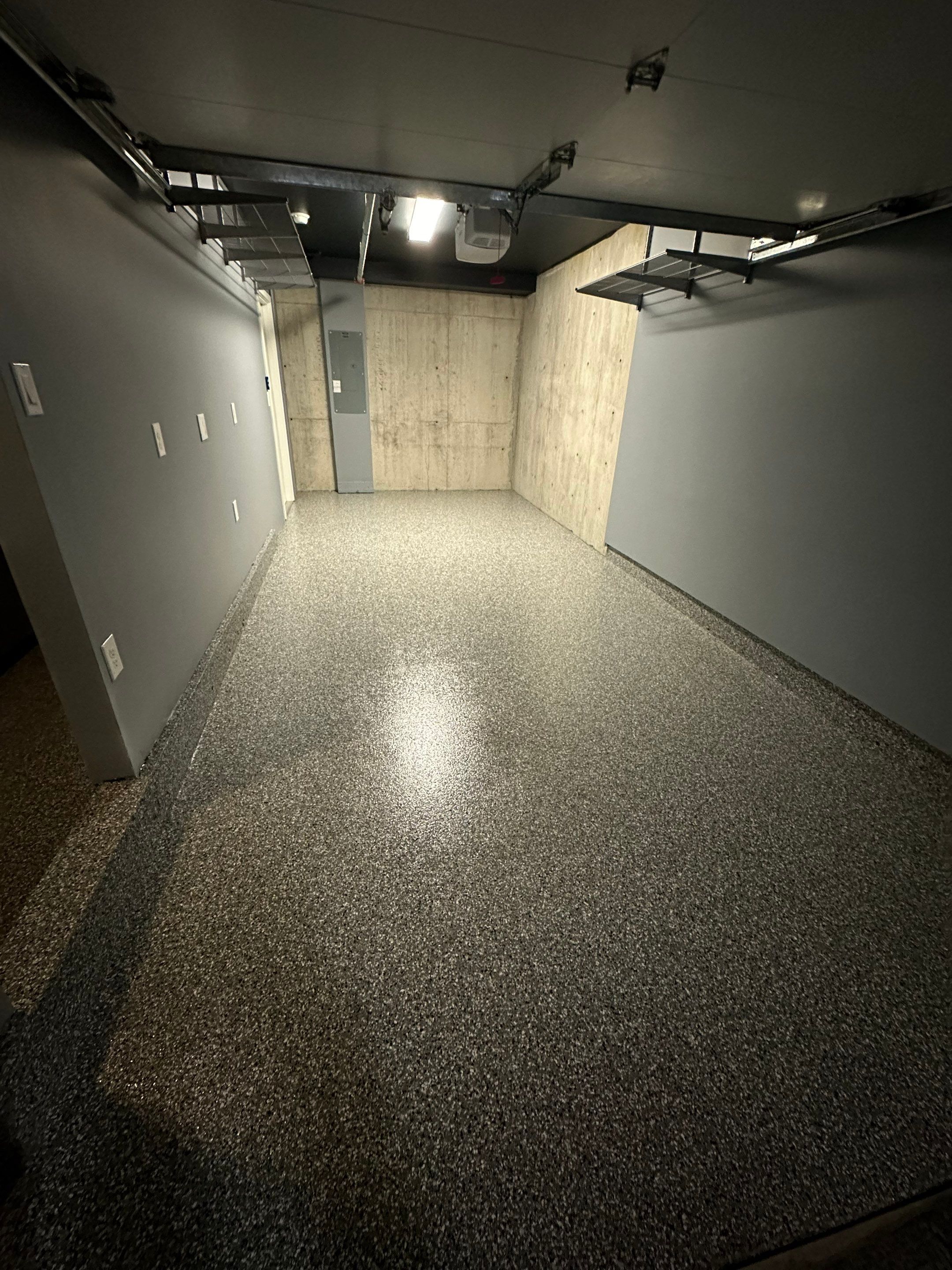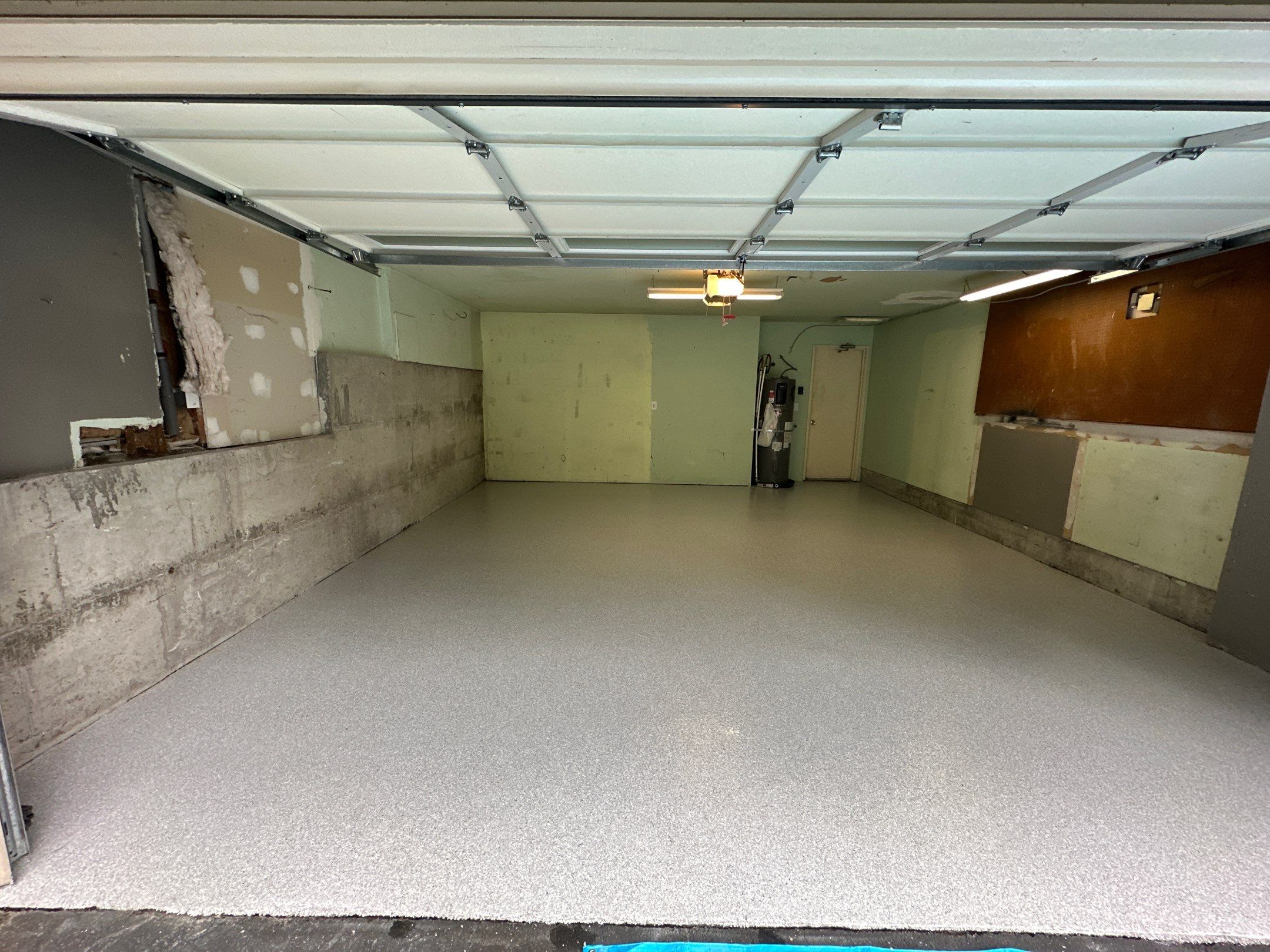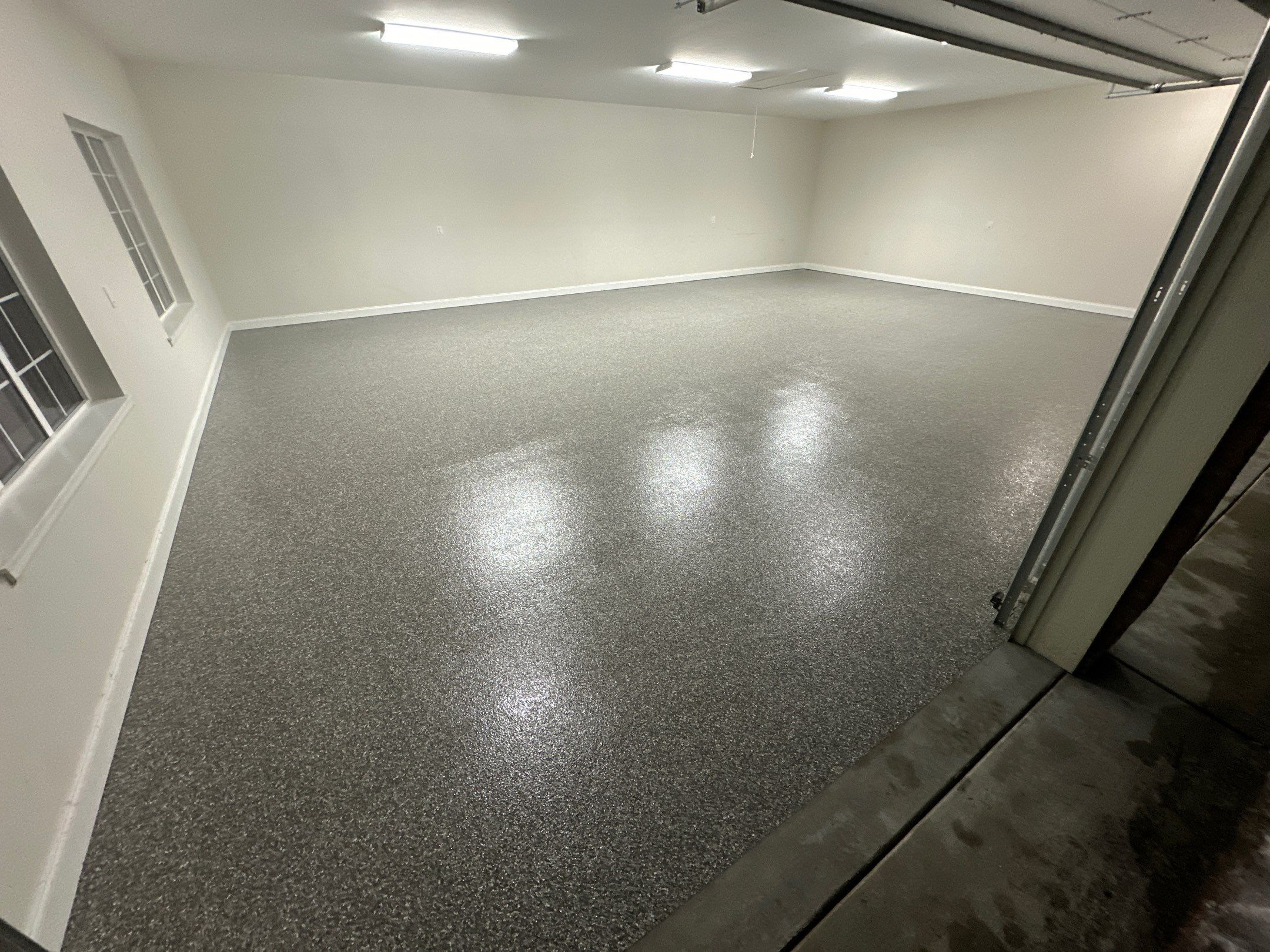
An under-house Seattle garage with mineral-stained concrete, tested four times from June to September, then coated in Mount Everest flake polyurea.


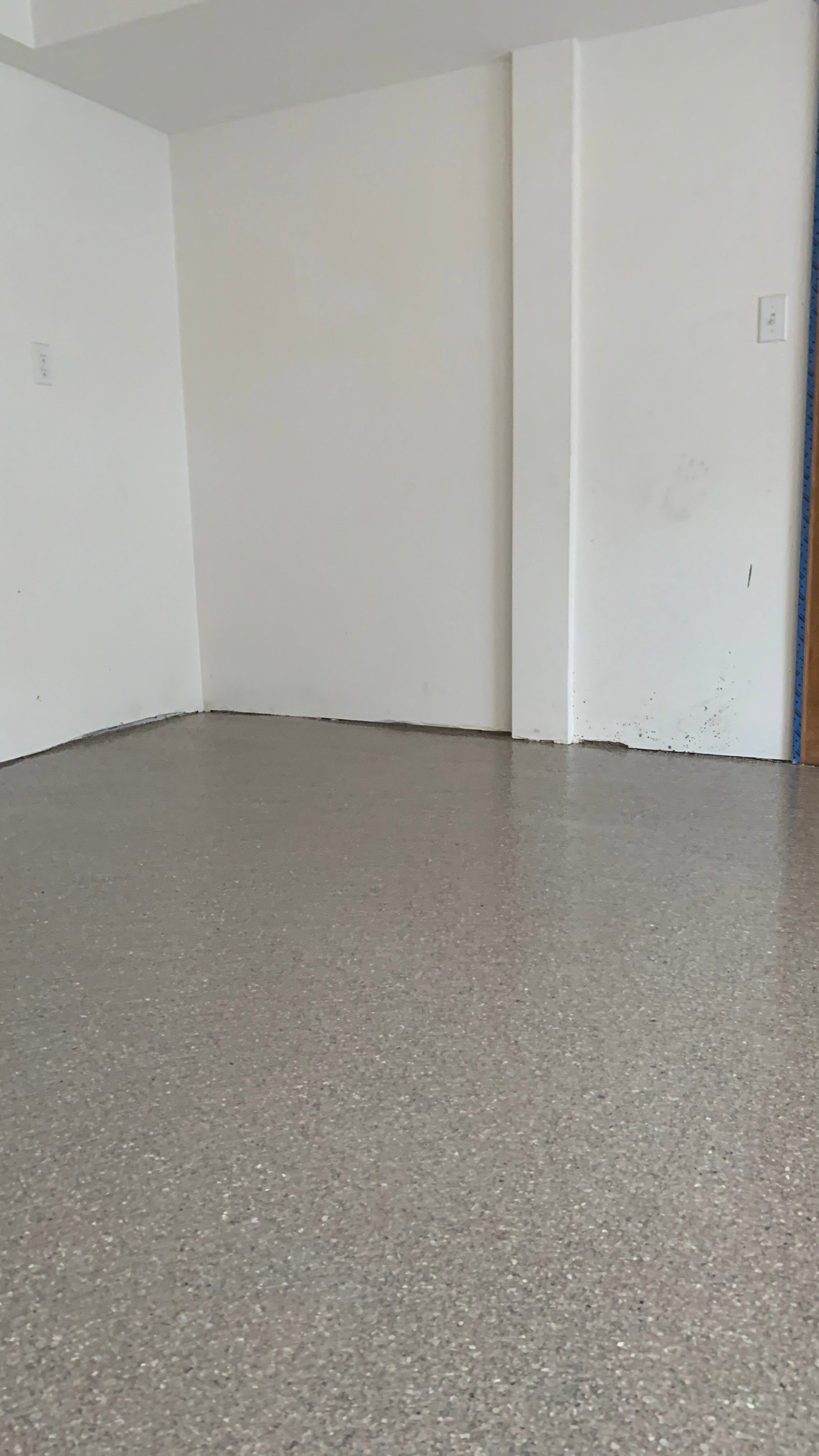
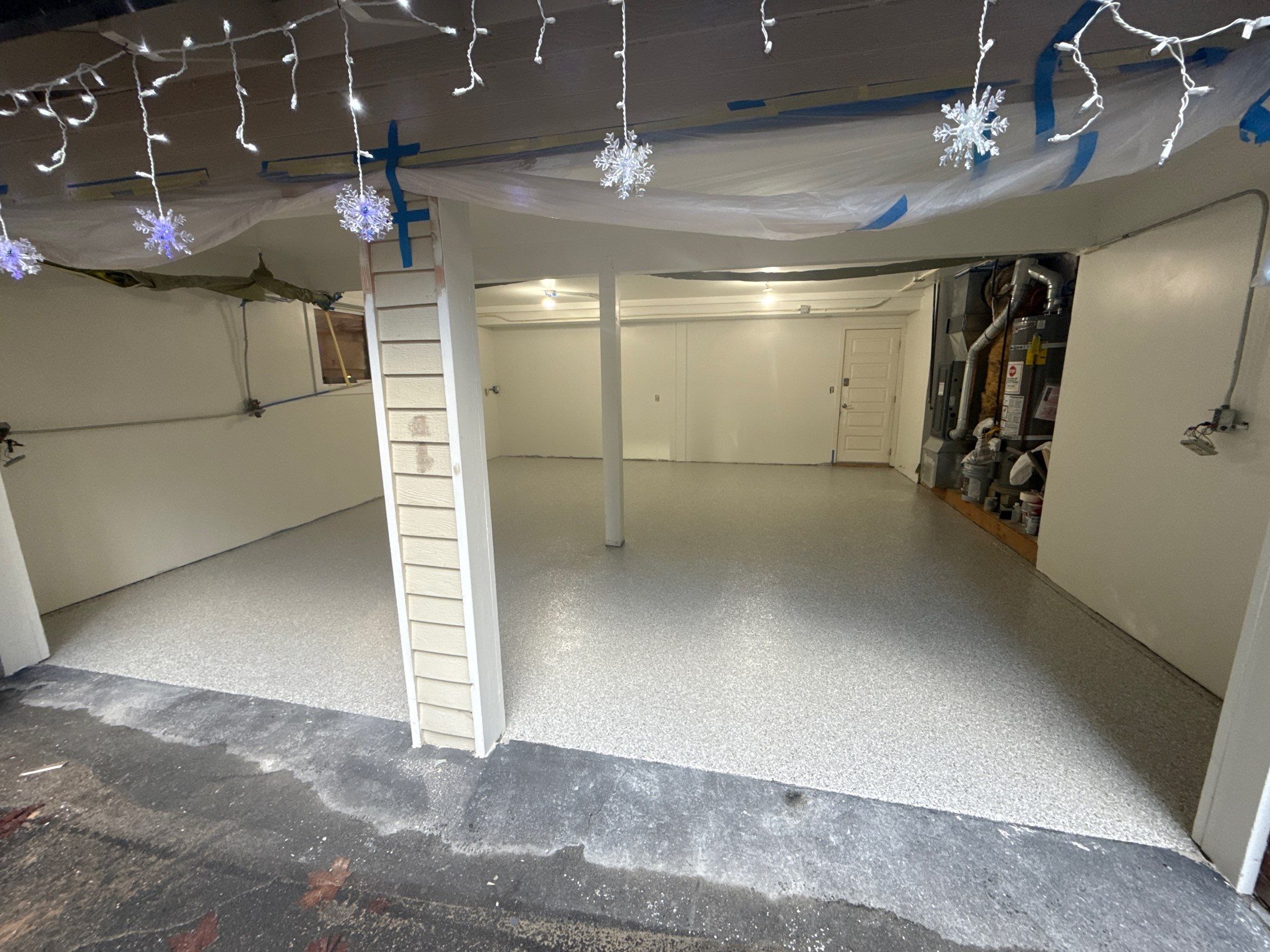
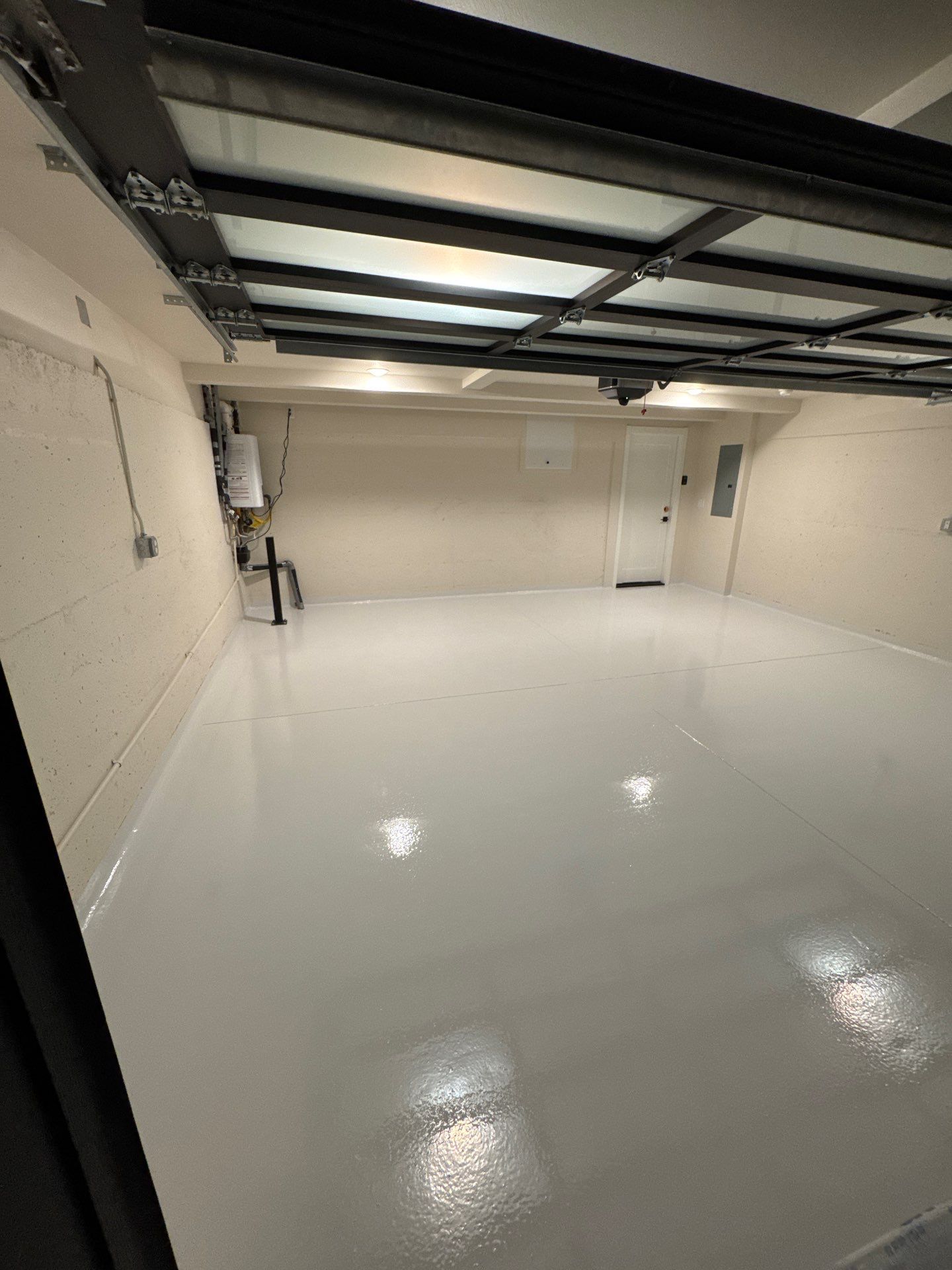
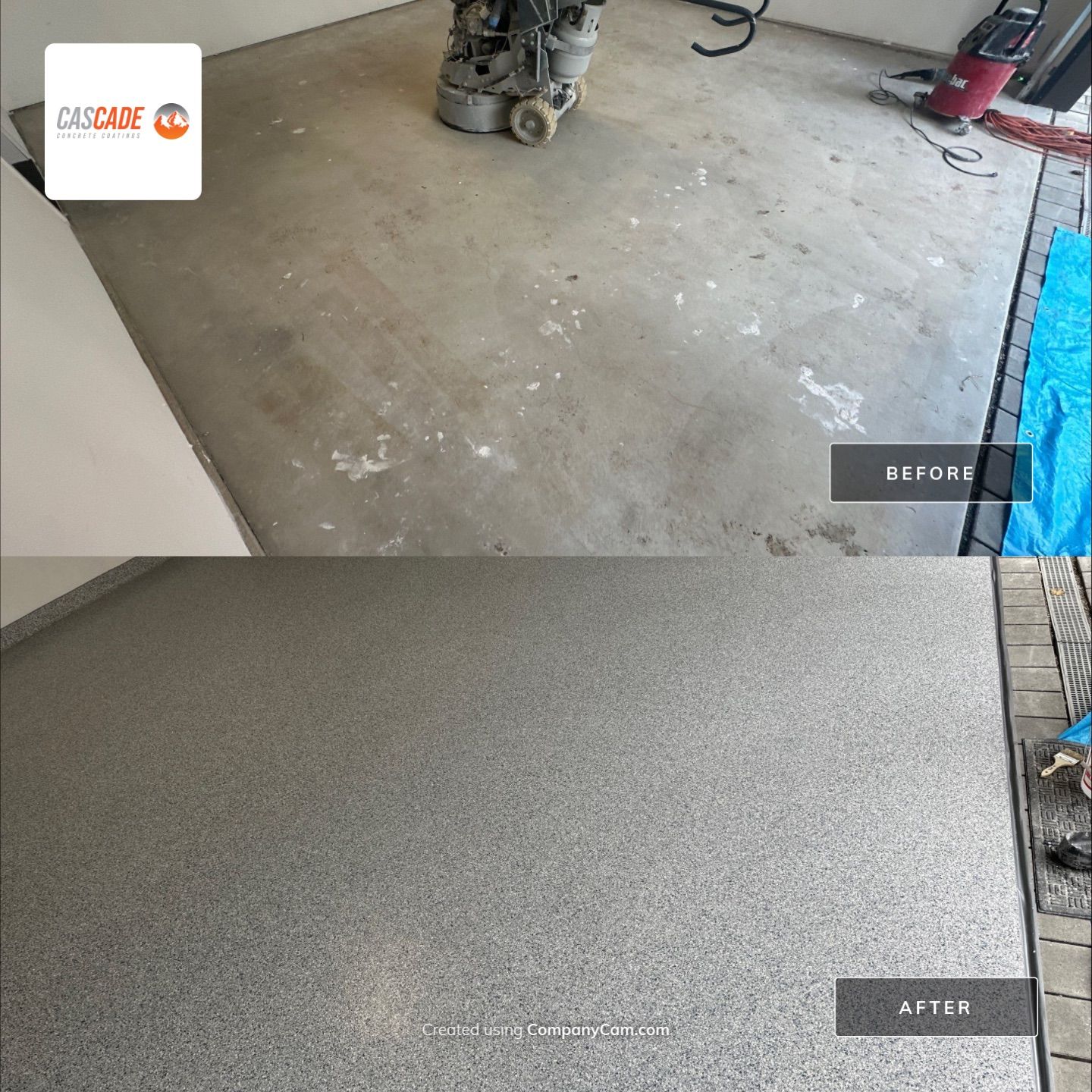
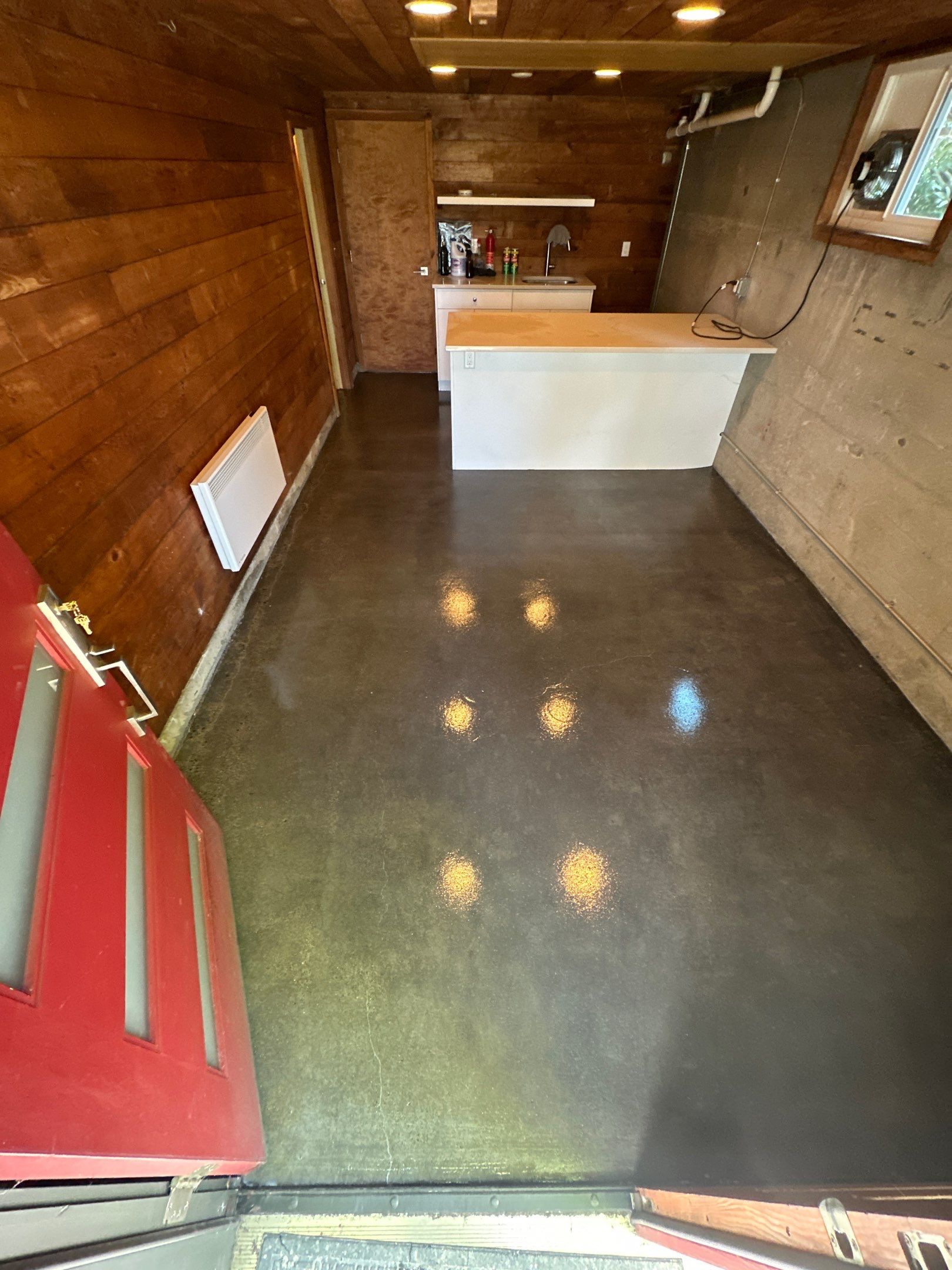
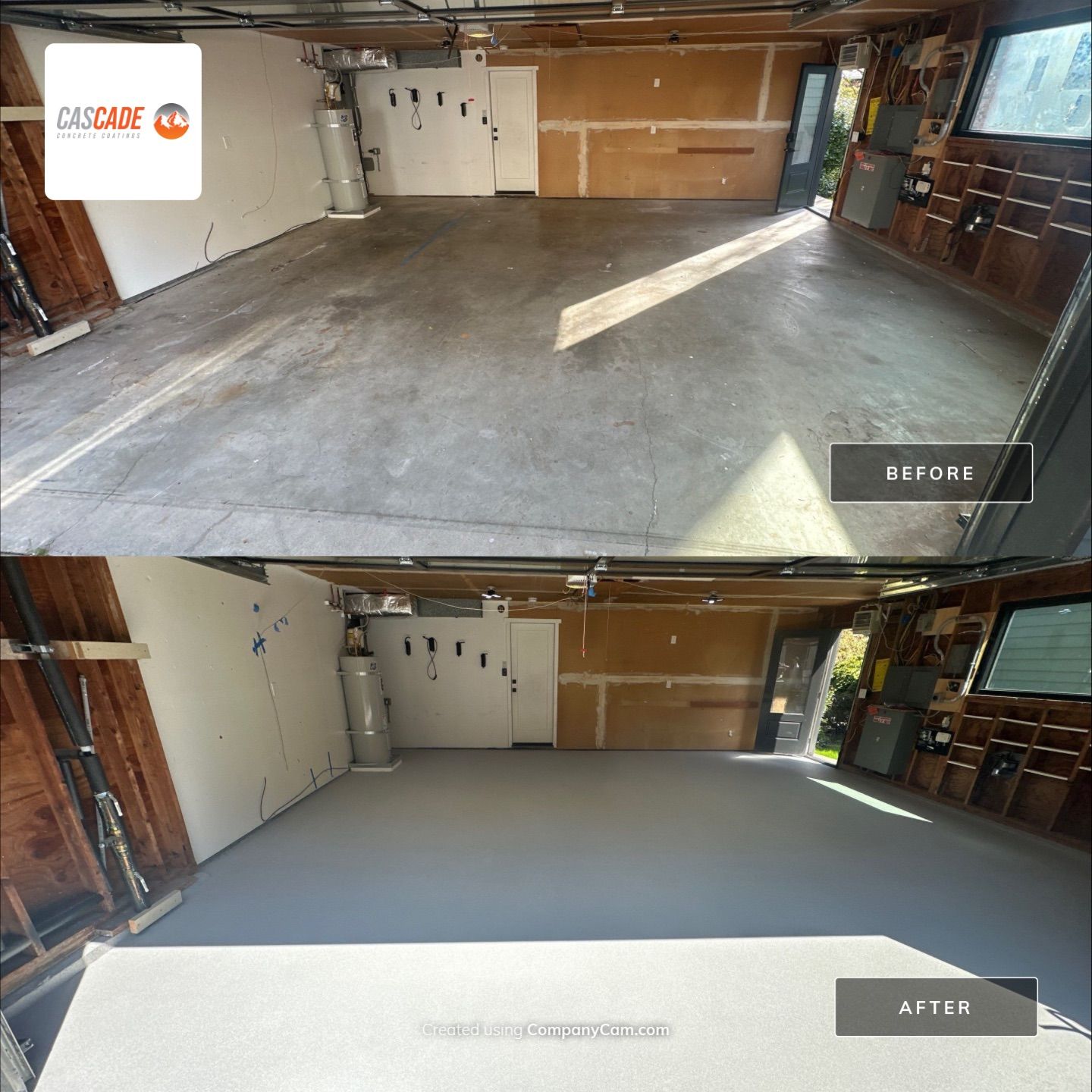
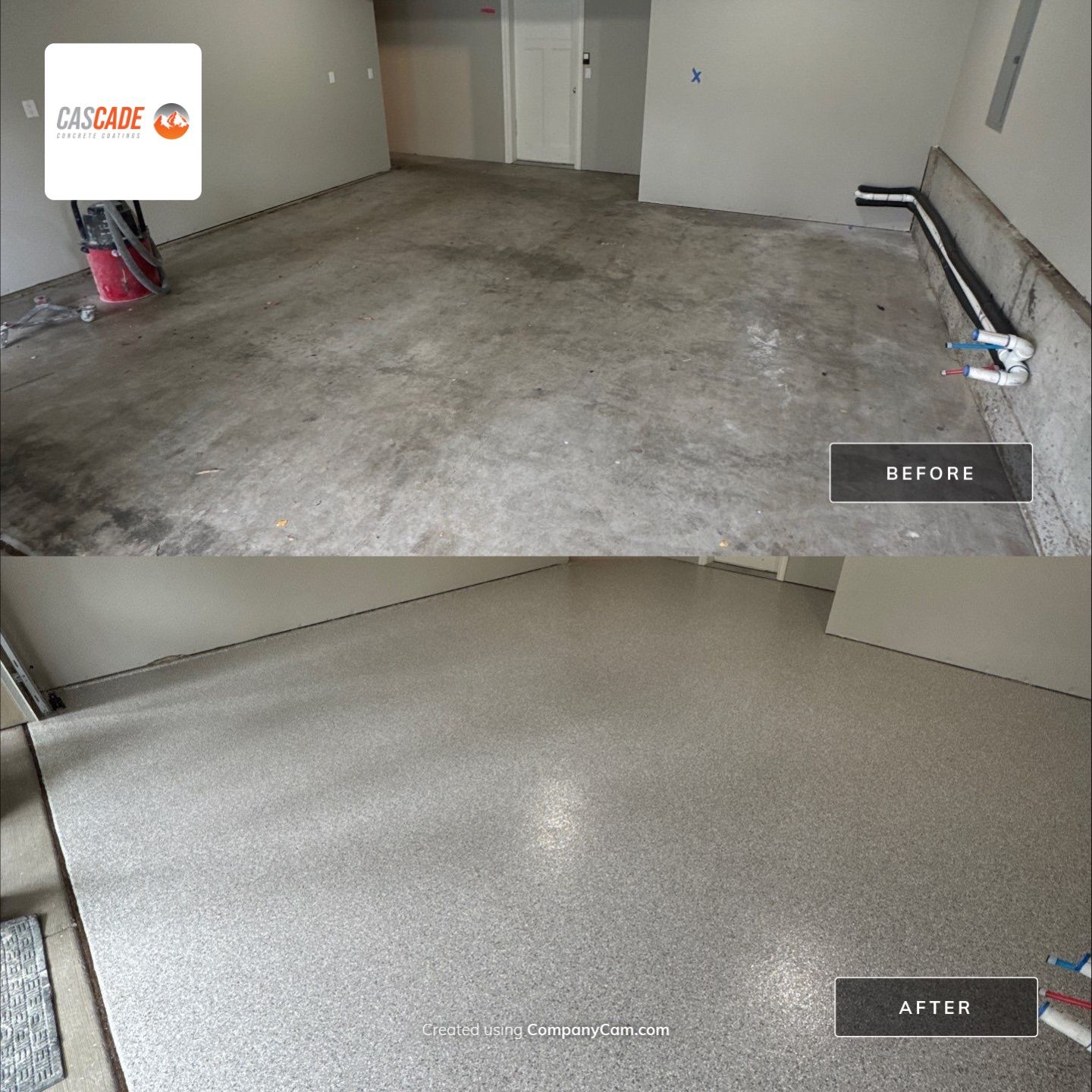
Some garages are basically basements with a door. This one in Seattle is tucked under an older house, framed by board-formed concrete walls, an old brick chimney base and insulation between the studs. The slab had white rings and blotches across it, the kind of marks that show up when moisture moves through concrete and leaves minerals behind.
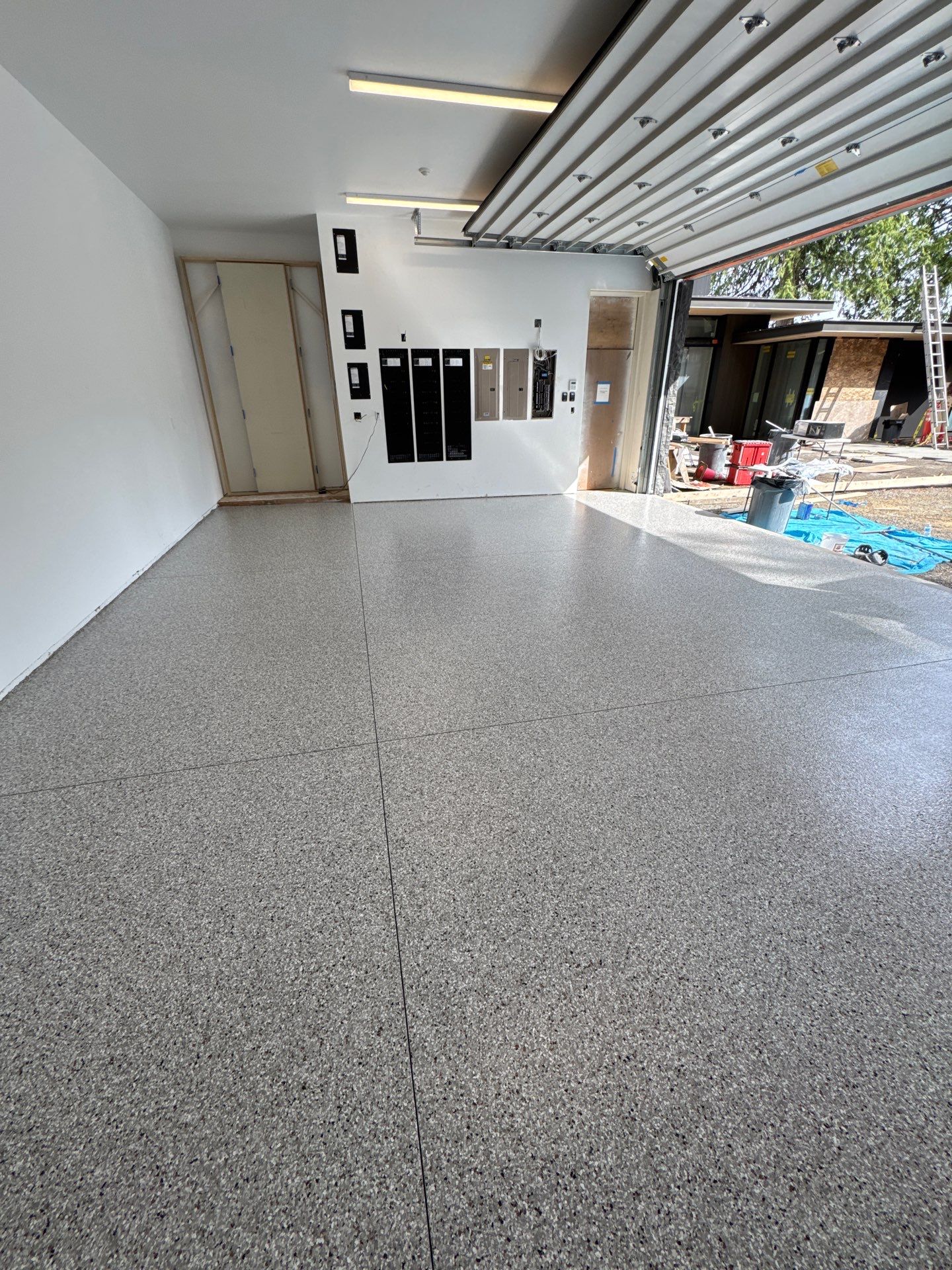
The homeowner wanted a clean, bright floor. Cascade wanted to be sure the slab was ready for one. After four rounds of moisture testing between June and September, the garage floor coating in Seattle went down in October 2025 with Certified Penntek polyurea in Mount Everest flake.
This is the part most people never see. The free consultation was in June 2025, and the first reading was 4.7%. A scratch test checked hardness, and the crew noted mineral staining low on the concrete walls.
Instead of guessing, Cascade came back. Here is how the readings went:
Concrete moisture changes with the season, the weather and what's under the slab. Testing more than once gives a real picture instead of a single snapshot. Our post on why moisture testing matters in Seattle explains what those numbers mean for a coating.
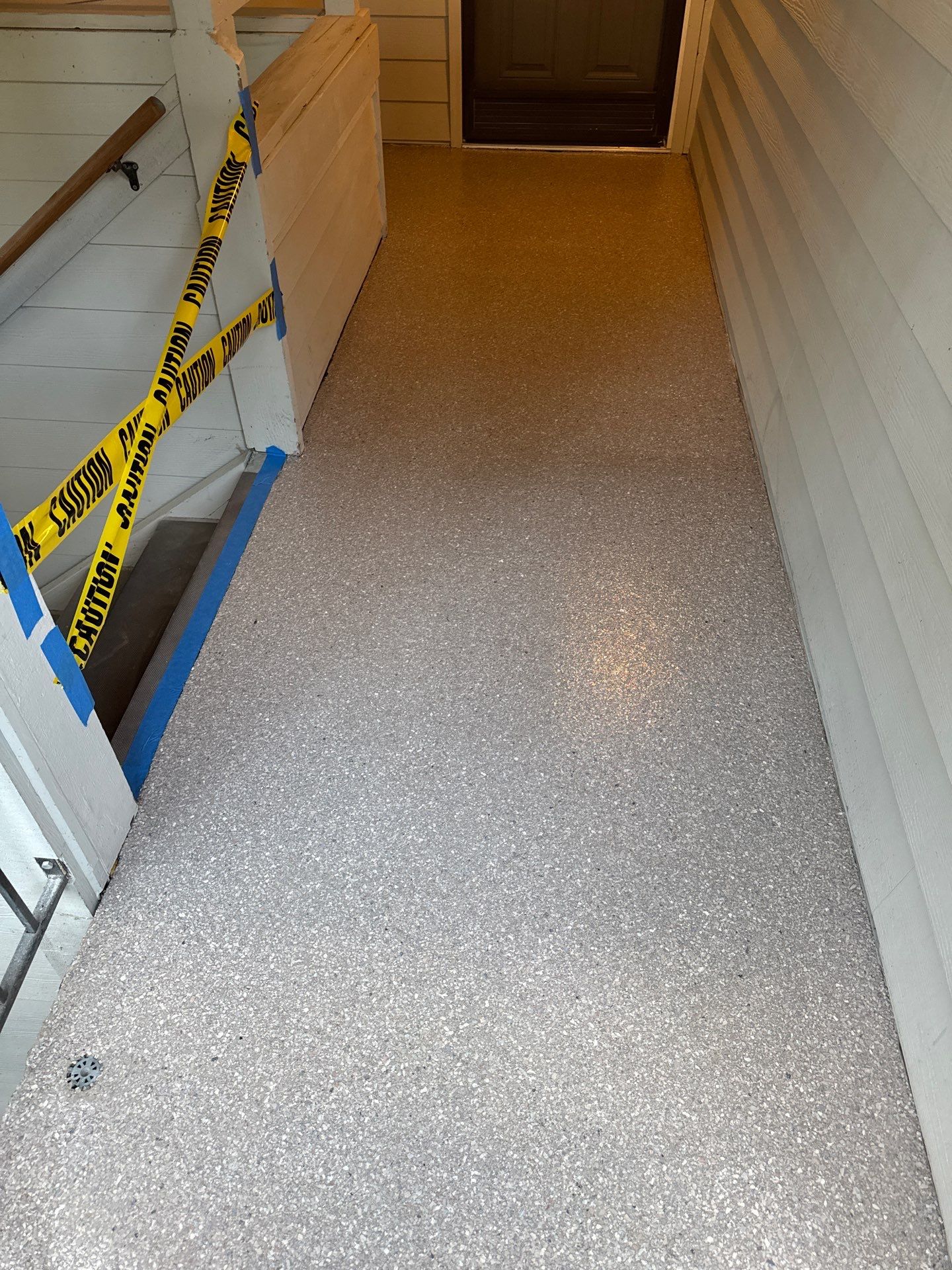
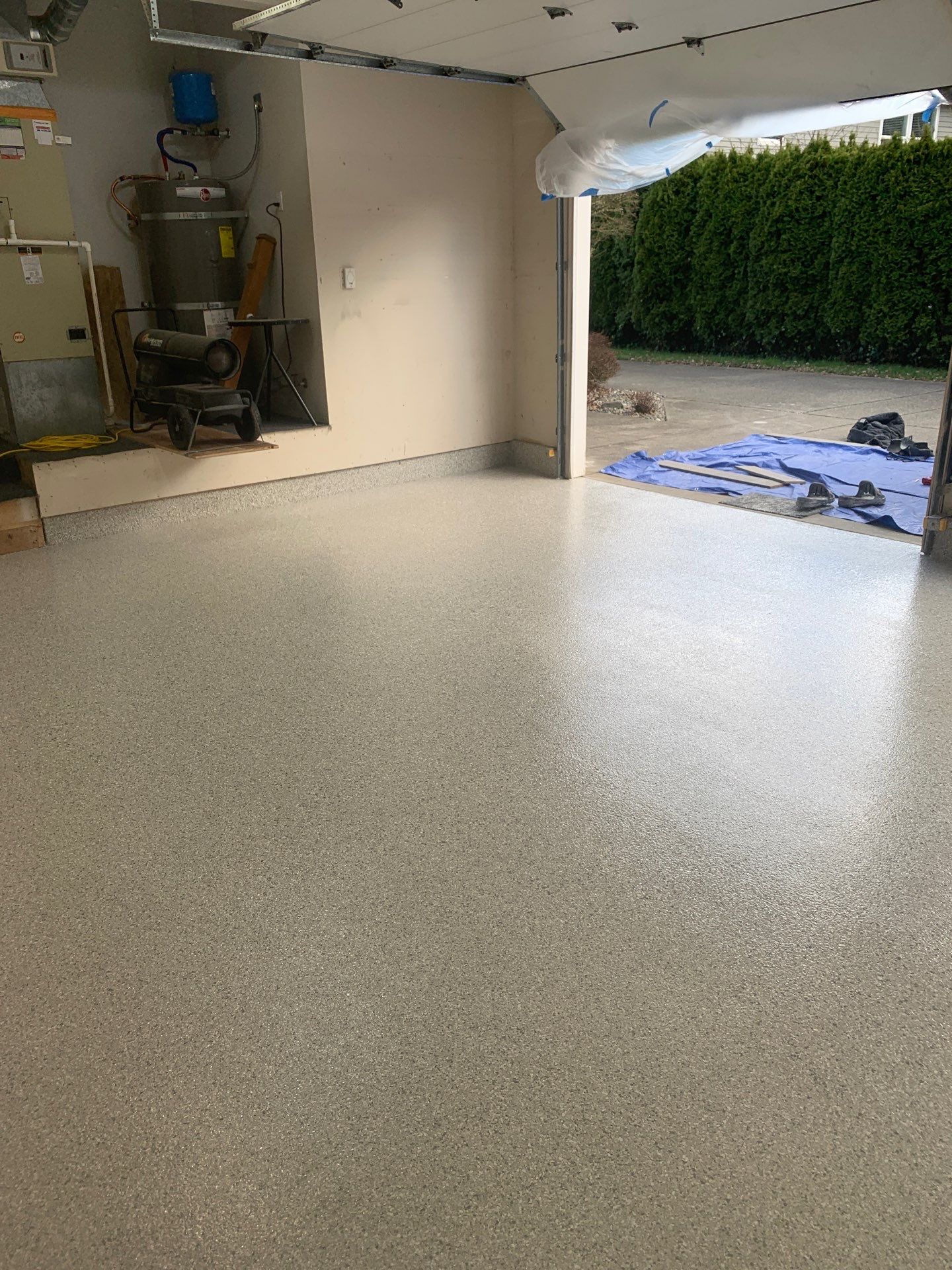
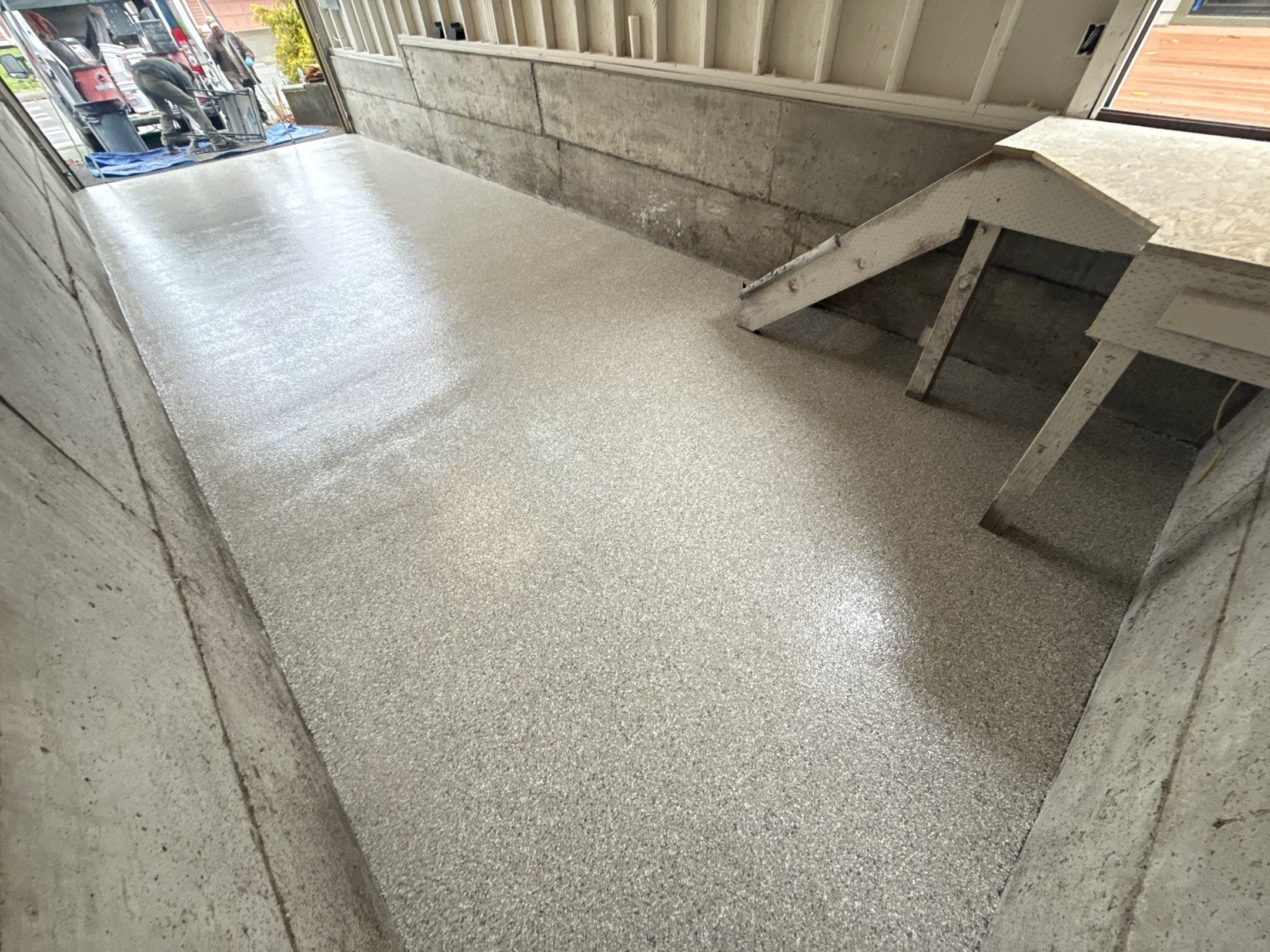
The floor went in on October 13, 2025. The garage door was taped off, the yard side was protected, and the crew ran the full system:
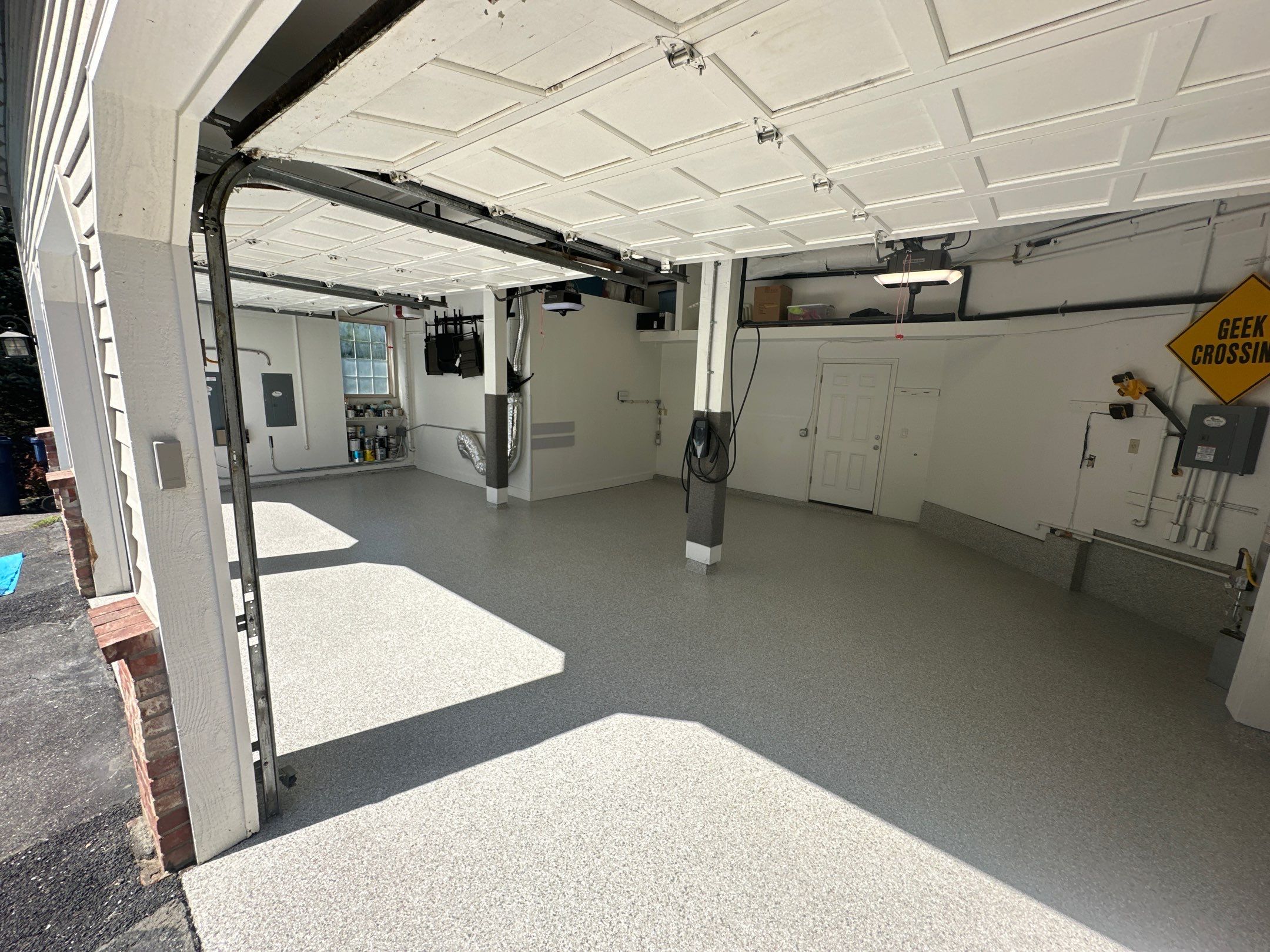
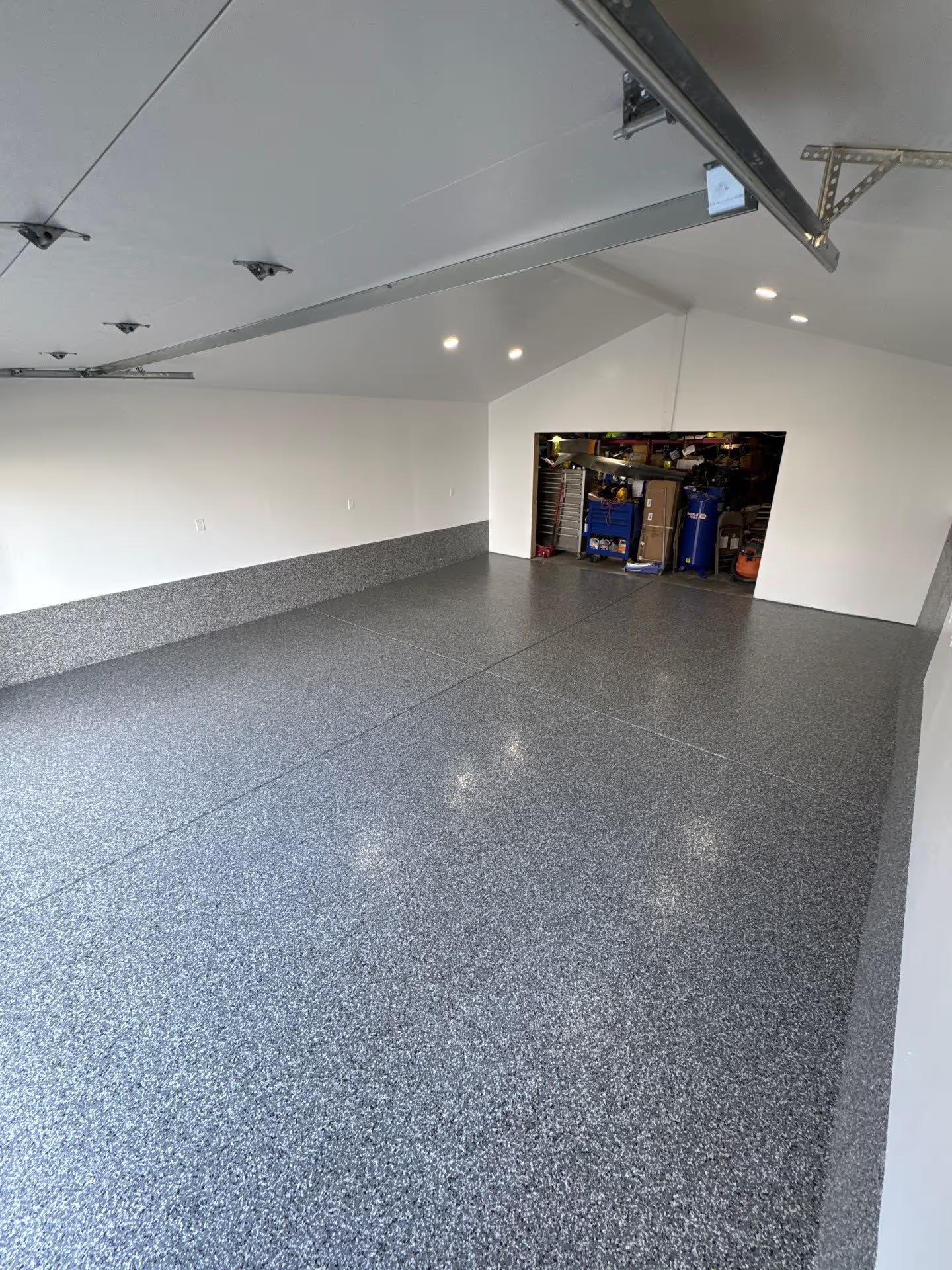
The coating runs right up to the concrete walls and the chimney base, so the whole space reads as one finished floor.
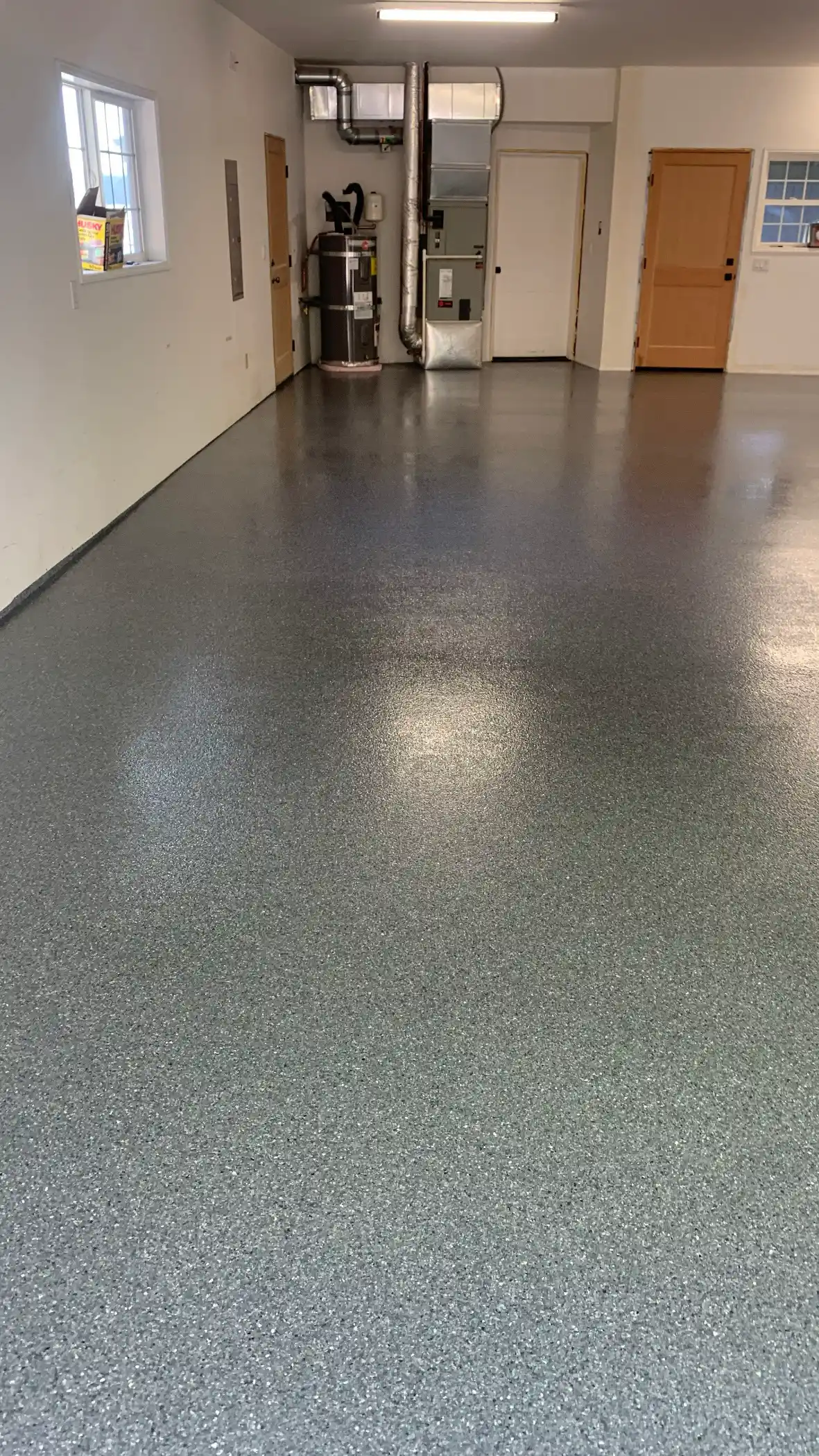
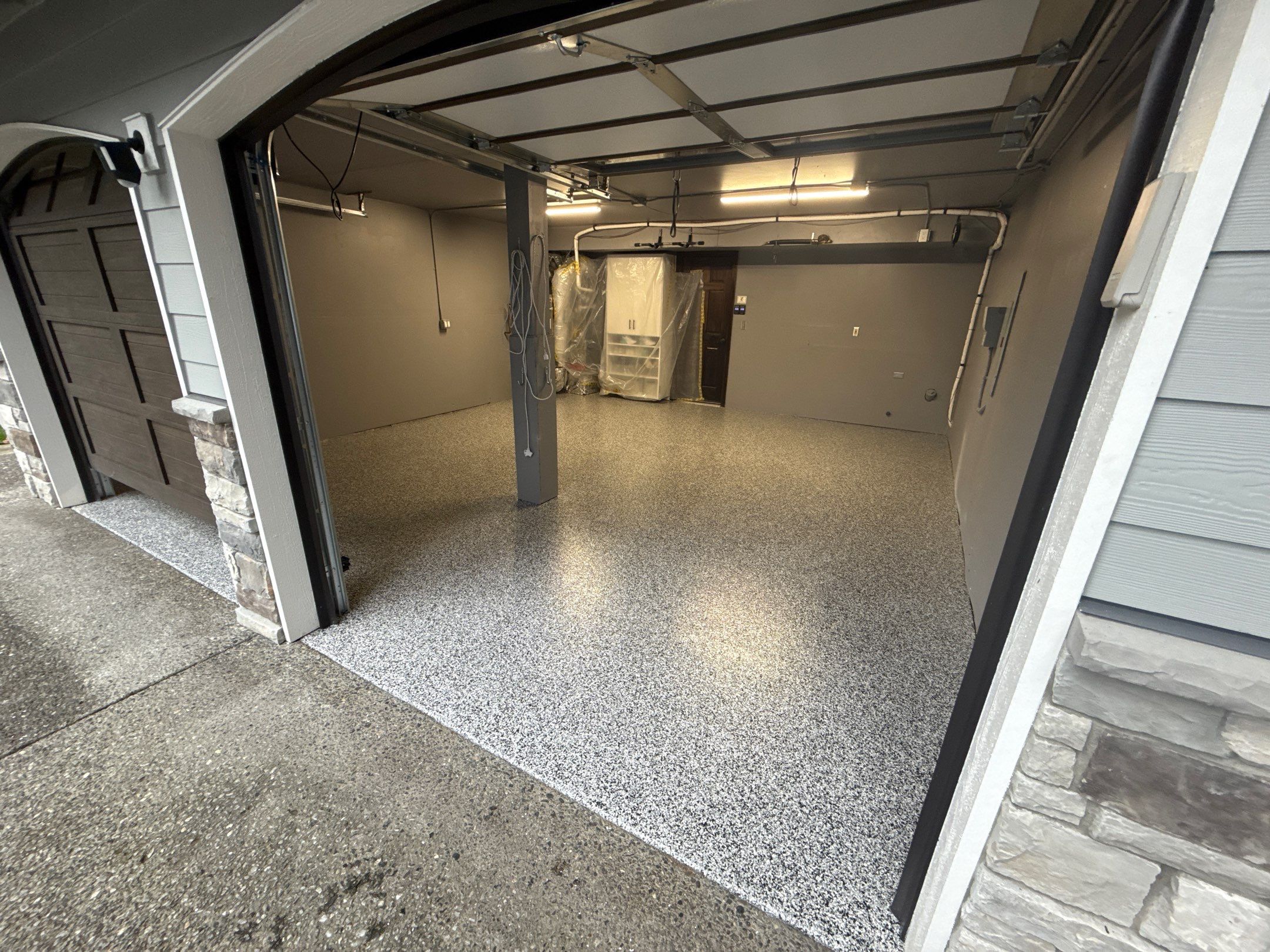
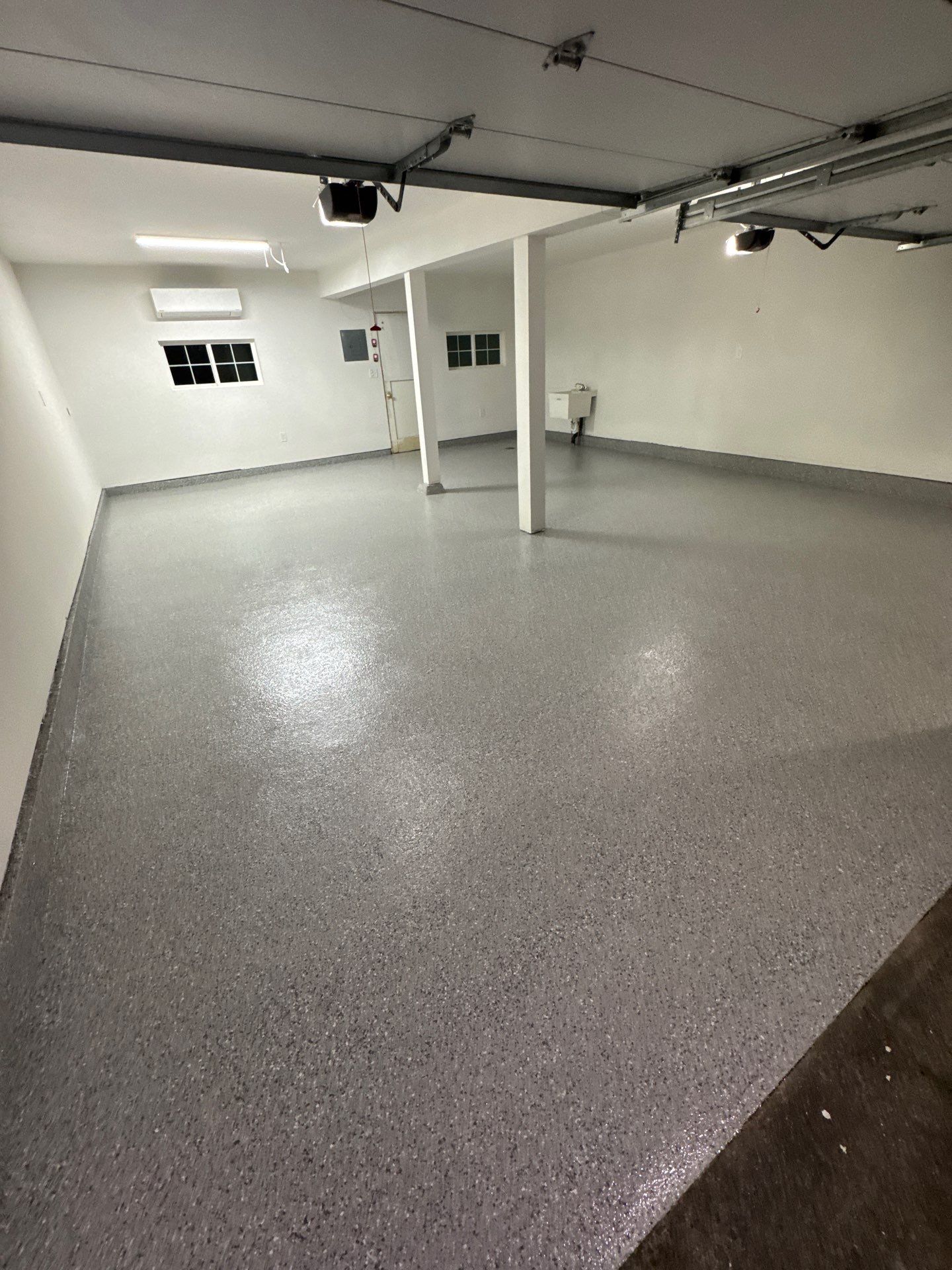
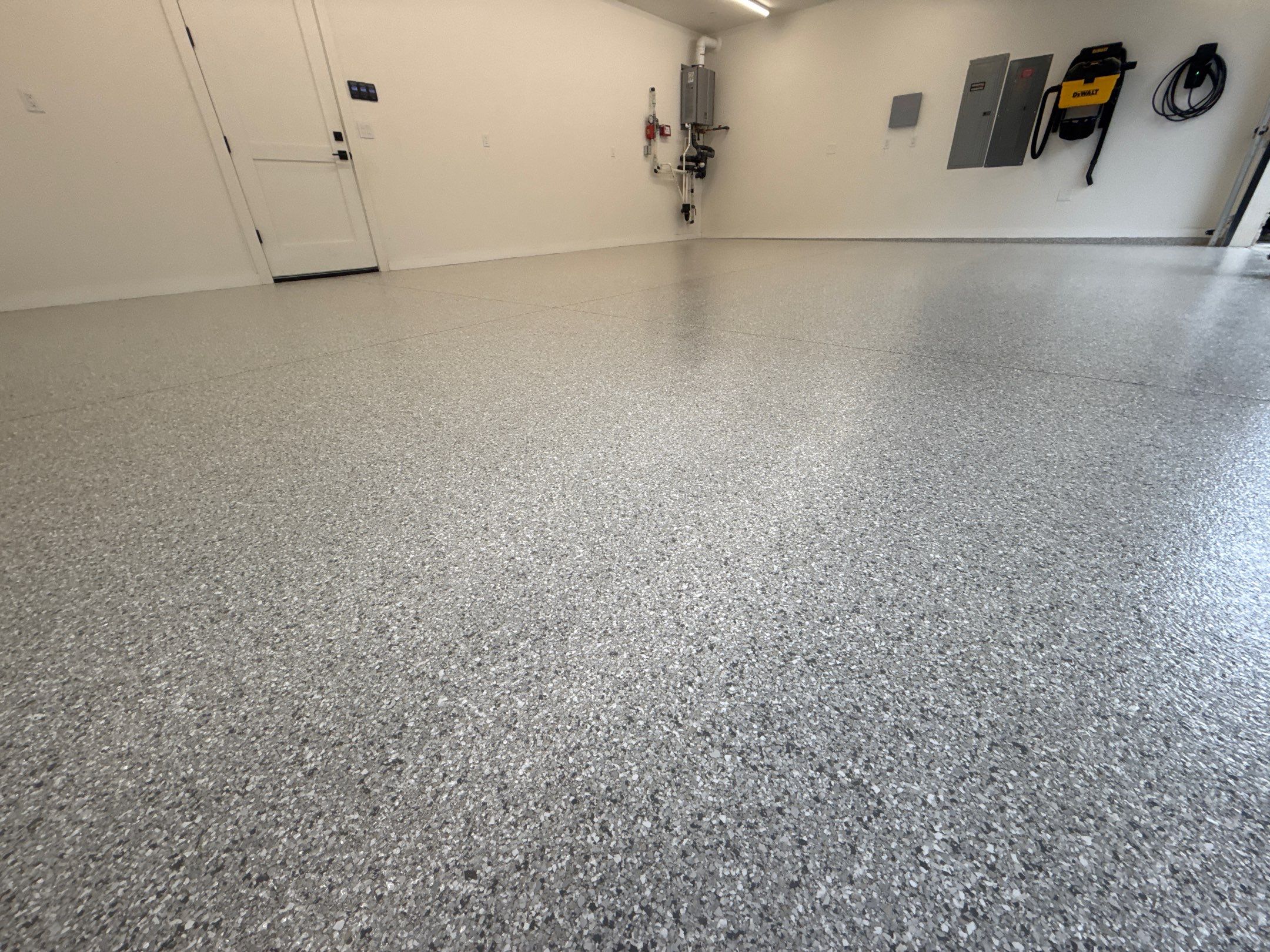
Under-house garages tend to be dim. Mount Everest is one of the lightest blends we install, mostly whites and greys with soft tan chips. It reflects what light there is and makes the room feel larger. The texture of the flake also hides the dust that drifts off old concrete walls.
When a coating fails on Seattle concrete, moisture and weak prep are usually part of the story. Two things work in this floor's favor:
The topcoat is non-porous, so spills and grime clean up easily. The Penntek Stain Test shows how. Every floor is registered with Penntek under its limited lifetime warranty.
Seattle has plenty of homes with garages dug into a hillside or built under the main floor. Those slabs sit against soil on more than one side, and with months of rain they can hold more water than a garage on flat ground. That is why a single reading isn't always enough.
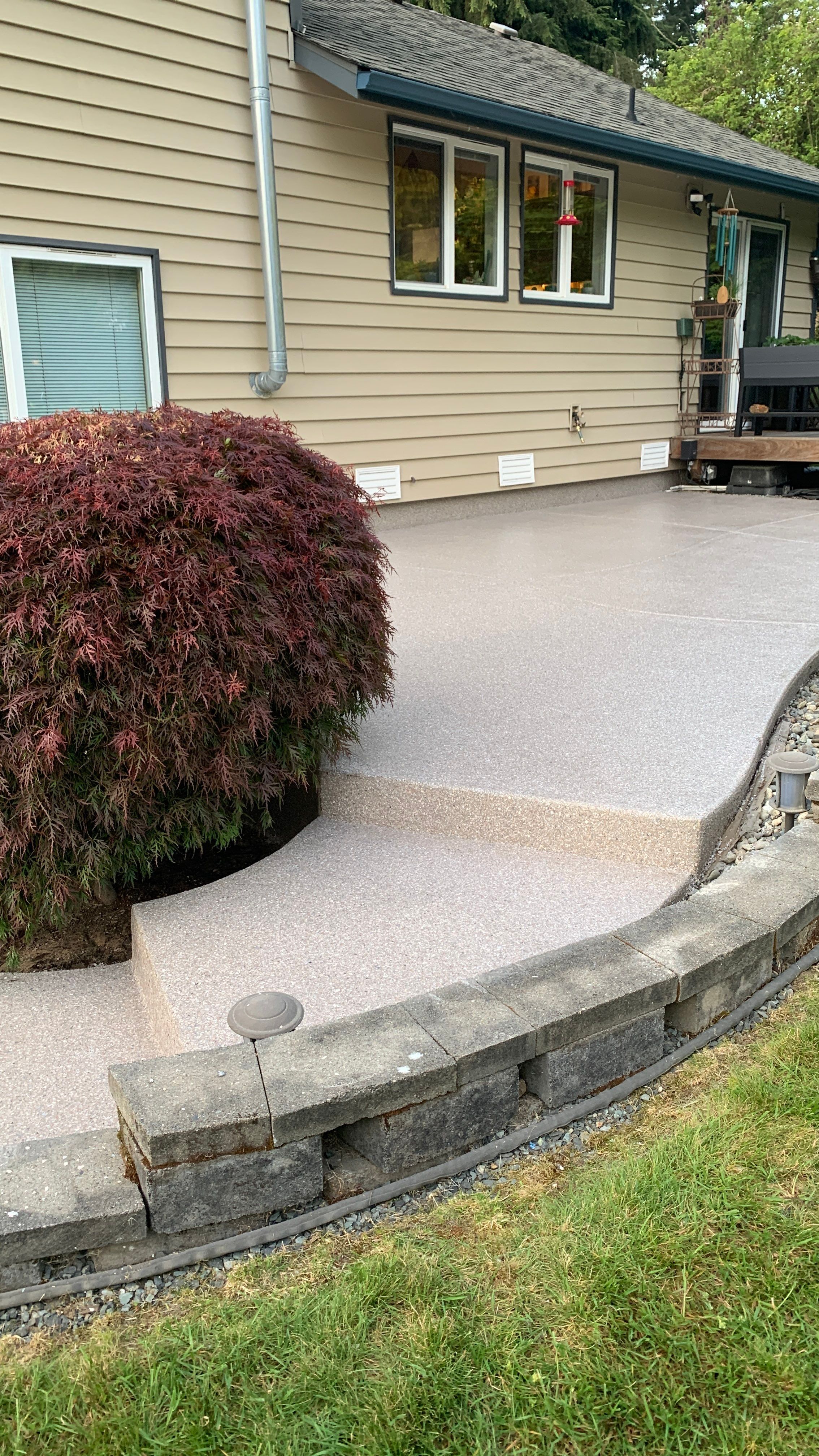
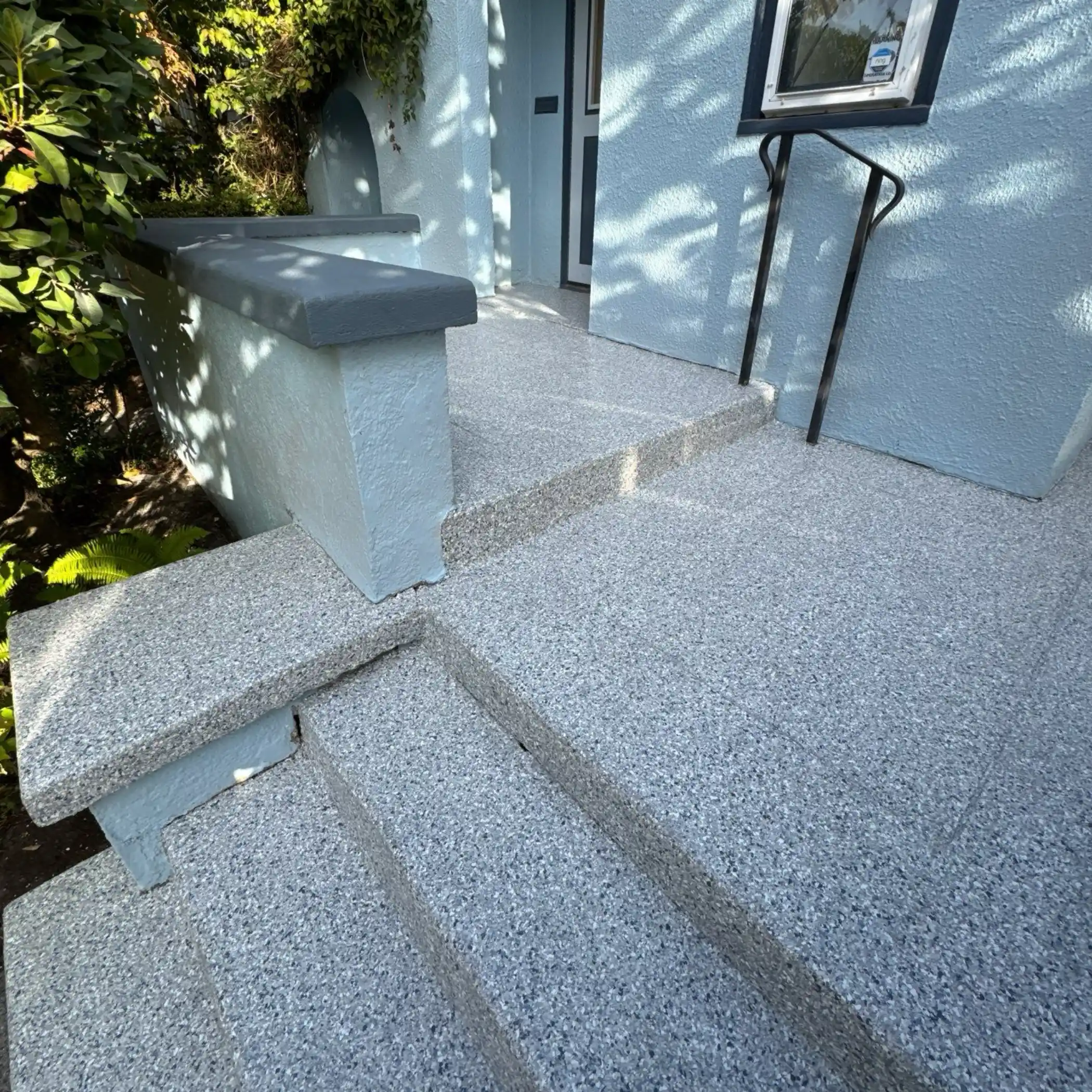
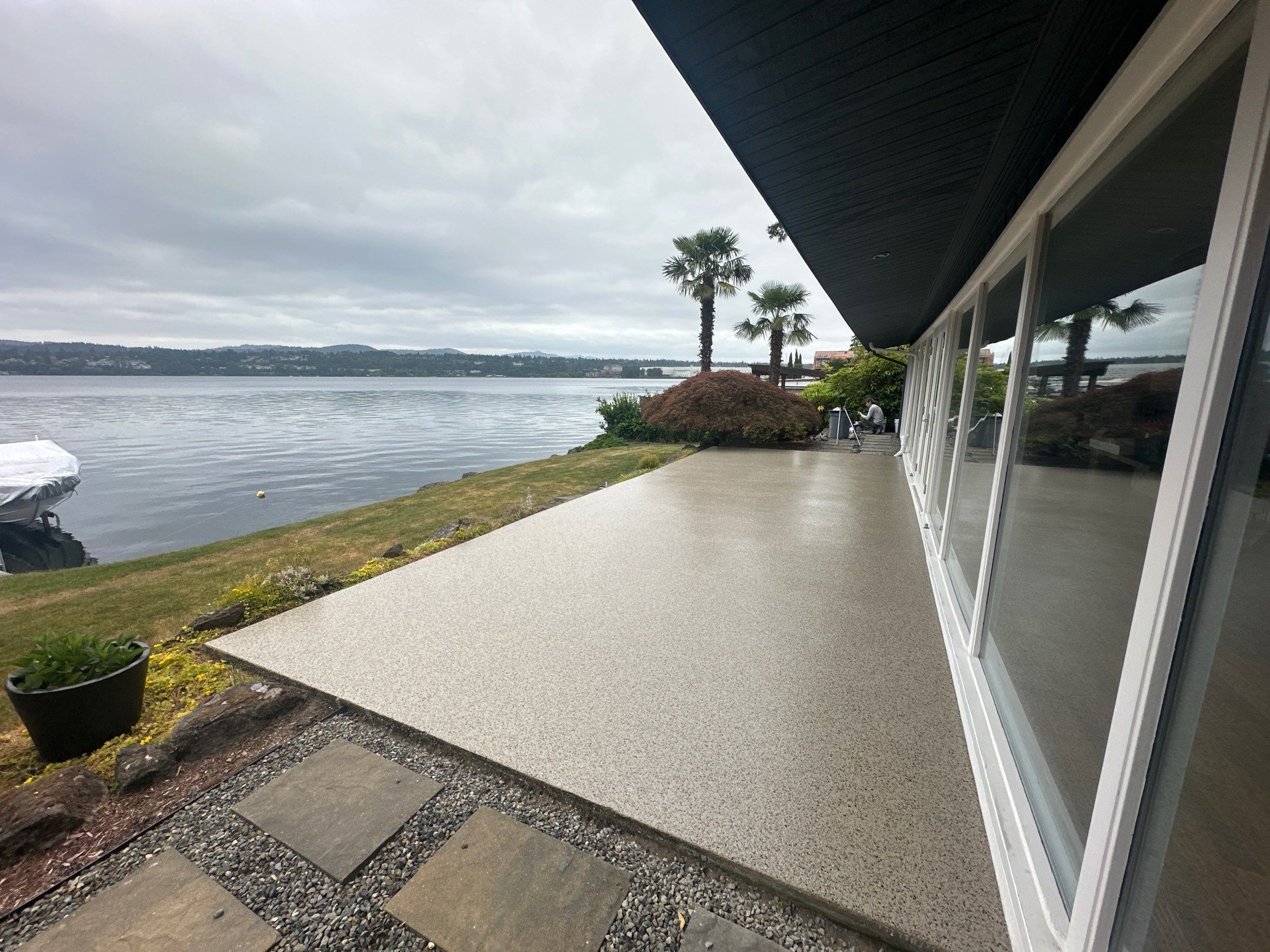
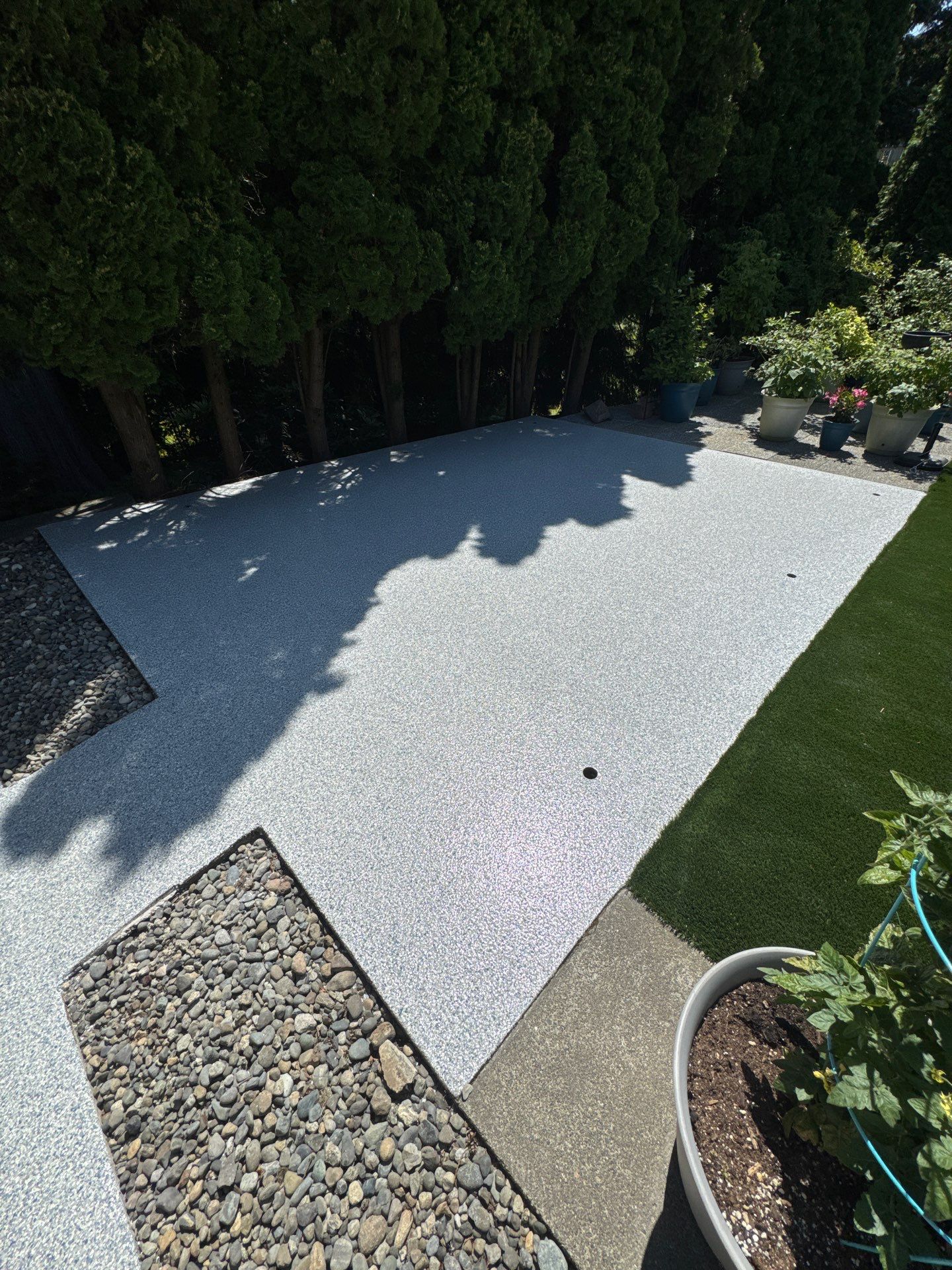
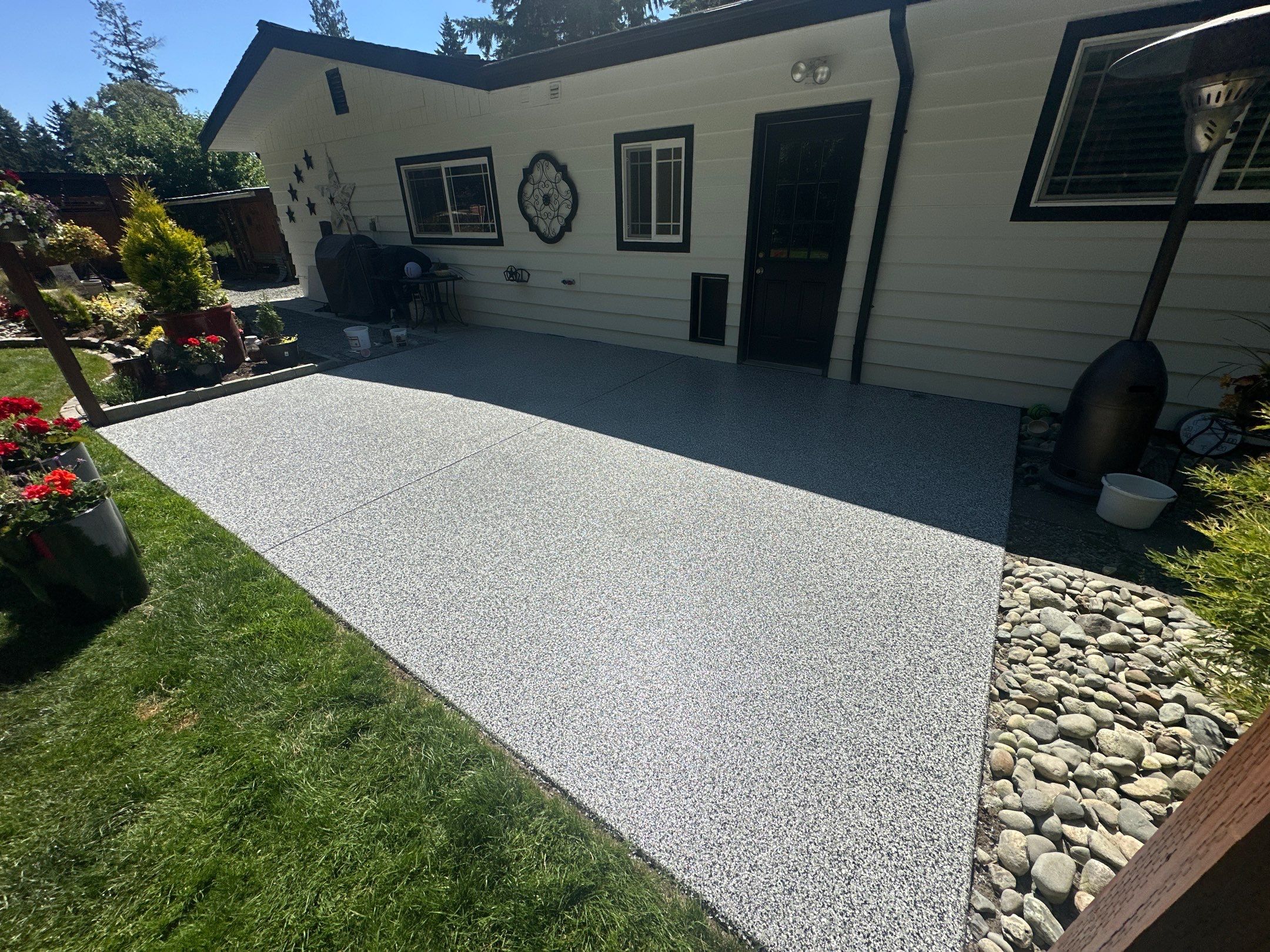
Learn more on our garage floor coatings in Seattle page, read our guide to basement floor coatings, or see a shaded, damp Seattle patio we coated in Flint.
Cascade meters every slab at the free consultation. When a slab needs it, a two-layer moisture barrier system goes down under the coating. On borderline slabs, repeat readings over a few months help decide the plan.
White rings and blotches are usually mineral deposits left as moisture moves up through the concrete and evaporates. They are a sign to test the slab before coating. Diamond grinding removes them from the surface.
Yes. Light blends like Mount Everest help dim spaces feel brighter, and the flake pattern hides dust well. The color doesn't change how the system performs.
Wondering what your own slab reads? Book a free in-home quote or call 425-226-6085. The moisture test is part of every visit.
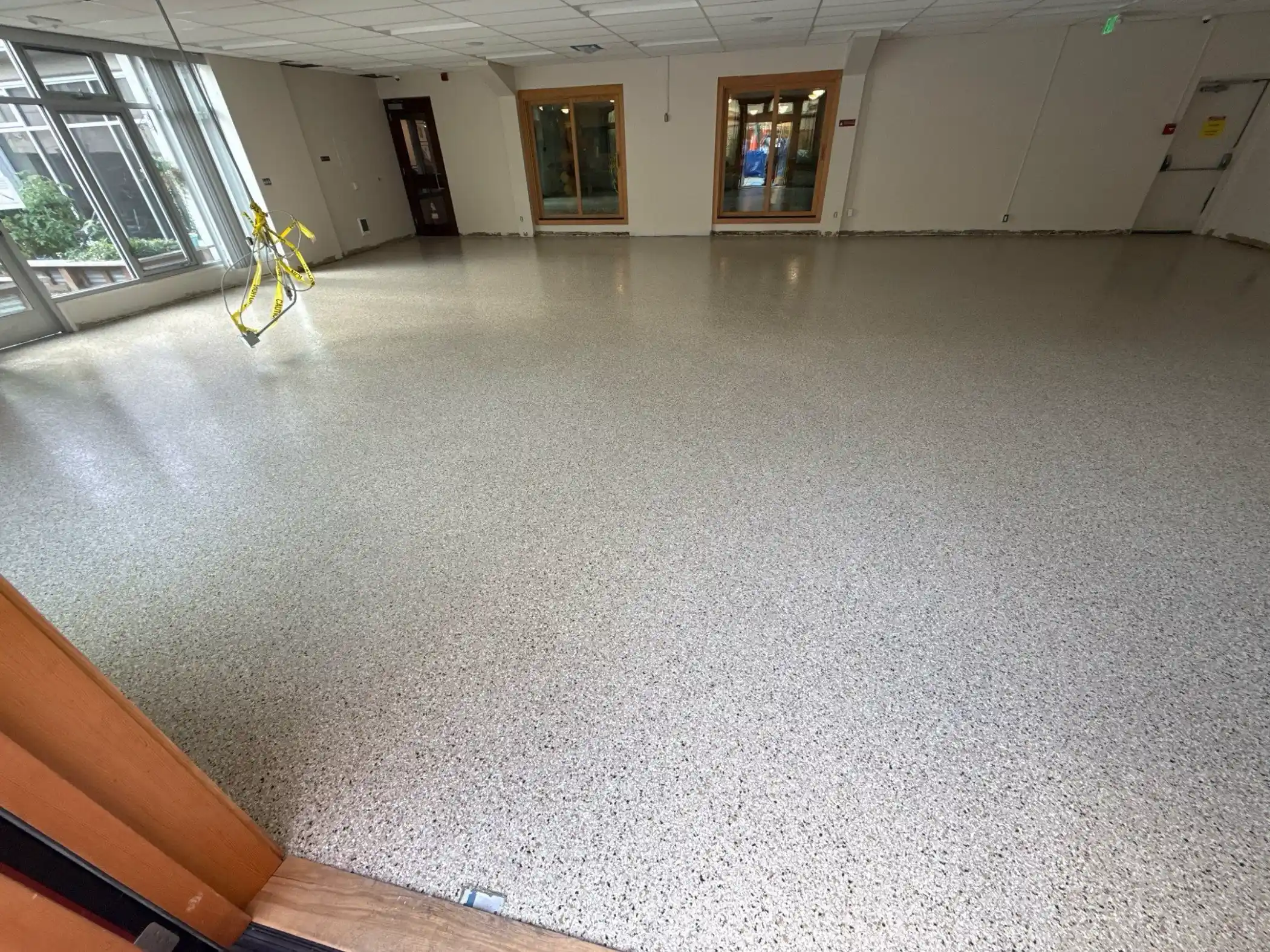
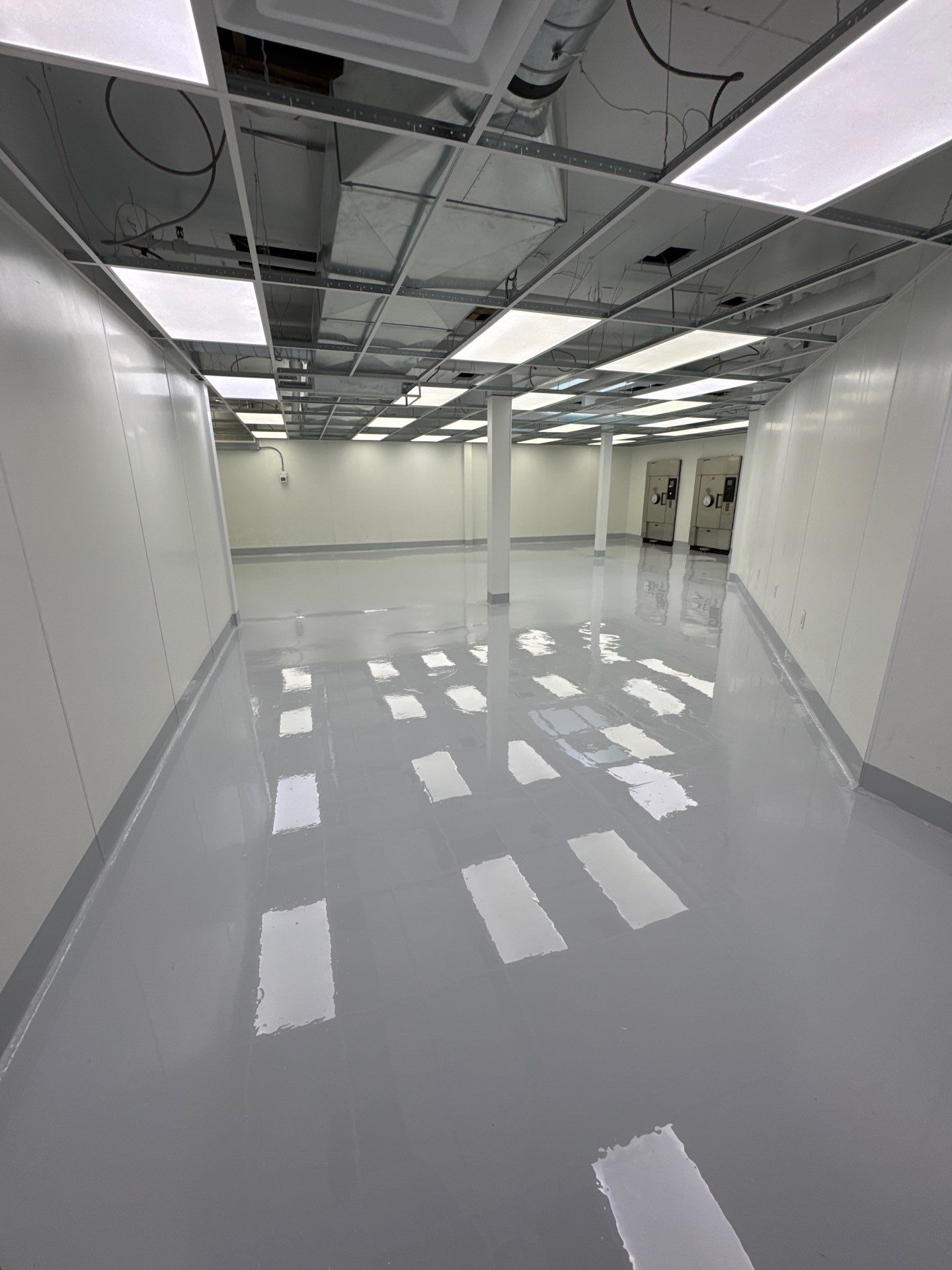
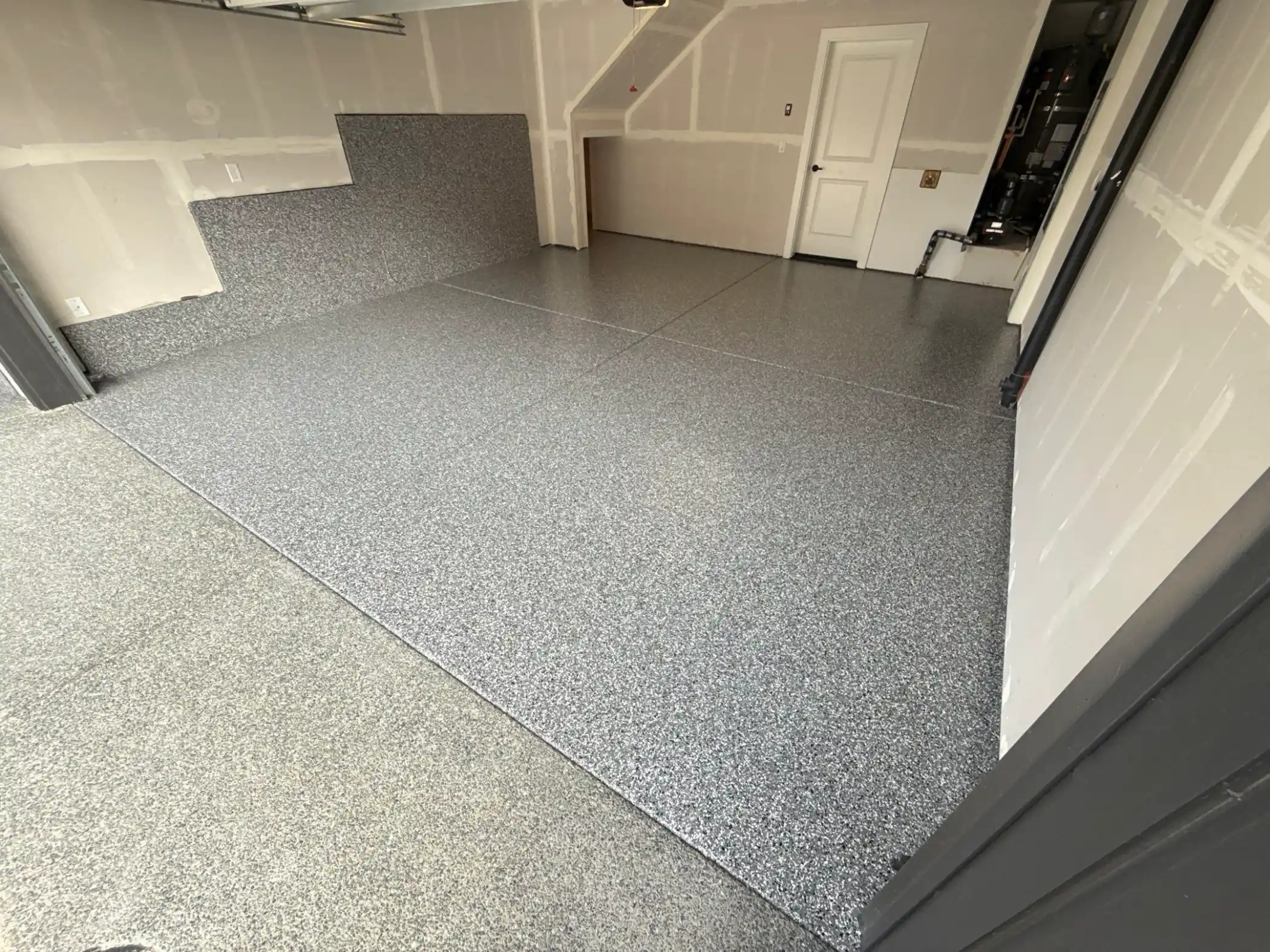
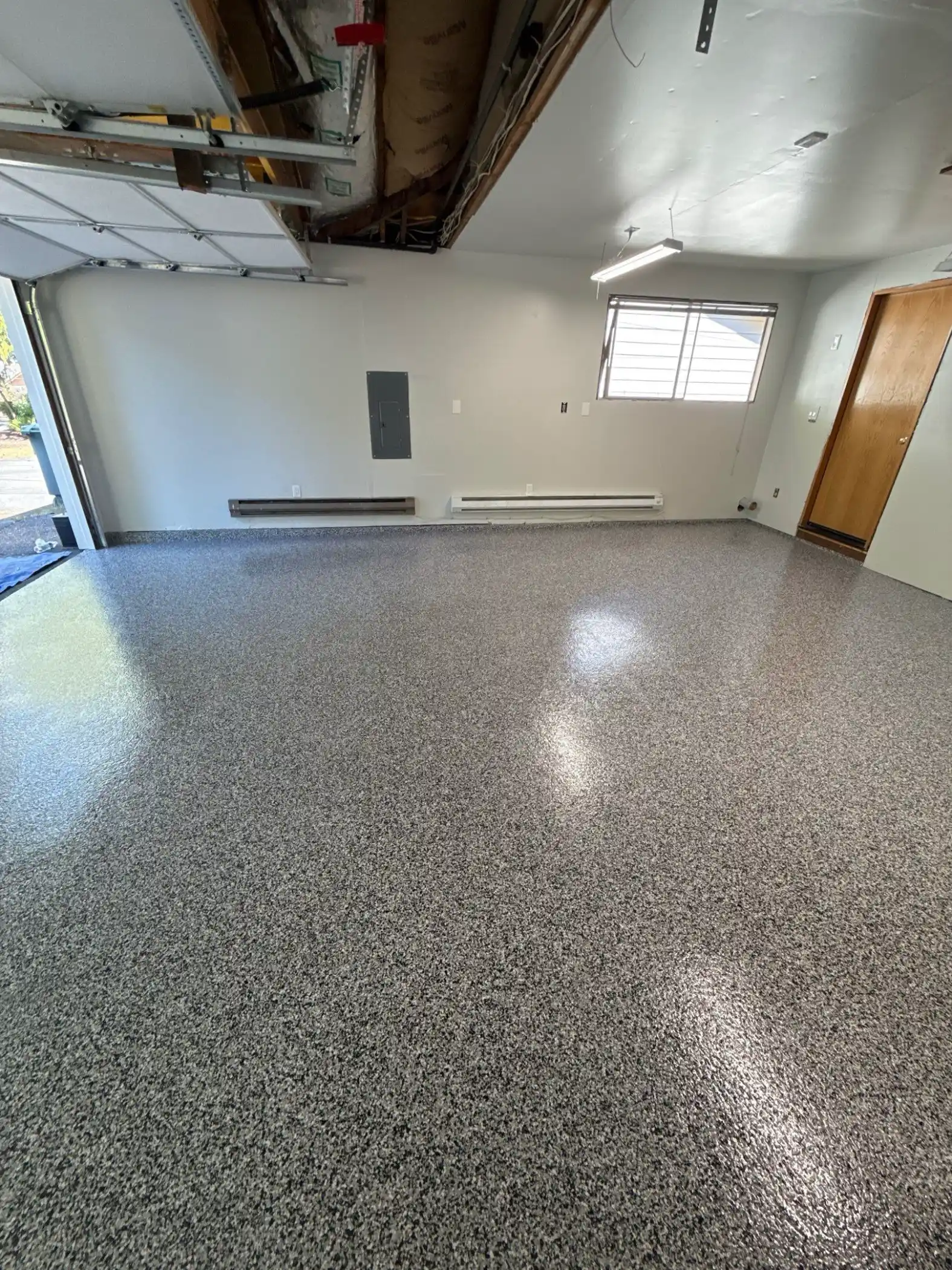
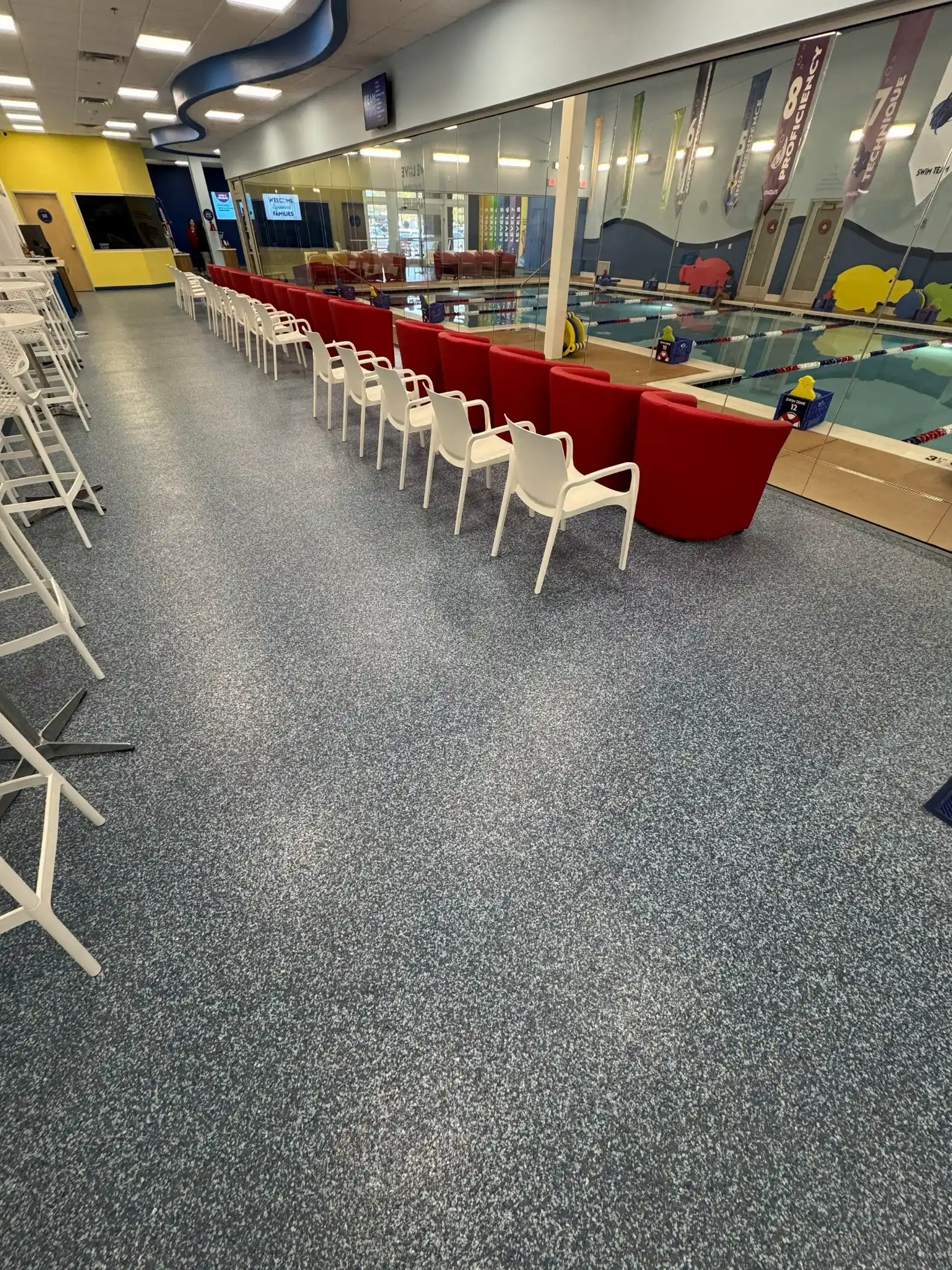
Here's just a few of our previous projects.