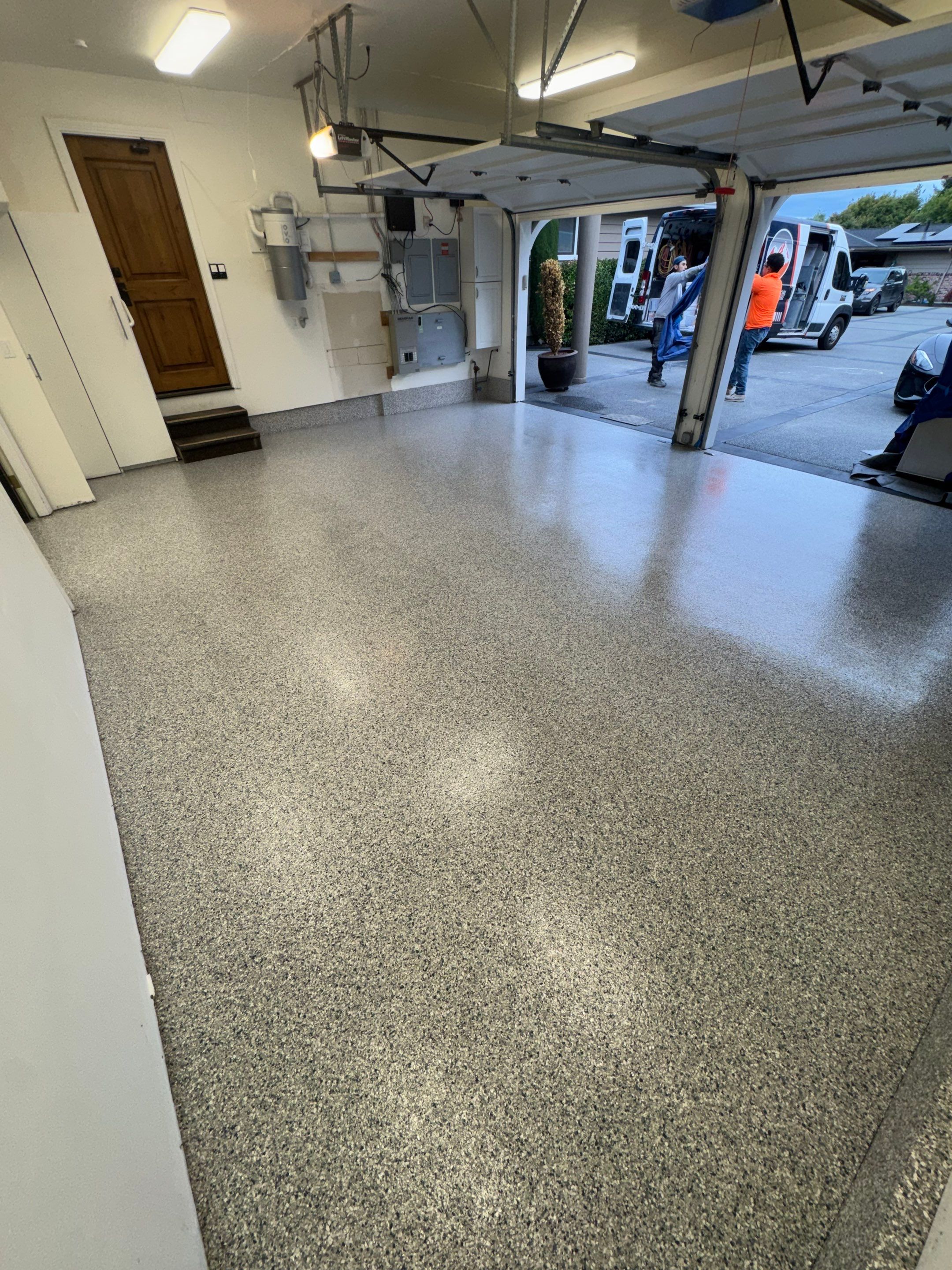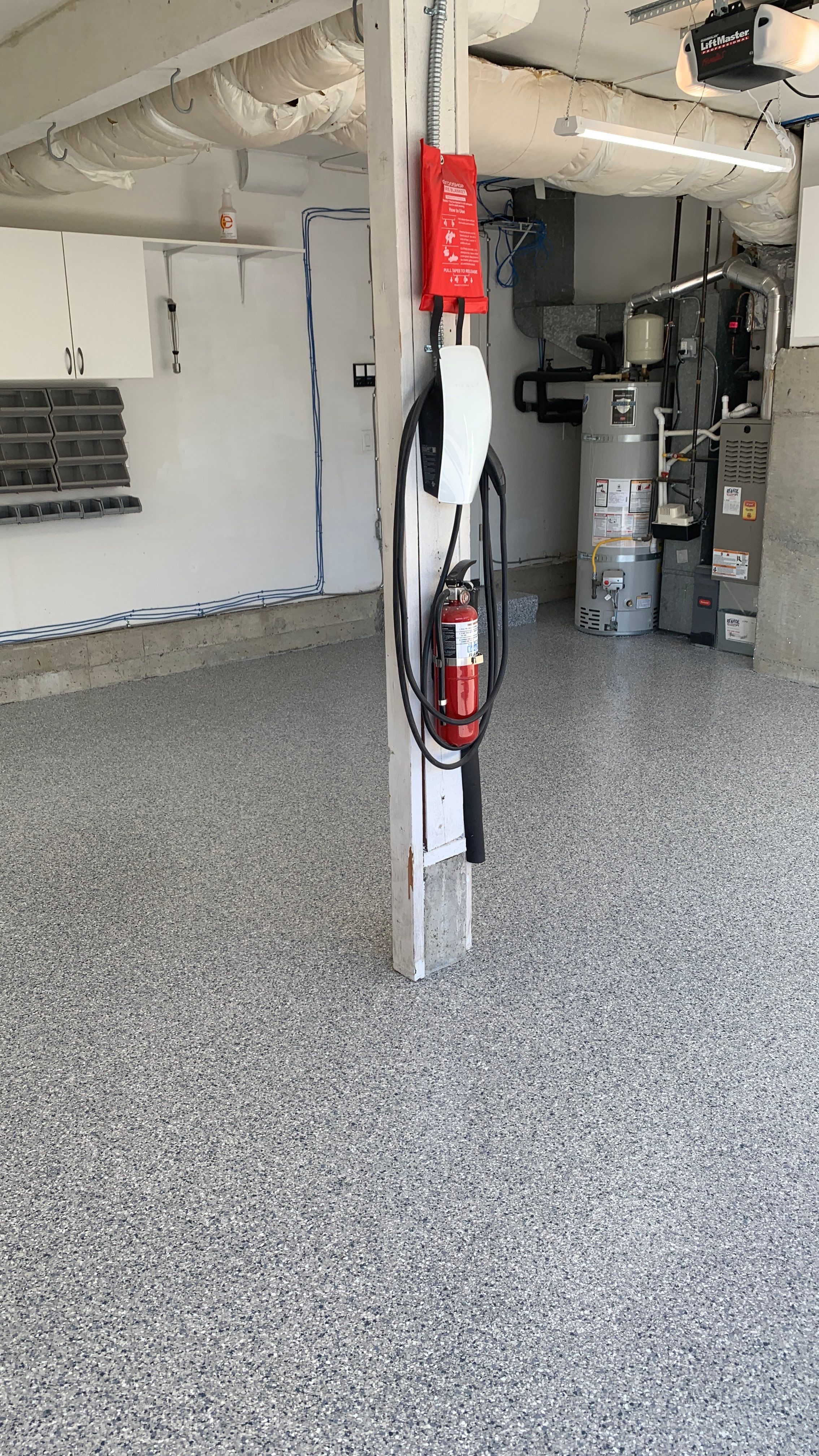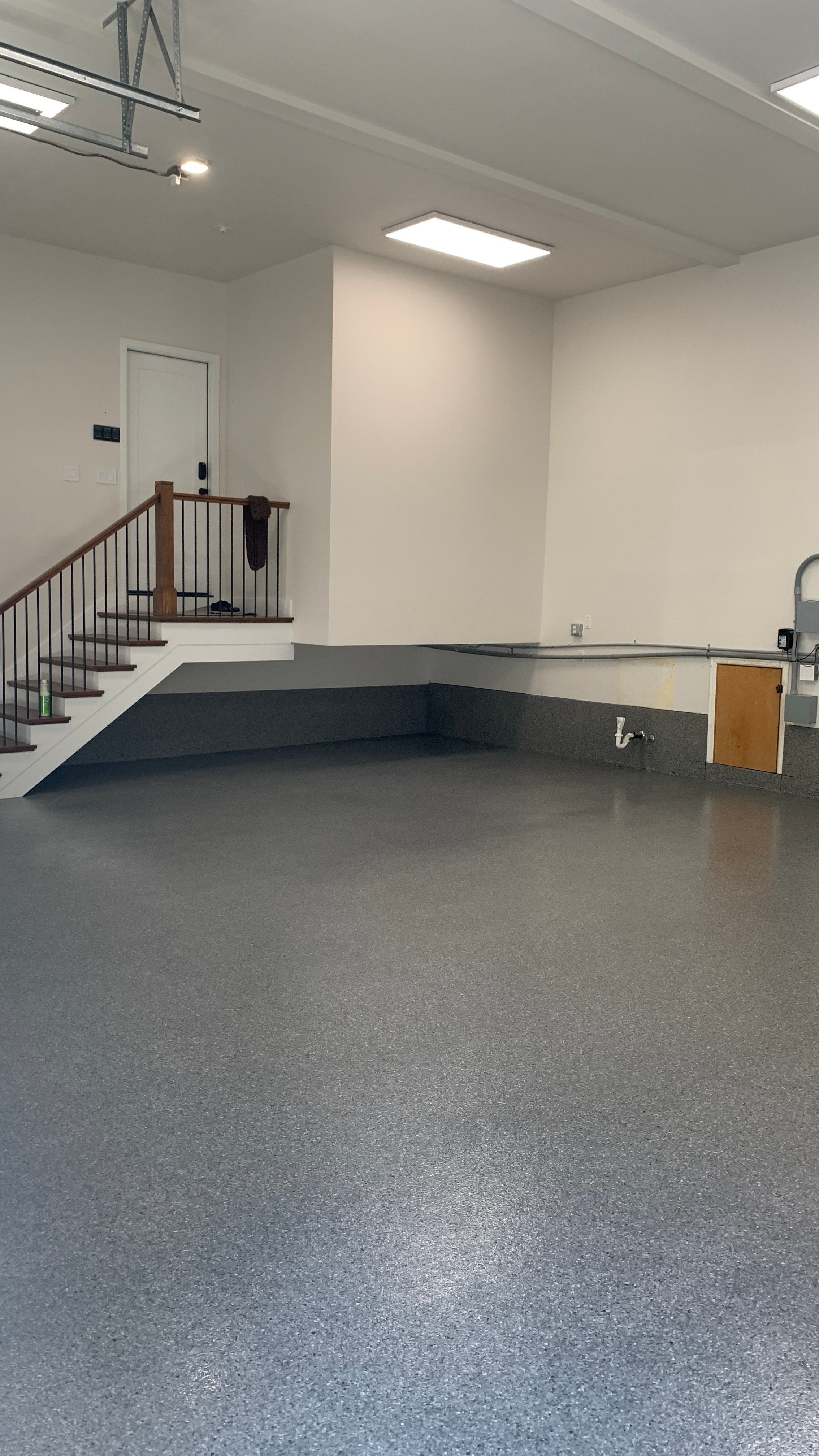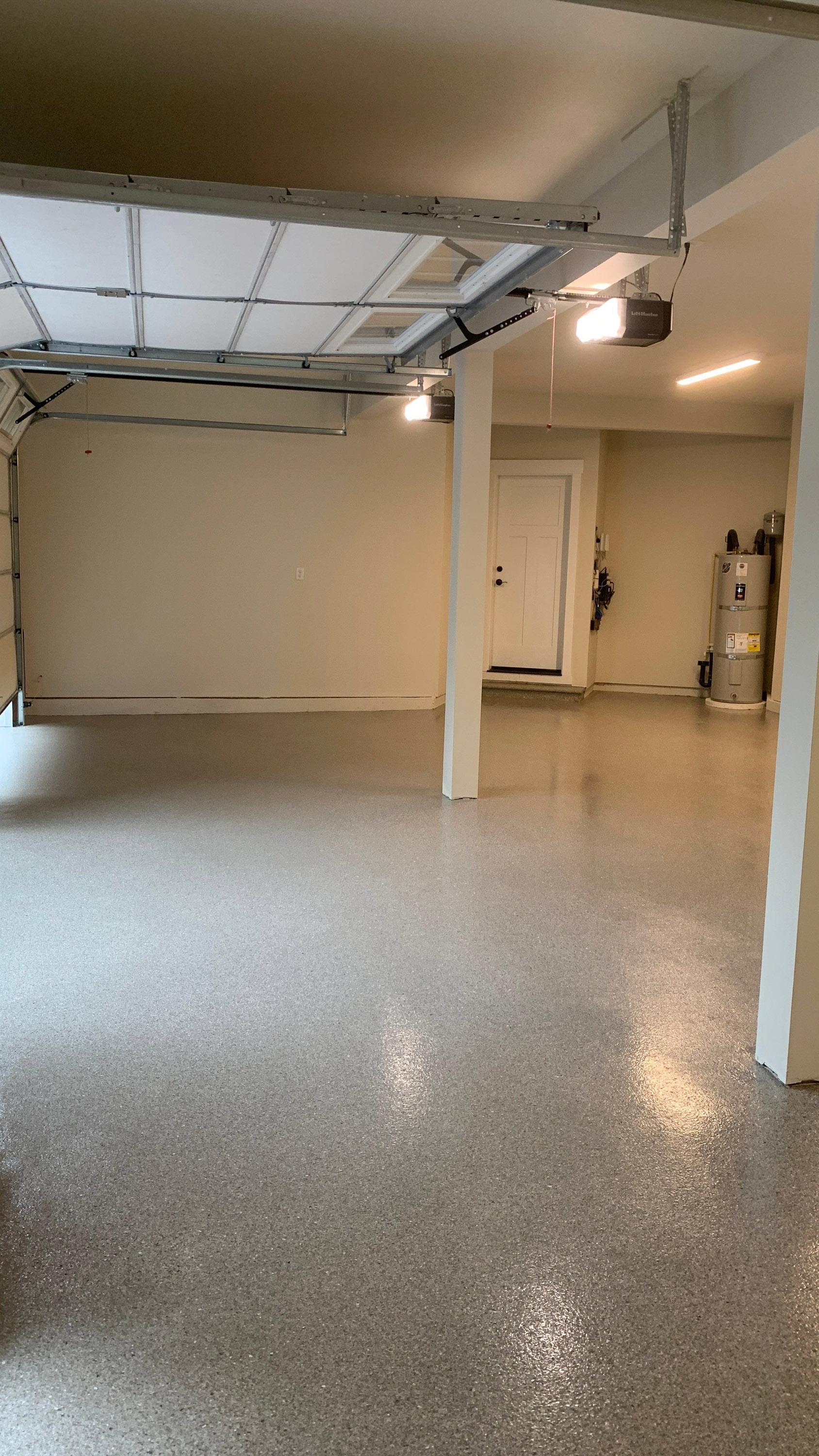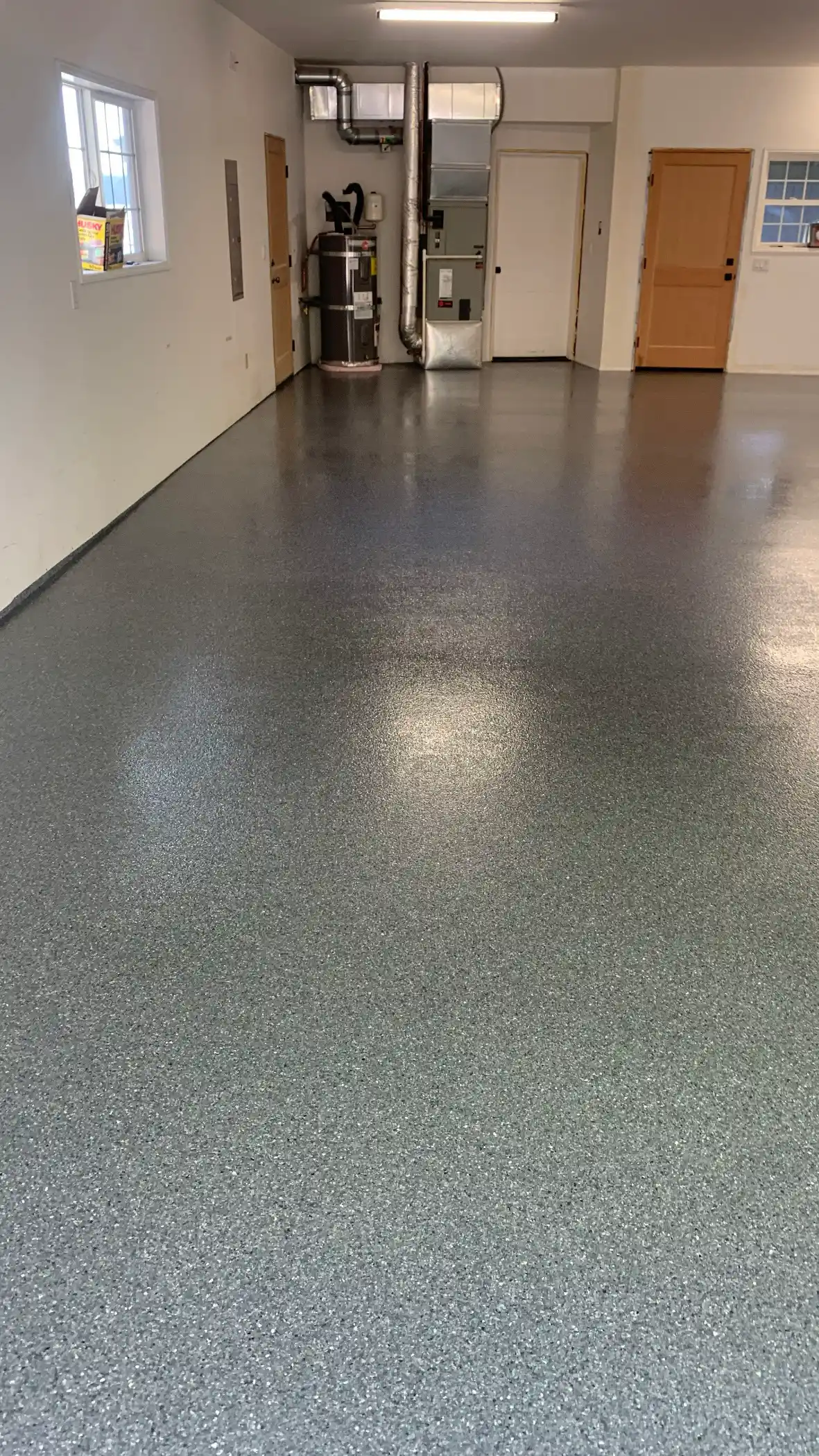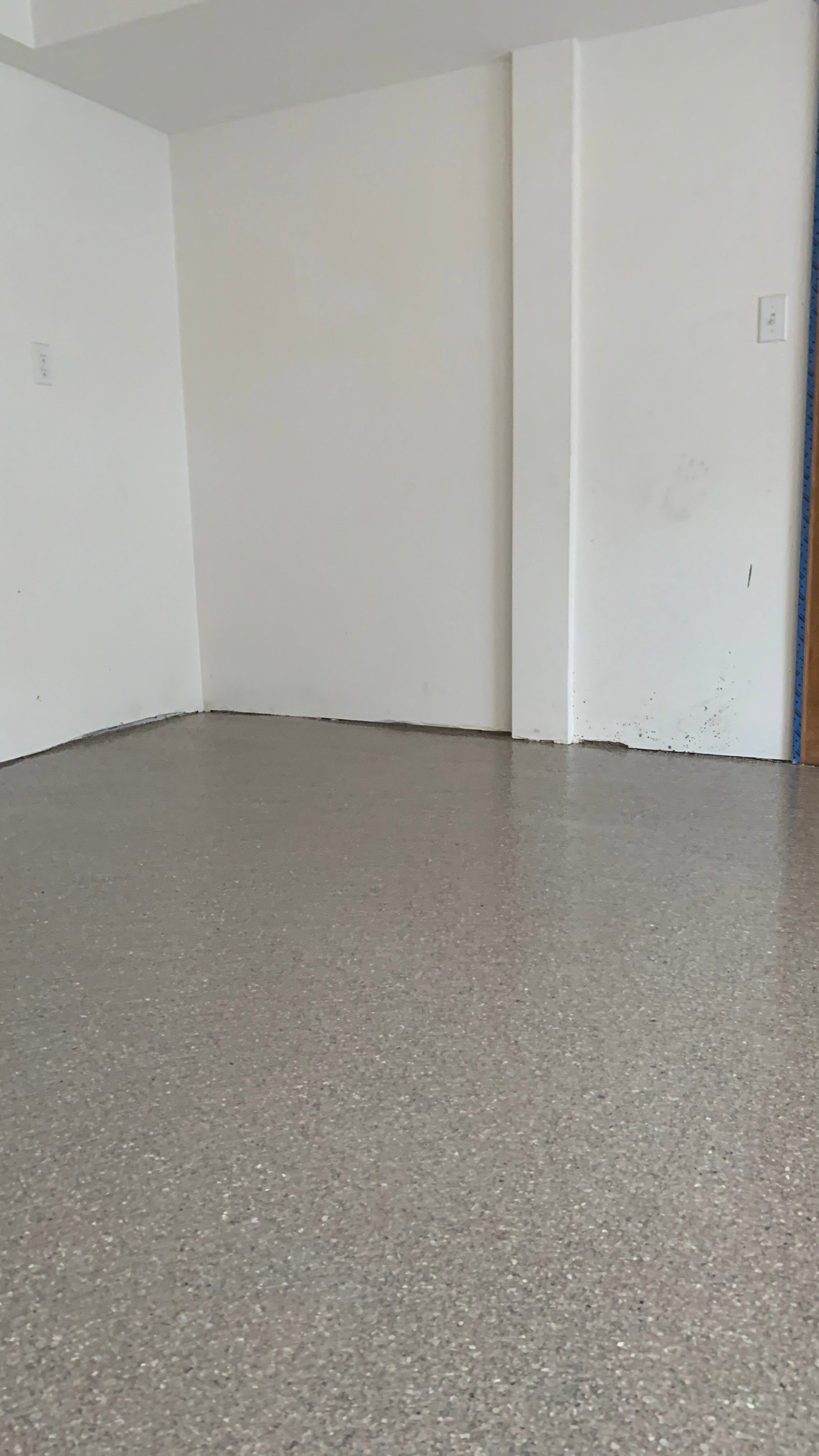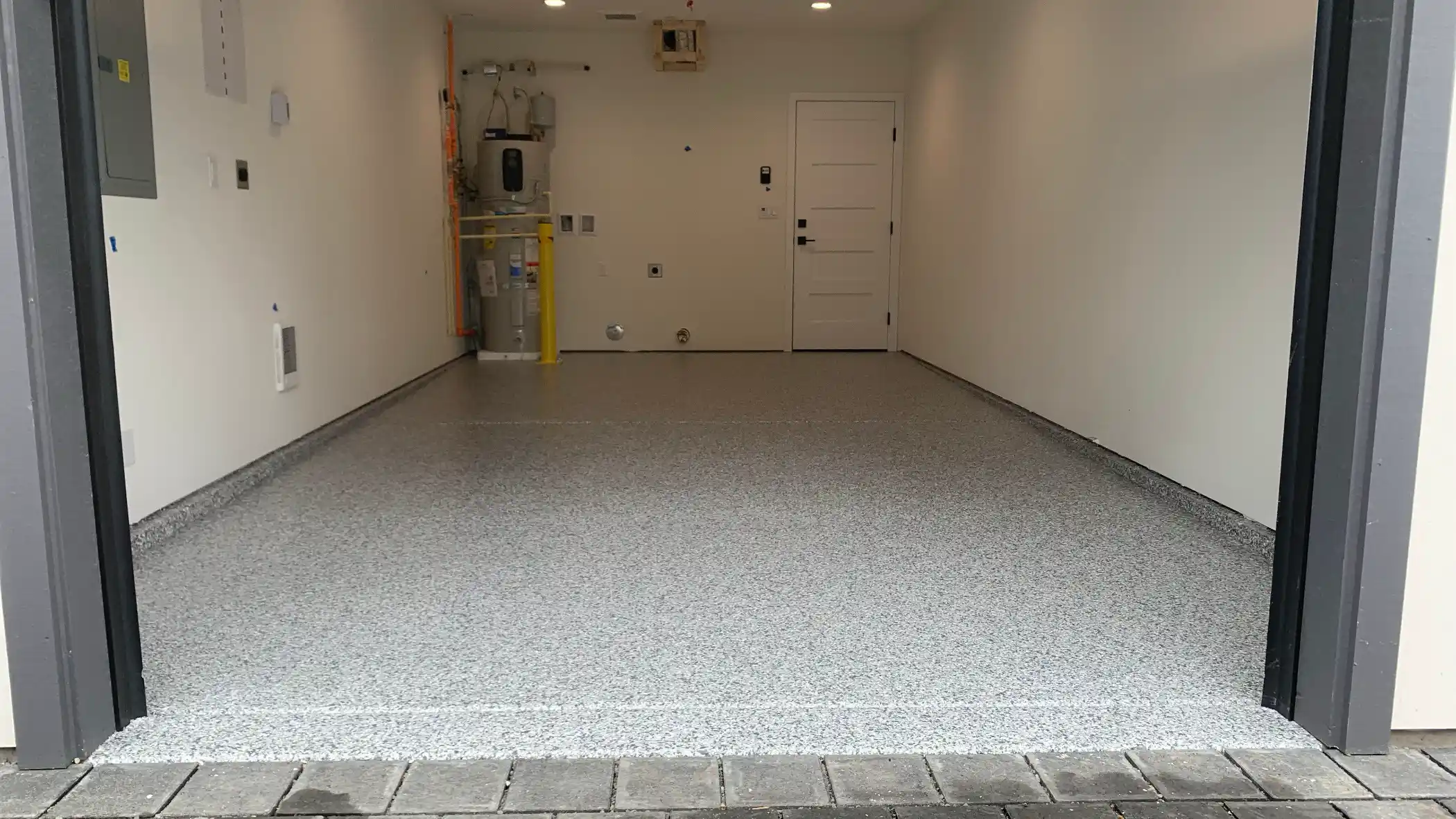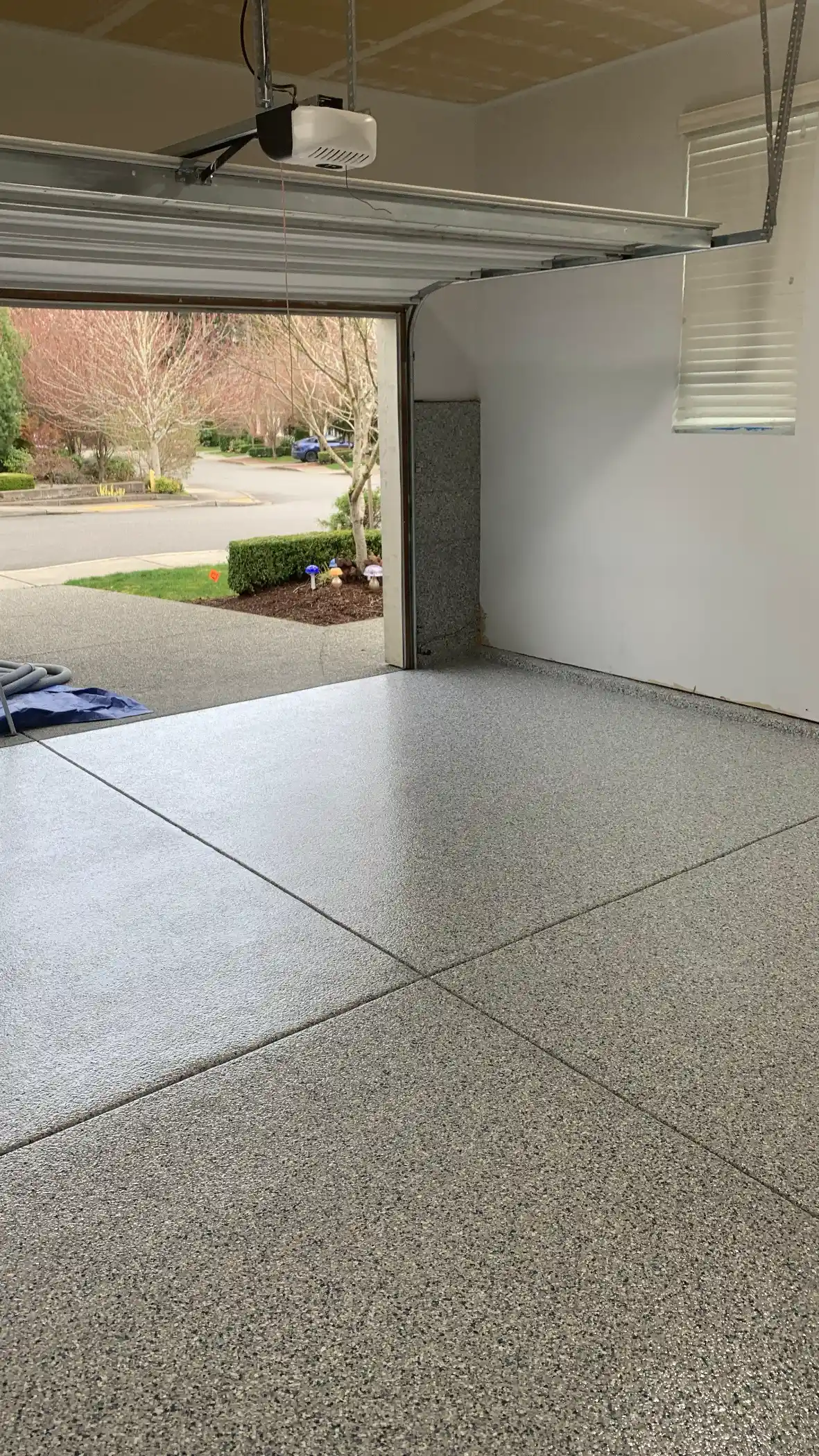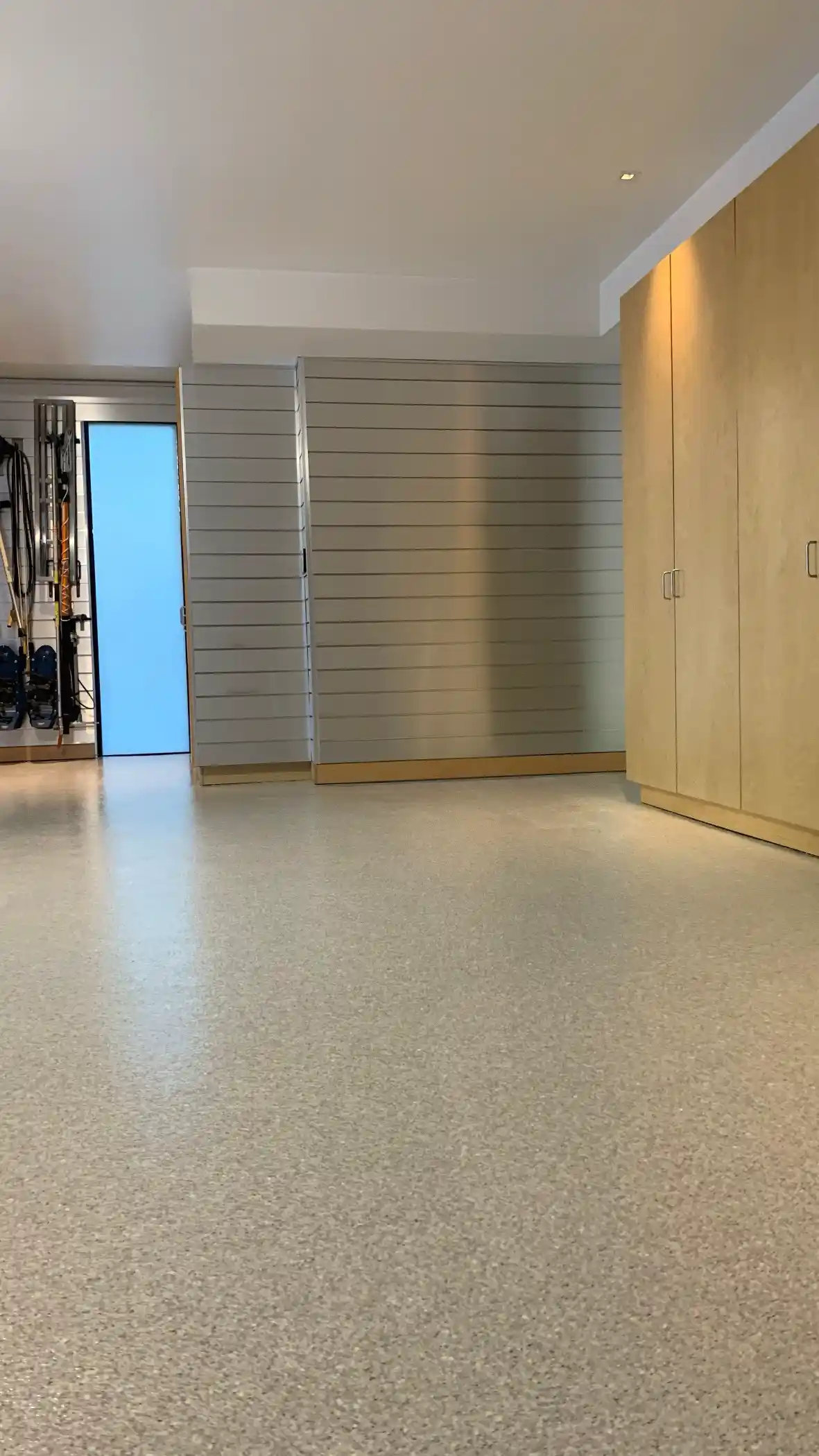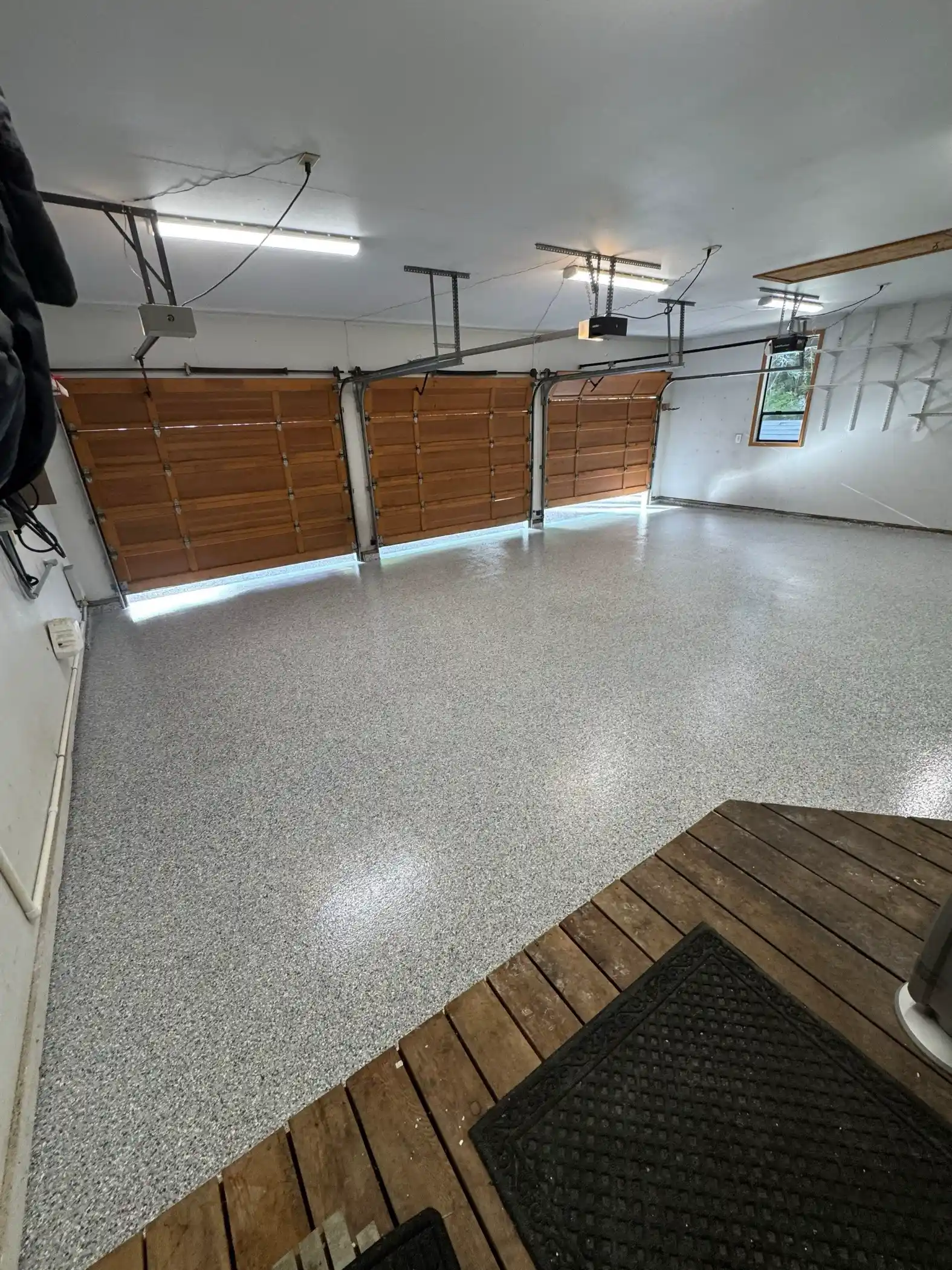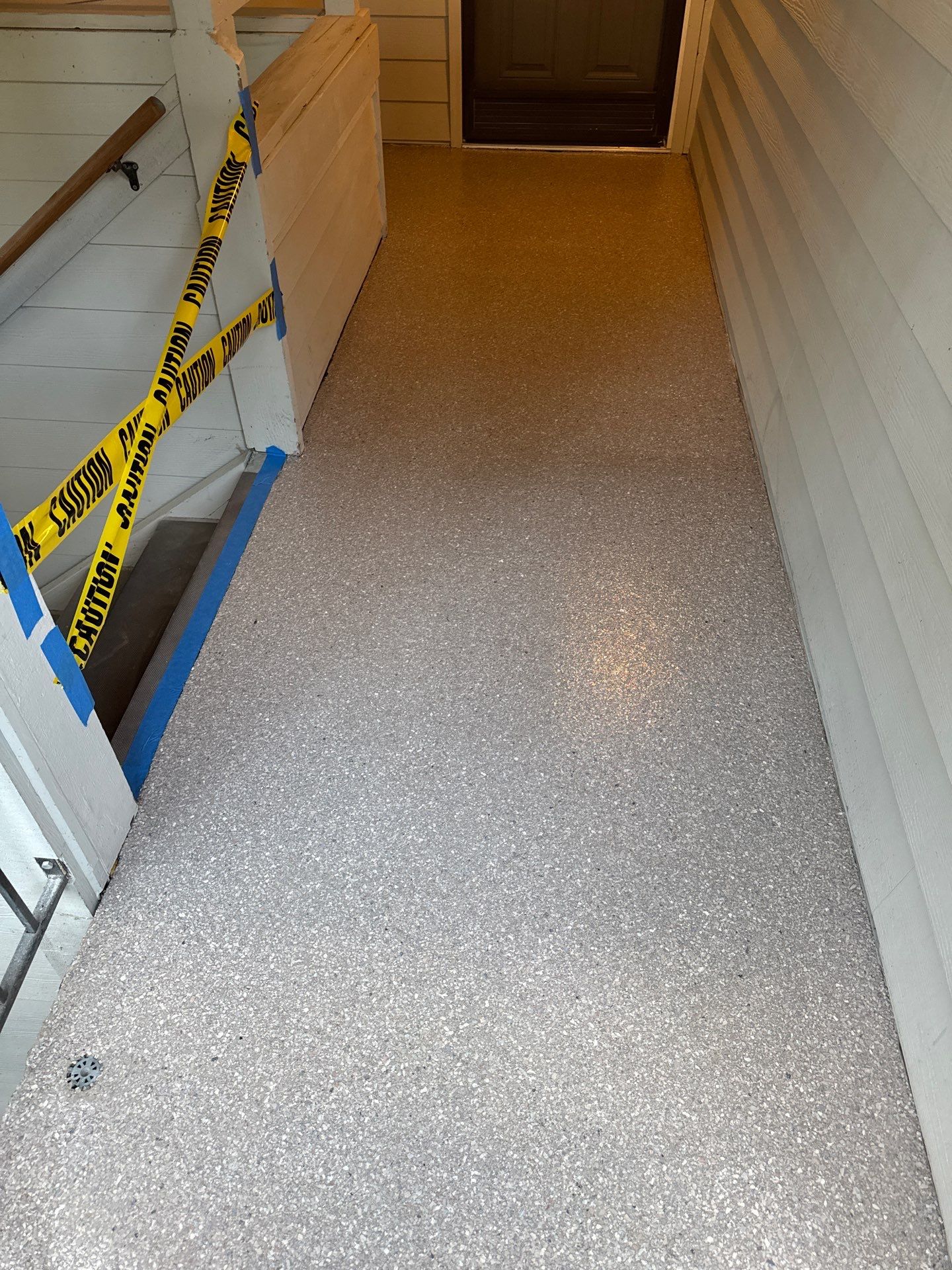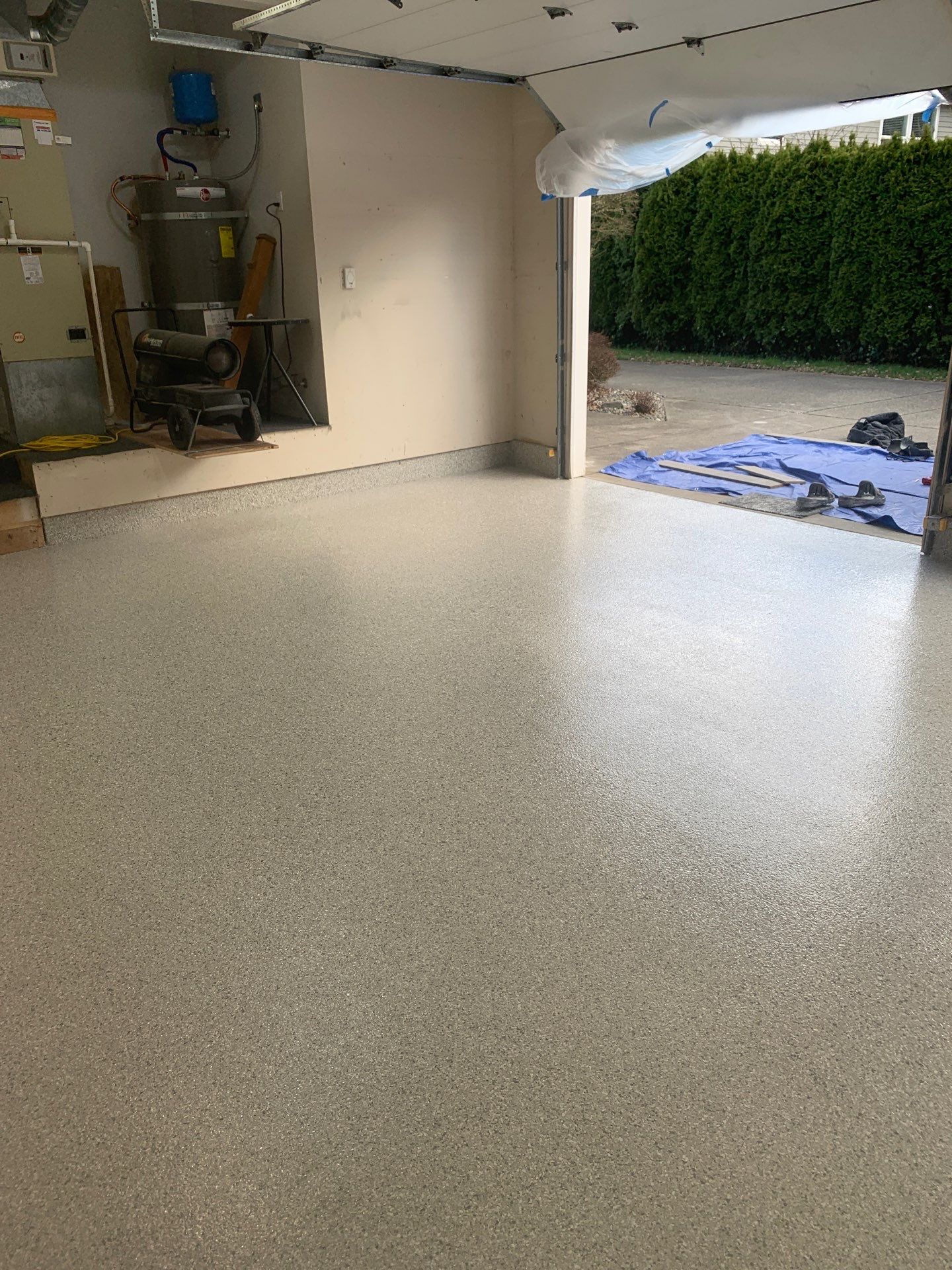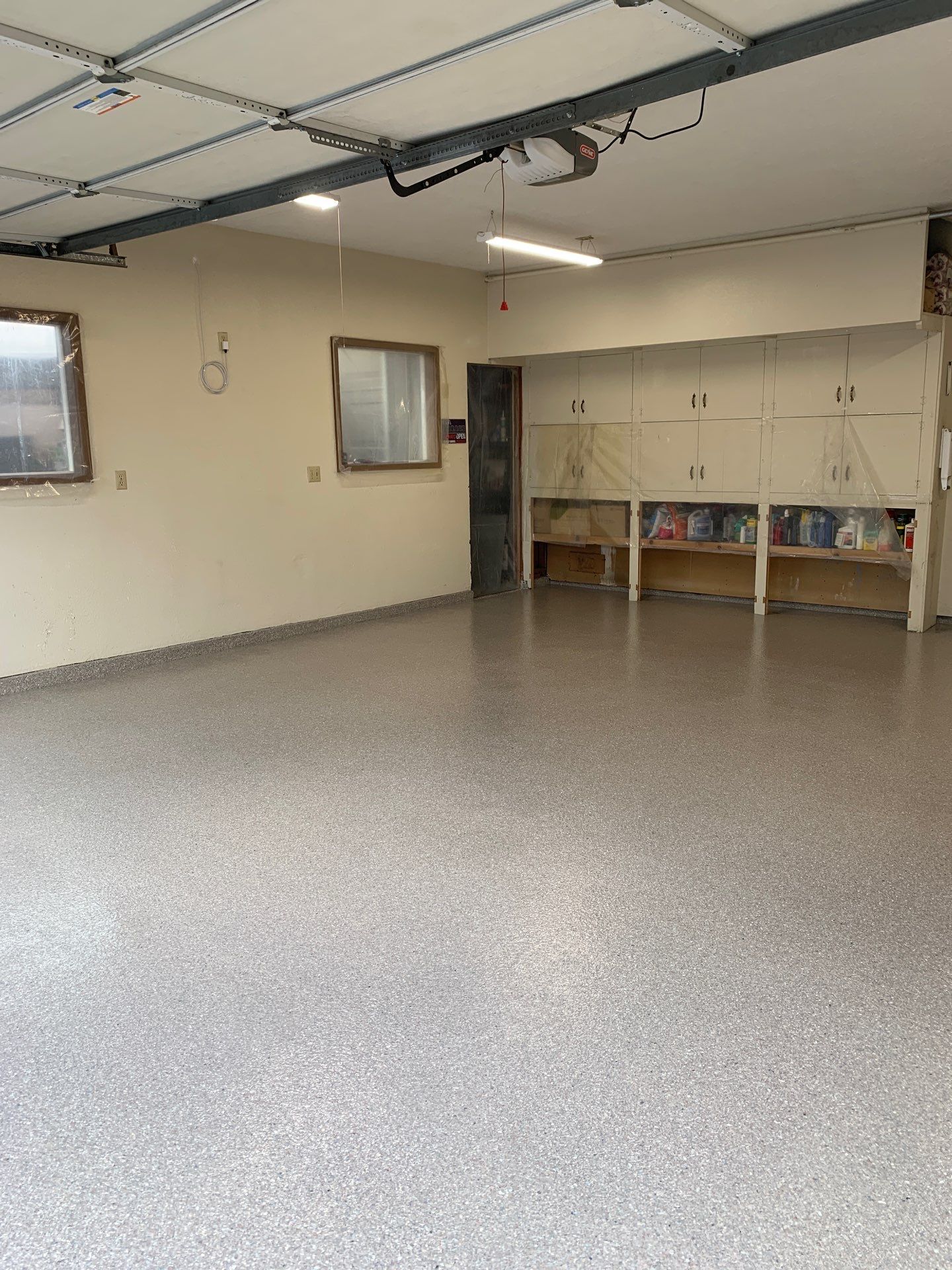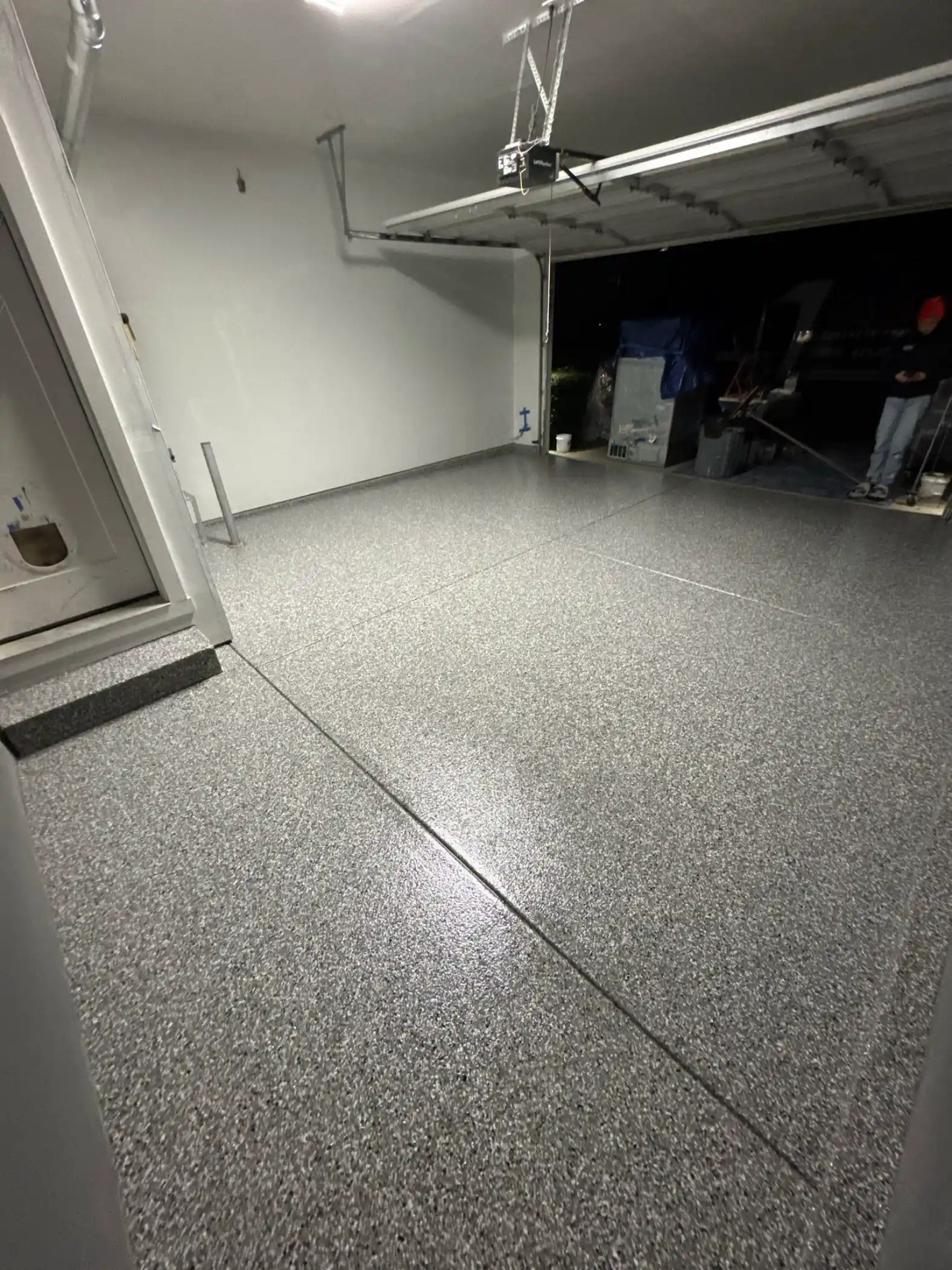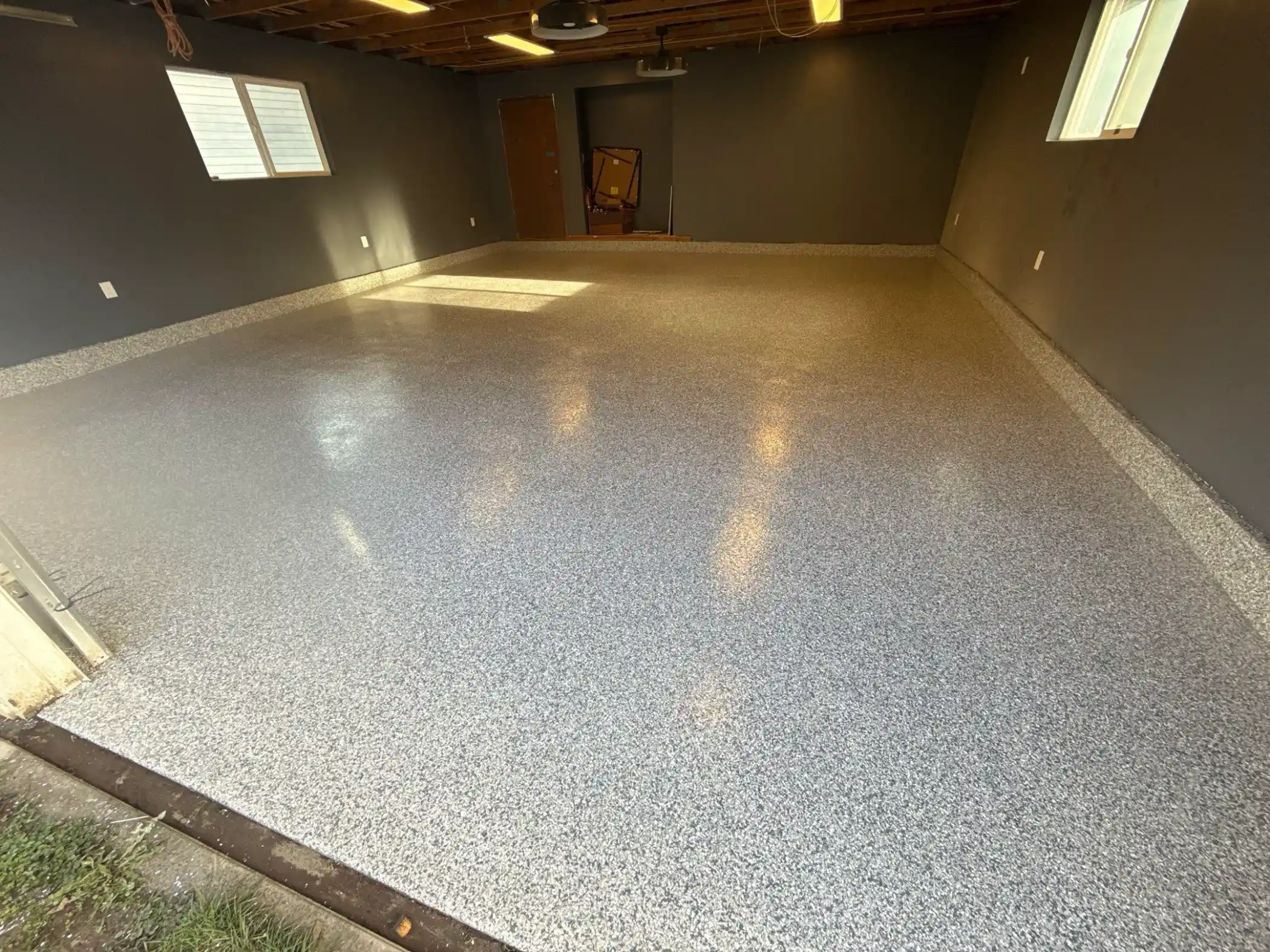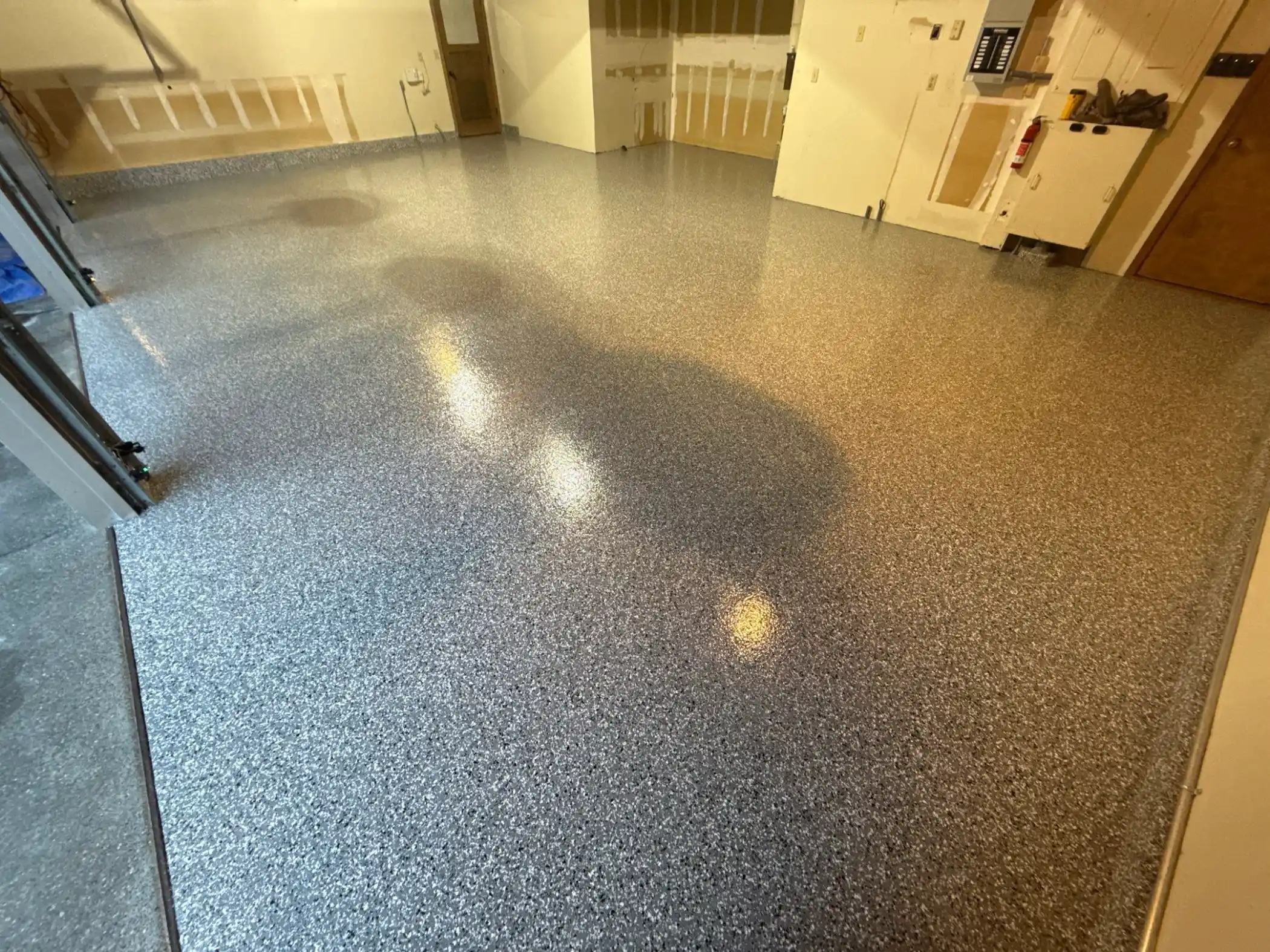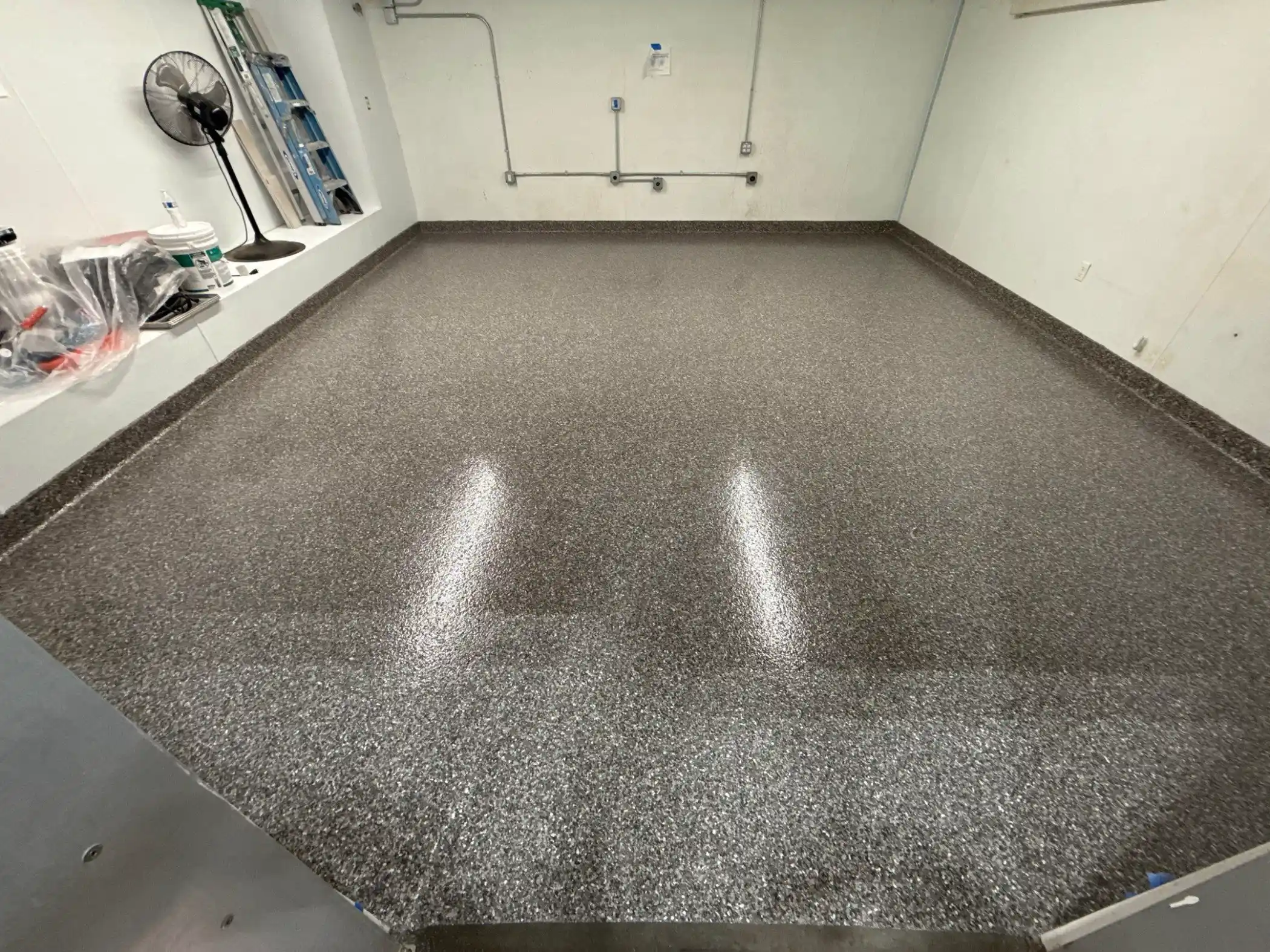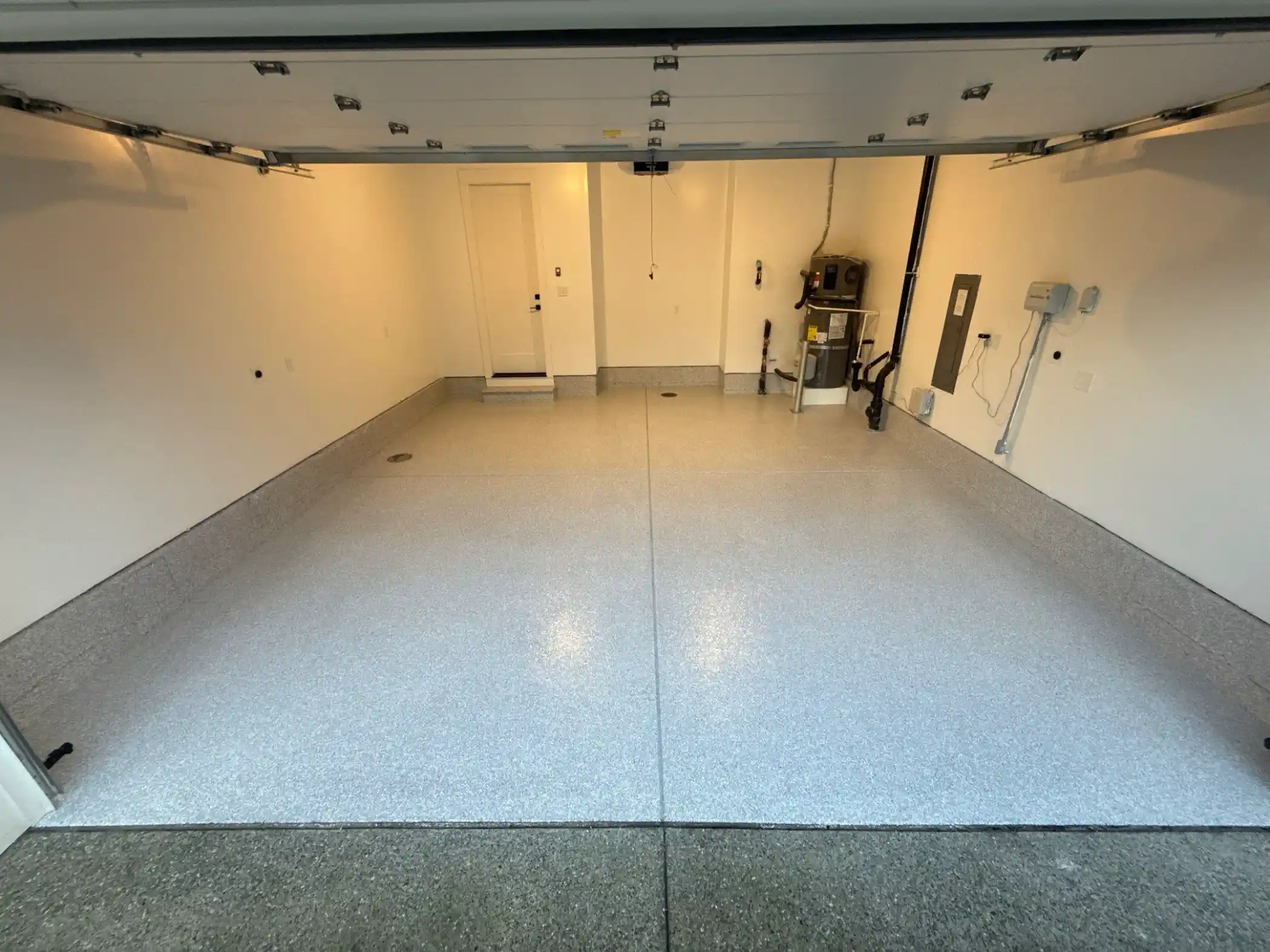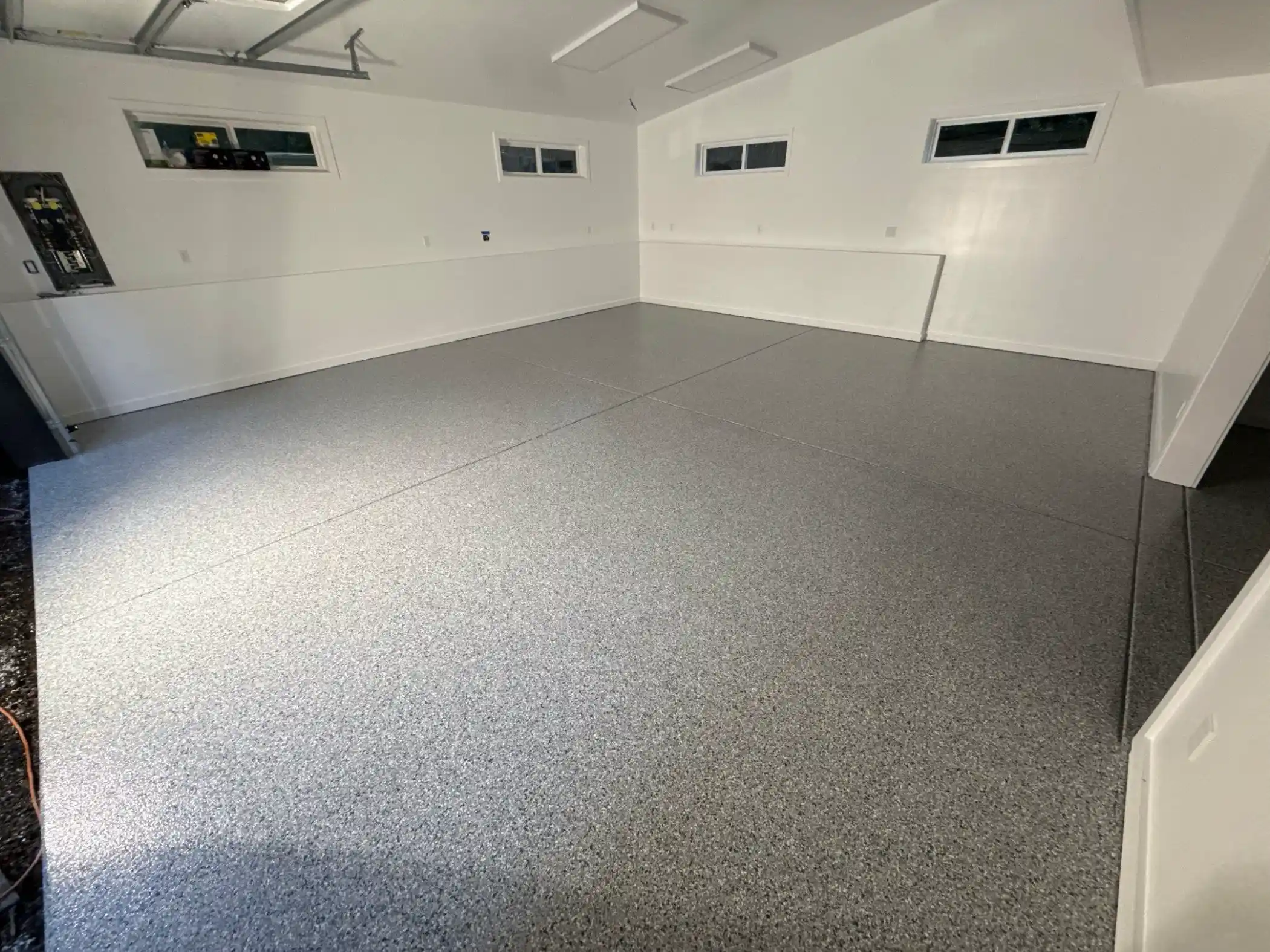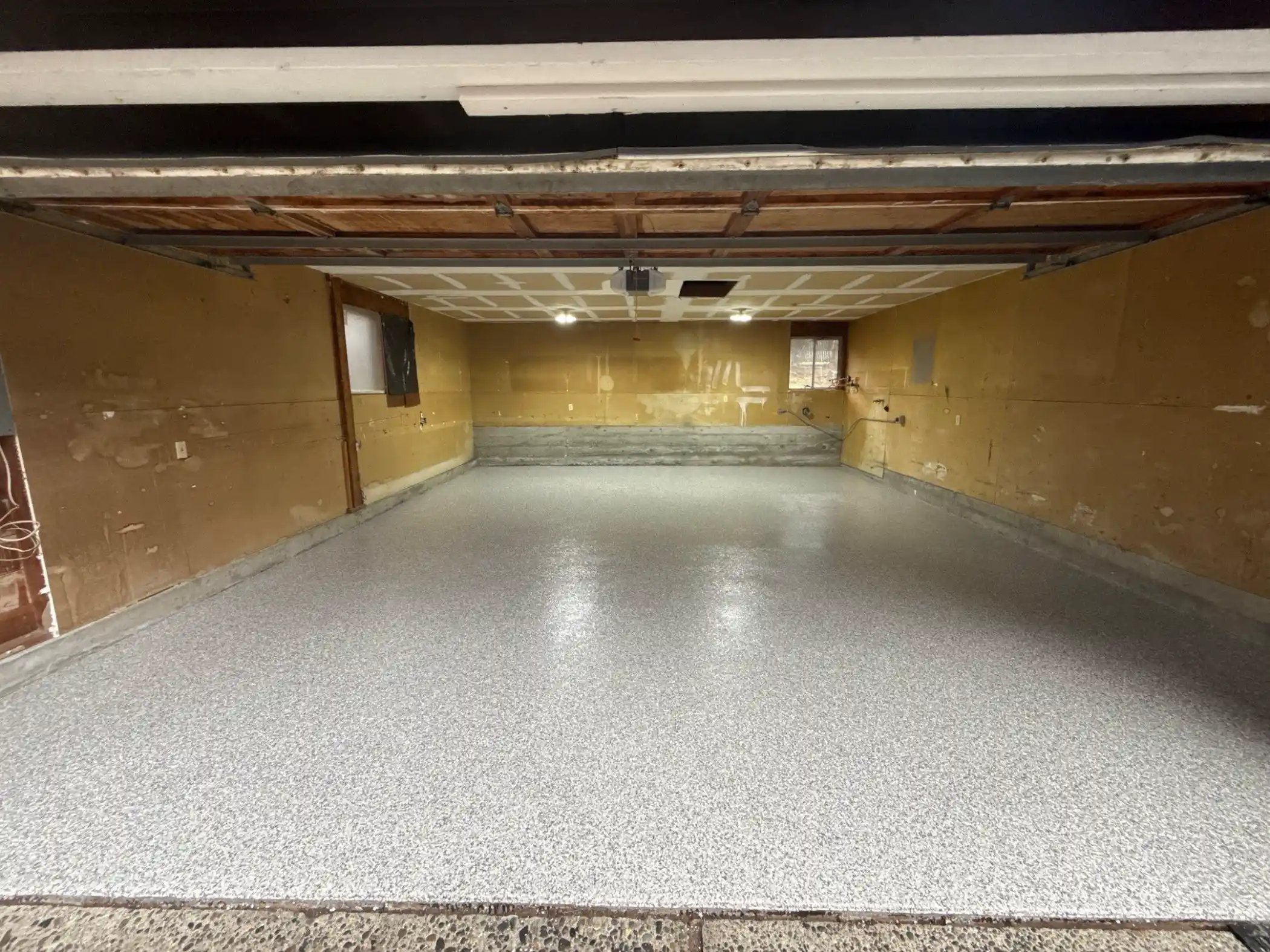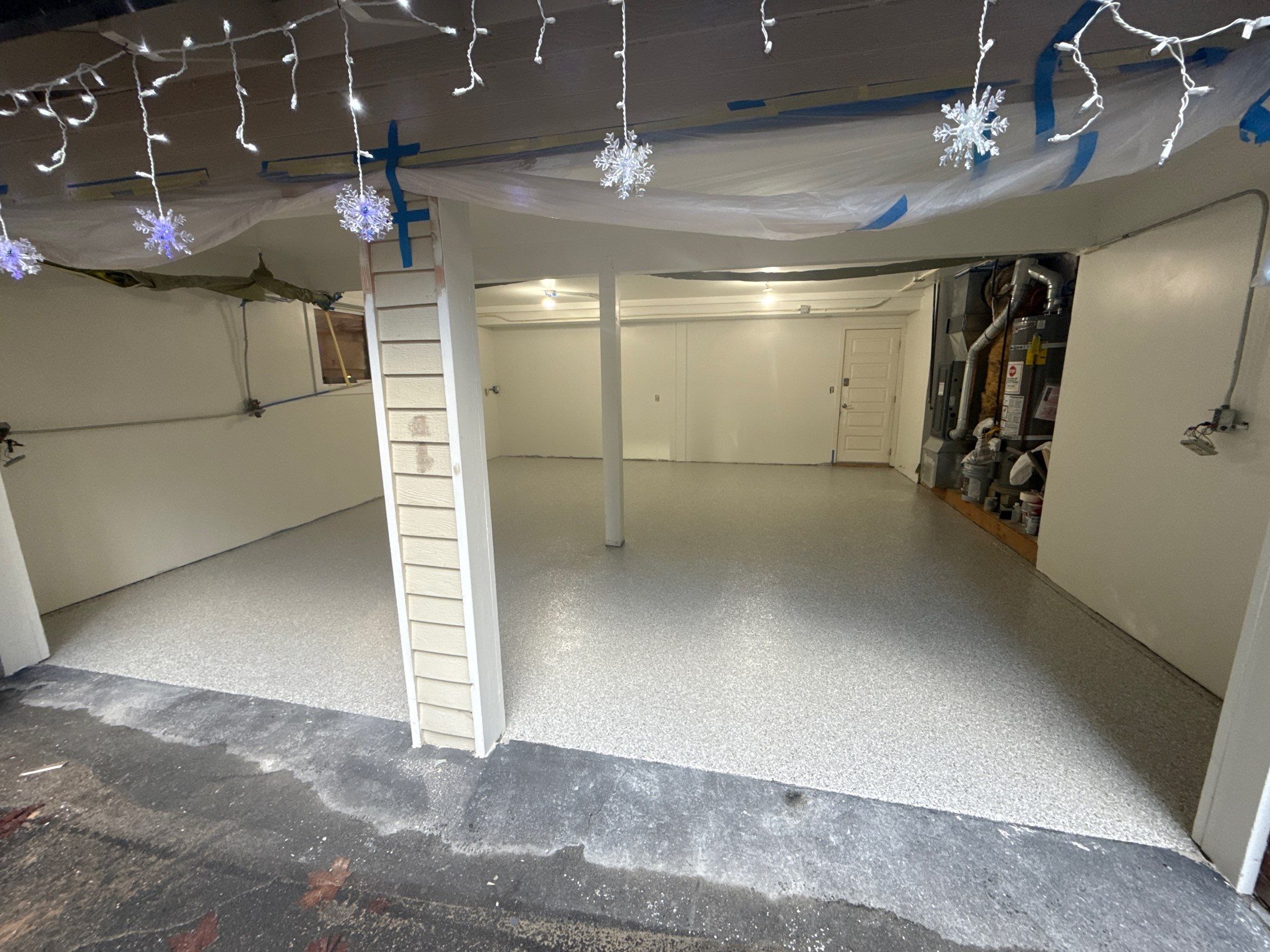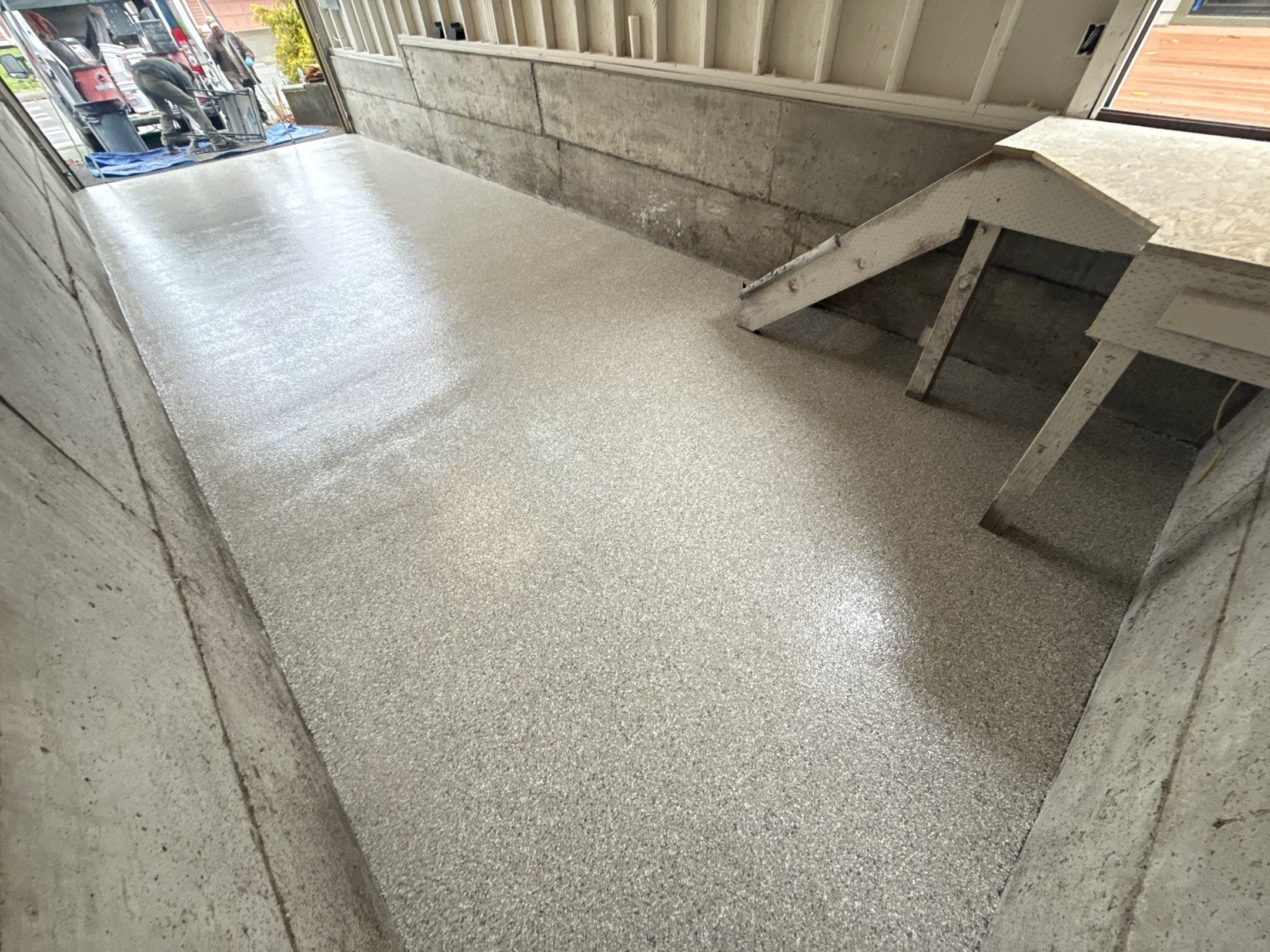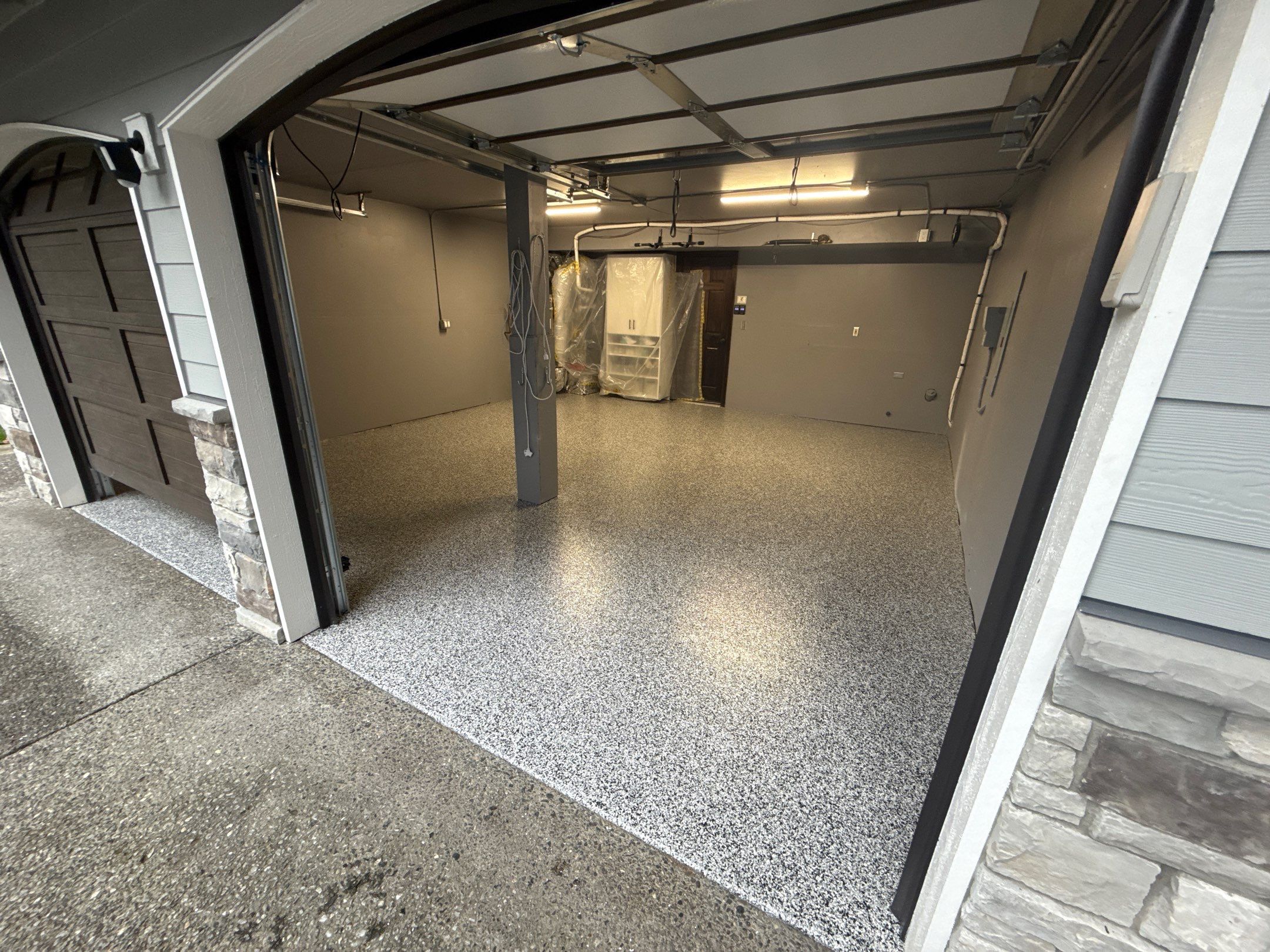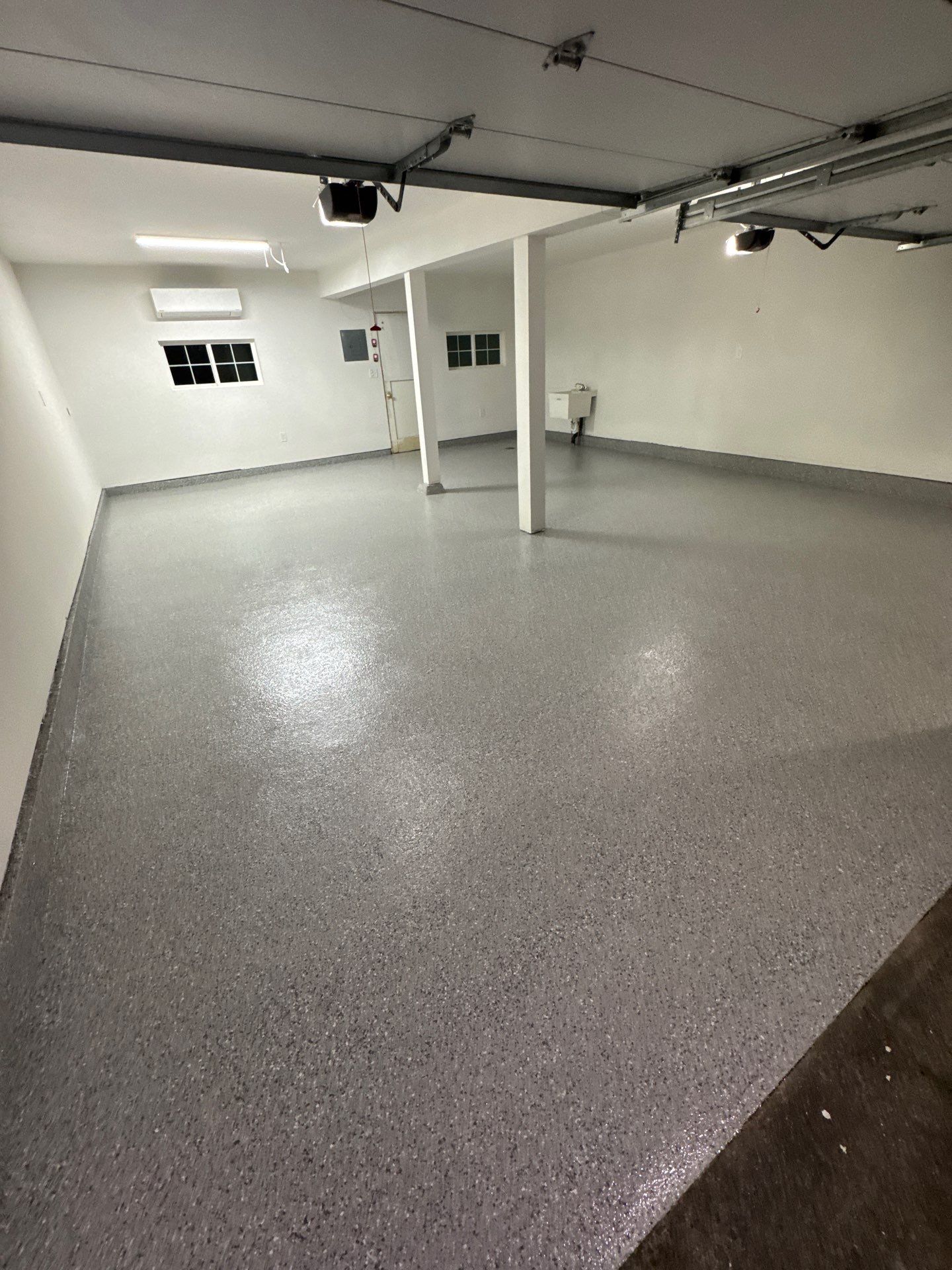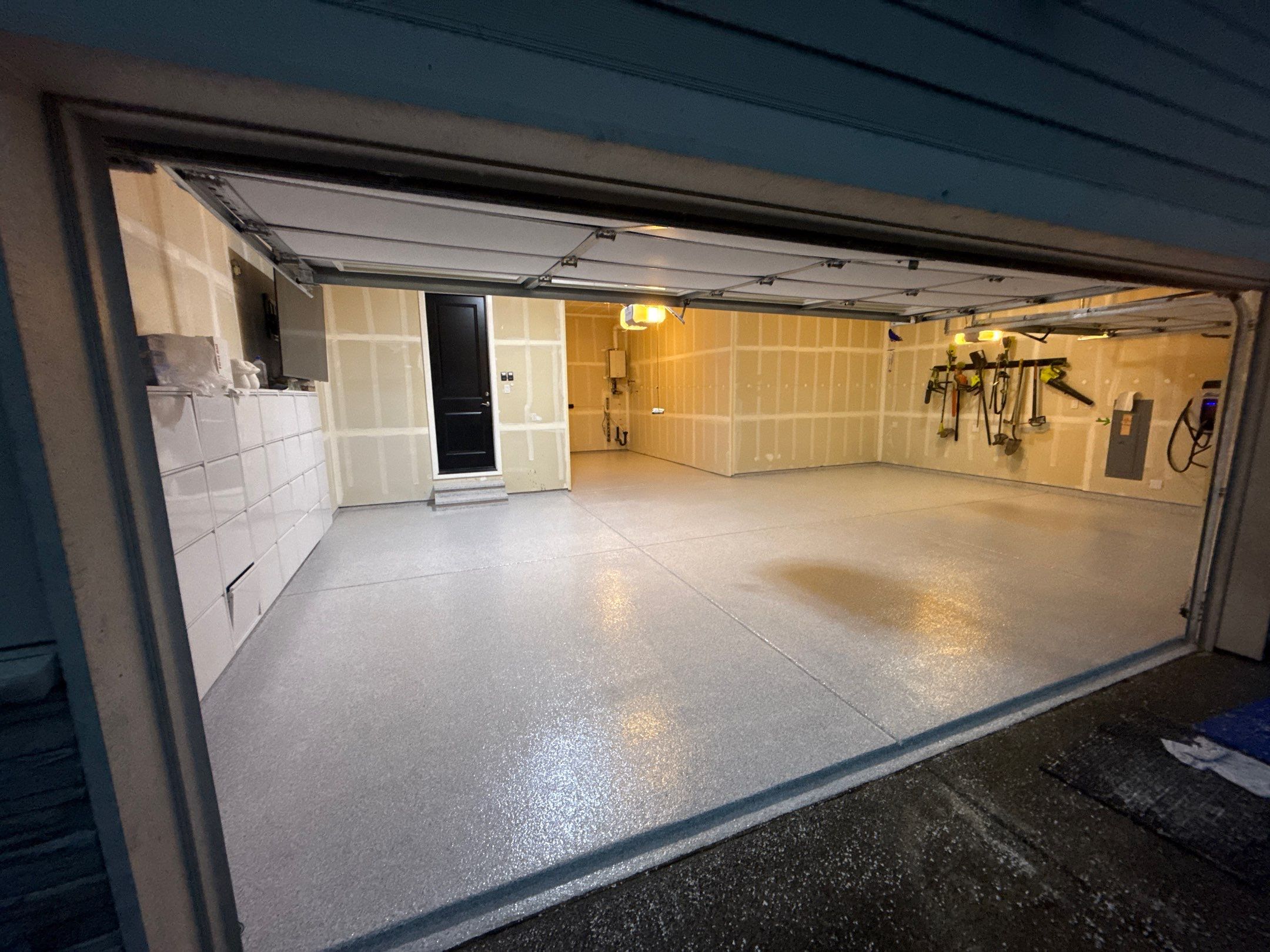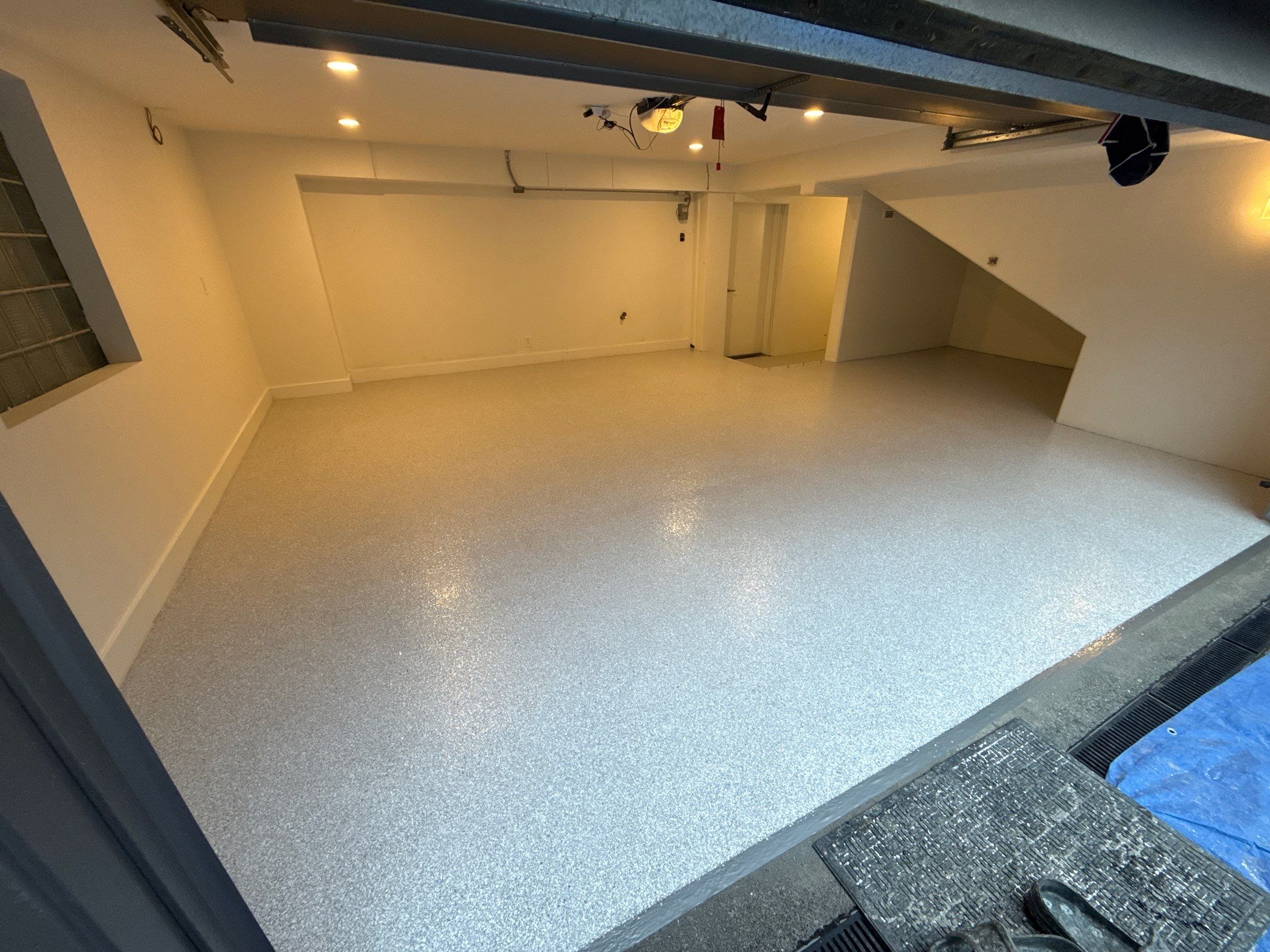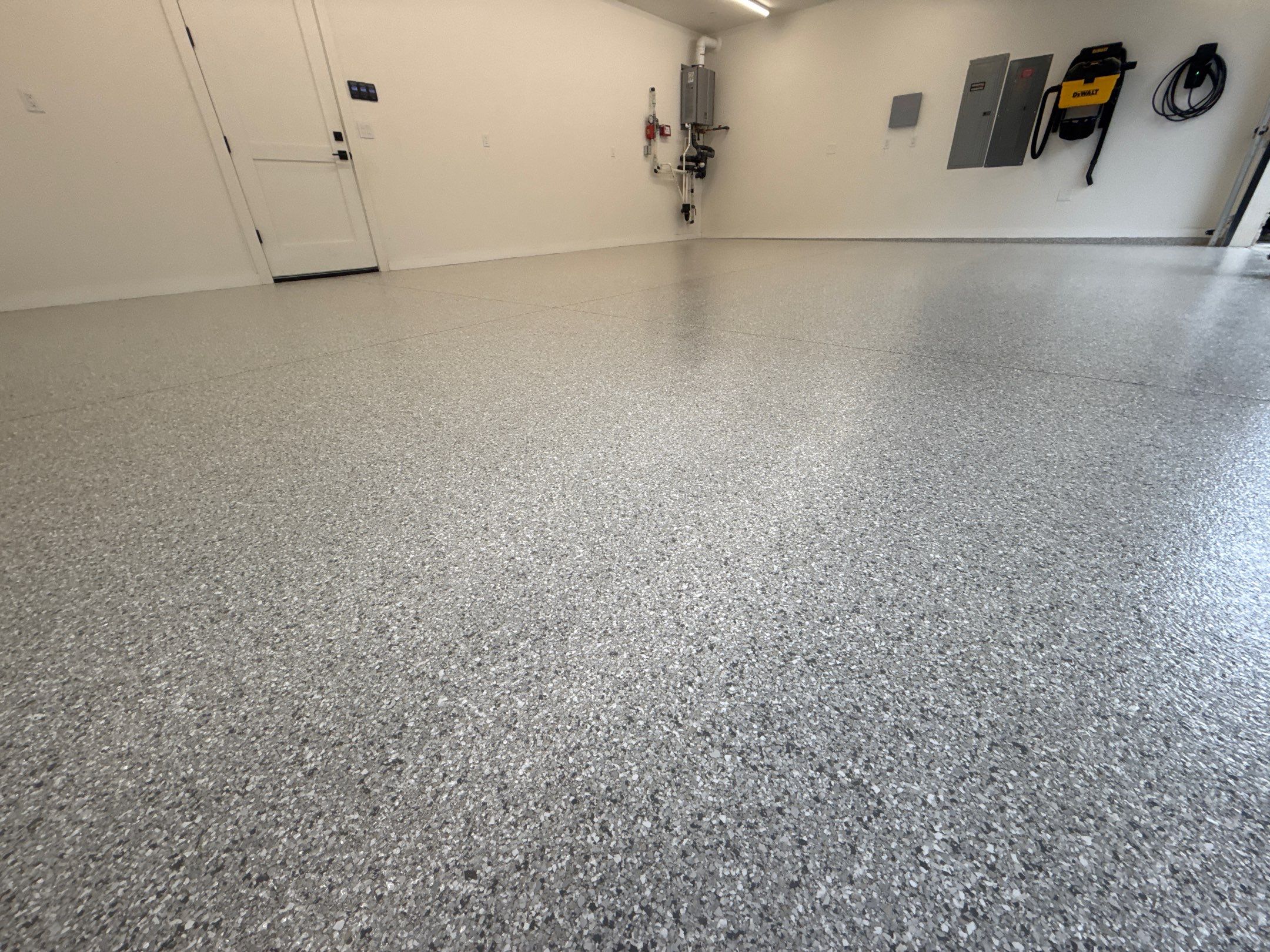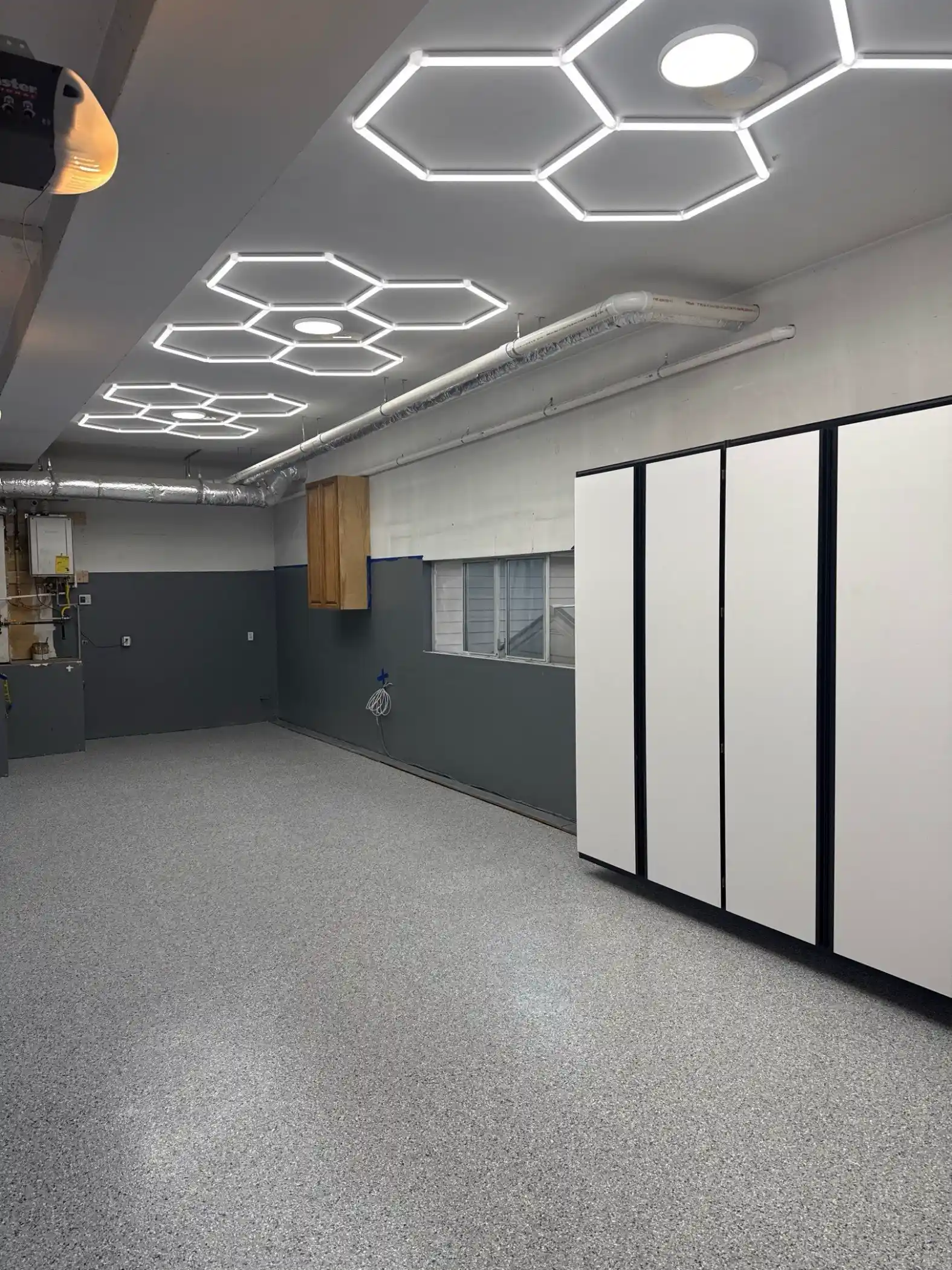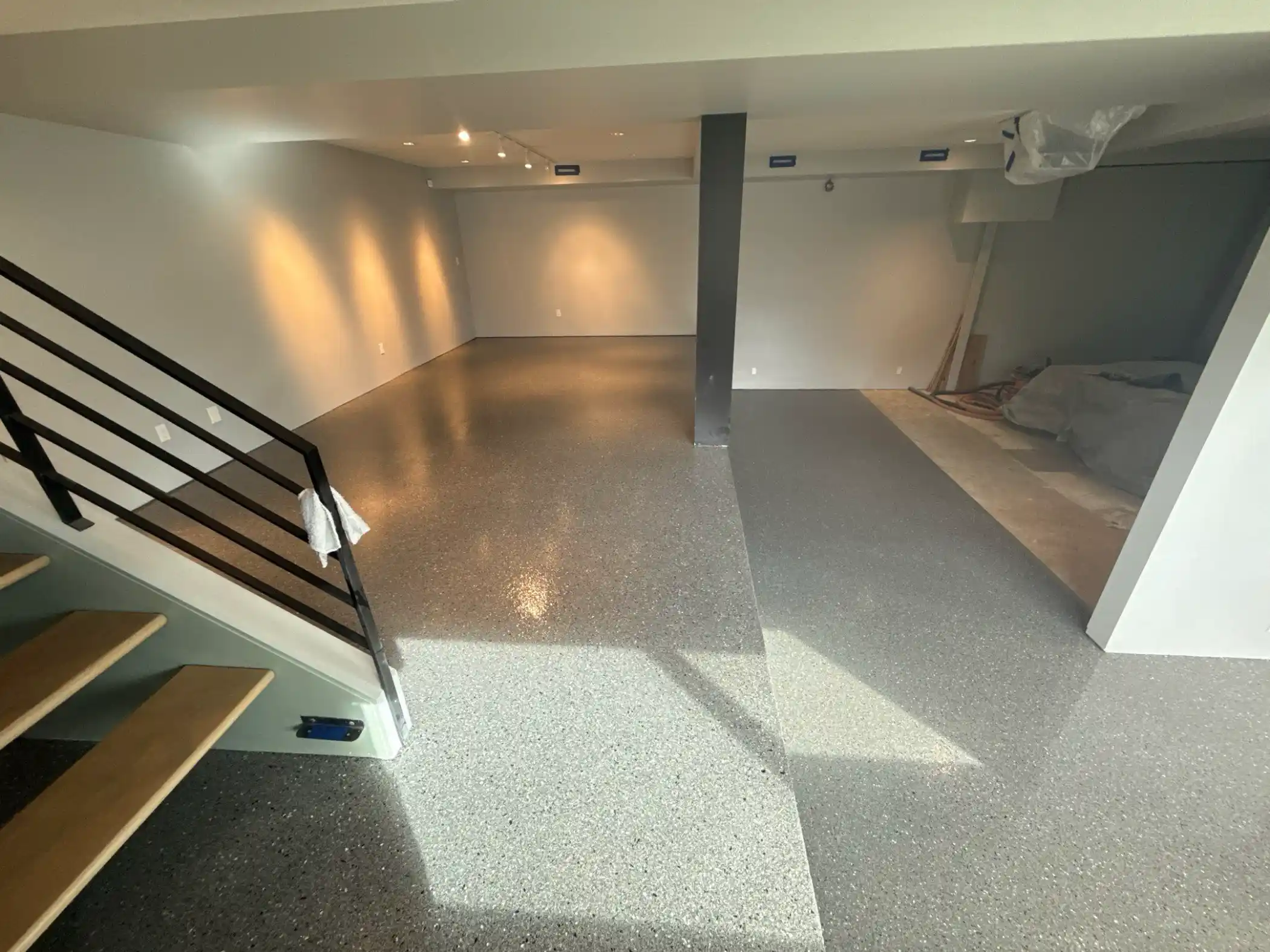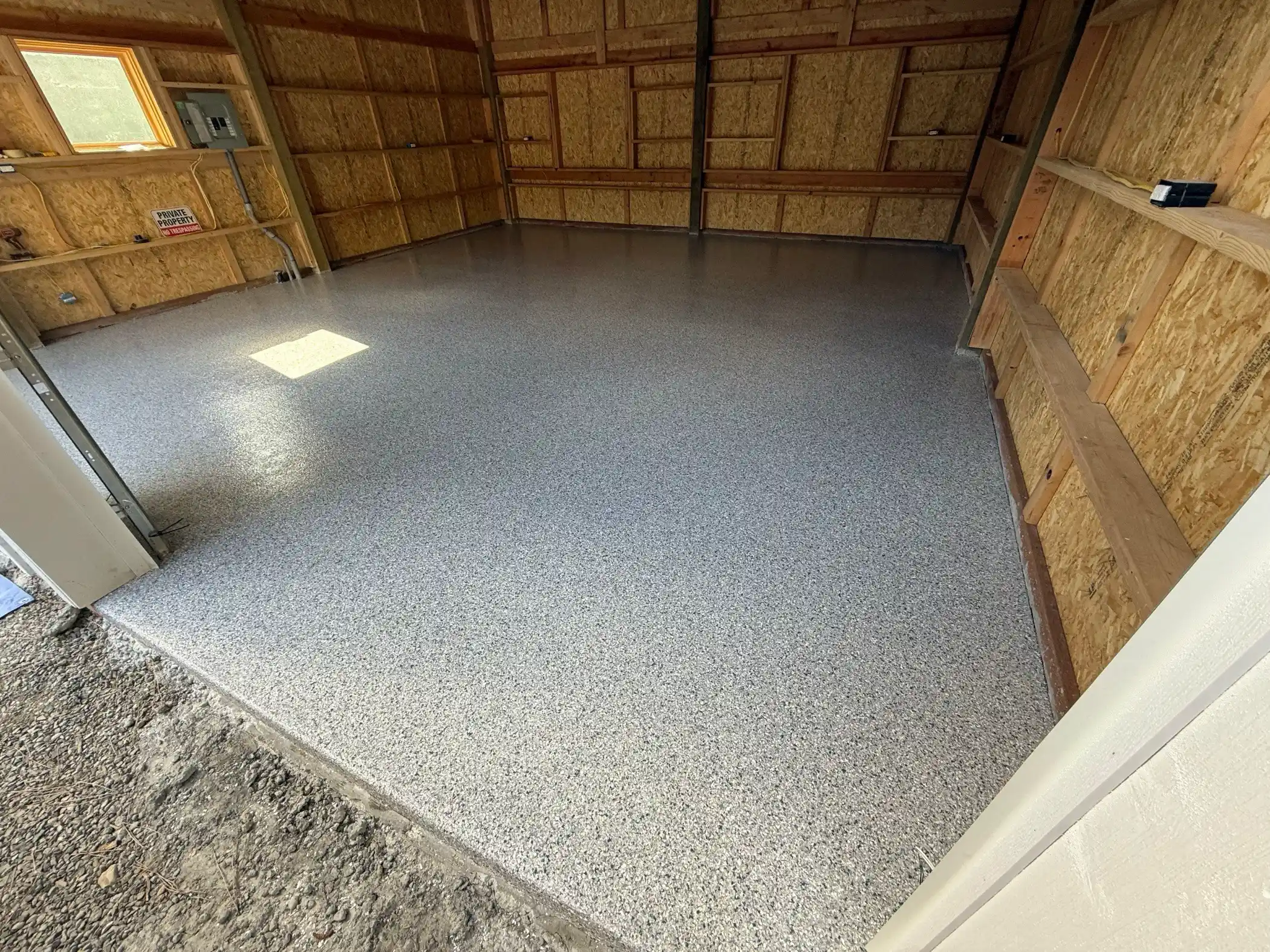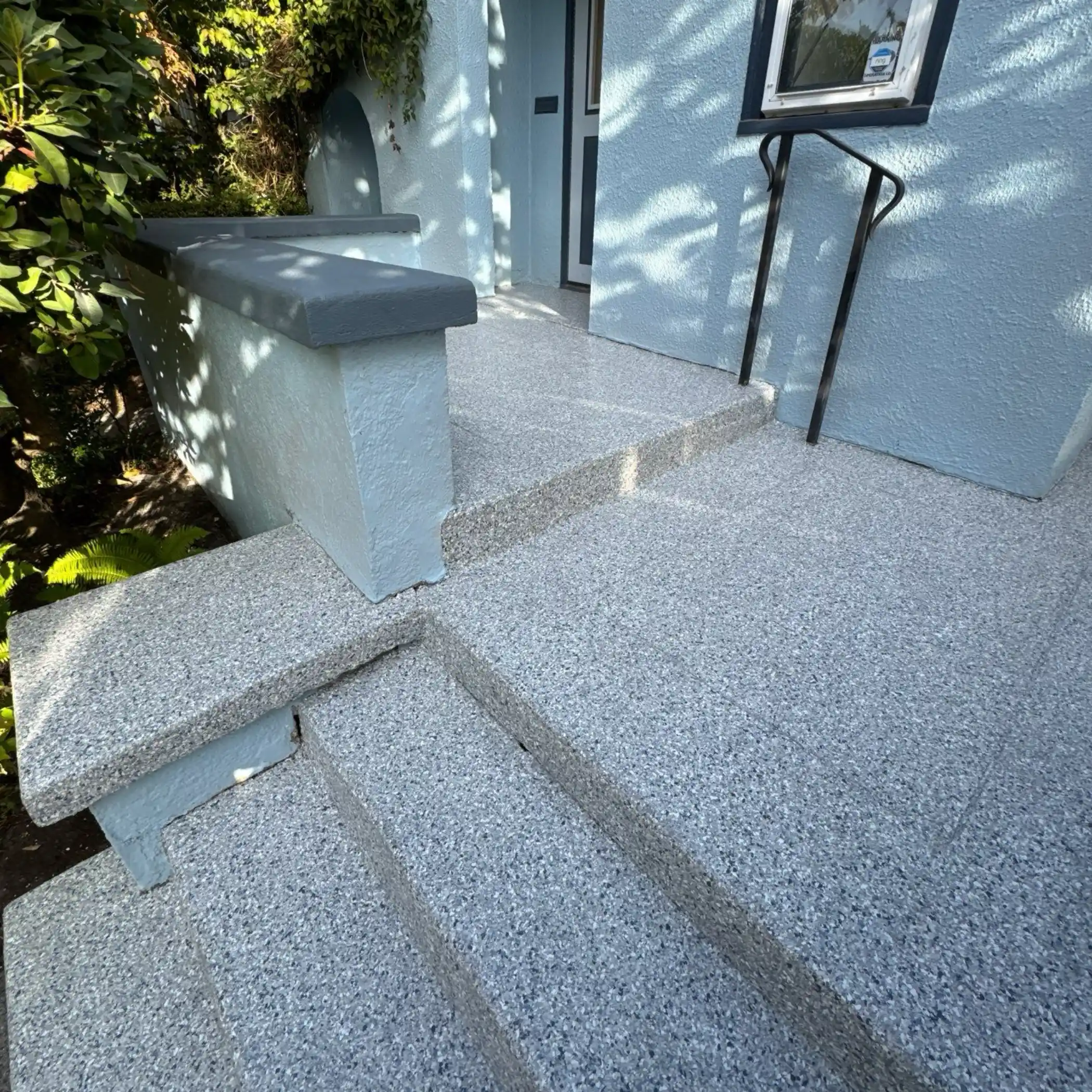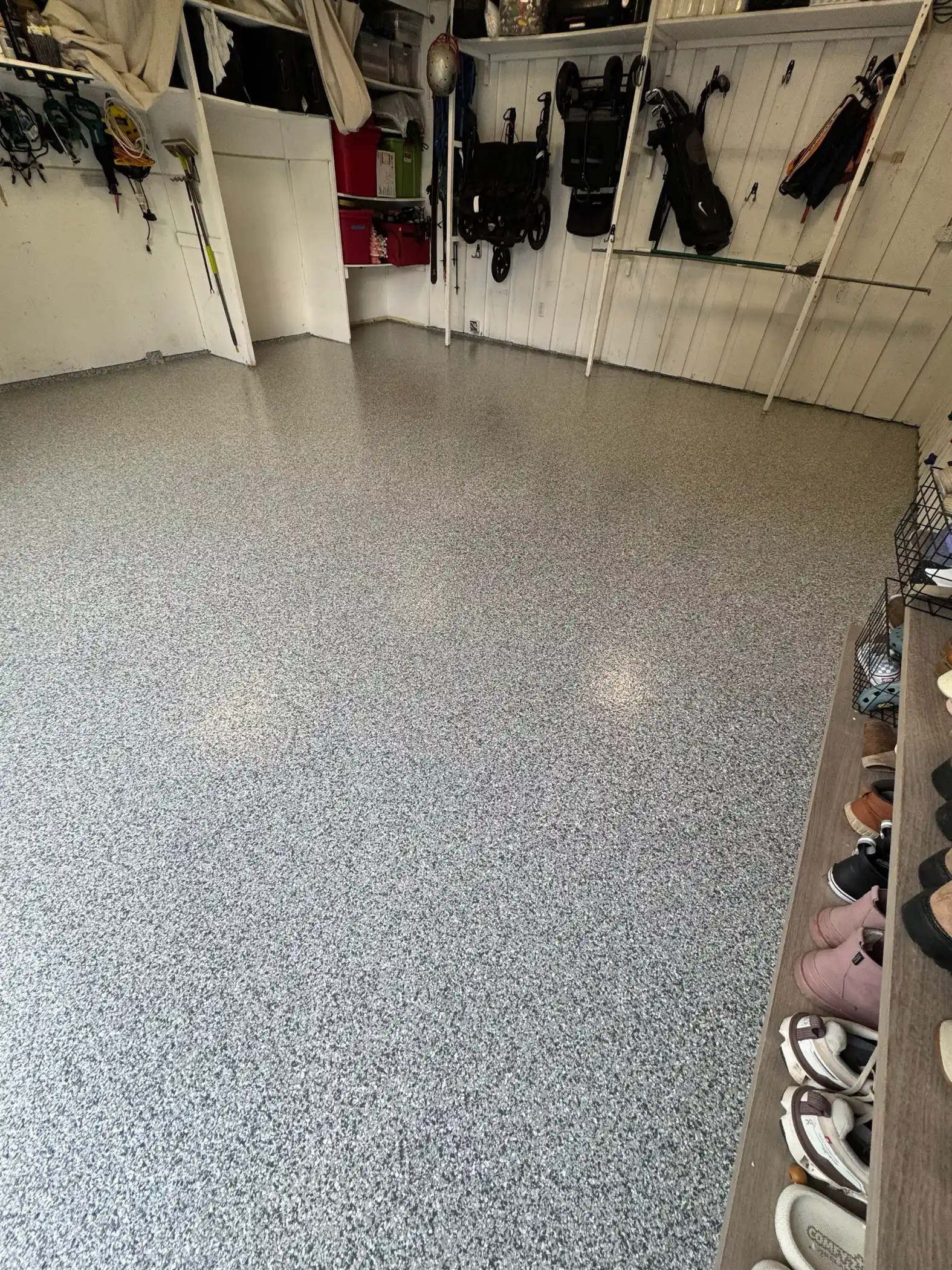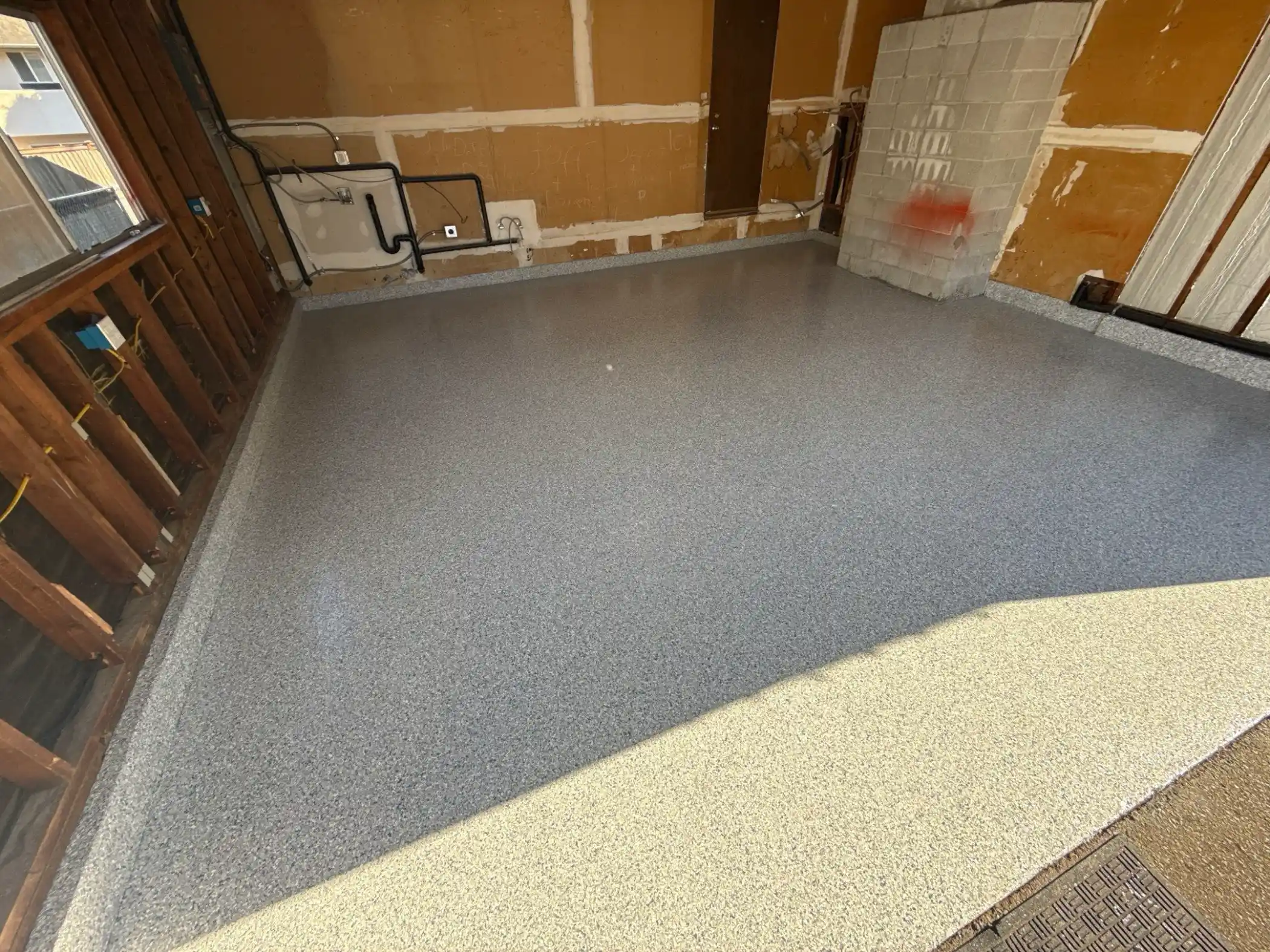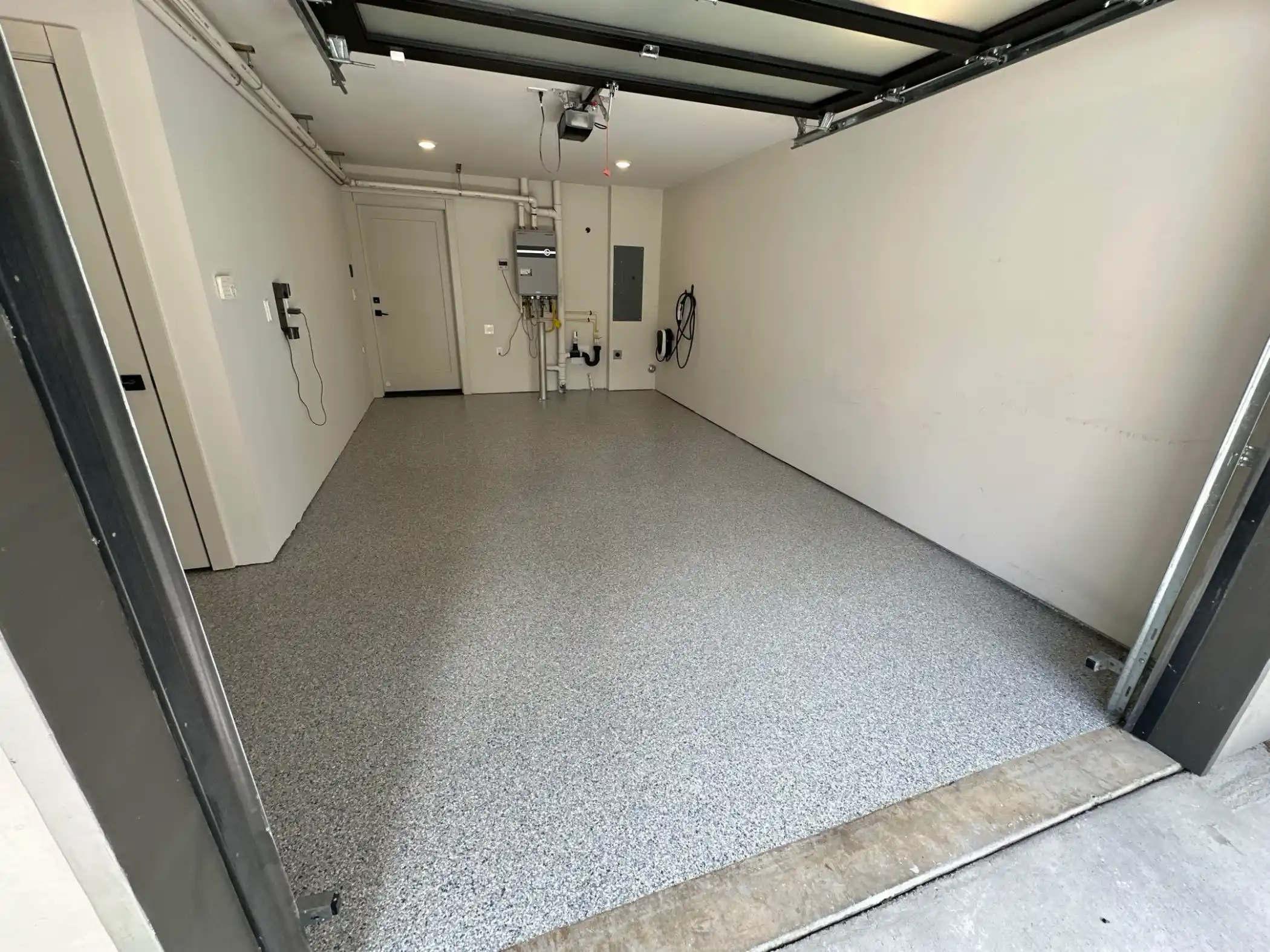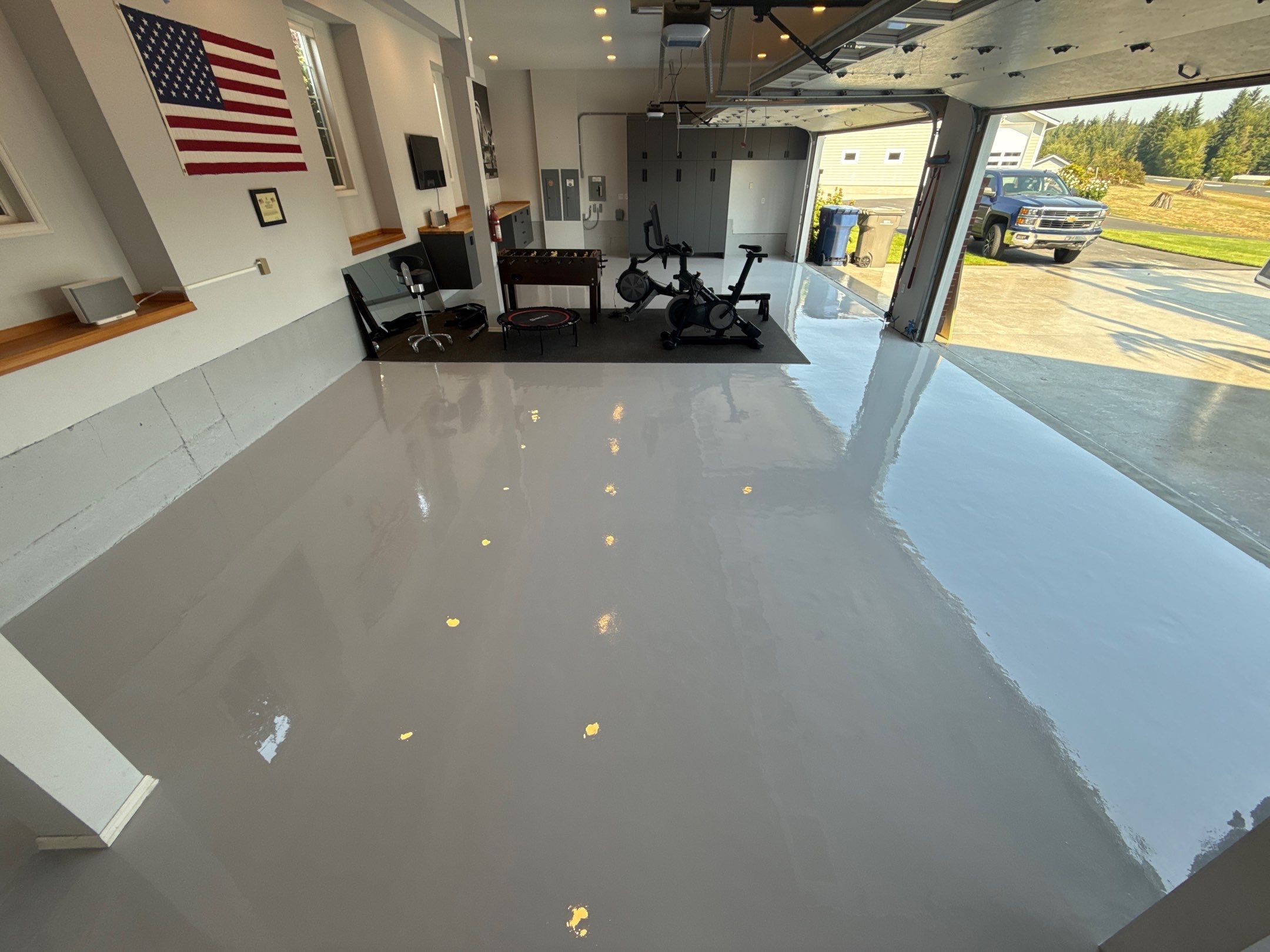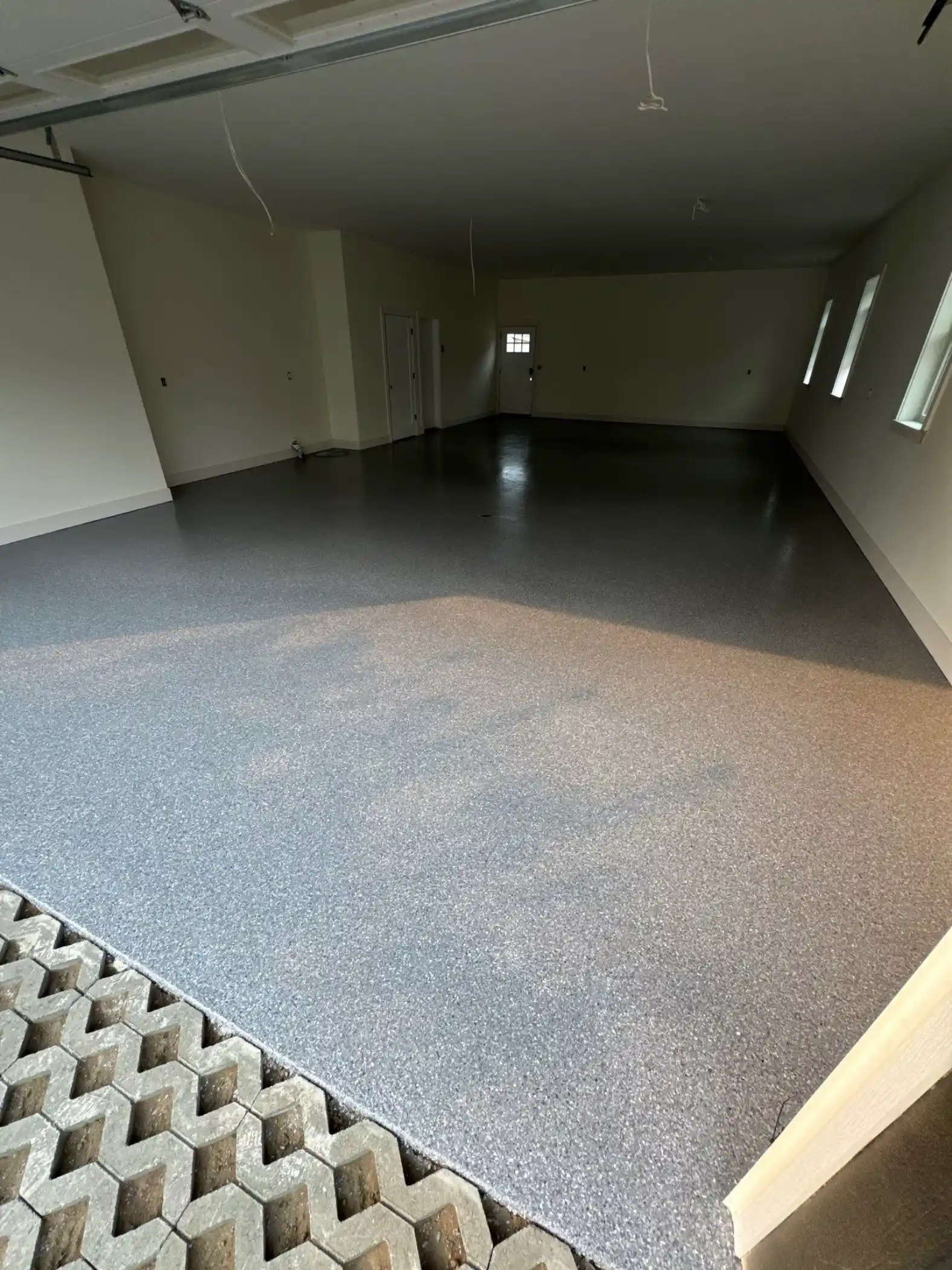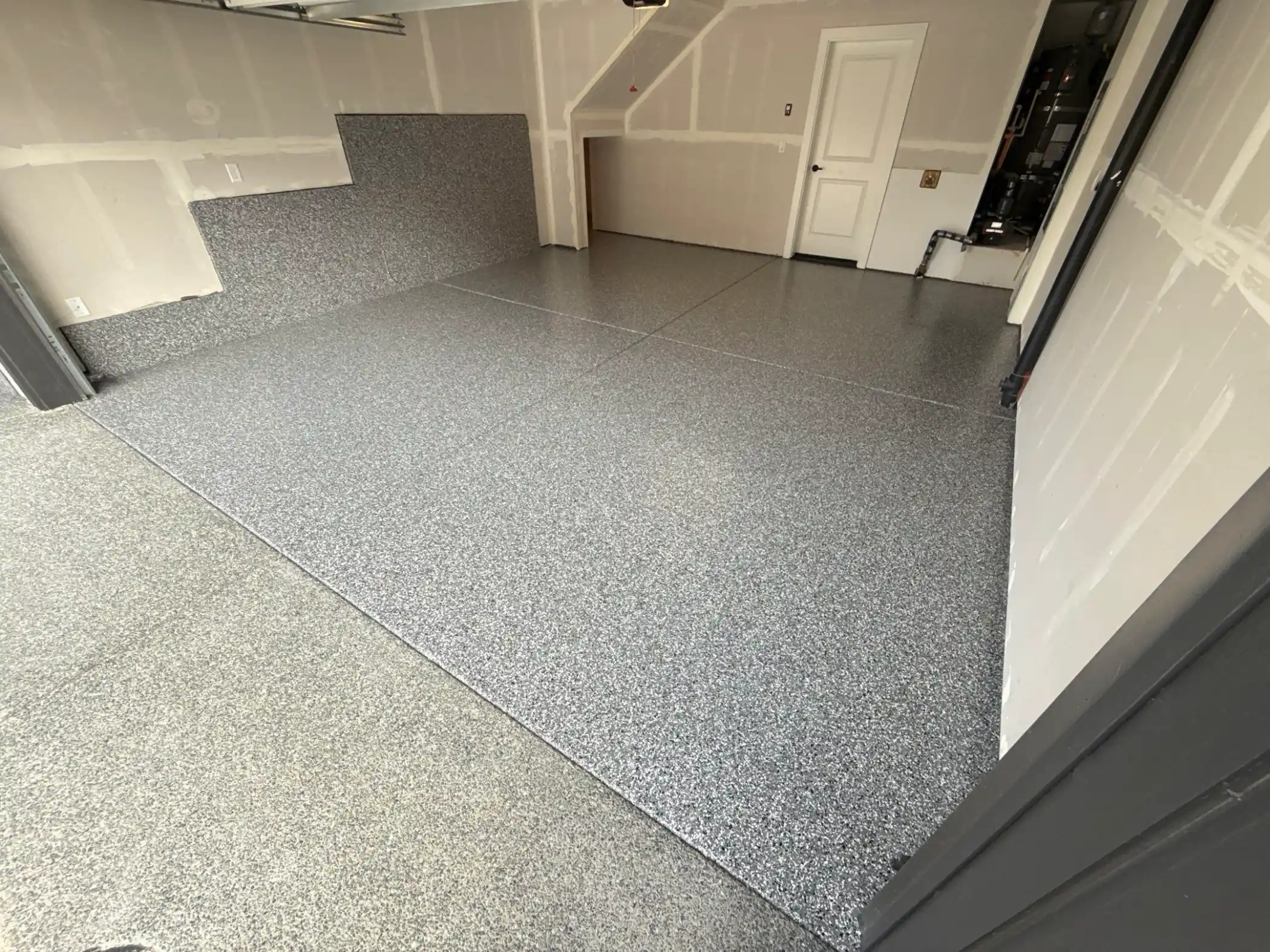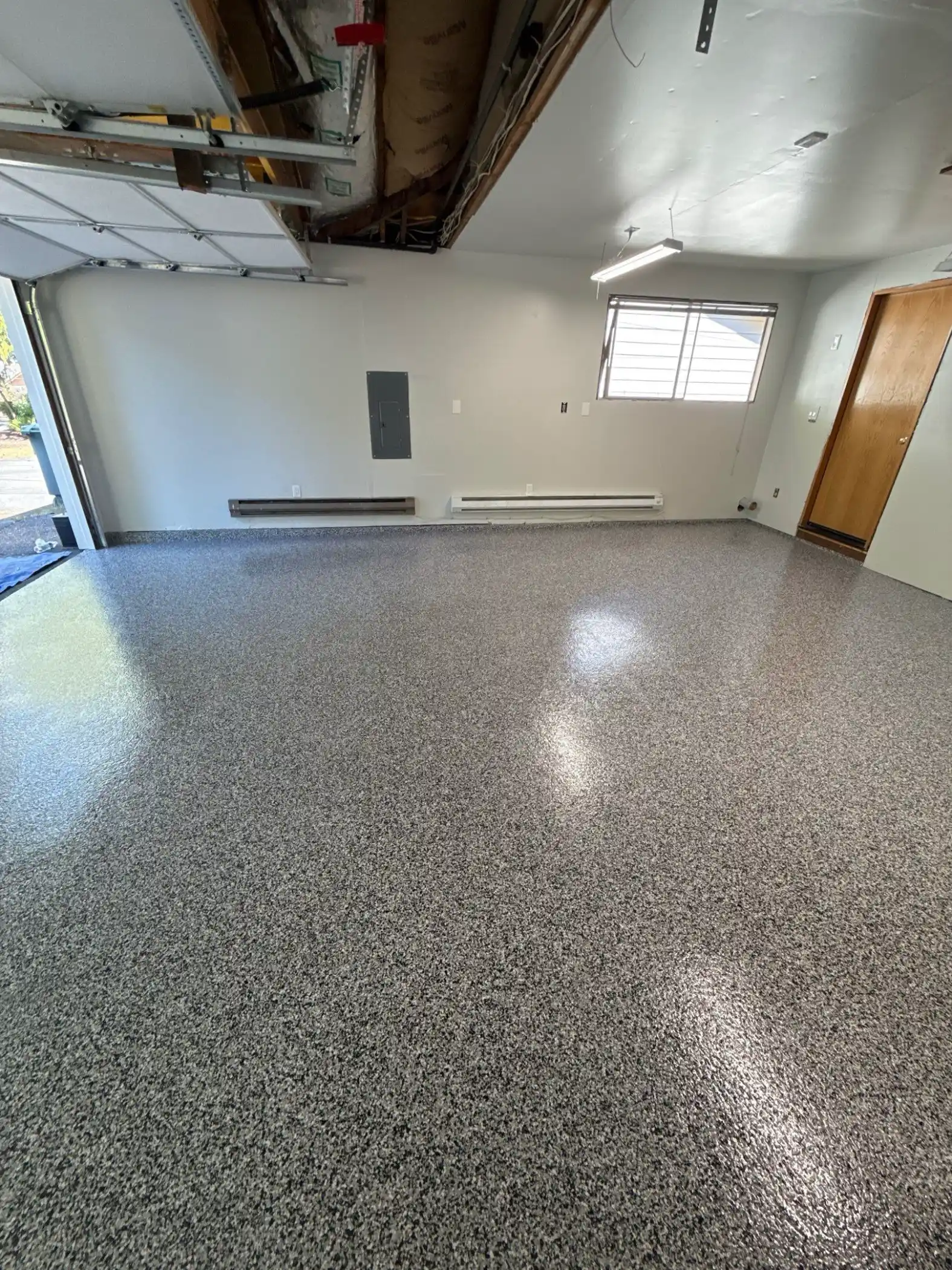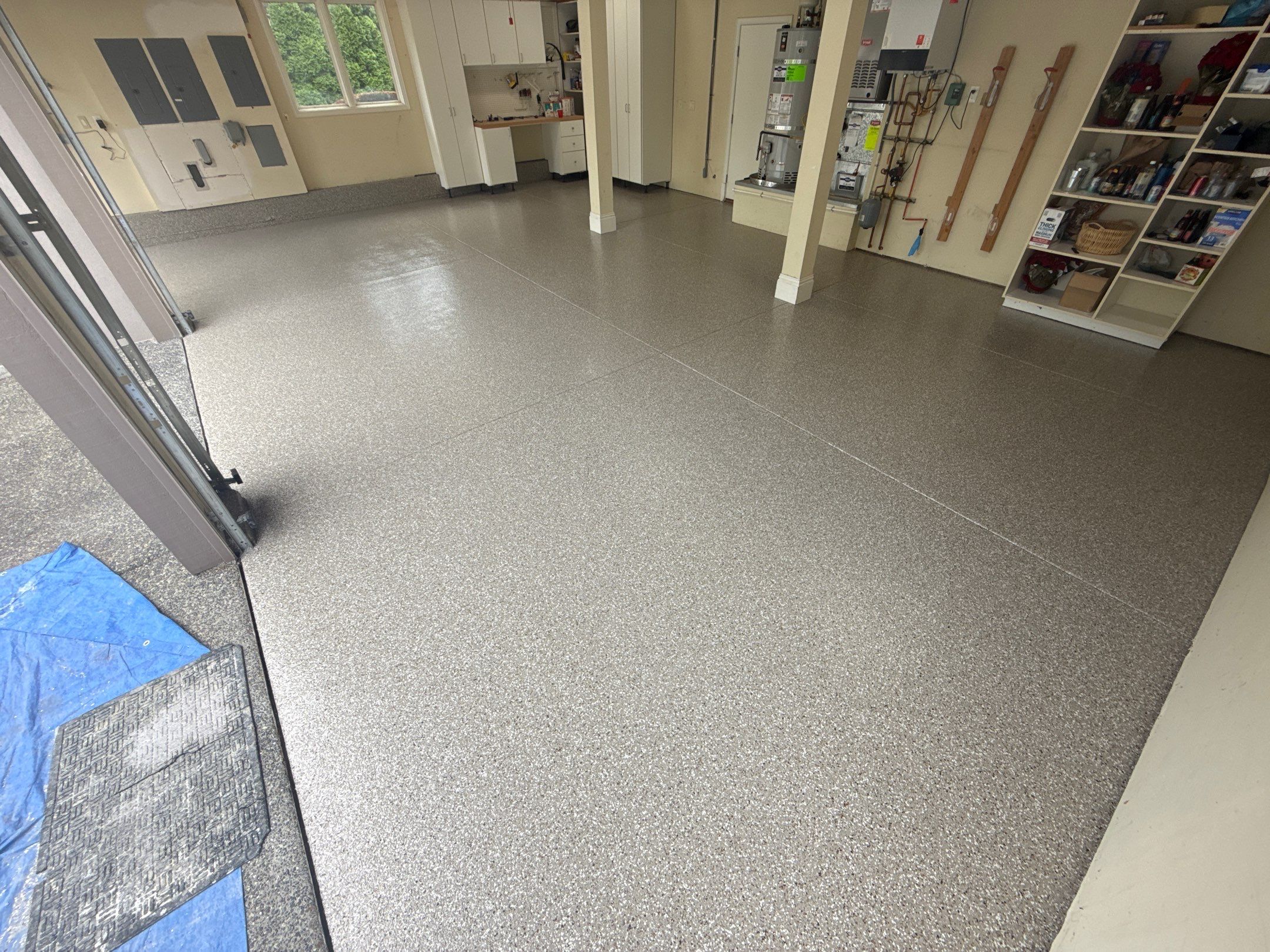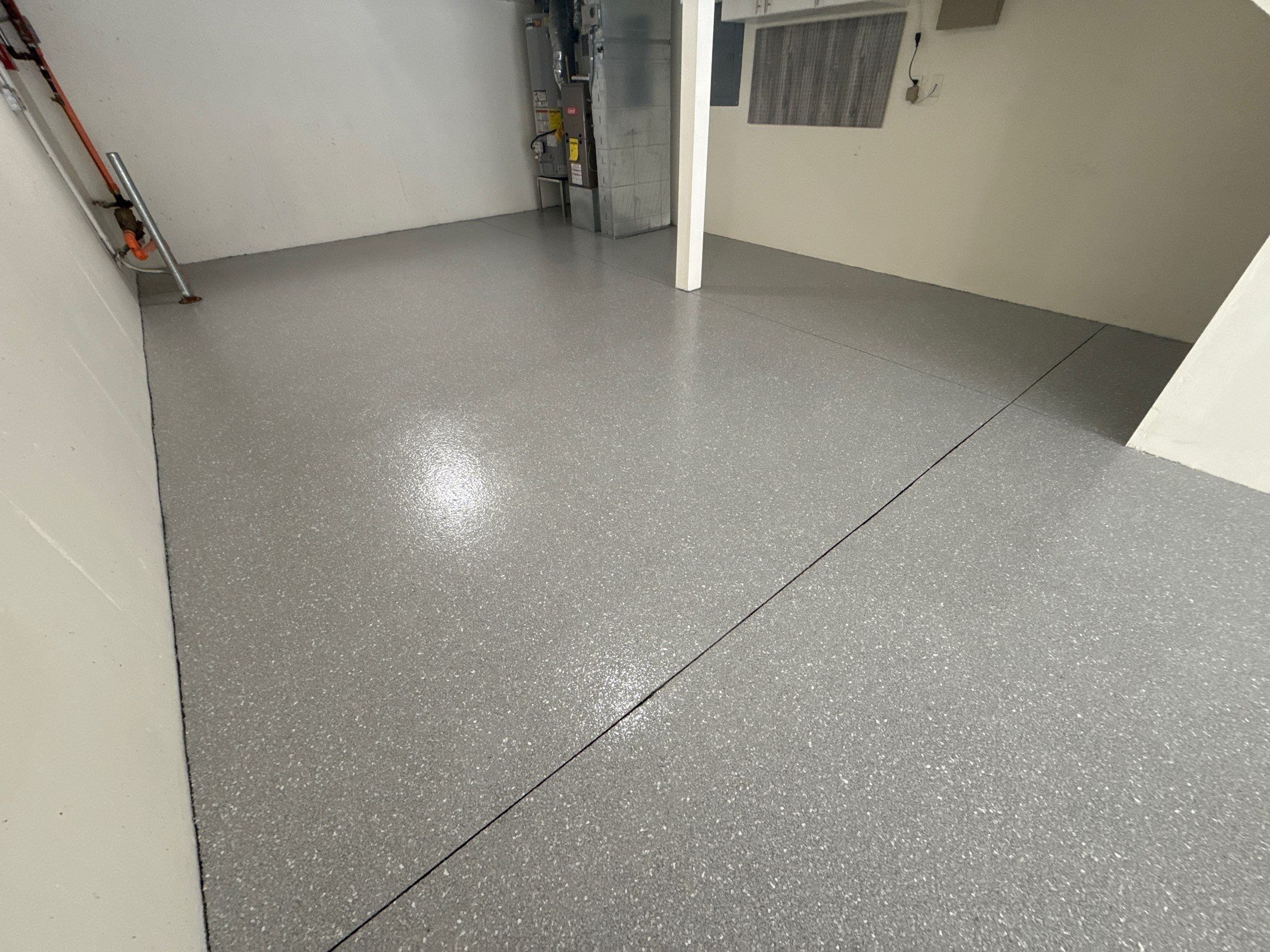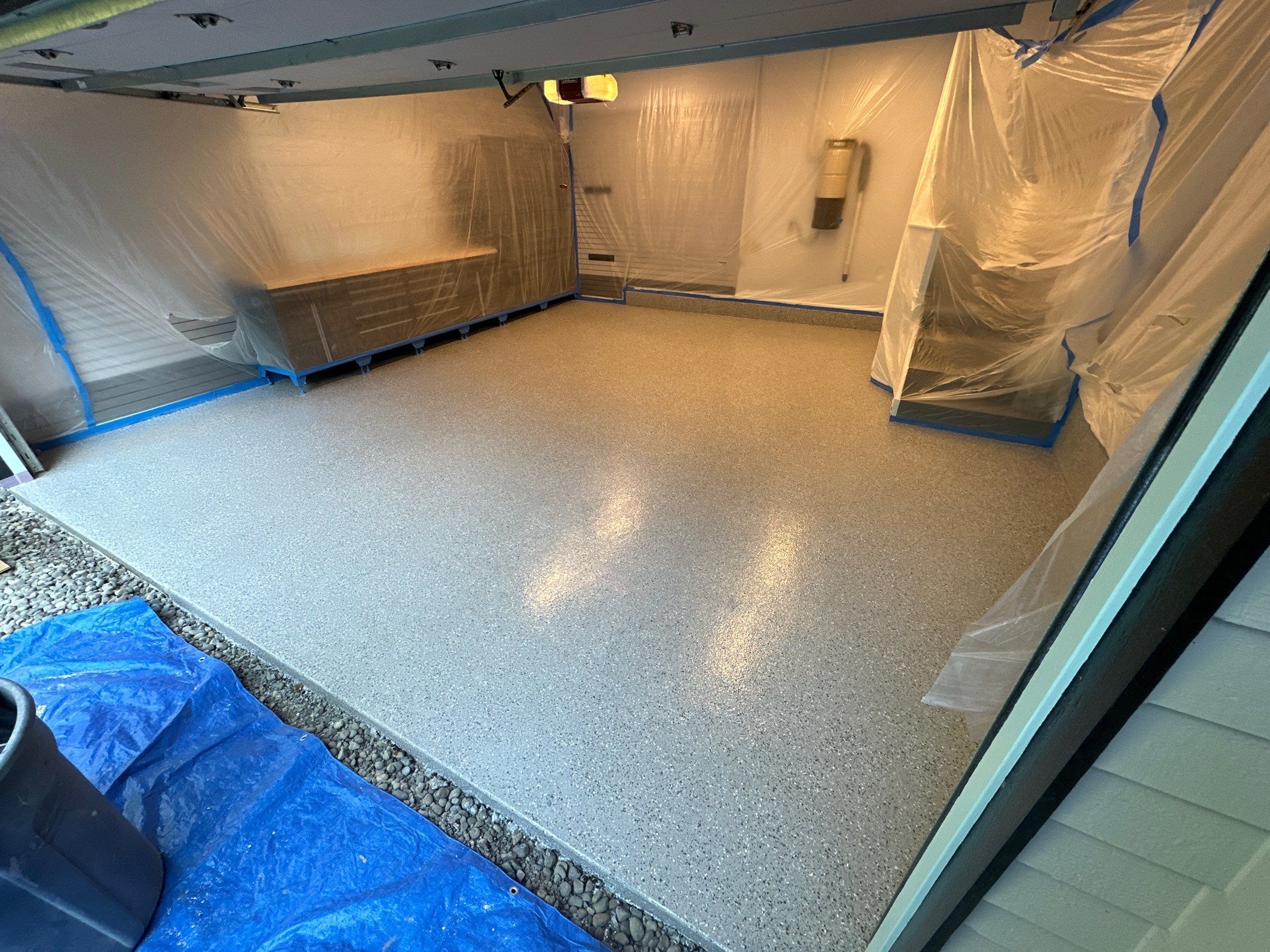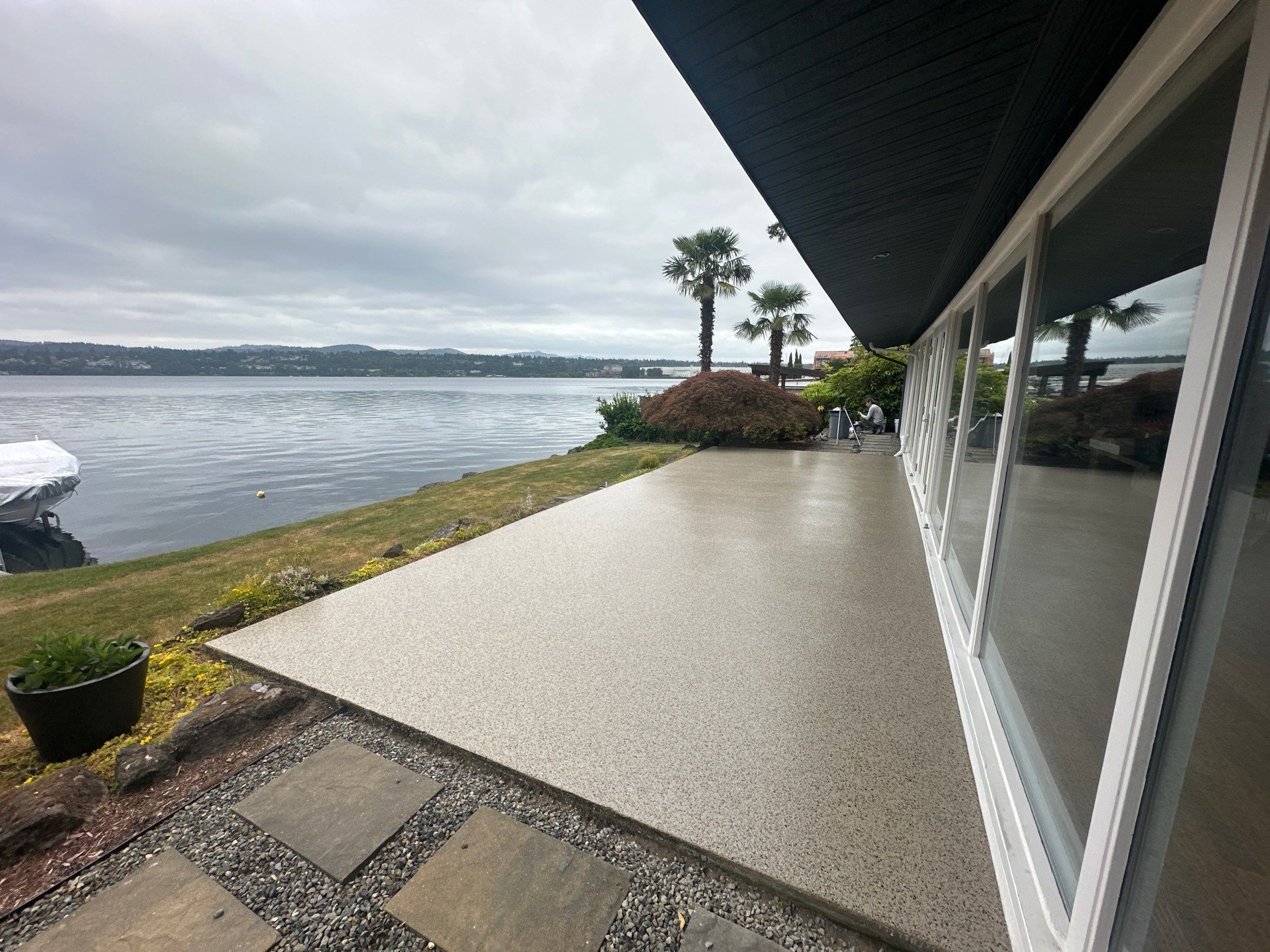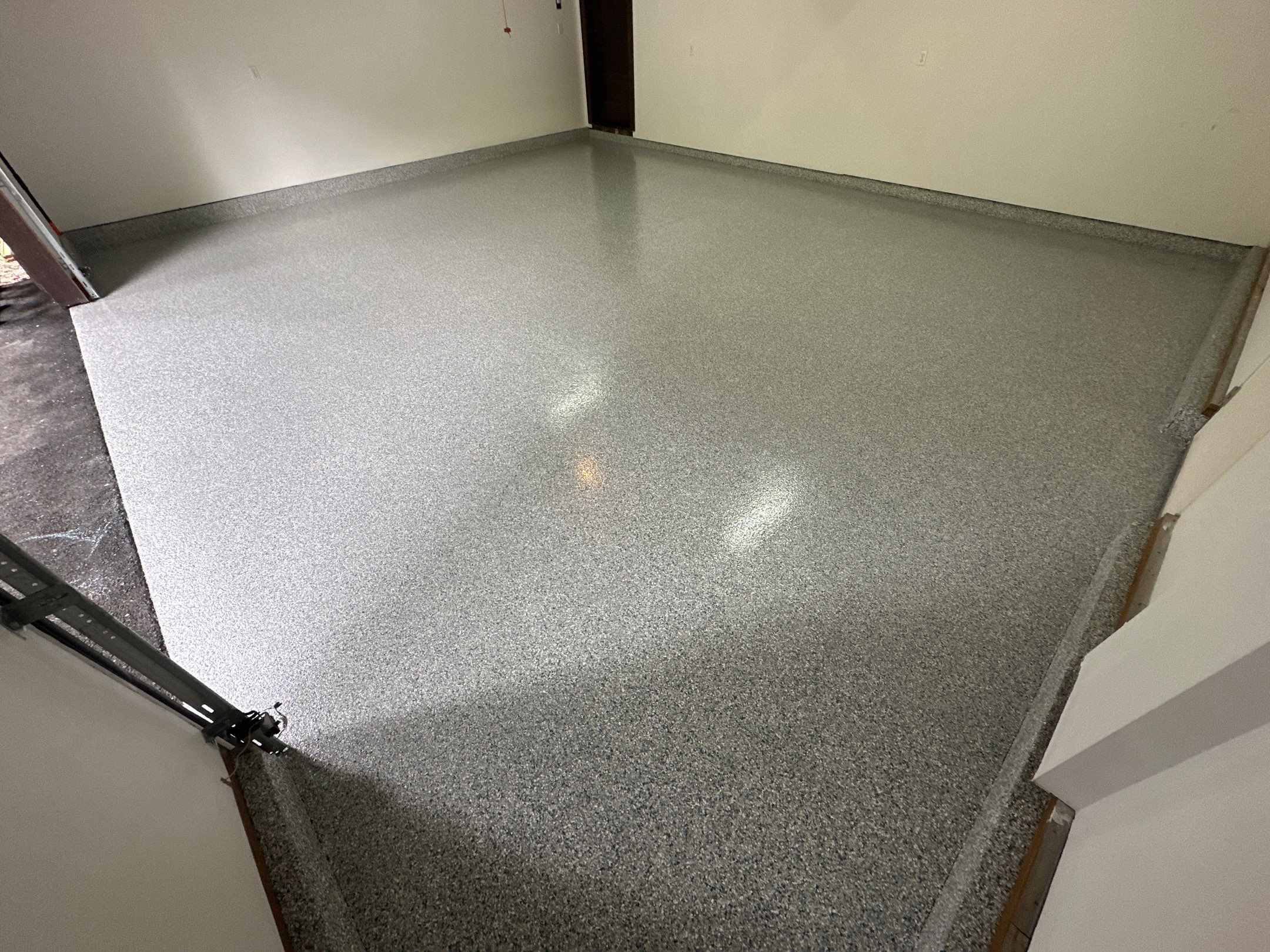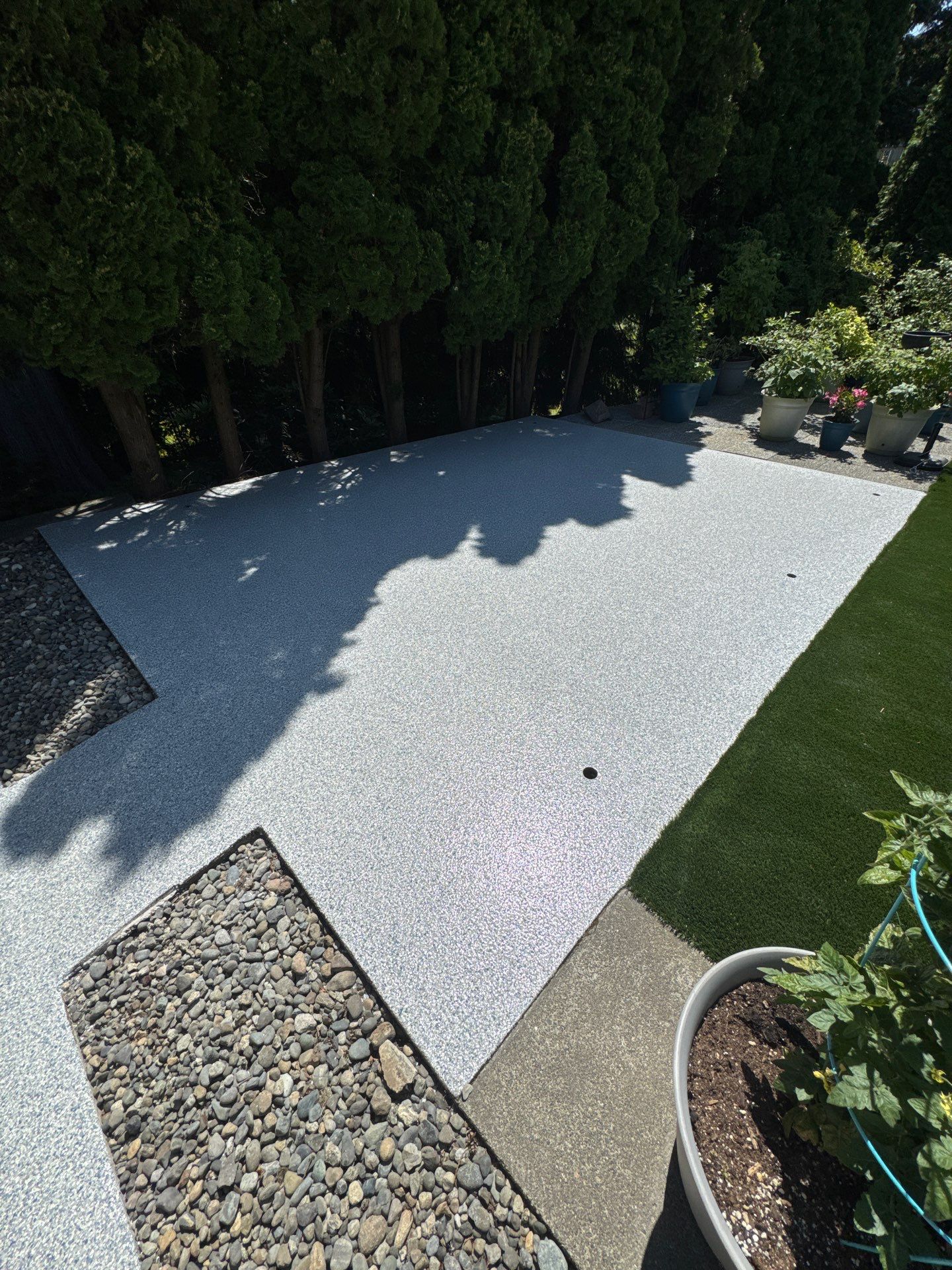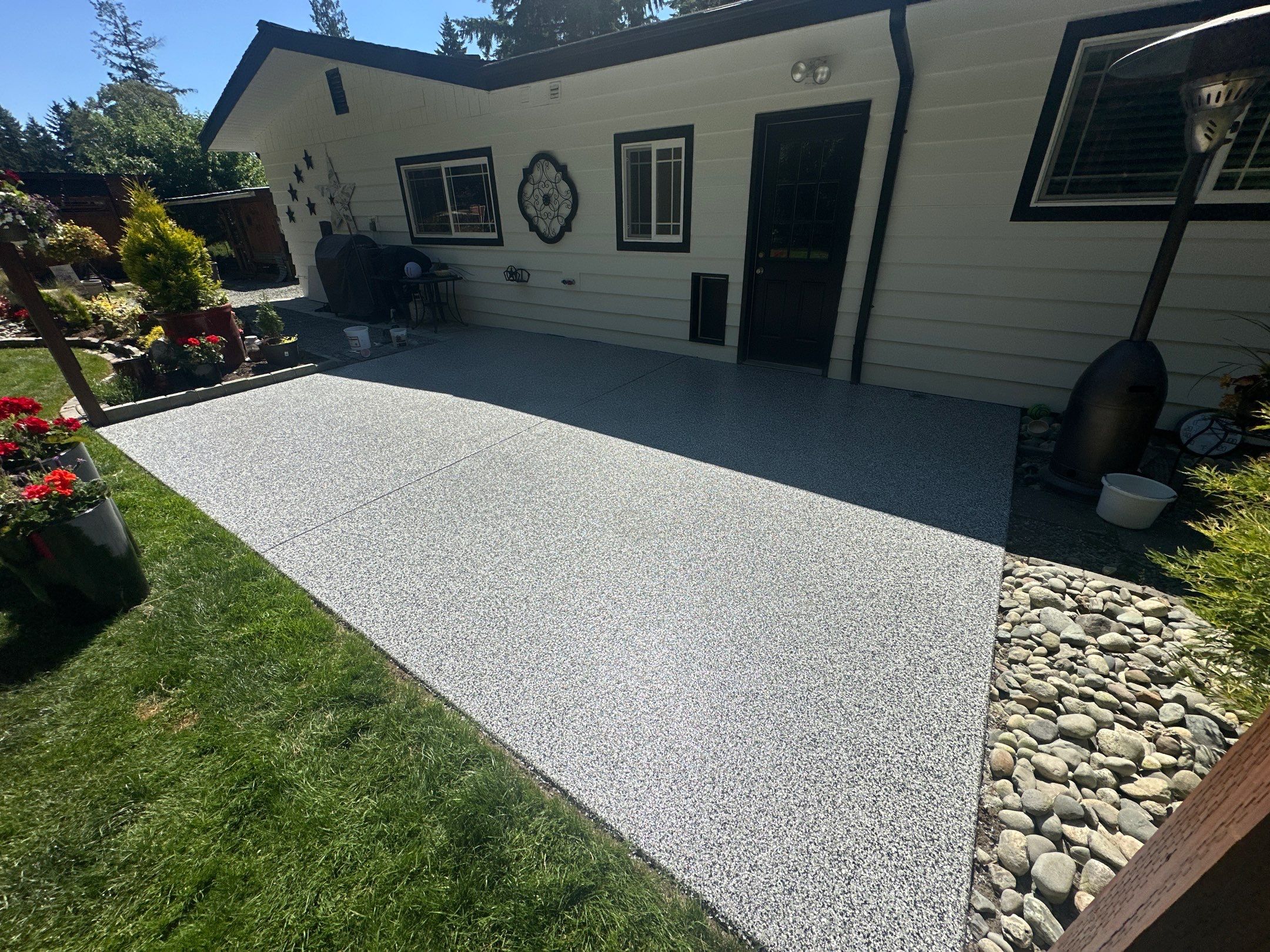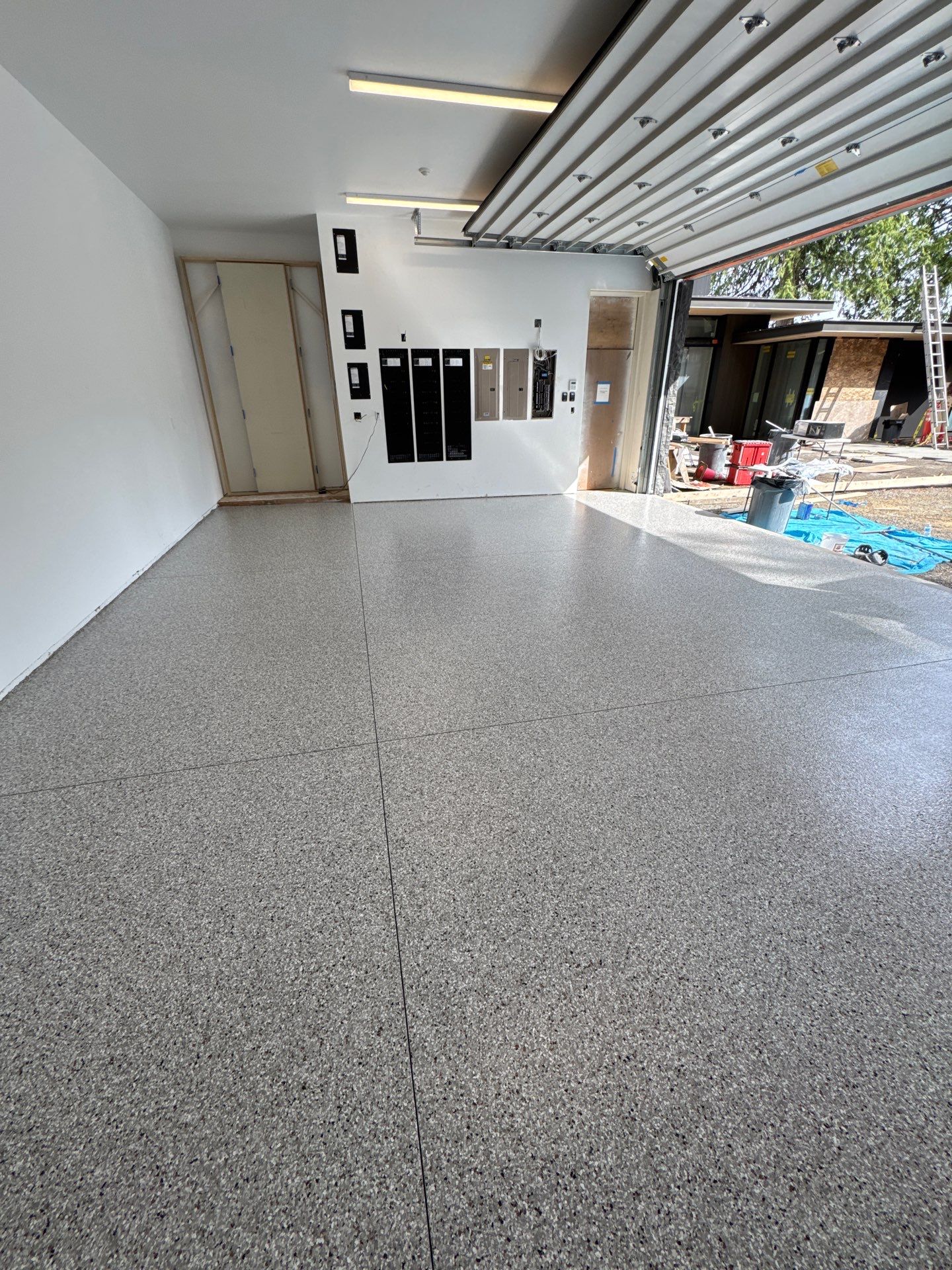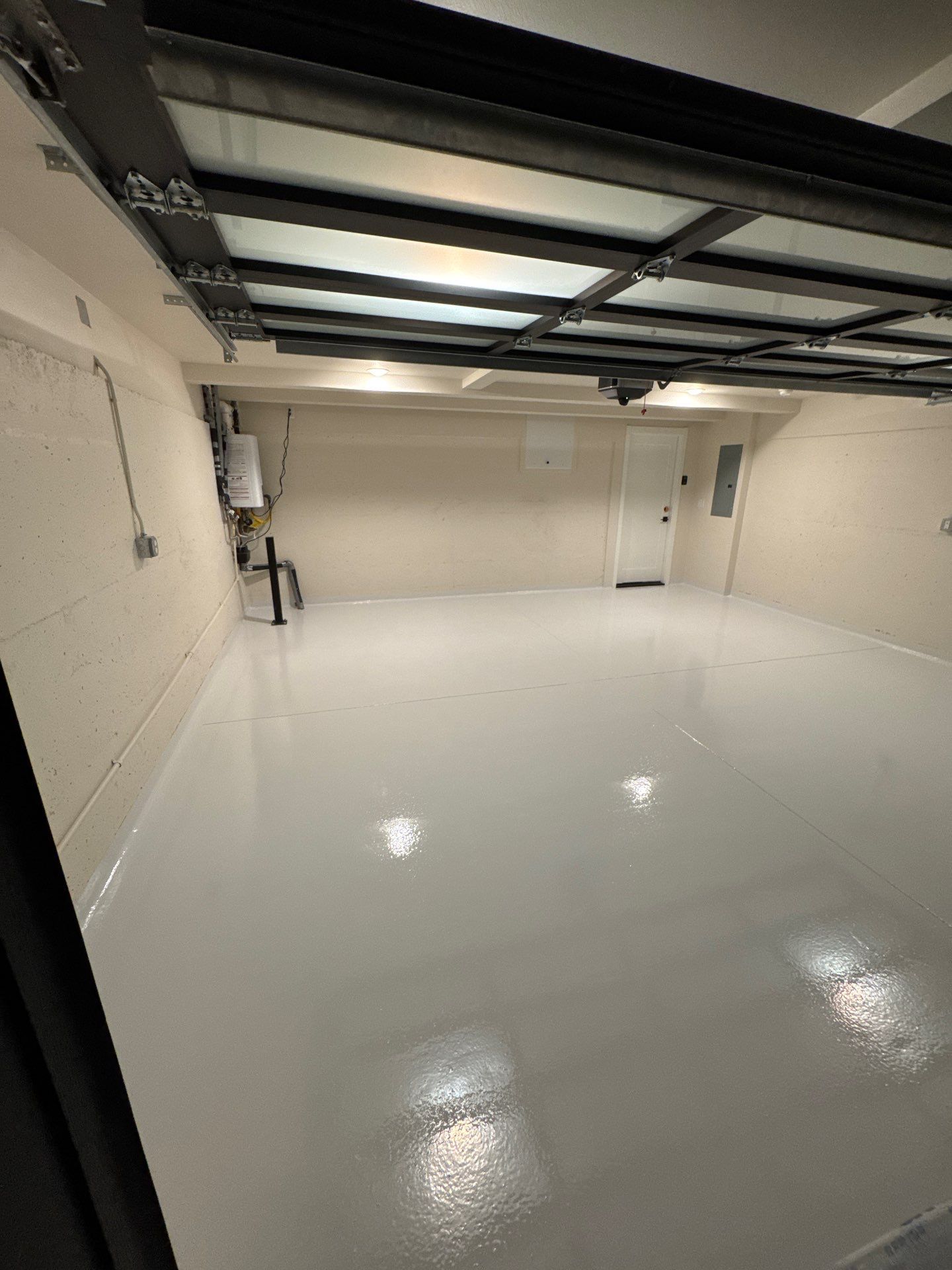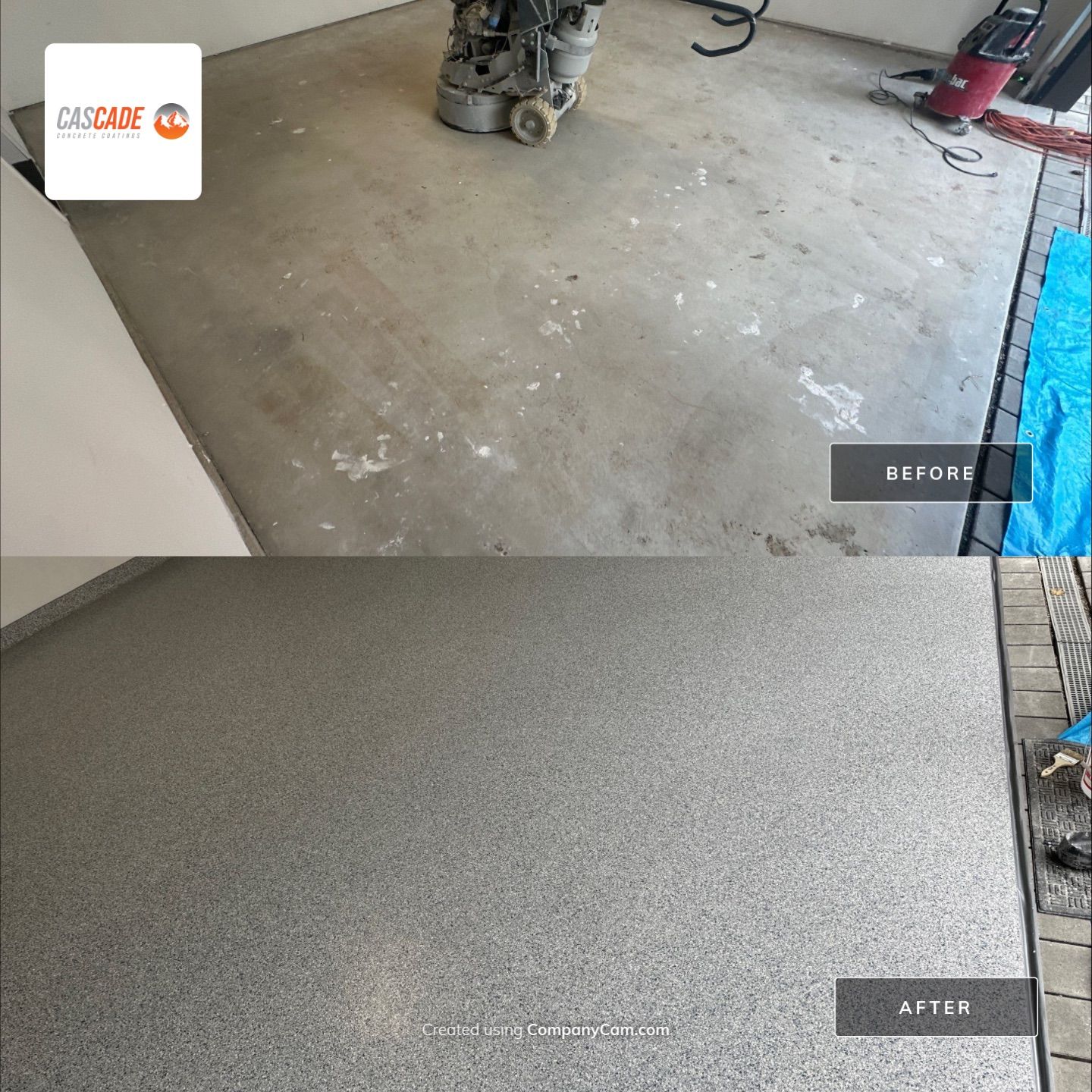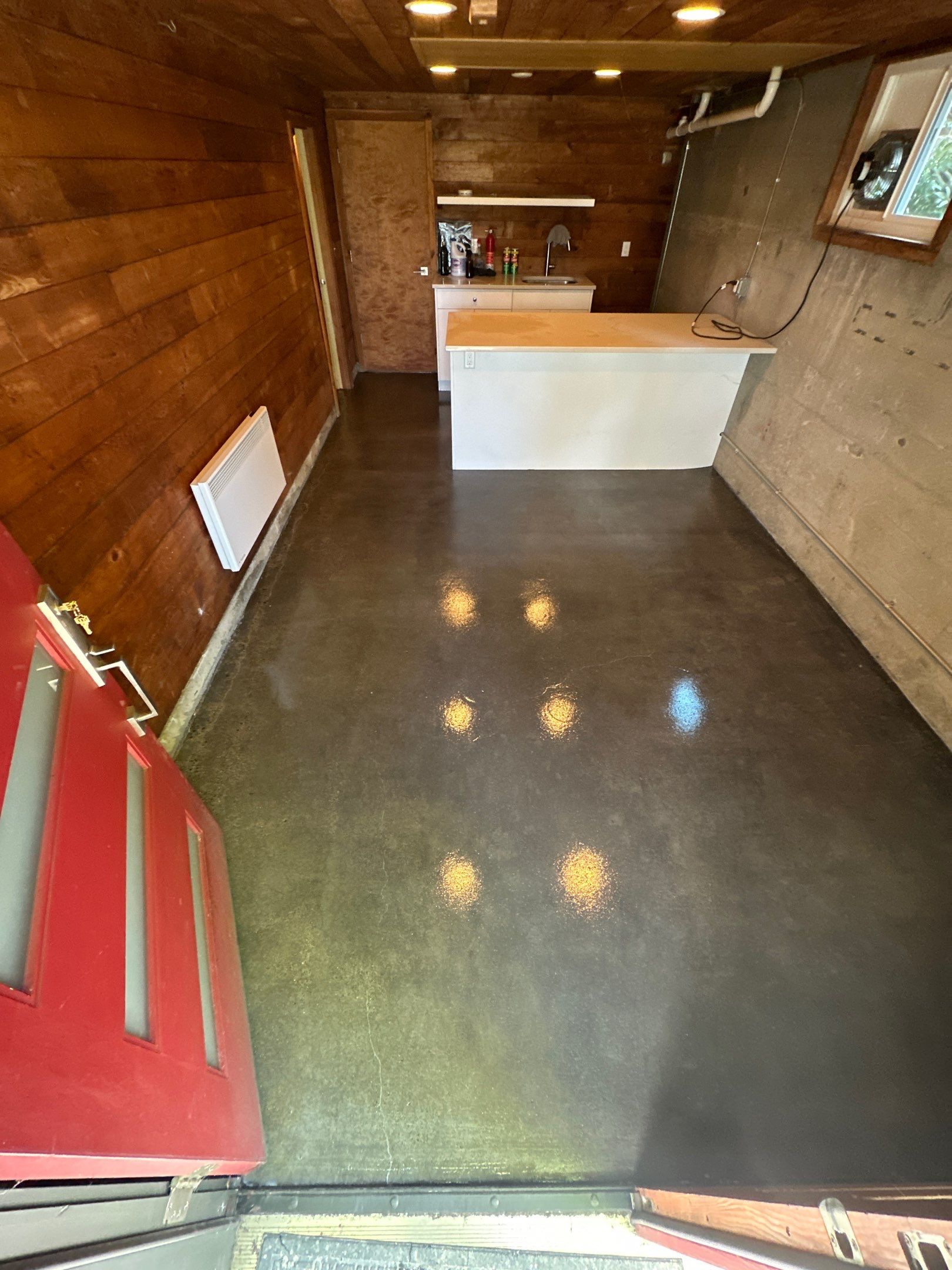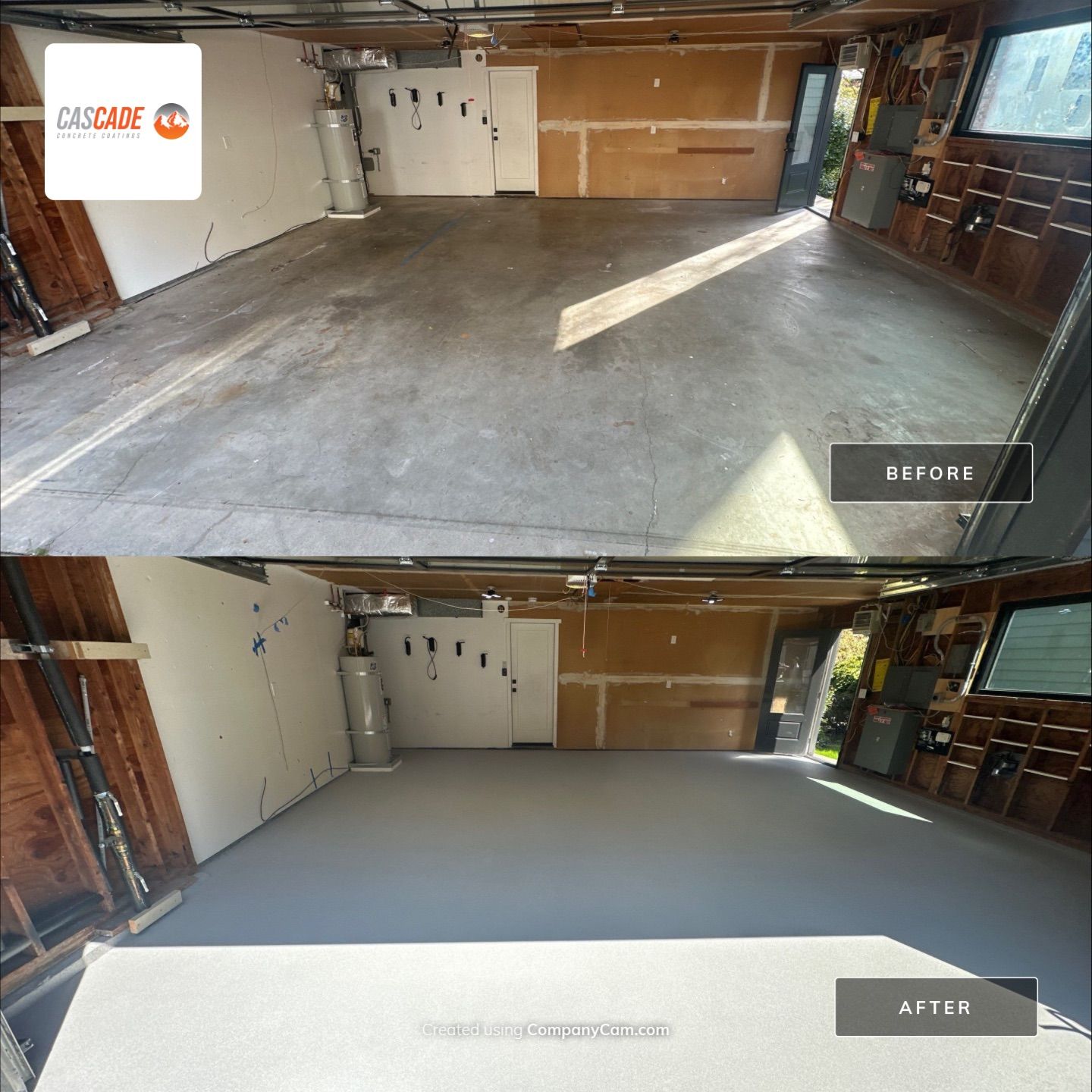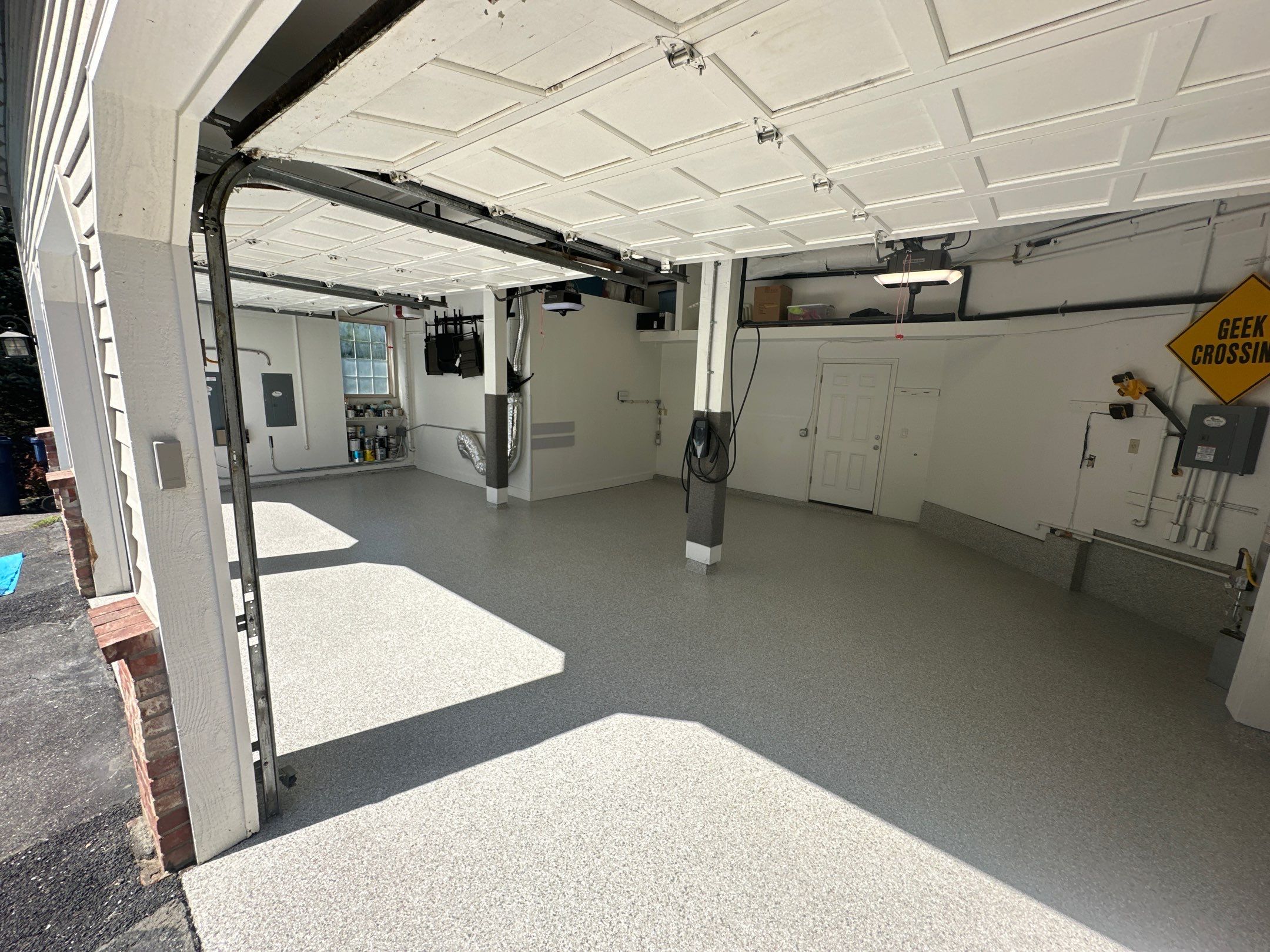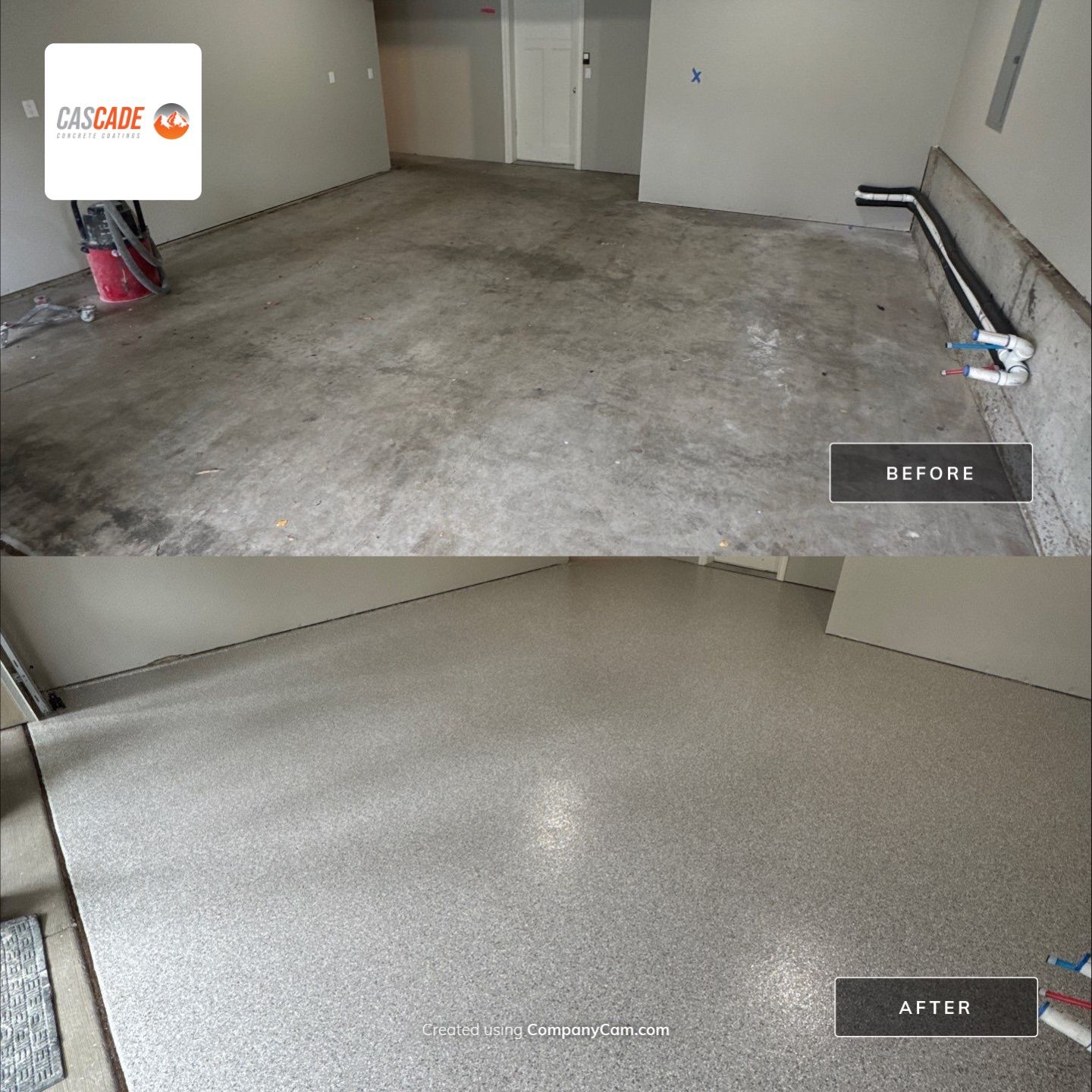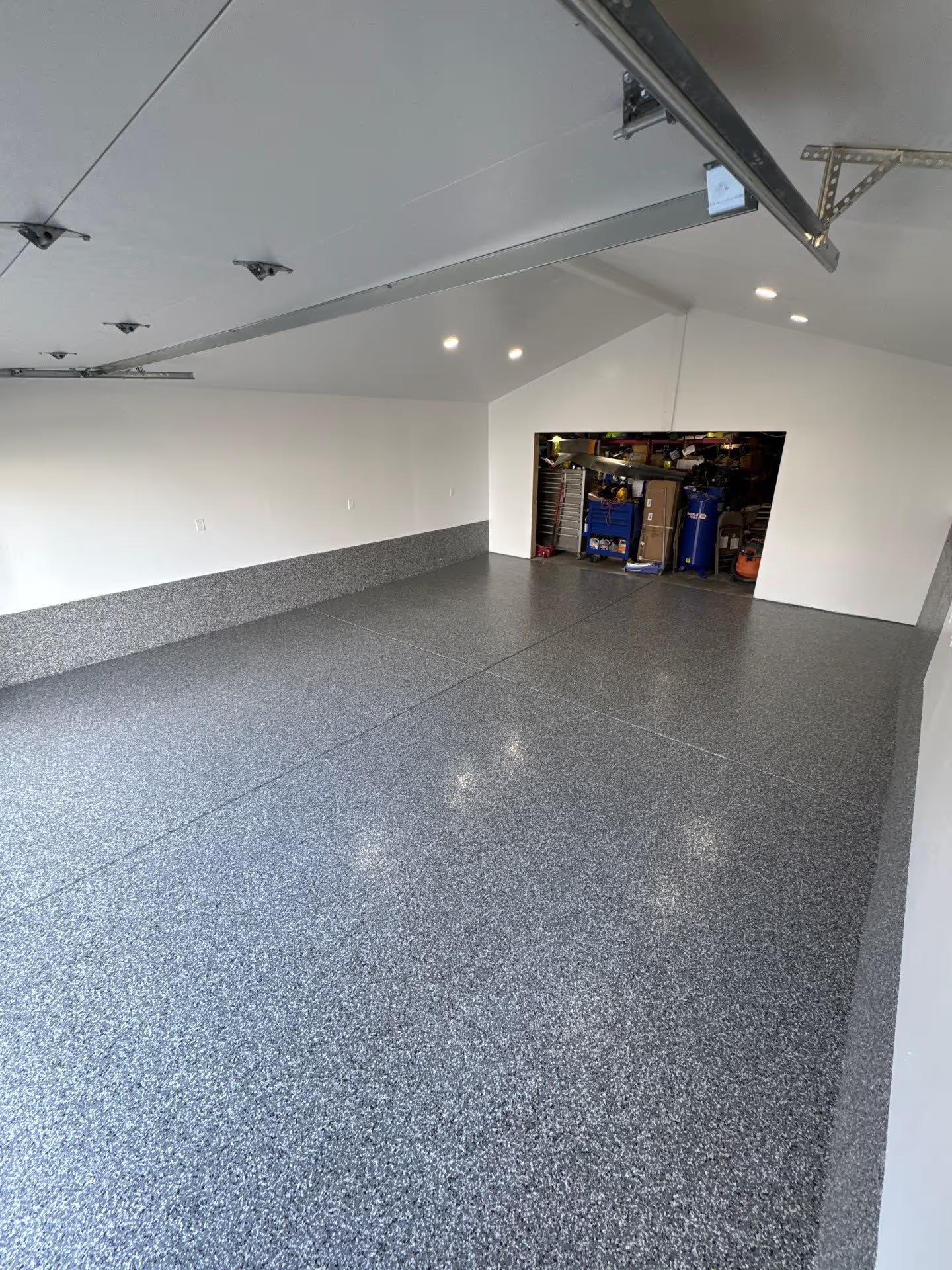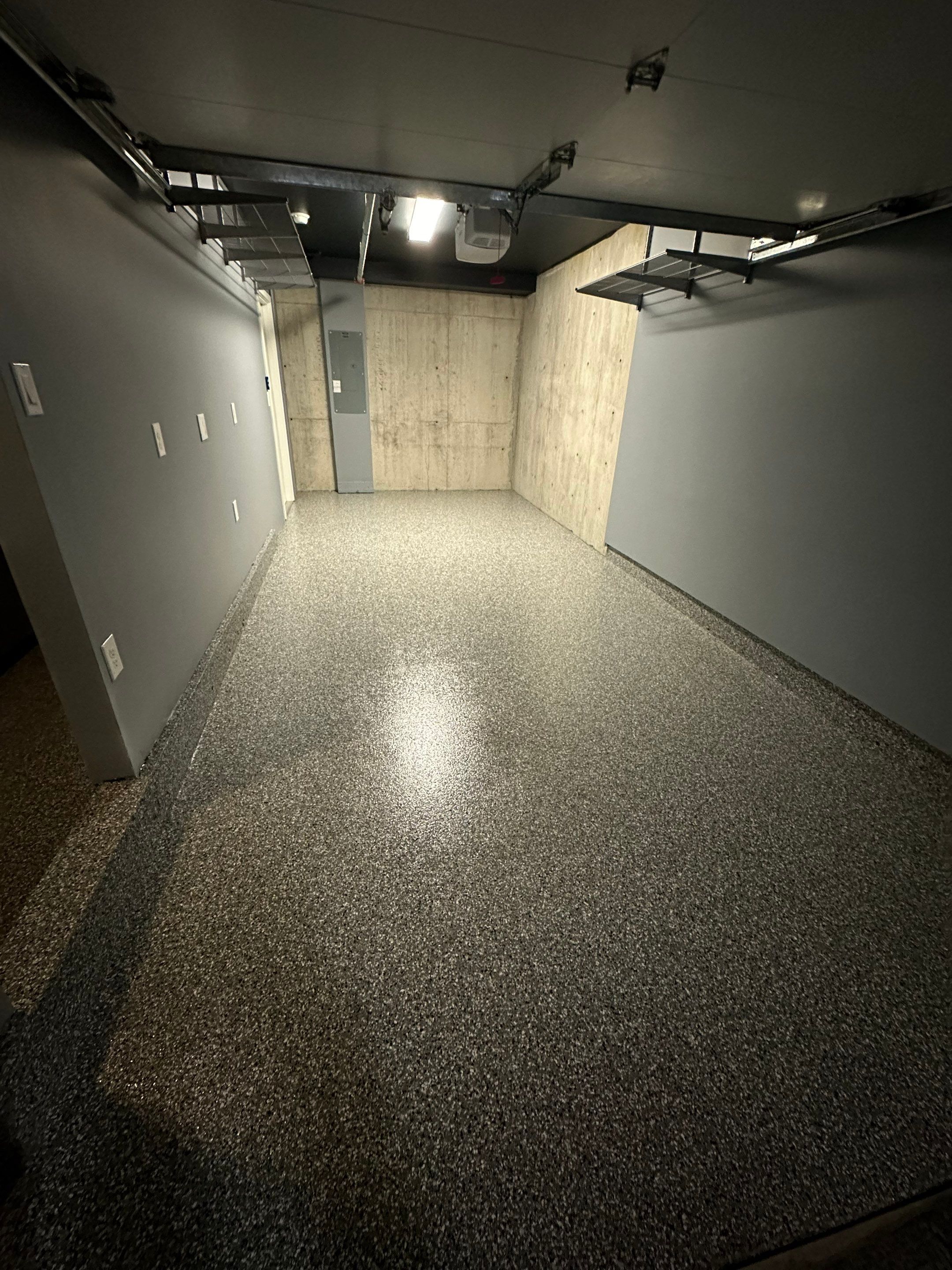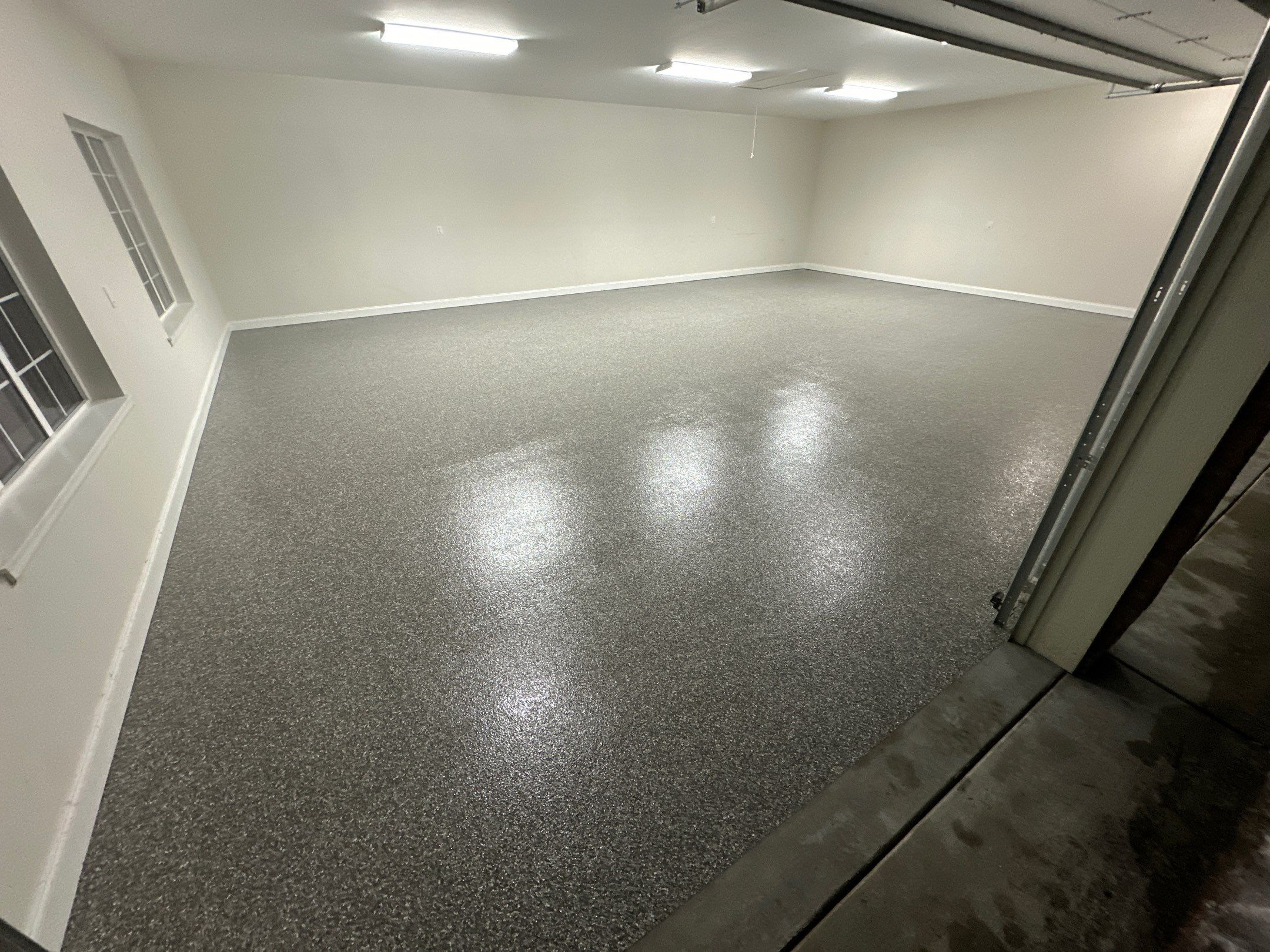
A rust and oil stained Shoreline garage, 375 sq ft, ground clean and coated in Ash Enviroflake polyurea in one day at 50°F in February 2025.
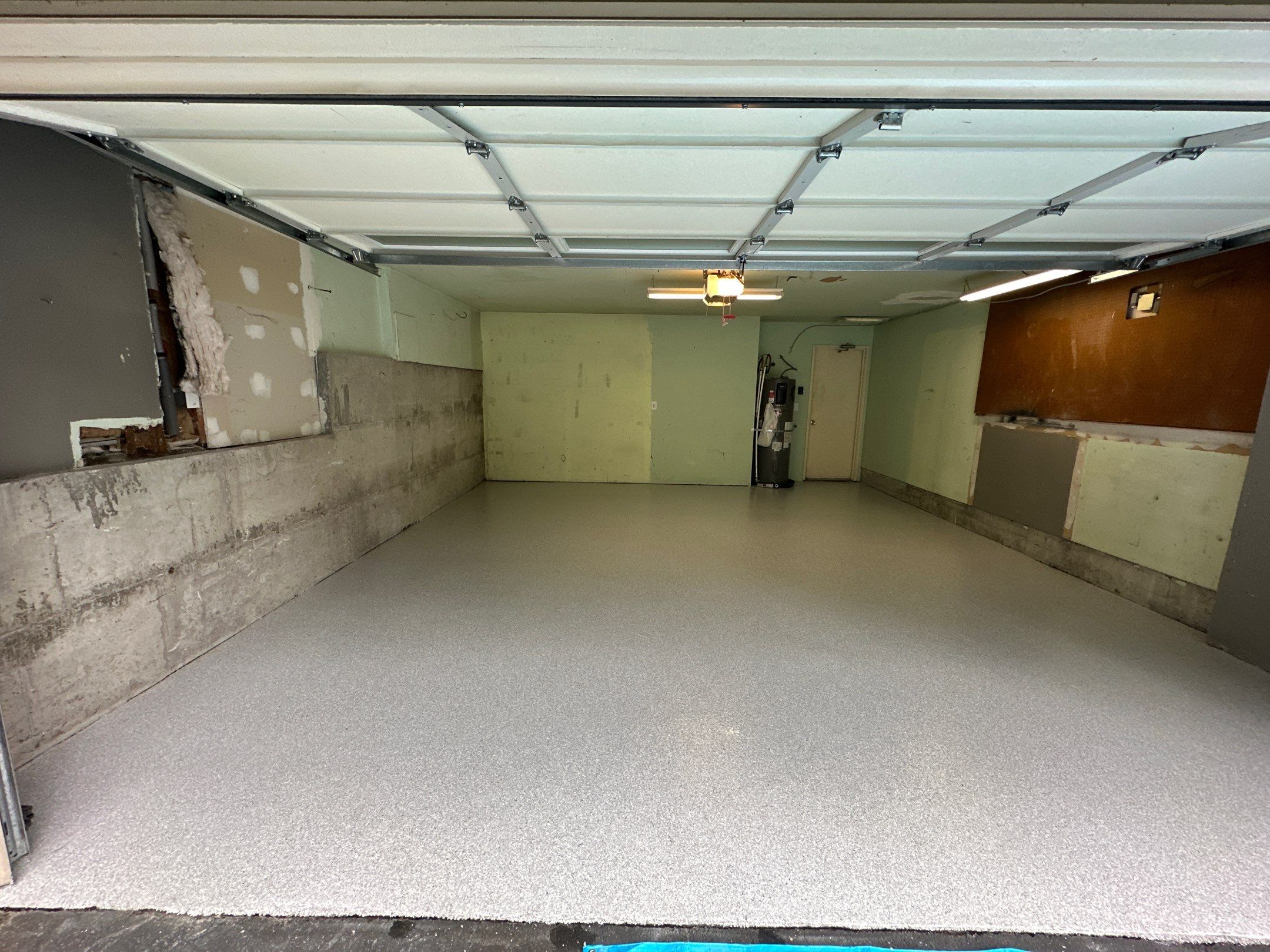
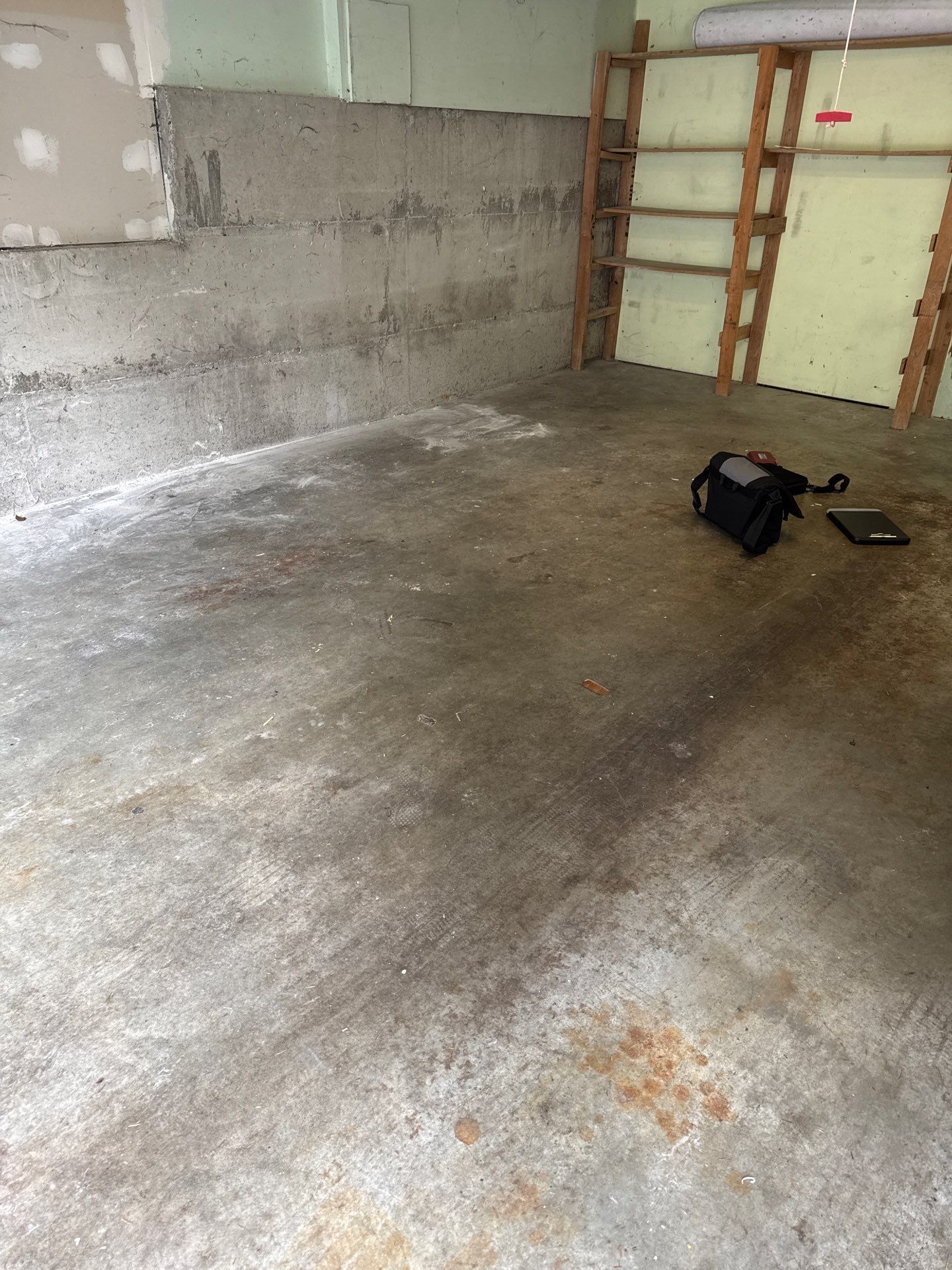


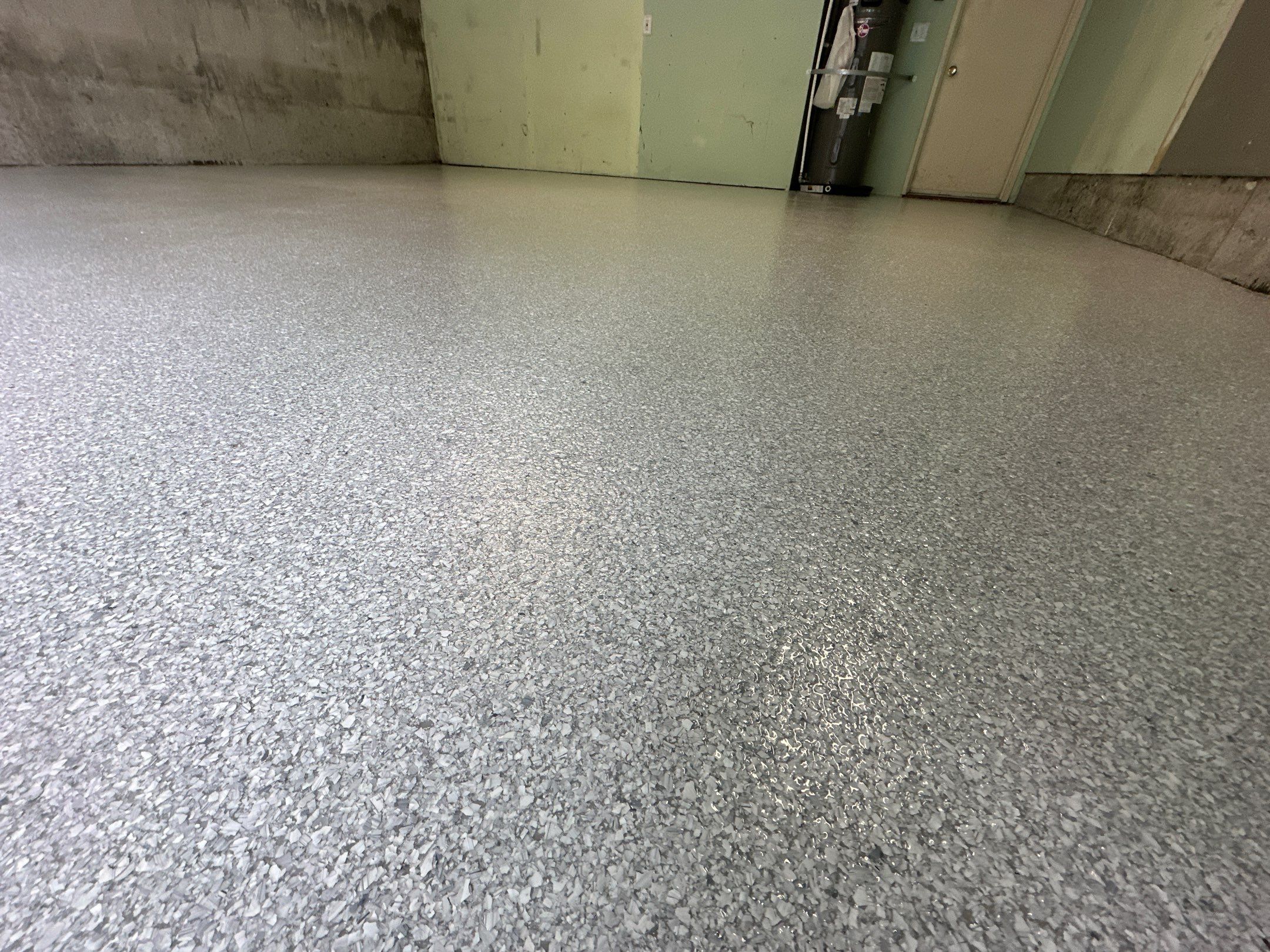
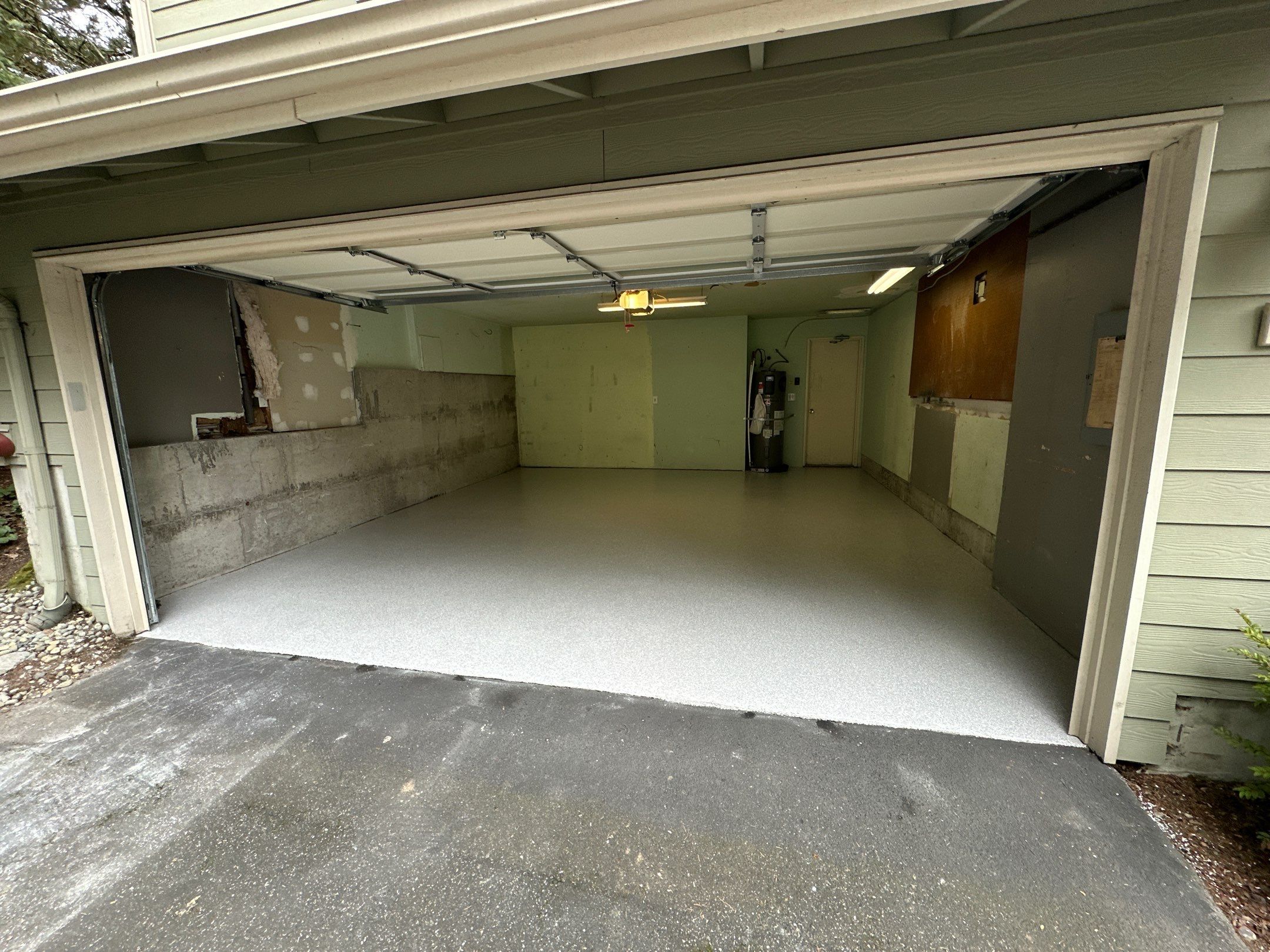
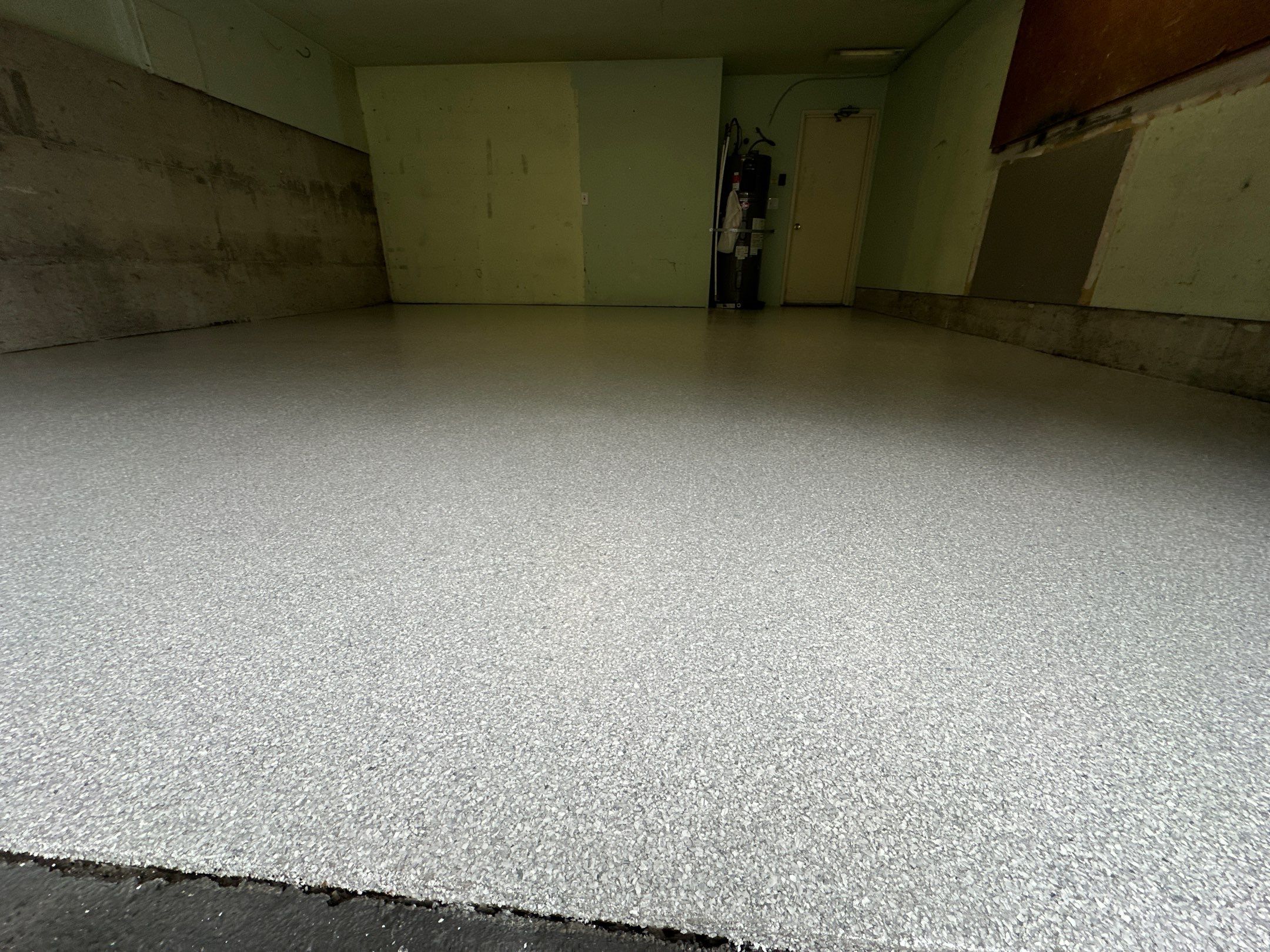


Rust stains are stubborn. This Shoreline garage had them in dark orange blooms across the middle of the floor, along with oil spots, tire tracks and a general grey grime from decades of use. It is a deep single-bay garage with concrete foundation walls along one side, pale green walls, and a door into the house at the back.
The homeowner wanted the stains gone for good and a floor that would look clean with very little effort. In February 2025 our crew put down a garage floor coating in Shoreline using Certified Penntek polyurea with Ash Enviroflake. 375 square feet, finished in one day on a 50°F winter afternoon.
The free consultation was on February 13, 2025. Two moisture readings on the slab both came in at 4.3%. The concrete itself was in good condition: no major cracks, no crumbling. The trouble was all on the surface.
Rust stains usually come from metal sitting on damp concrete, like old shelving legs, tools or a bike stand. Oil soaks in from cars. Neither one scrubs out of bare concrete, because the stain is in the pores, not on top. The fix is to grind past it.
A week after the consult the crew was back. With the air at 50°F, slab temperature was part of the plan, and a portable heater ran in the garage during the work. We keep installing through the winter, with slab and air conditions checked and logged on every install day. Our post on coating concrete in winter explains the details.
By the end of the day the rust and oil were gone from view, ground away and sealed under the new floor.
Ash Enviroflake is a light, fine-textured grey with white and charcoal chips. In a deep garage where the light from the door fades toward the back, a pale floor helps. It bounces daylight down the length of the room and makes the space feel open.
The fine flake also hides small things well. Sawdust, a few leaves, a dusty footprint. You notice them less than on a solid color.
The whole point of this job was stains, so the topcoat matters most. Penntek's polyaspartic topcoat is non-porous. Oil, gas, grease and road salt sit on the surface and wipe off instead of soaking in. Watch the Penntek Stain Test to see it in action. If you already have a coated floor and want to keep it clean, our guide on removing stains from a coated floor covers the basics.
Under the topcoat is a pure polyurea basecoat with a chemical bond to the concrete, over 1,300 PSI. Typical epoxy often starts to fail in years 3–5. This system is built for up to 5x that lifespan, and every floor carries a limited lifetime warranty backed by Penntek.
Shoreline sits on Puget Sound just north of Seattle, and its winters are long, grey and damp. Concrete stays wet, metal rusts, and whatever drips off a car sits on the slab for weeks. A sealed floor is the simplest way to stop that cycle.
See more on our Shoreline garage floor coatings page, or look at another Shoreline garage finished in Ash. Homeowners share their experience on our reviews page.
Yes. Diamond grinding removes the stained top layer of concrete, and the coating seals what is left. Once the stained layer is gone and the slab is sealed under the coating, the stain stays out of sight.
No. This Shoreline floor went down at 50°F. We check air and slab temperature on the day, and log the readings for the Penntek warranty.
Penntek floors are built for 30–40 years, up to 5x the lifespan of typical epoxy. Moisture testing at the consult and a chemical bond to the concrete are what make that possible in a wet climate.
Ready to be done with stains? Book a free in-home quote or call 425-226-6085. Nicole and Sheldon own Cascade and are licensed, bonded and insured.
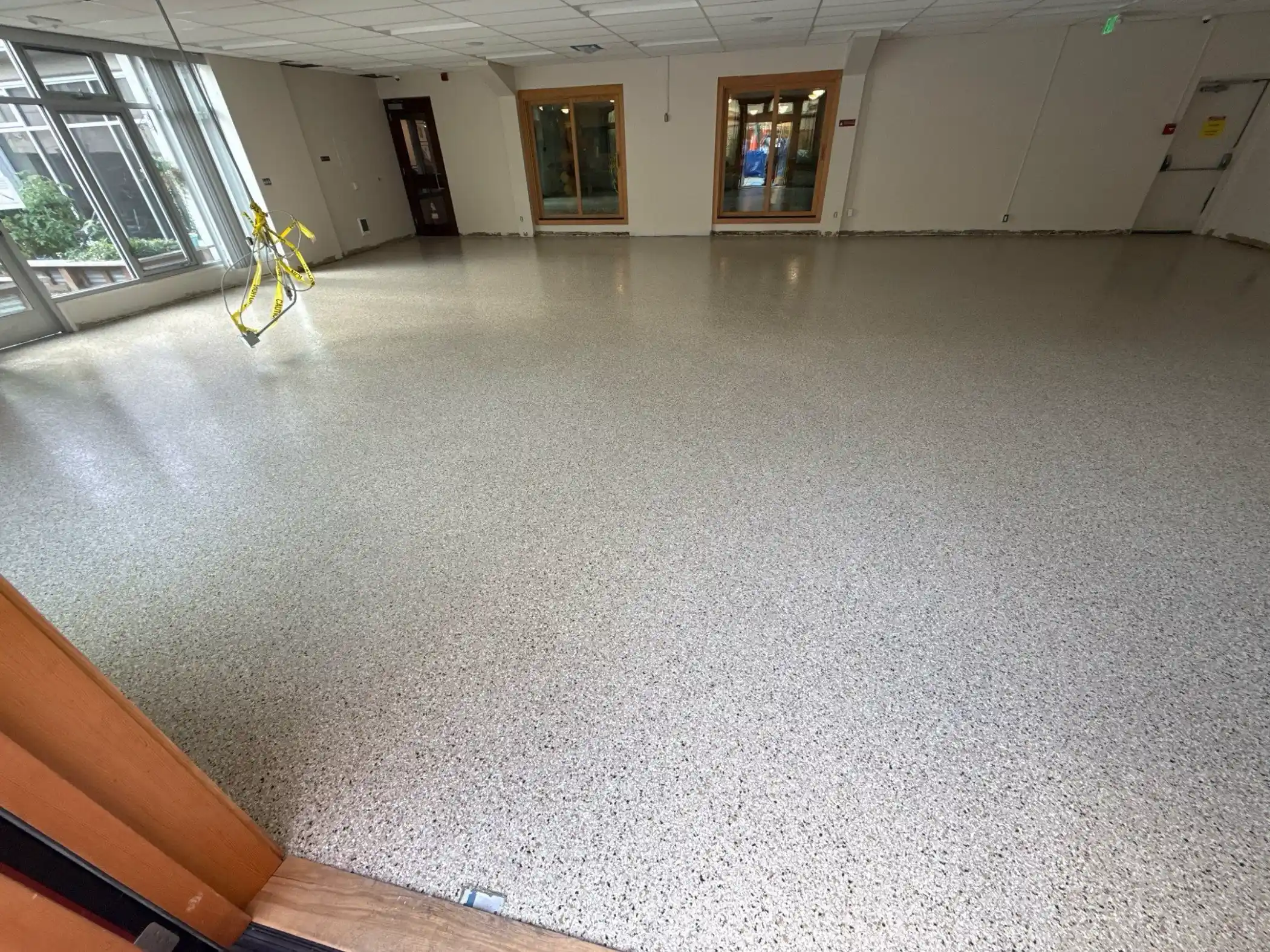
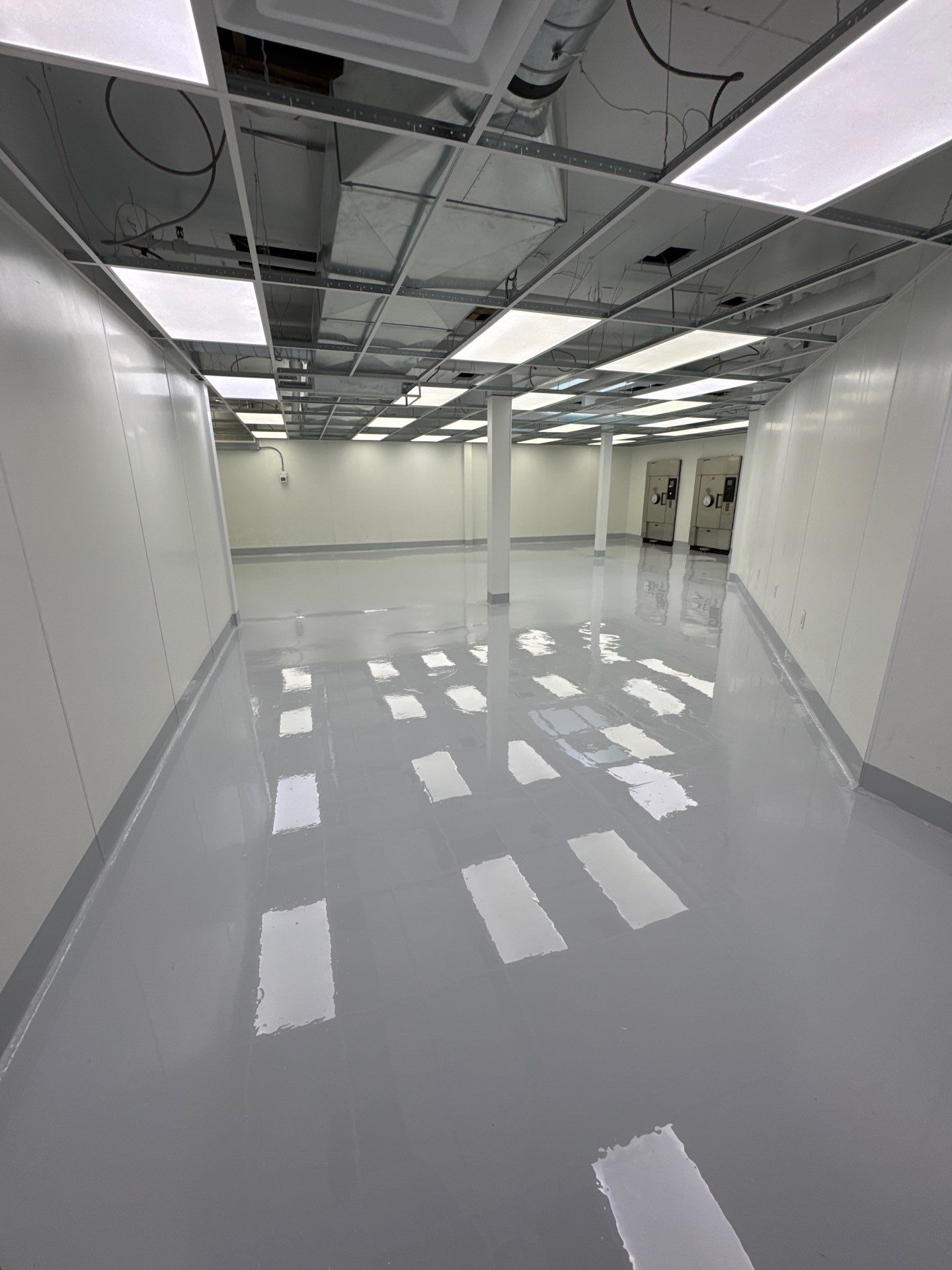
Here's just a few of our previous projects.