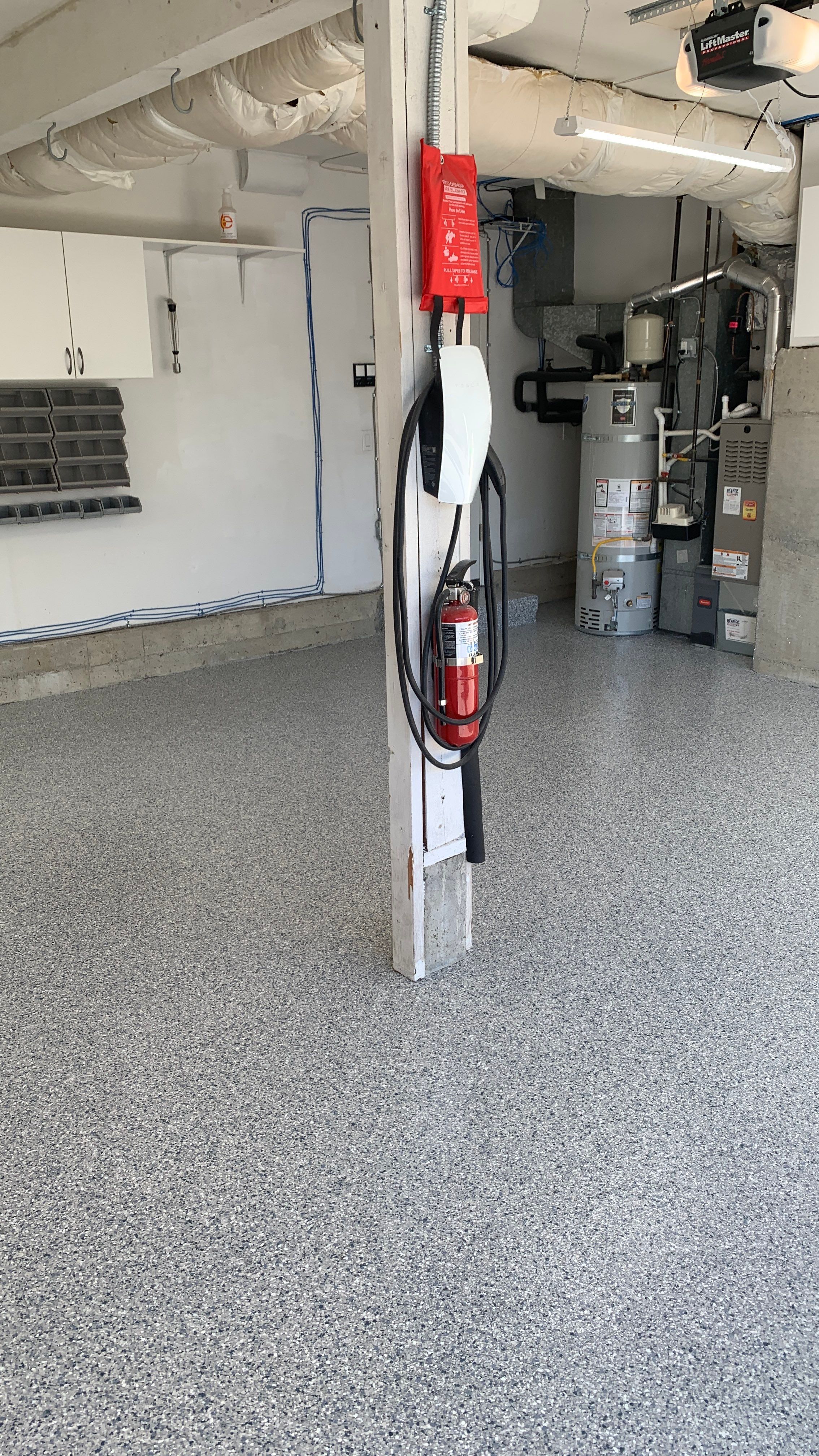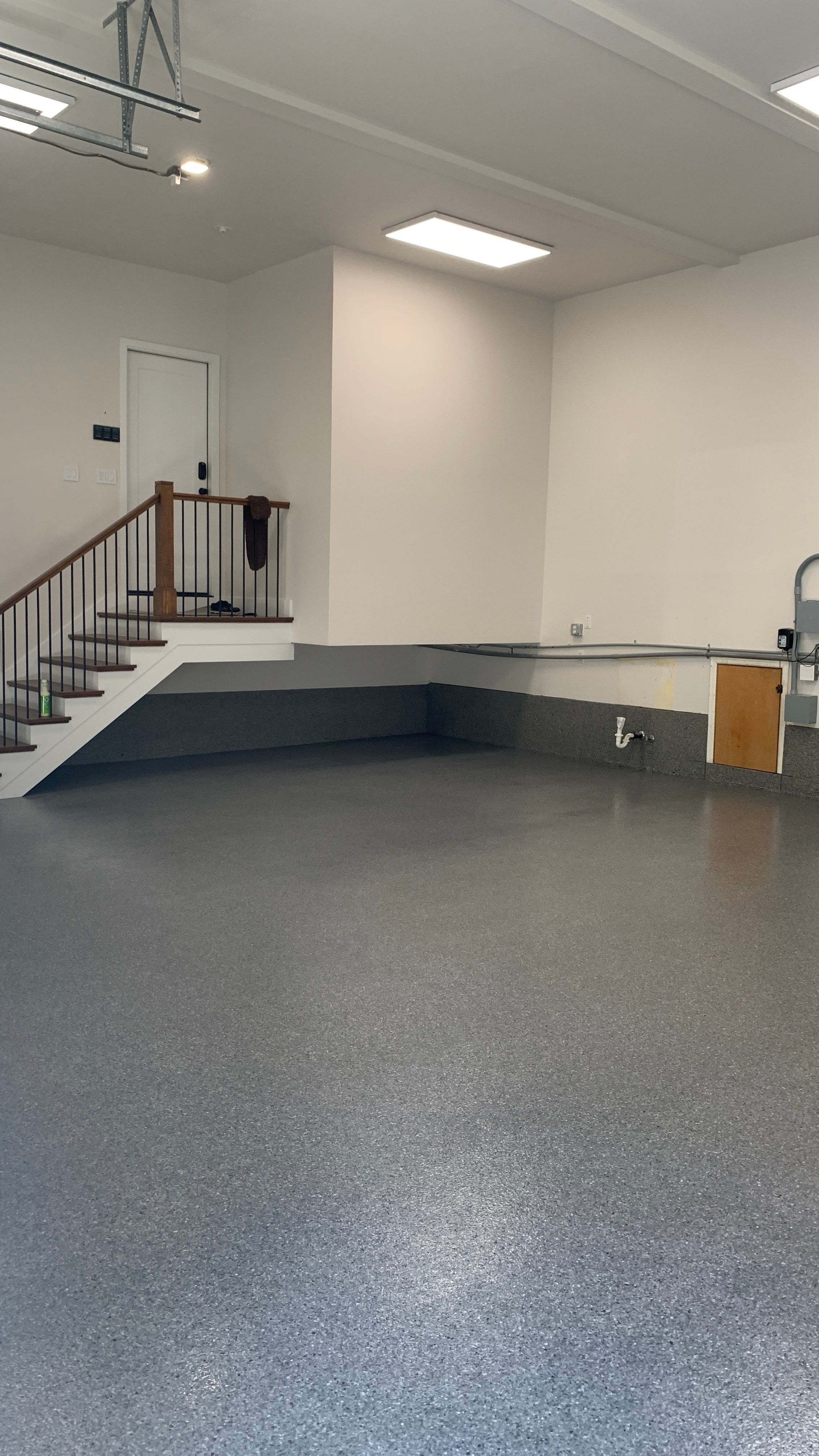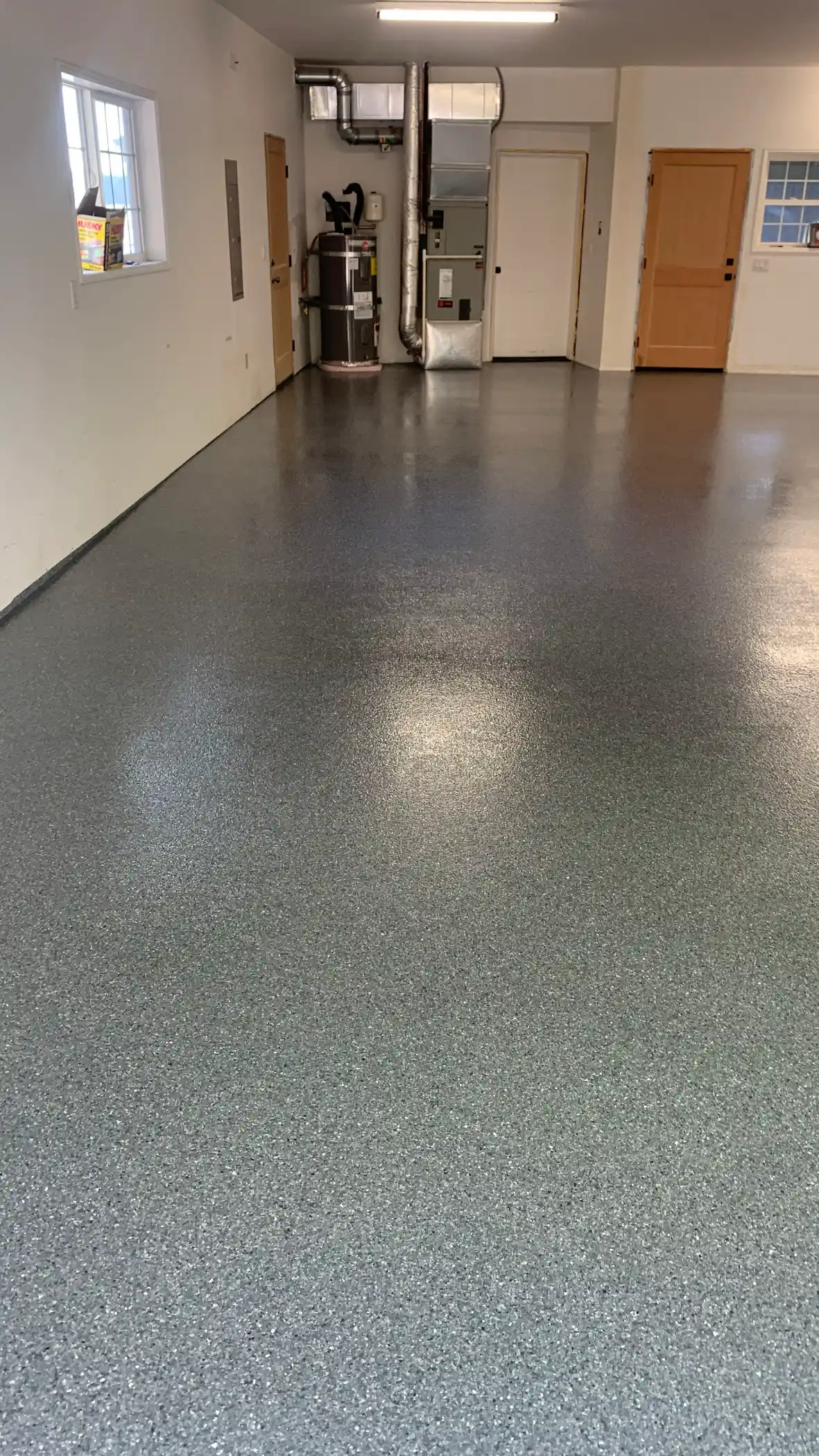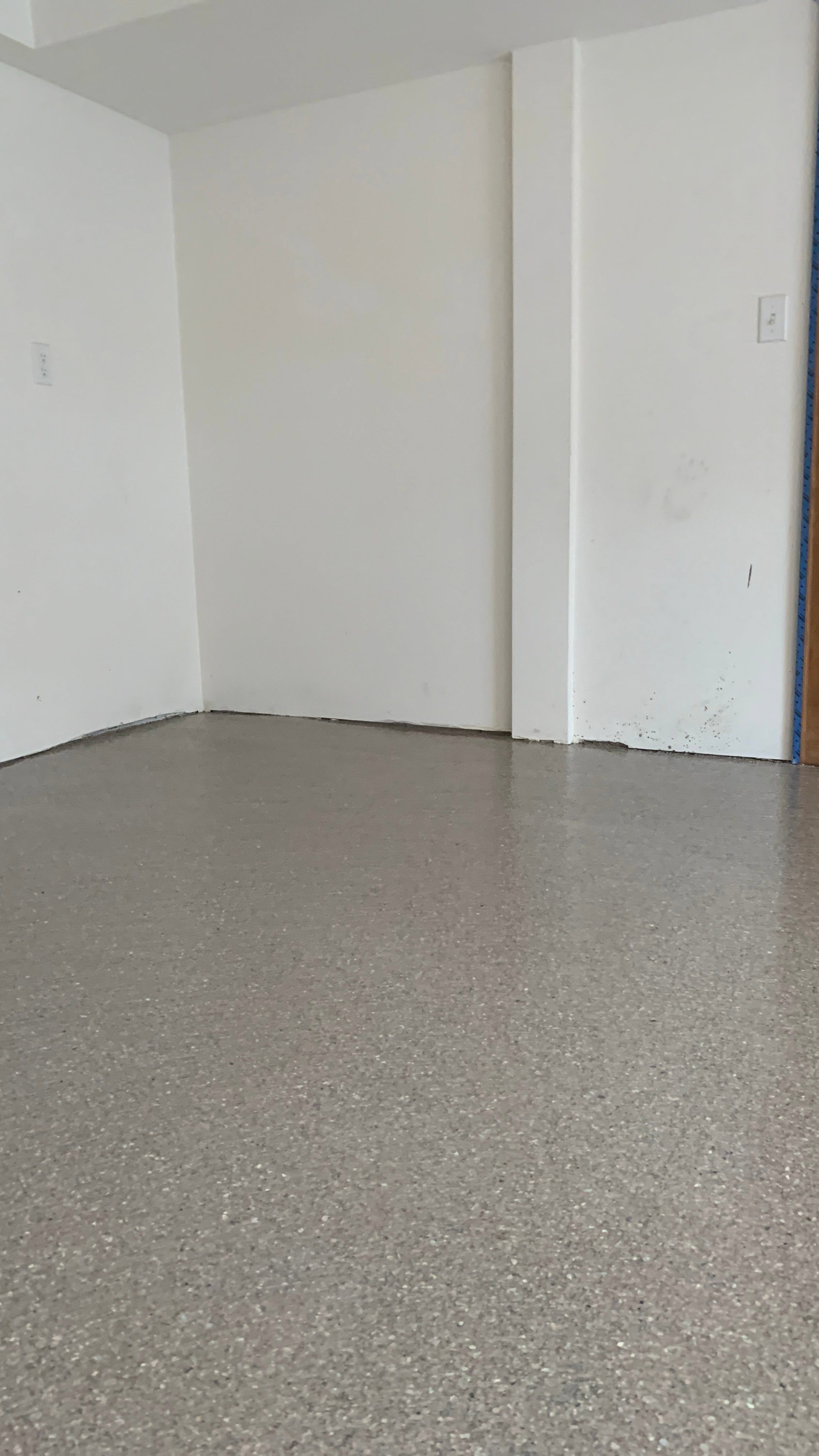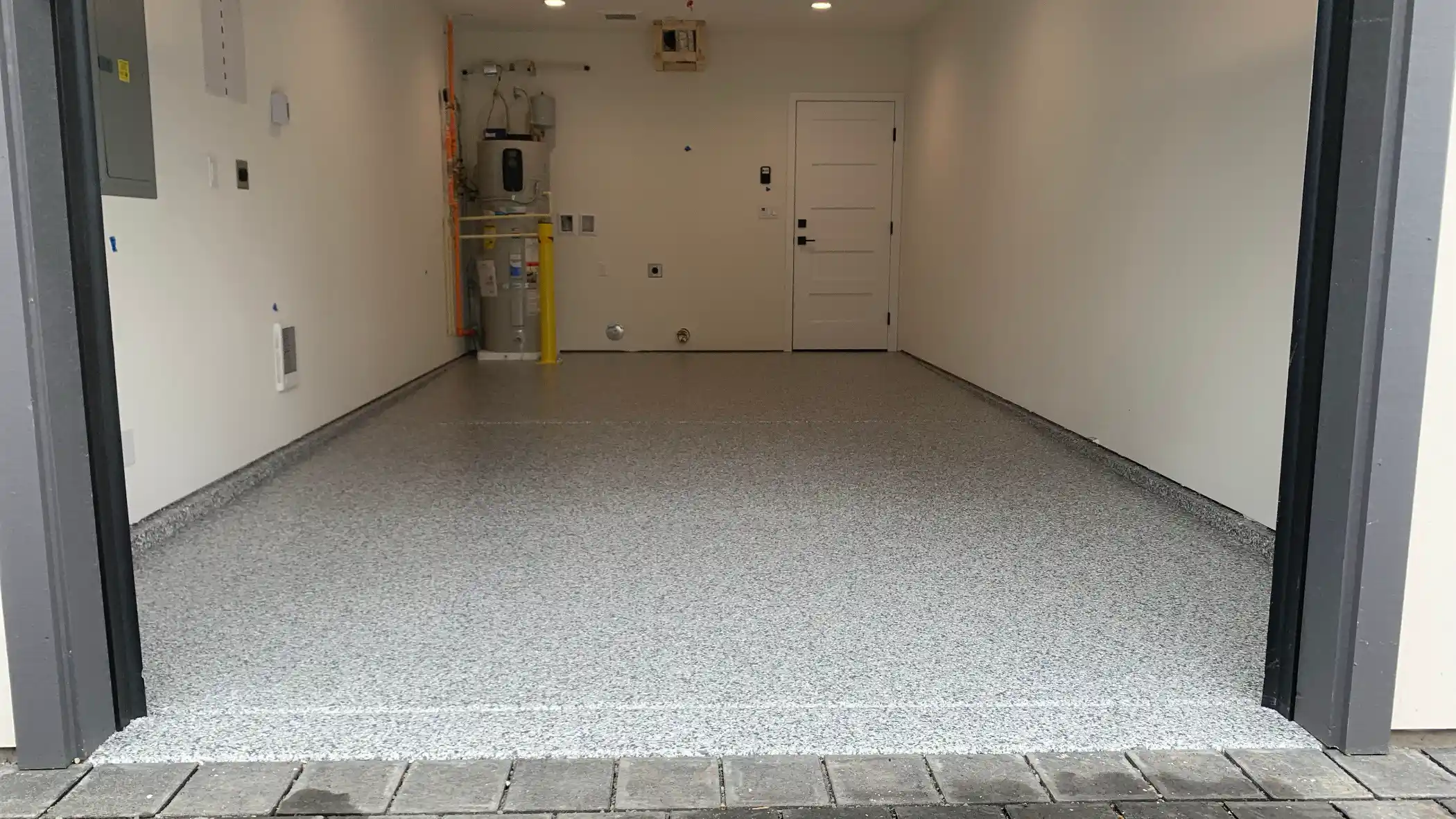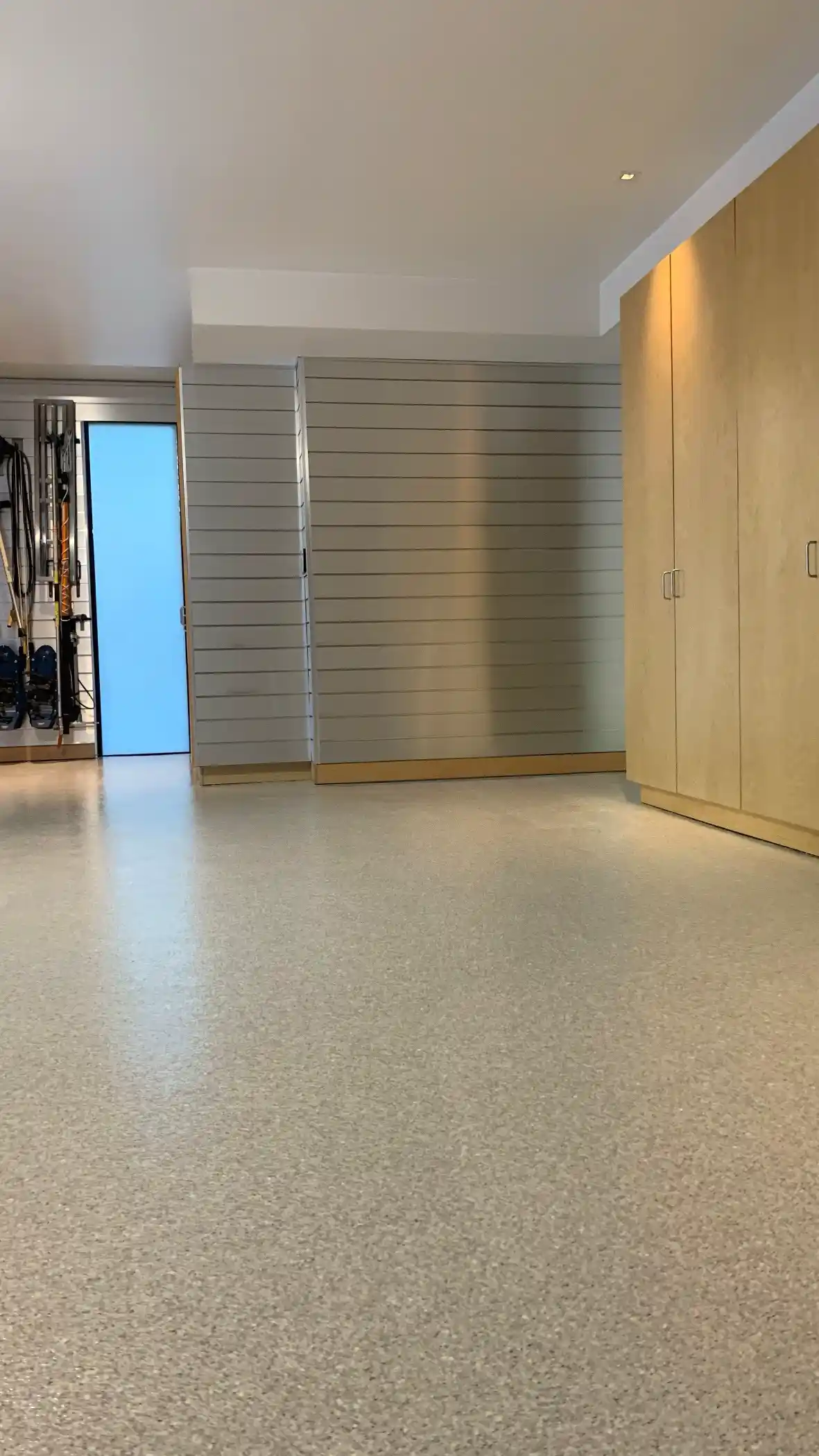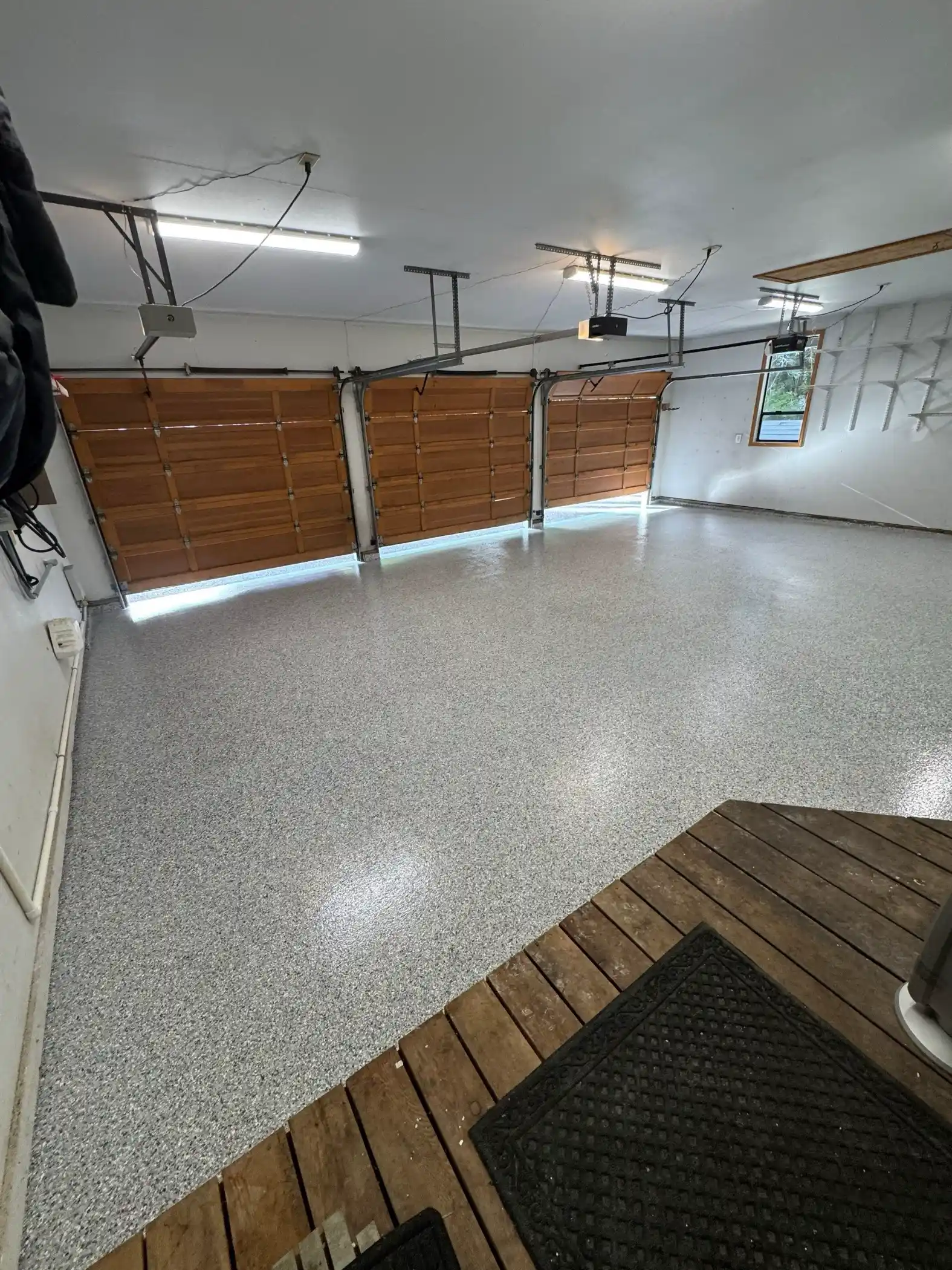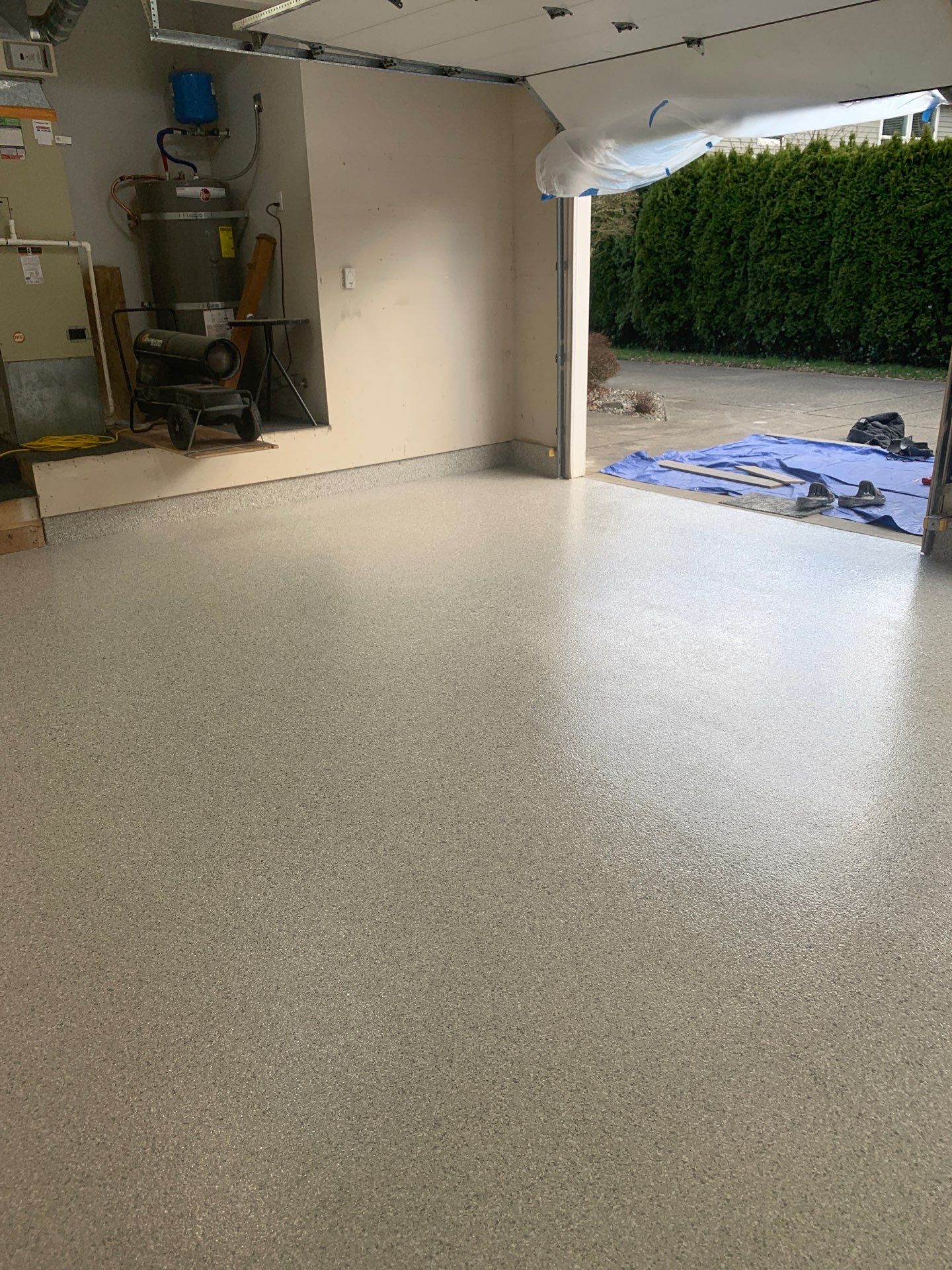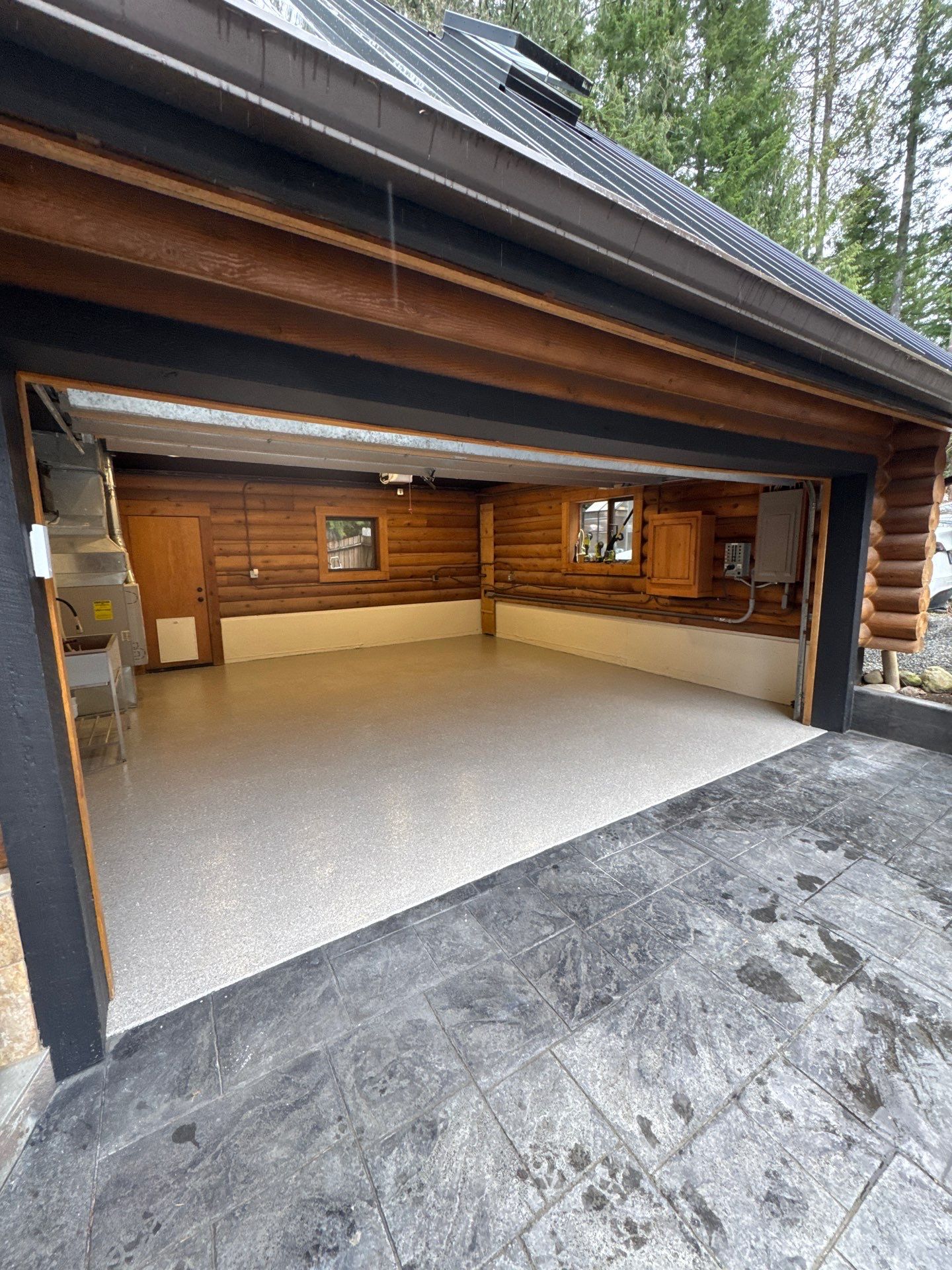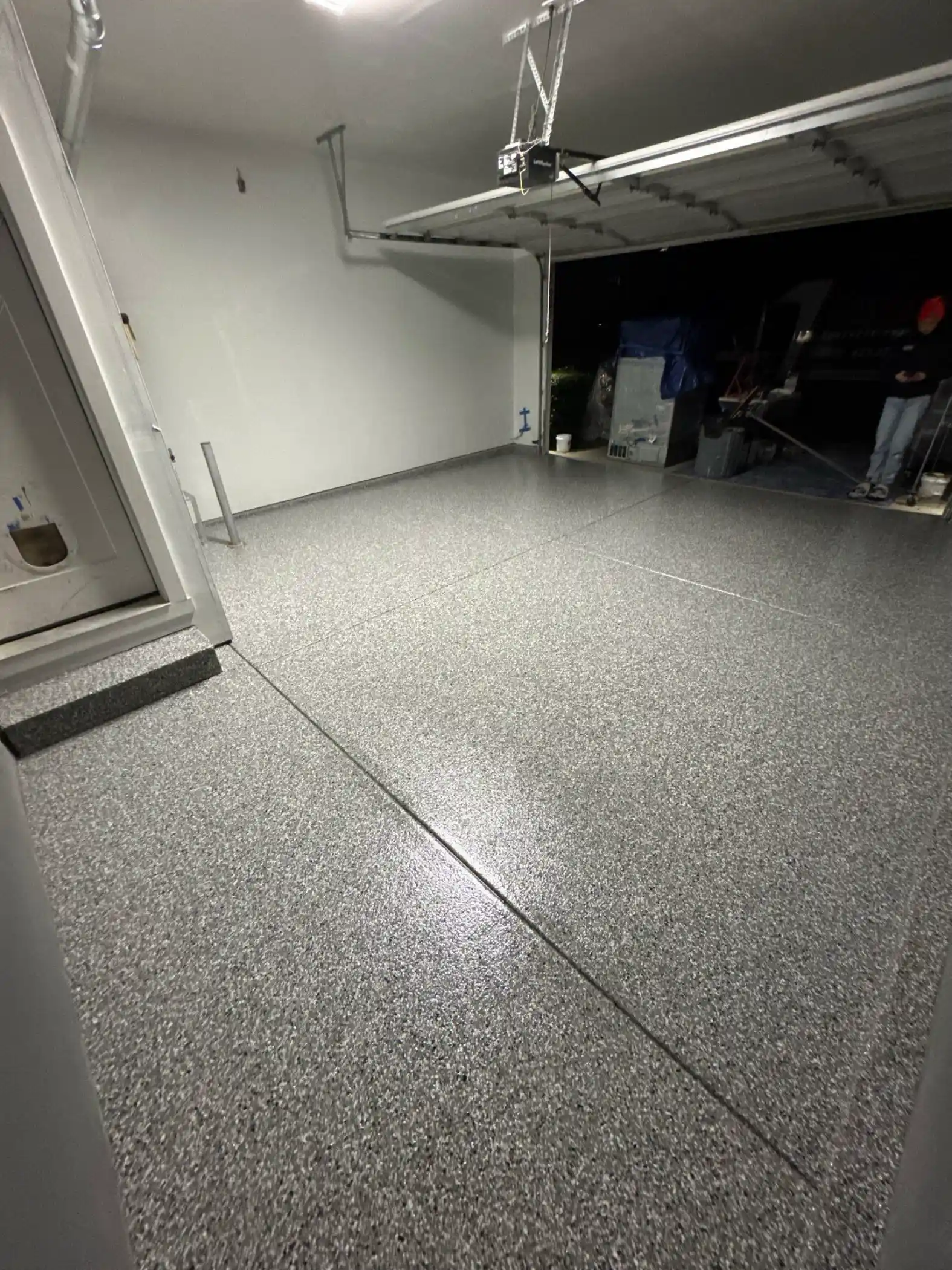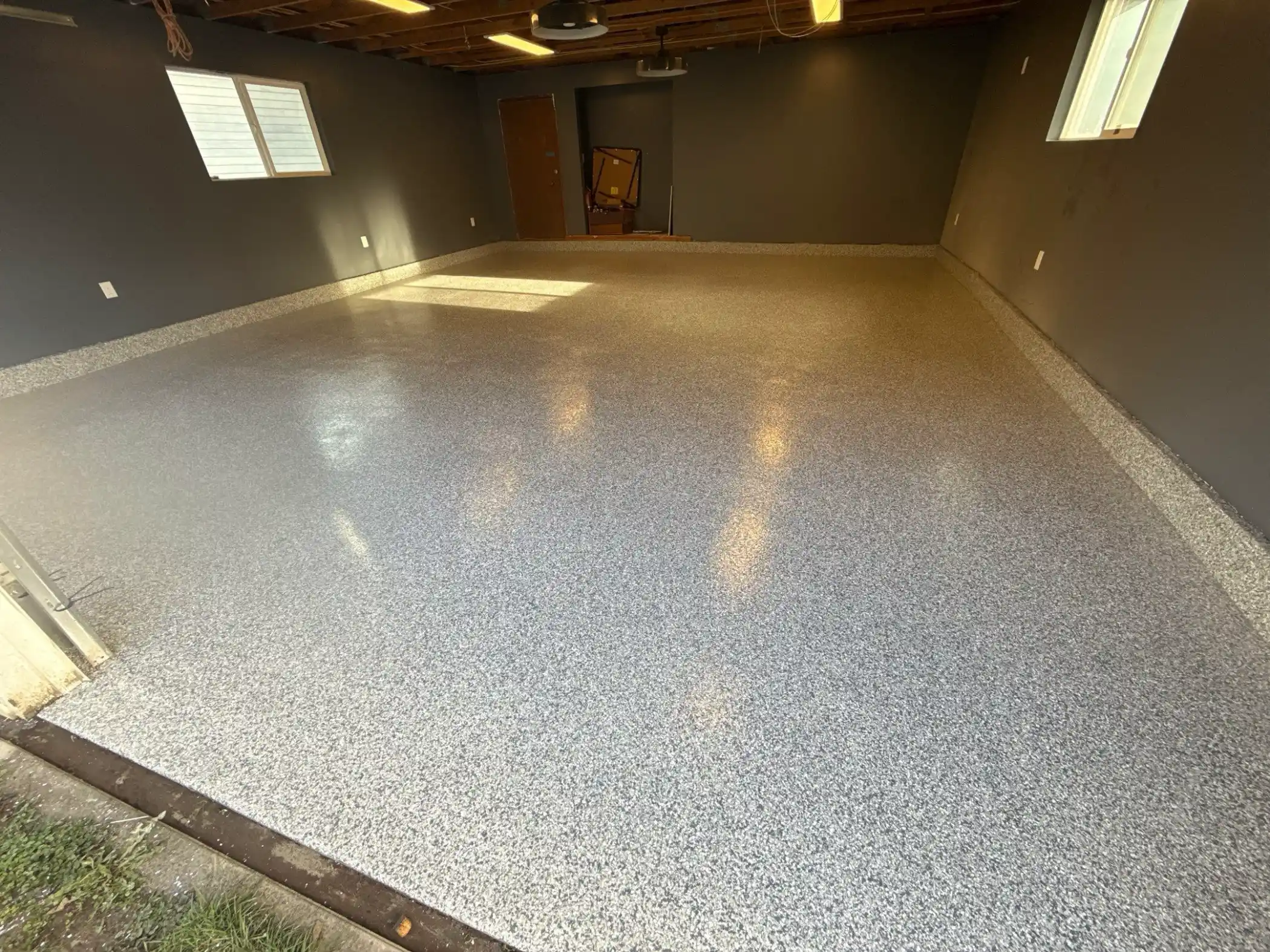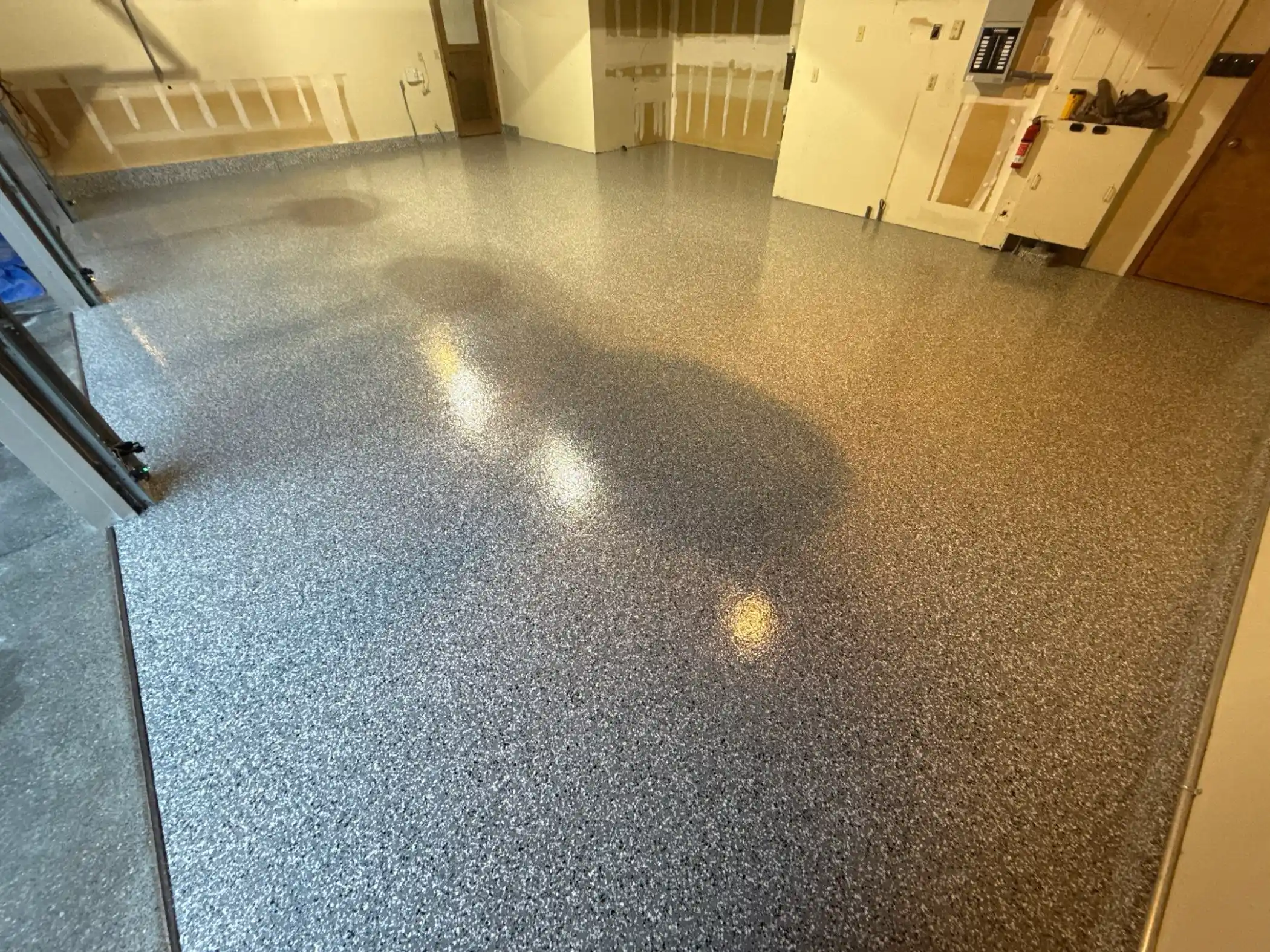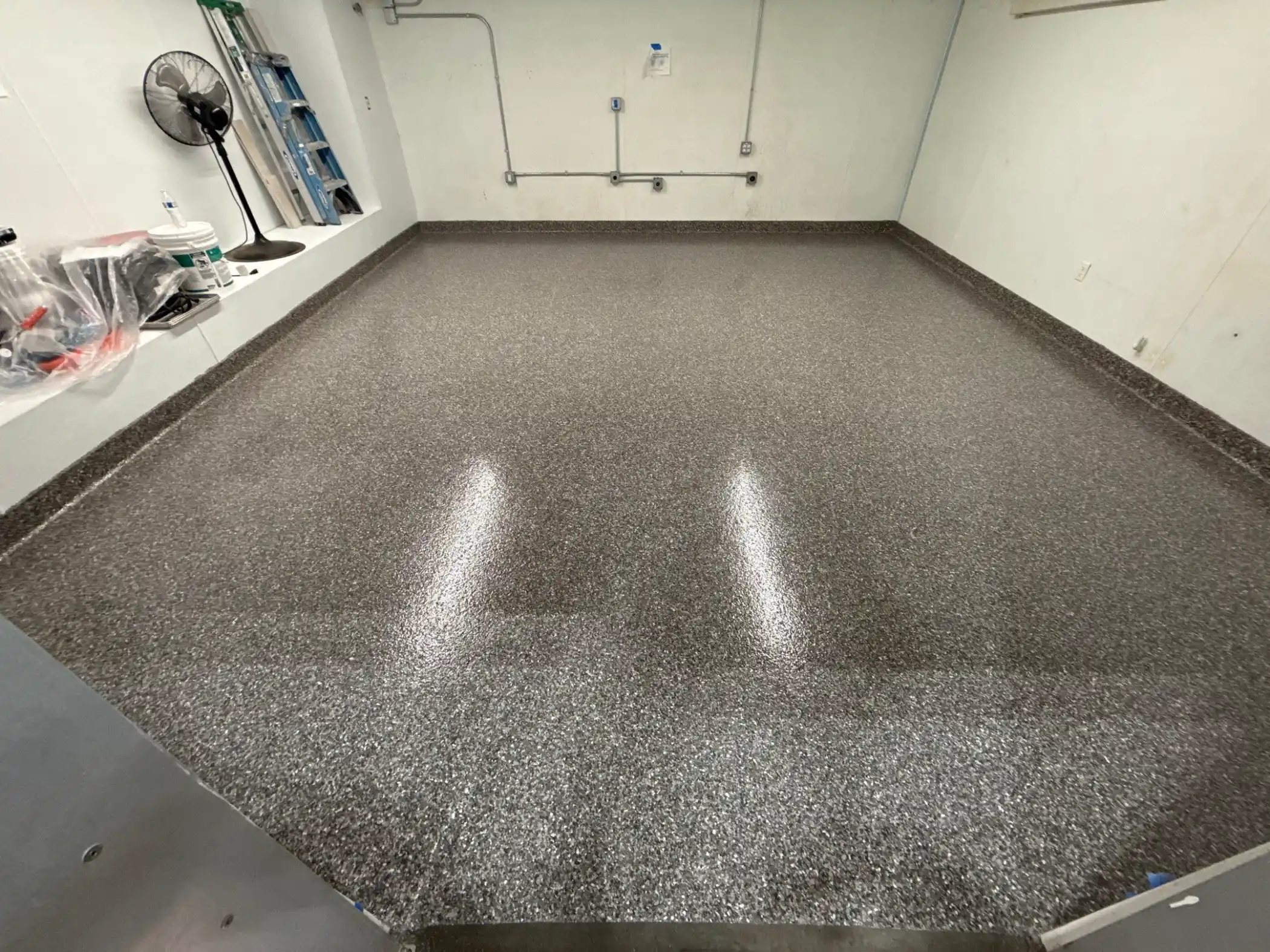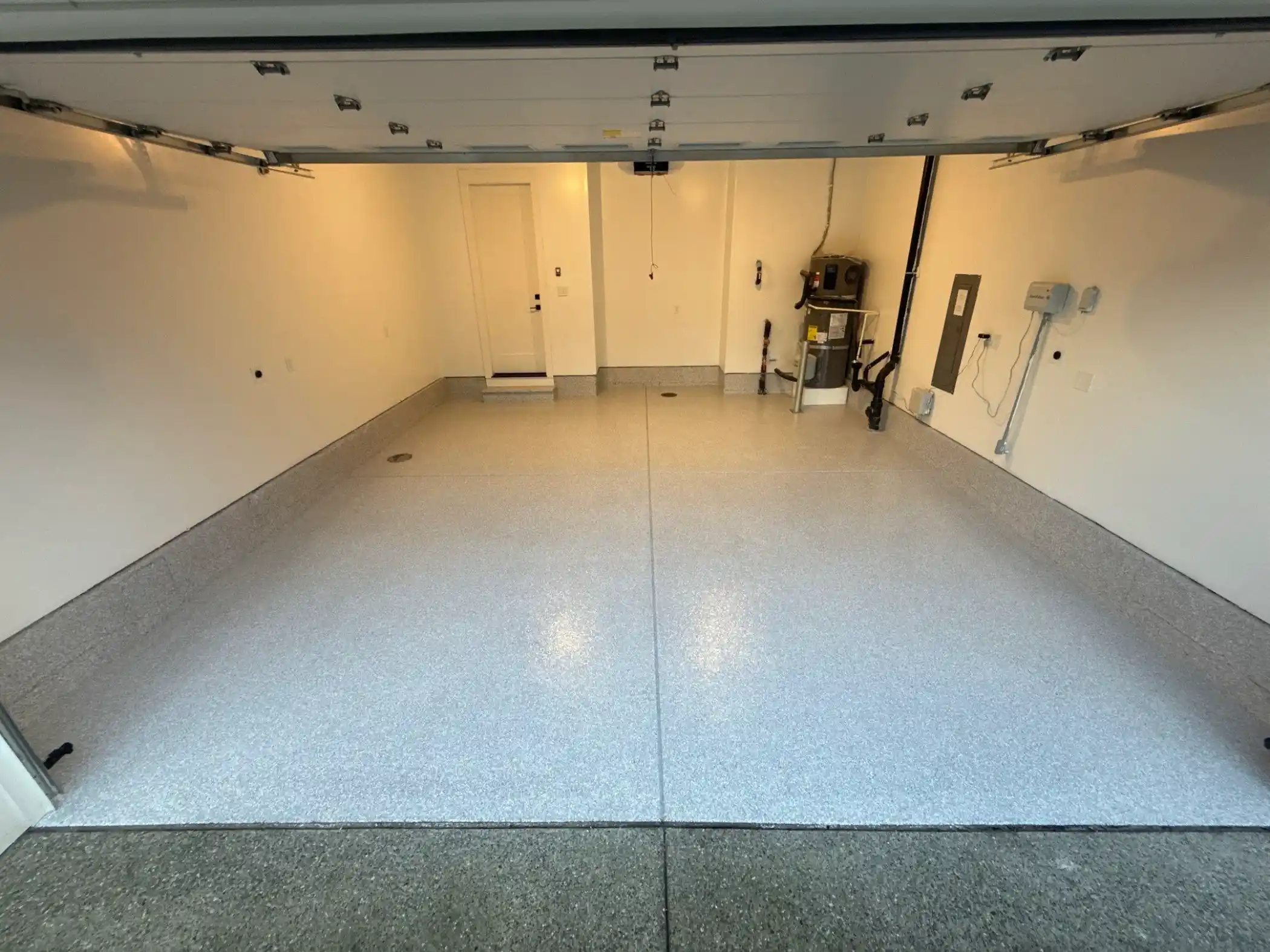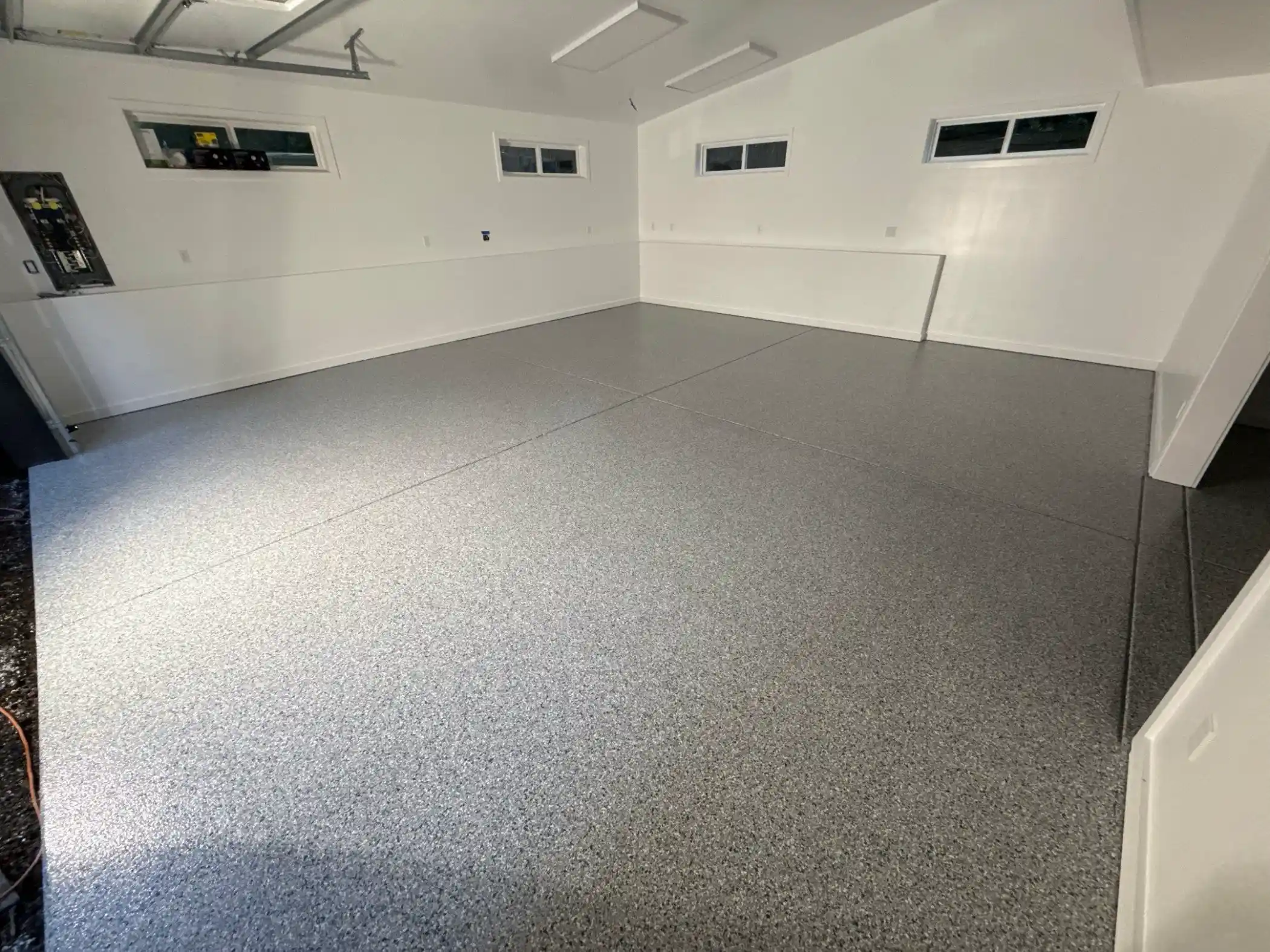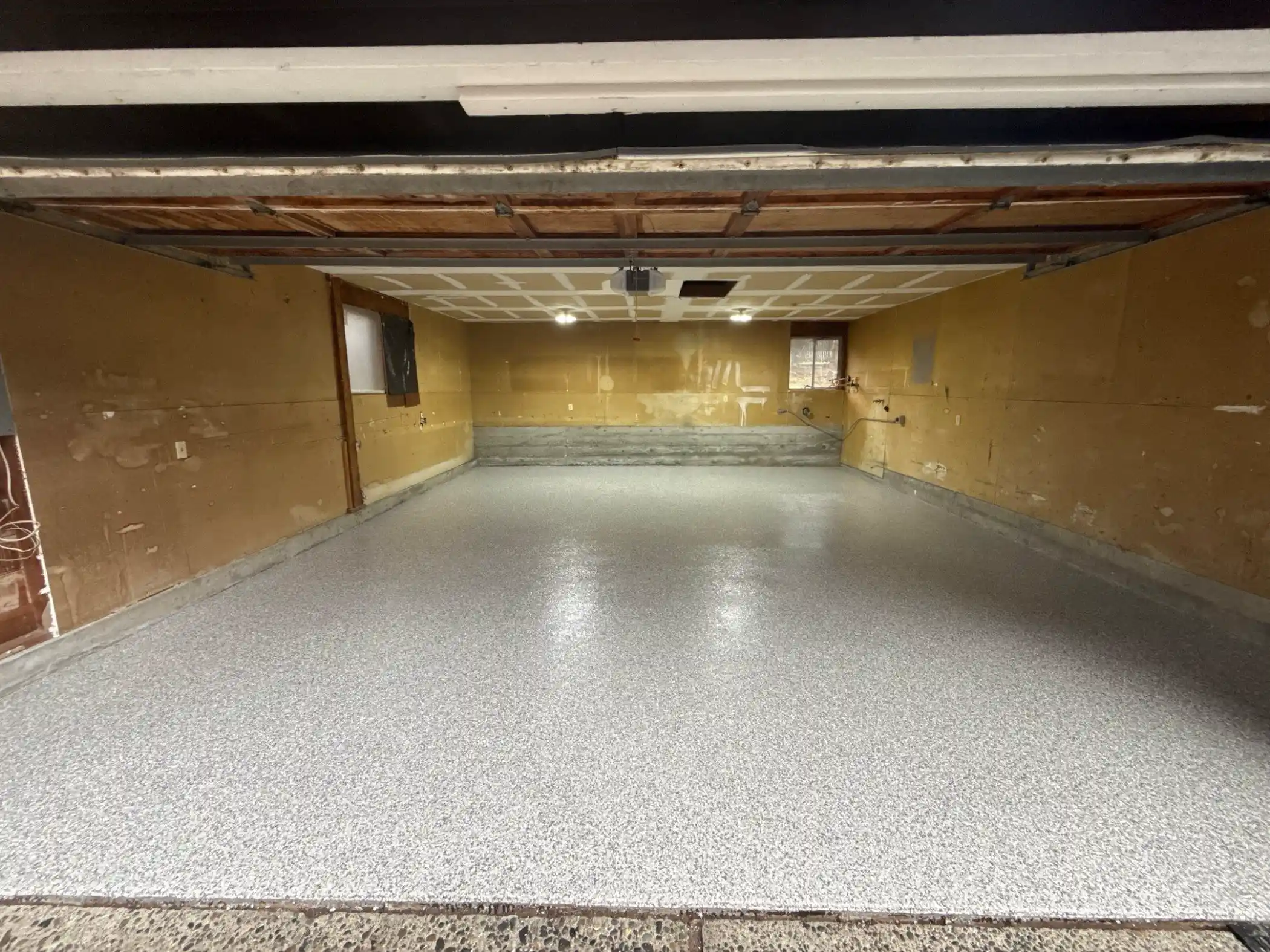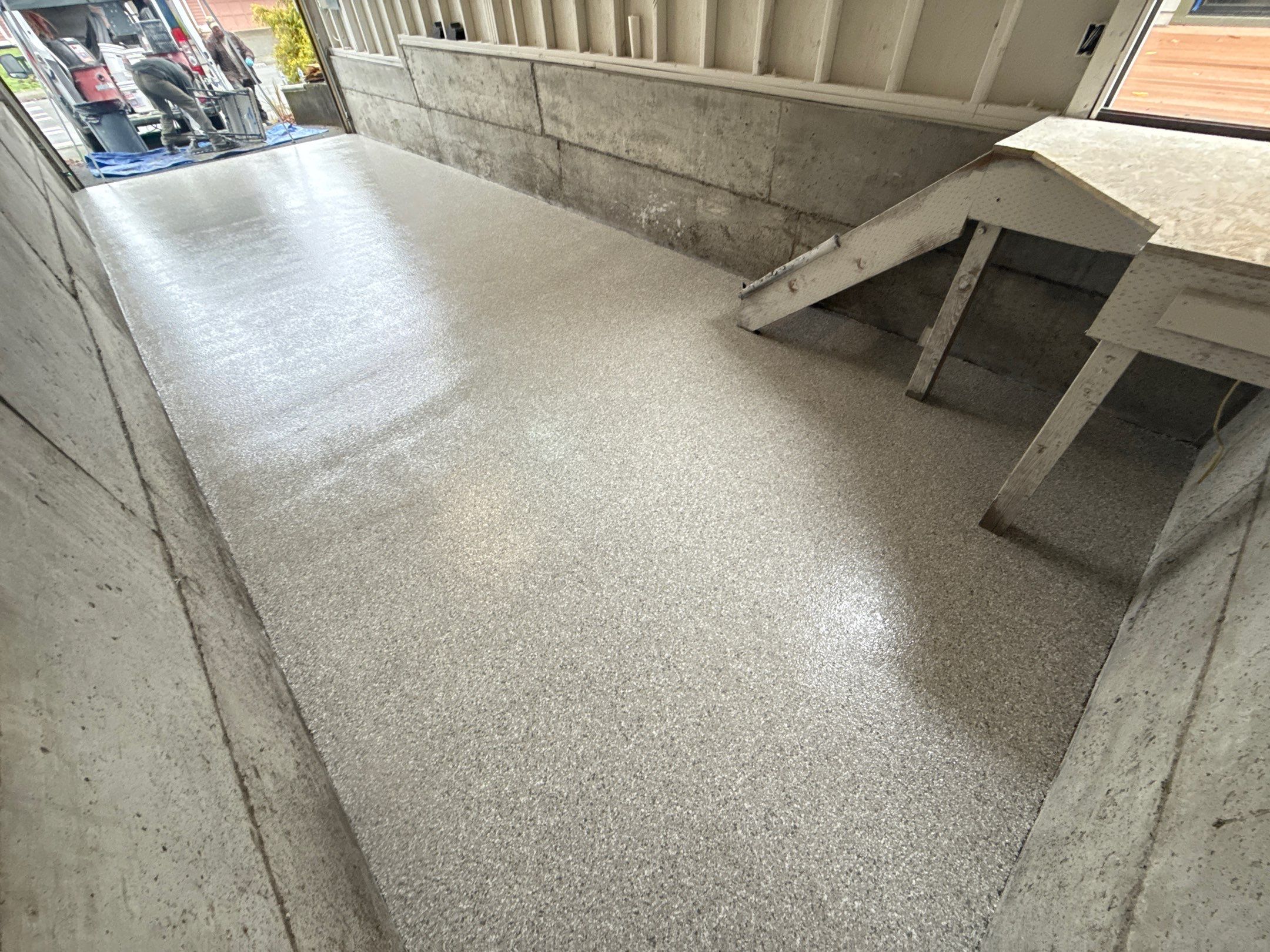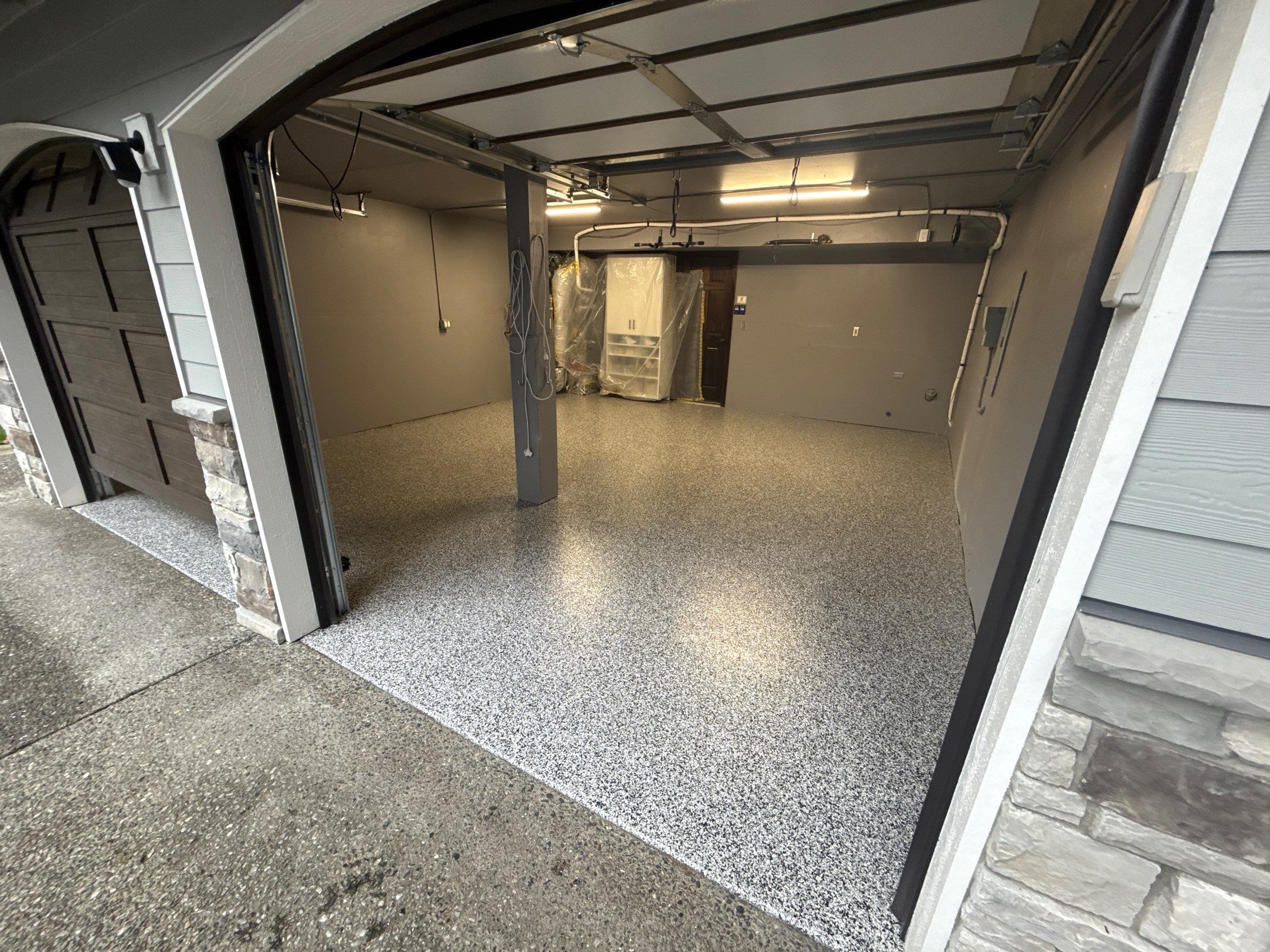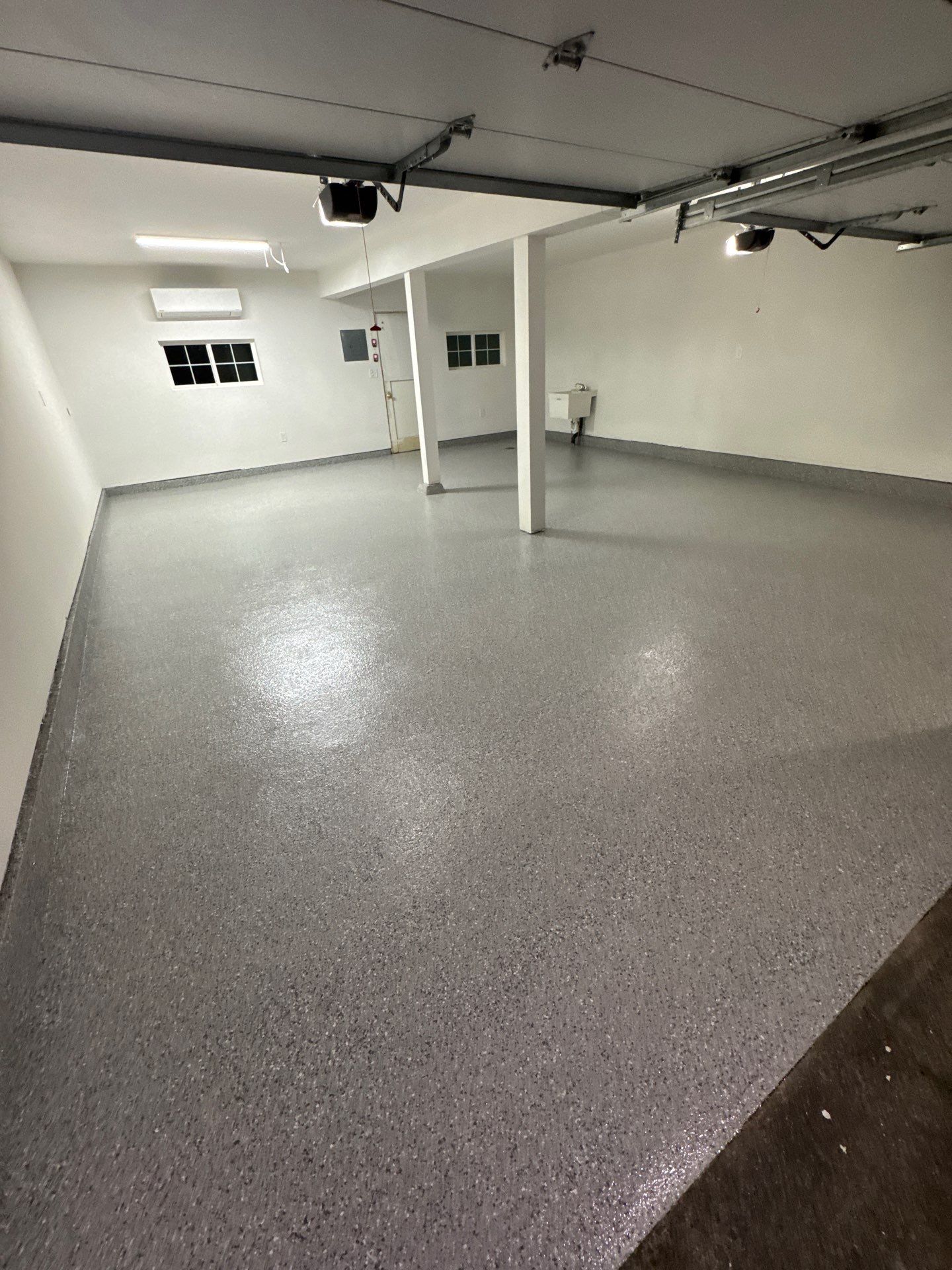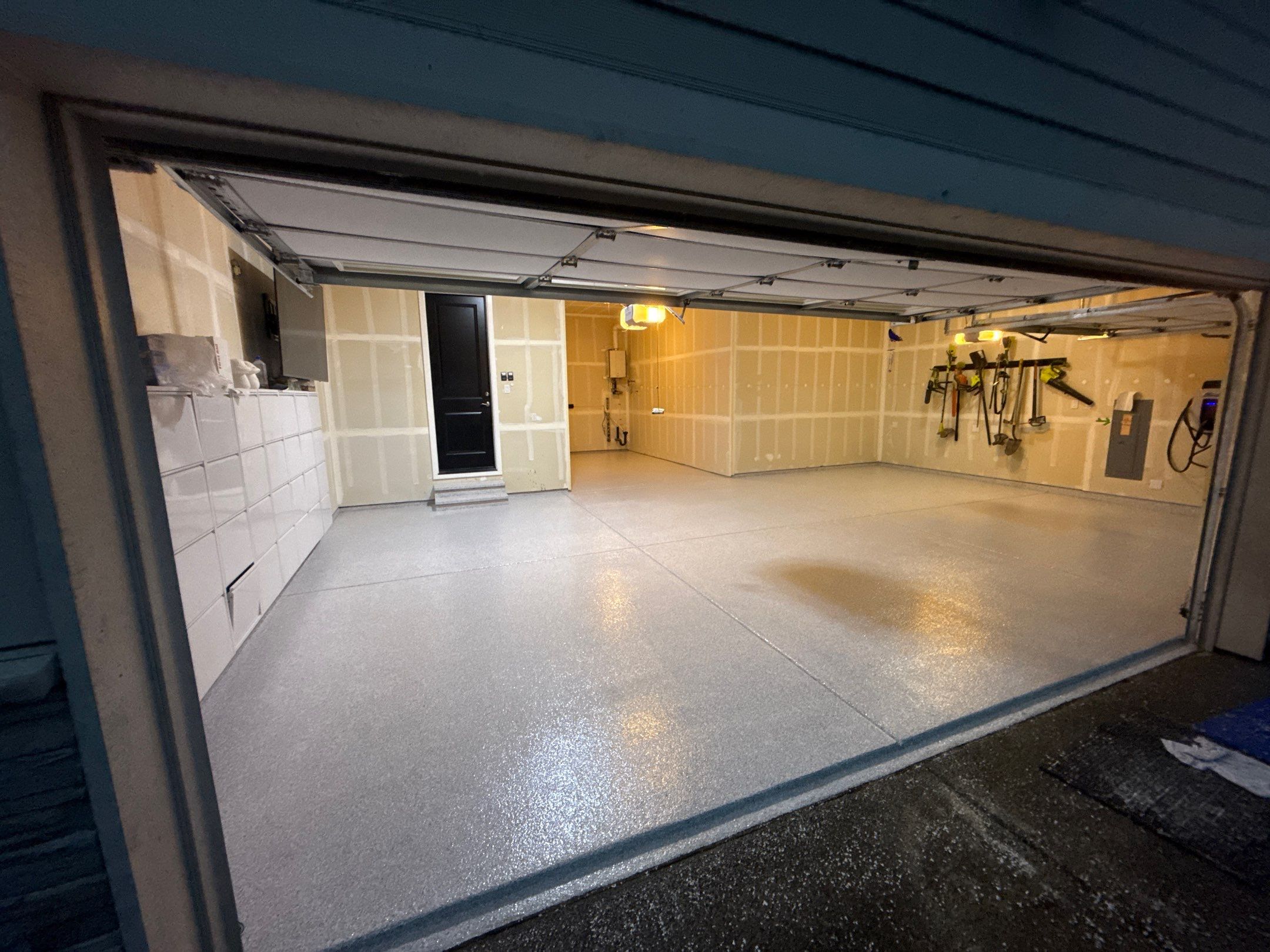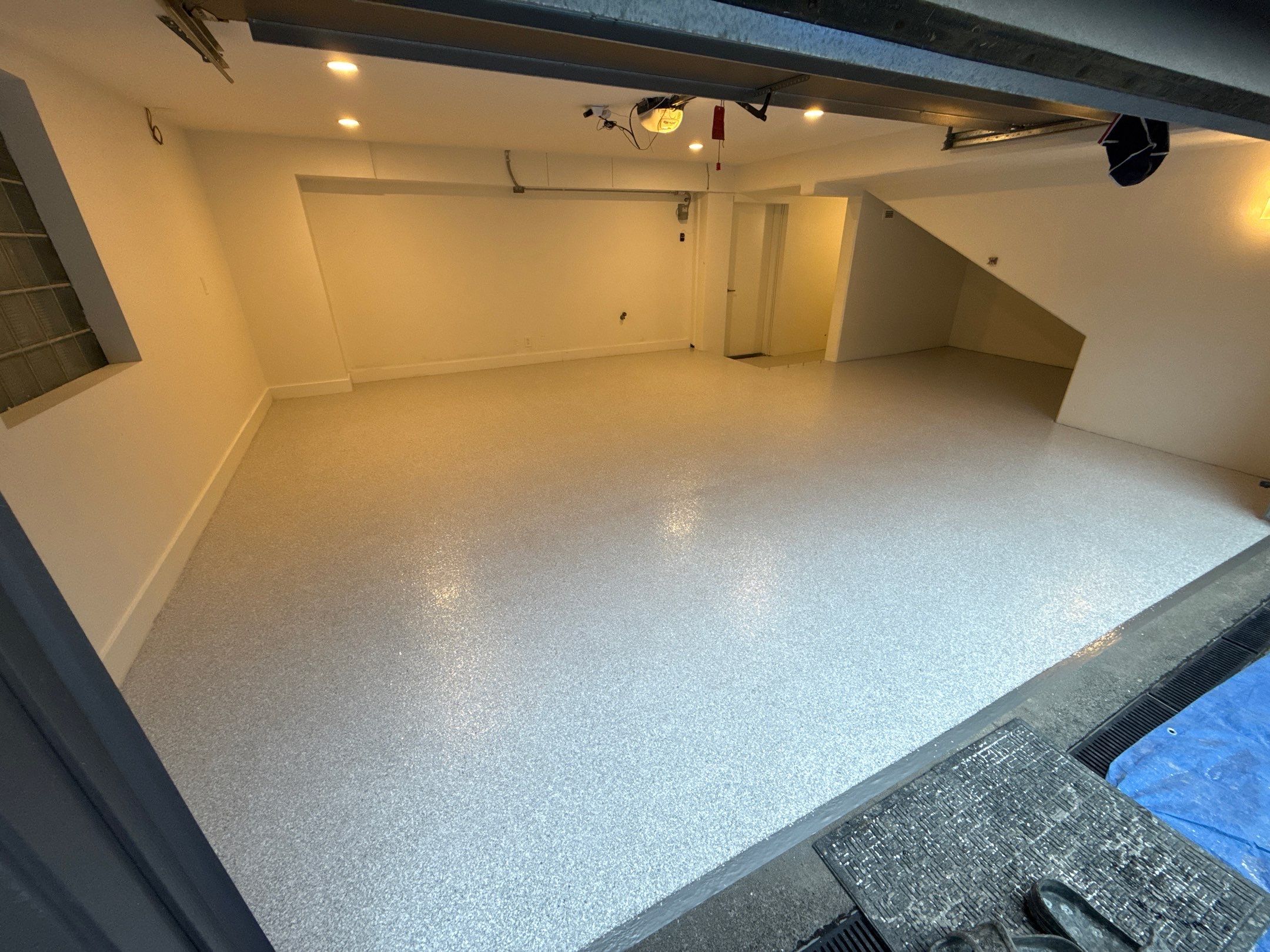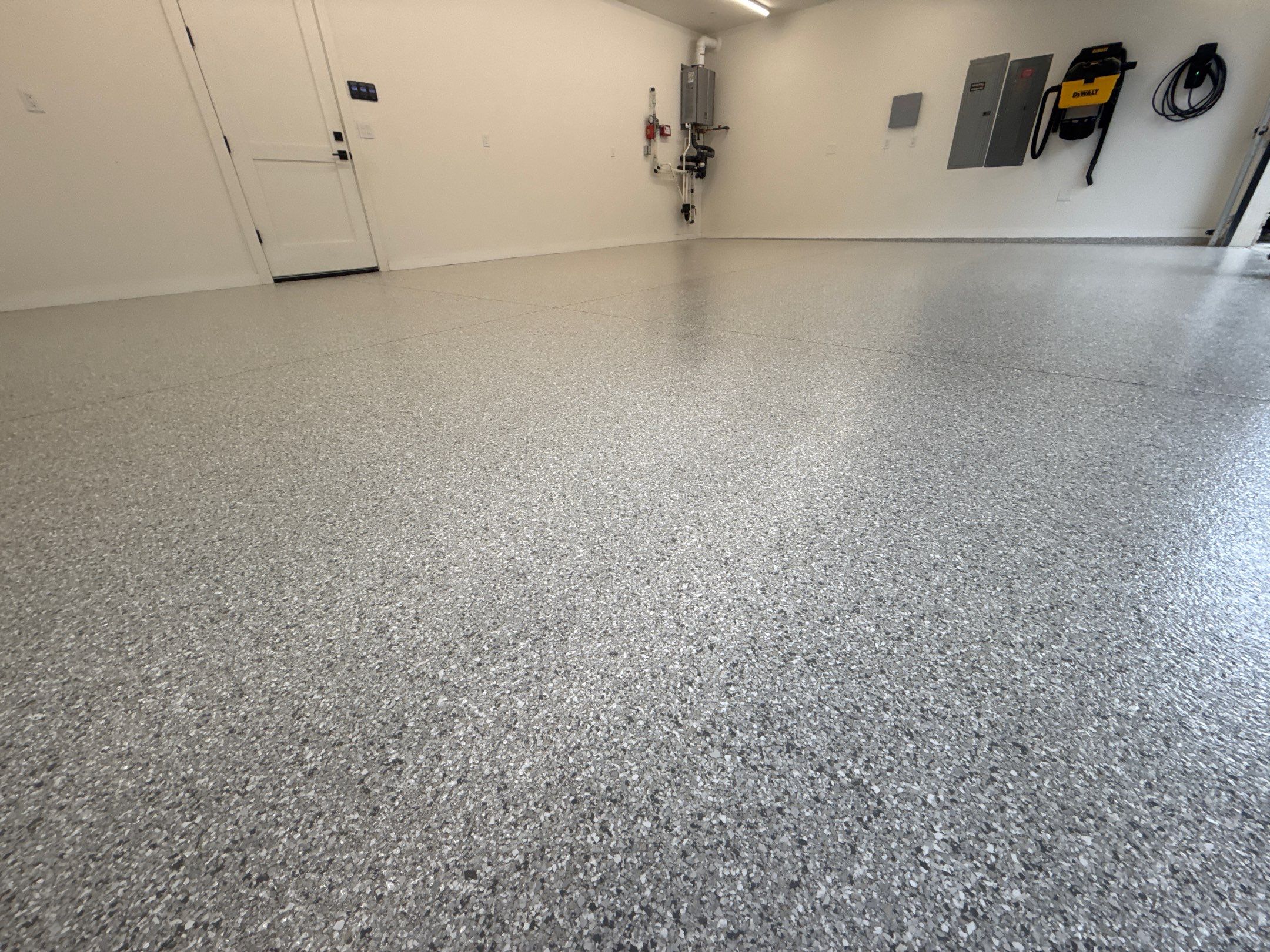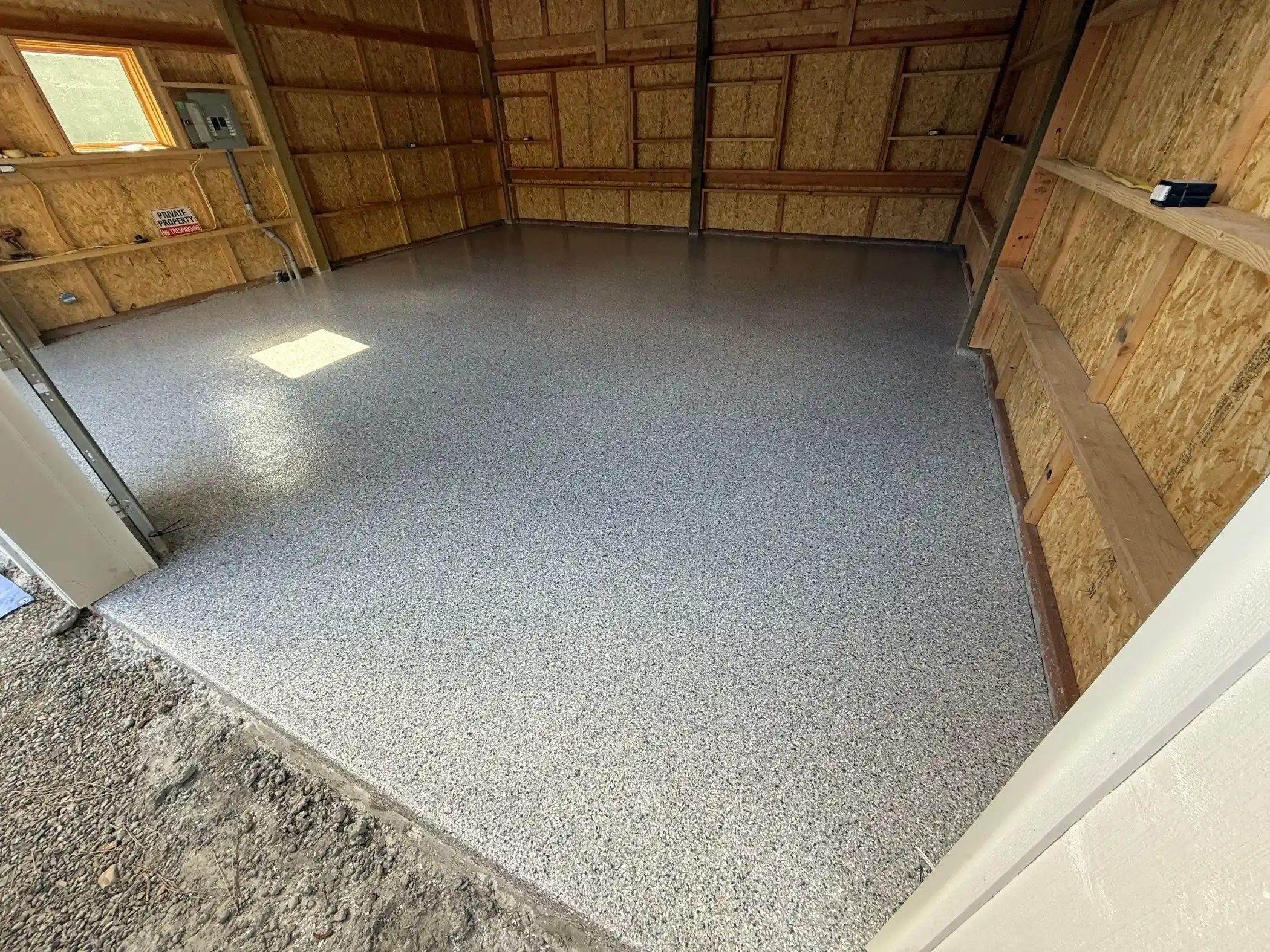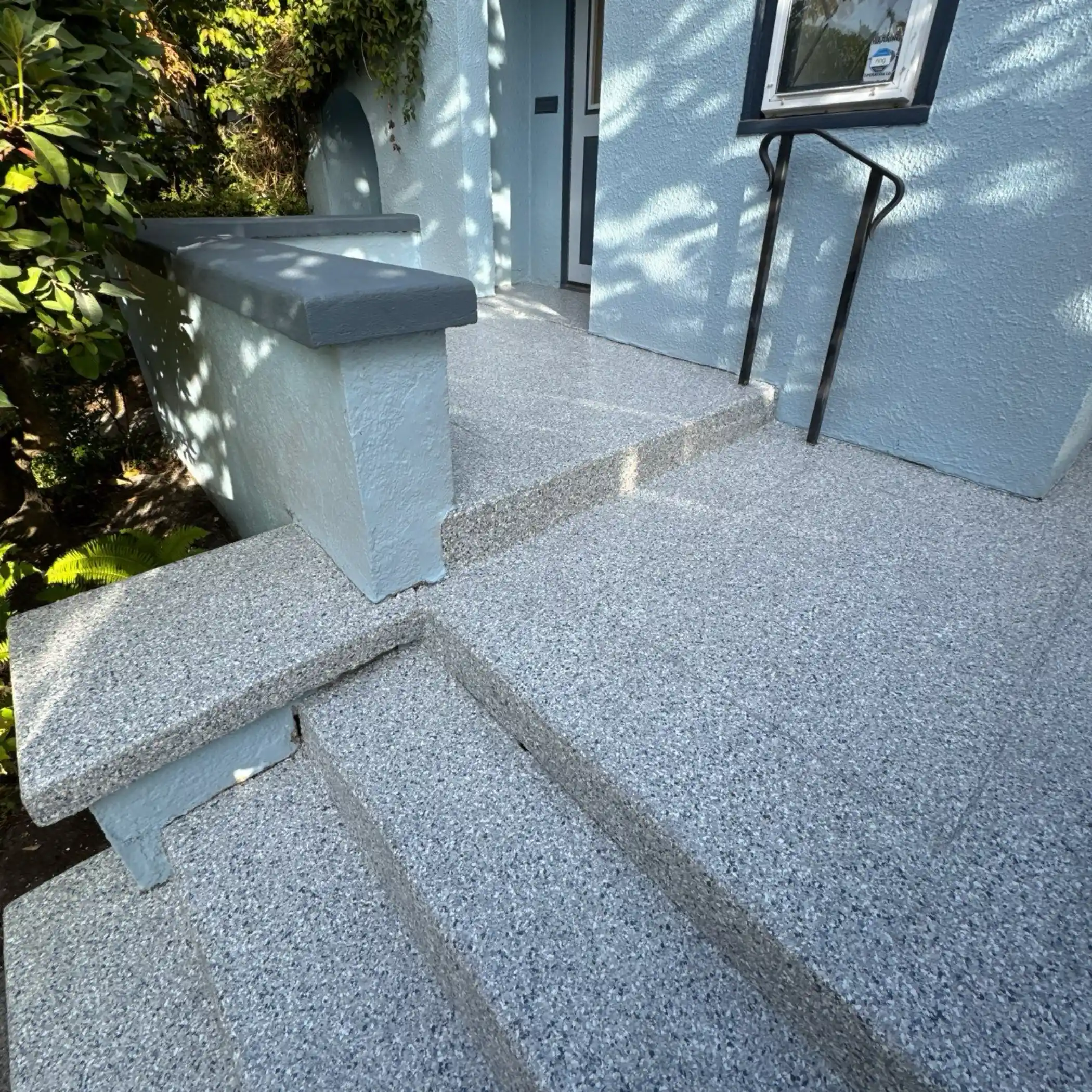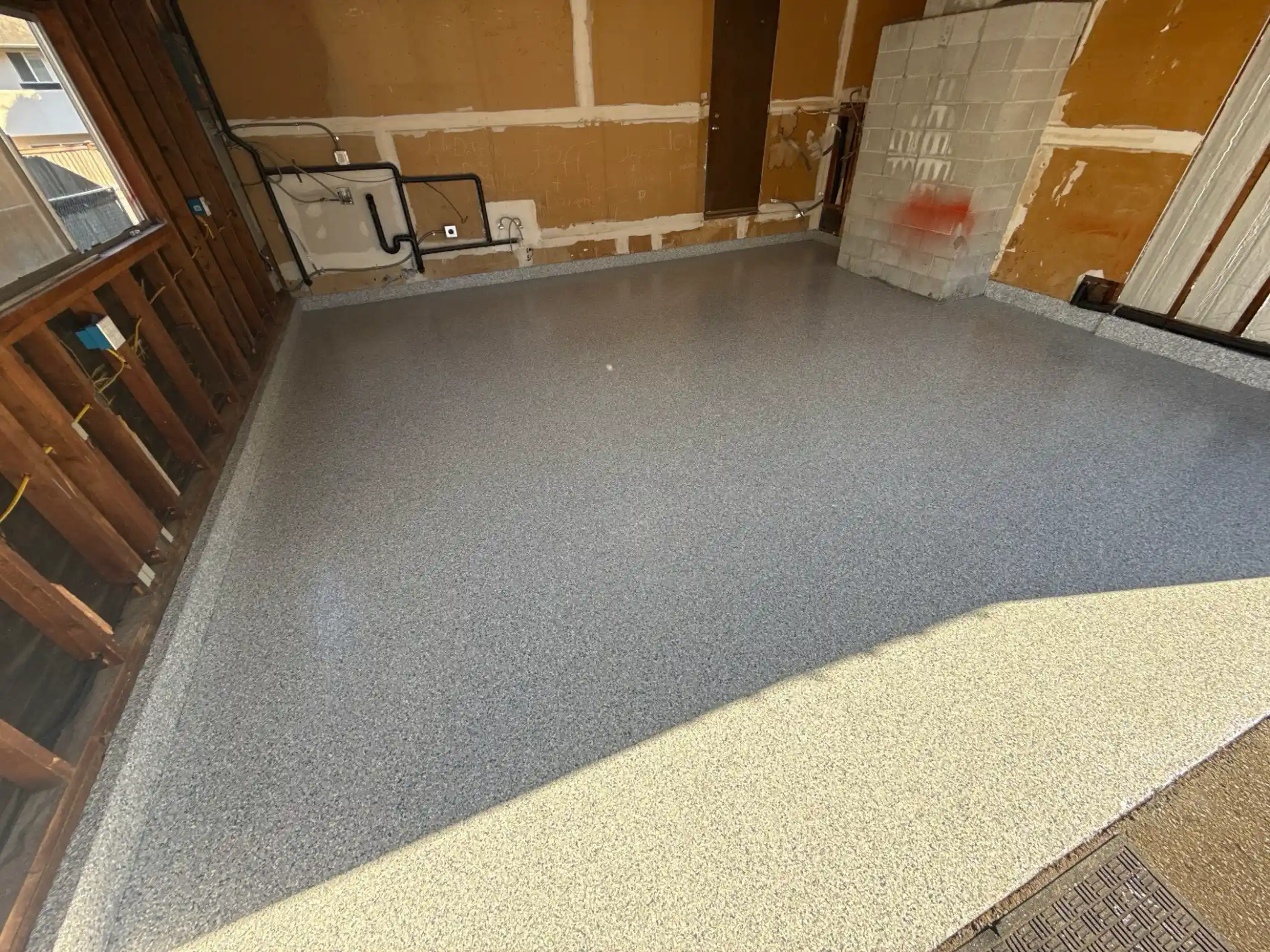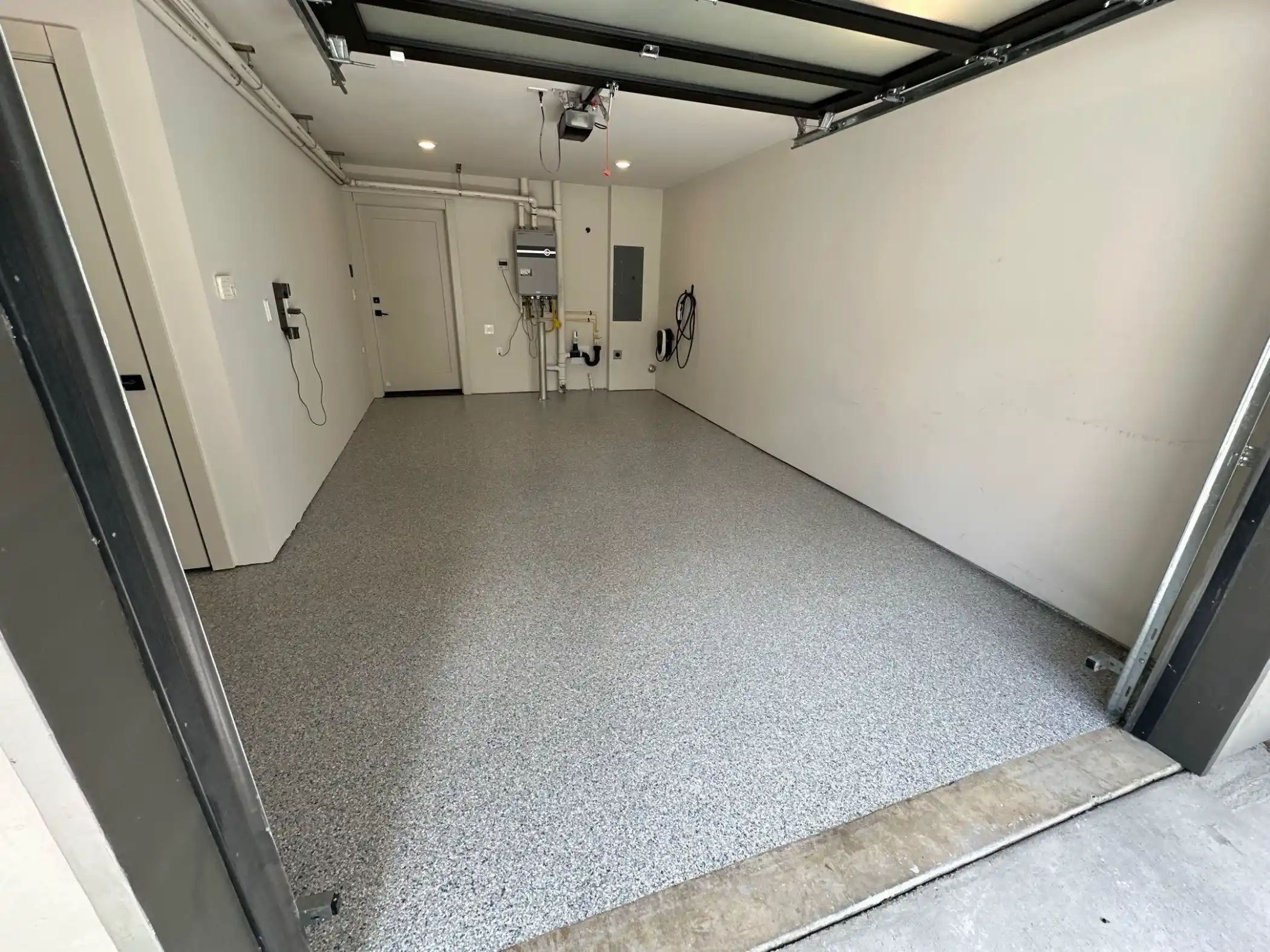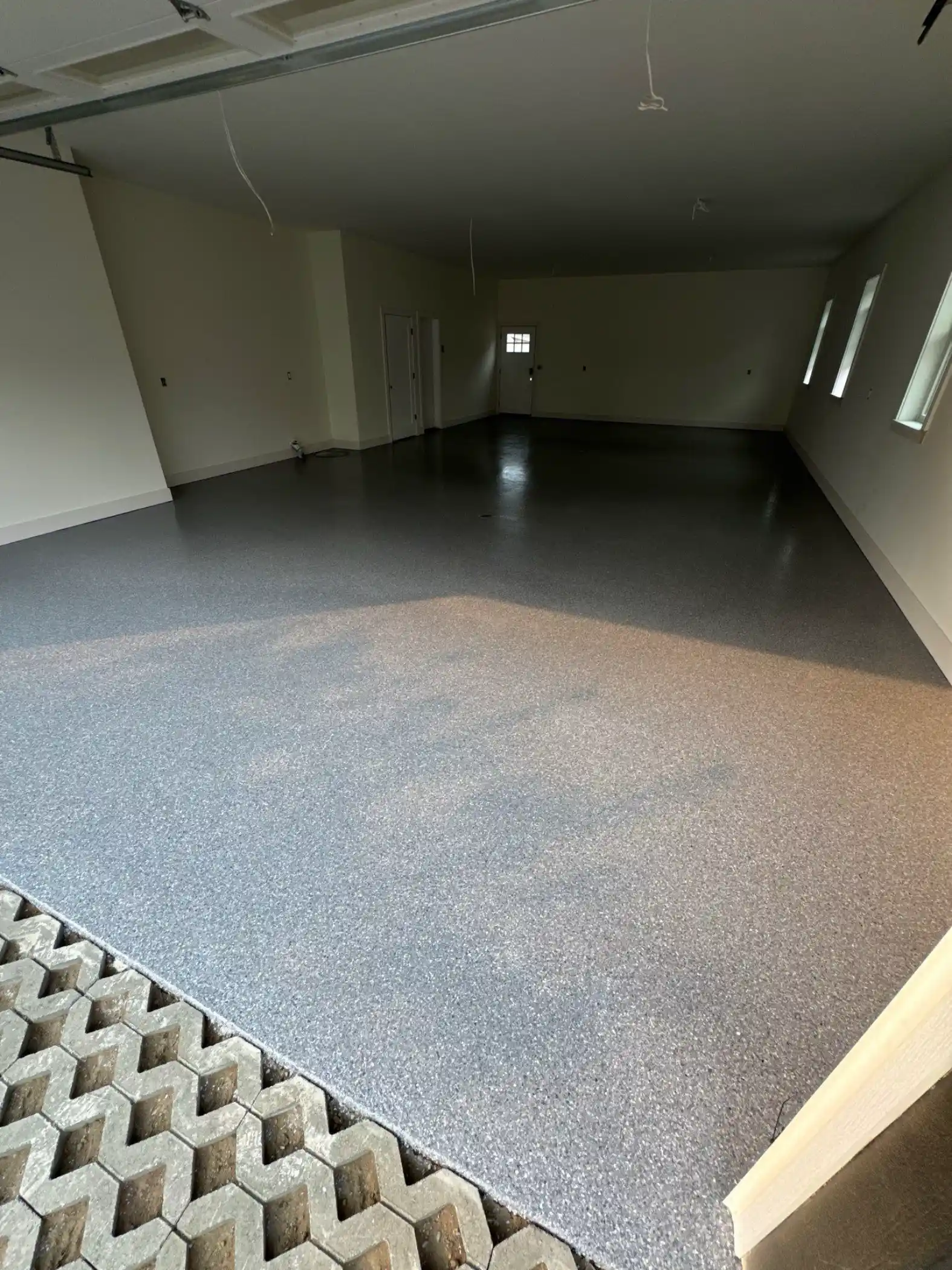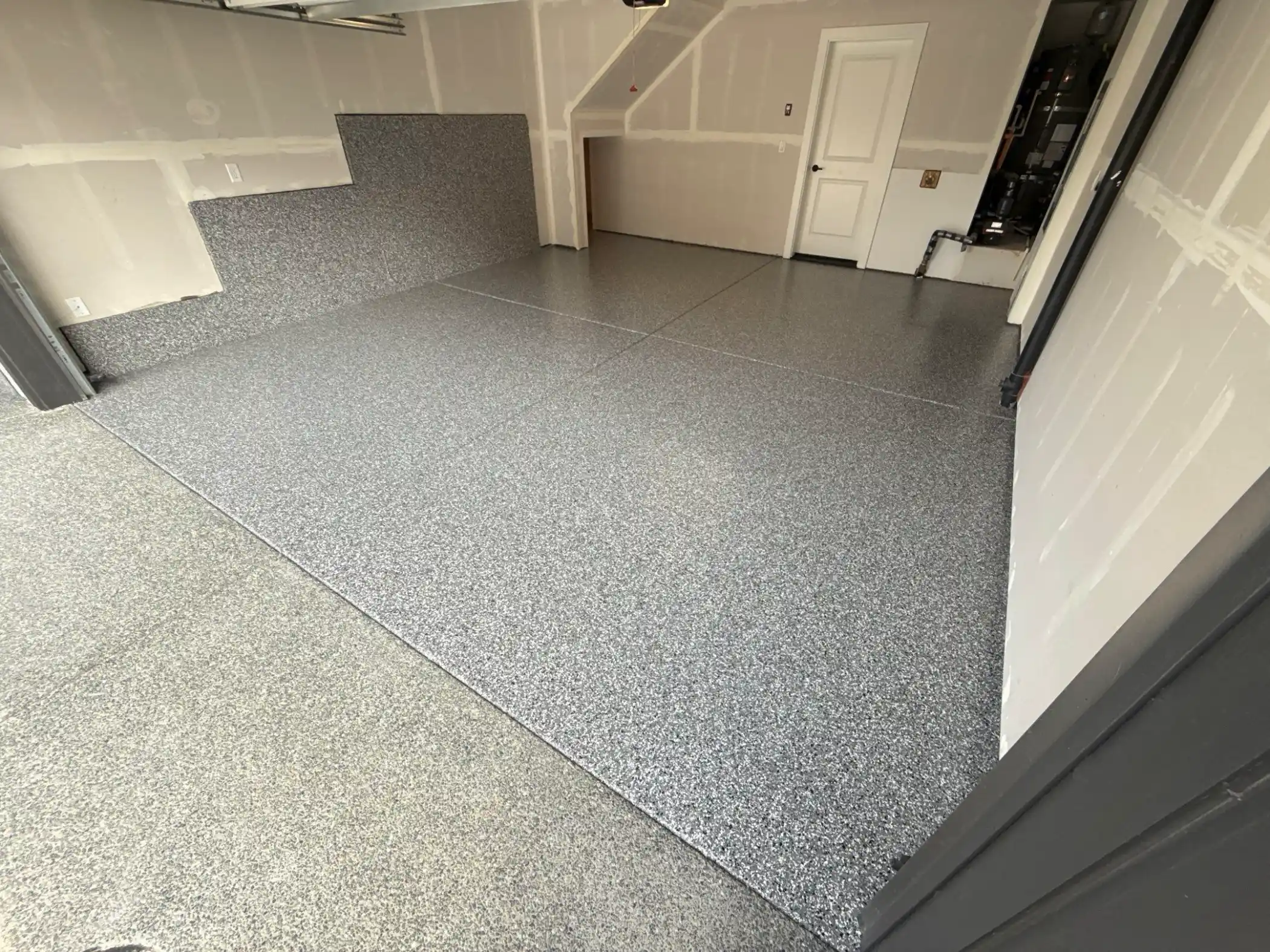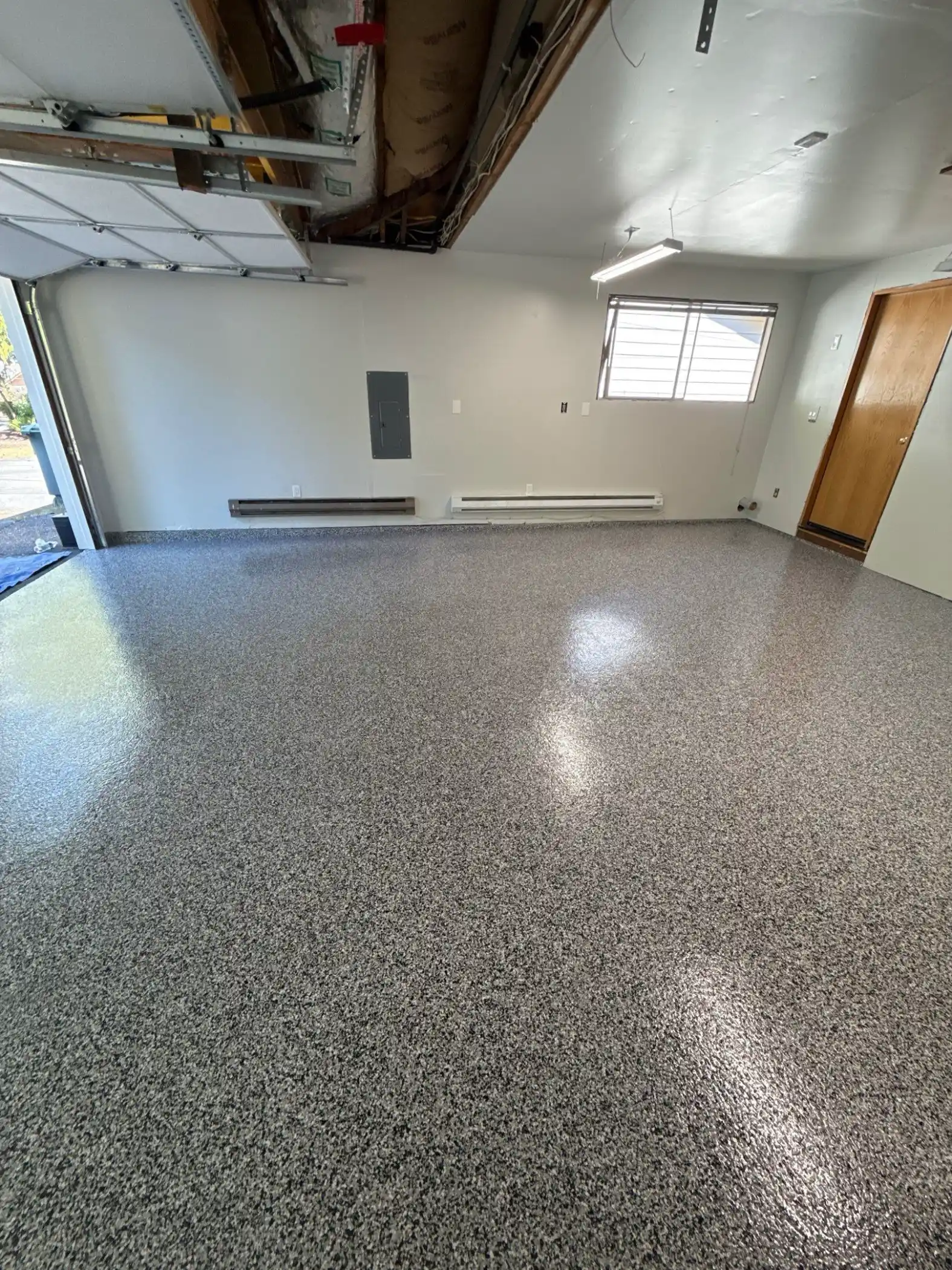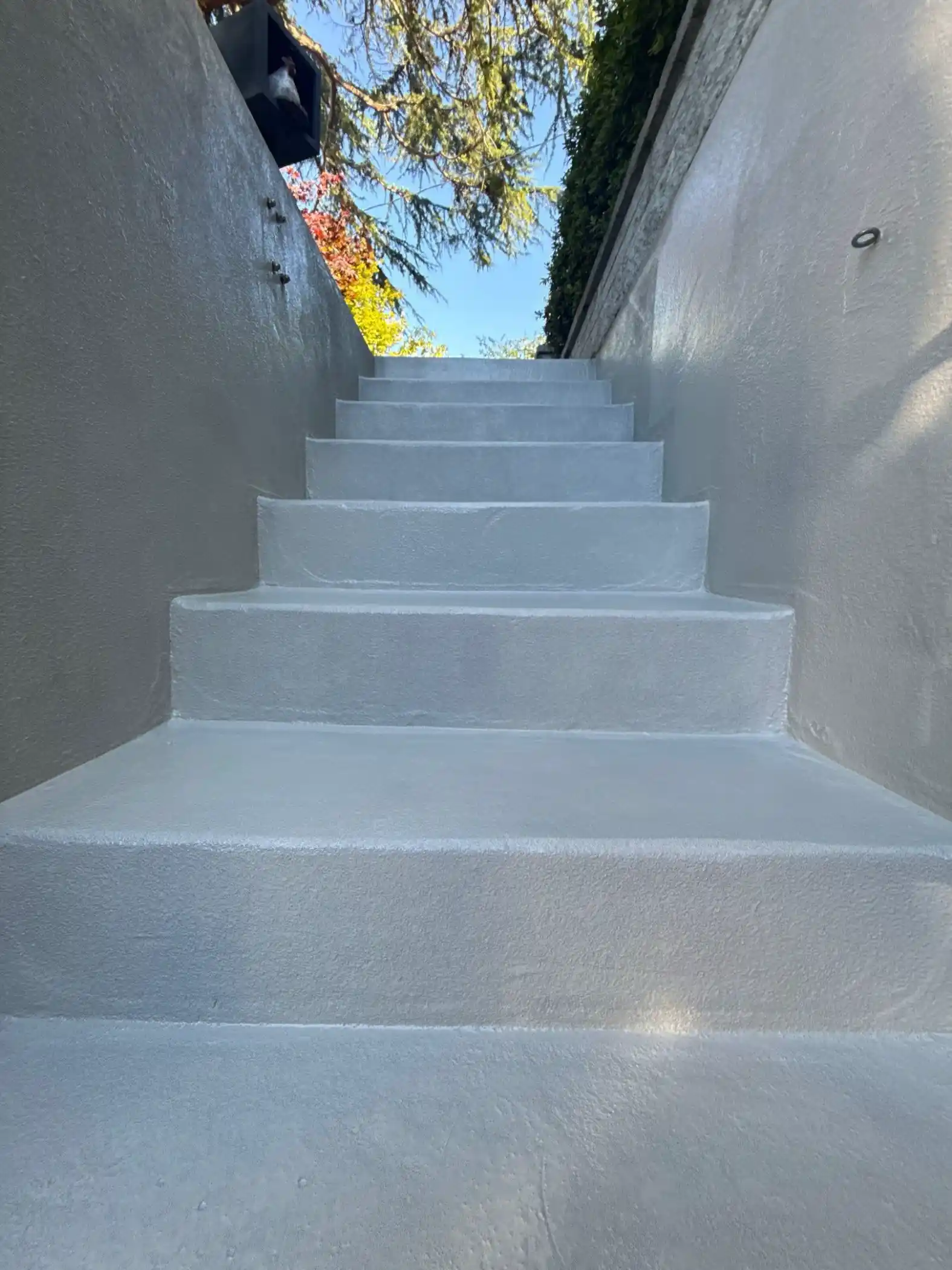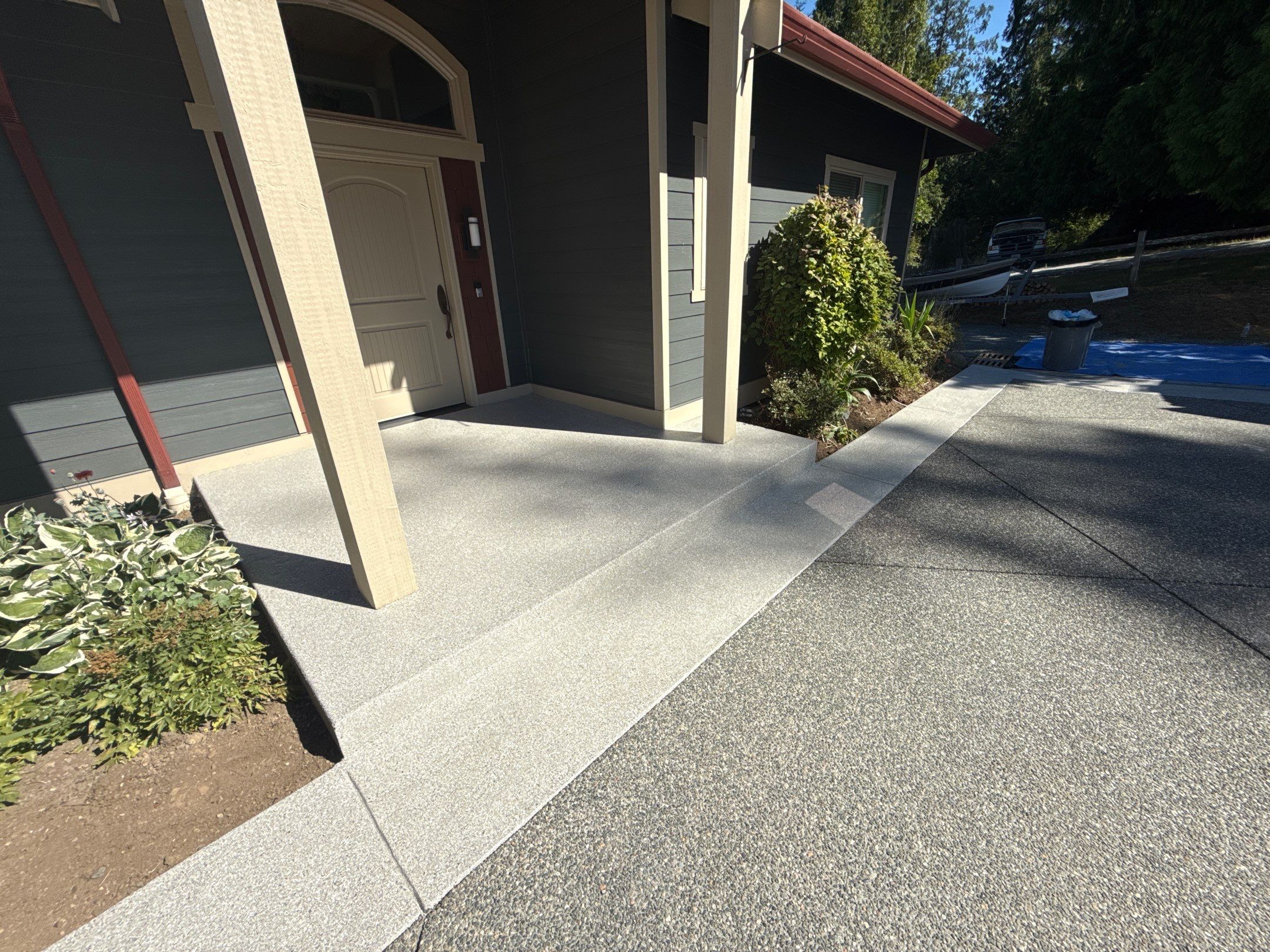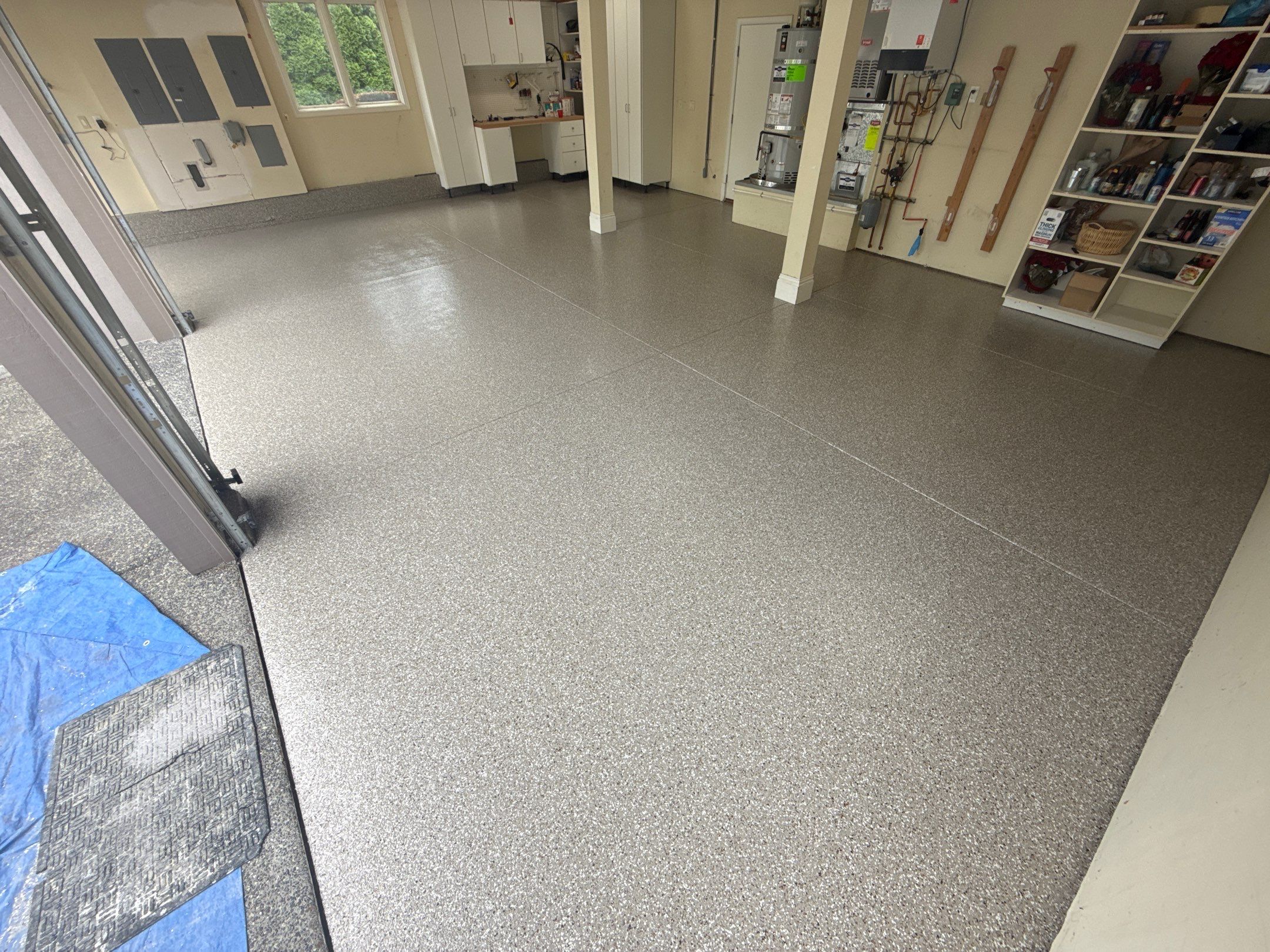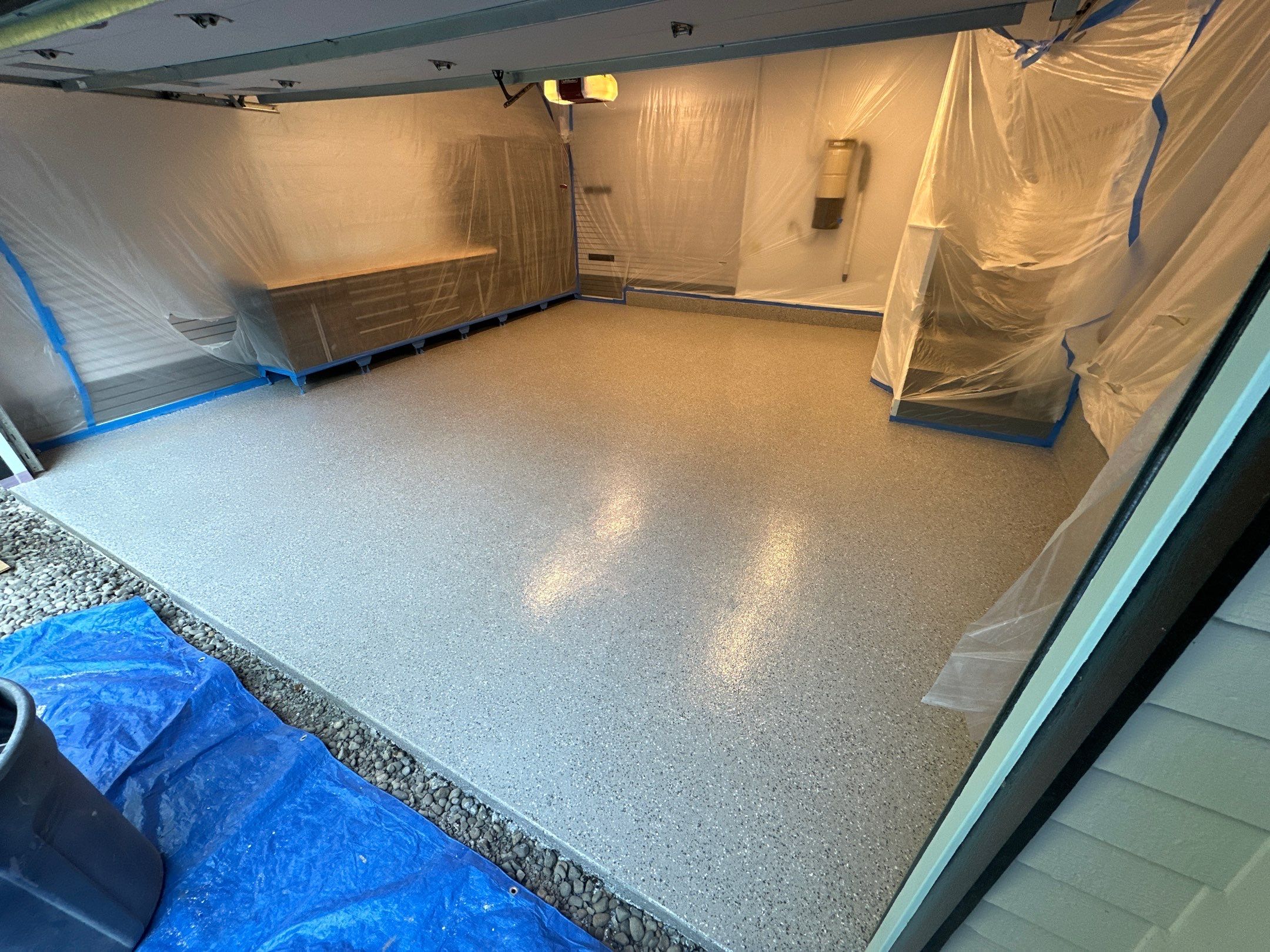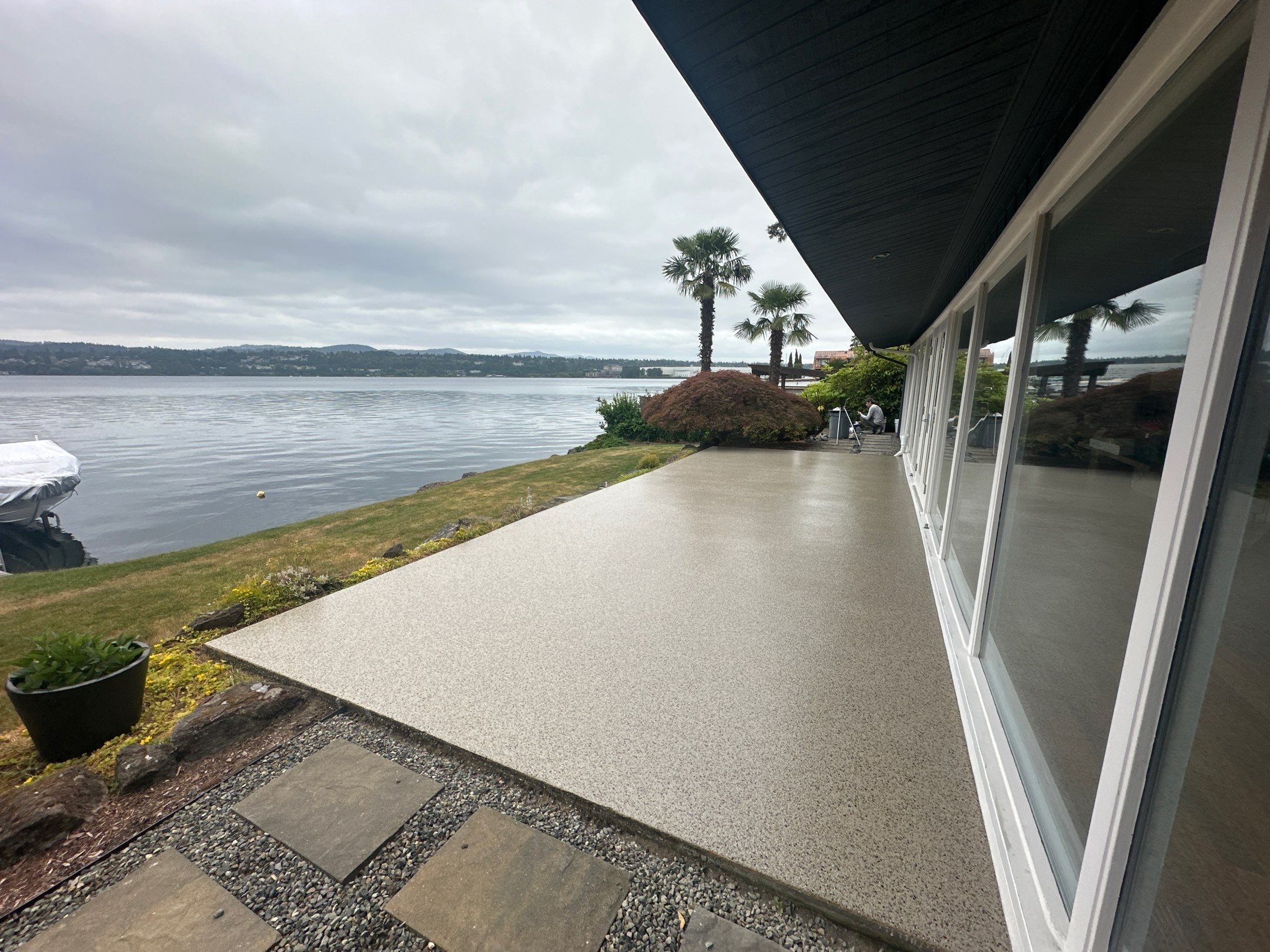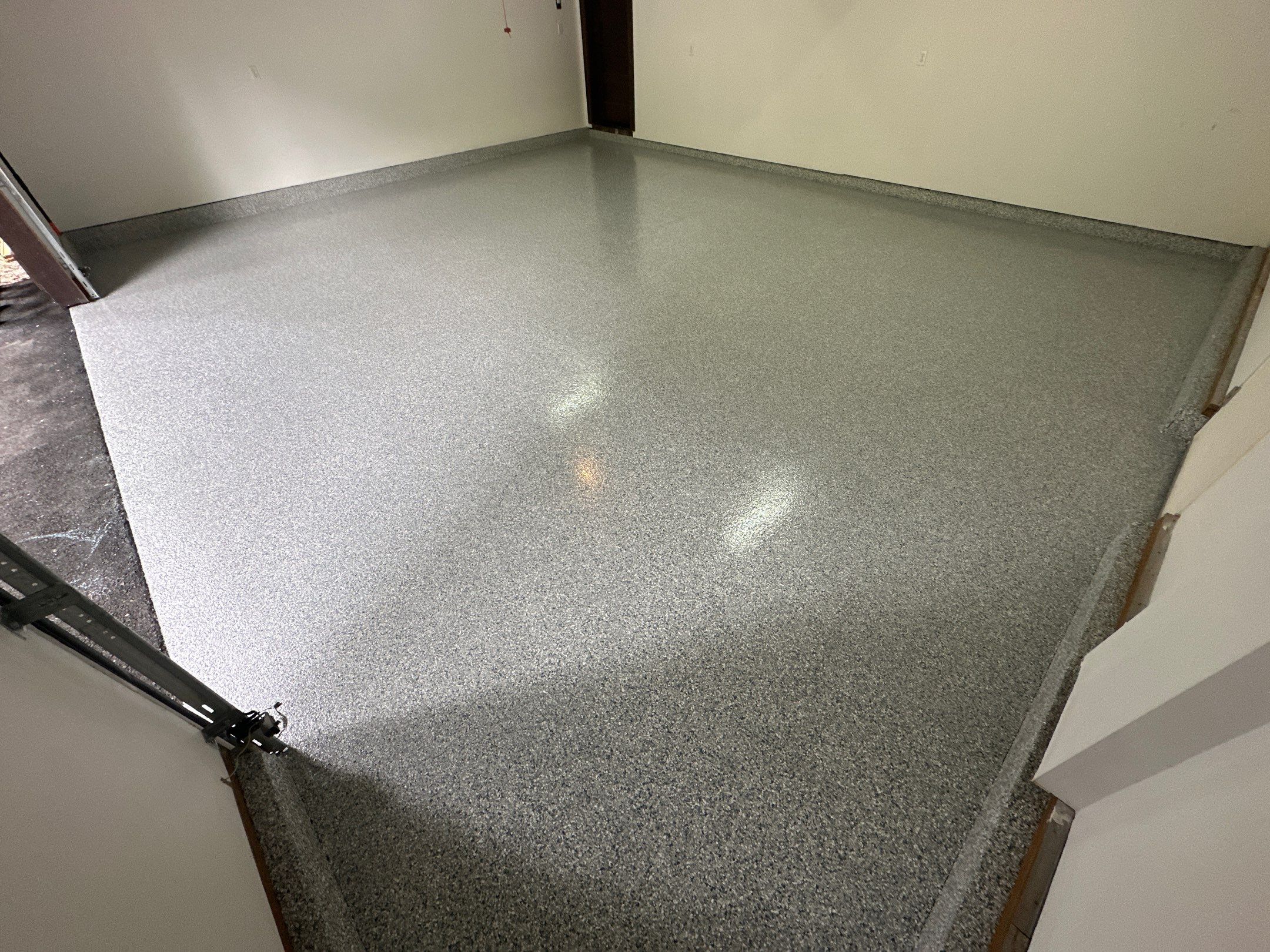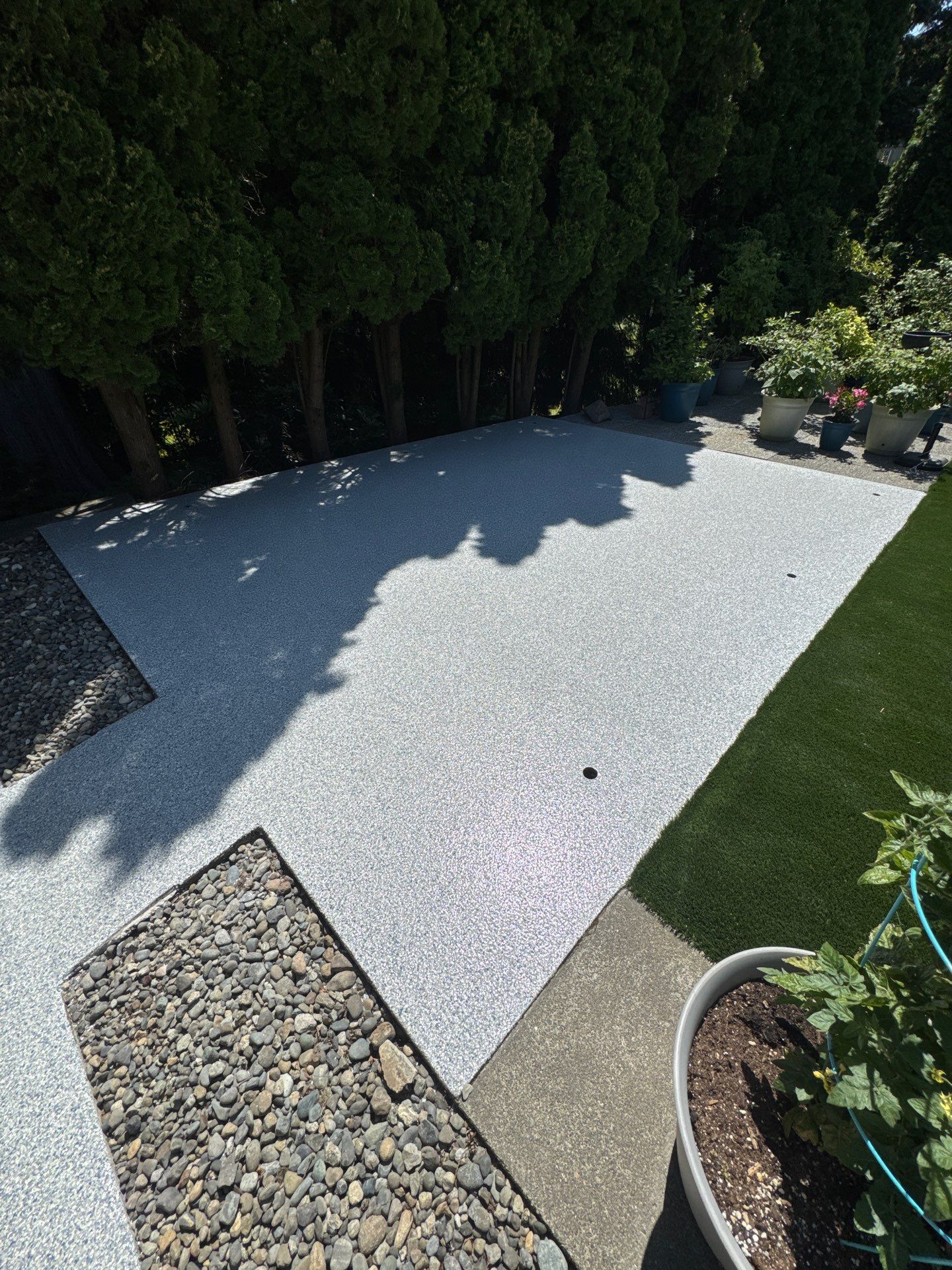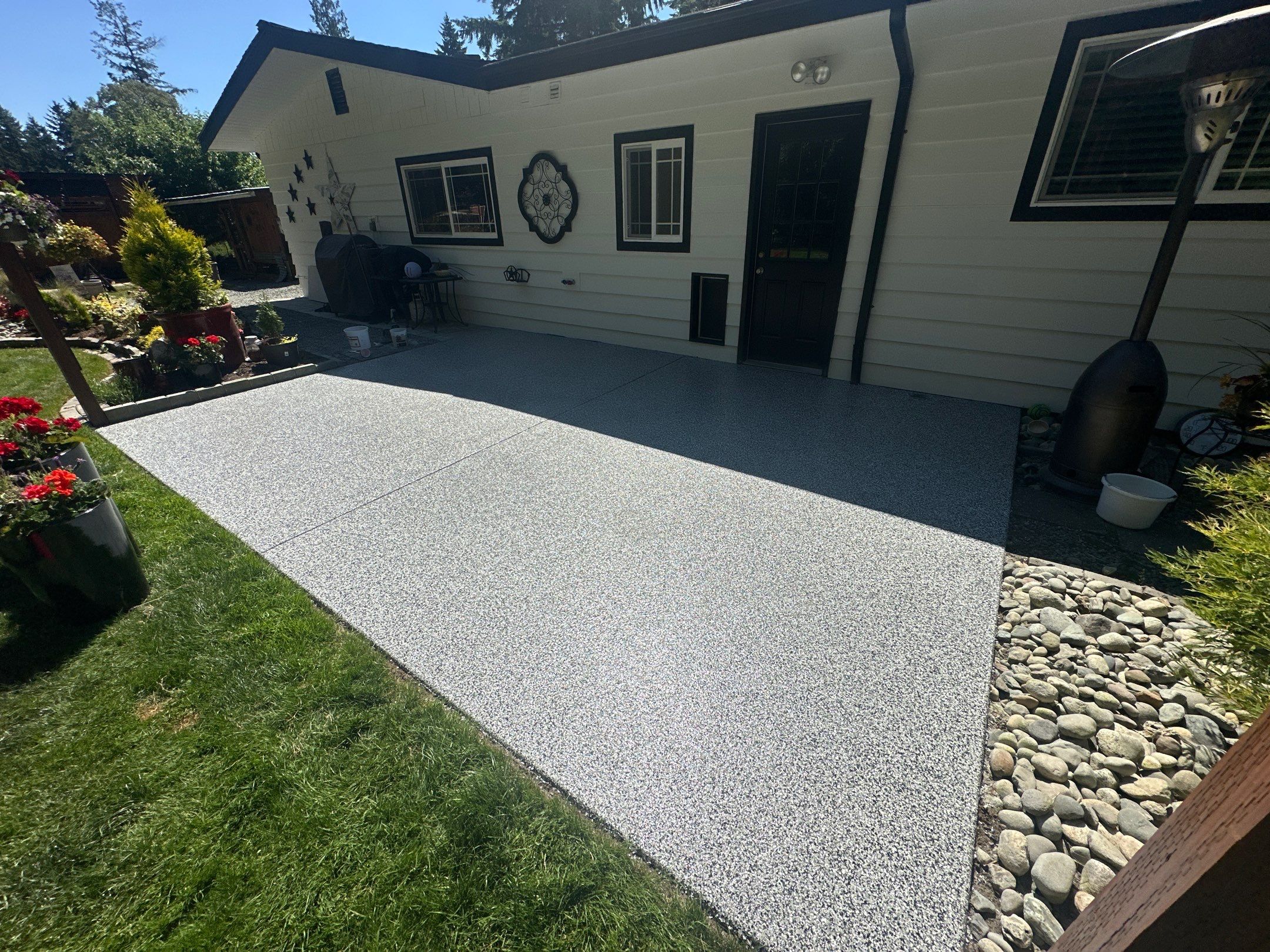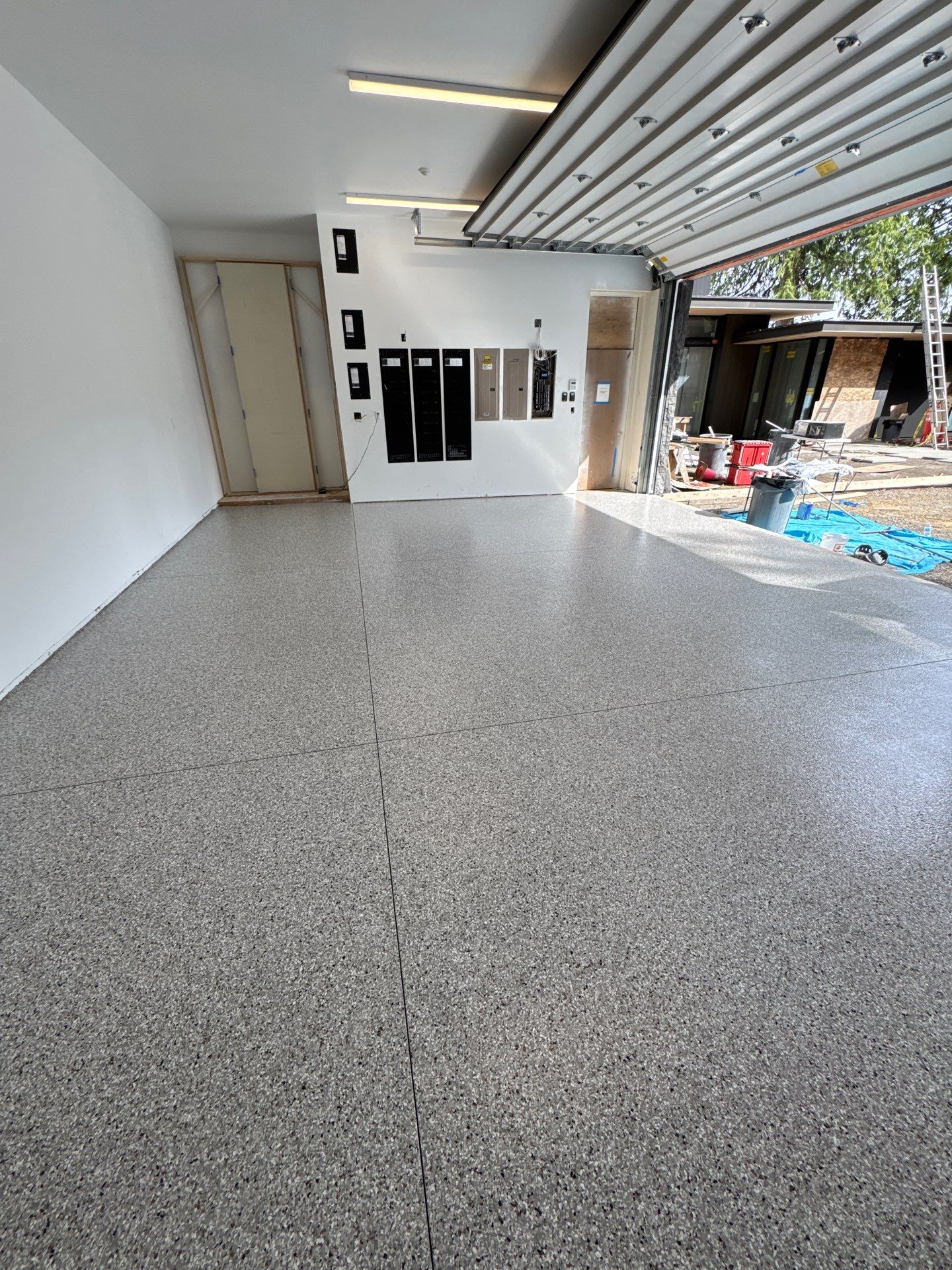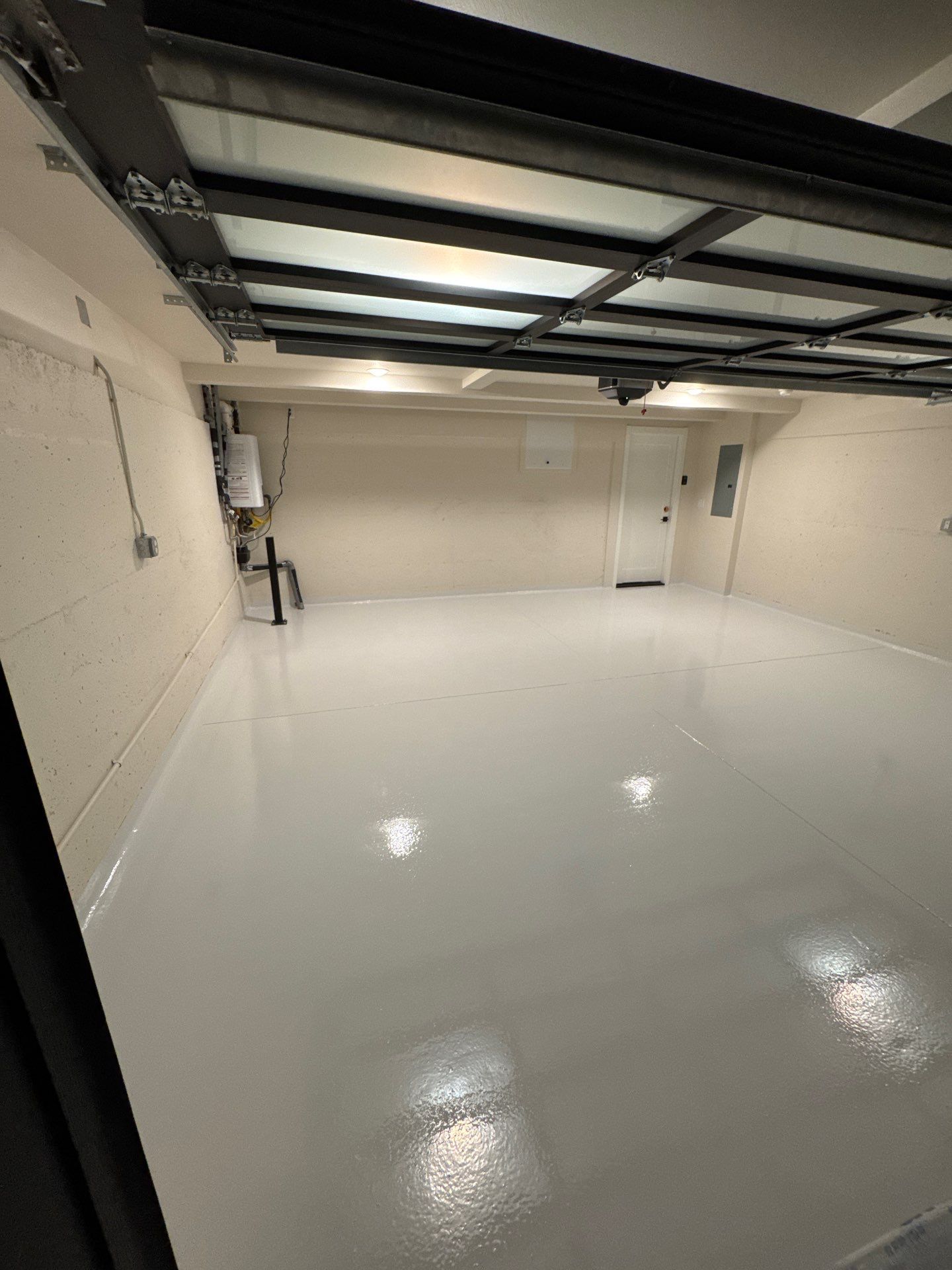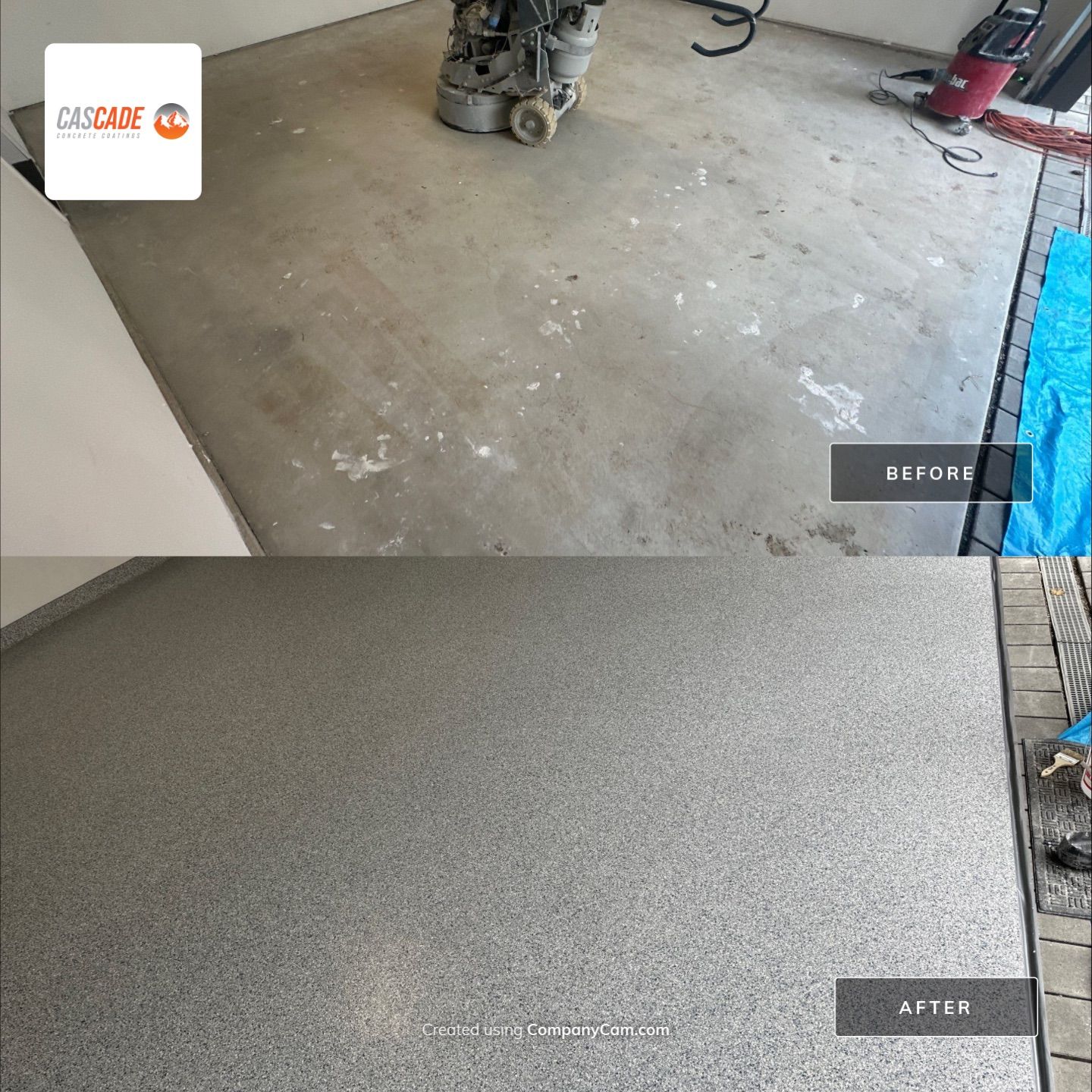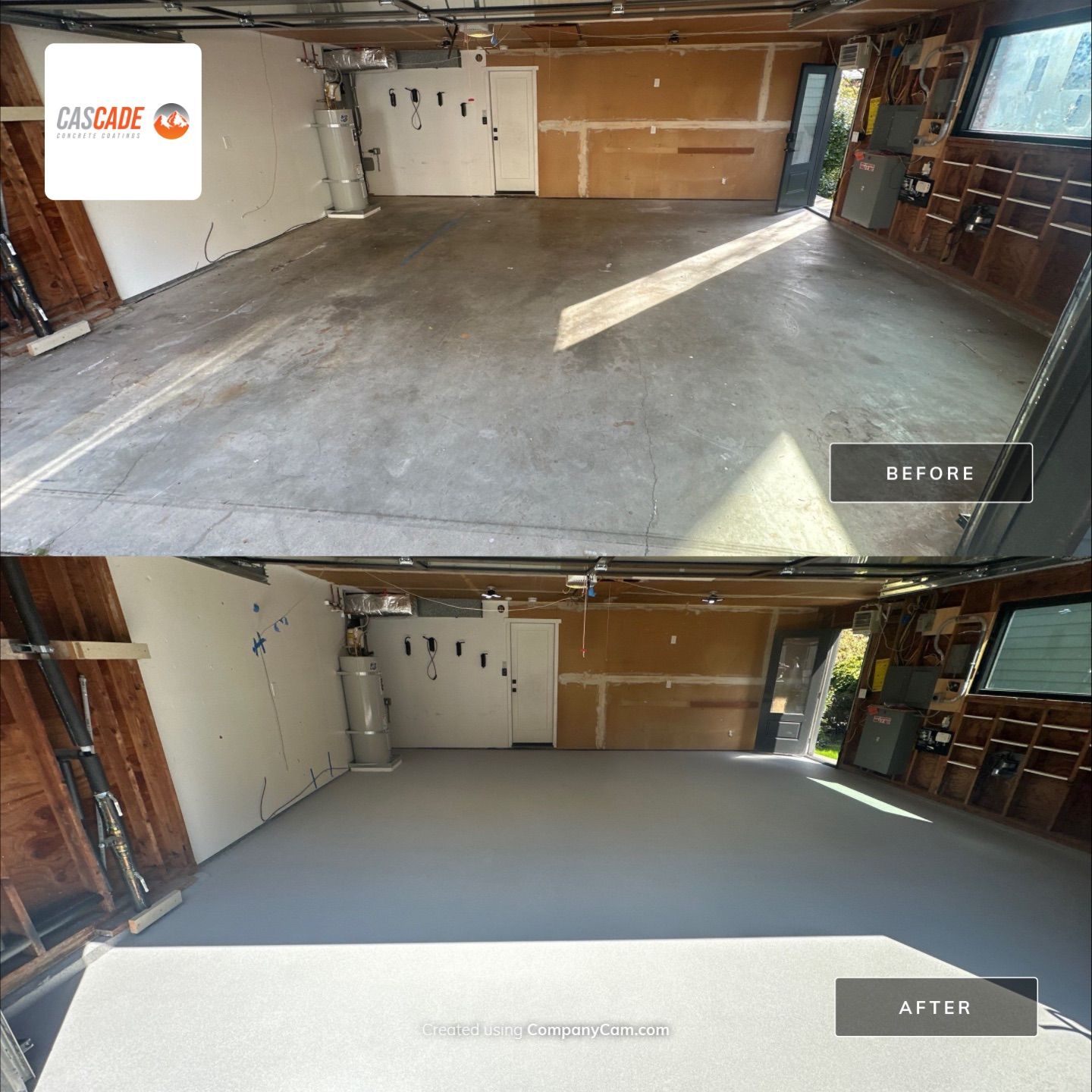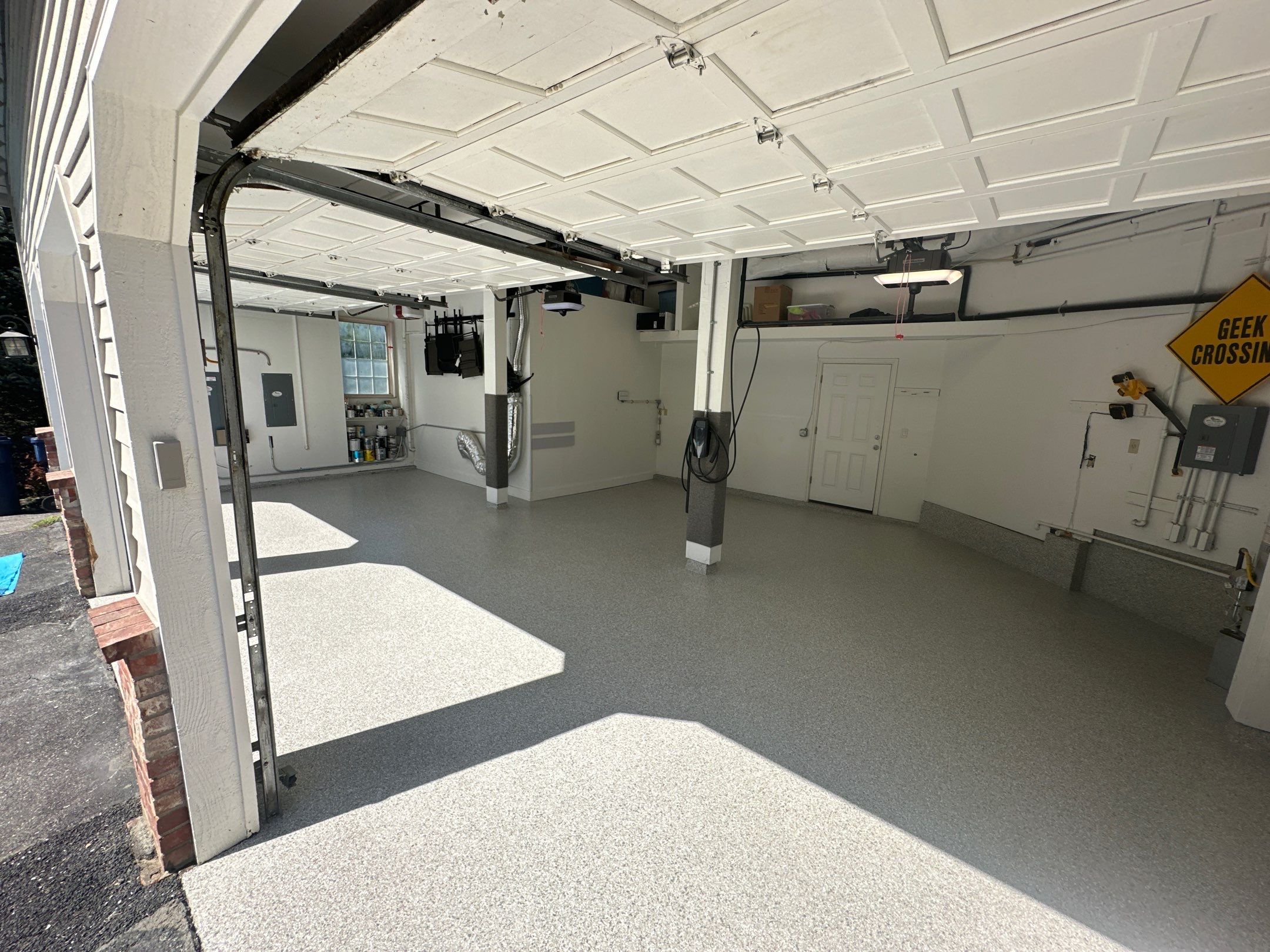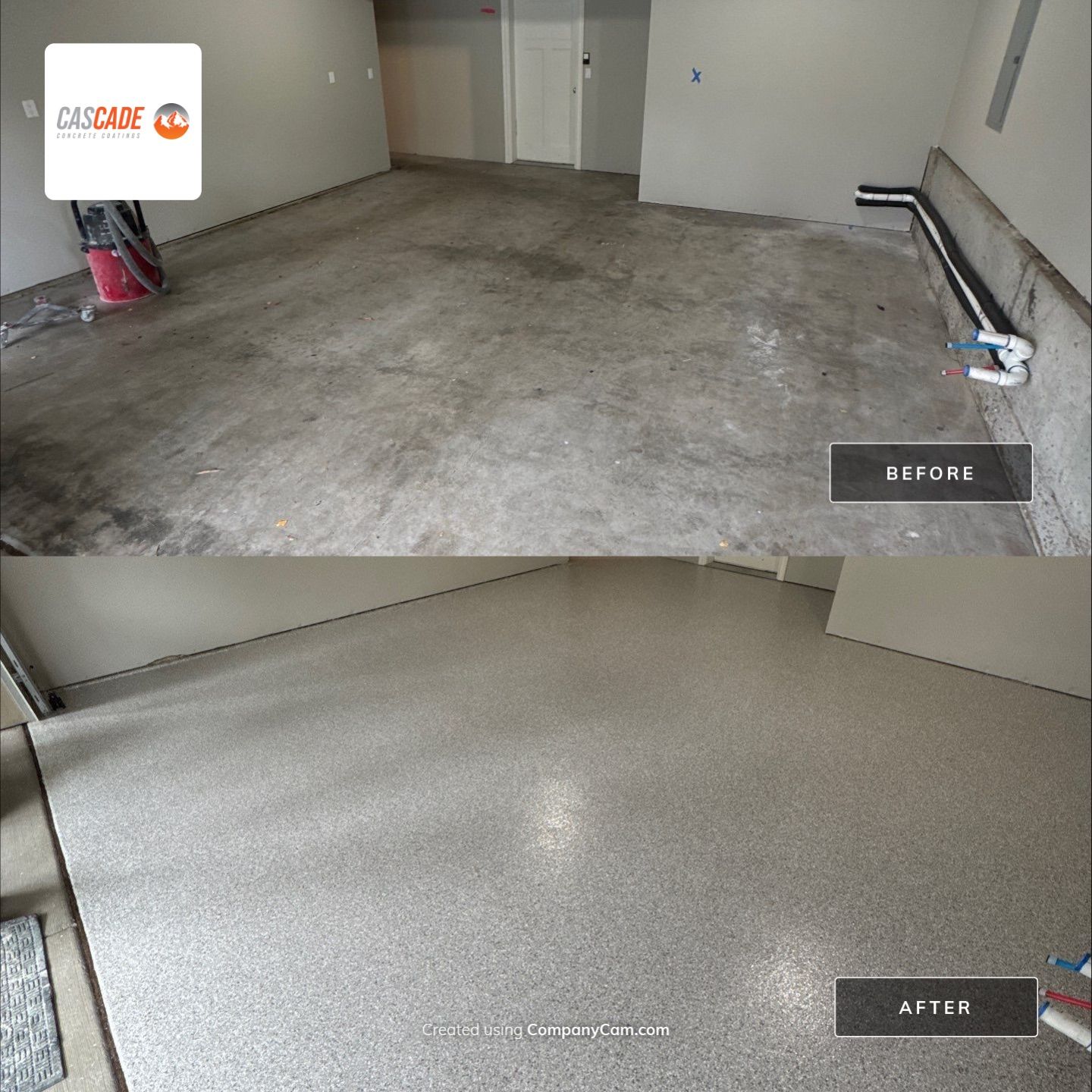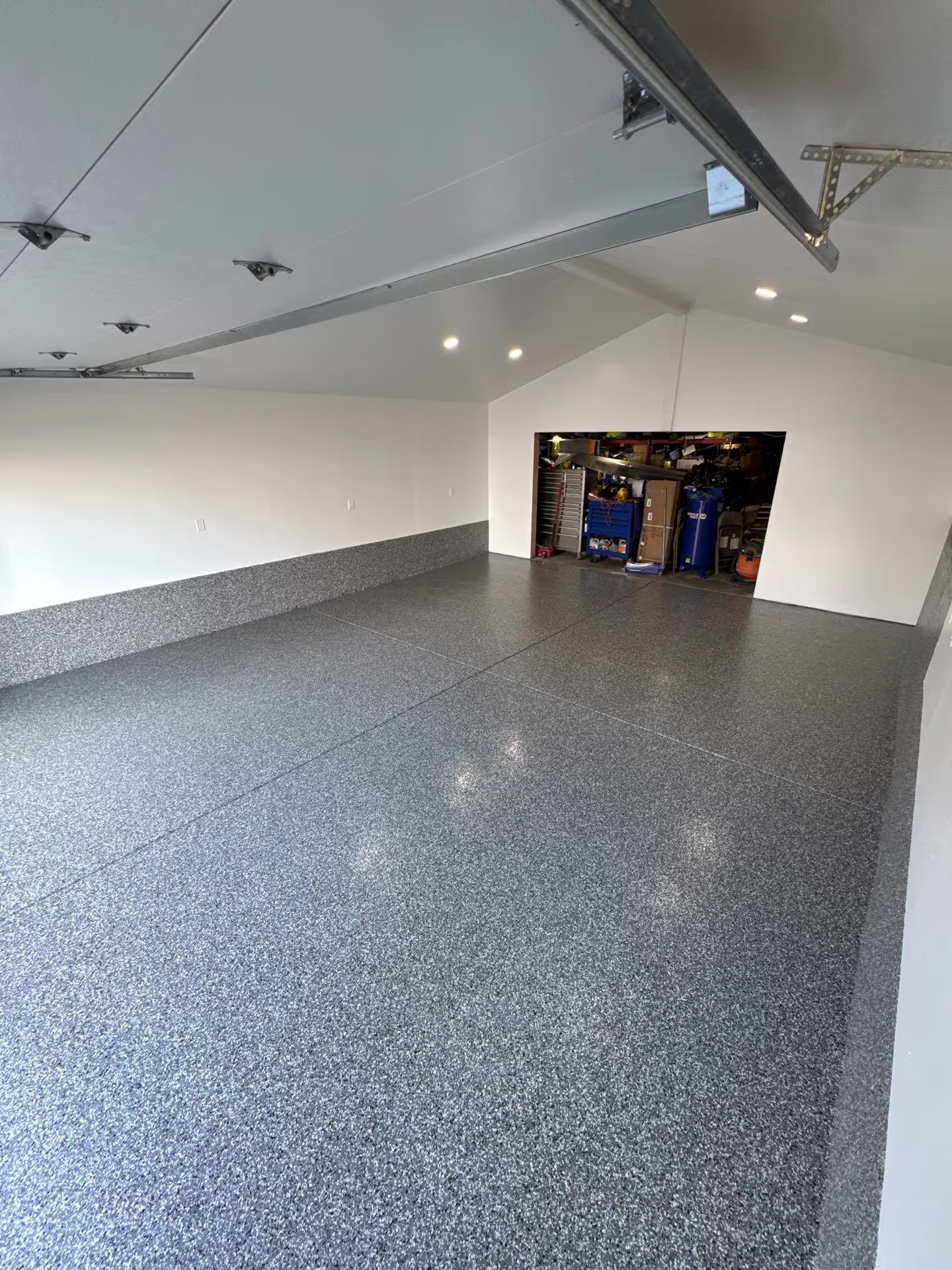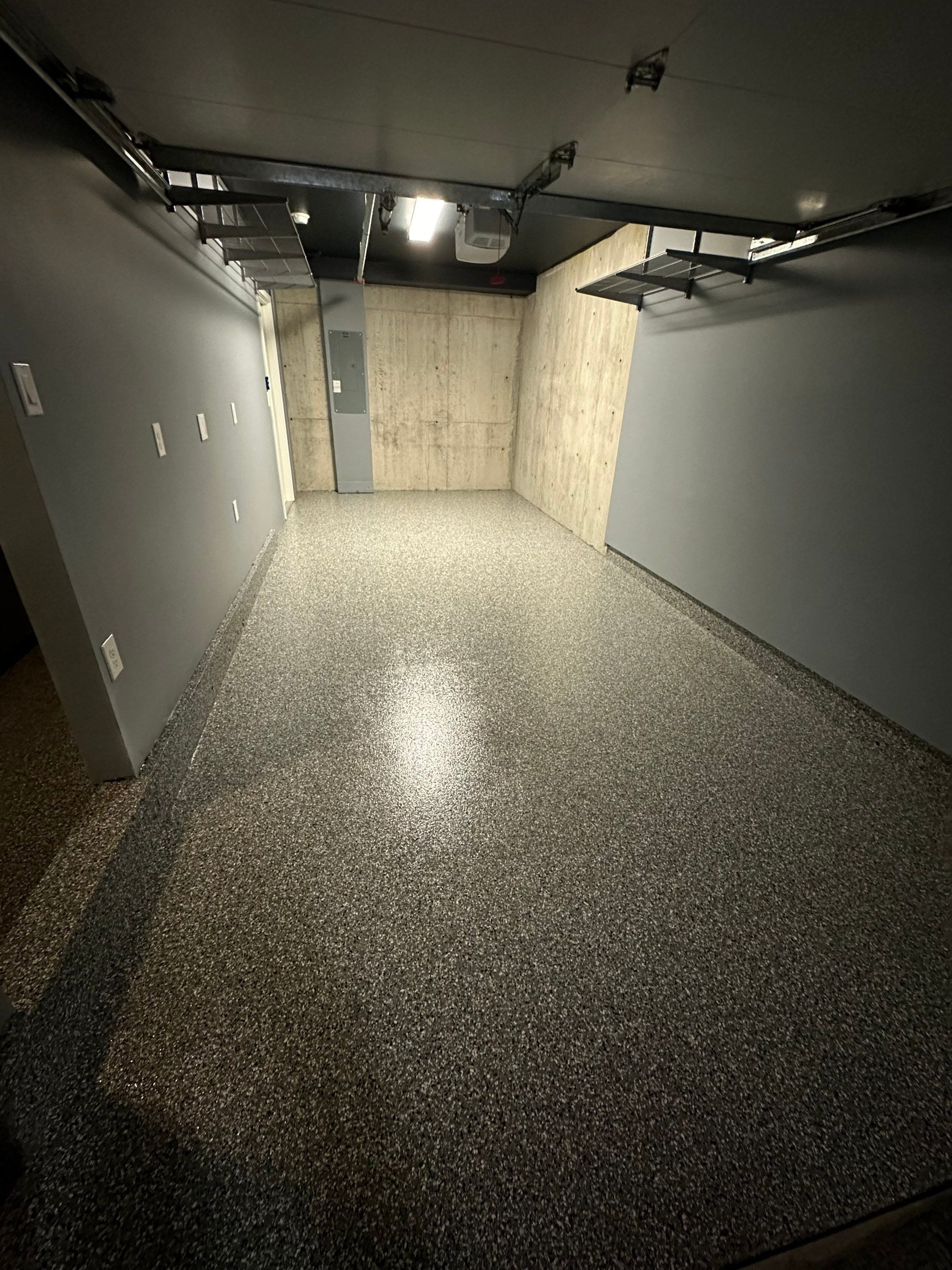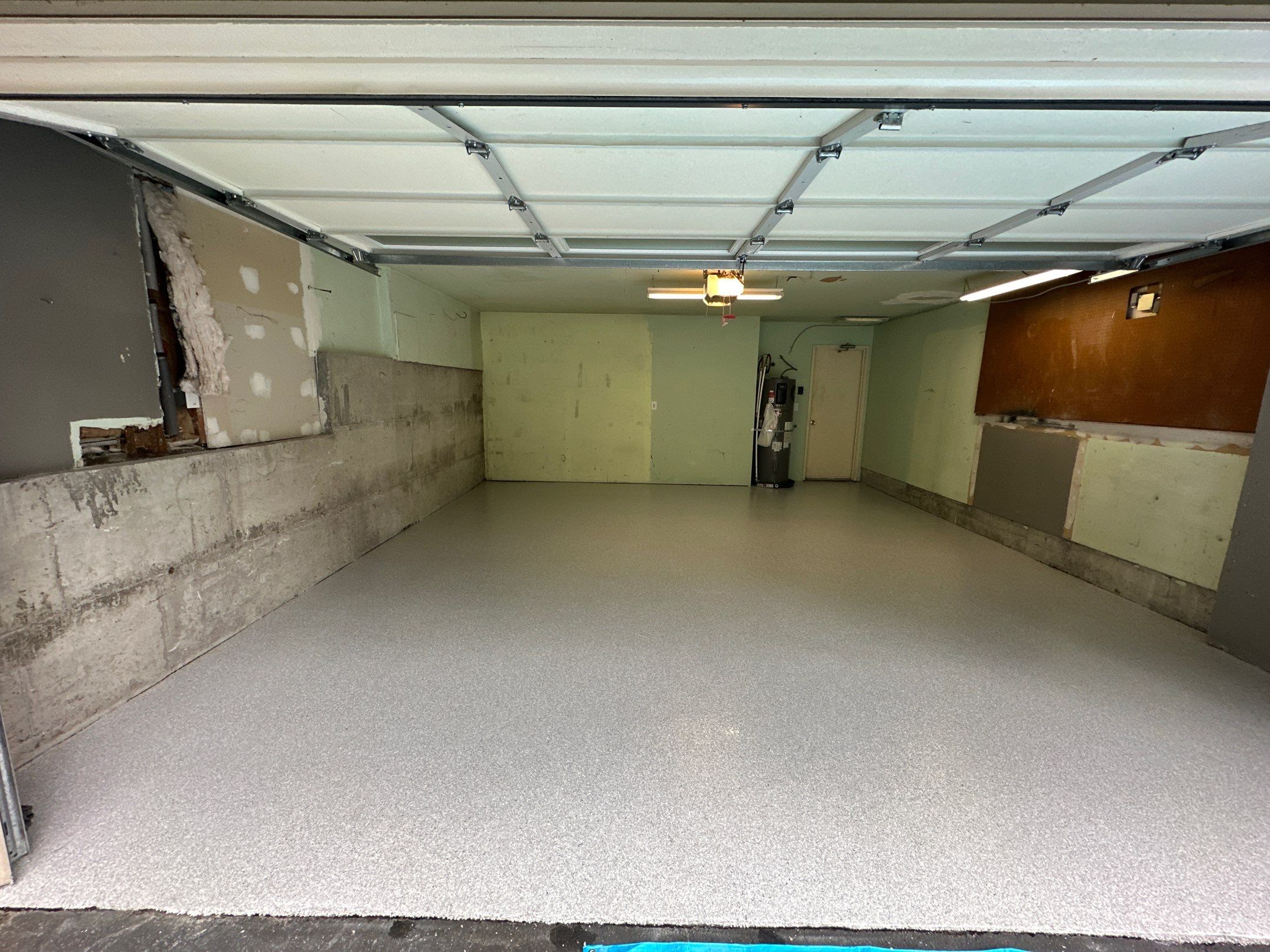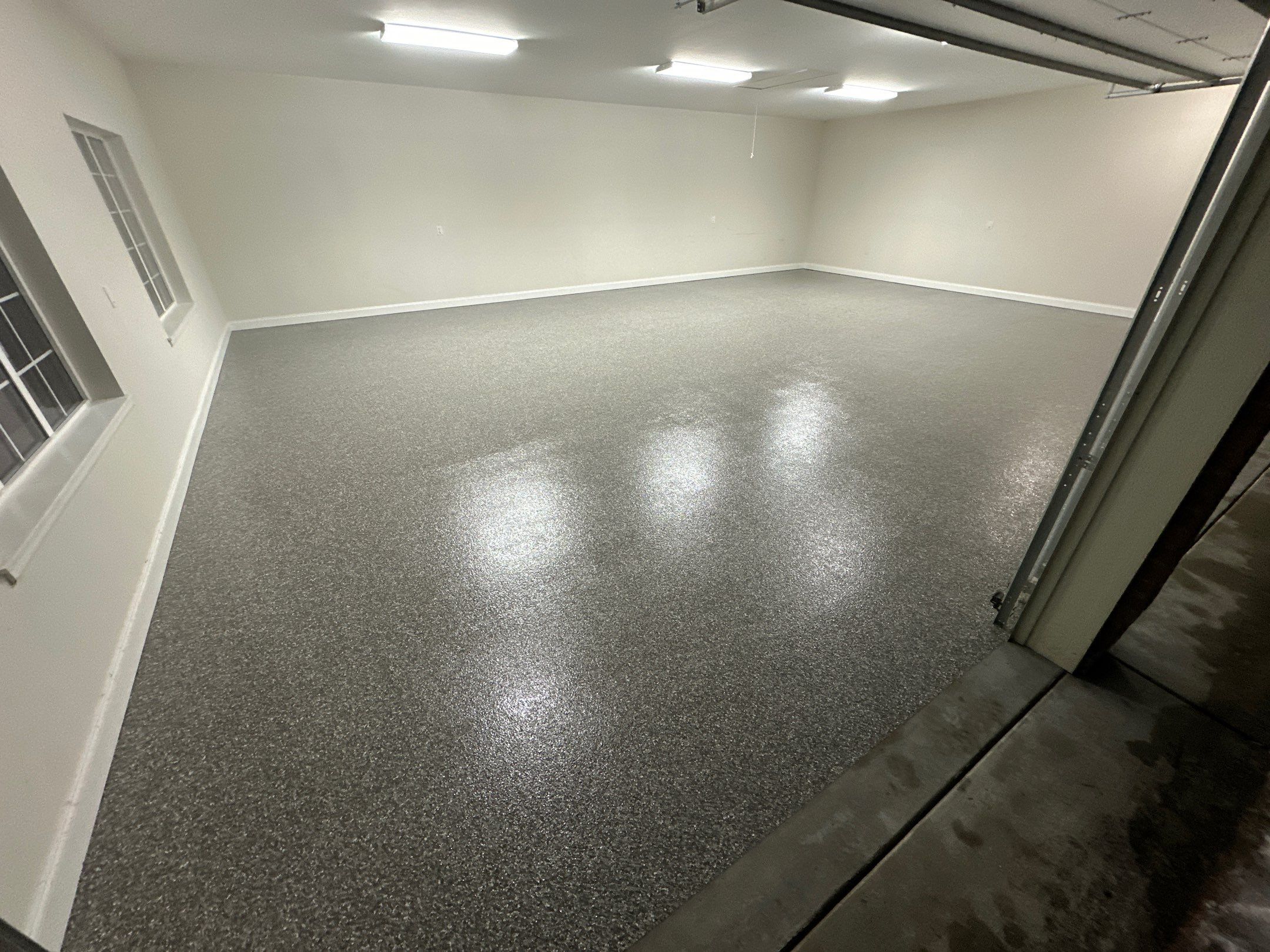
A Sammamish garage, its entry steps and knee wall, moisture tested in five spots and coated in Tidal Wave flake polyurea in one day.
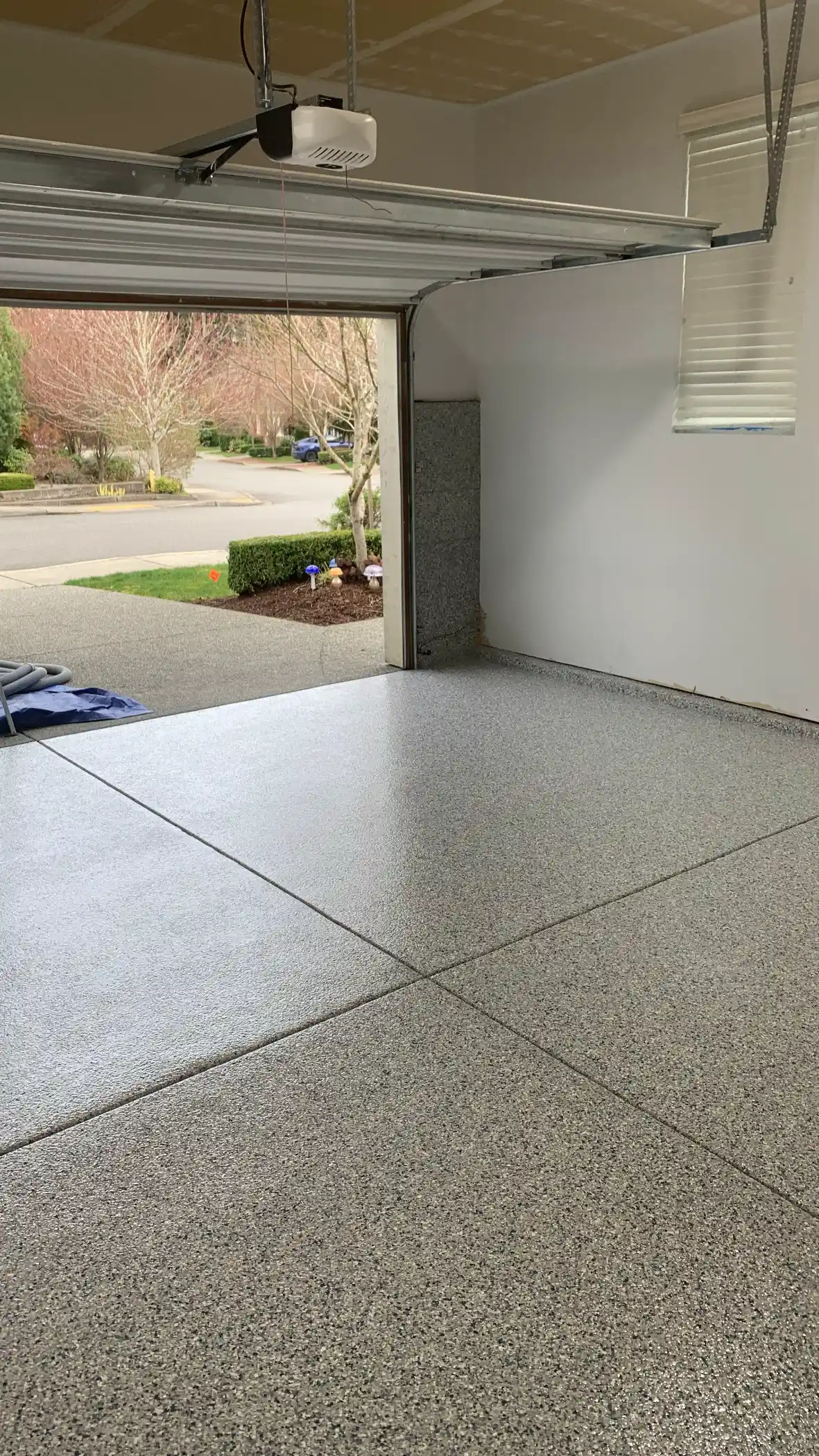

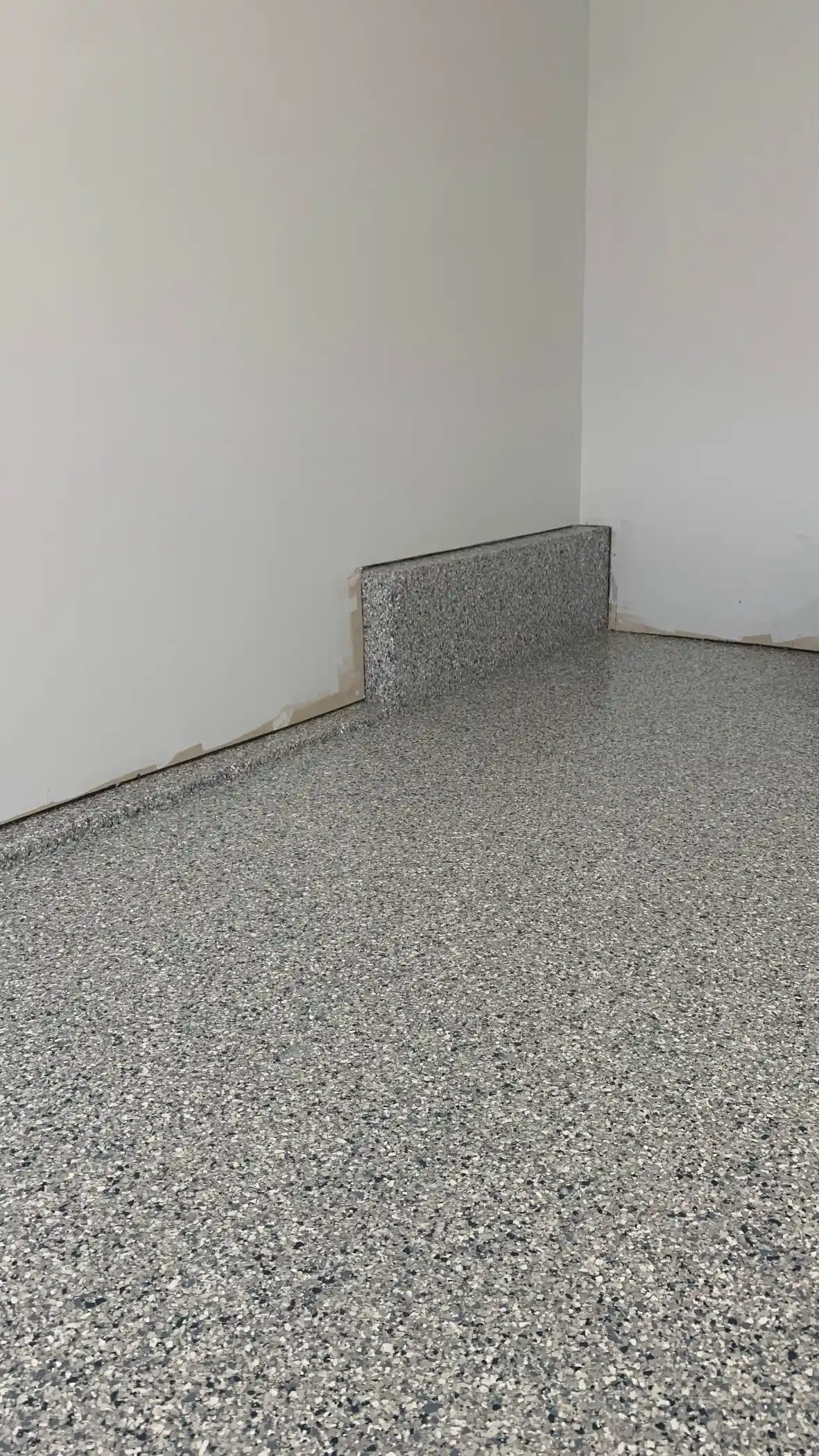
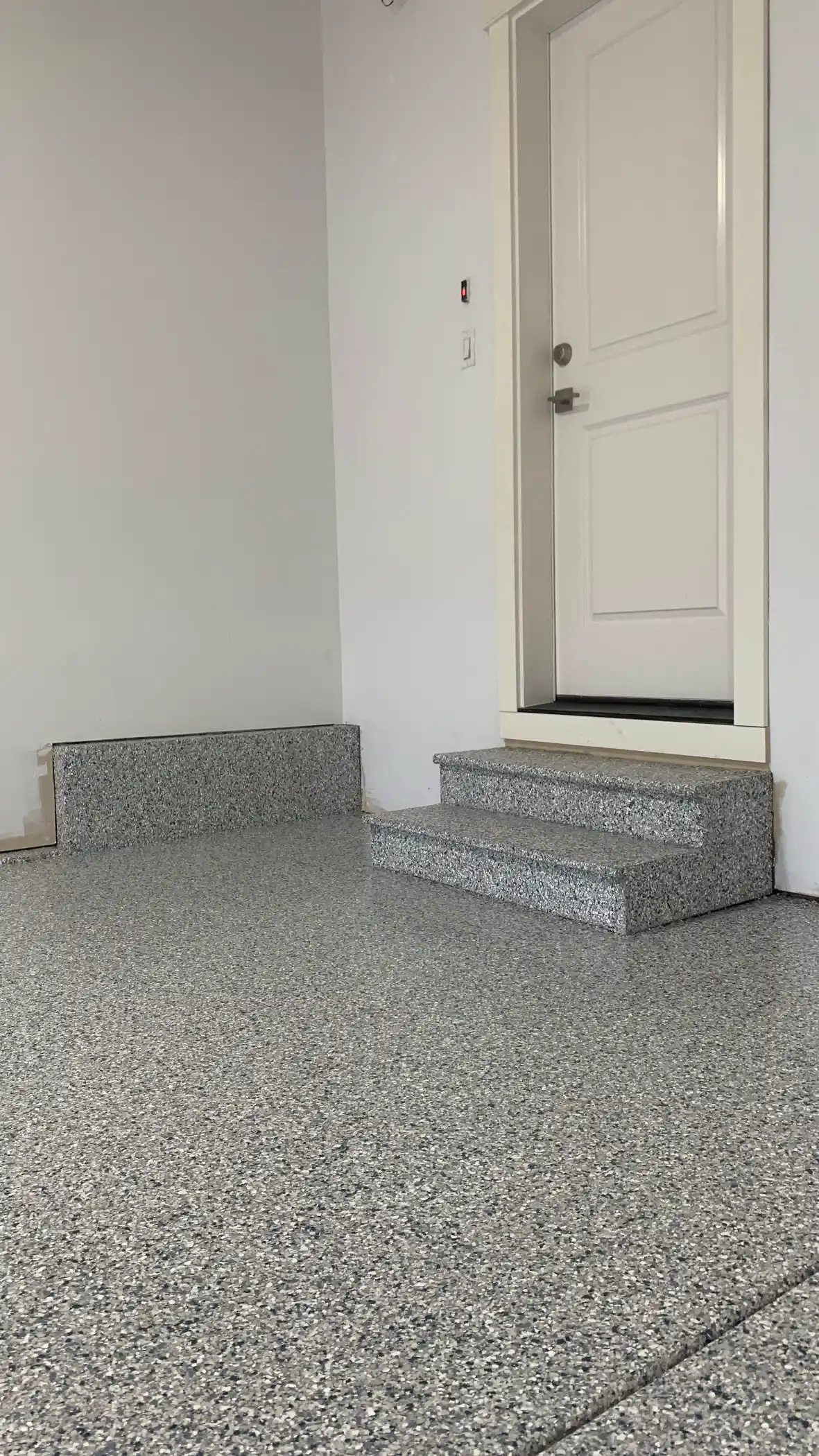
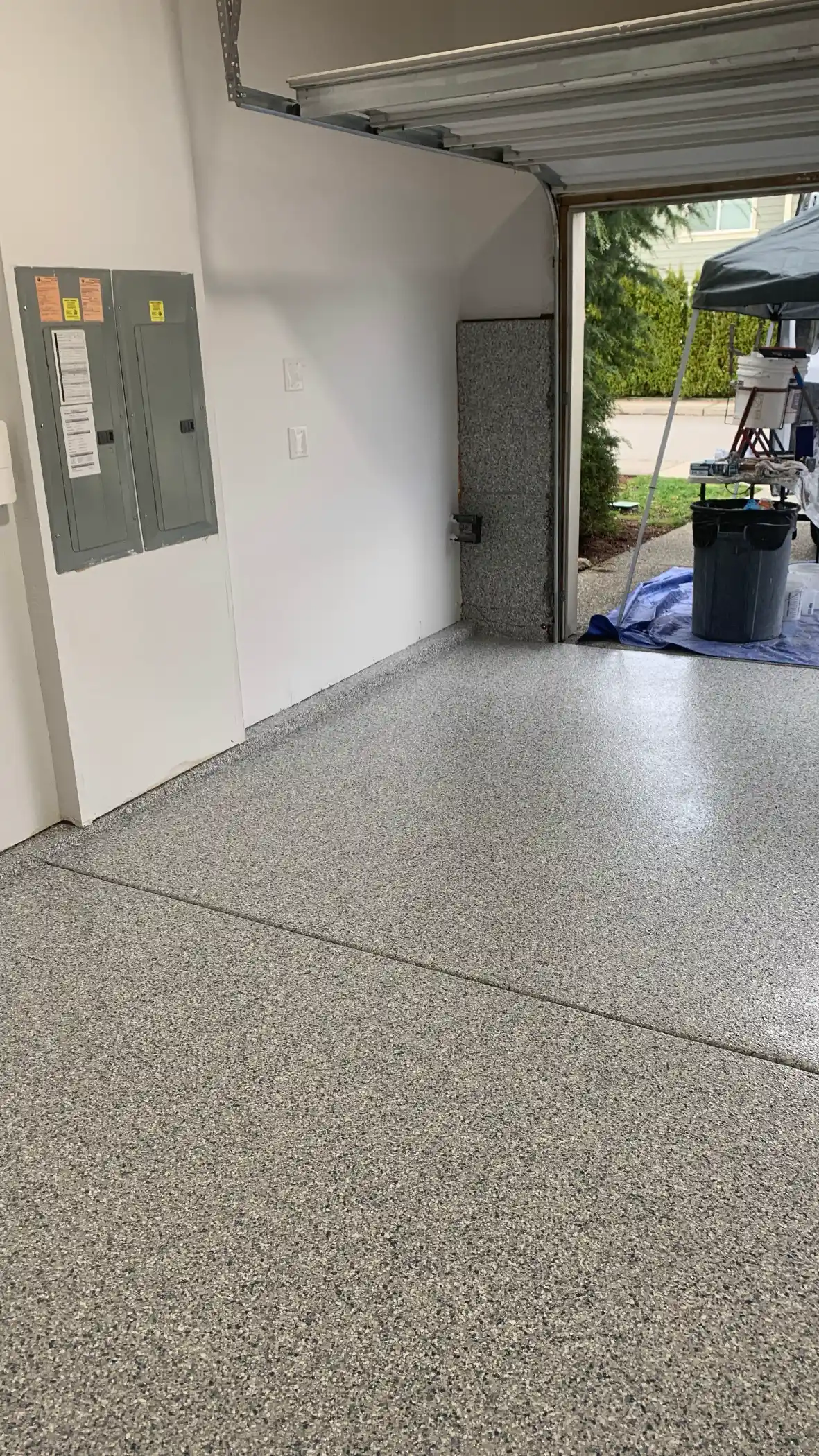
Lots of people in Sammamish start their search with "epoxy garage floor." This homeowner did too. The garage was a typical newer Eastside two-car space with white walls, a short concrete knee wall, two steps up to the house and a slab that had picked up oil spots near the door and a dusting of fir needles every time the door opened.
What we installed in early April 2026 was a garage floor coating in Sammamish made with Certified Penntek polyurea in Tidal Wave flake. The floor, the steps and the knee wall all got the same finish, installed in one day.
The free consultation was in late March 2026. Before anyone talks about color, the meter goes down. On this slab we took five readings in different spots, from the open middle of the floor to the edge by the wall. They ranged from 4.8% to 5.5%.
Why five? Concrete isn't uniform. The edge near the door, the spot under a leaky car and the back corner can all read differently. One reading tells you about one spot. Several tell you about the slab. That is the step that decides whether a floor needs our two-layer moisture barrier system before the basecoat goes down, and it's the step a rushed installer skips.
The rest of the slab told an ordinary story. Oil stains in the parking lanes. Control joints cut in a grid. A bit of surface wear. Nothing a diamond grinder can't handle.
The steps and the knee wall are what make this one look finished. When only the flat floor gets coated, the bare concrete edges stand out every time you walk in.
Tidal Wave Evolution is a light grey blend with black and white chips and a few cool blue-grey notes. In a garage with white walls and trim, it keeps the room bright without looking sterile. It also hides needles, dust and the grey road film that comes in on tires all winter.
Typical epoxy is rigid. Concrete isn't. Slabs move a little with temperature and freeze-thaw, and a brittle coating can crack and lift as they do. The Penntek basecoat is flexible, so it moves with the slab. The Penntek Stretch Test shows it bending where epoxy would snap.
Then there is sun. That open door faces the street, and typical epoxy yellows under UV. The FadeLock™ topcoat passed a 16-hour QUV accelerated UV test and won't yellow or amber. Problems with typical epoxy often show in years 3–5. A Certified Penntek polyurea floor is built to last 30–40 years. We break down the differences in Penntek vs epoxy, and you can watch more test videos on our demo page.
Sammamish sits on a plateau above Lake Sammamish, with big evergreens and rain from fall into late spring. Garage slabs here soak up water from the ground and from every car that pulls in wet. That is why moisture testing matters so much in this area. Our post on rainy climate and moisture testing goes deeper.
For another look at what we do nearby, see a Sammamish two-car garage in Slate Stone or our page on Sammamish epoxy garage floor alternatives.
Moisture varies across a slab. Readings near the door, in the middle and along the walls can differ. Taking several gives a real picture of the floor before we decide whether a moisture barrier is needed.
Yes. Steps get the same grind, basecoat, flake and topcoat as the floor. The flake leaves a little texture on the treads, and the finish matches the floor exactly.
Less than you'd expect. The mix of light grey, black and white chips hides dust, needles and tire film between cleanings. The non-porous topcoat means it all comes up with a mop or a quick hose-off.
Curious what your own slab reads? Book a free, no-pressure in-home quote or call 425-226-6085. We bring the meter and the color samples.
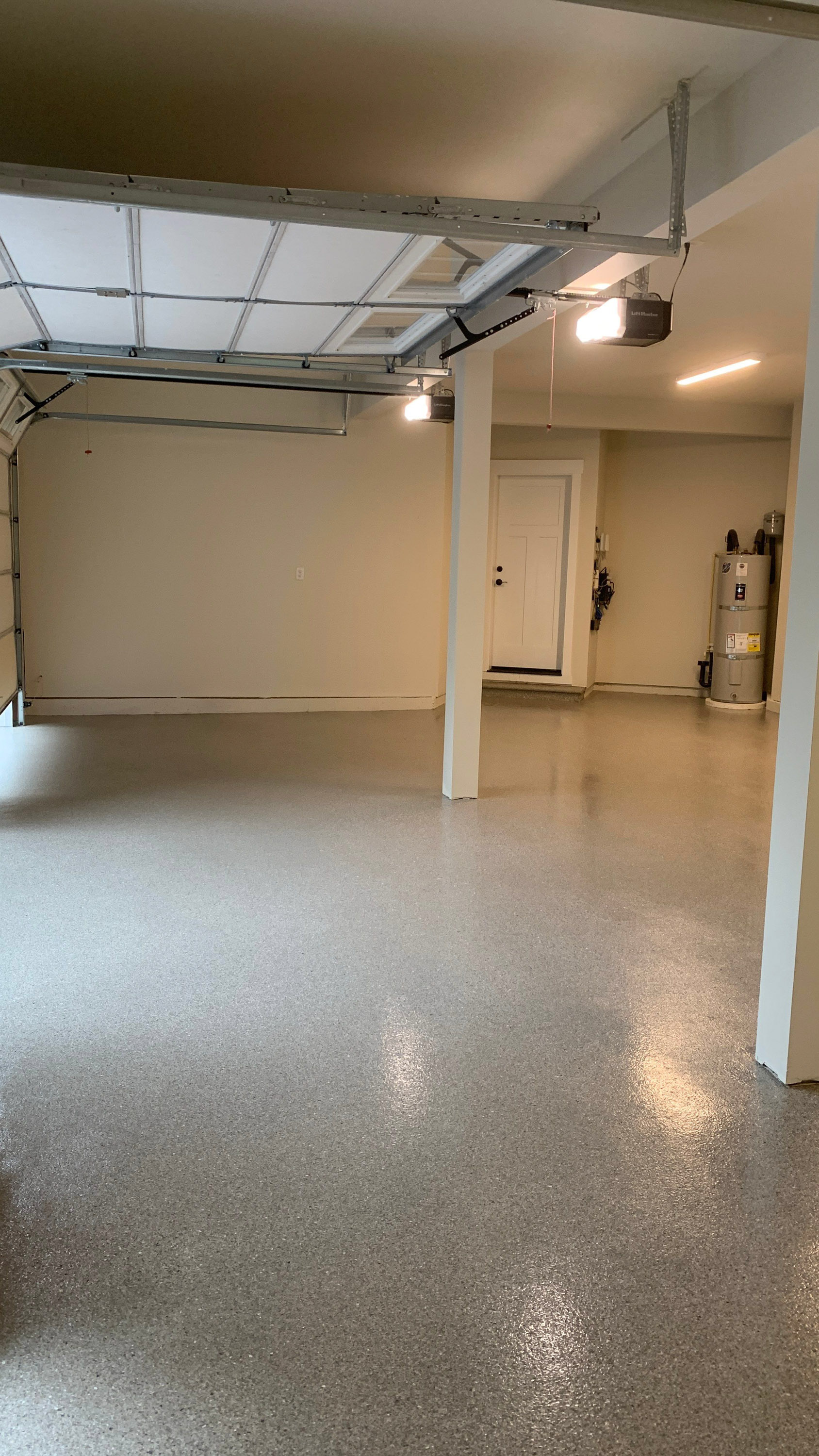
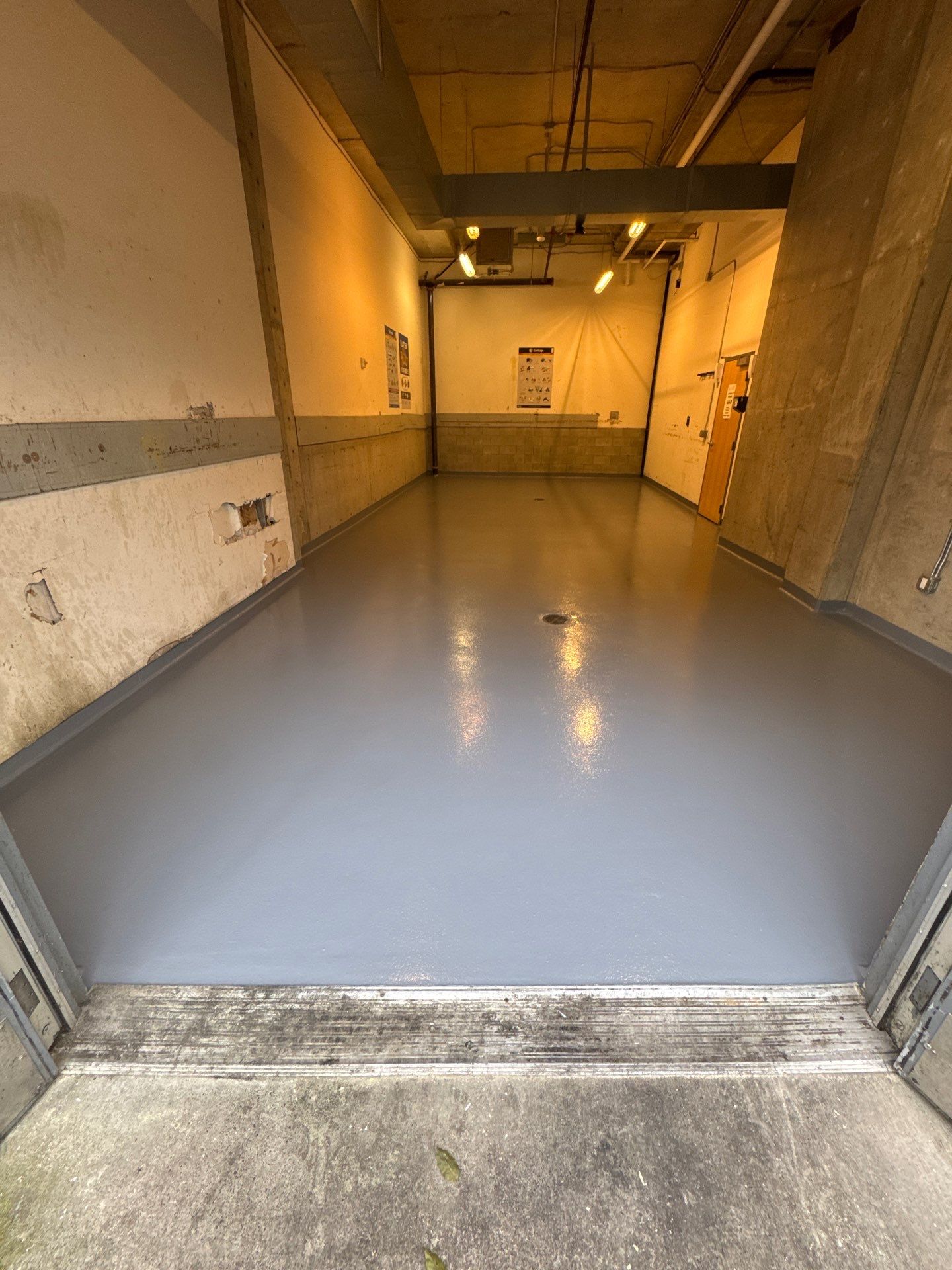
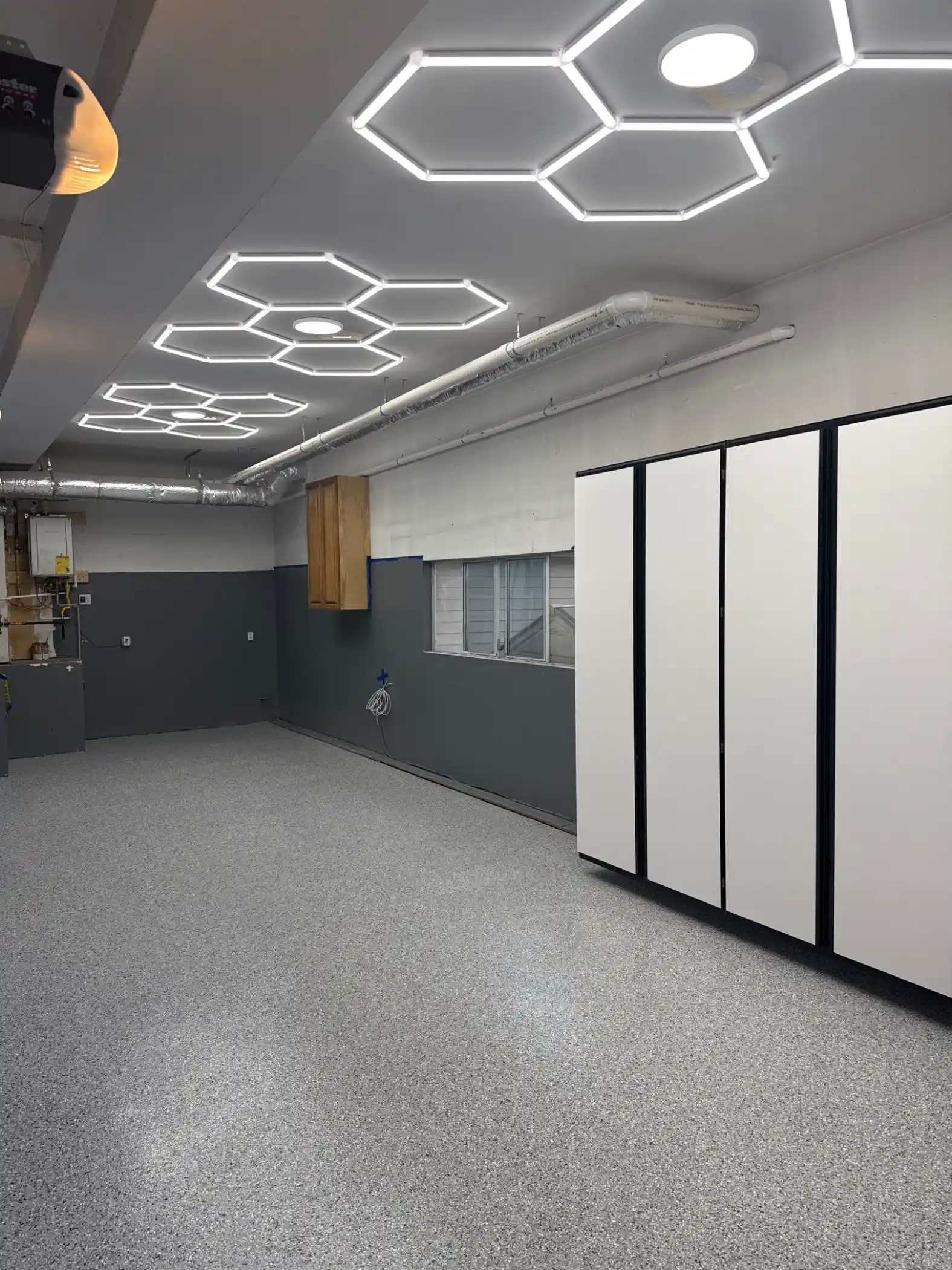
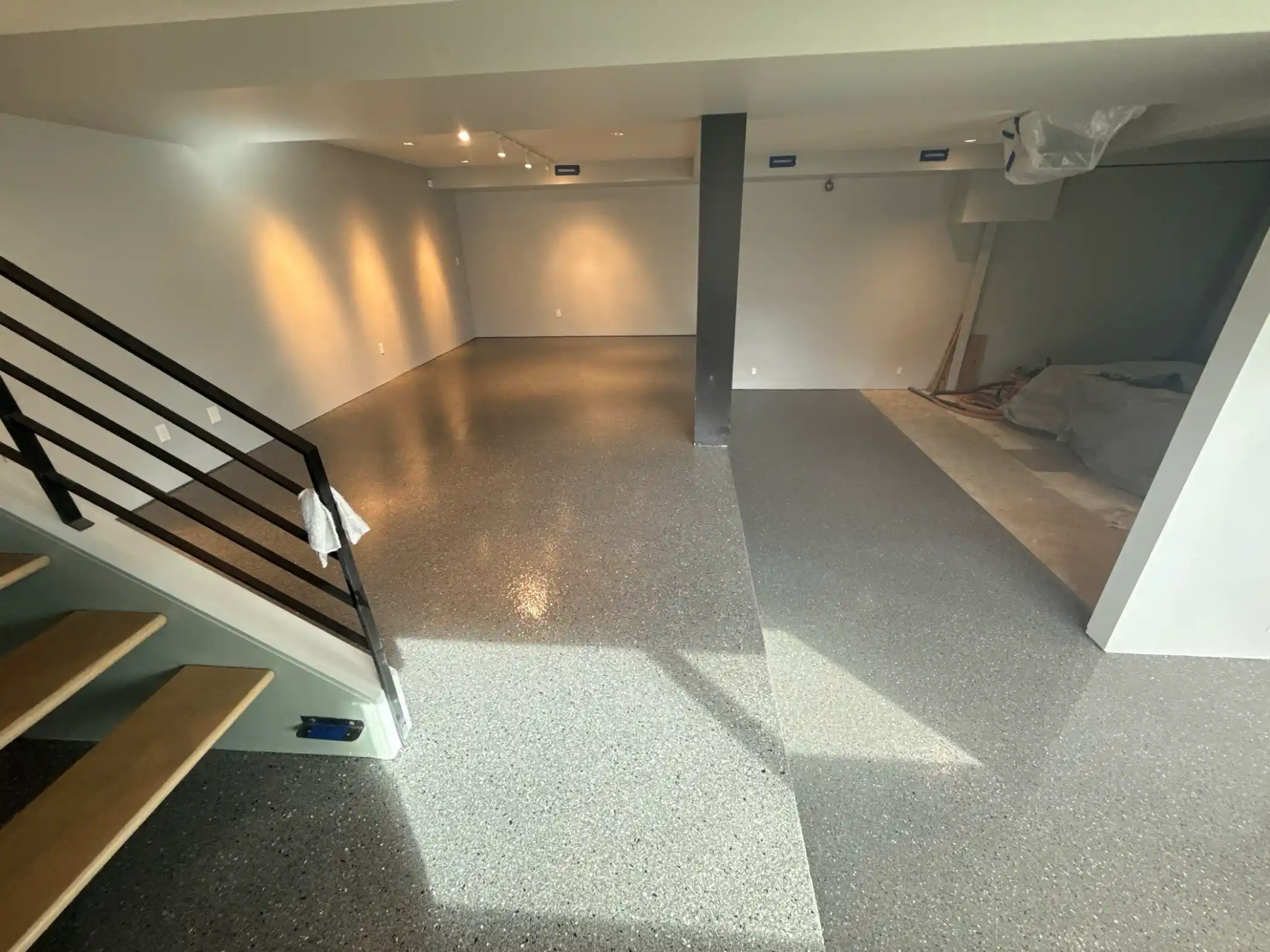
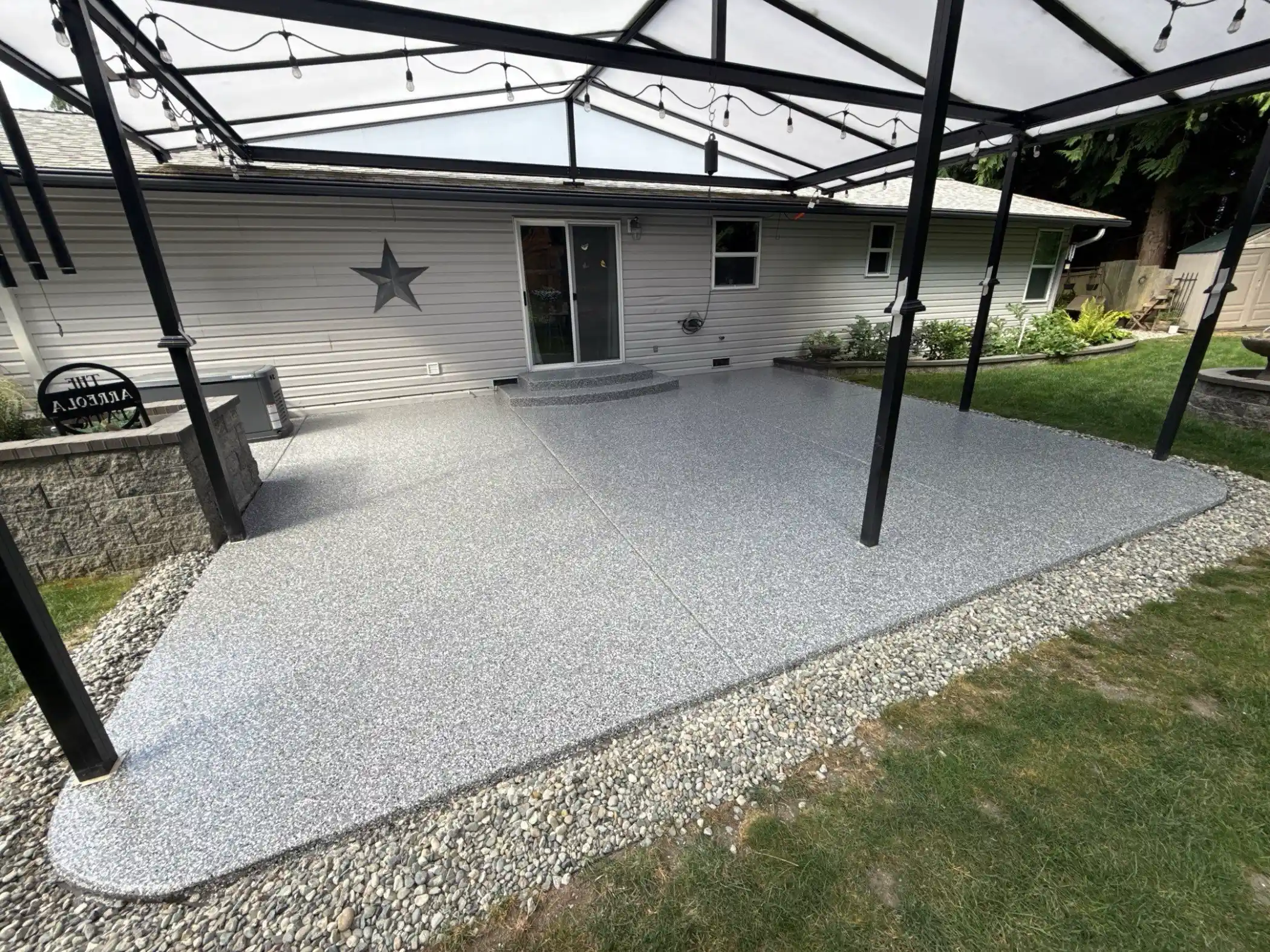
Here's just a few of our previous projects.