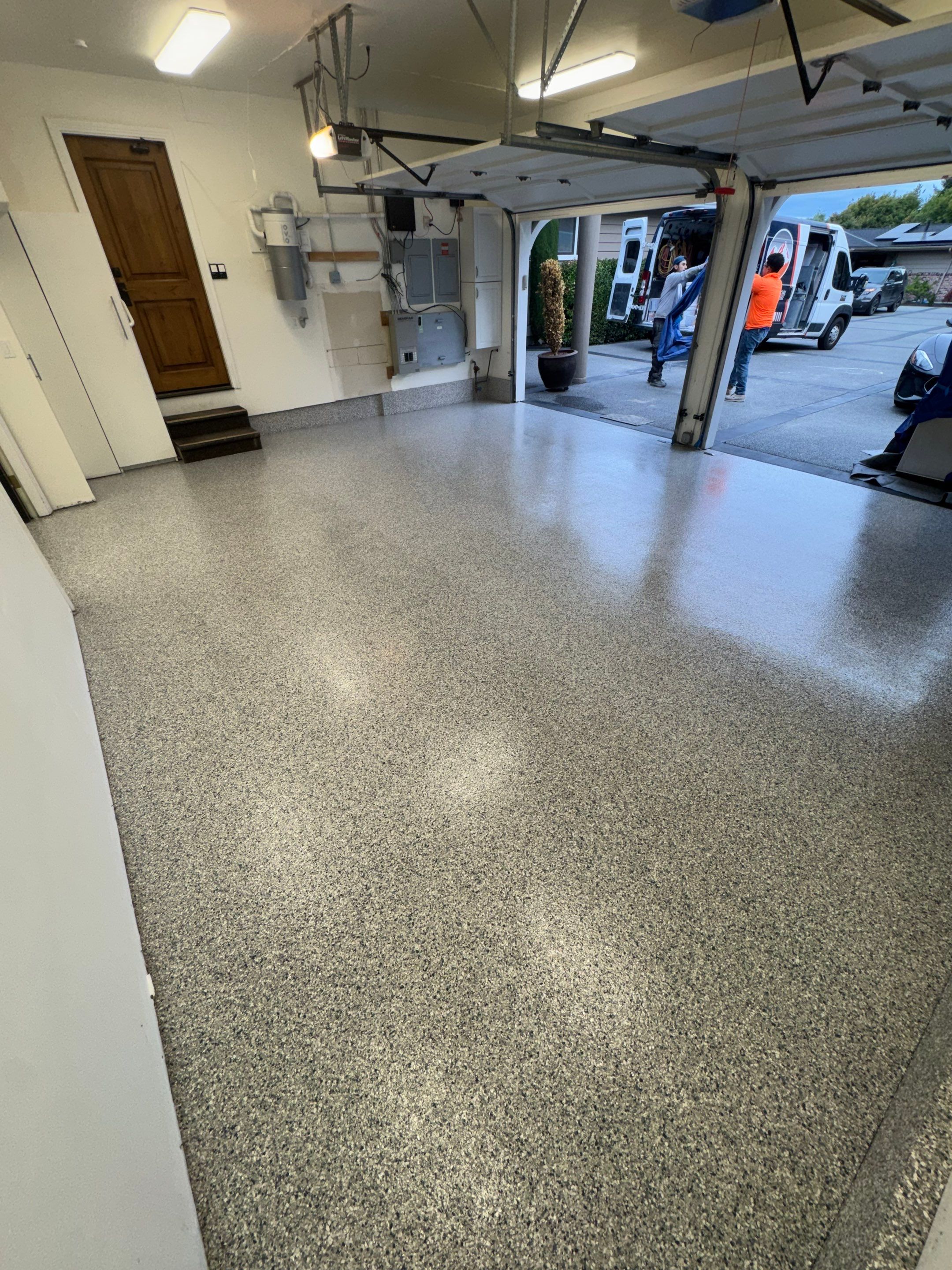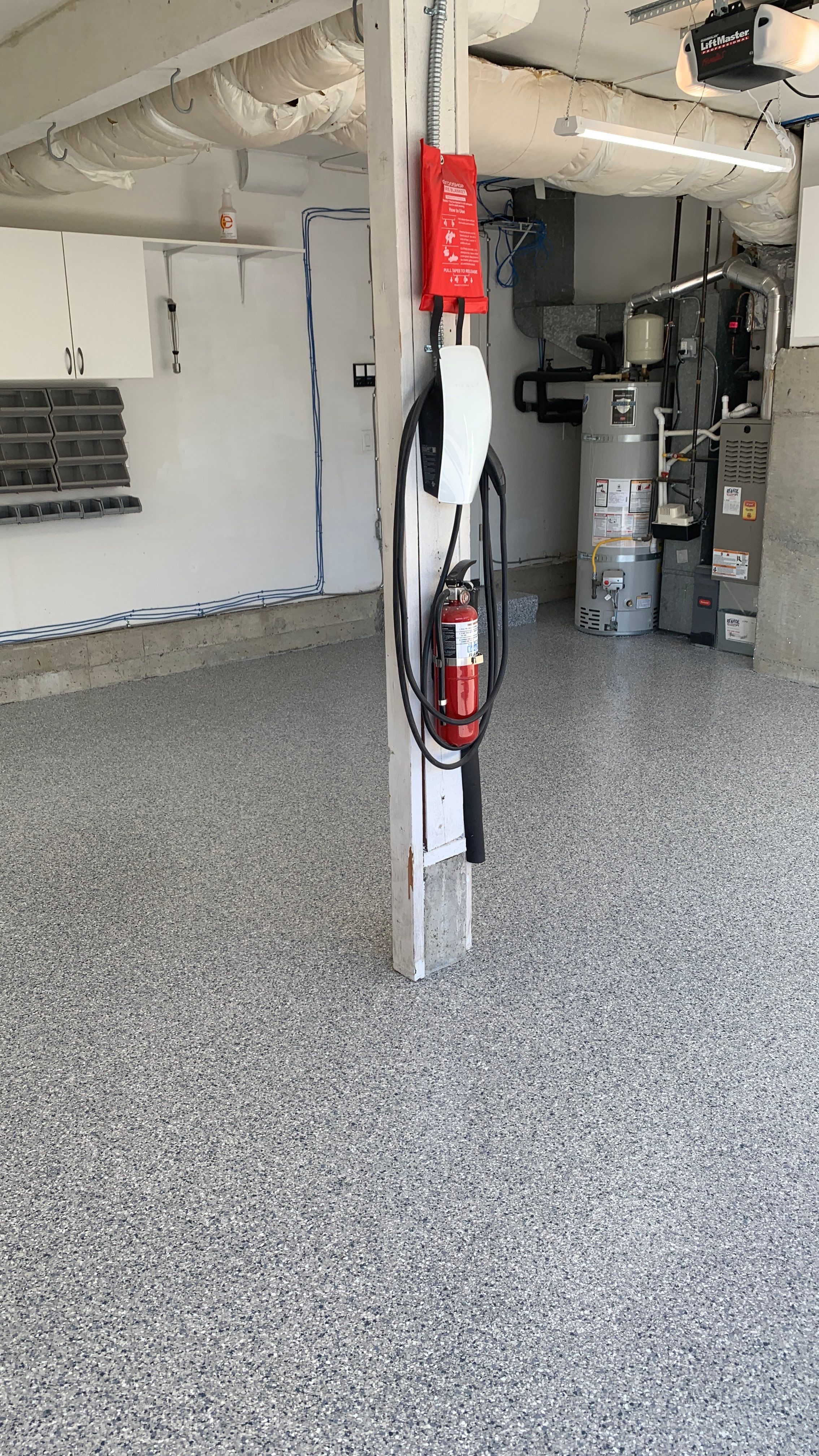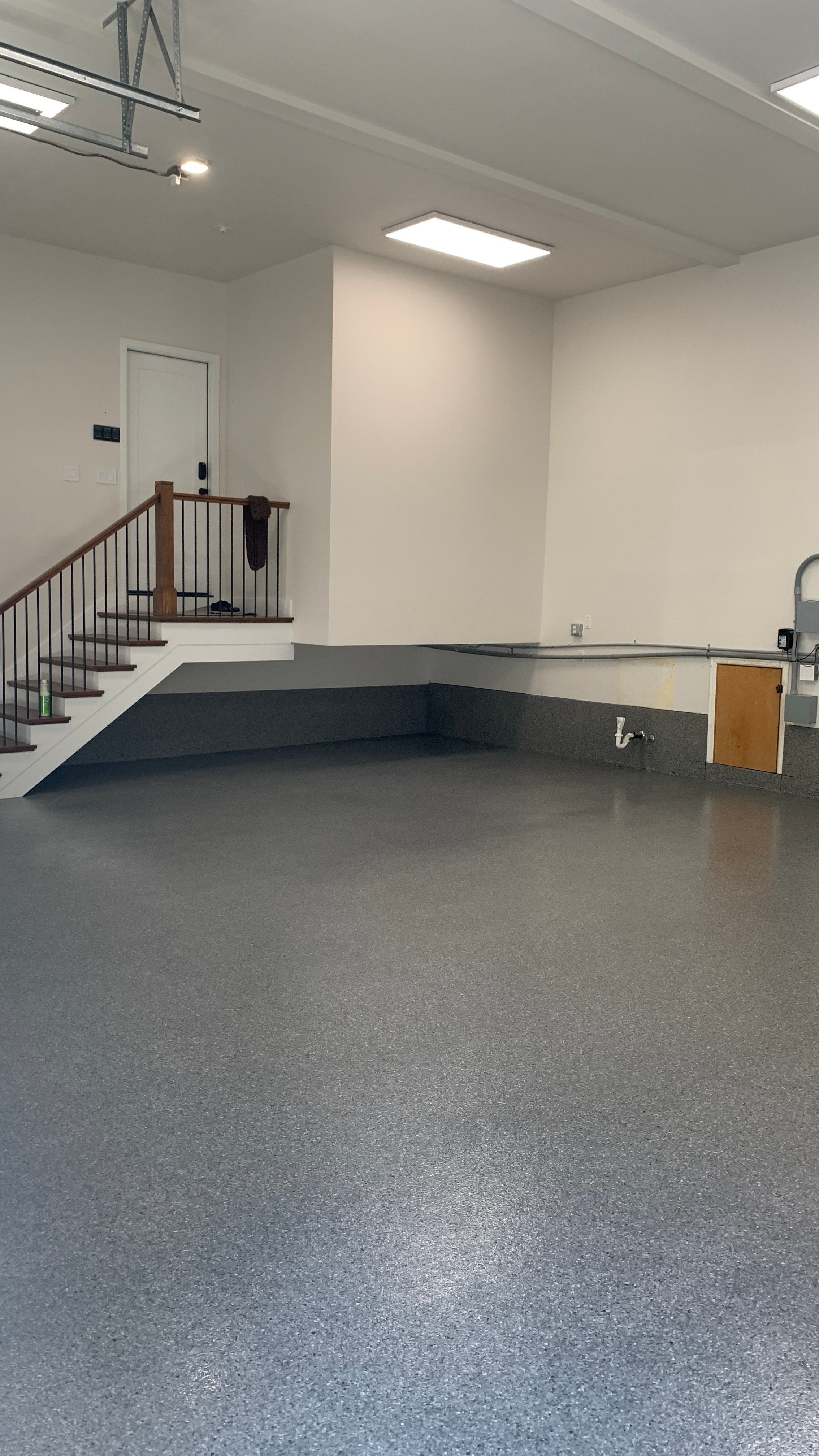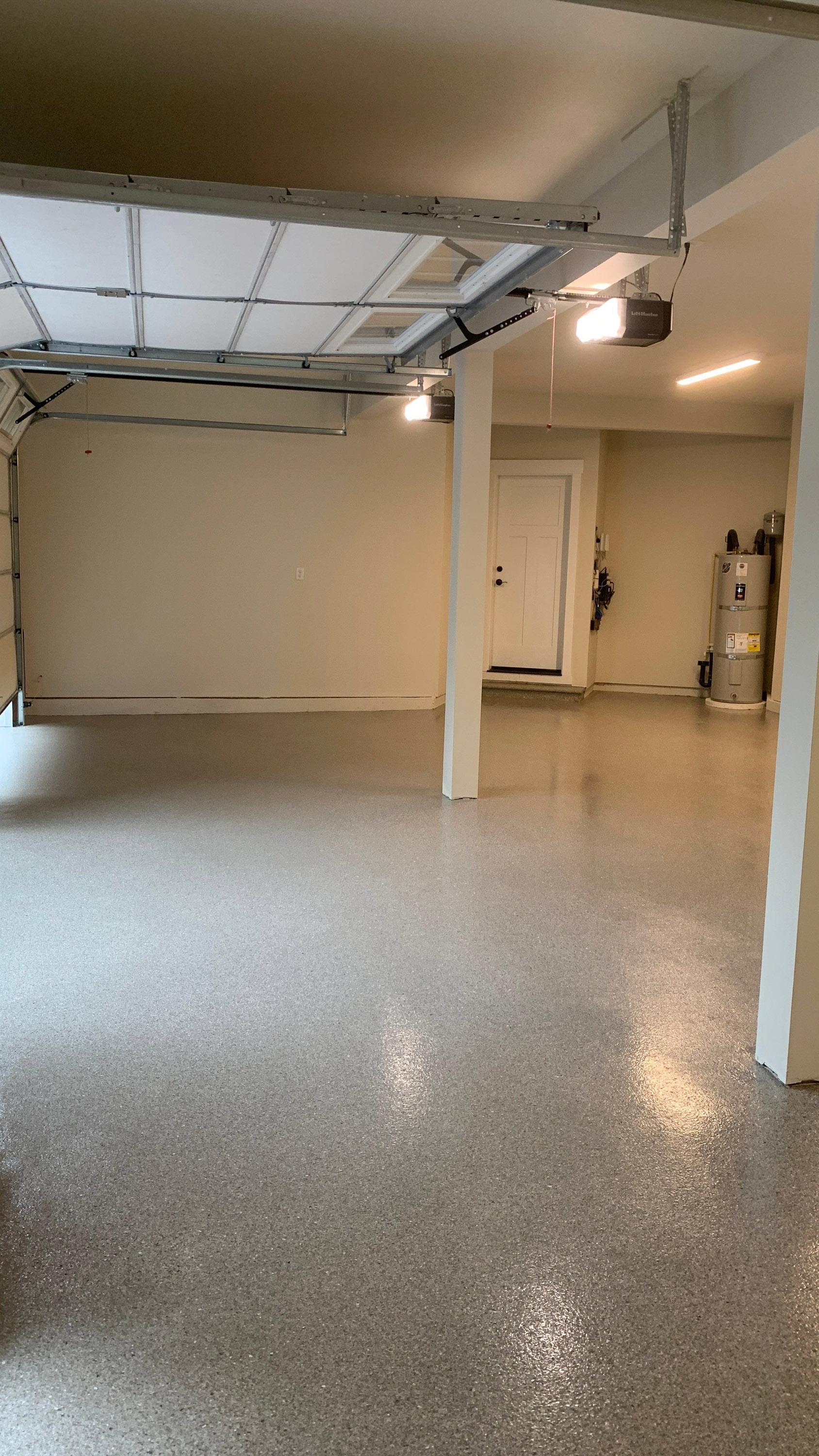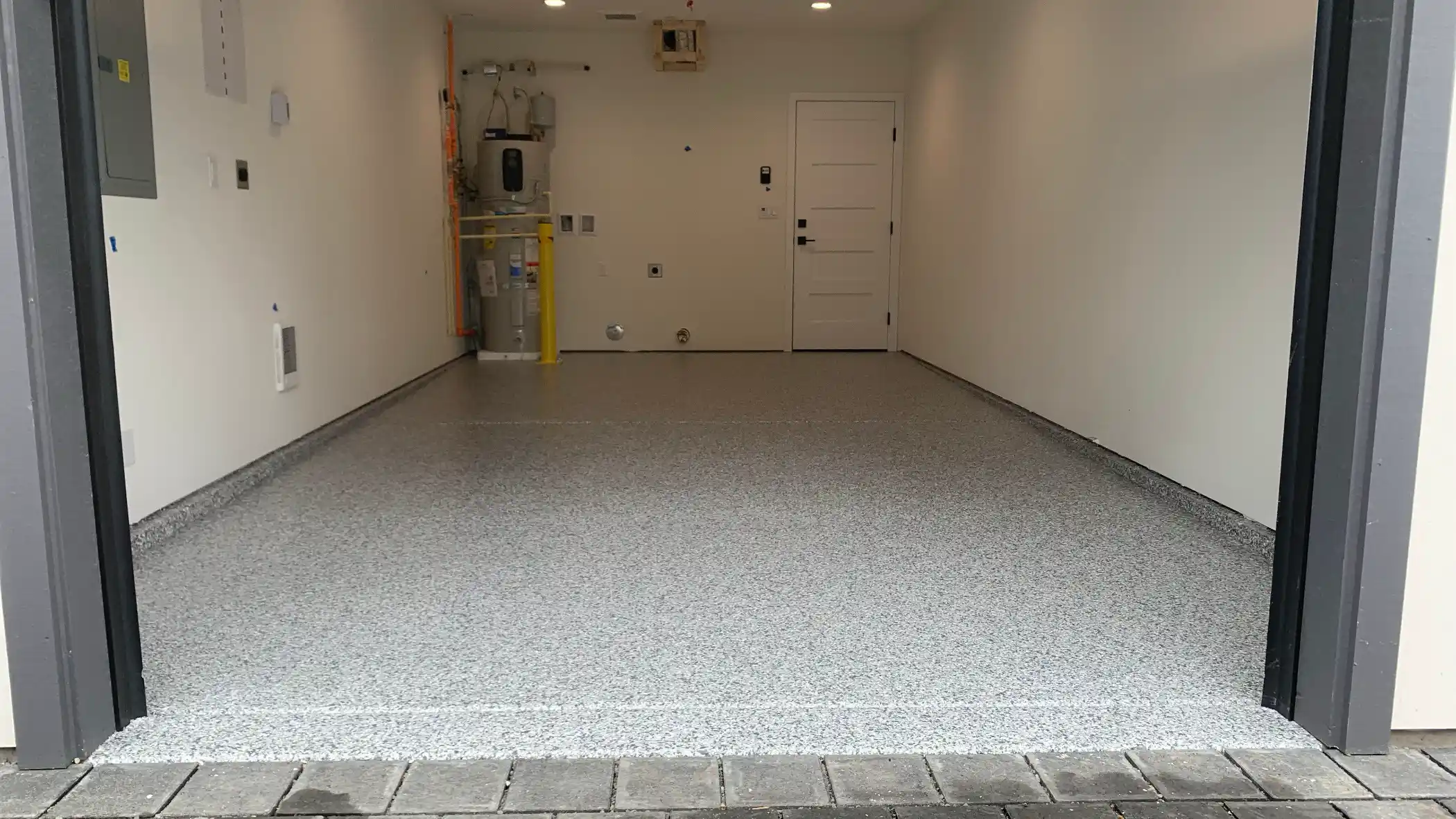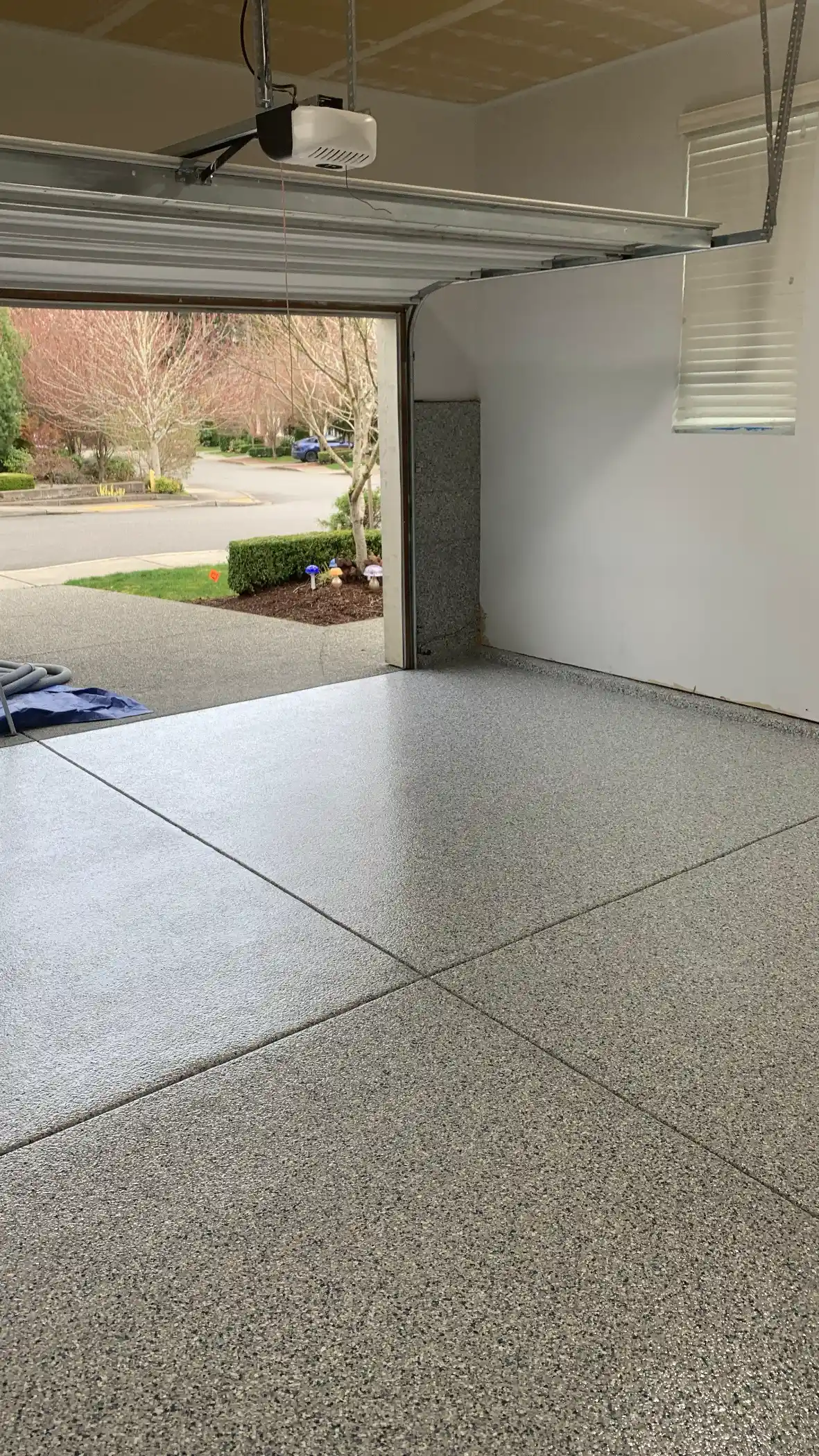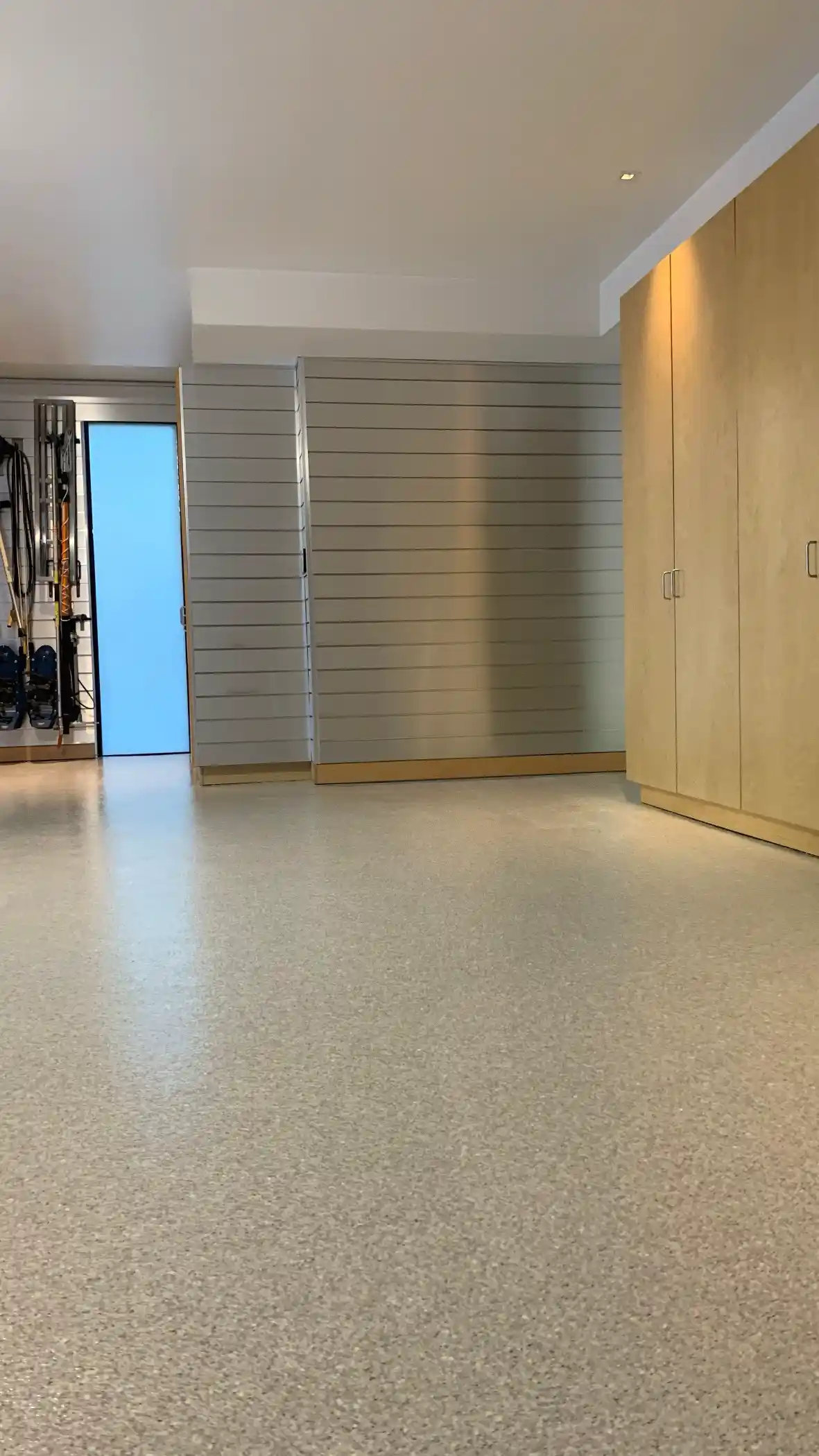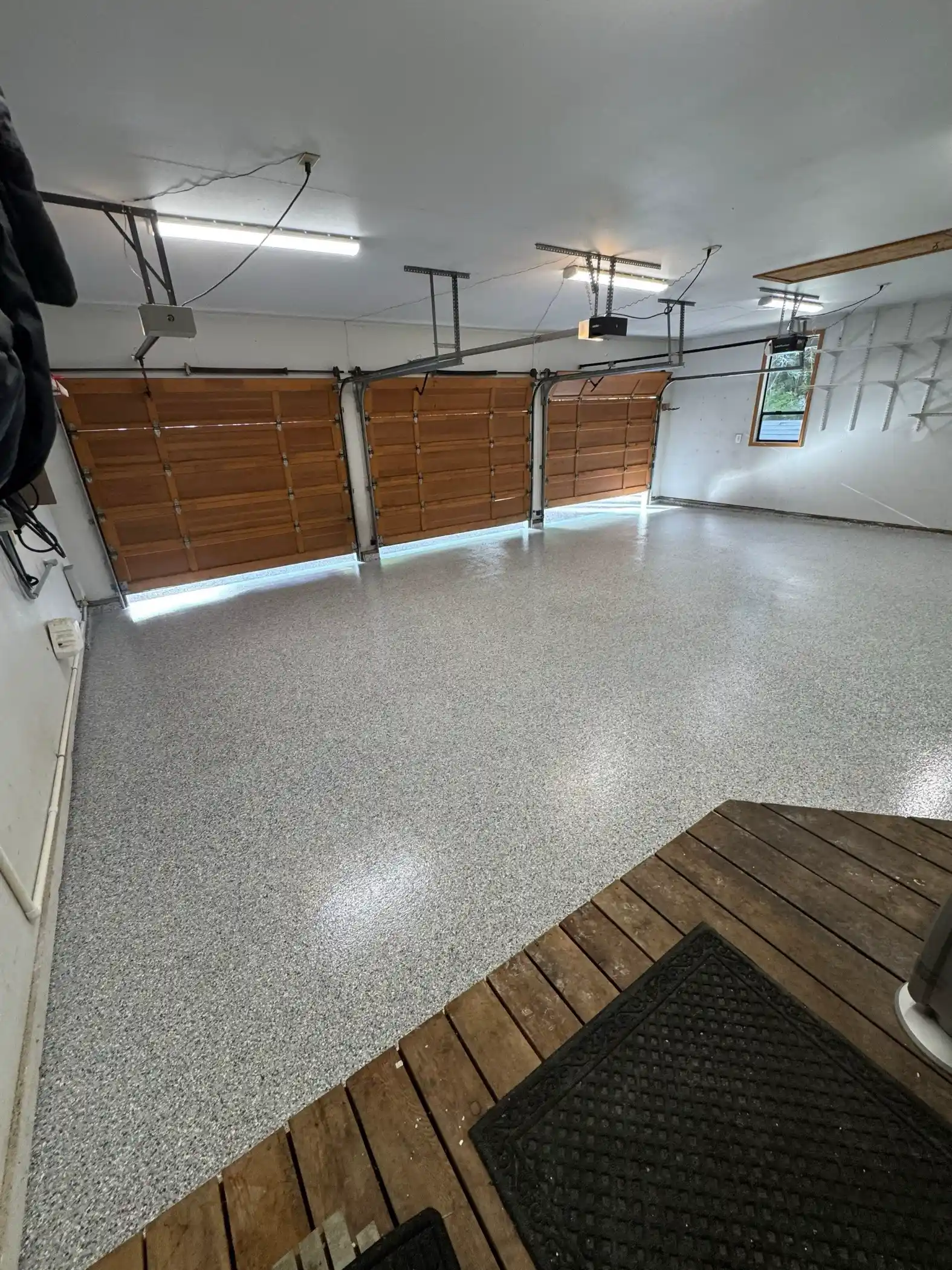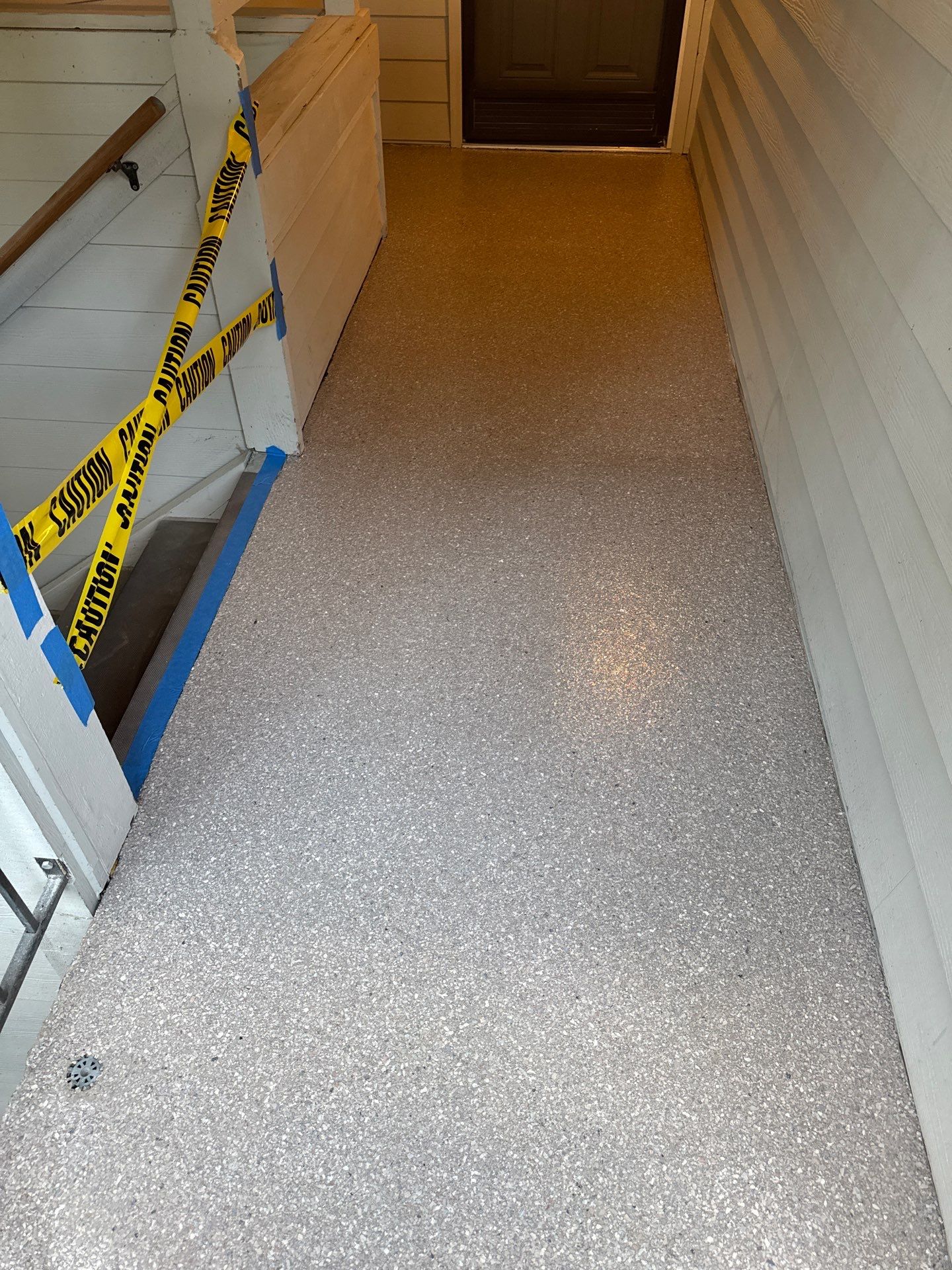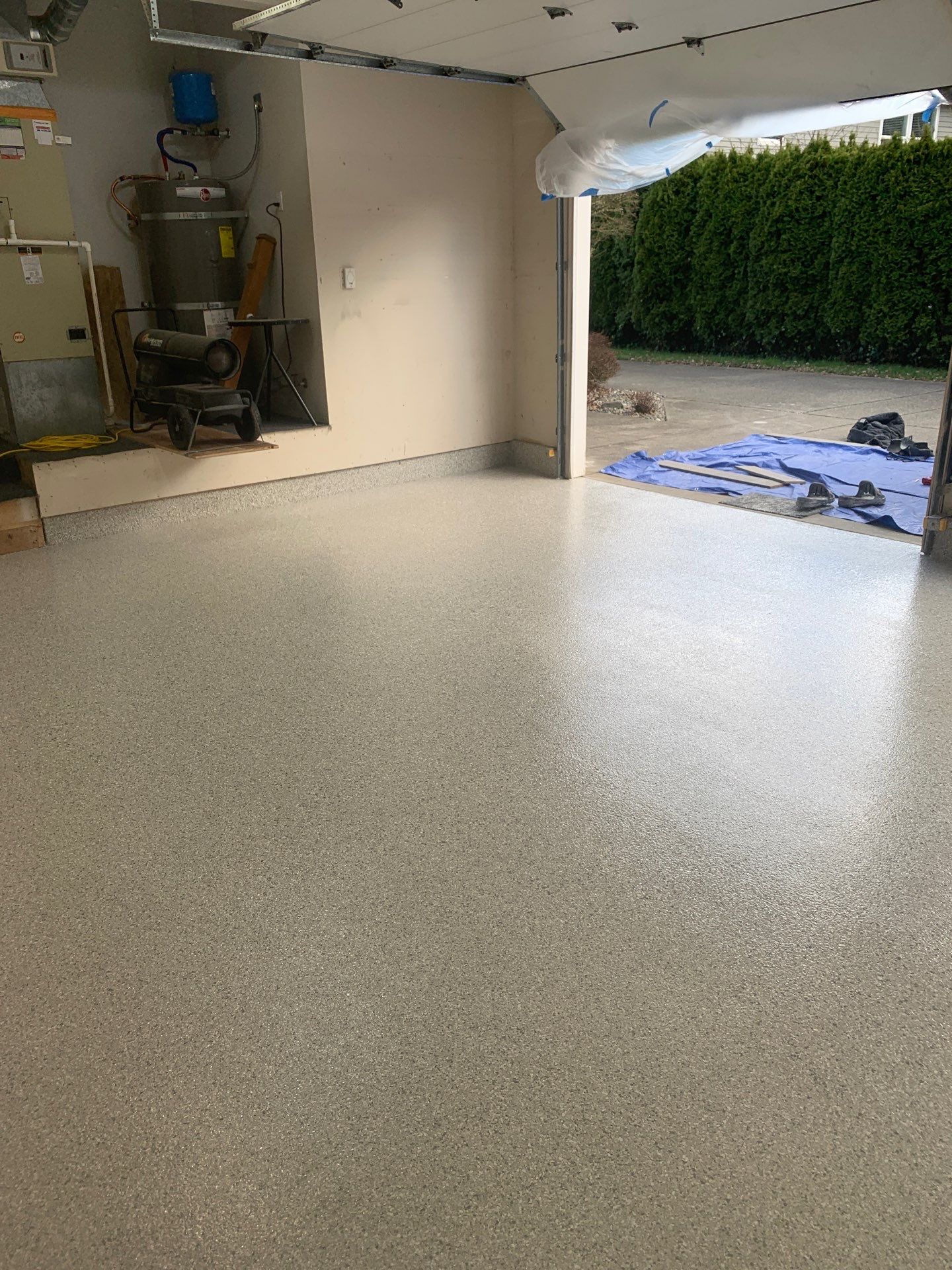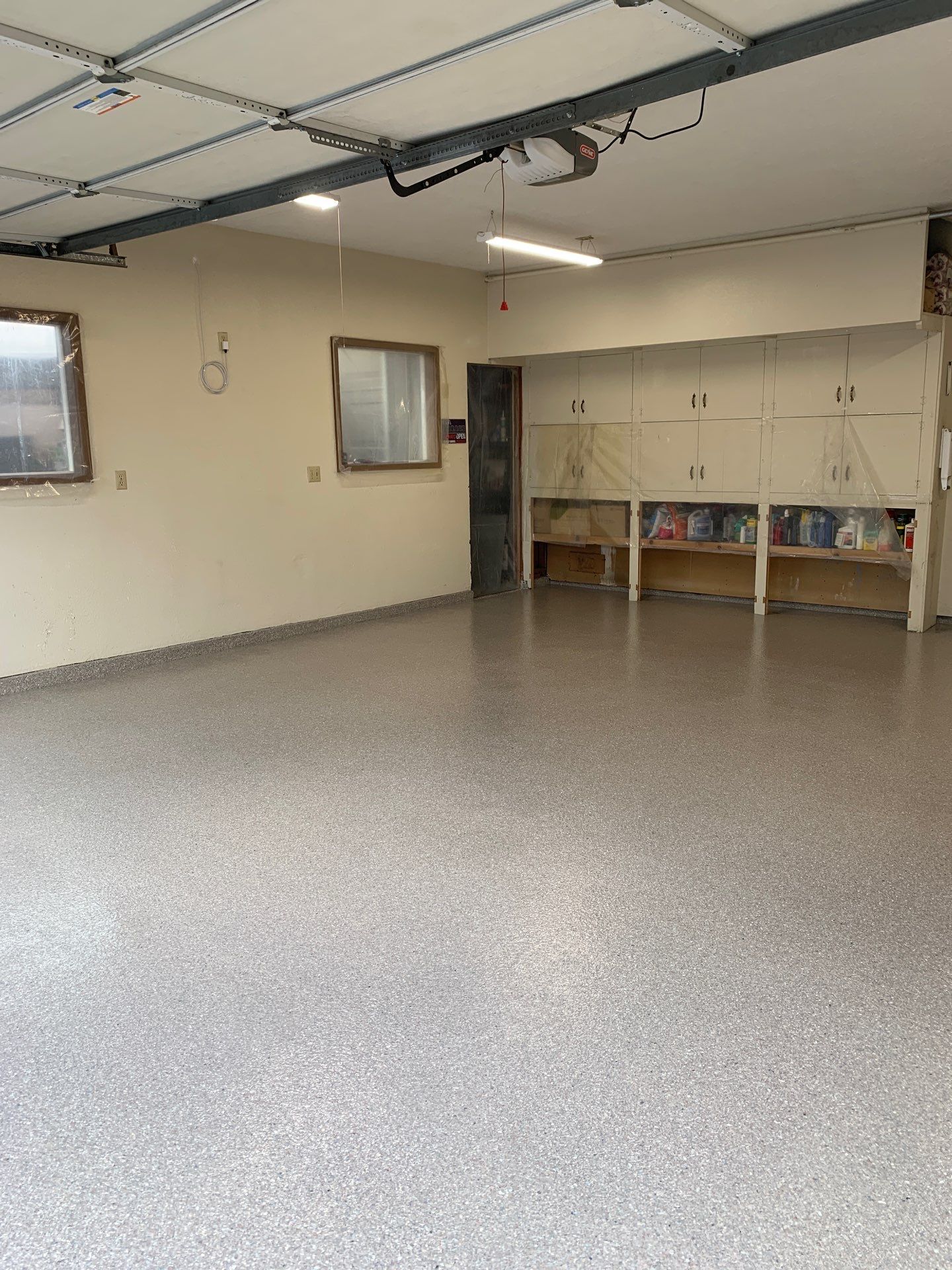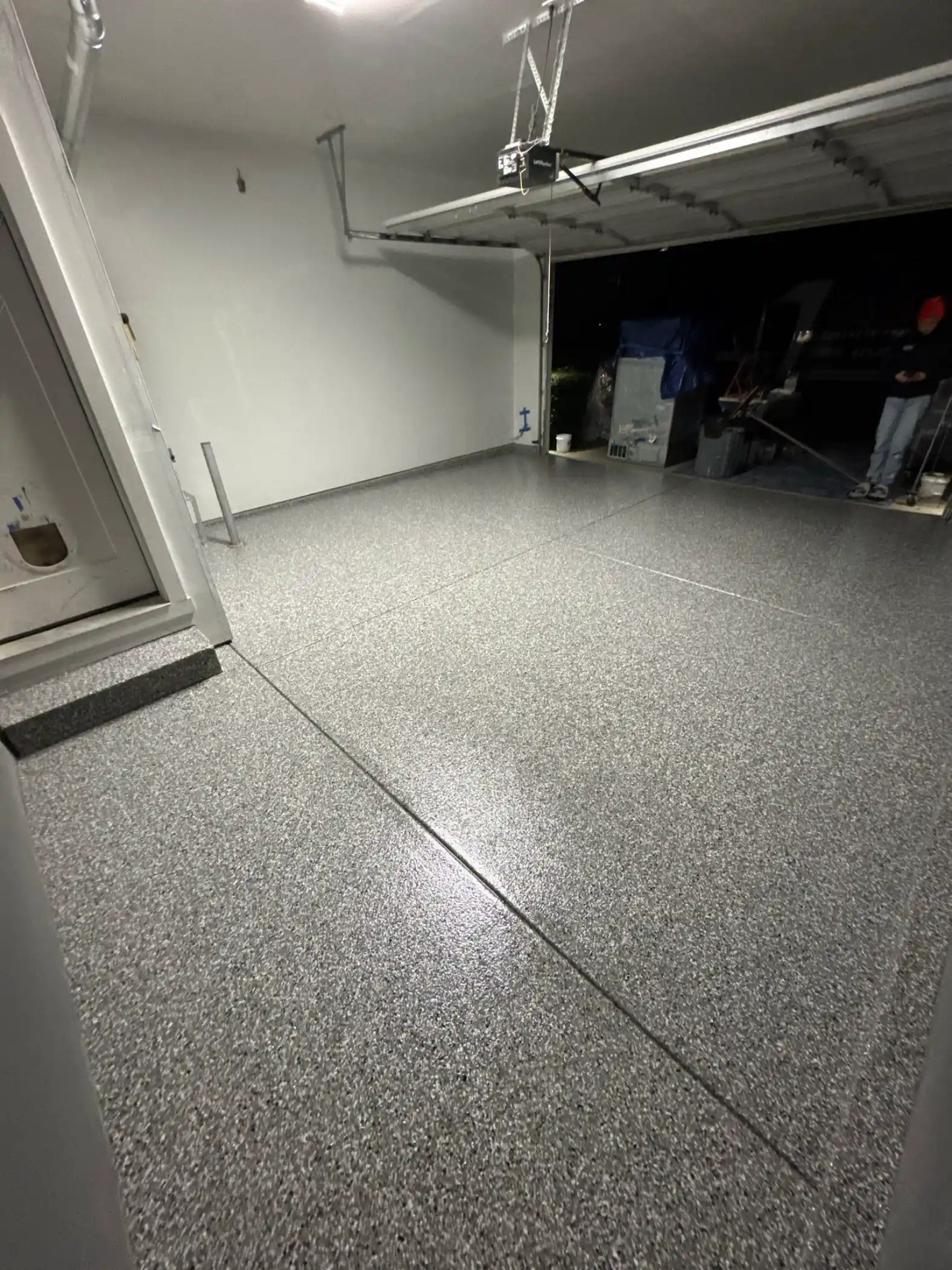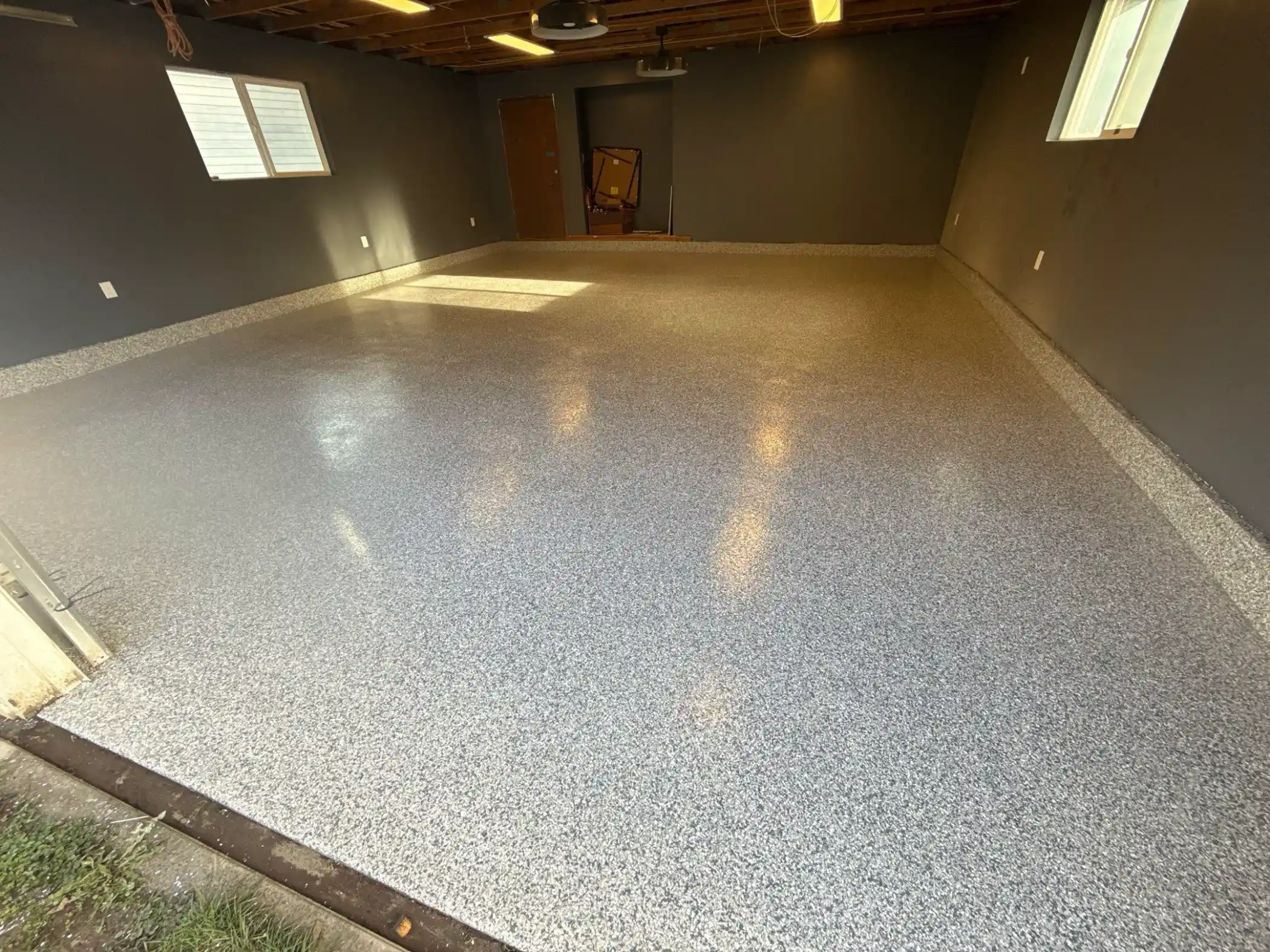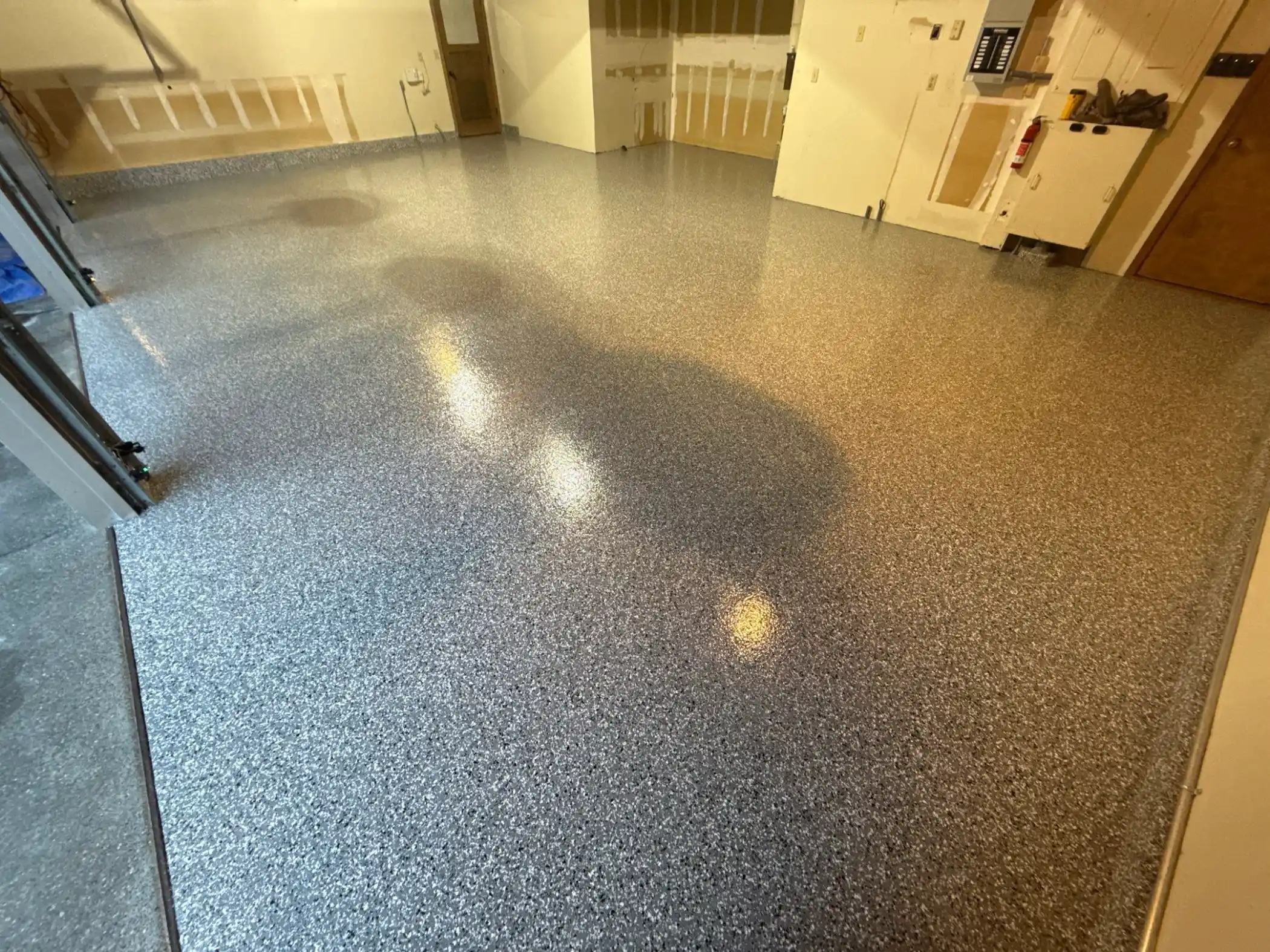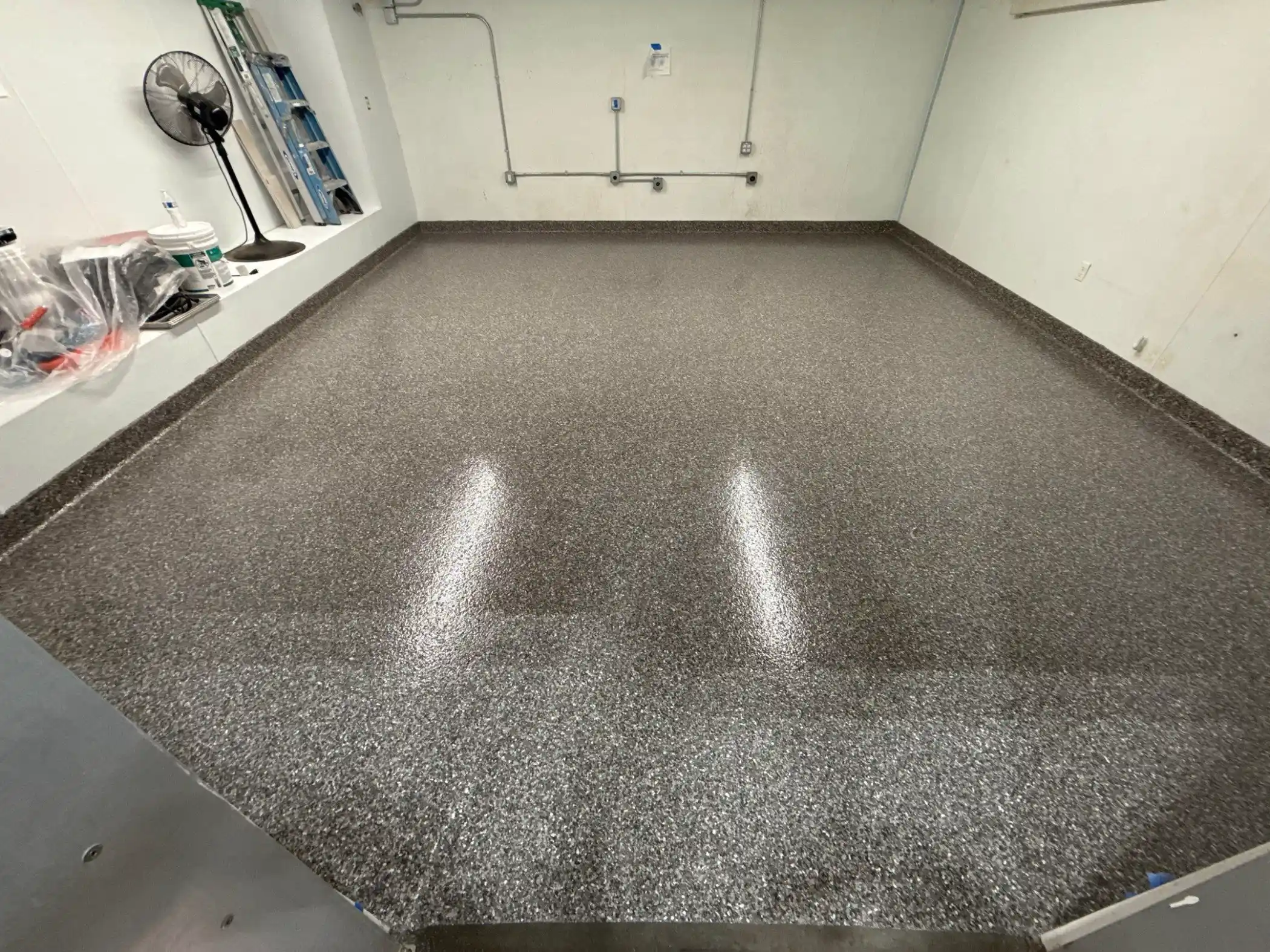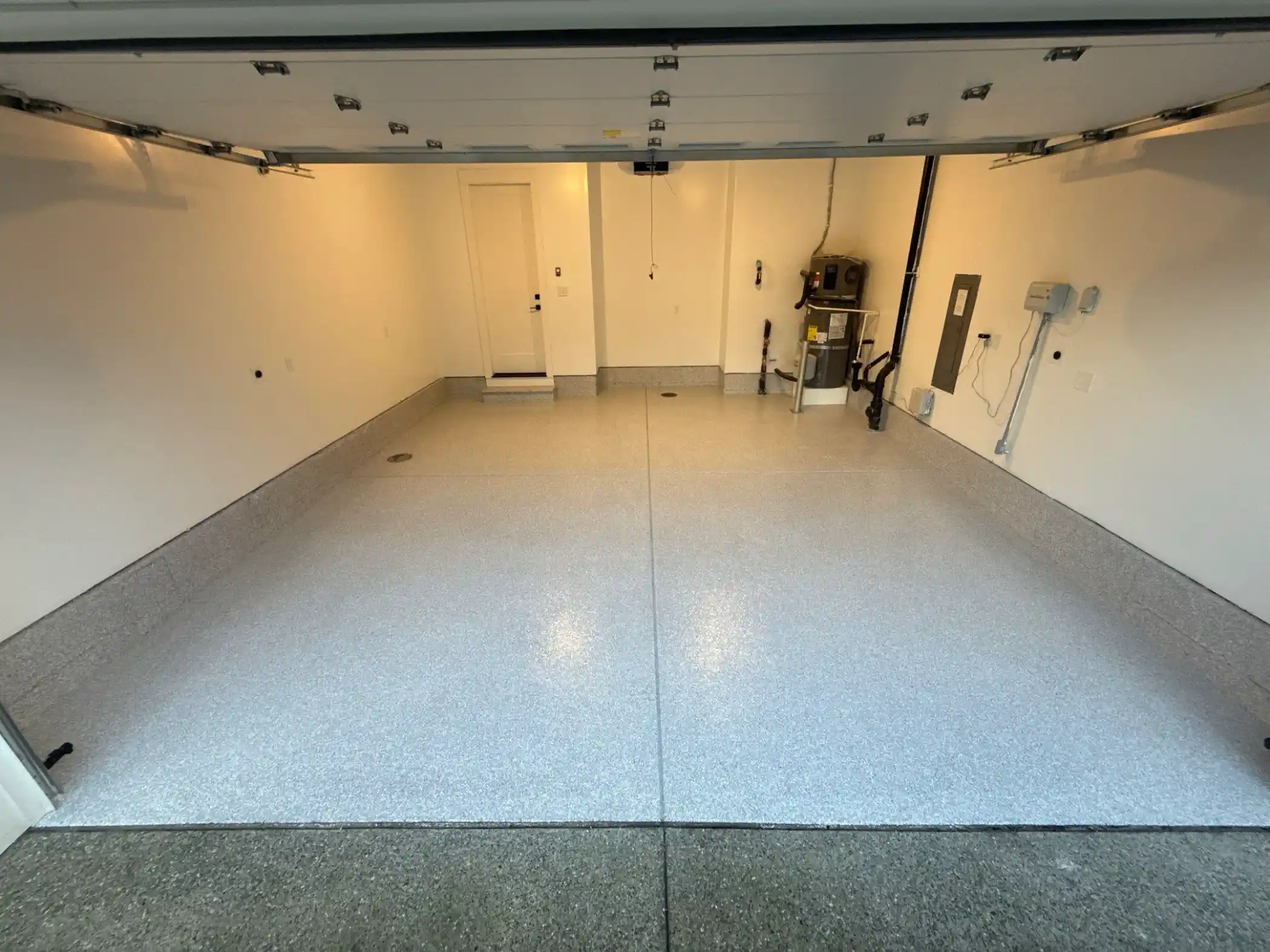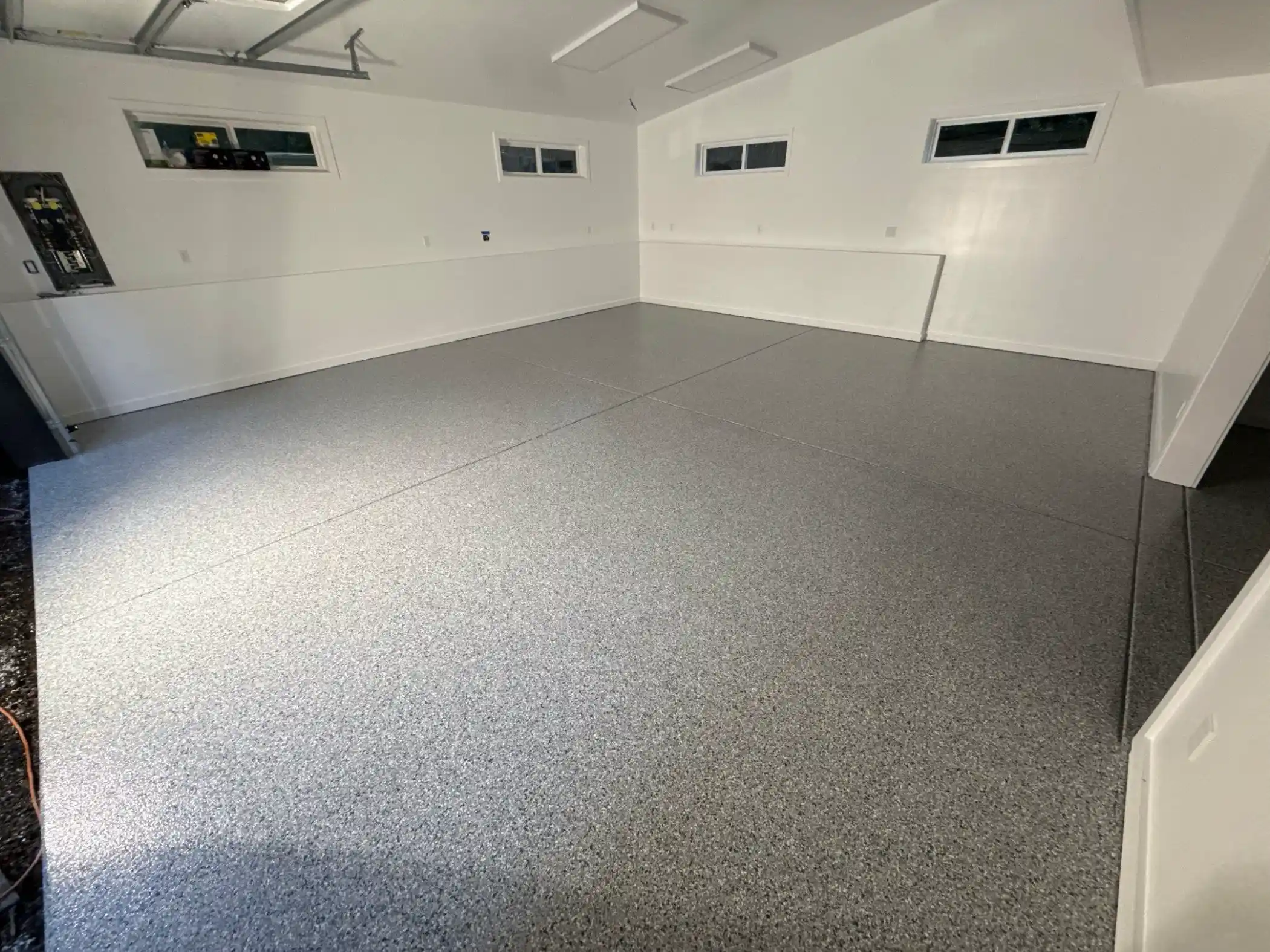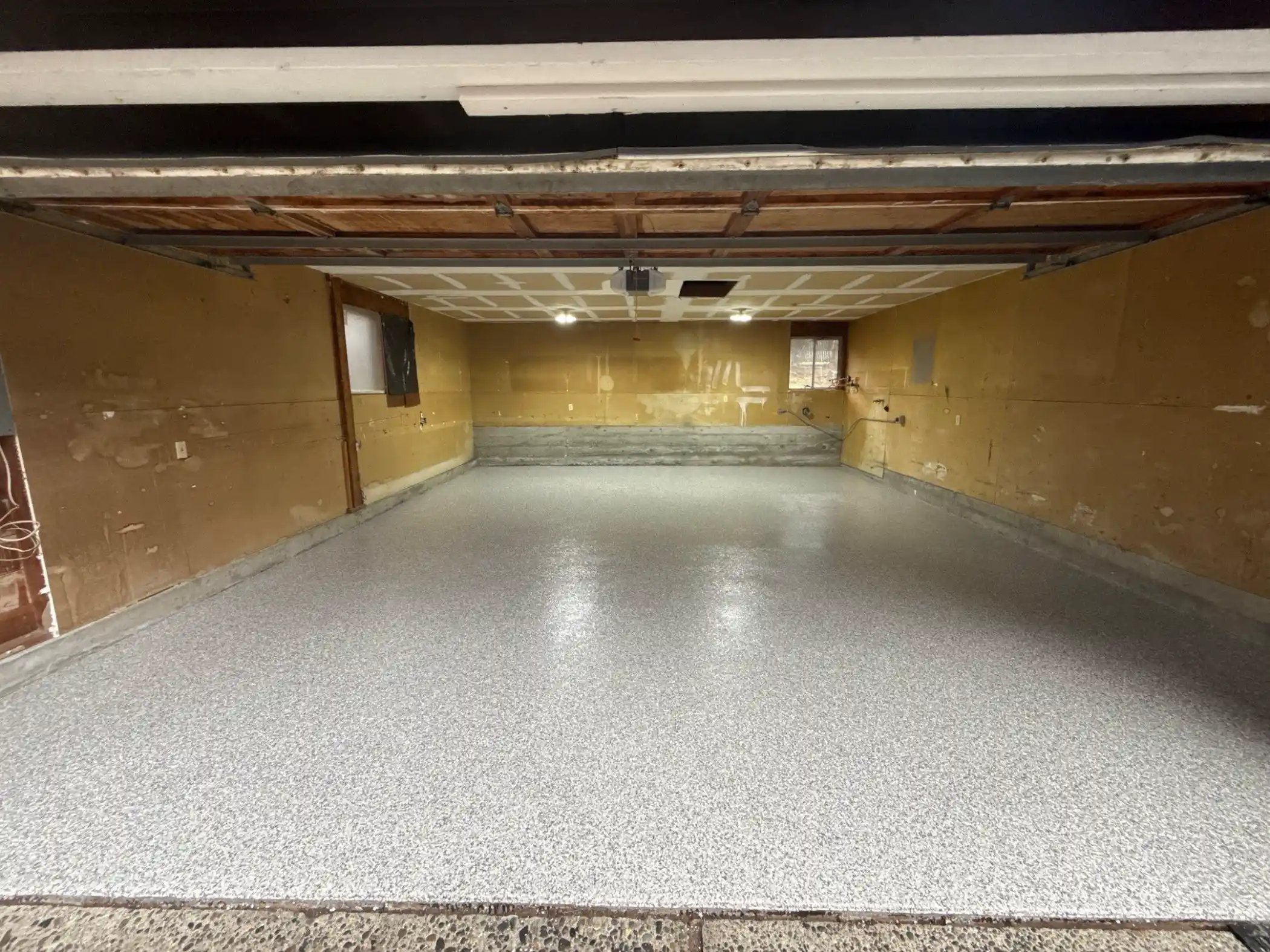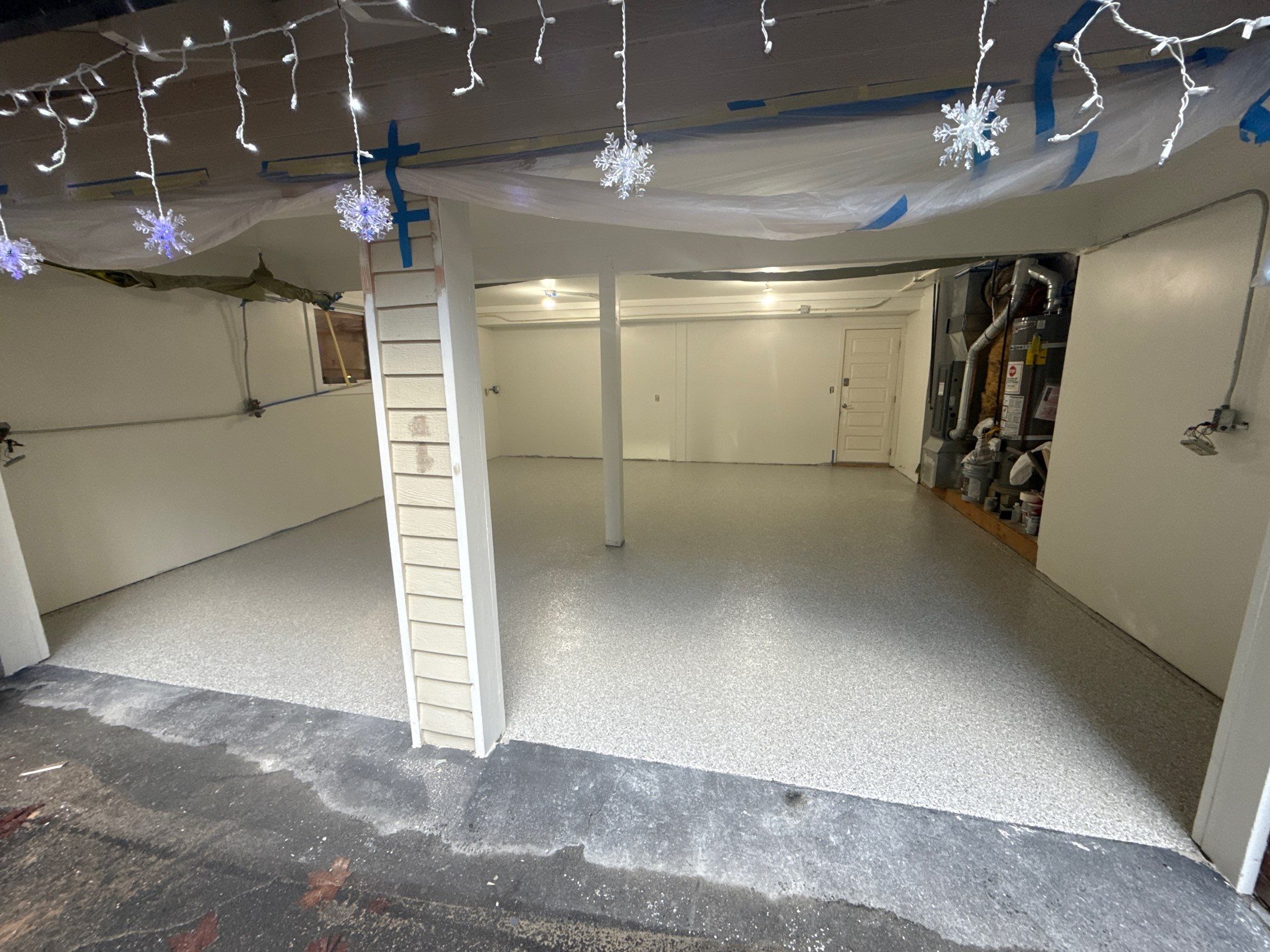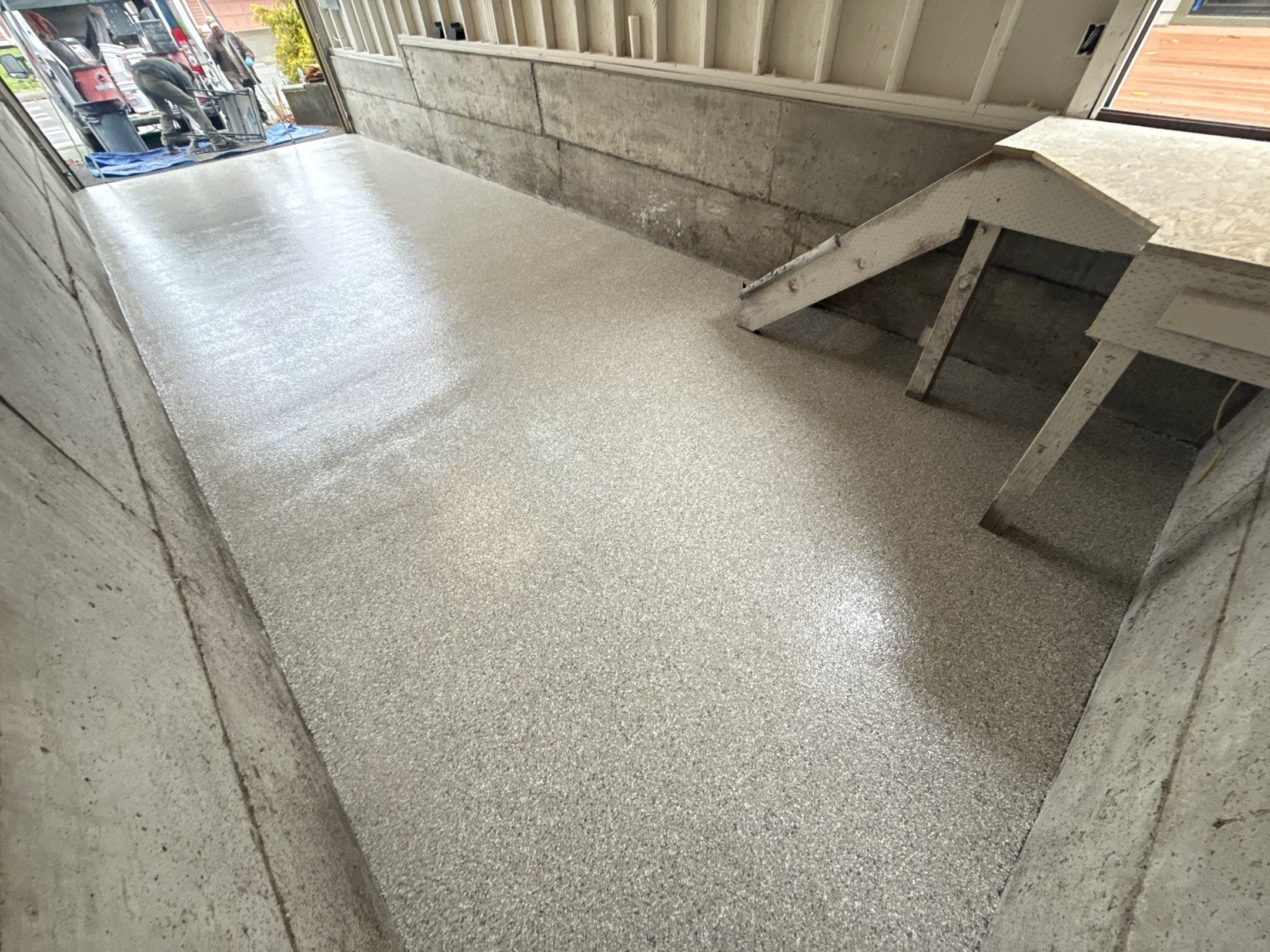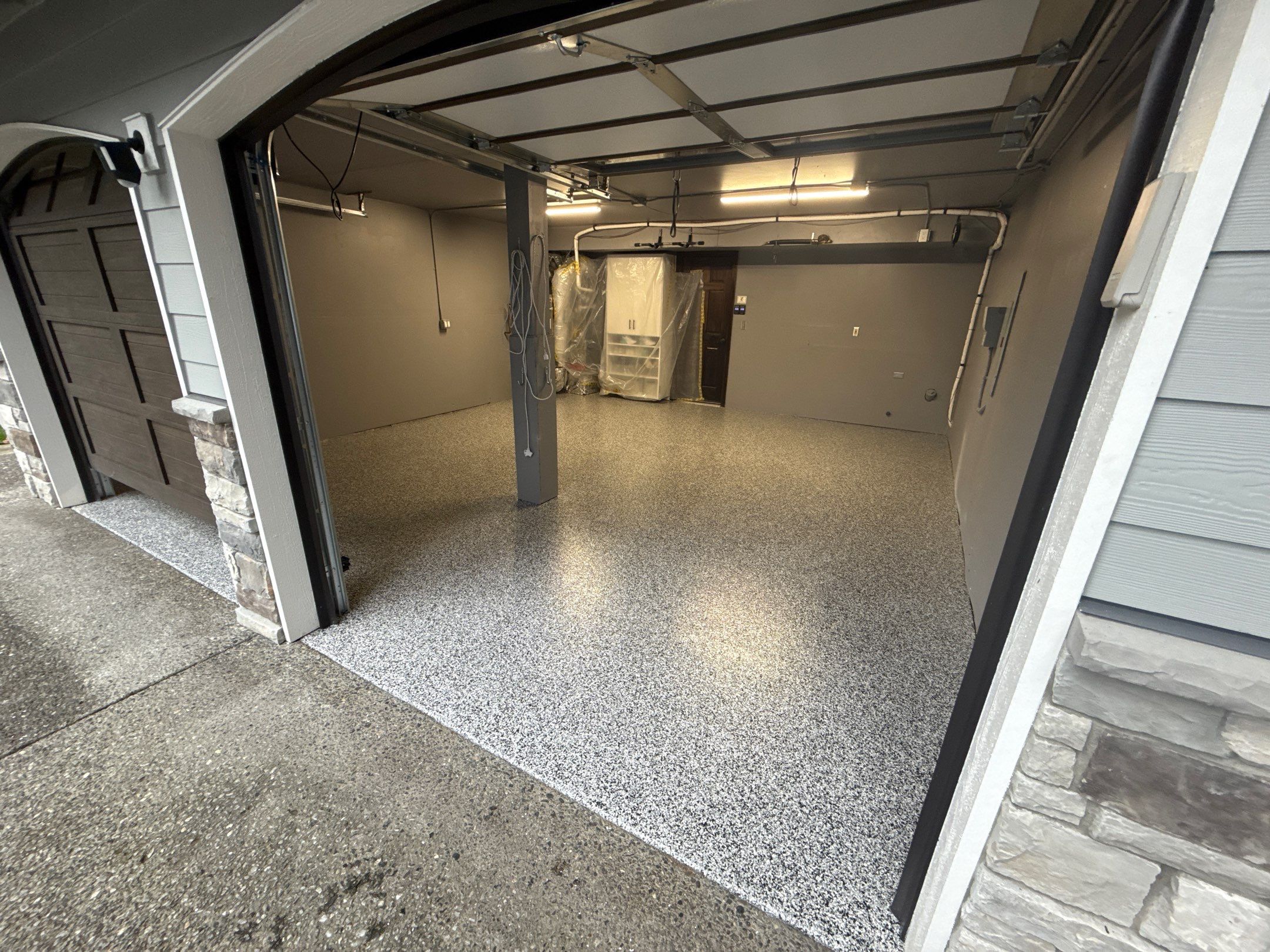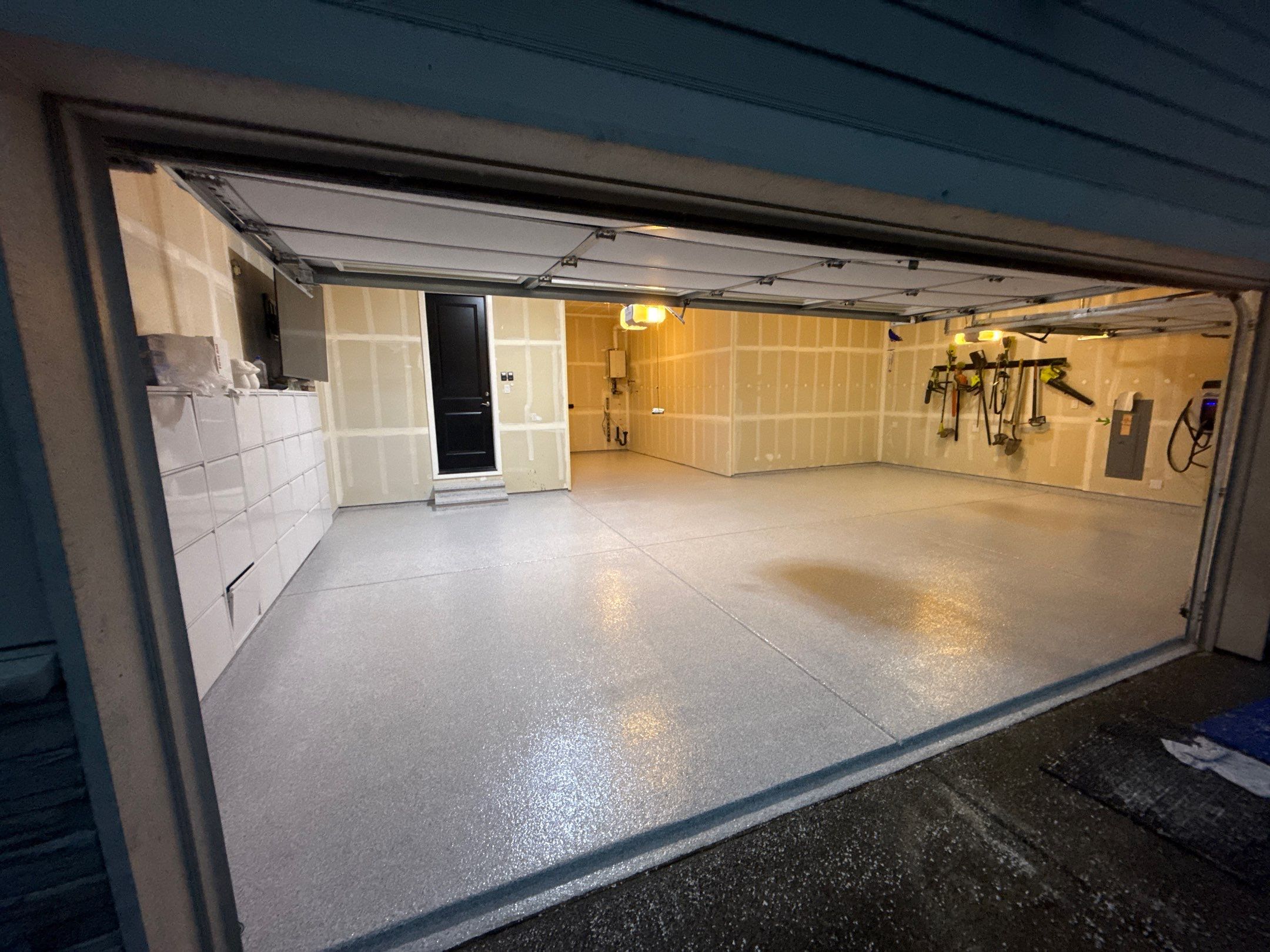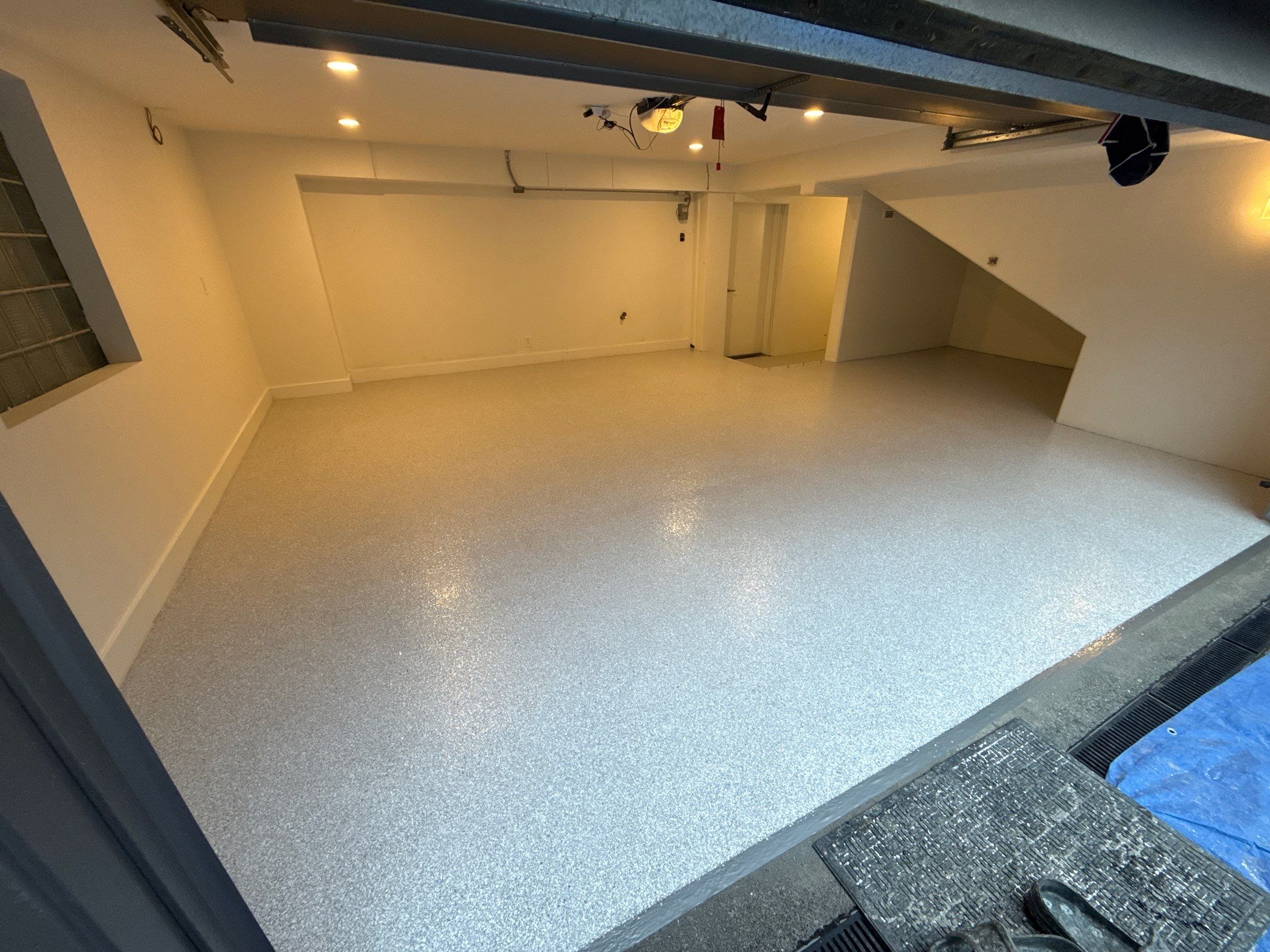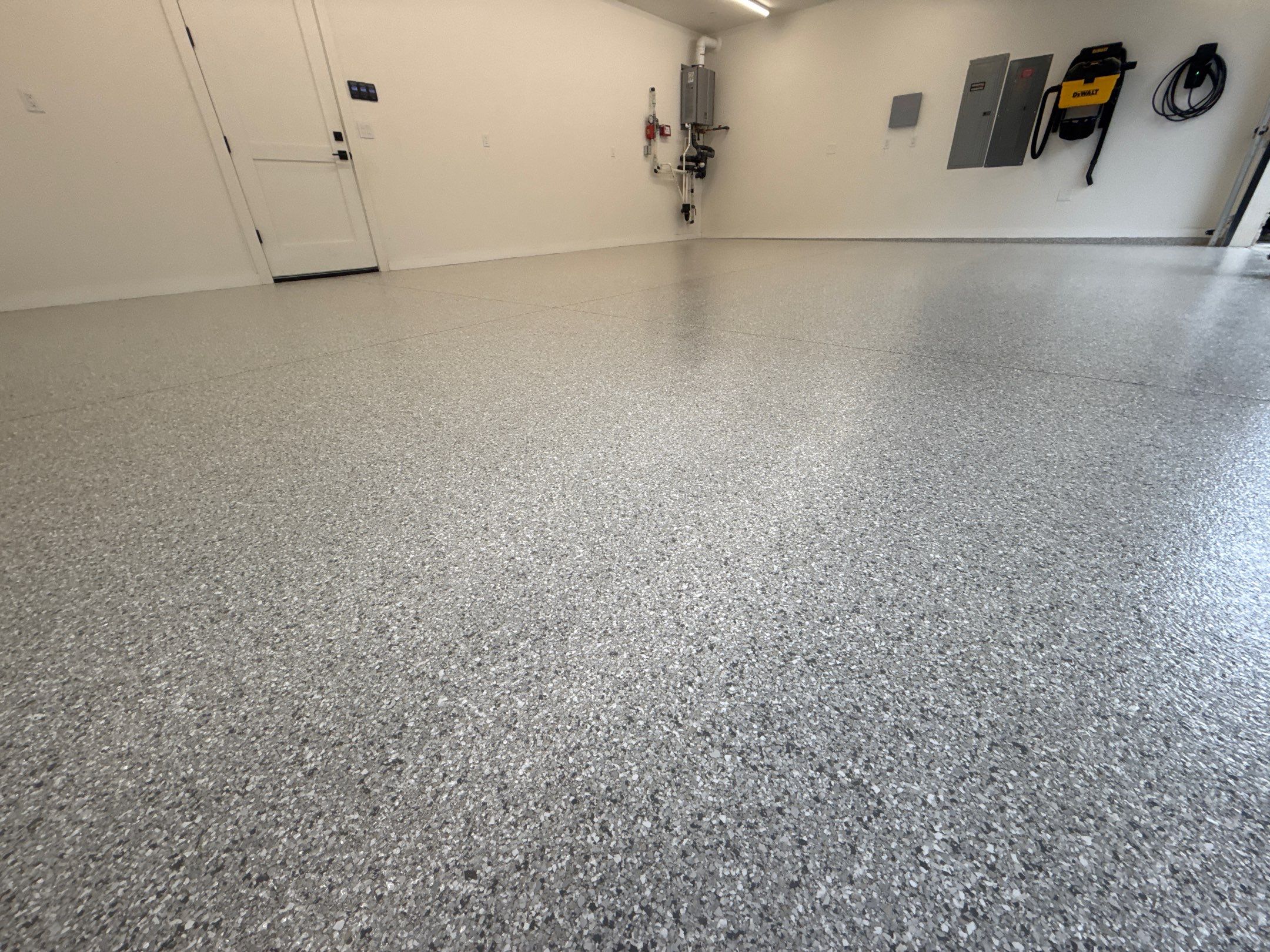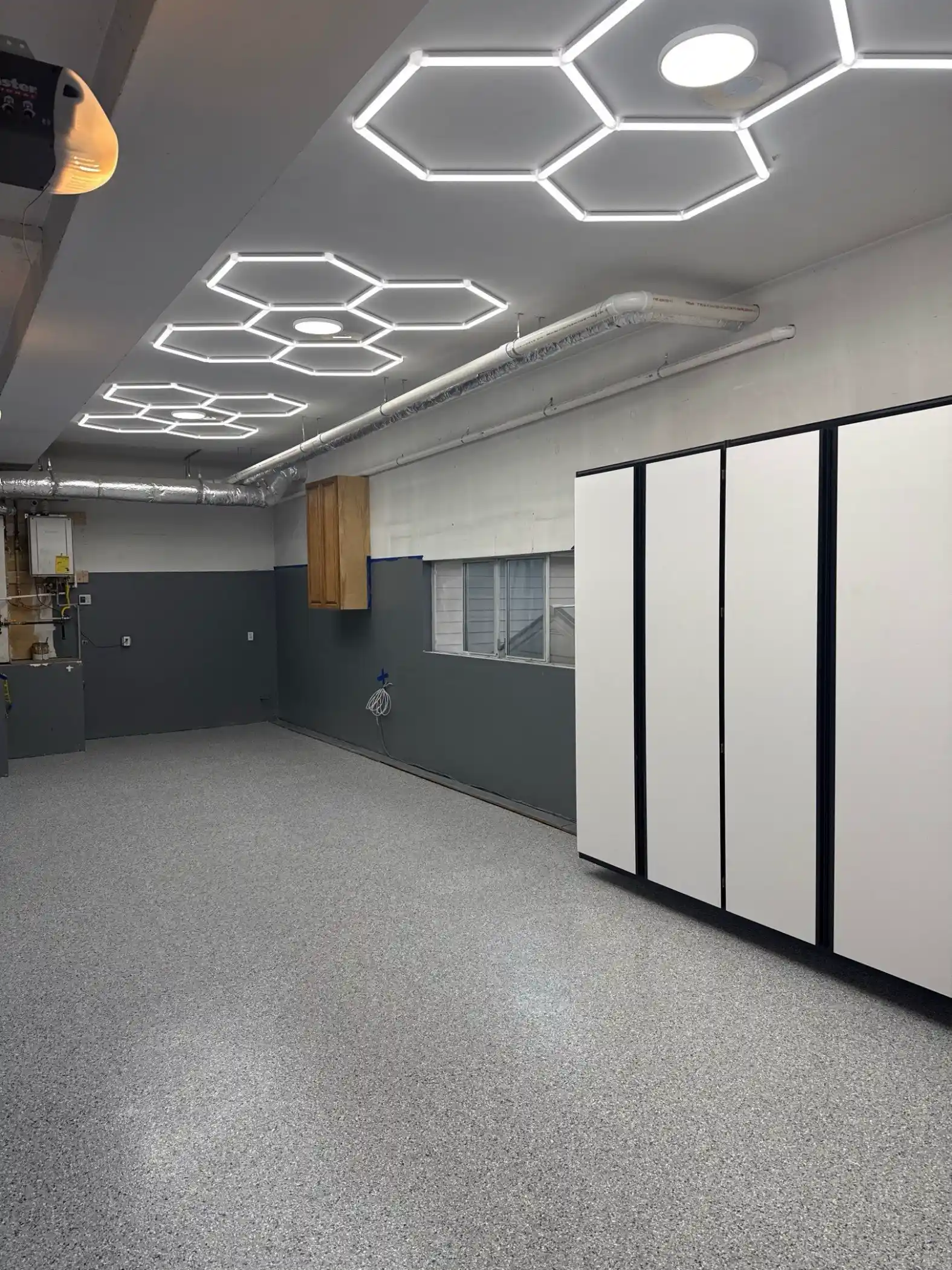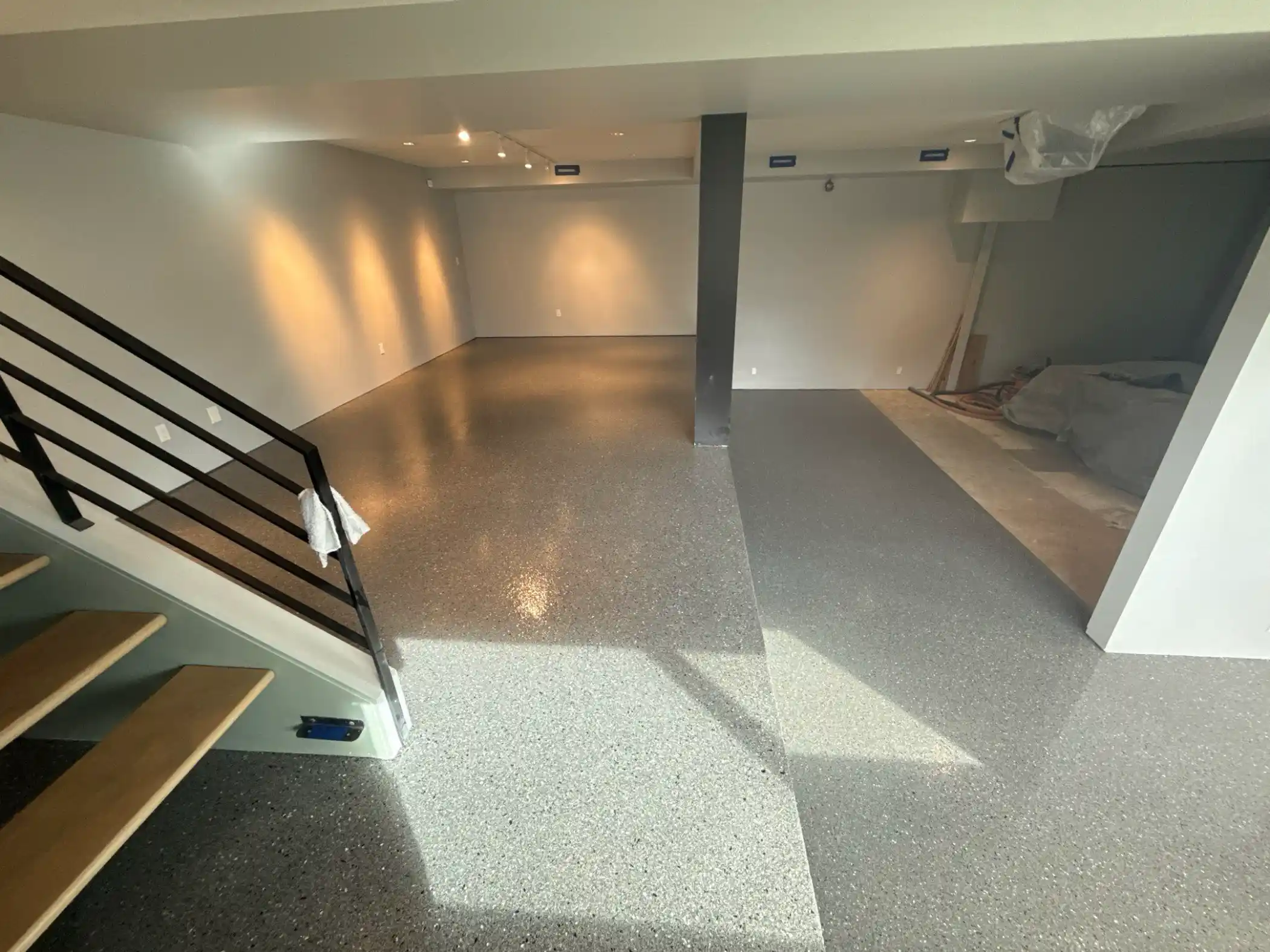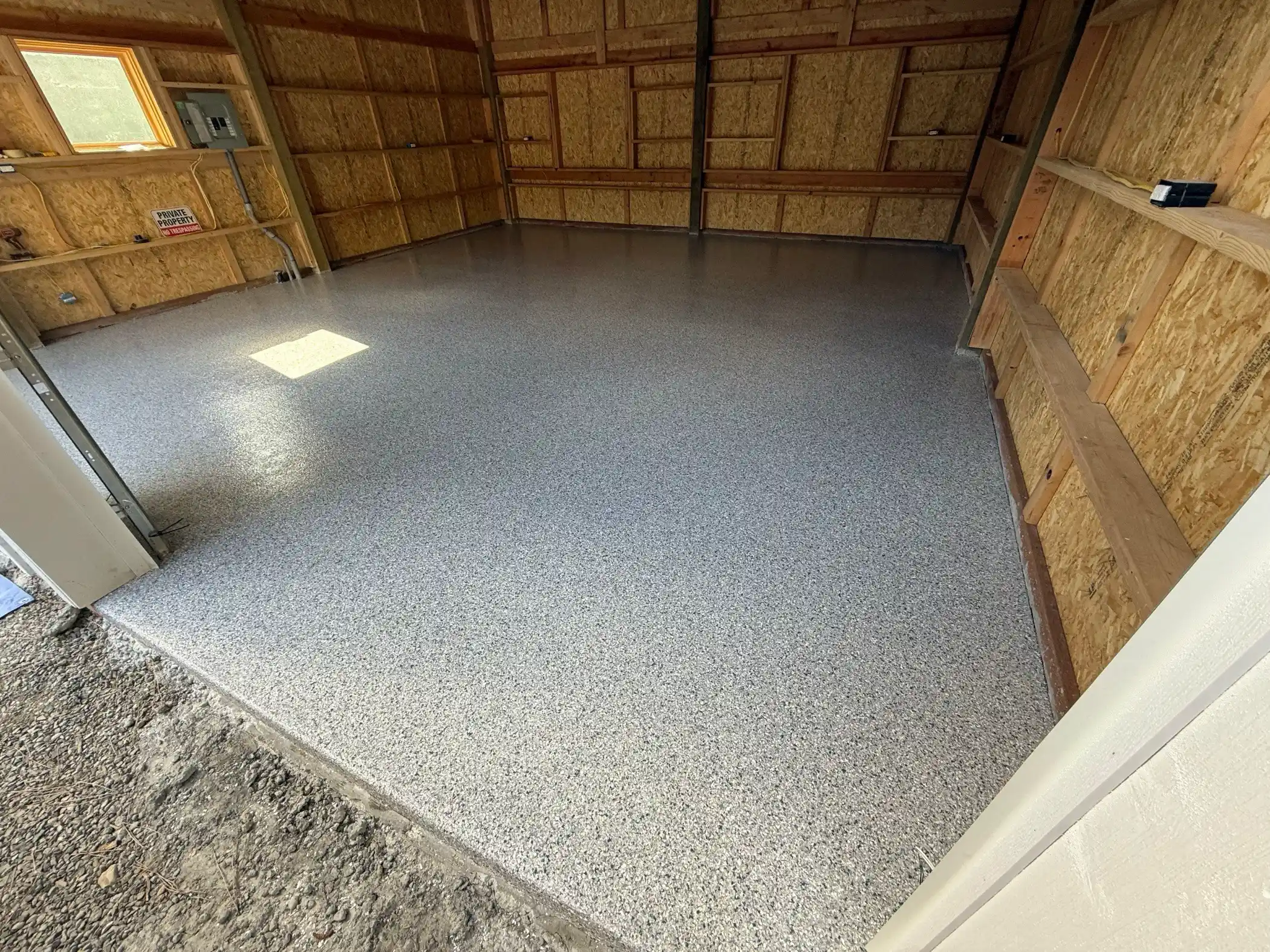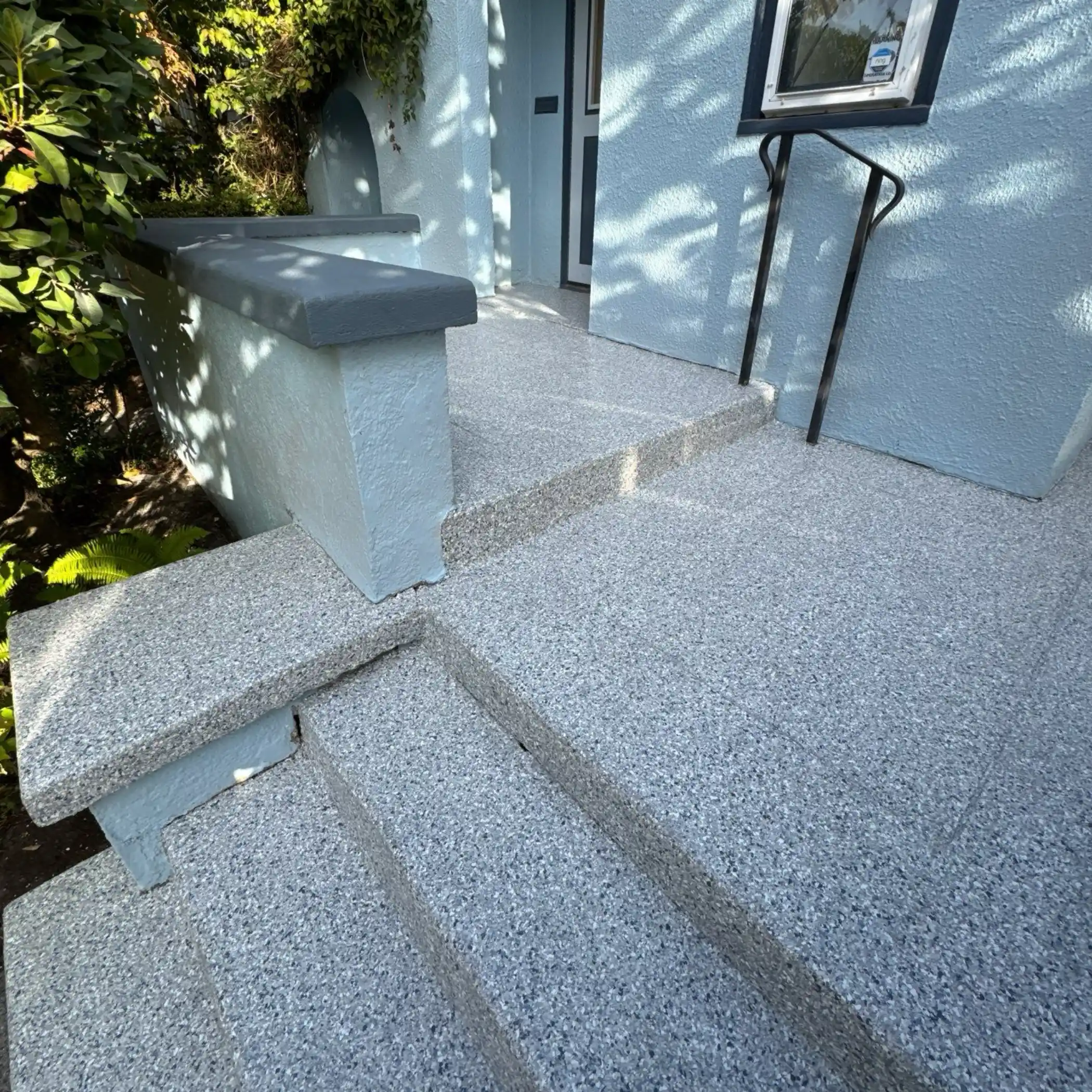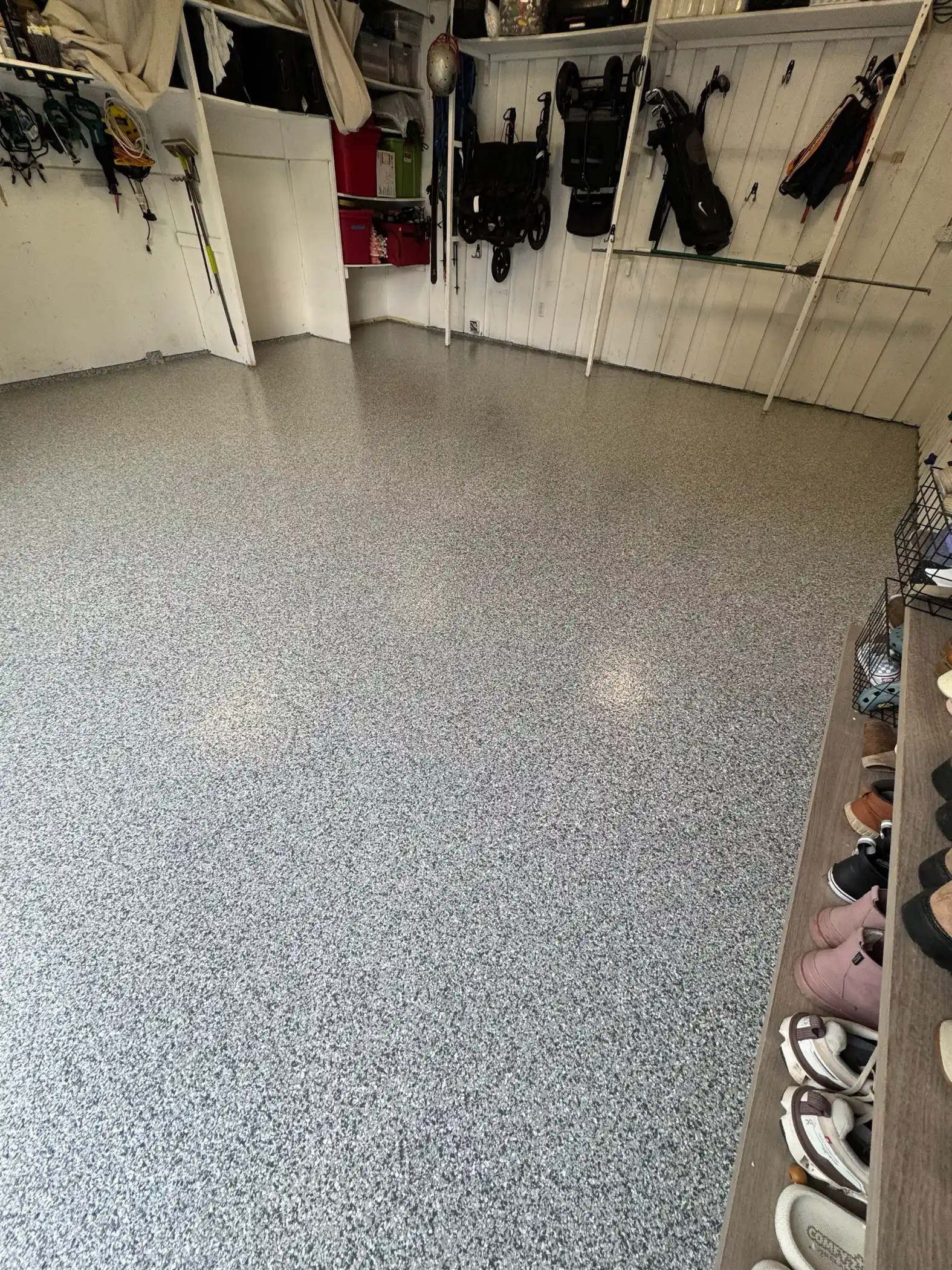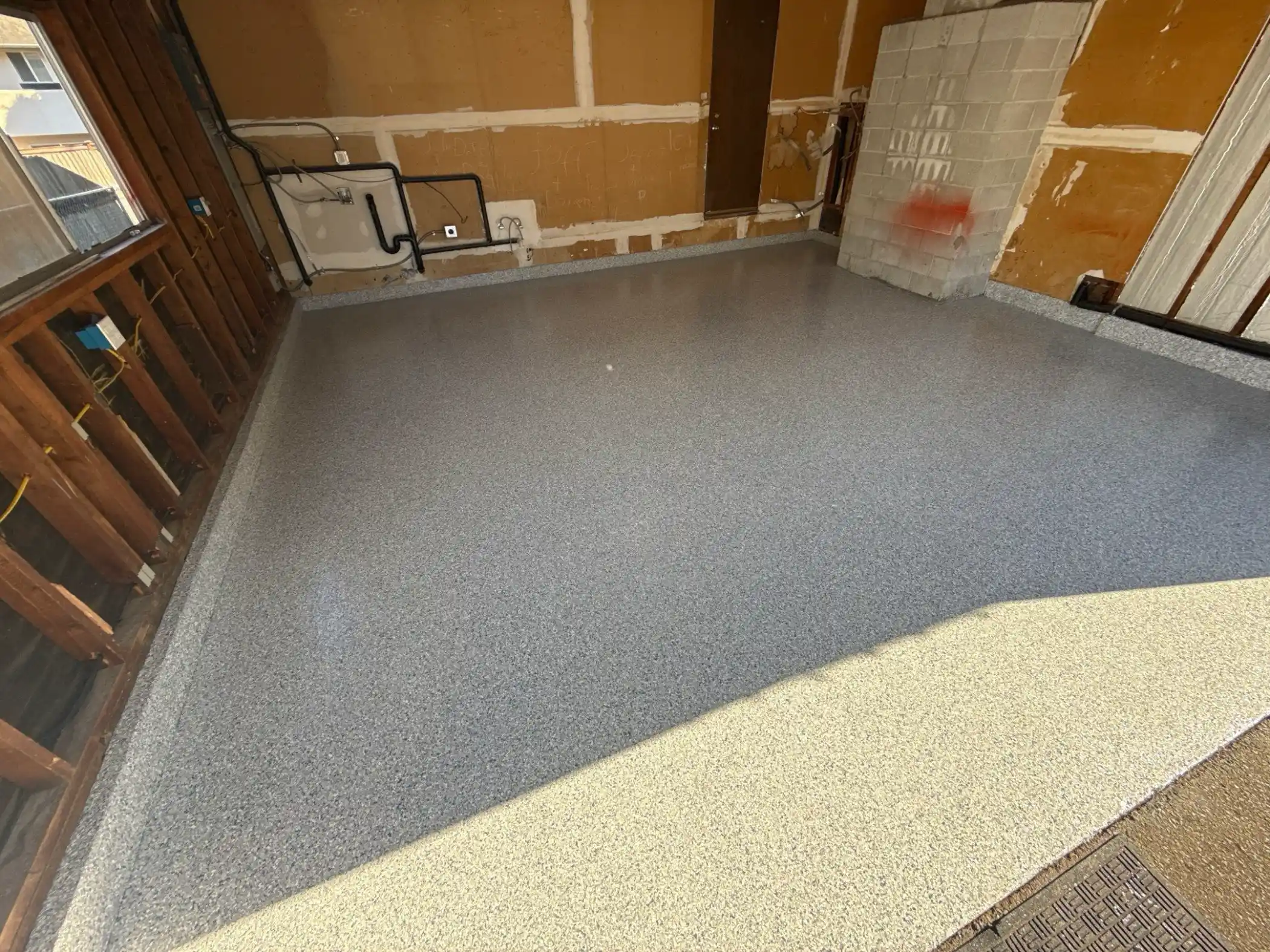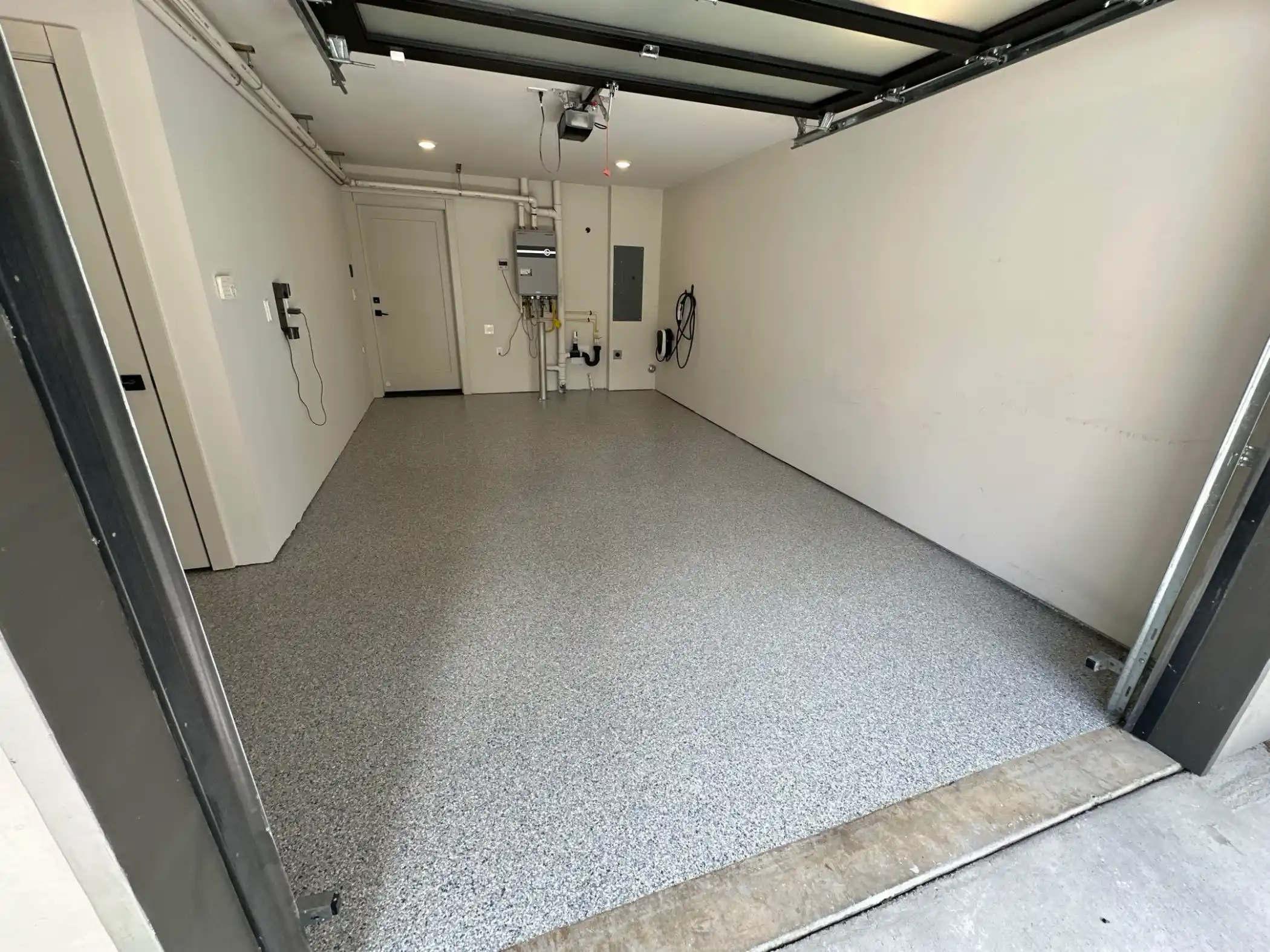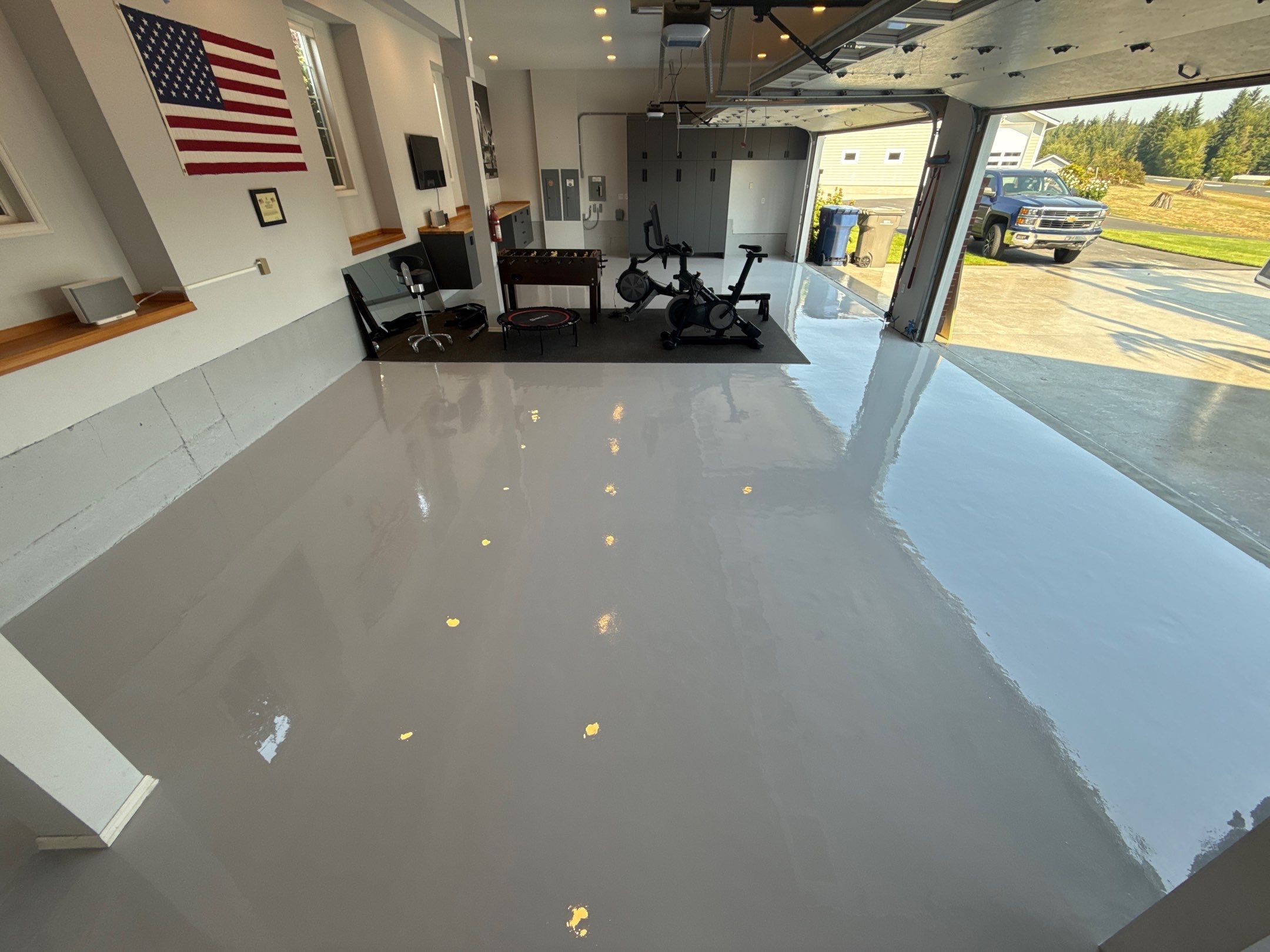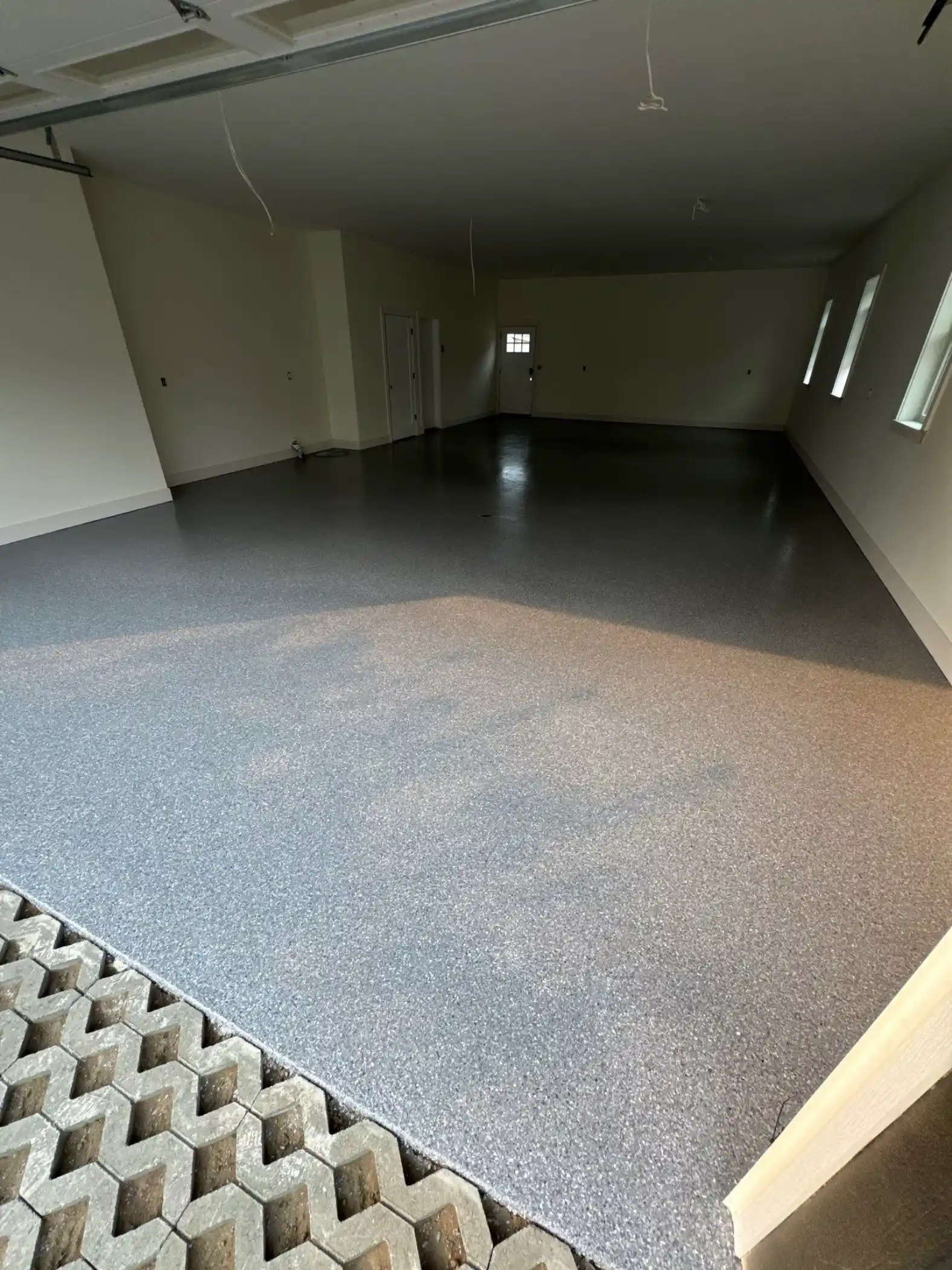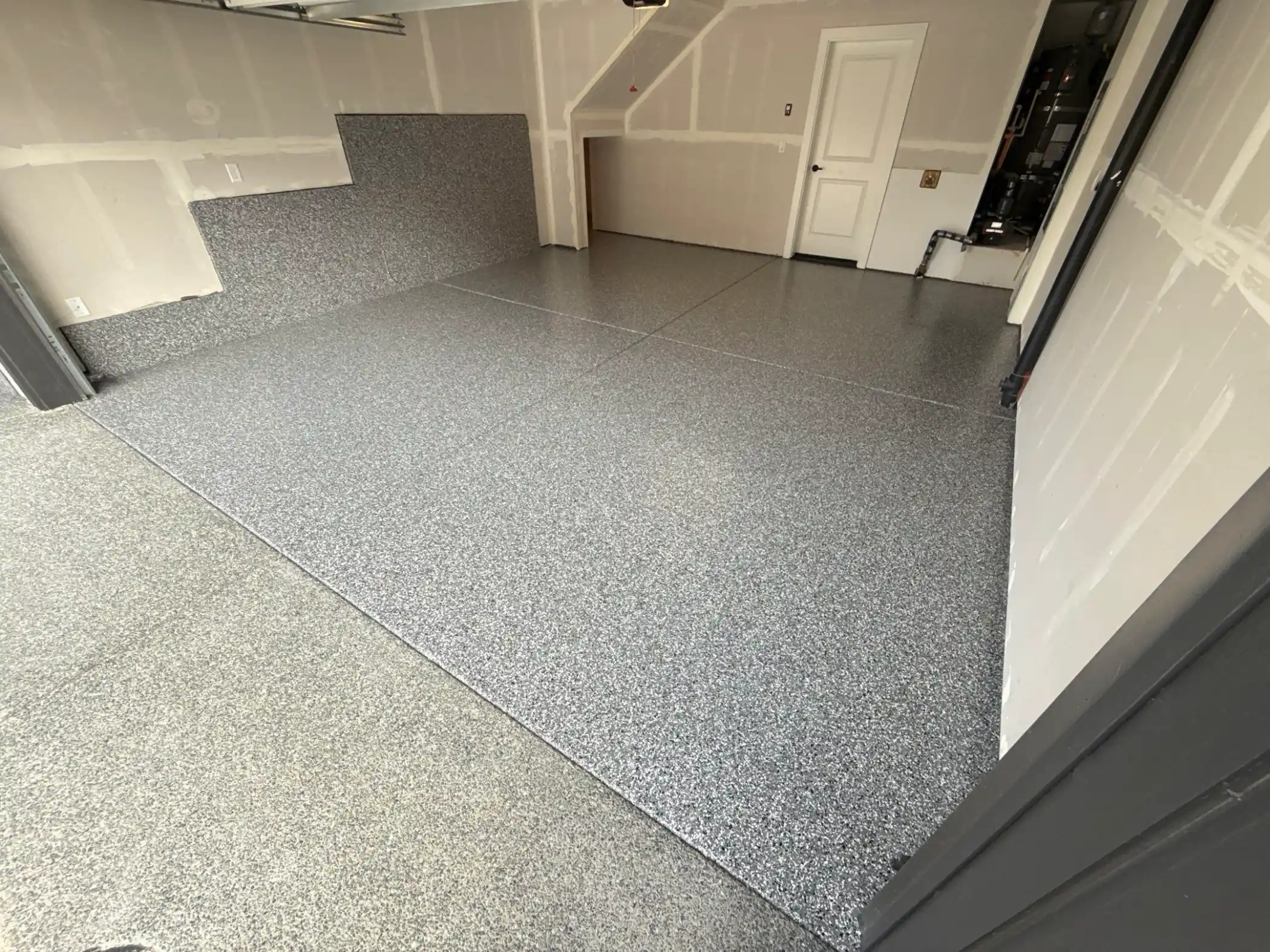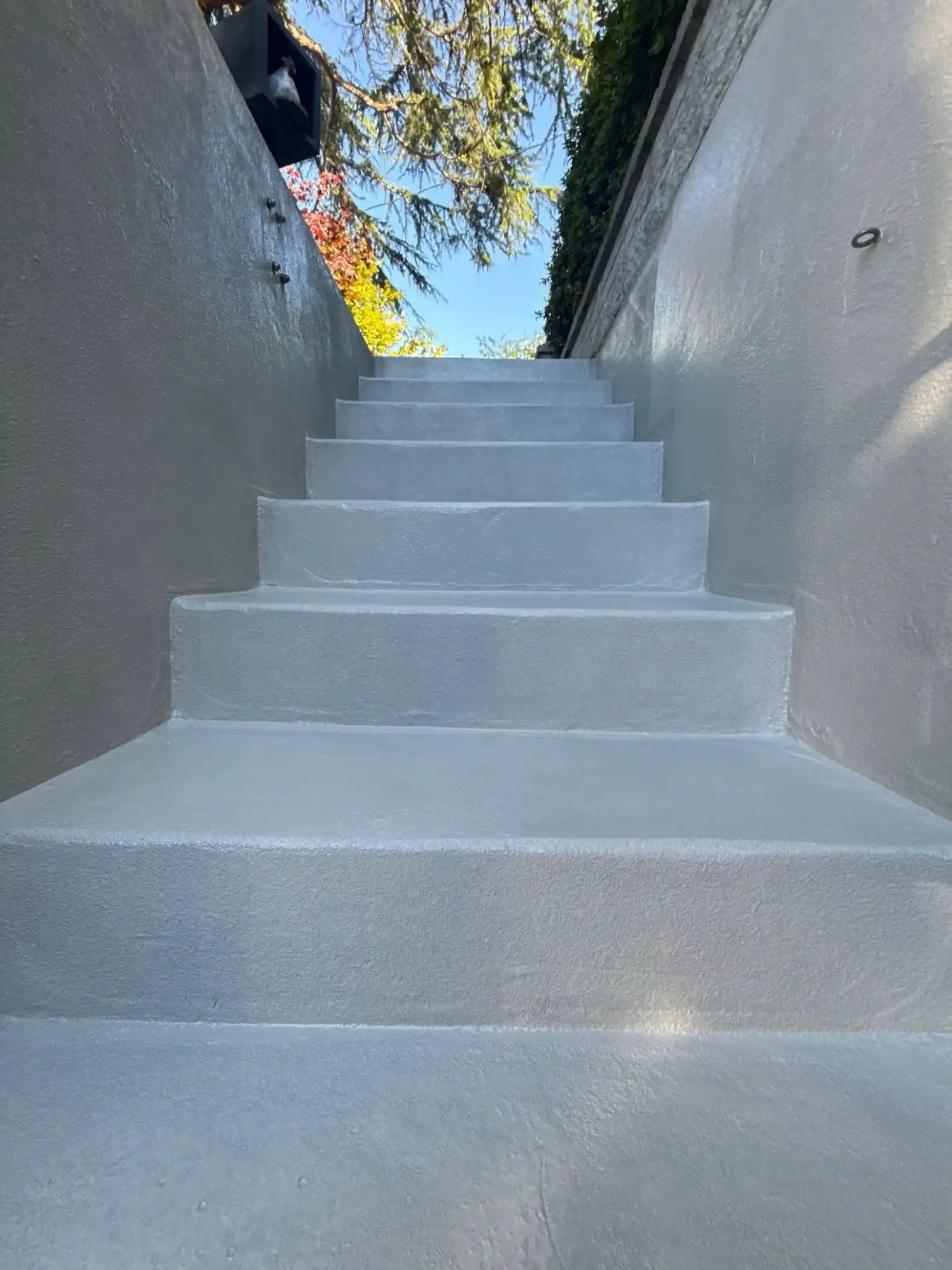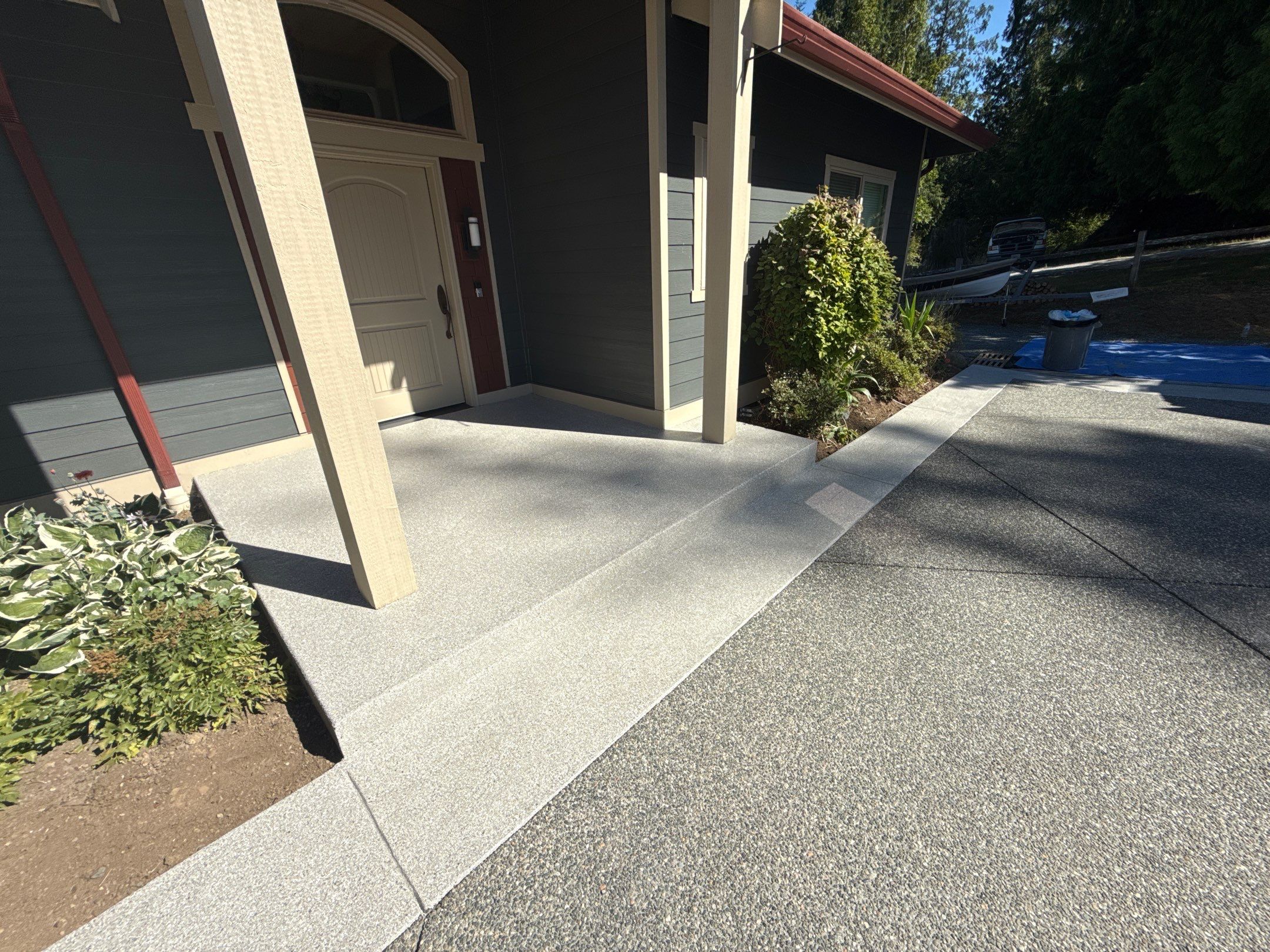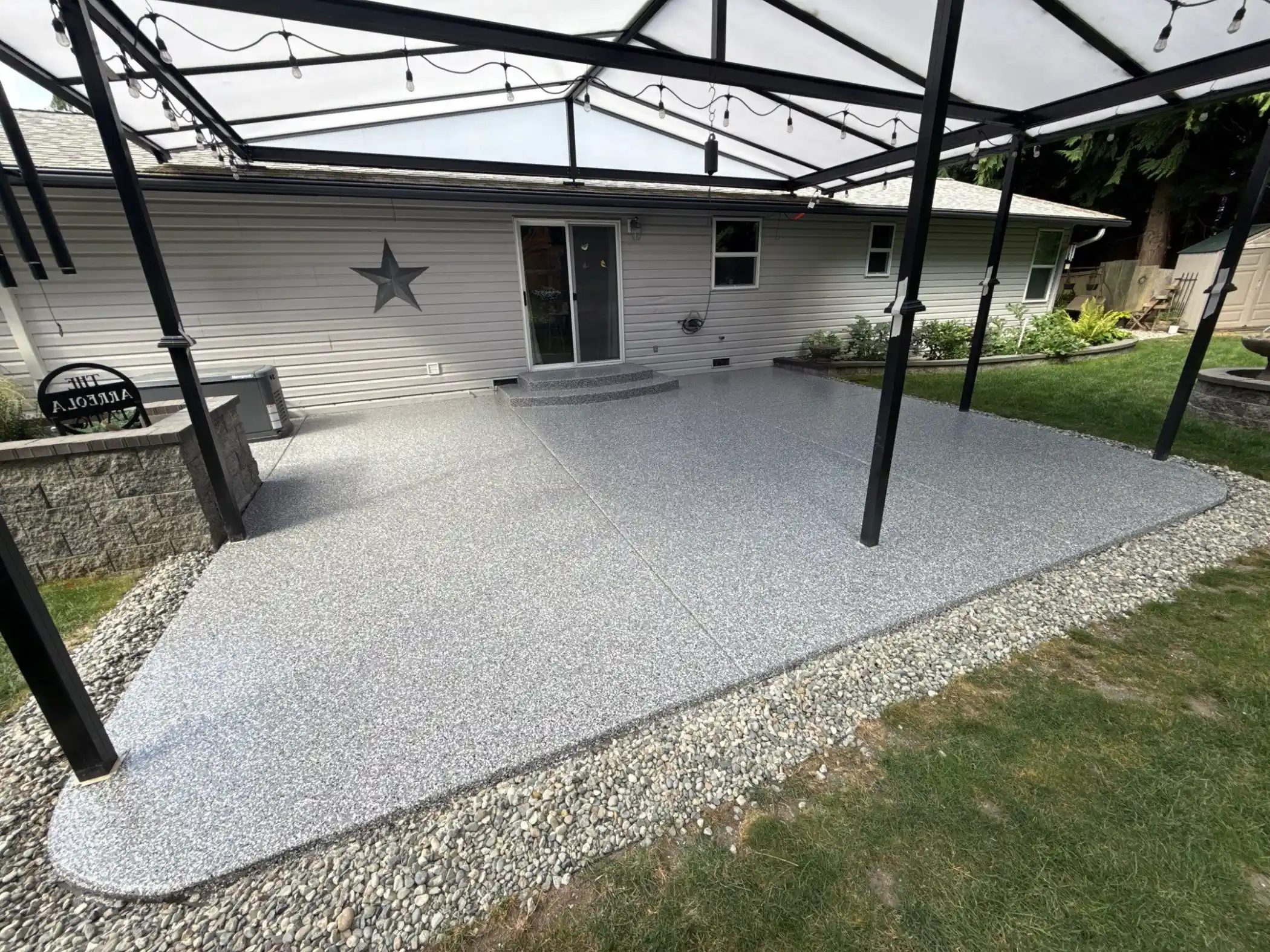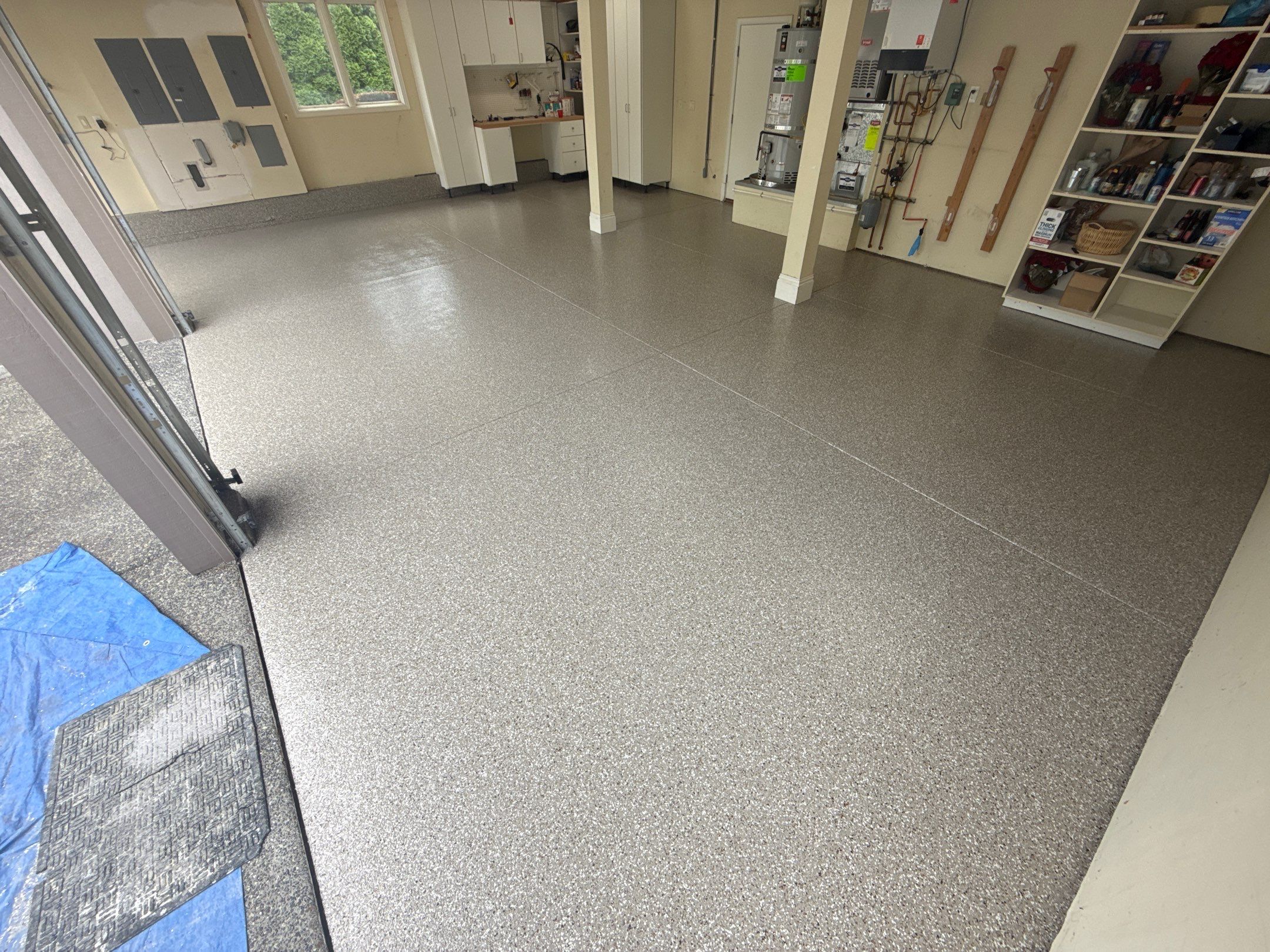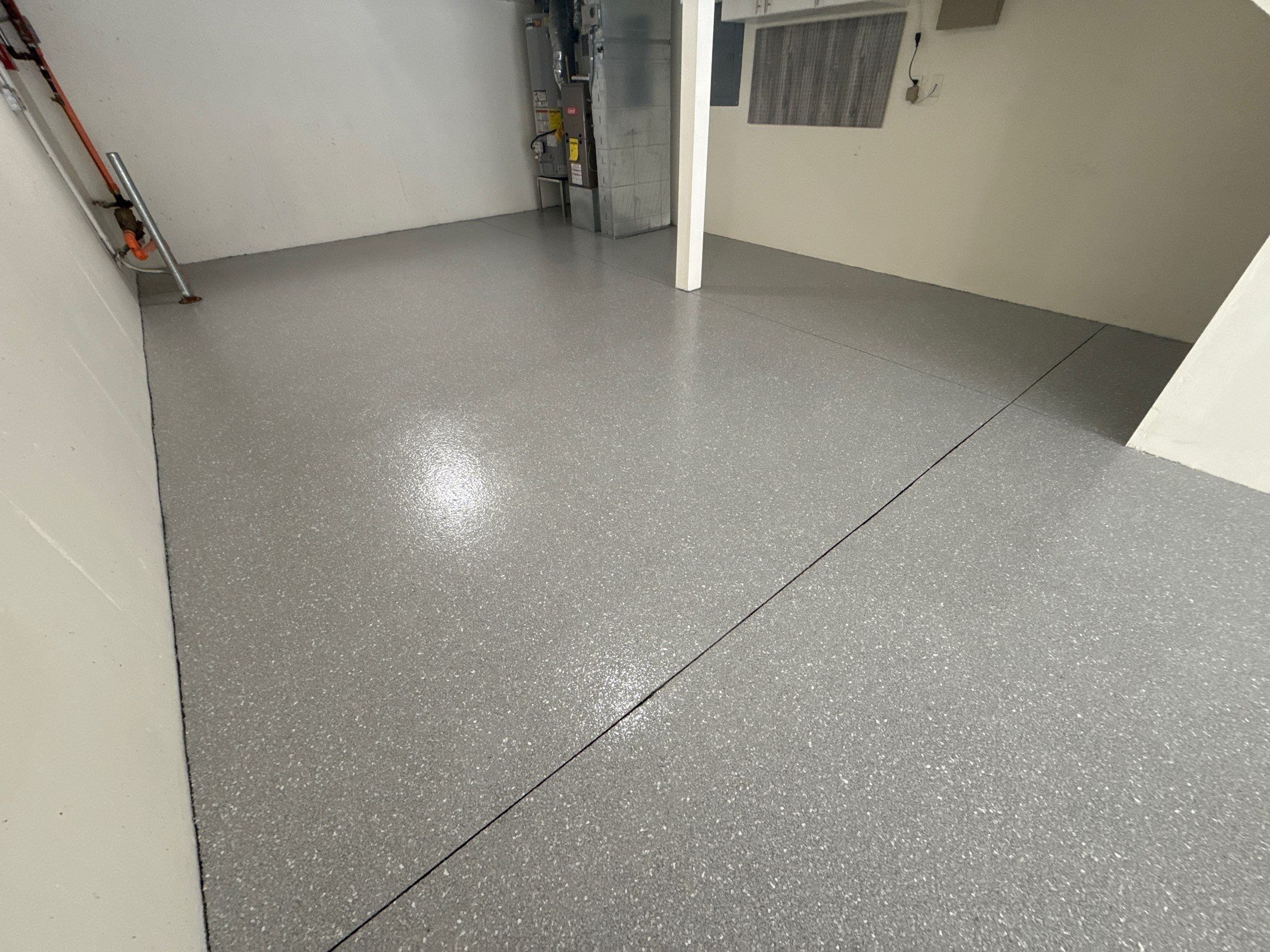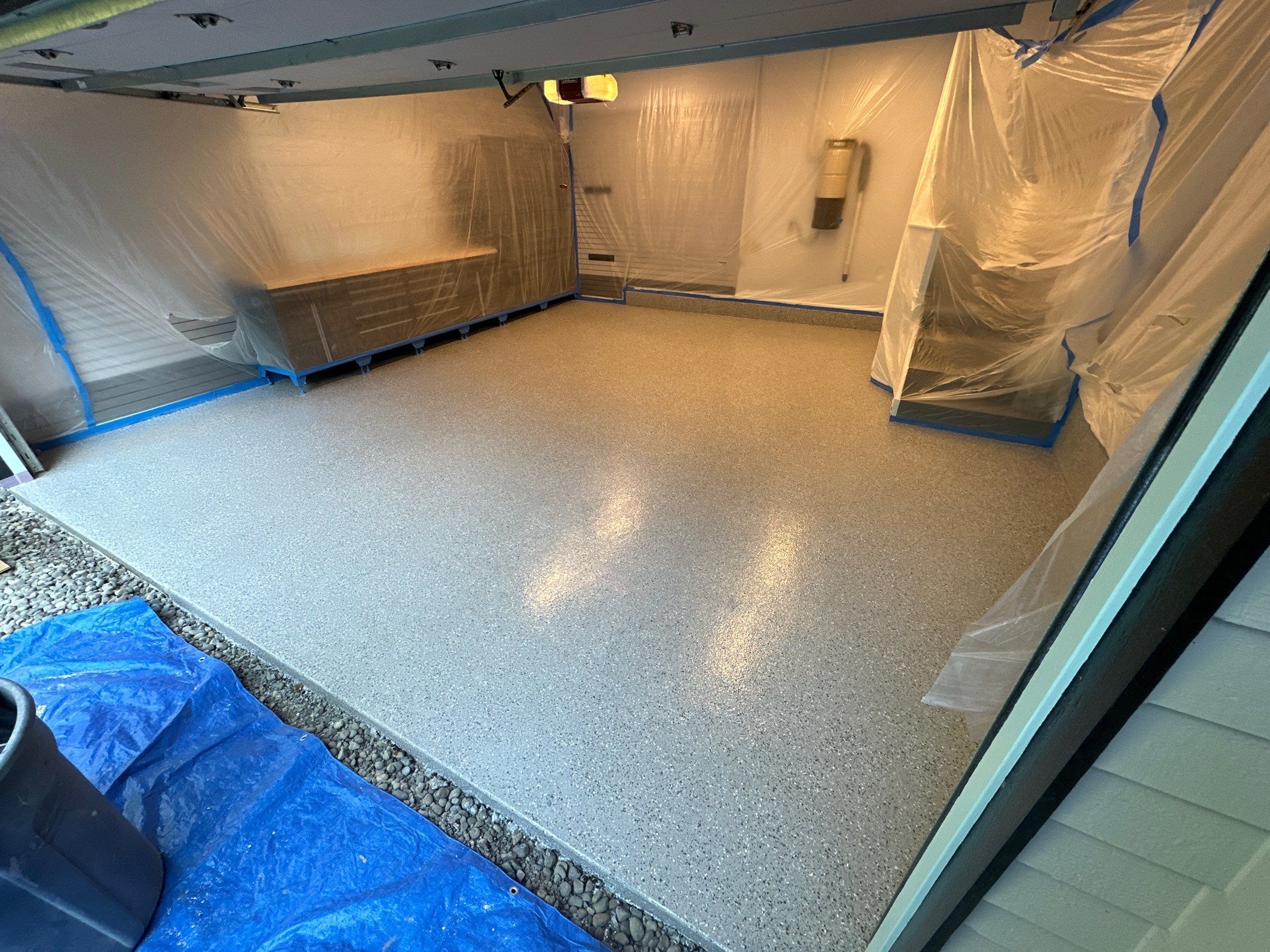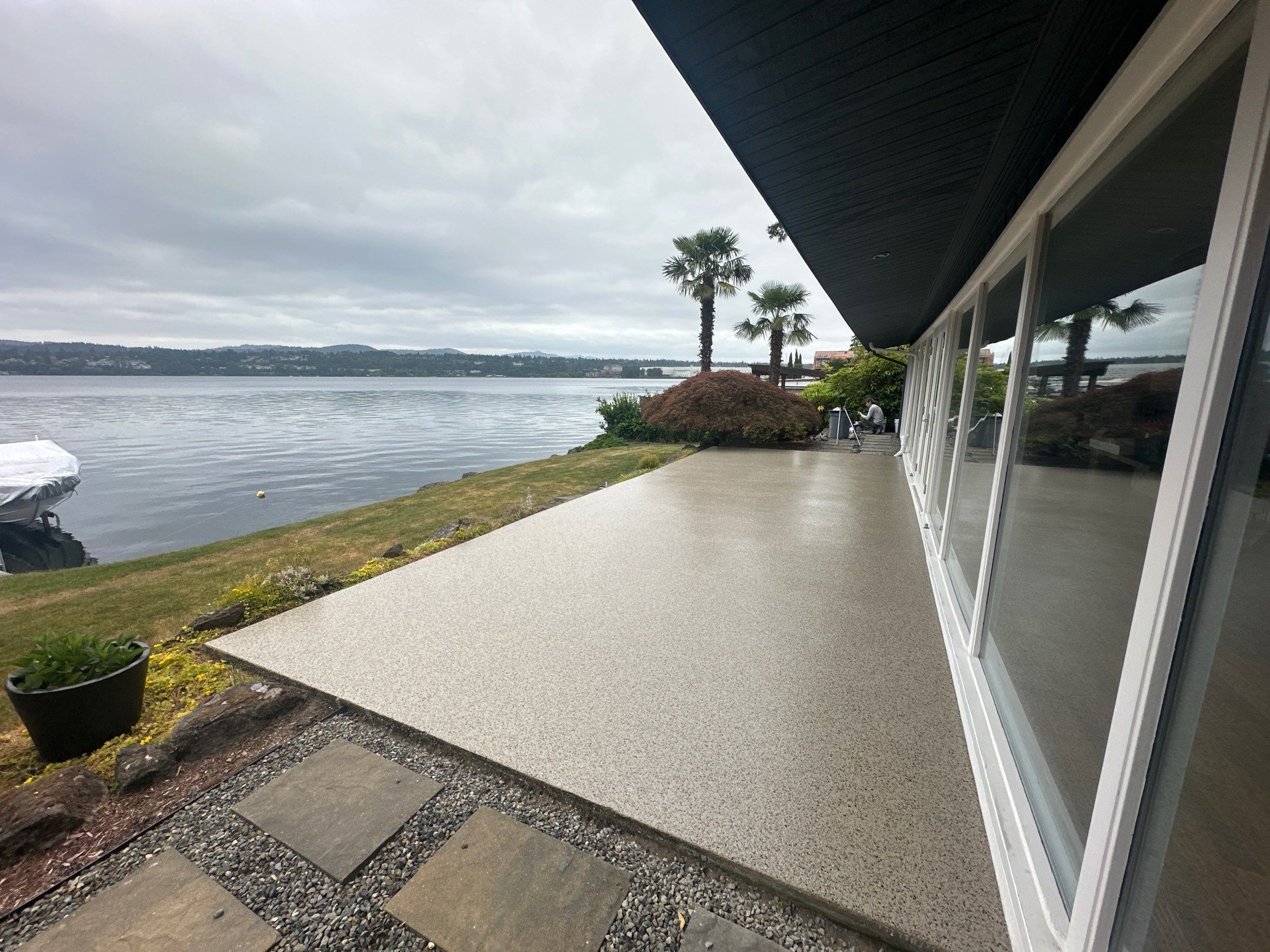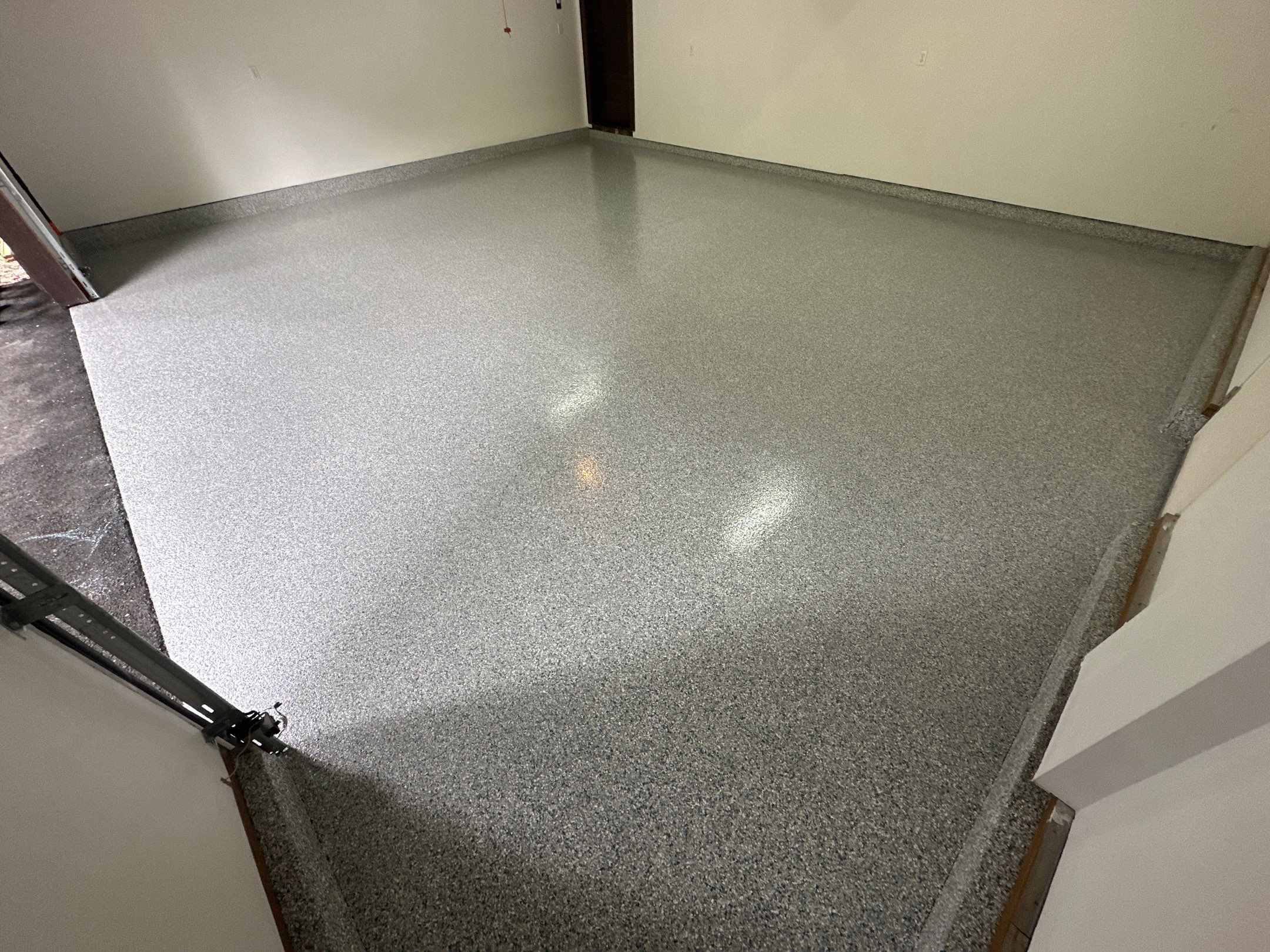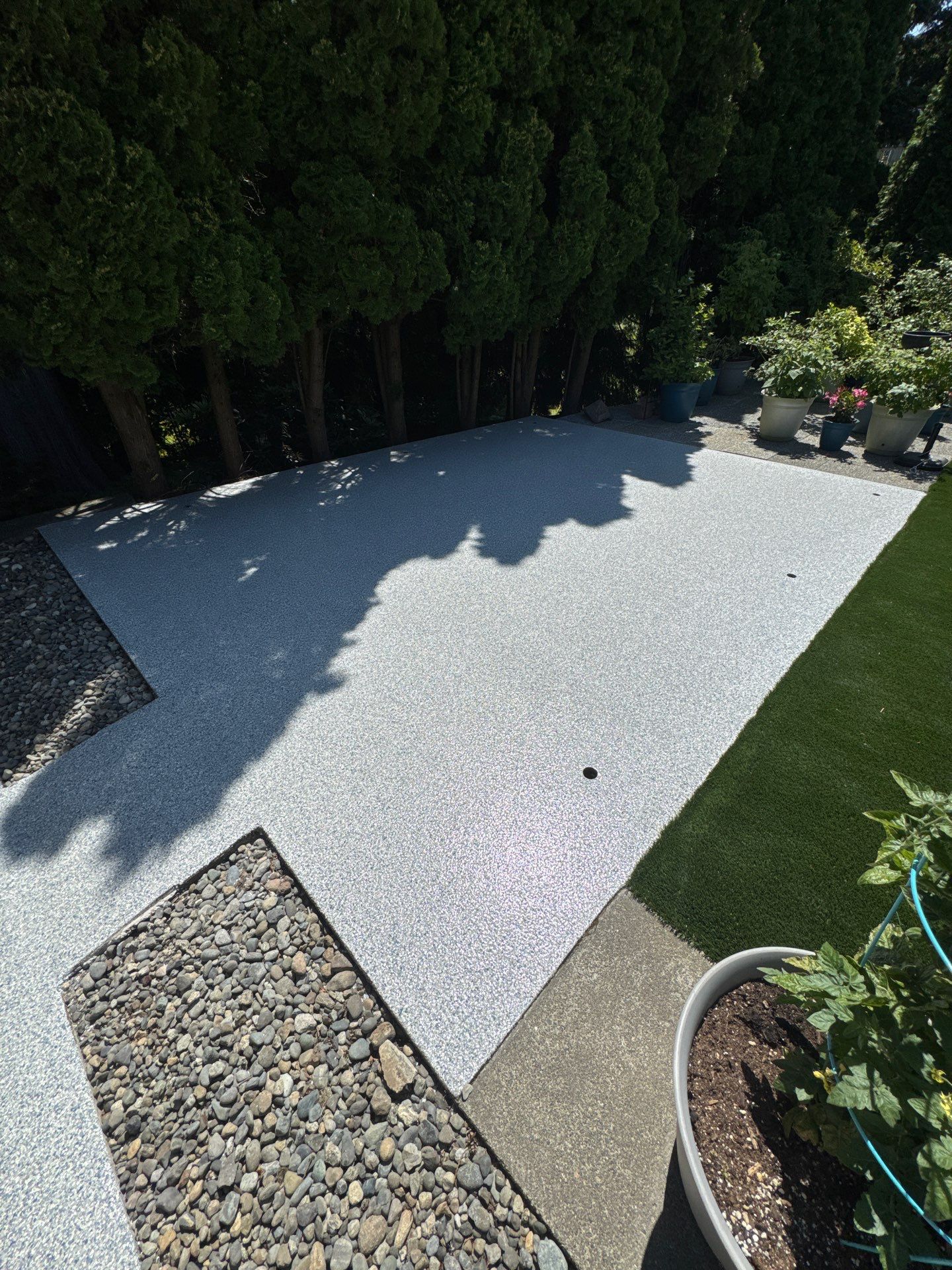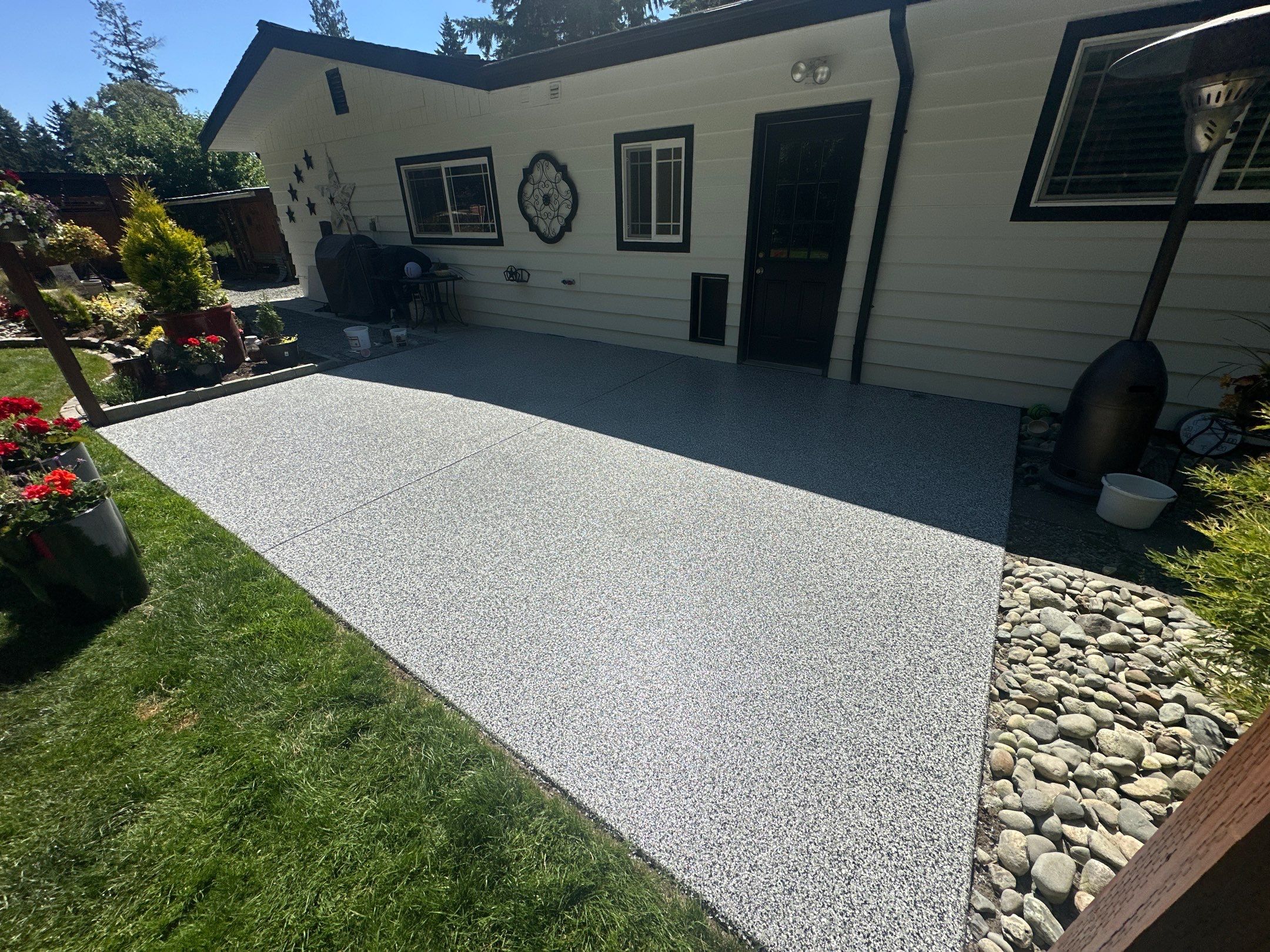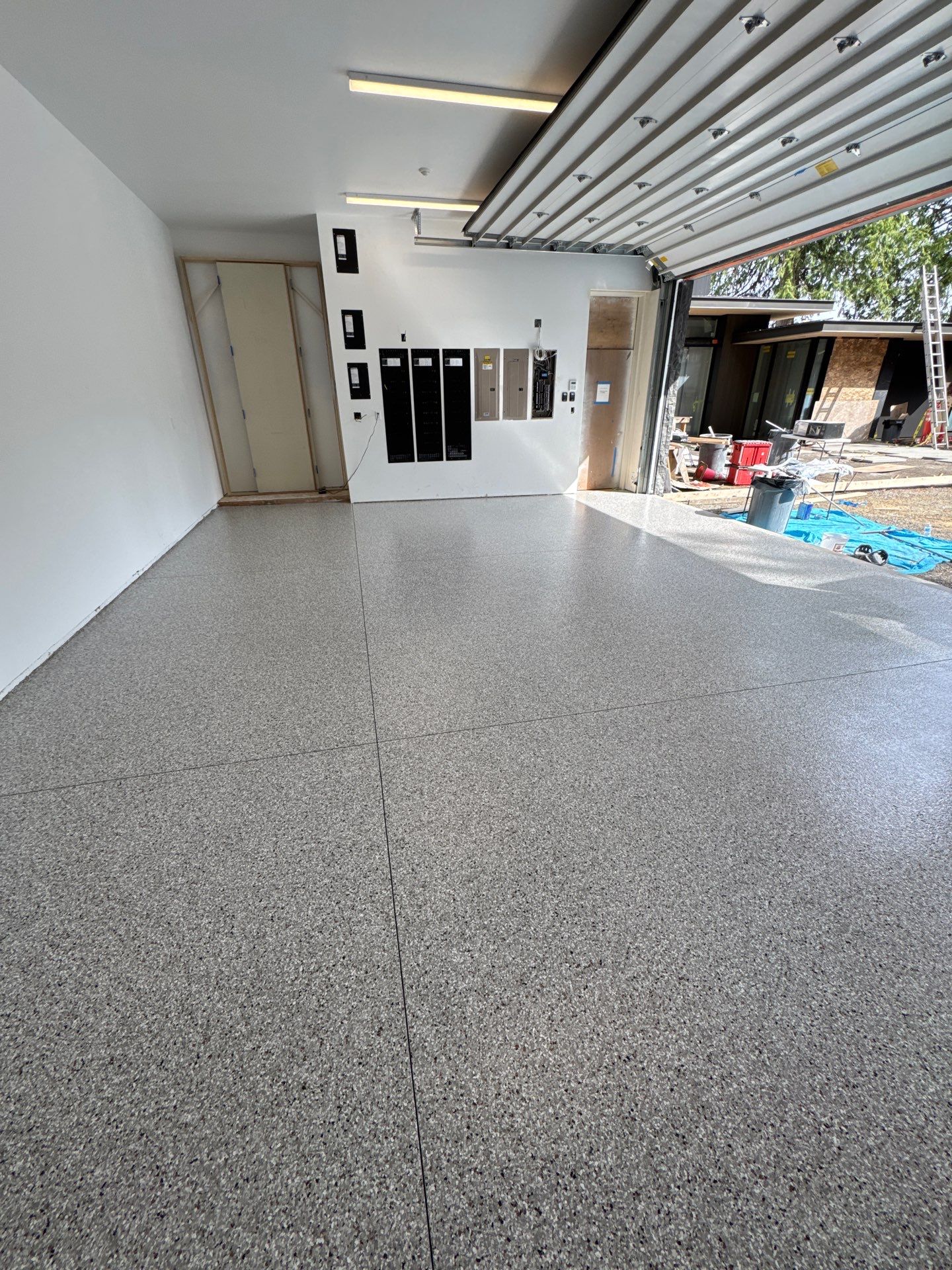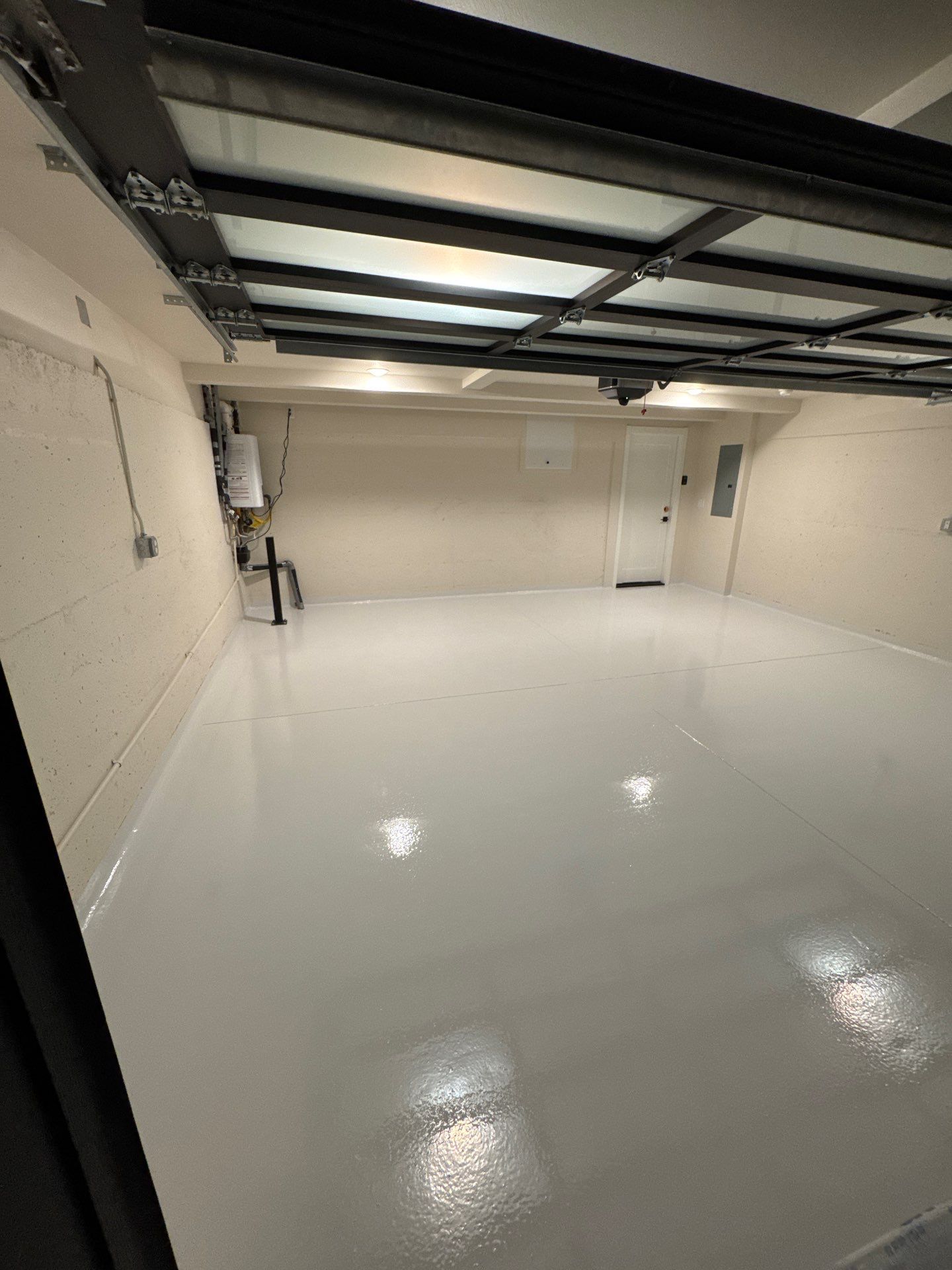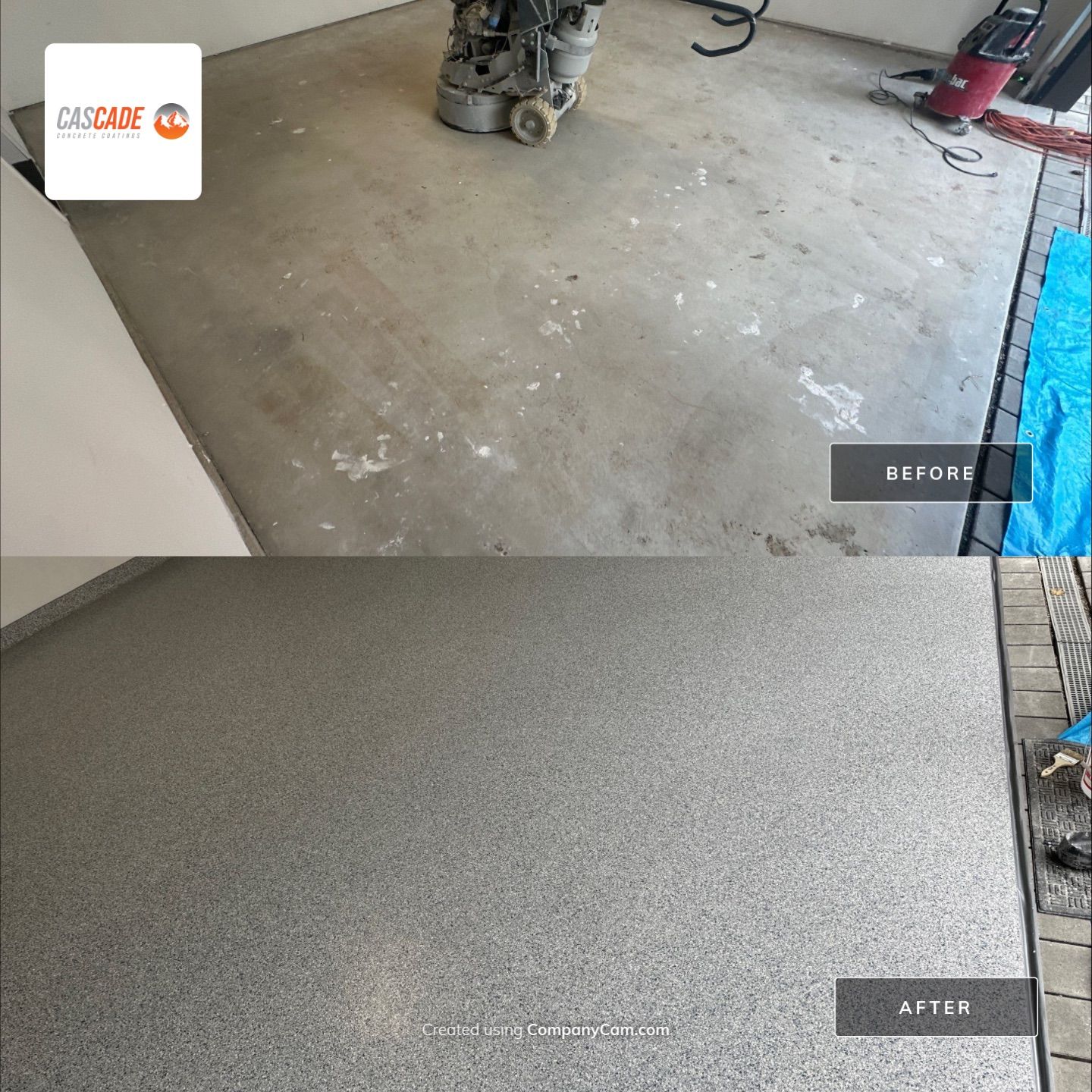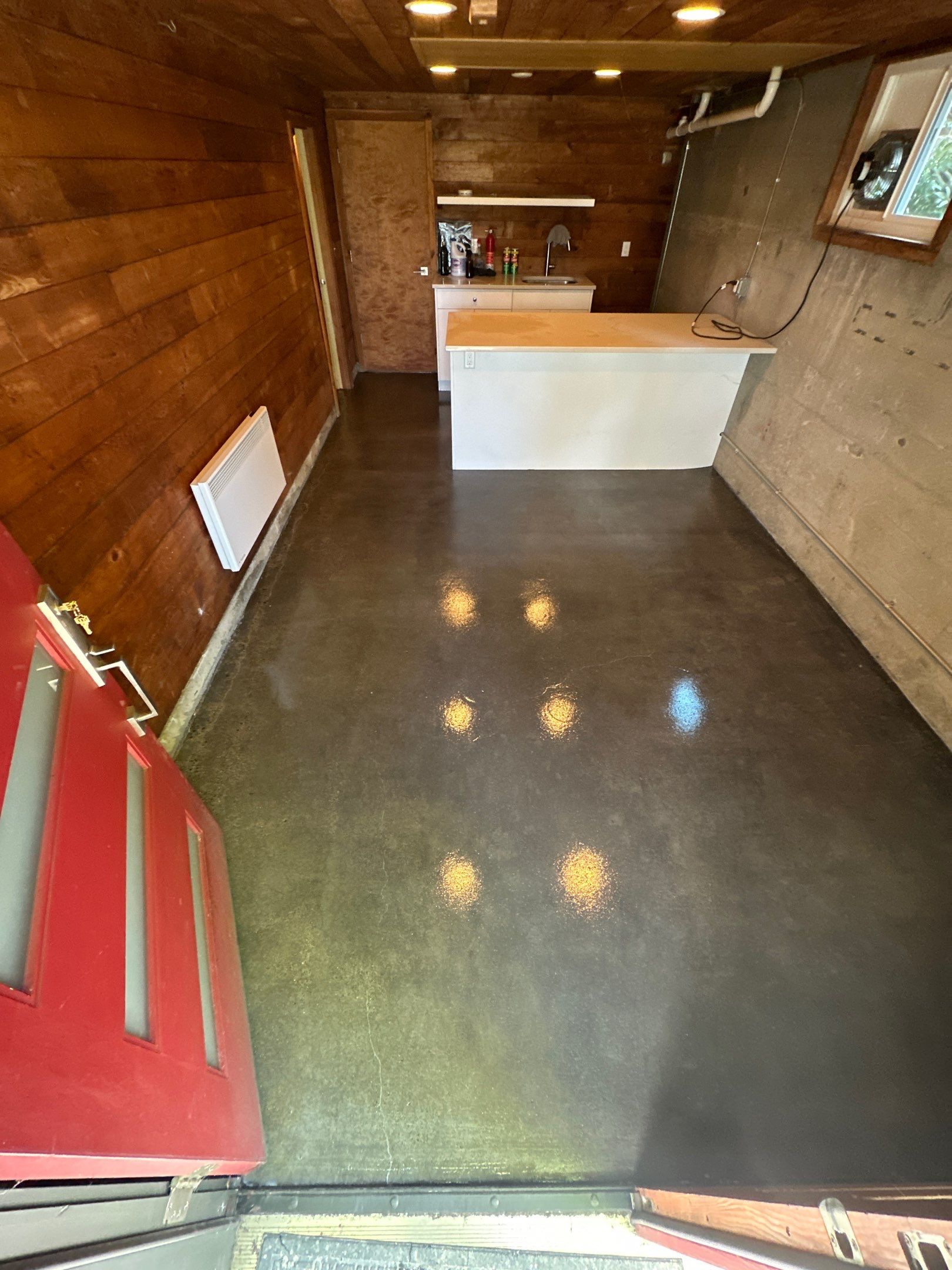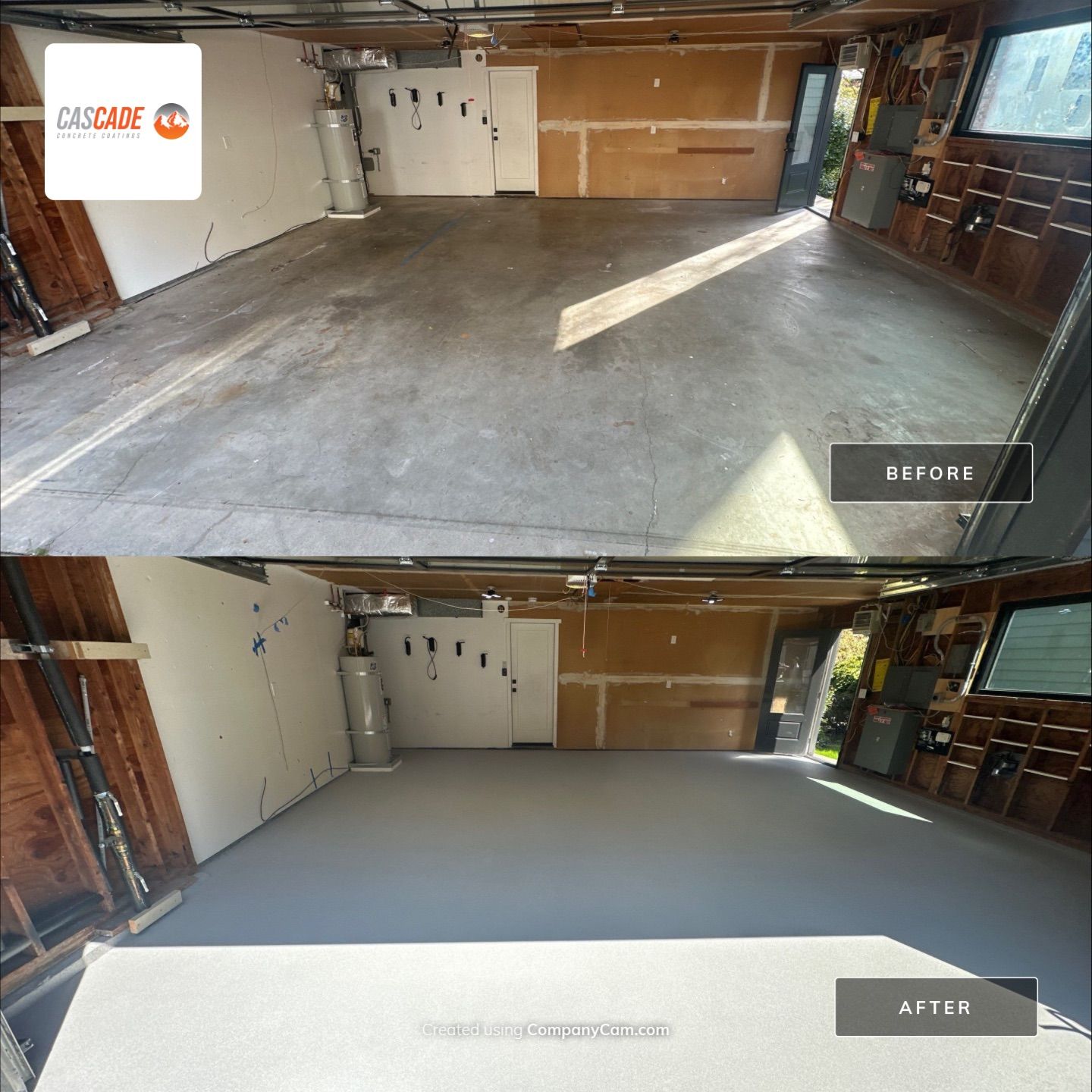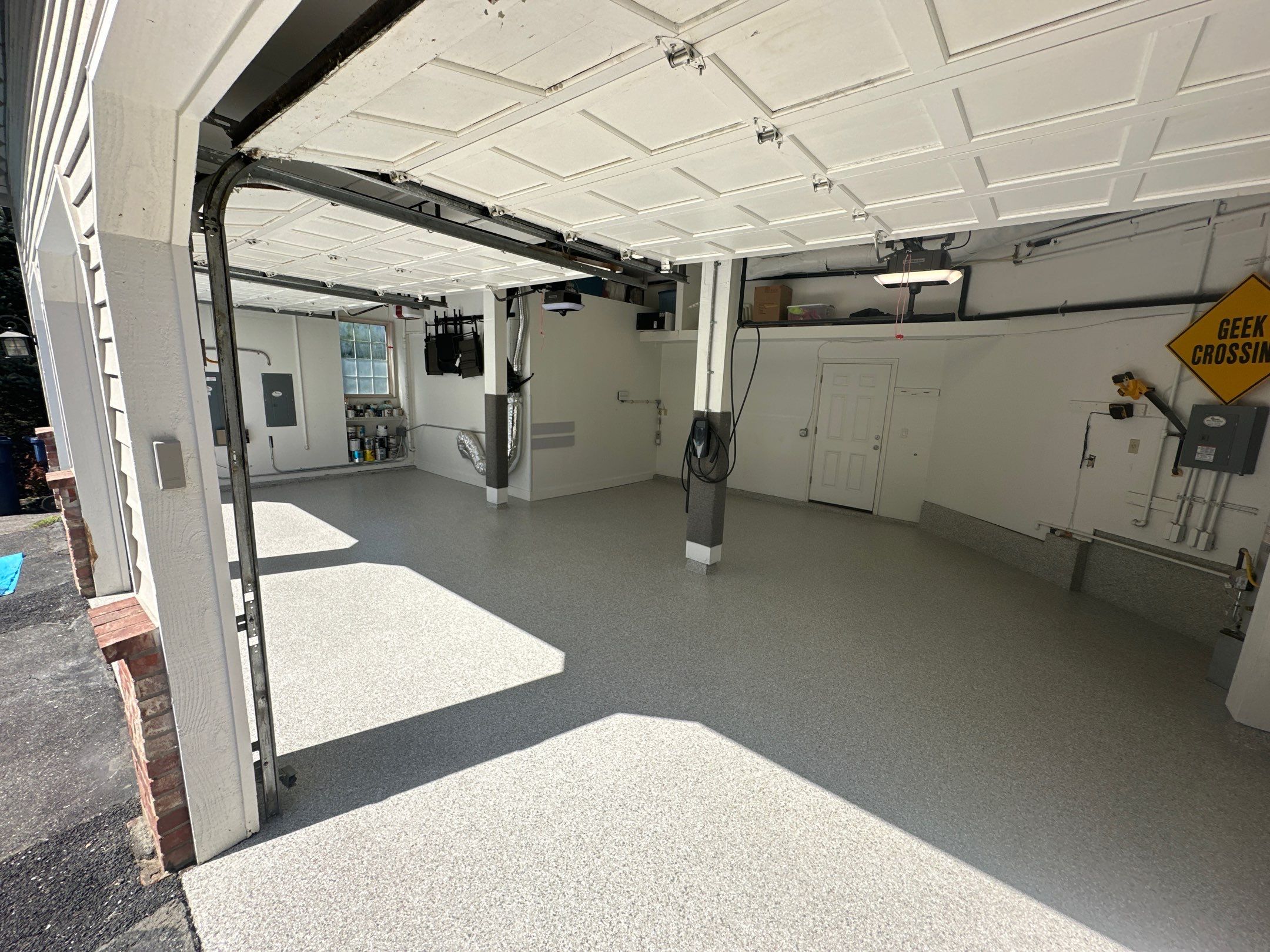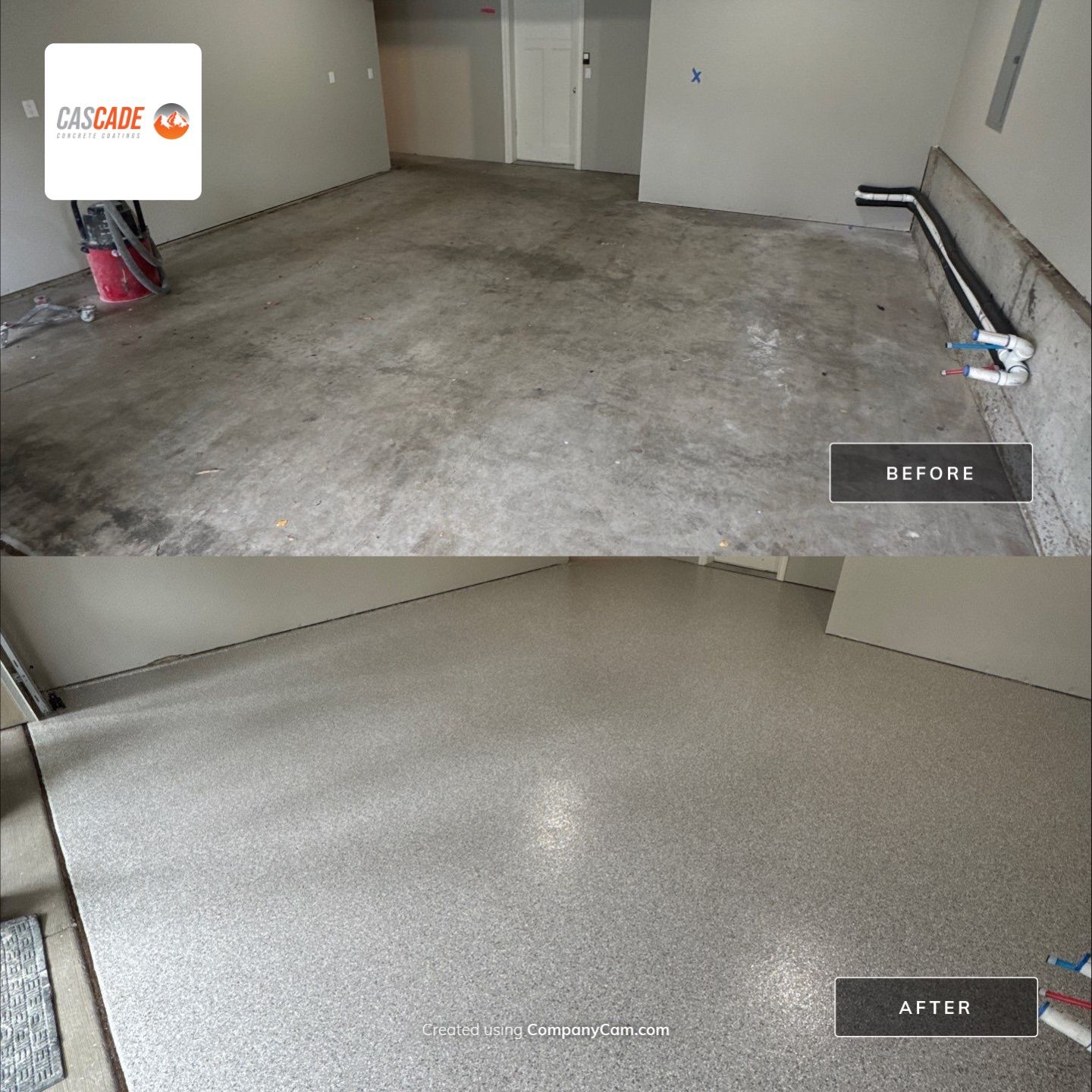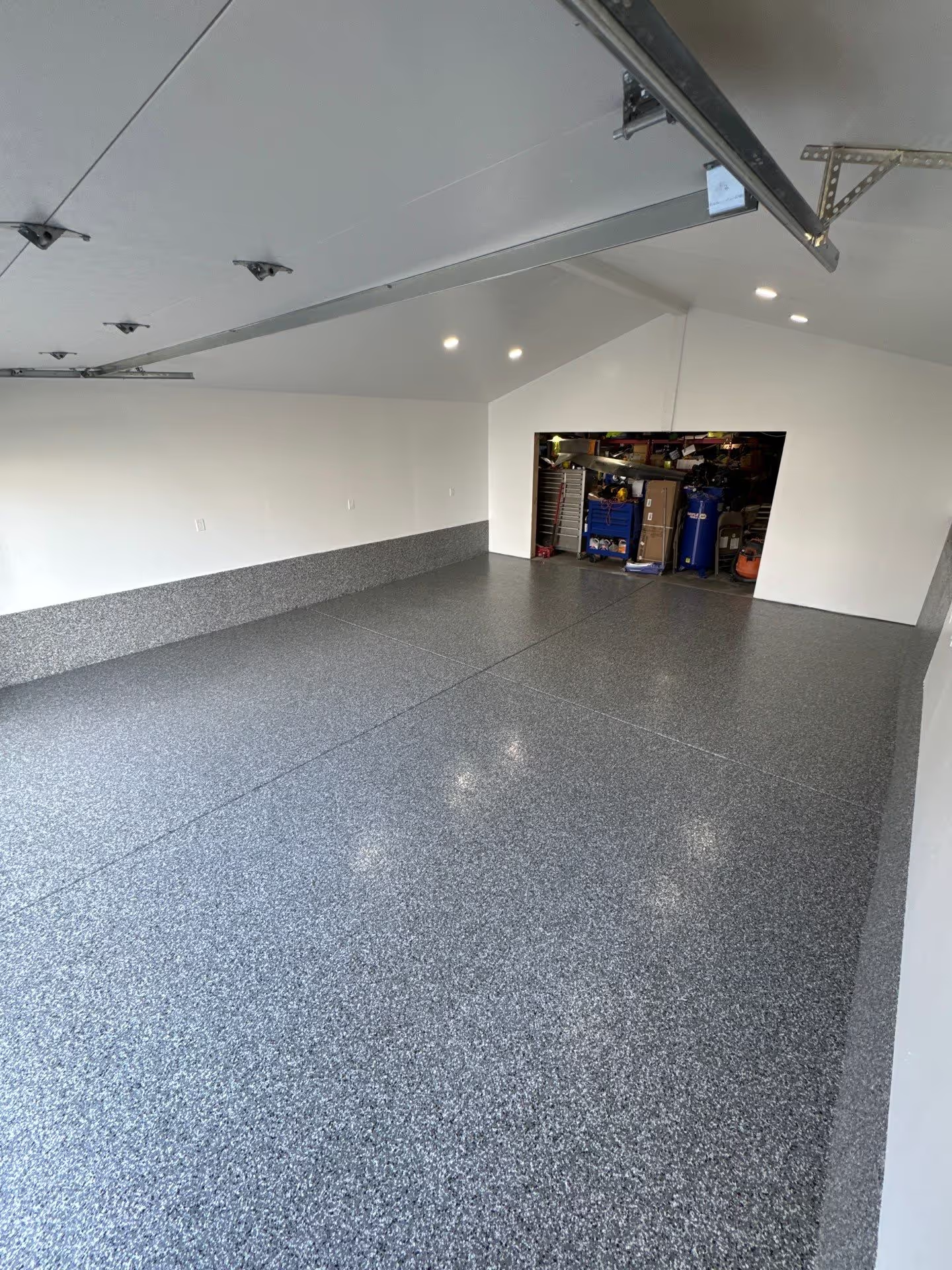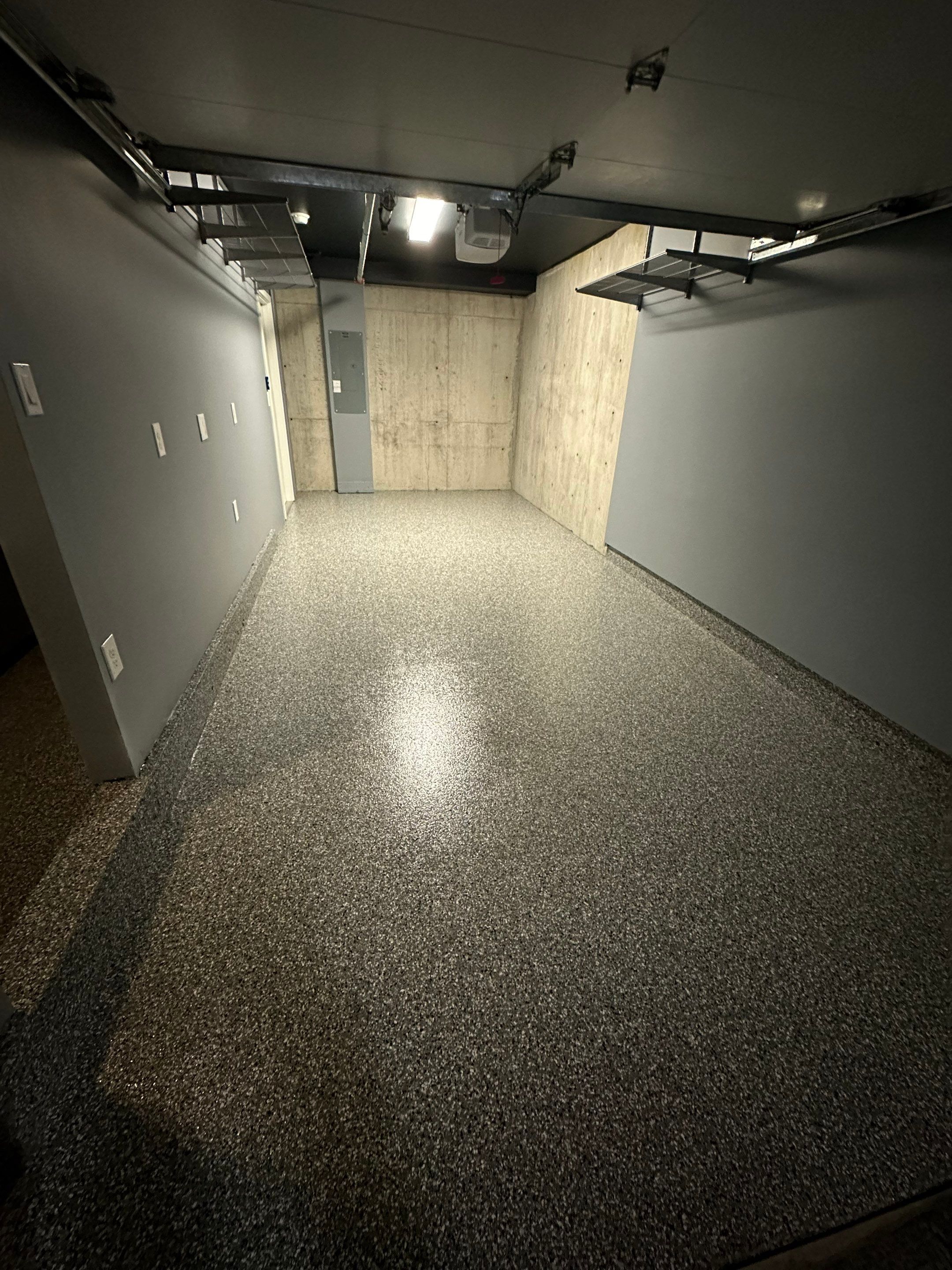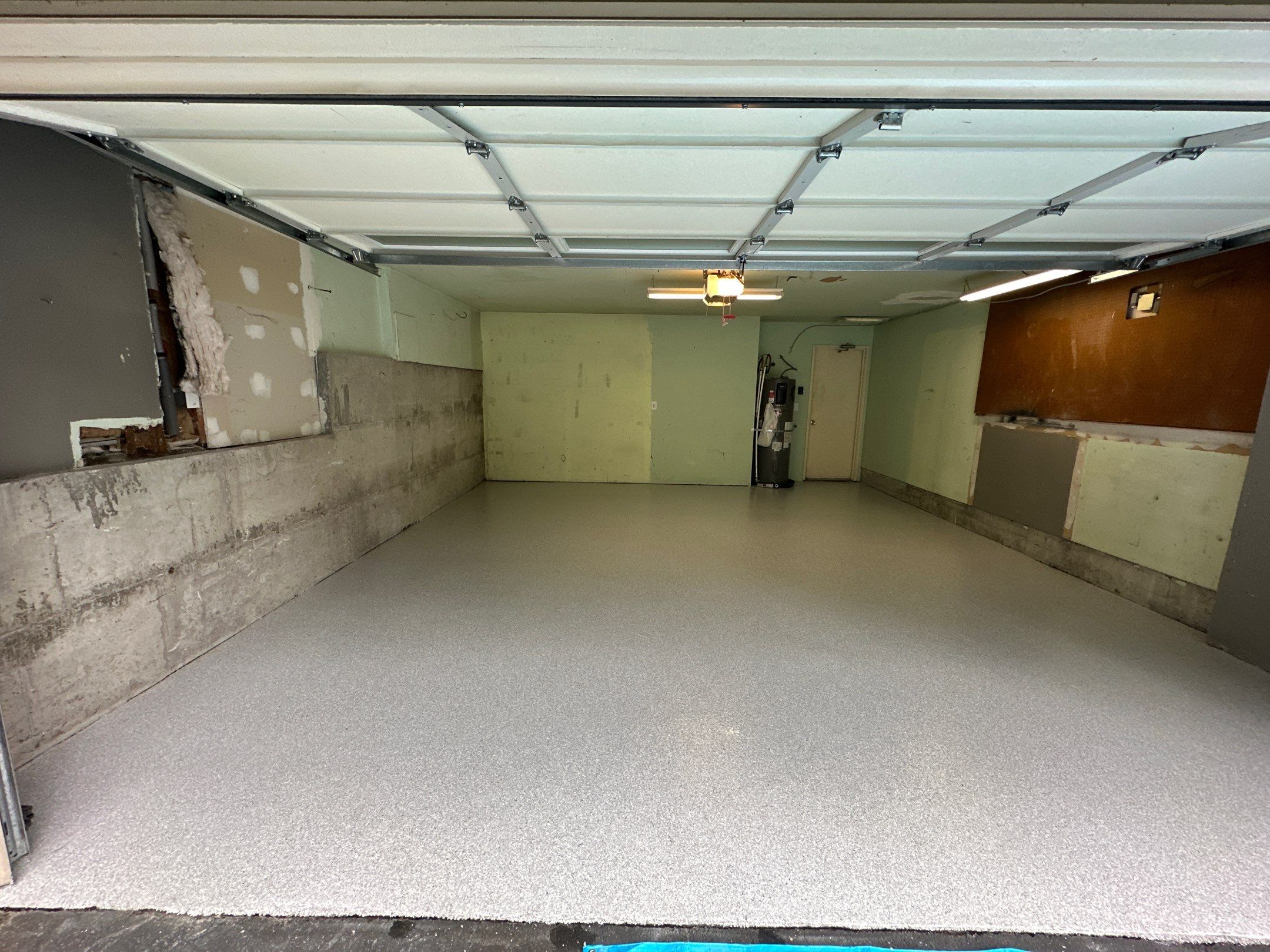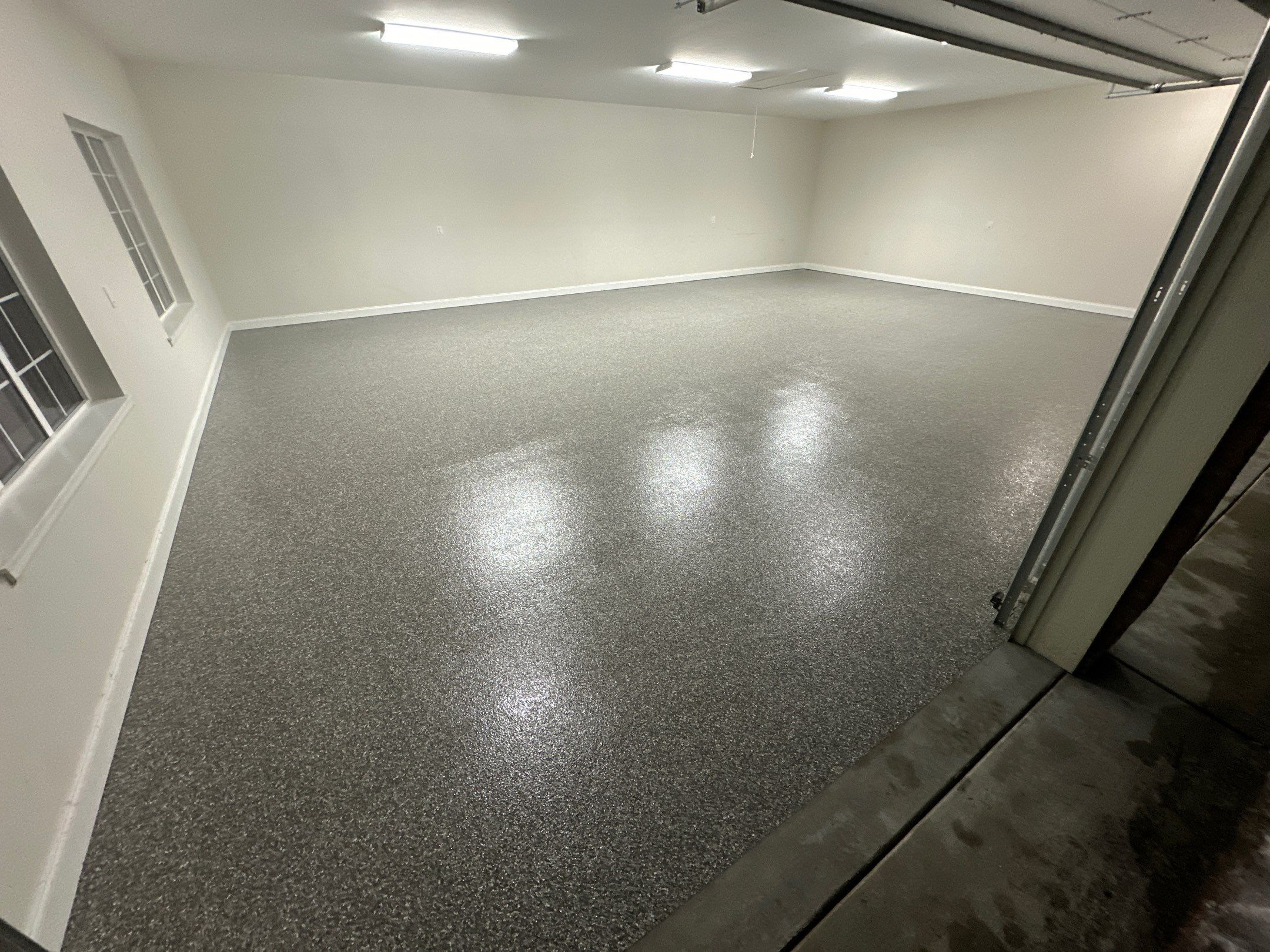
An 838 sq ft Sammamish garage with tire-stained concrete, four stairs and 30 feet of wall base, all finished in Slate Stone flake polyurea.
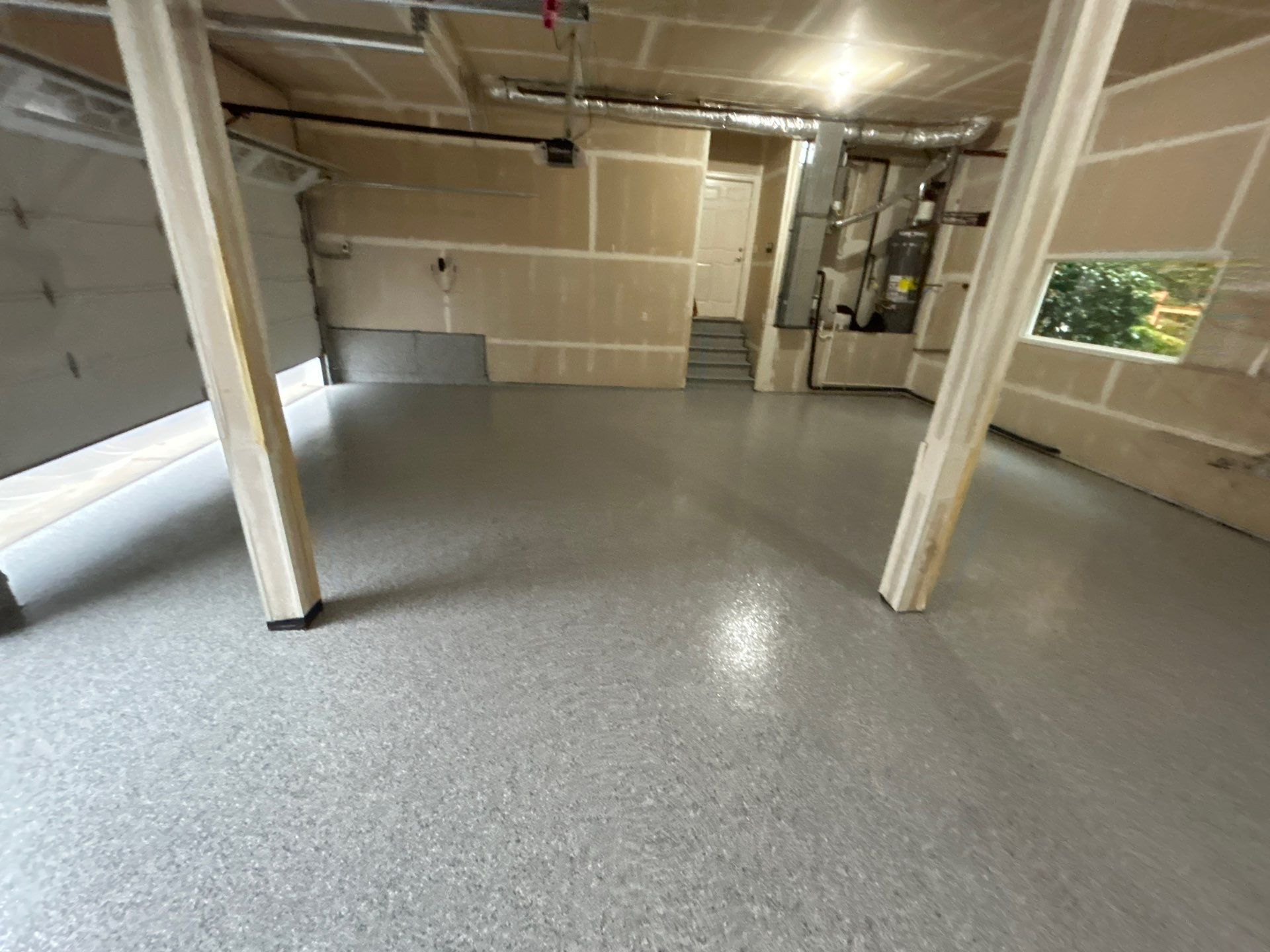
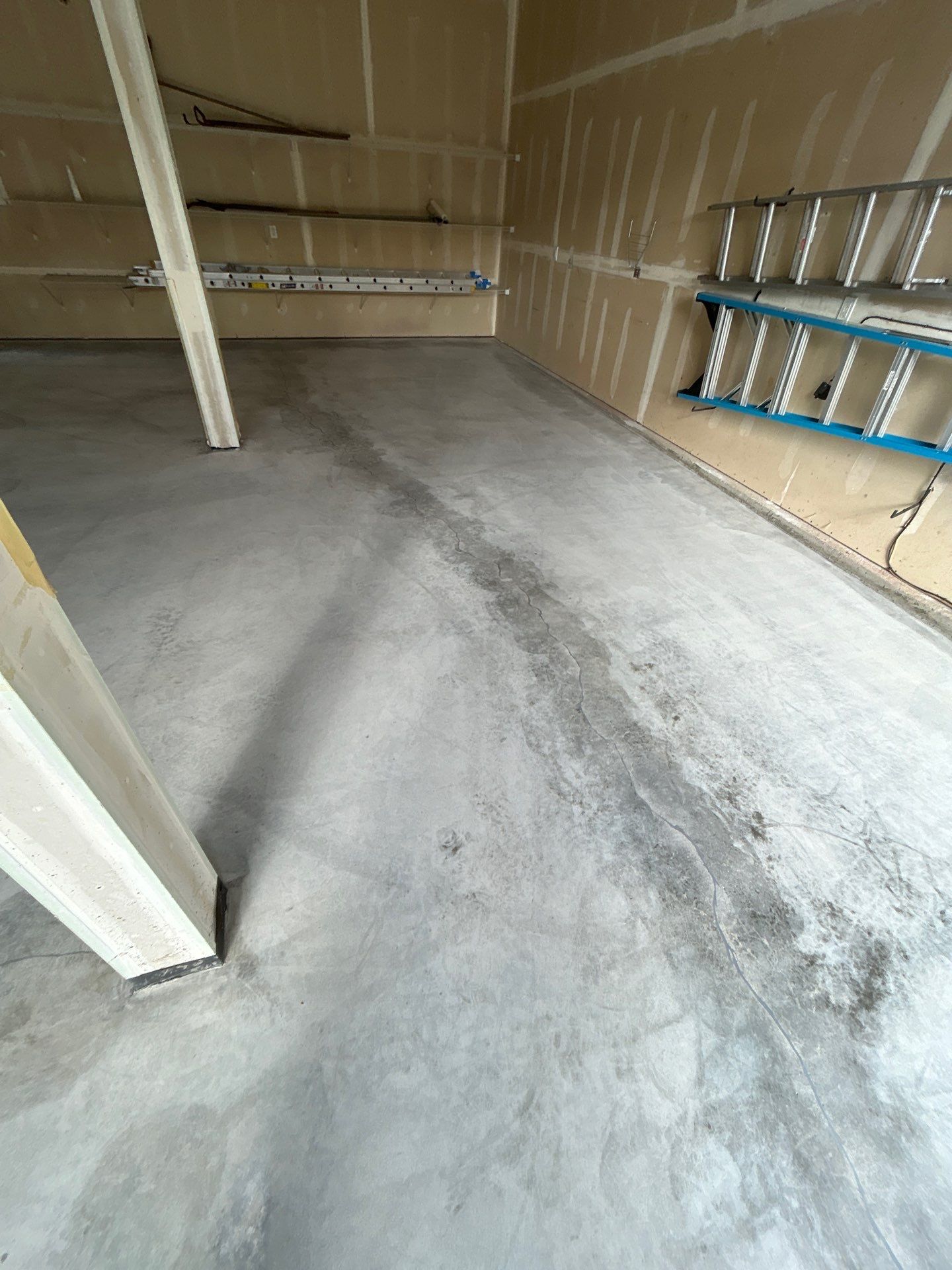
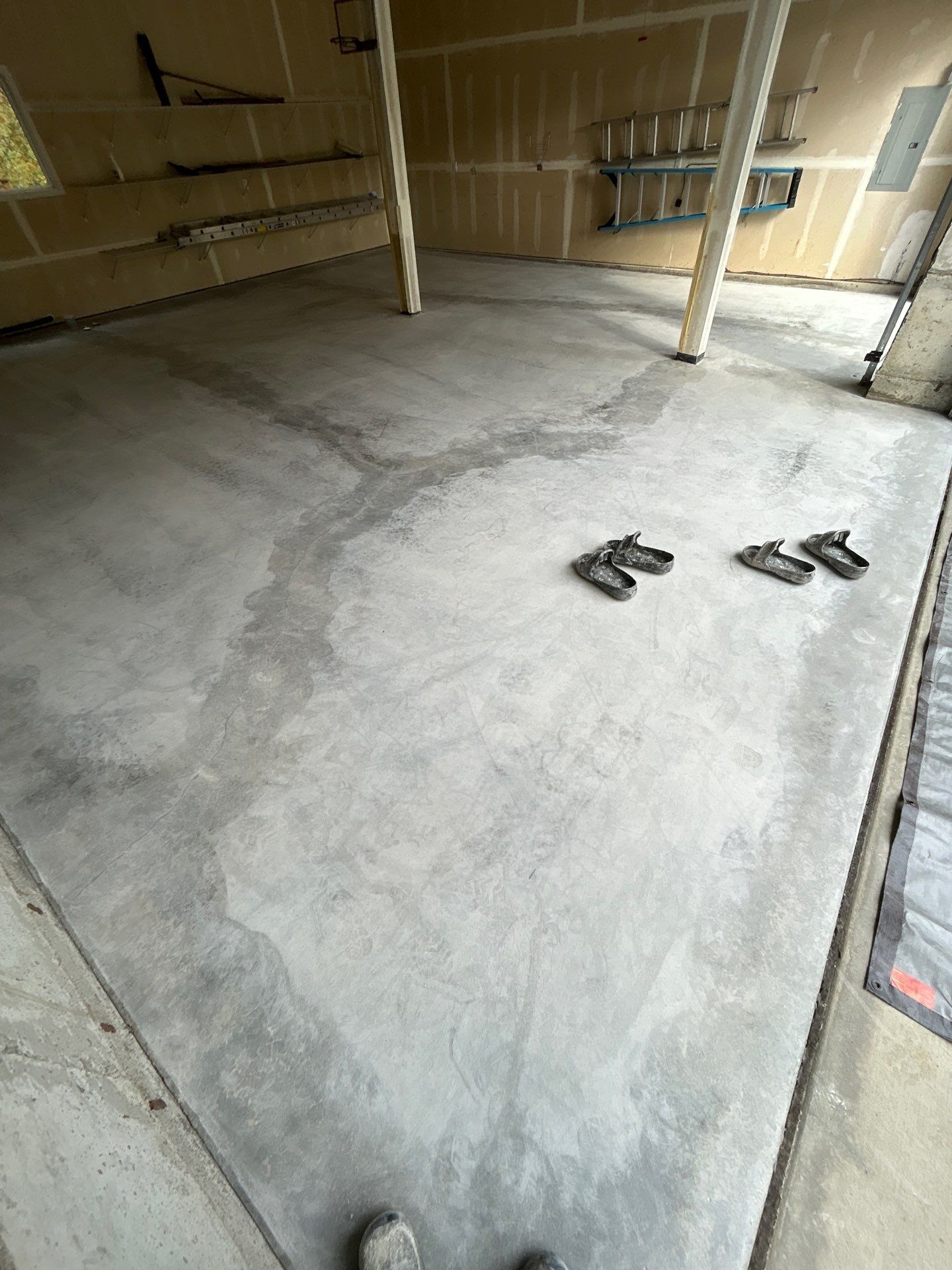
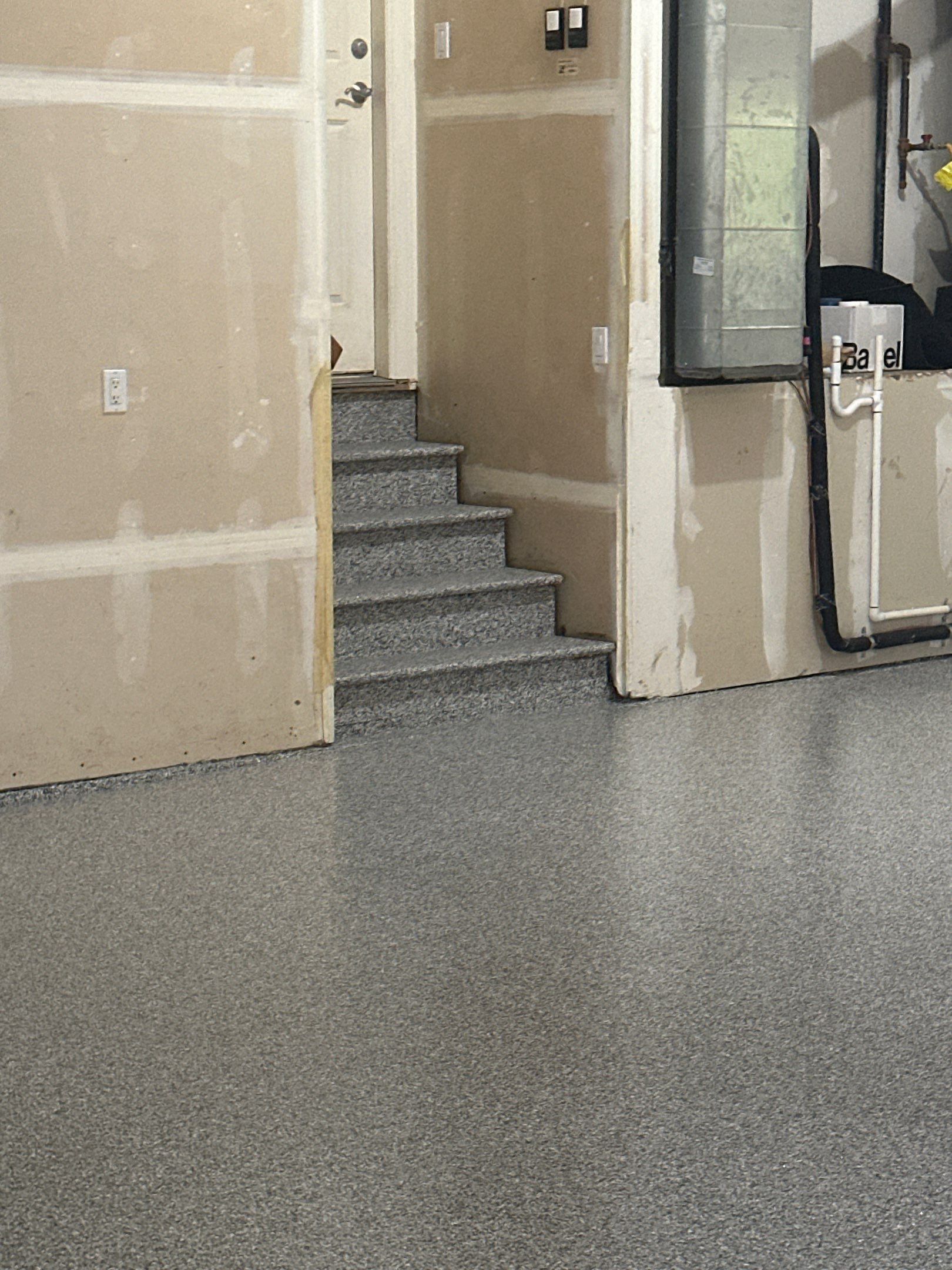


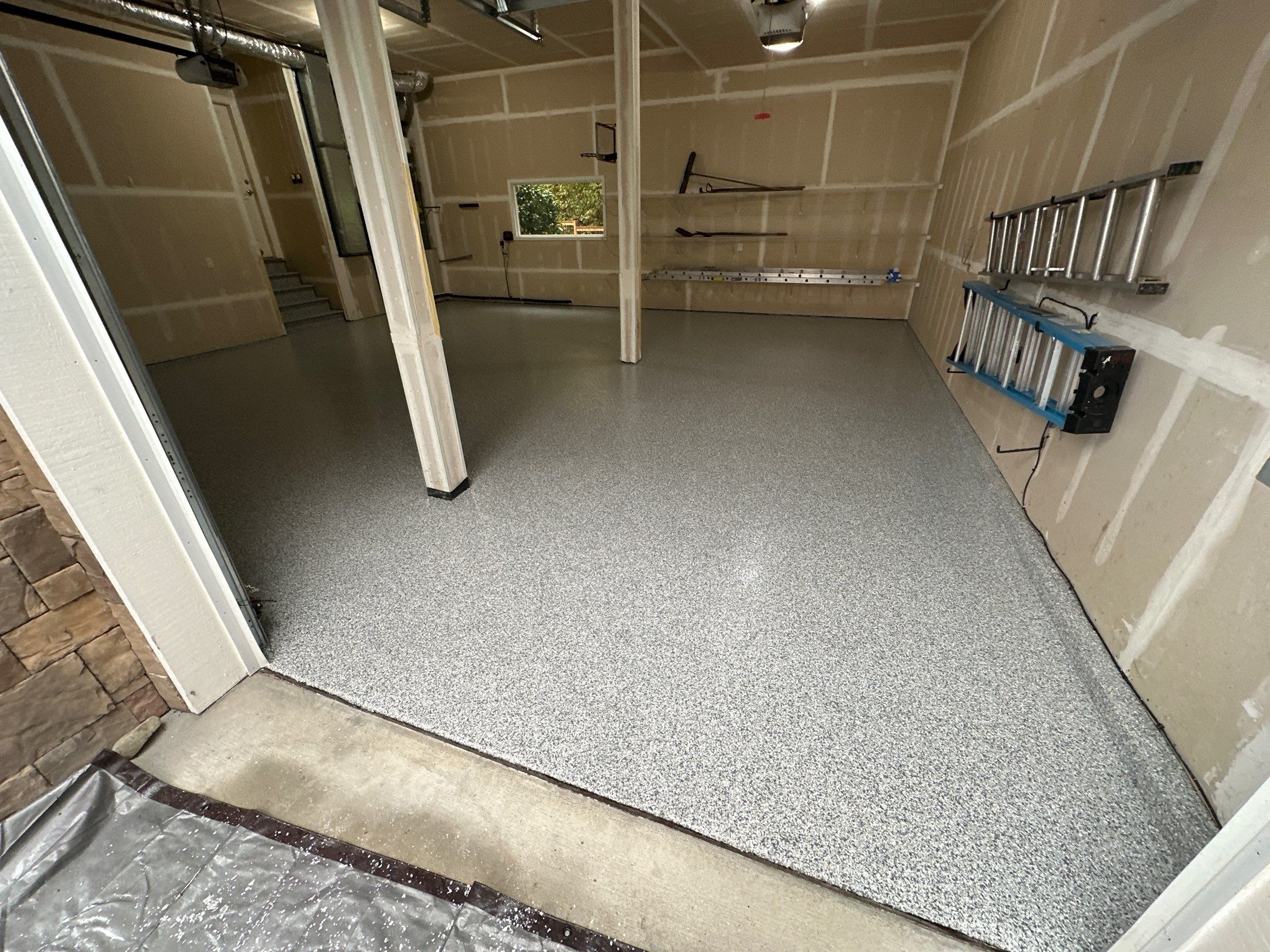
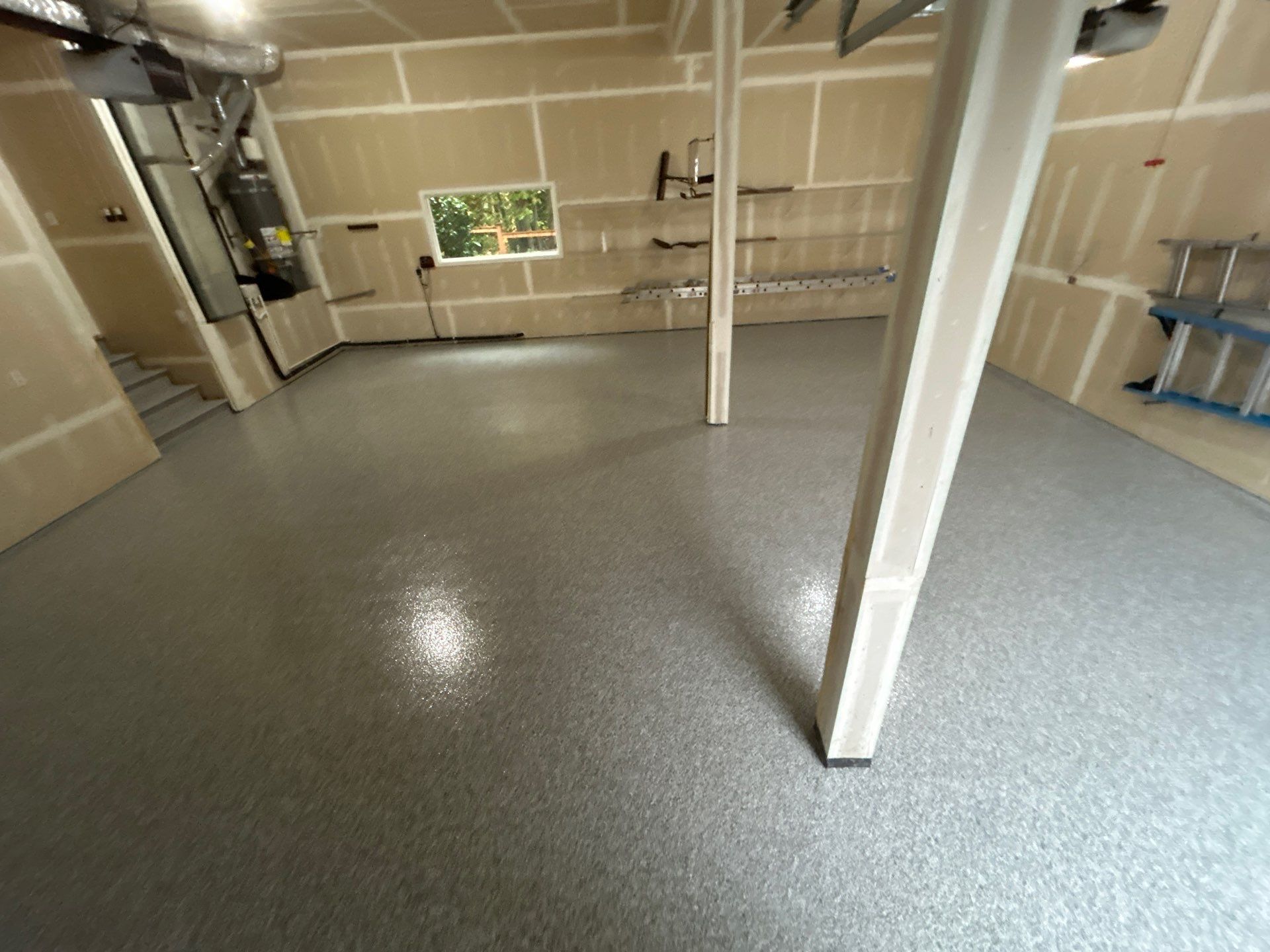
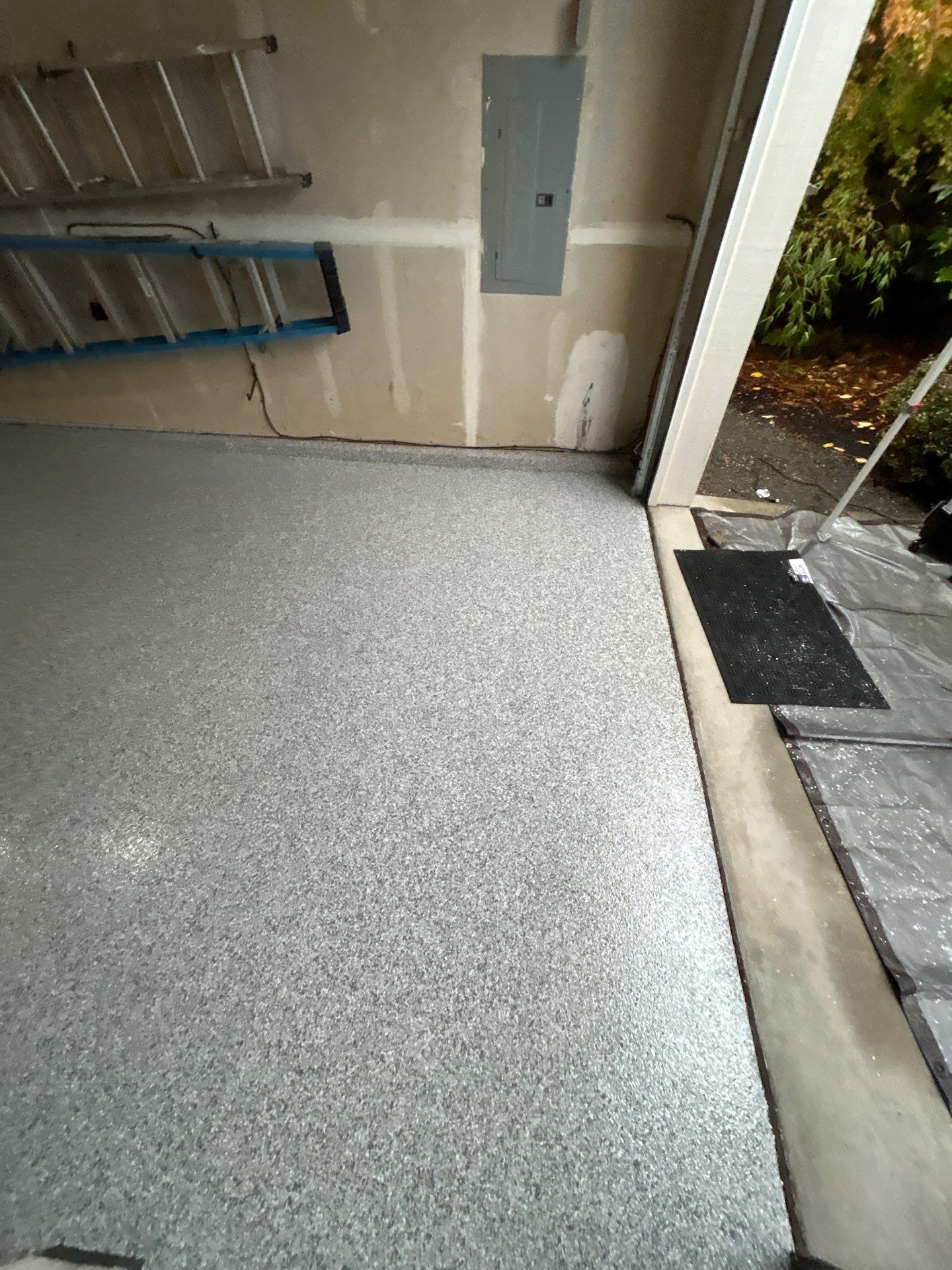
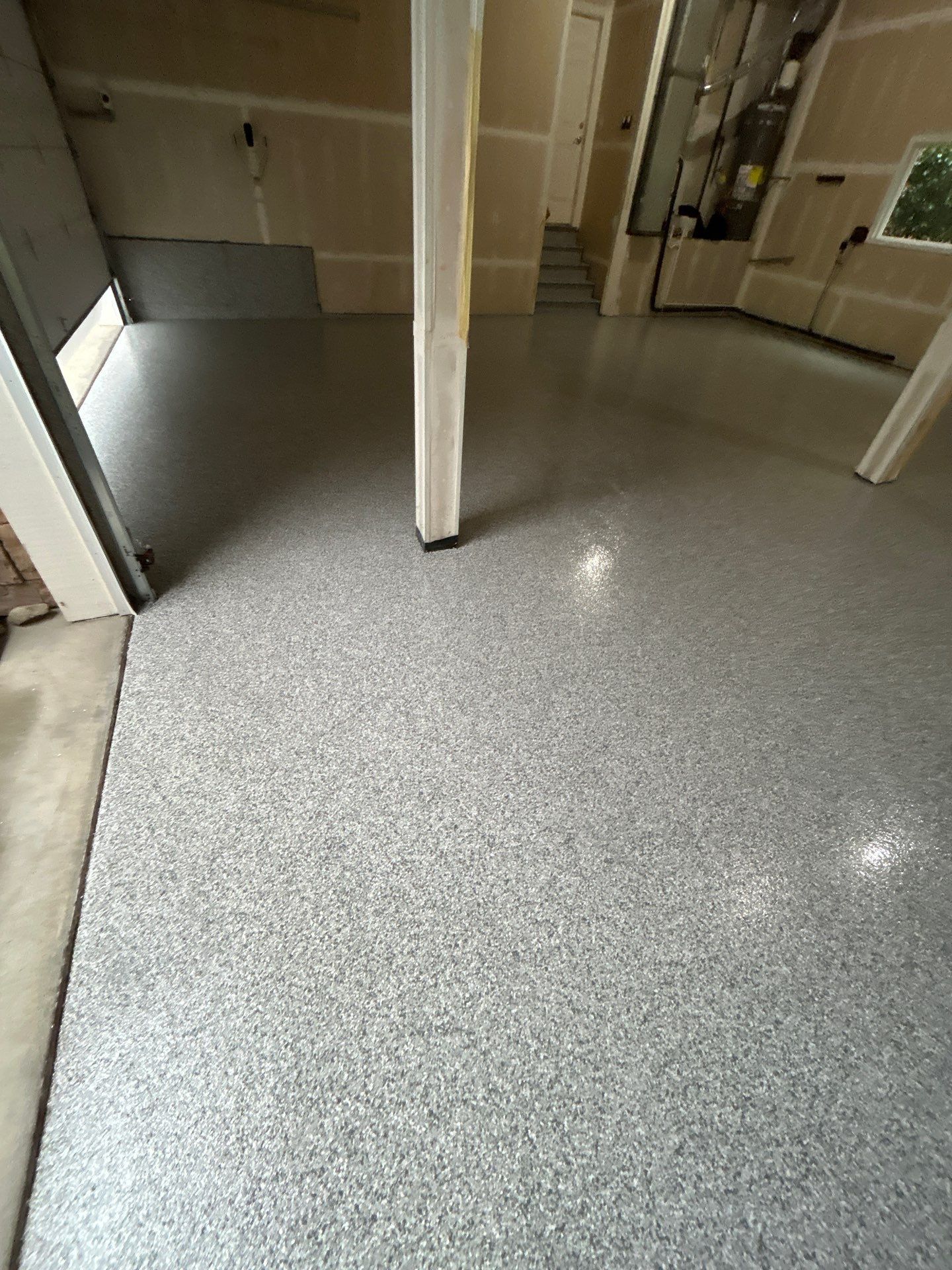
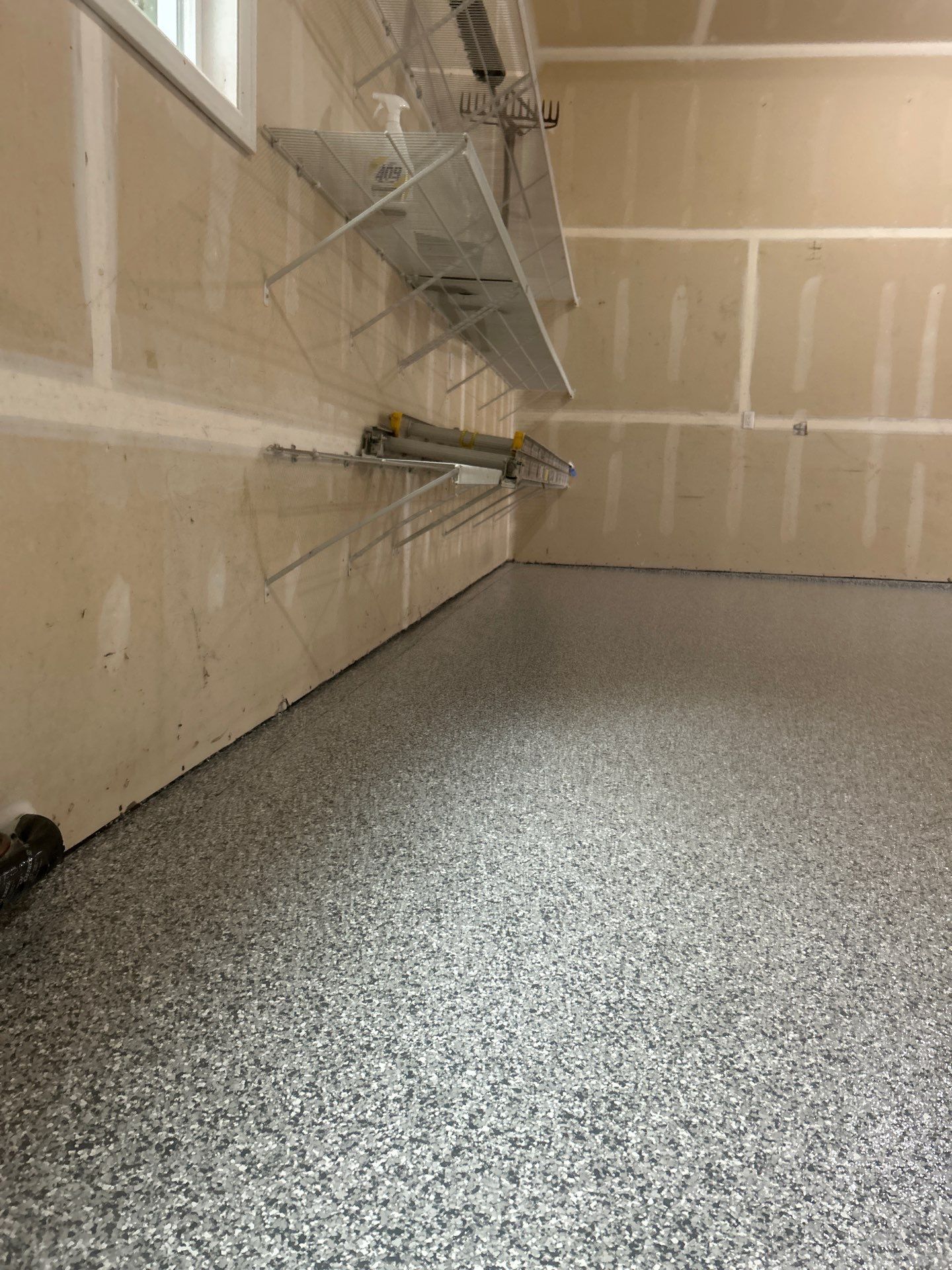
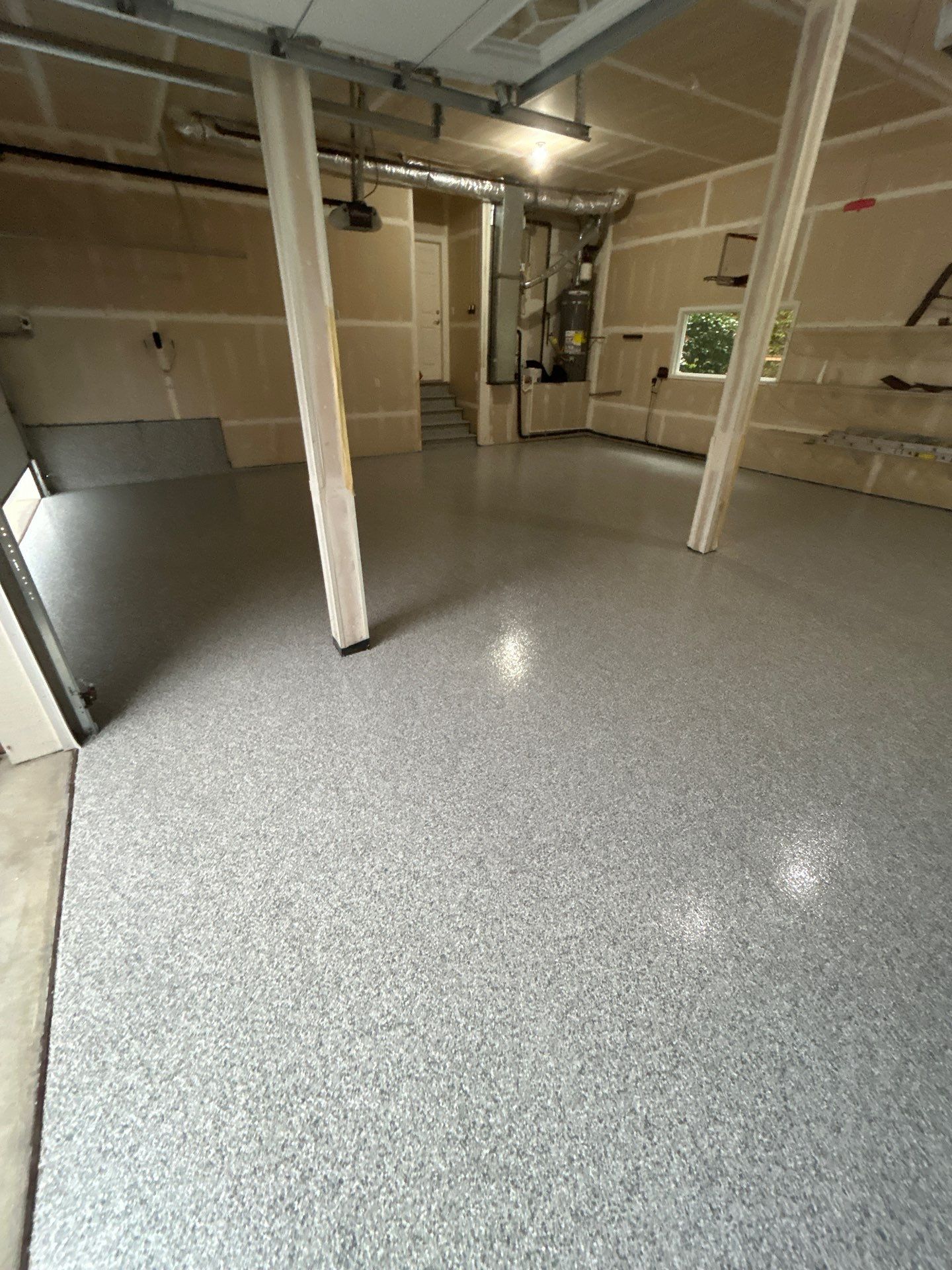
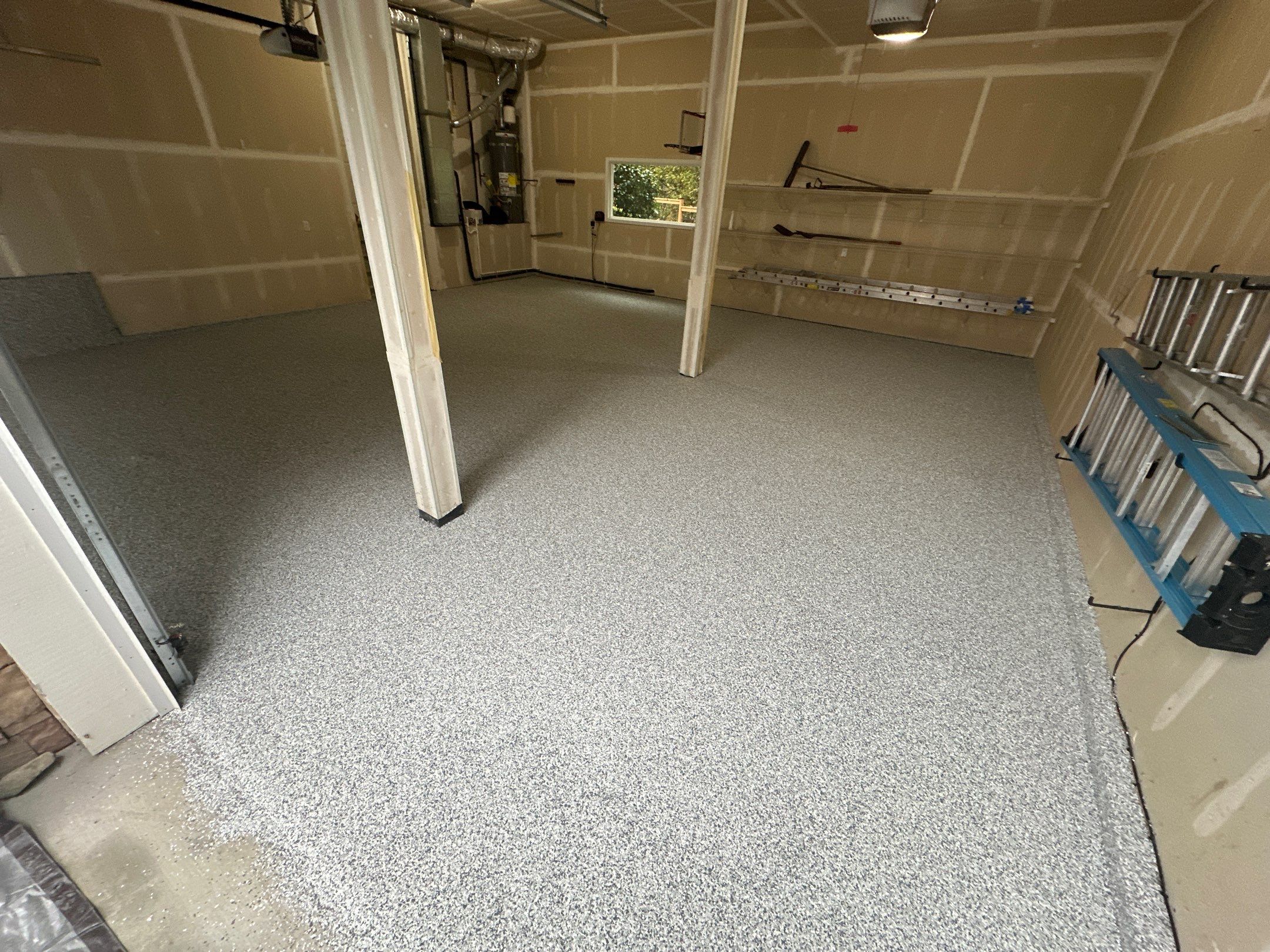
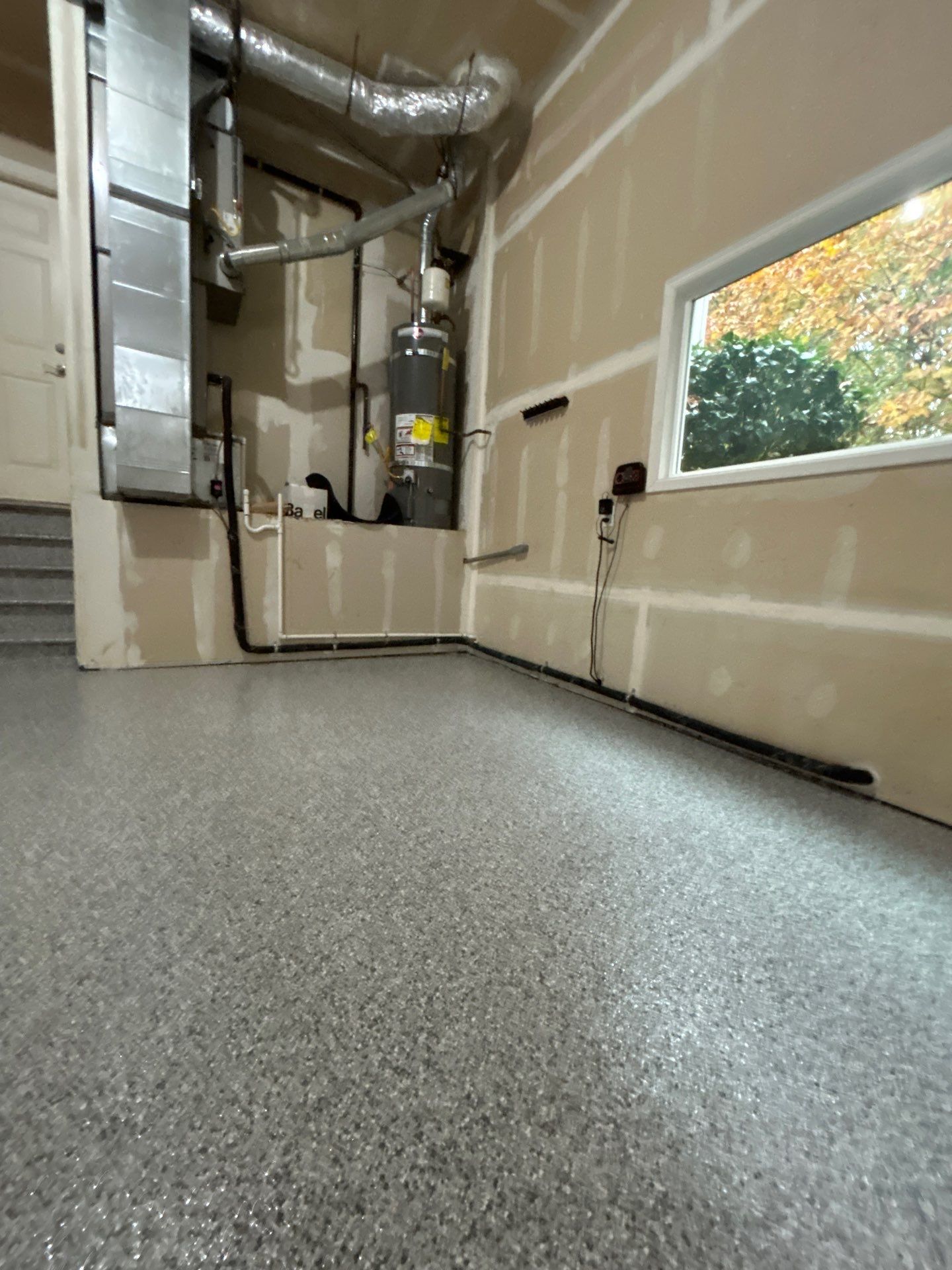
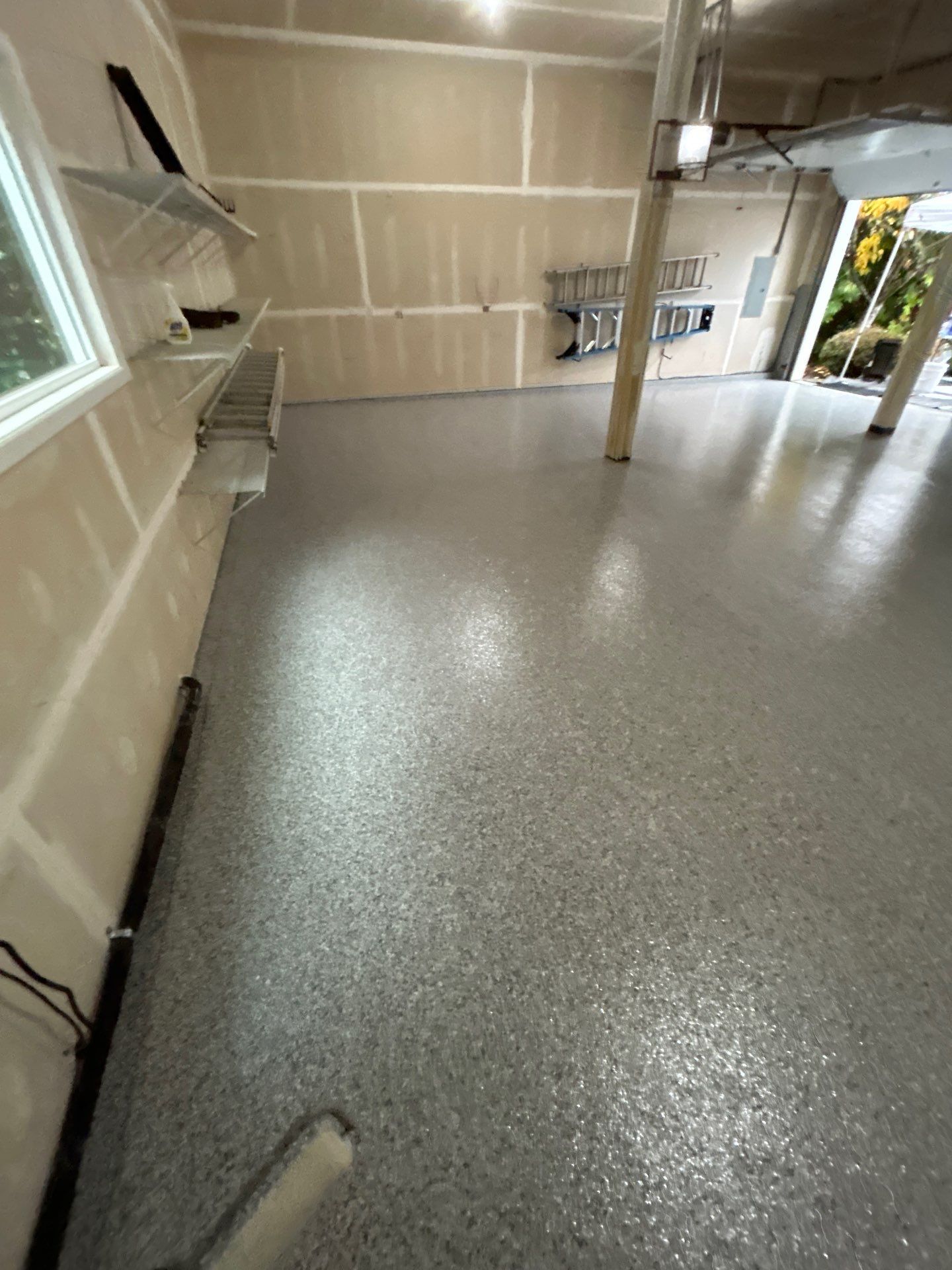

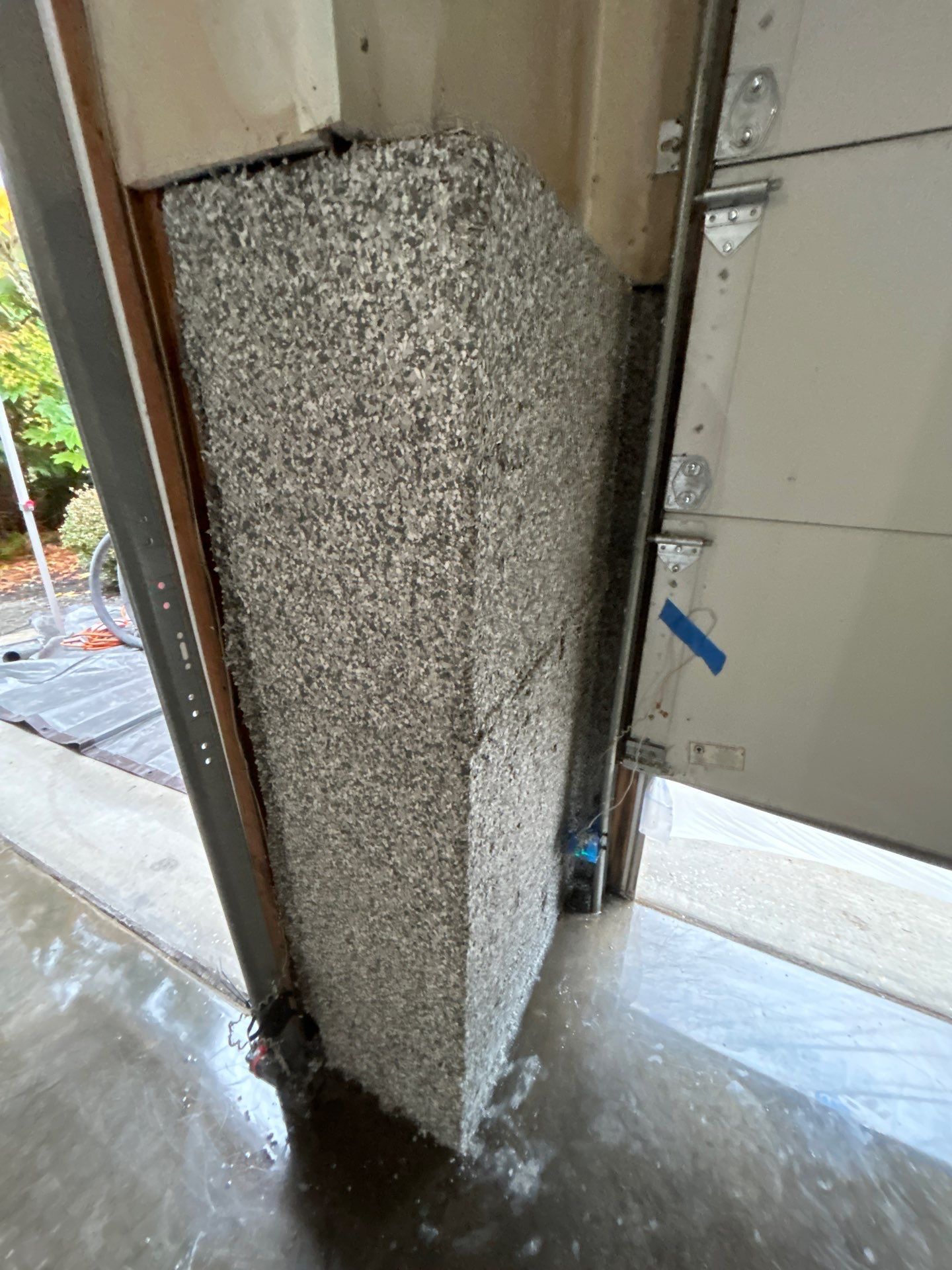
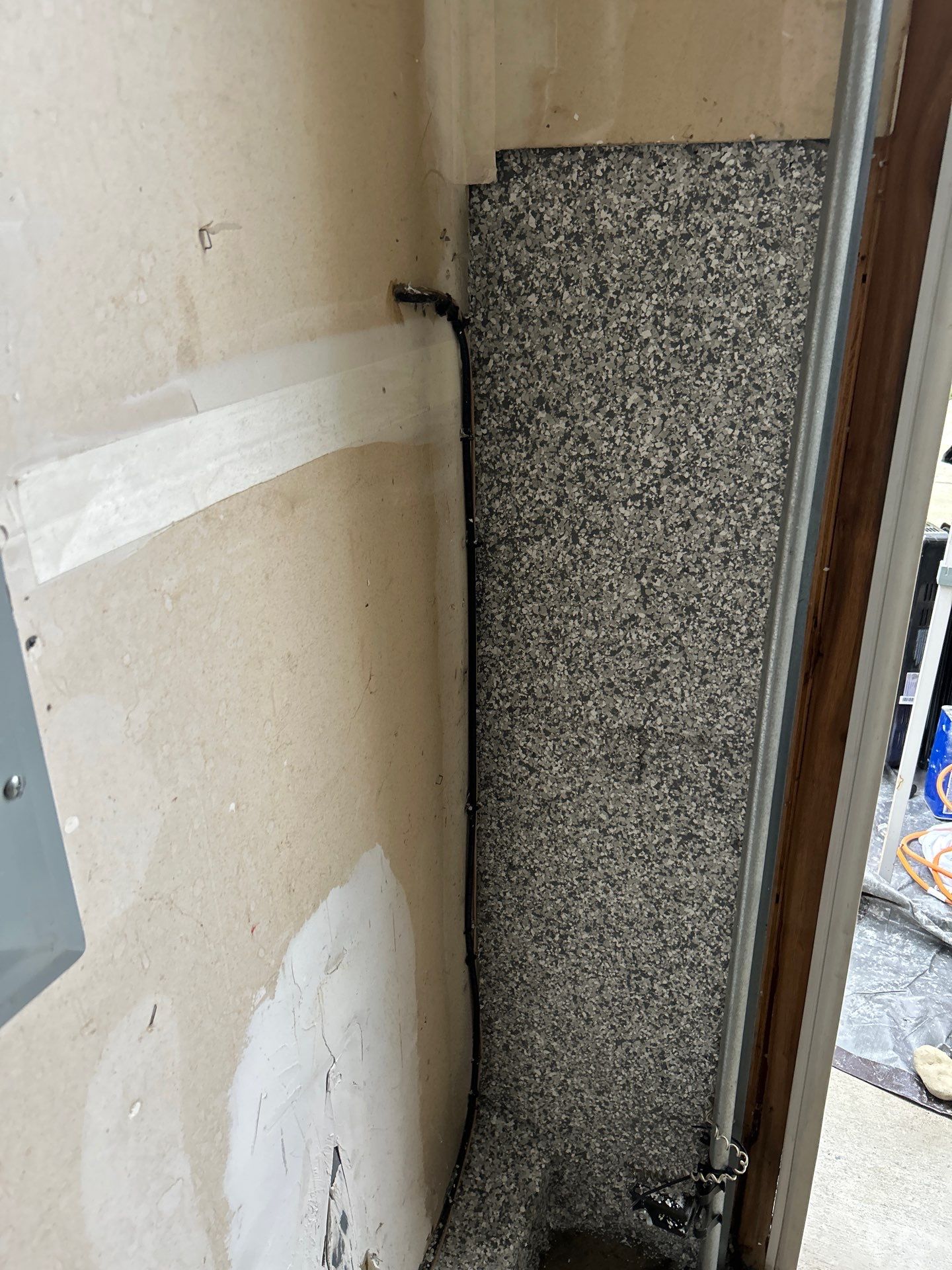
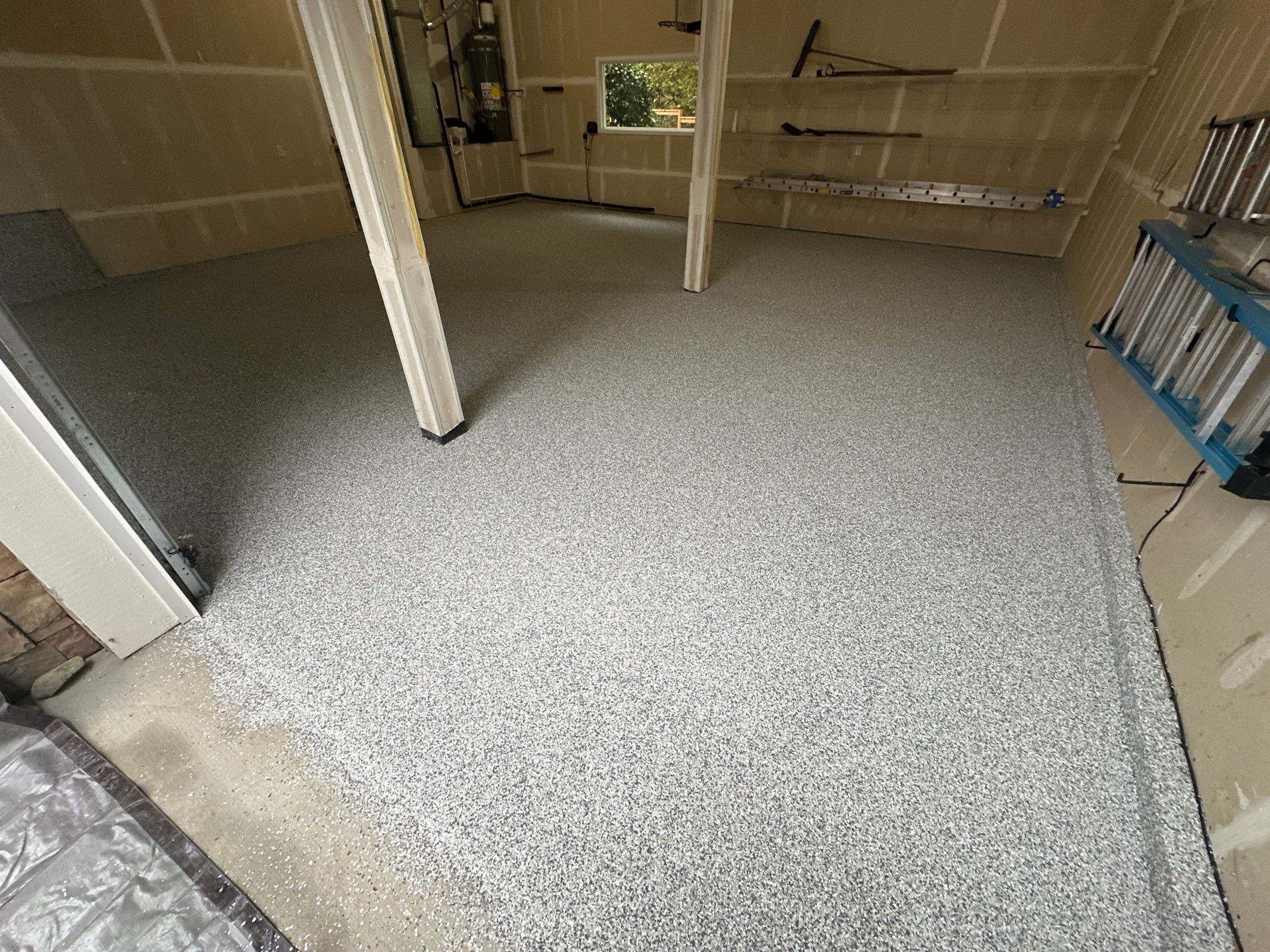
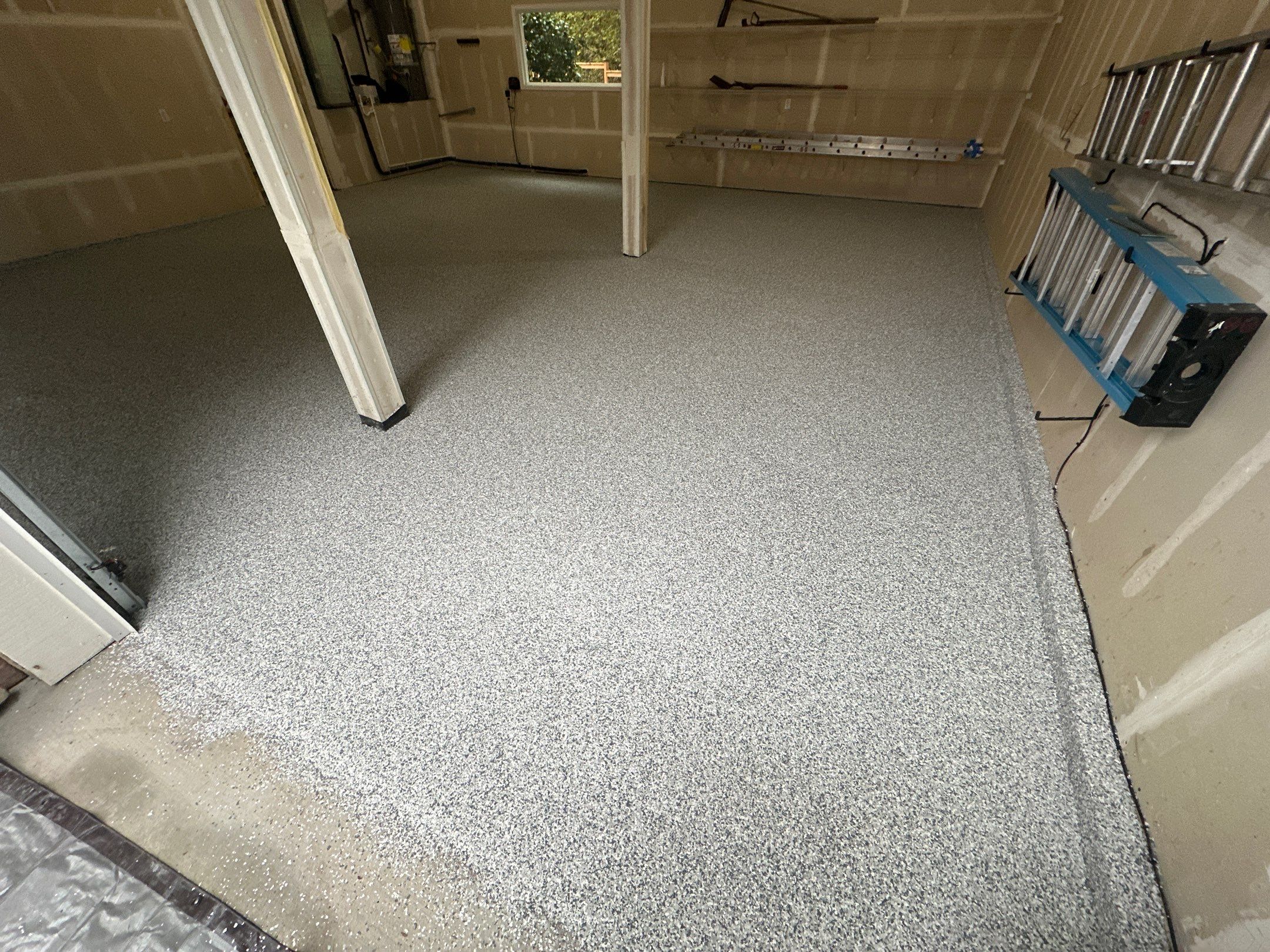
Big garages hide their problems in plain sight. This one in Sammamish had room for two cars plus a wall of ladders and shelving, two wood support posts in the middle, and a short run of concrete stairs up to the house. The slab itself had years of dark tire tracks pressed into it, and the stairs and wall bases were bare, rough concrete.
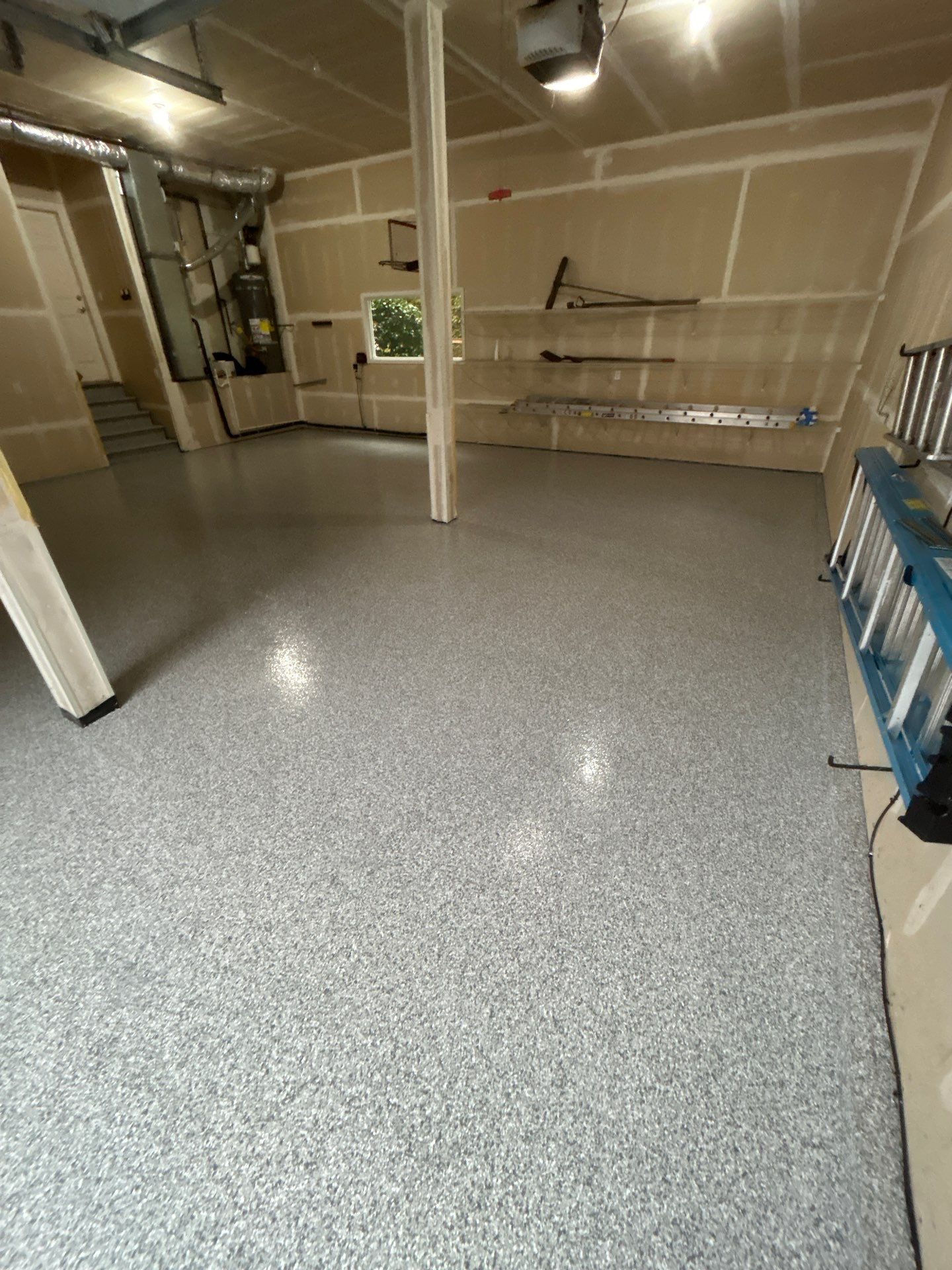
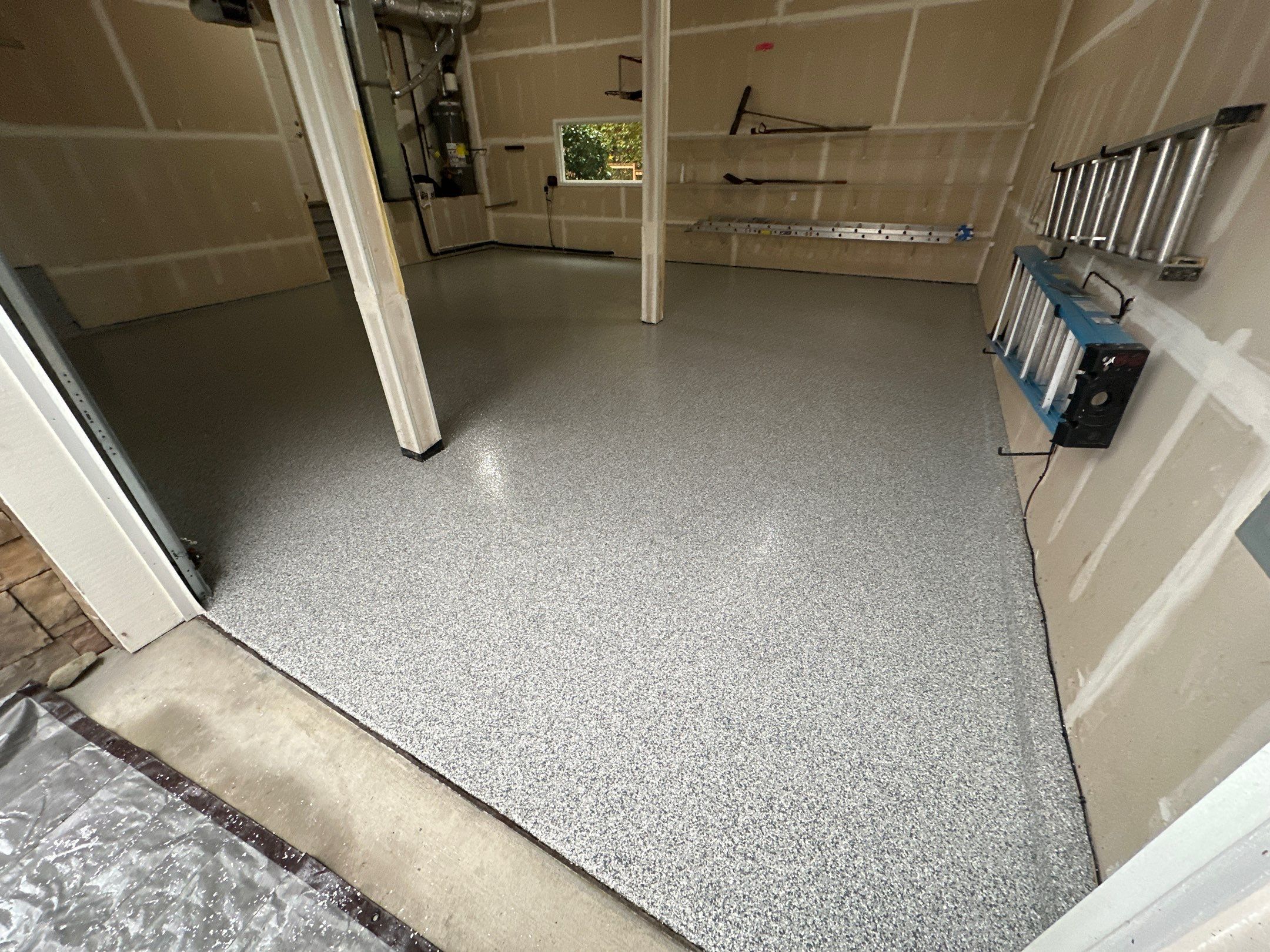
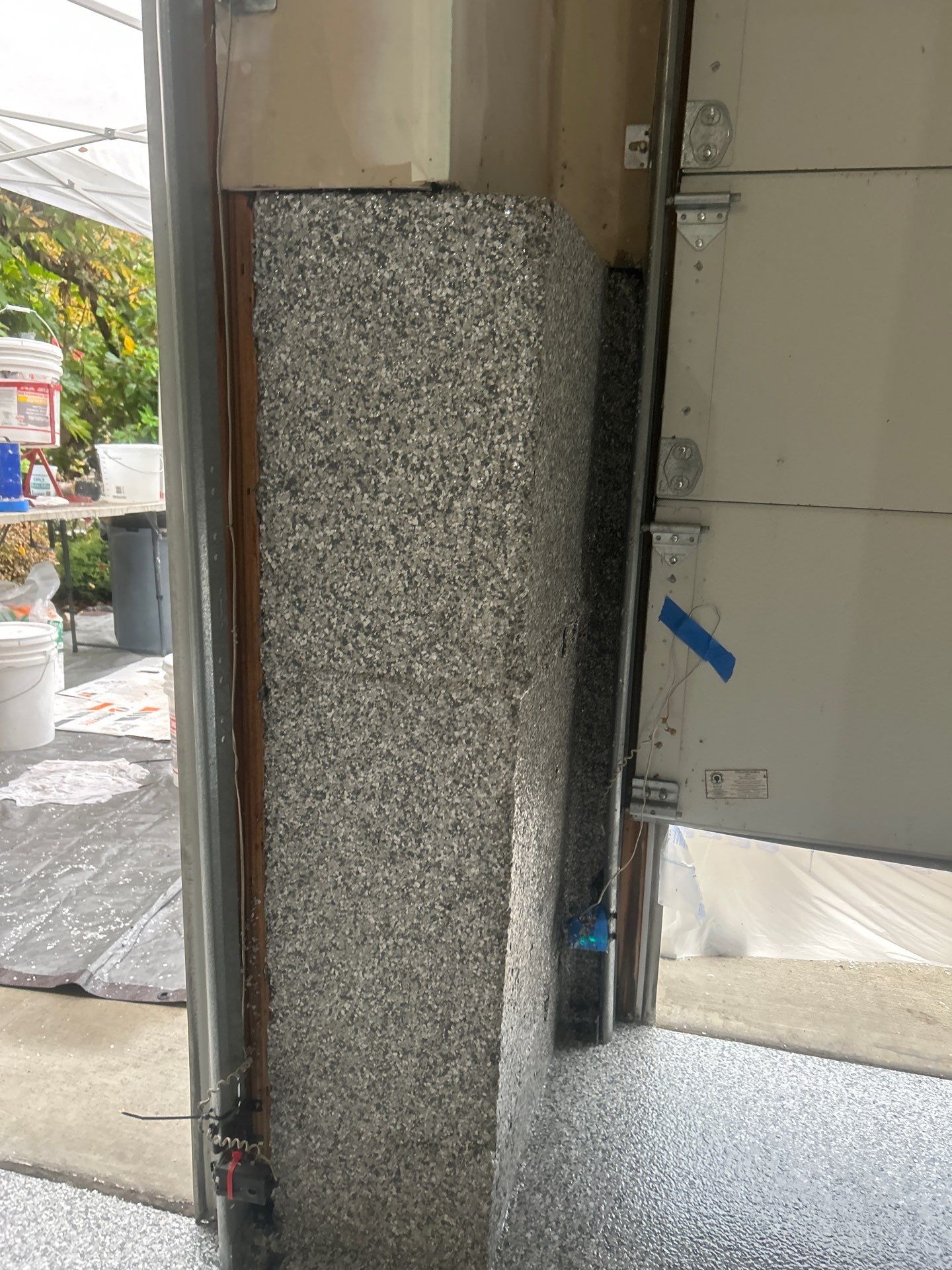
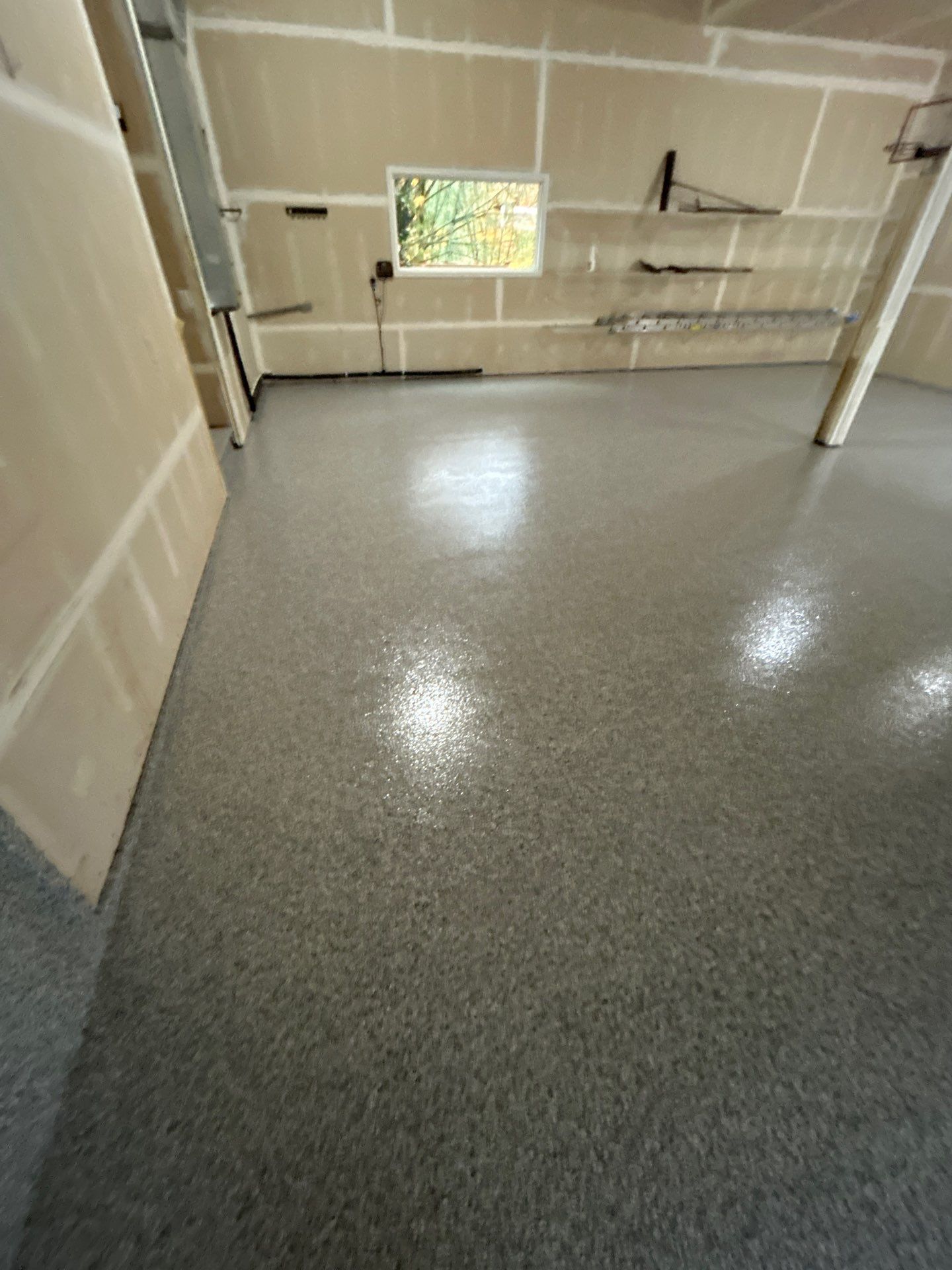
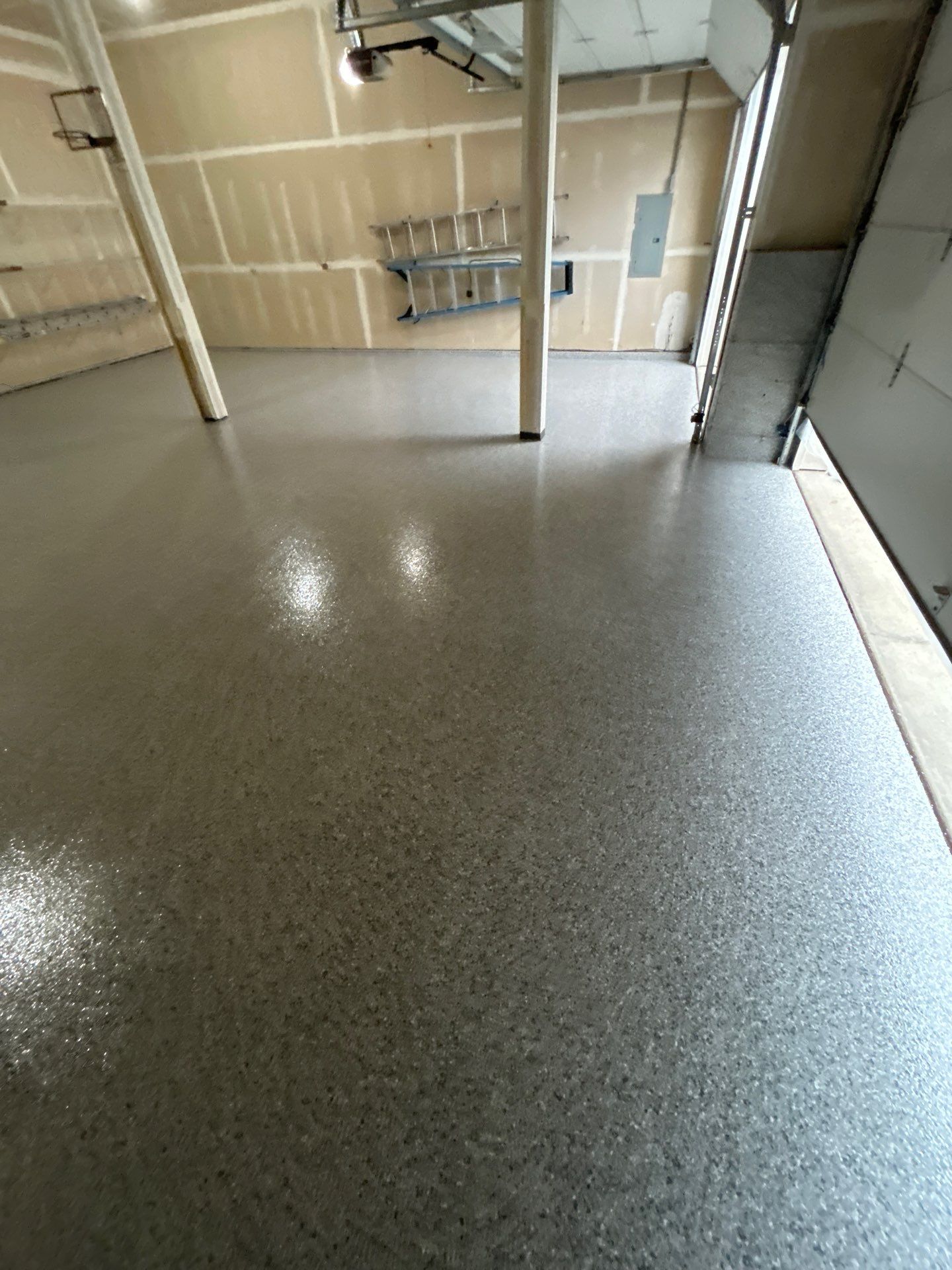
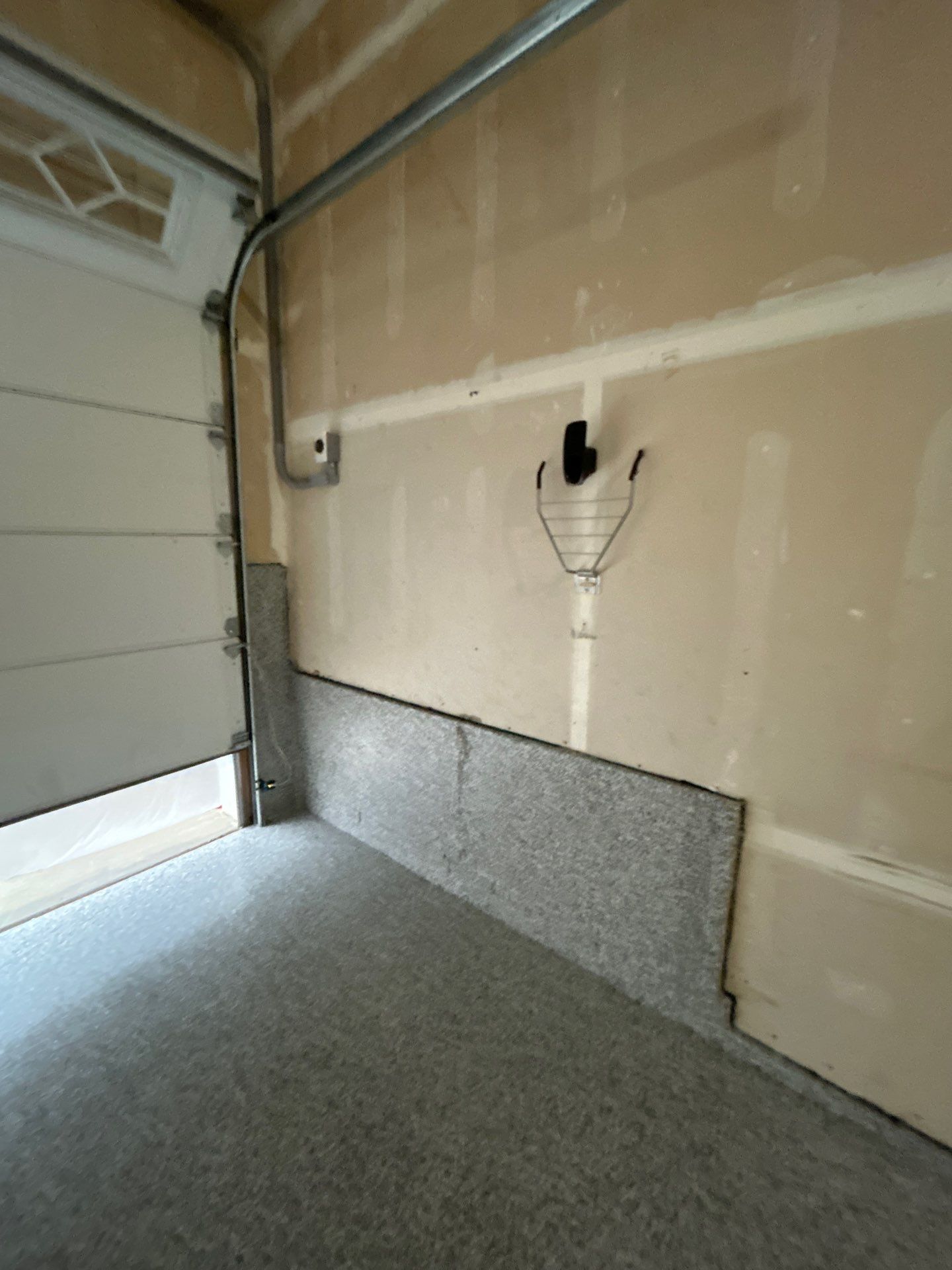
The homeowner wanted the whole space to look finished, not just the part where the cars park. In late October 2024 our crew installed a garage floor coating in Sammamish with Certified Penntek polyurea in Slate Stone flake, covering the floor, the four stairs and the wall bases in one continuous finish.
We came out for the free consultation in mid October. The first stop was the moisture meter, which read 6.3% on the open slab. We test every slab before we quote, because moisture coming up through concrete is behind a lot of coating failures in this part of the state.
The numbers on this job were bigger than most:
Decent concrete is good news. It means the slab is sound and the work is mostly about grinding off the stains and wear, then building a coating that will outlast the house payments.
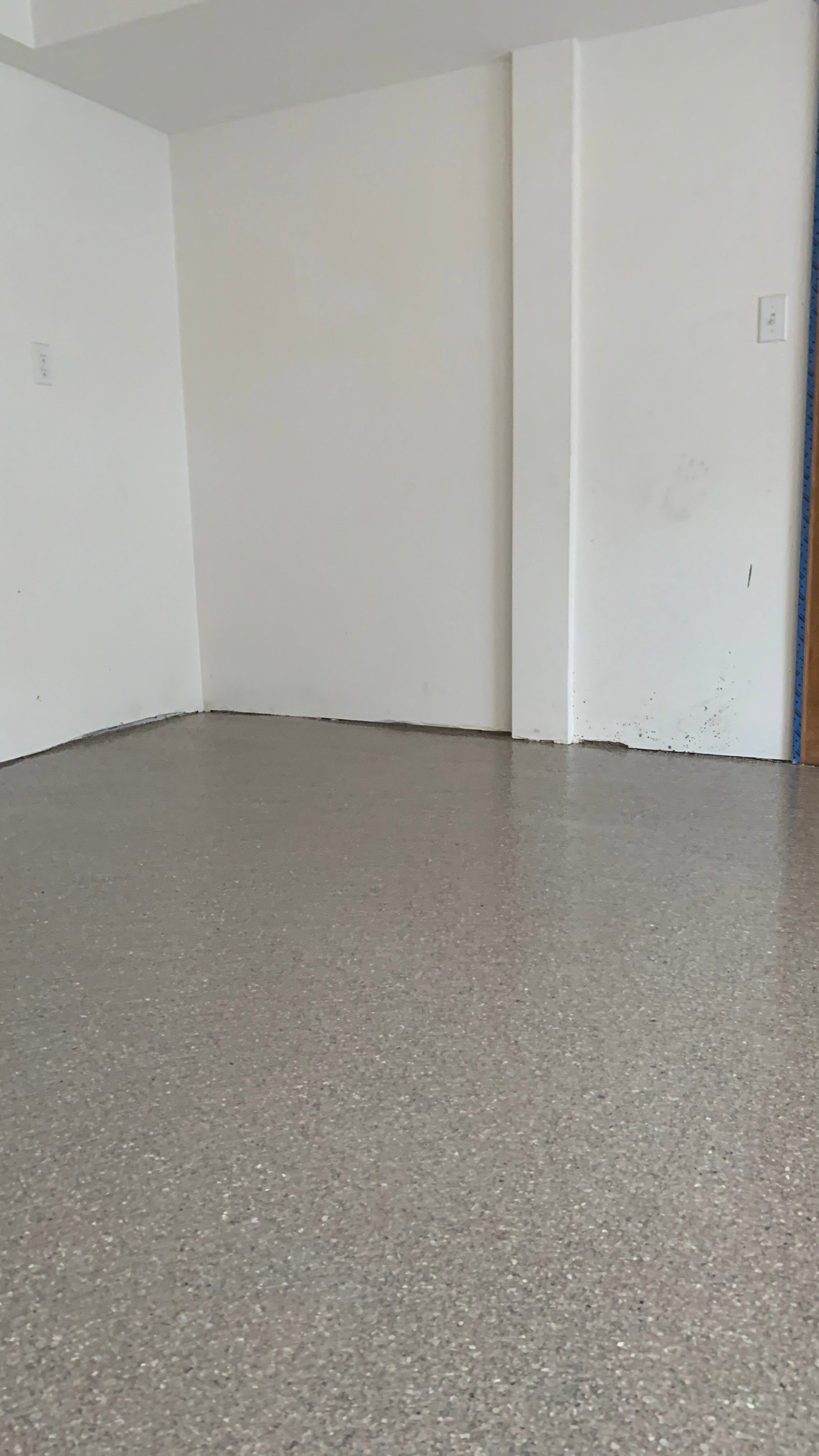
Stairs take patience. Each tread and riser gets the same grind and the same layers as the floor, so the finish doesn't stop at the bottom step. You can see more on the installation process page.
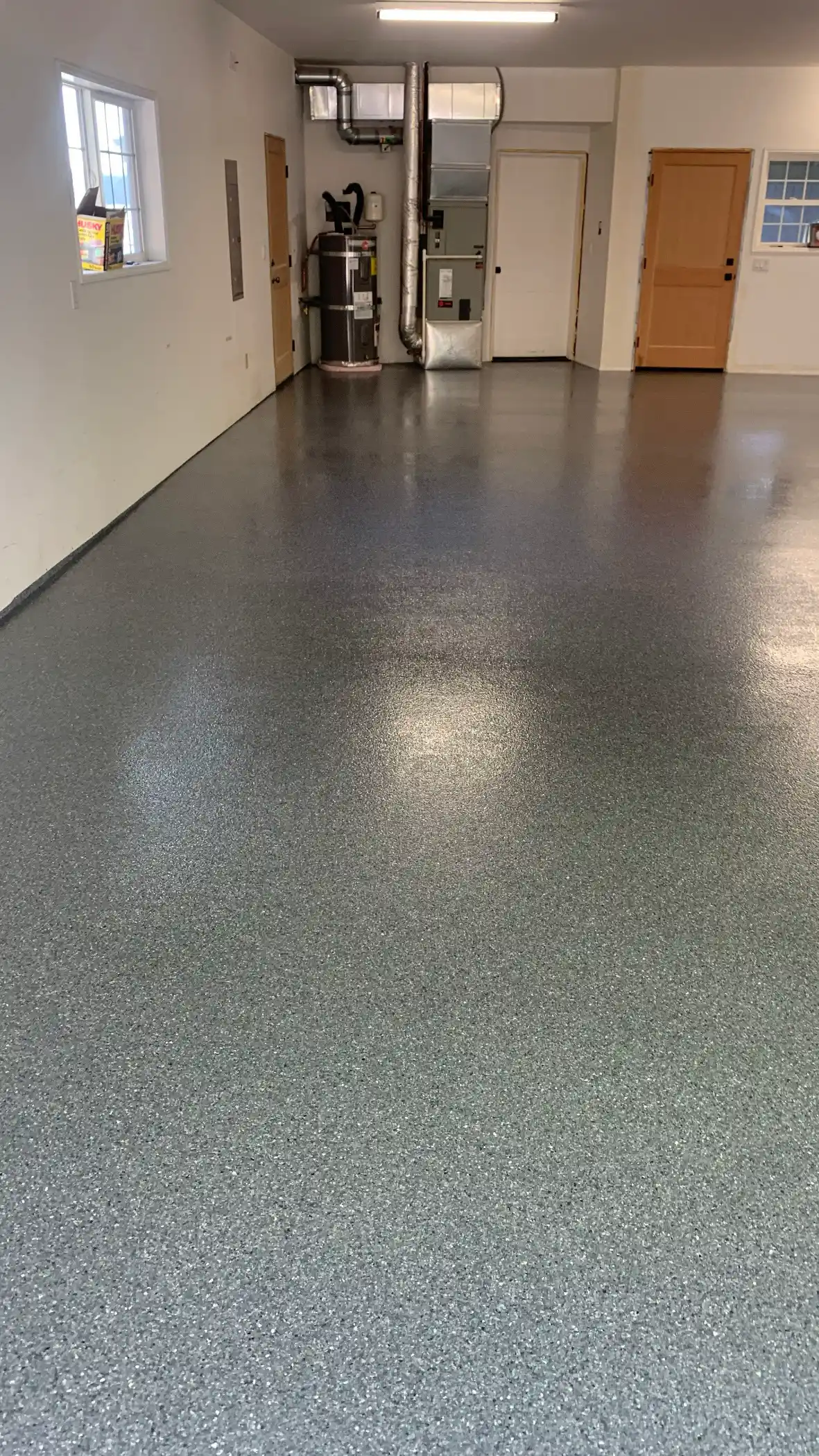
Slate Stone Evolution is a mix of greys, white and black chips. It looks clean against the unpainted drywall, and the pattern is busy enough to hide tire marks, sawdust and the drips that come off a wet car in November. On the coated stairs it gives each step a crisp edge you can see in a dim garage.
Those dark tracks on the old slab came from tires pressing into porous concrete. The polyaspartic topcoat is non-porous, so oil, salt and grime sit on top where a mop can reach them. It also resists hot tire pickup, the problem where warm tires lift a weak coating right off the floor. Our post on preventing hot tire pickup explains why some floors fail that test.
The bond does the rest. Penntek polyurea bonds chemically with the concrete at over 1,300 PSI. Before the coating comes up, the concrete will come up. Watch the Penntek Hammer Test to see what that looks like under abuse. Typical epoxy is a different story, and problems often start to show in years 3–5.
Sammamish sits up on the plateau between Lake Sammamish and the Snoqualmie Valley, with tall evergreens and a long wet season. Garages here take in rain, needles and road grime from October to May. A coated floor and coated stairs mean that mess wipes up instead of soaking in.
Want to compare looks? See a Sammamish garage we finished in Tidal Wave, or read more about our Sammamish garage floor coatings.
Yes. Stairs get the same grind, basecoat, flake and topcoat as the floor. The flake adds texture underfoot, and the finish runs continuously from the slab up to the door.
It is one data point we record at every consult. We take readings before quoting so we know whether a slab needs our two-layer moisture barrier system. The reading goes on the Penntek warranty registration along with the job details.
Certified Penntek polyurea is built as a 30–40 year floor, with up to 5x the lifespan of typical epoxy. Size doesn't change that. It carries a limited lifetime warranty backed by Penntek, the manufacturer.
Have a big garage with stairs, posts or odd corners? Book a free in-home quote or call 425-226-6085. Sheldon runs the installs himself, so the person measuring your stairs knows exactly how they'll be coated.
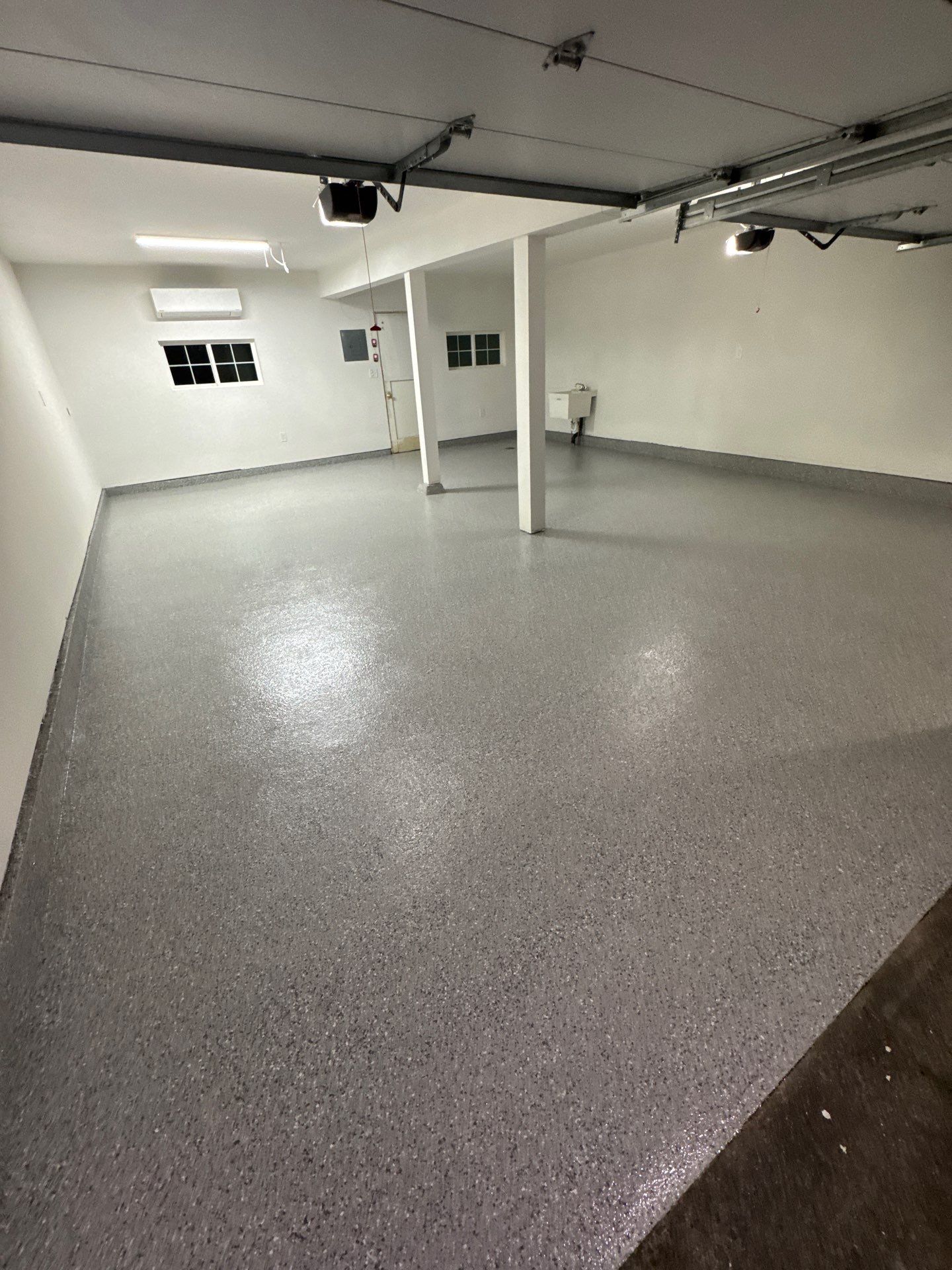
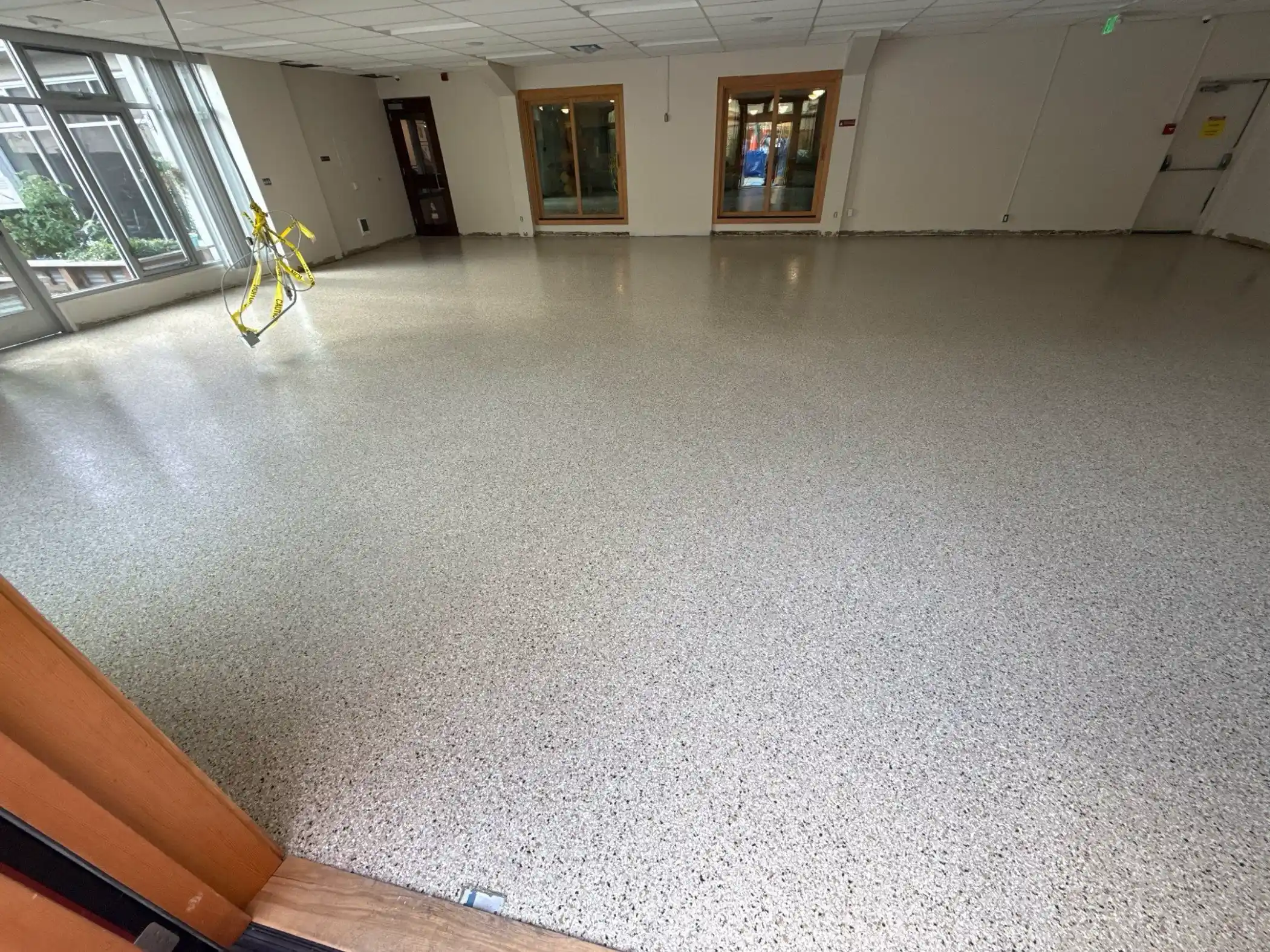
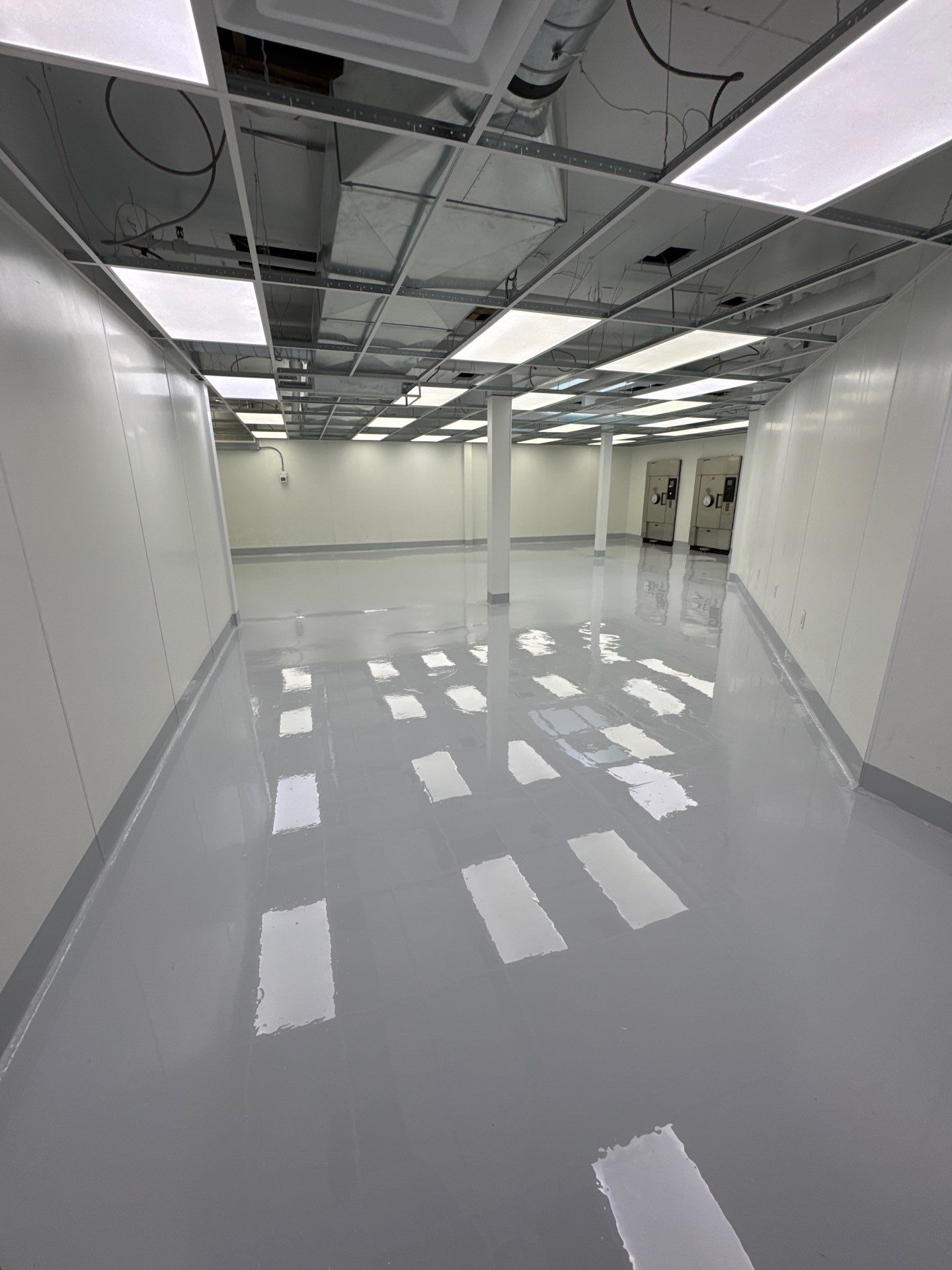
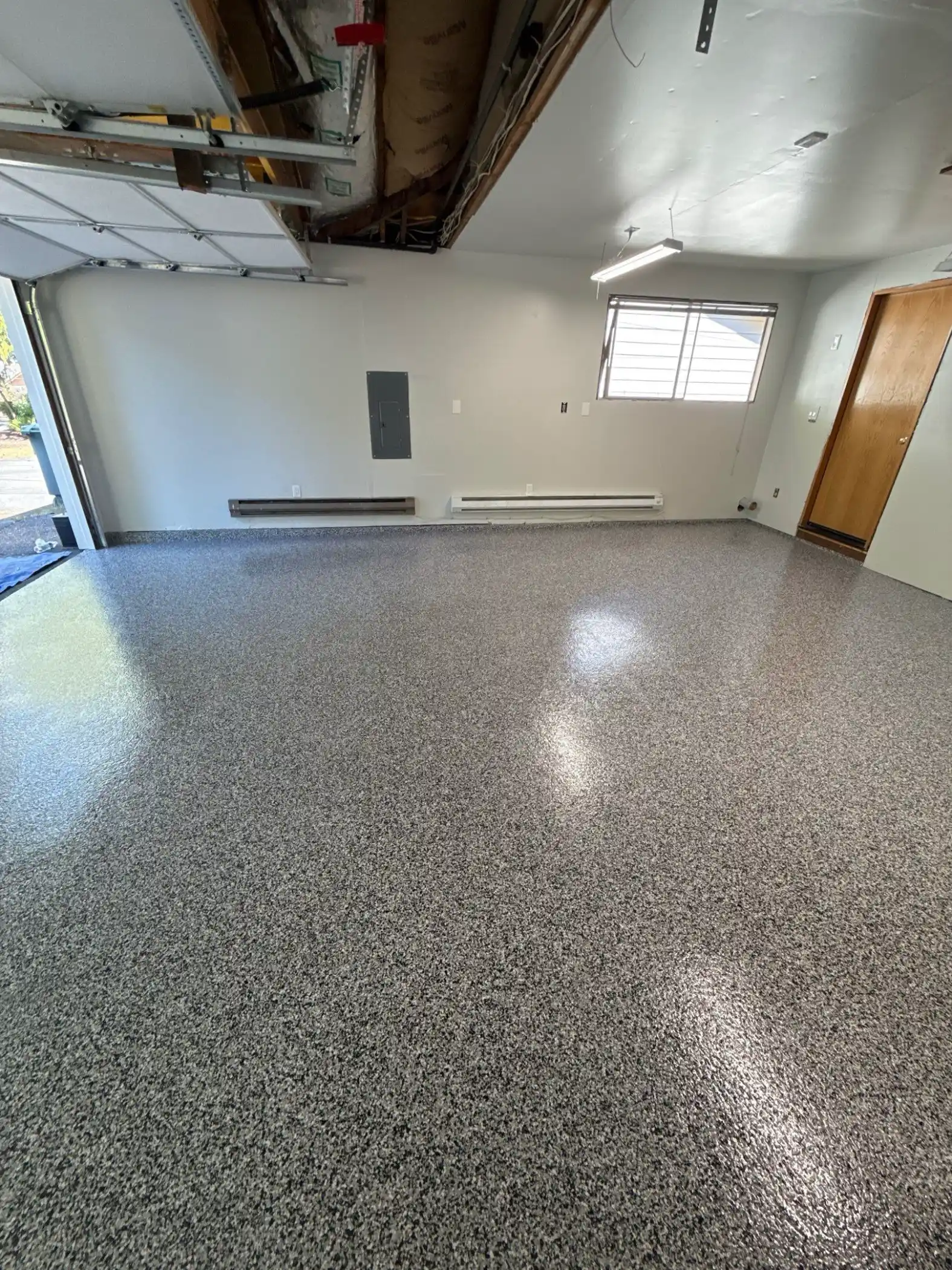
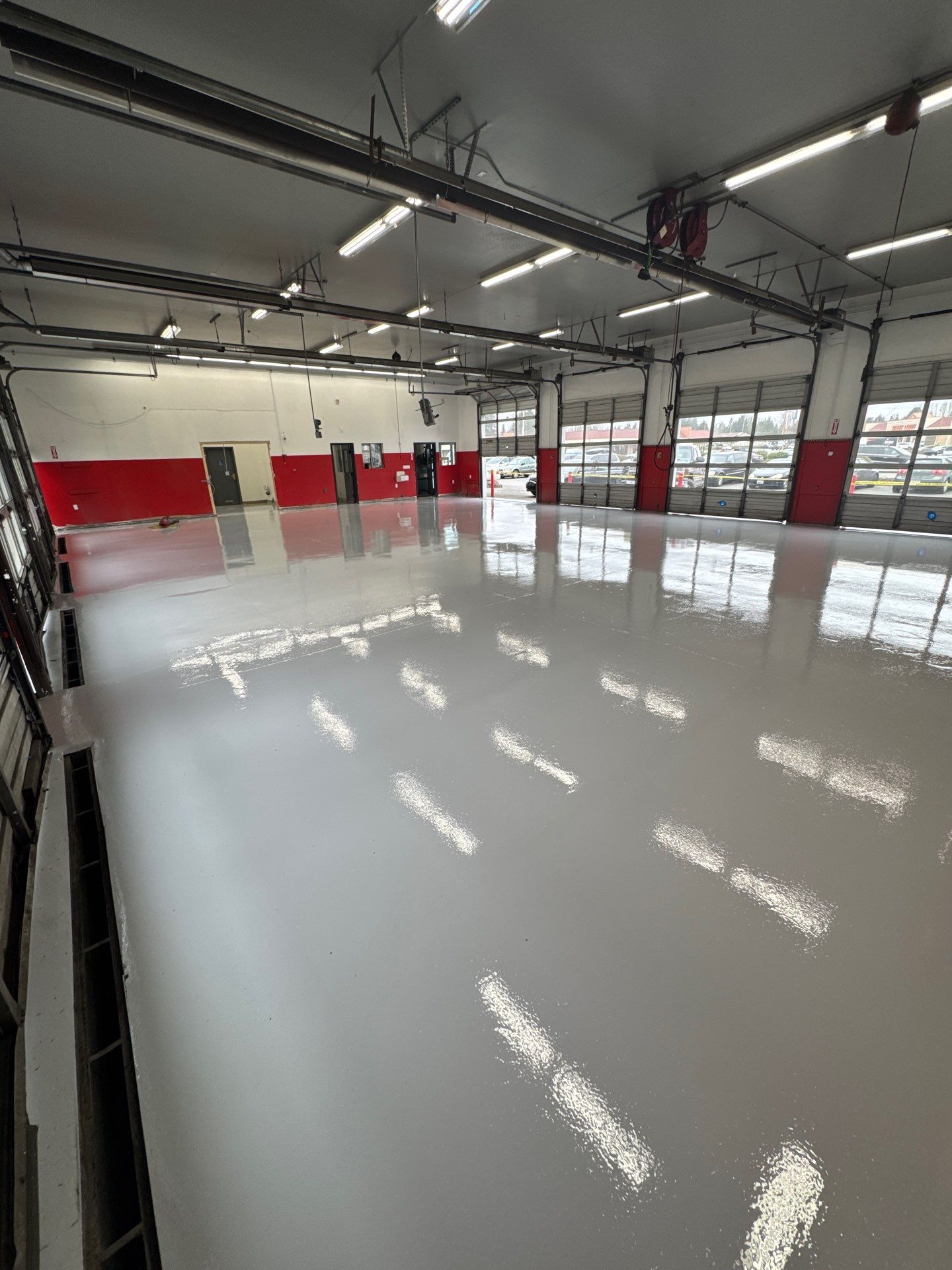
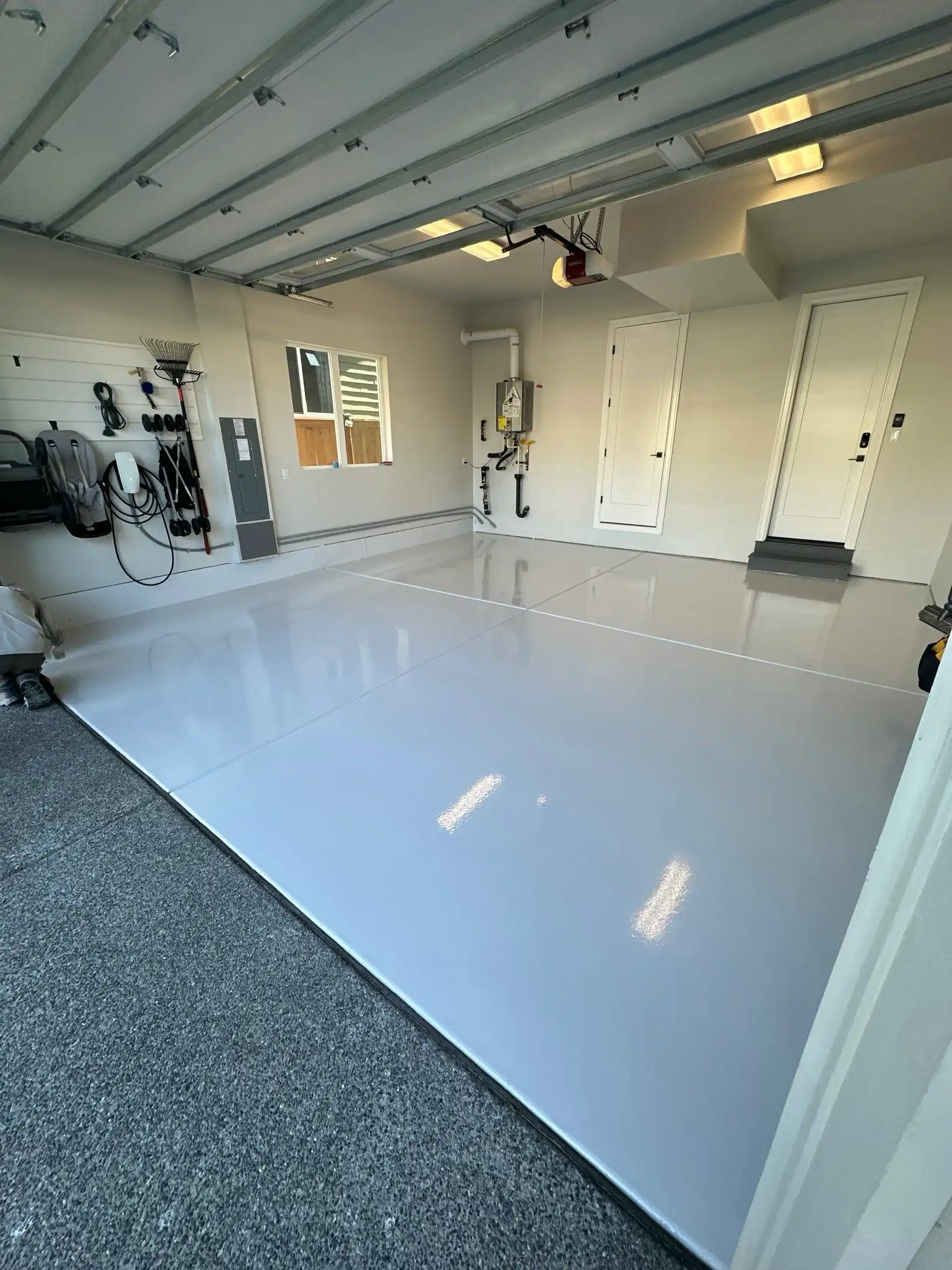
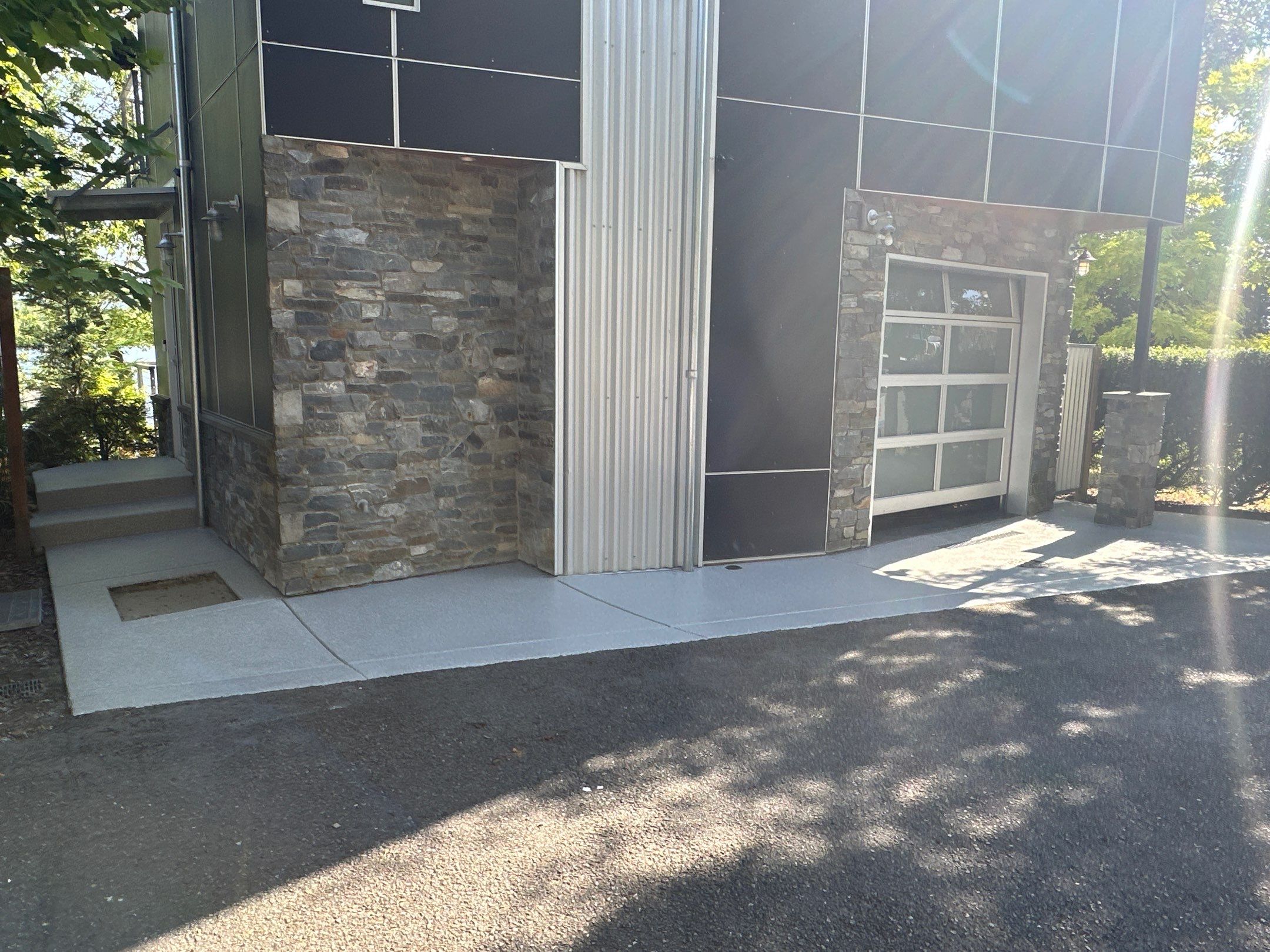
Here's just a few of our previous projects.