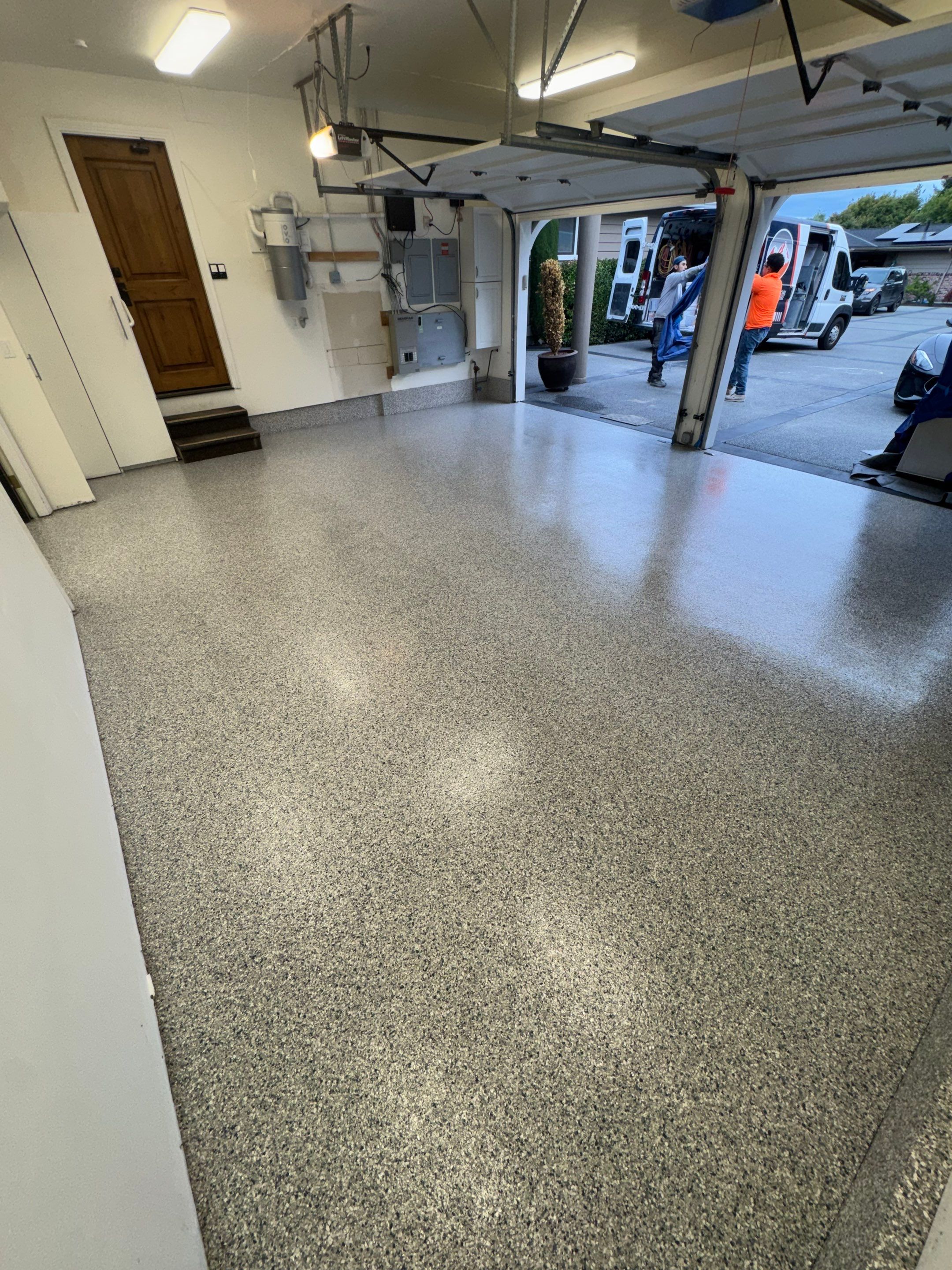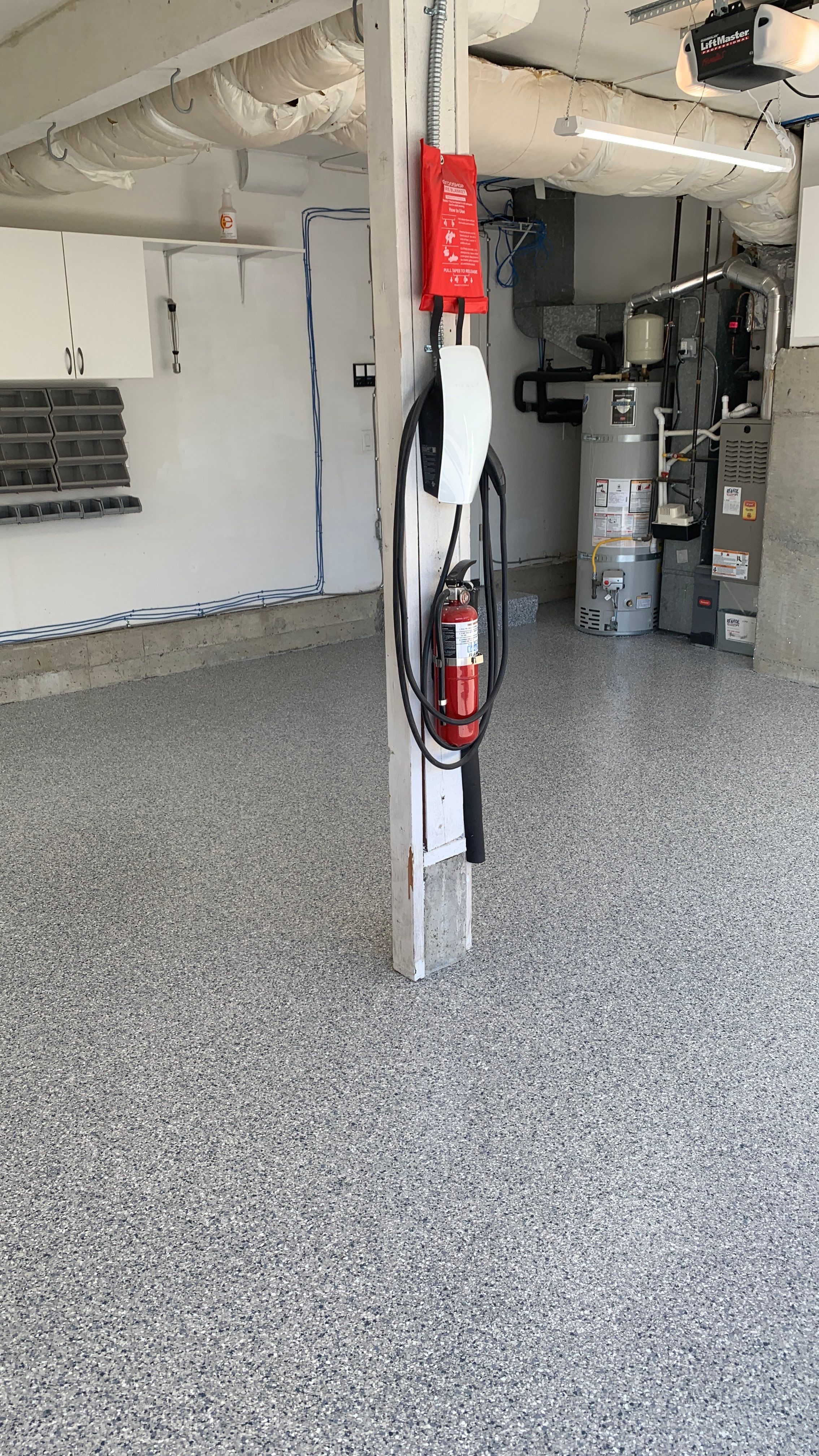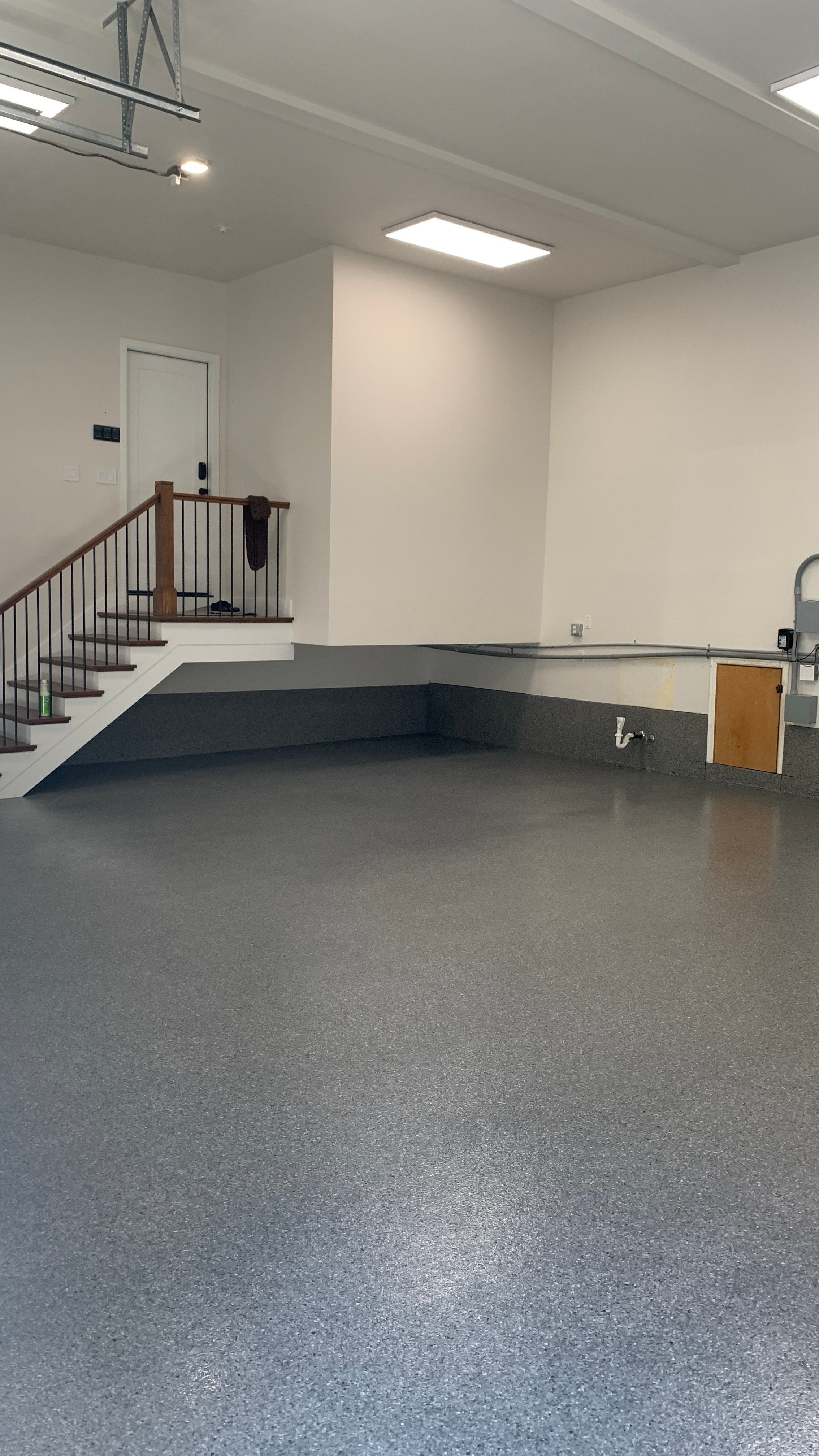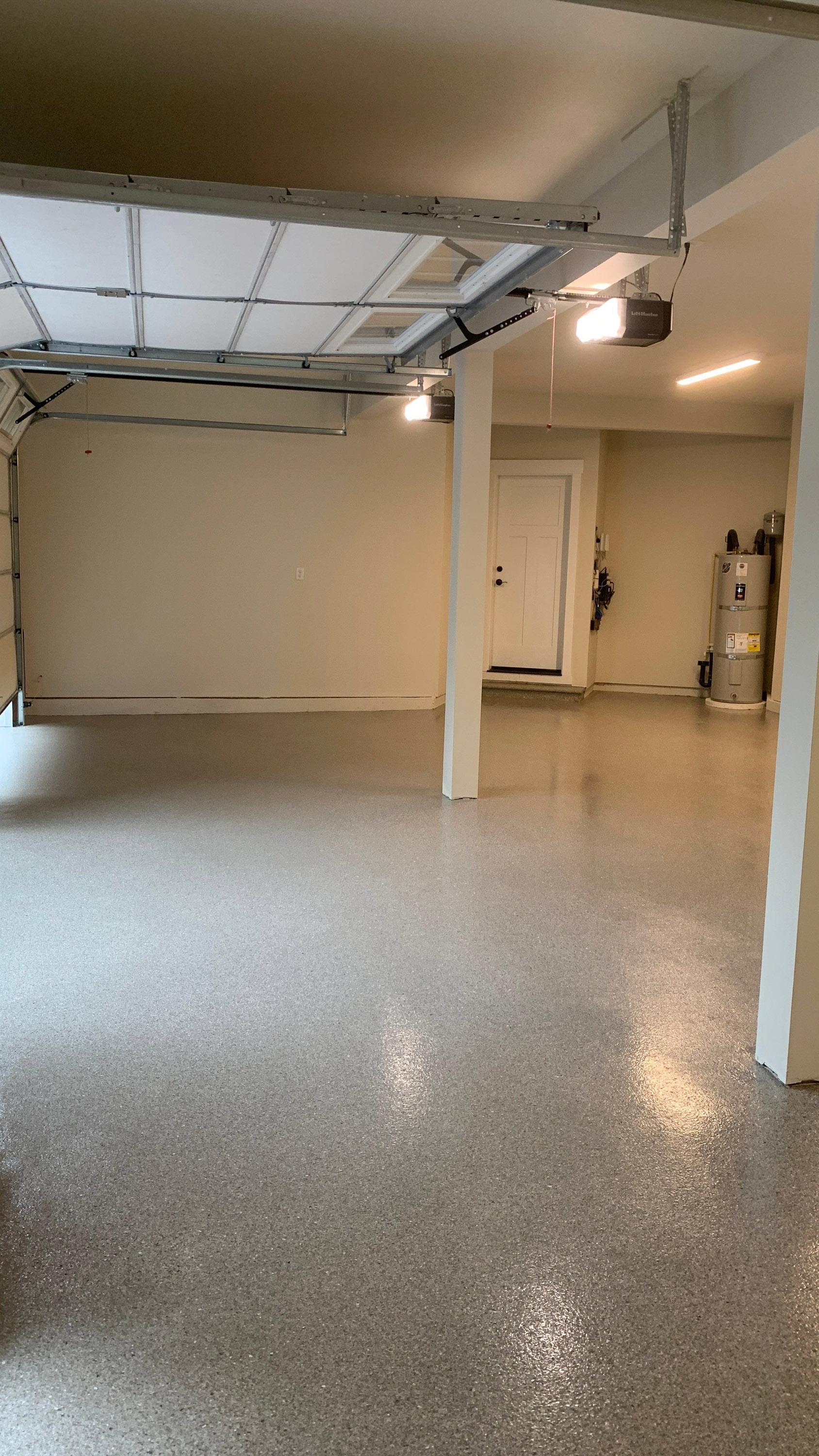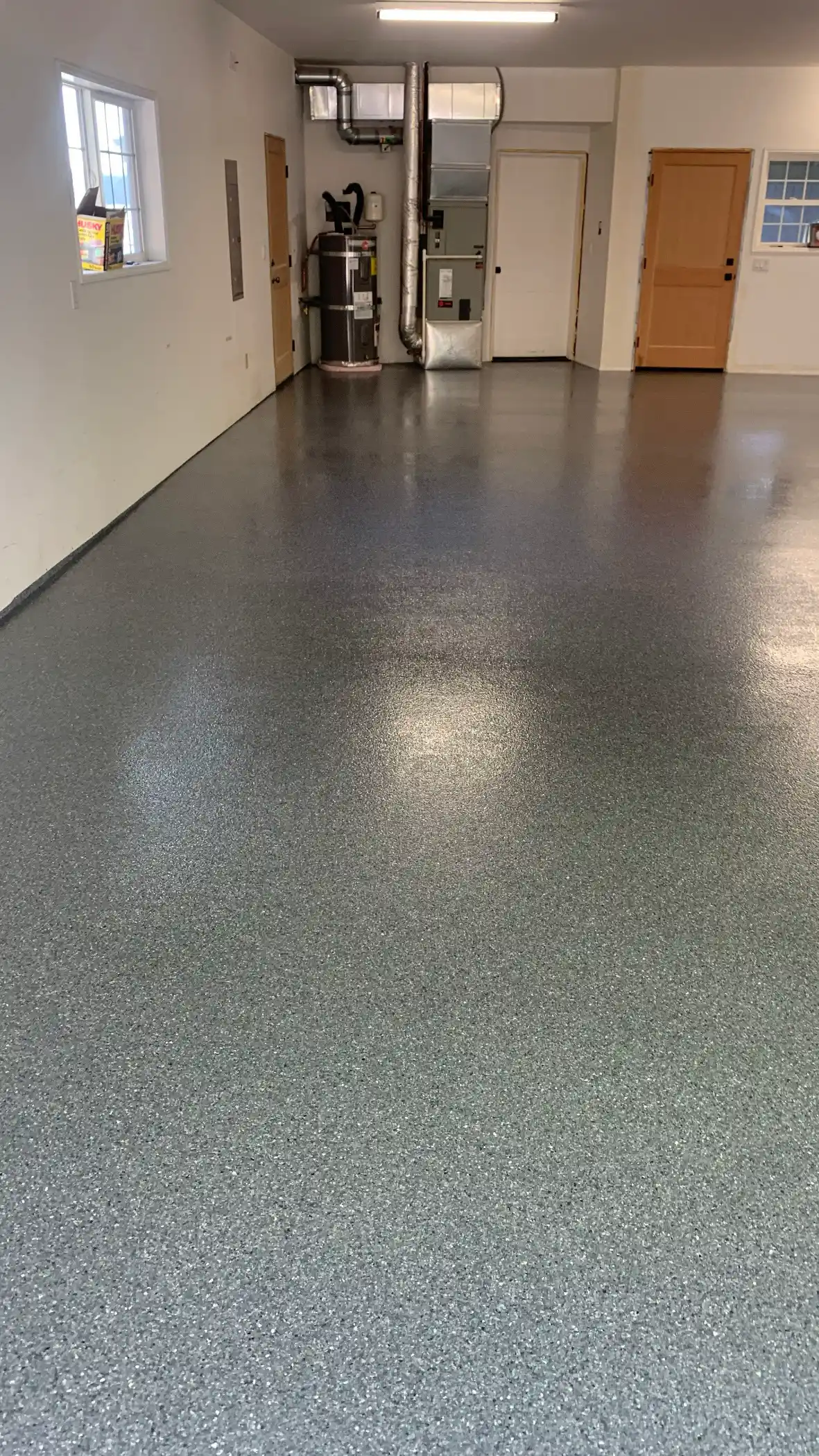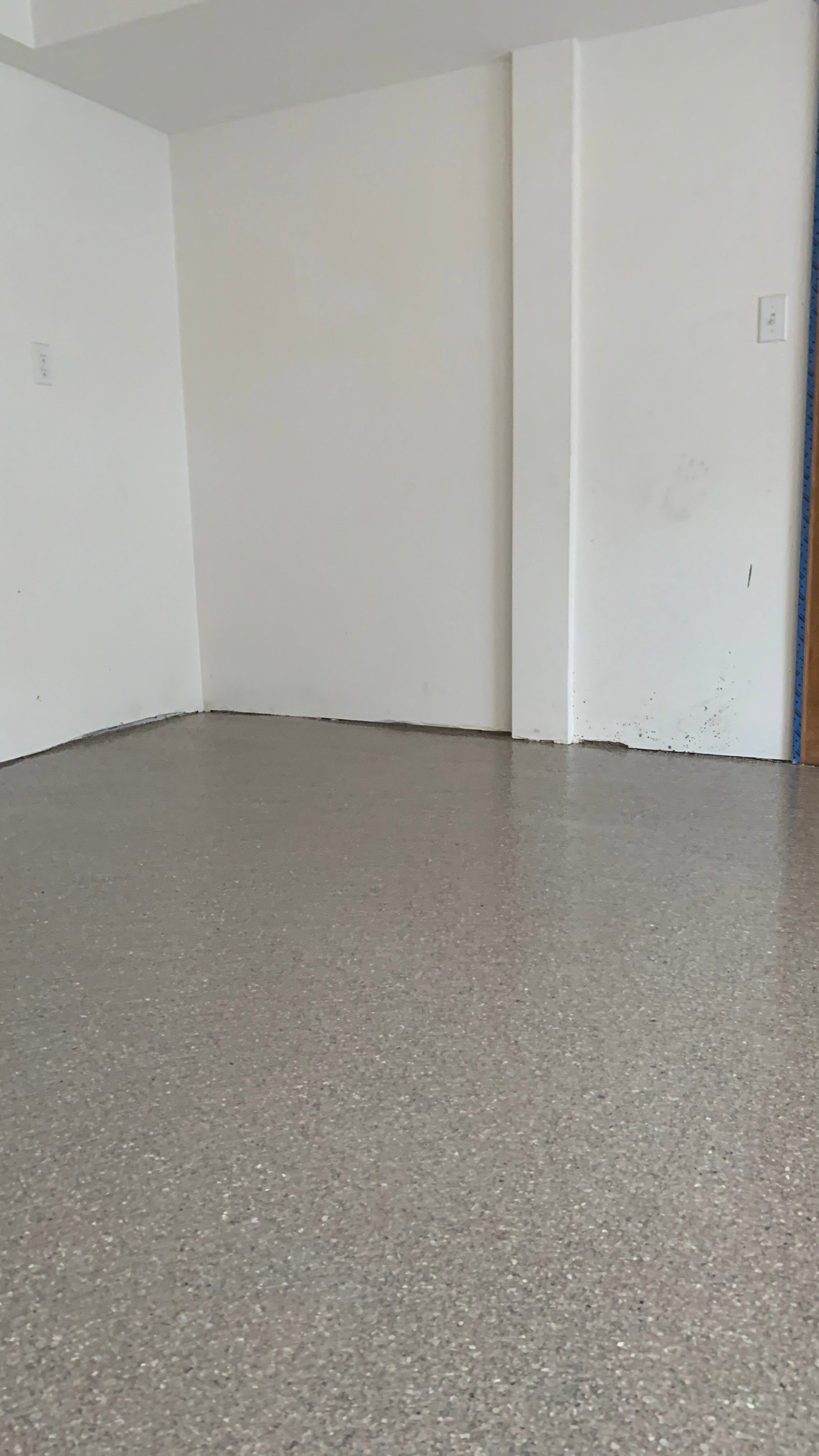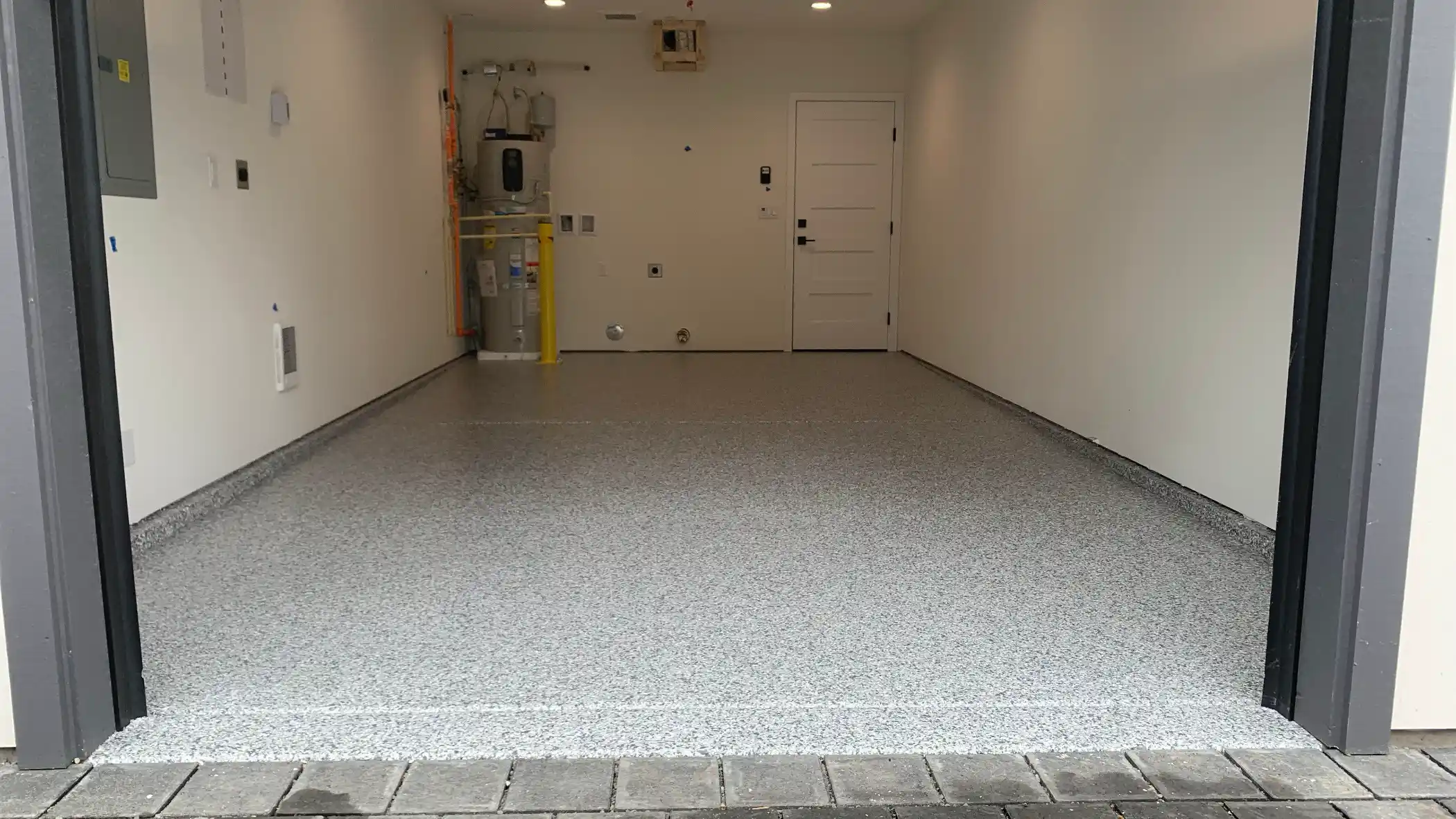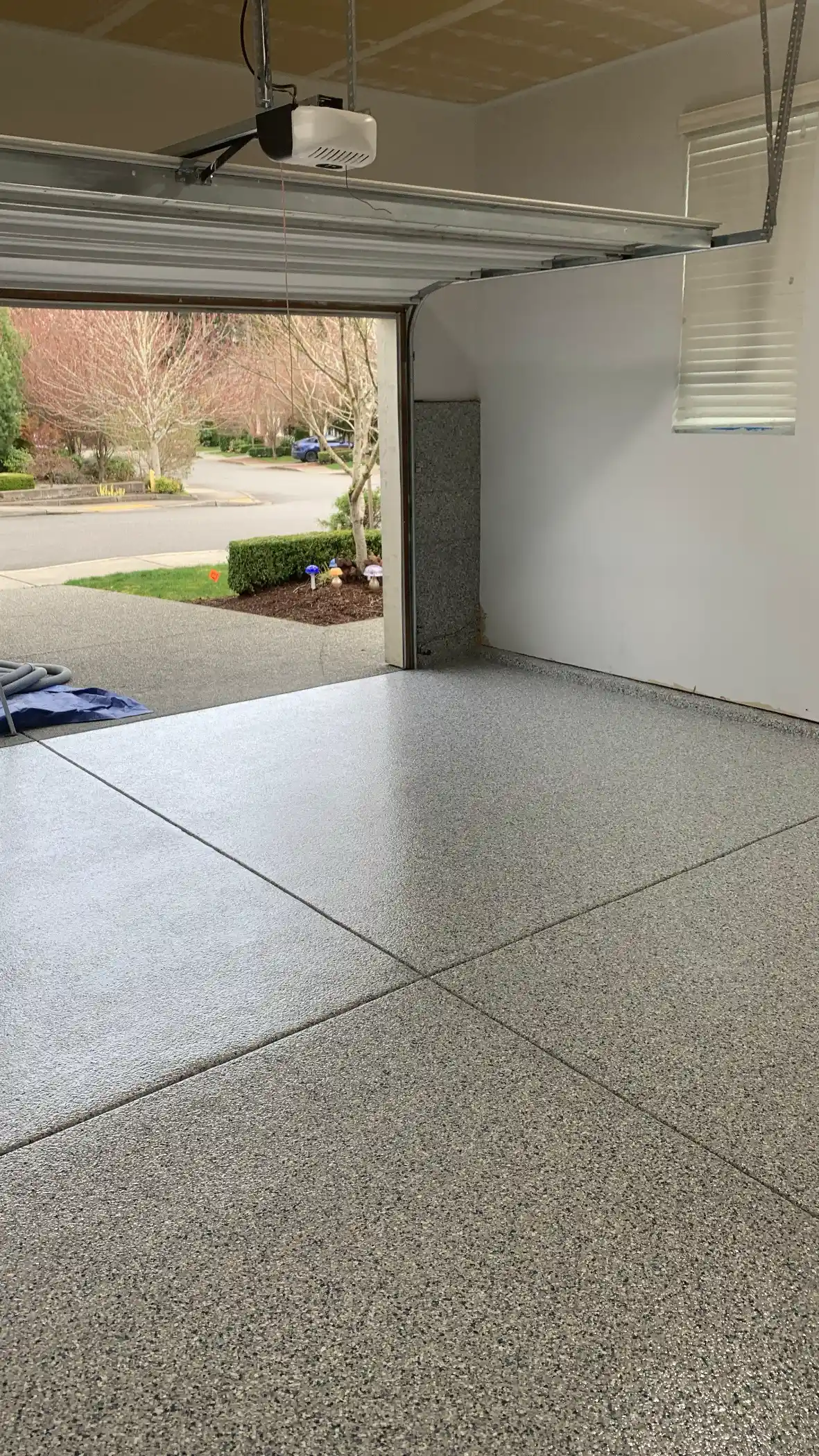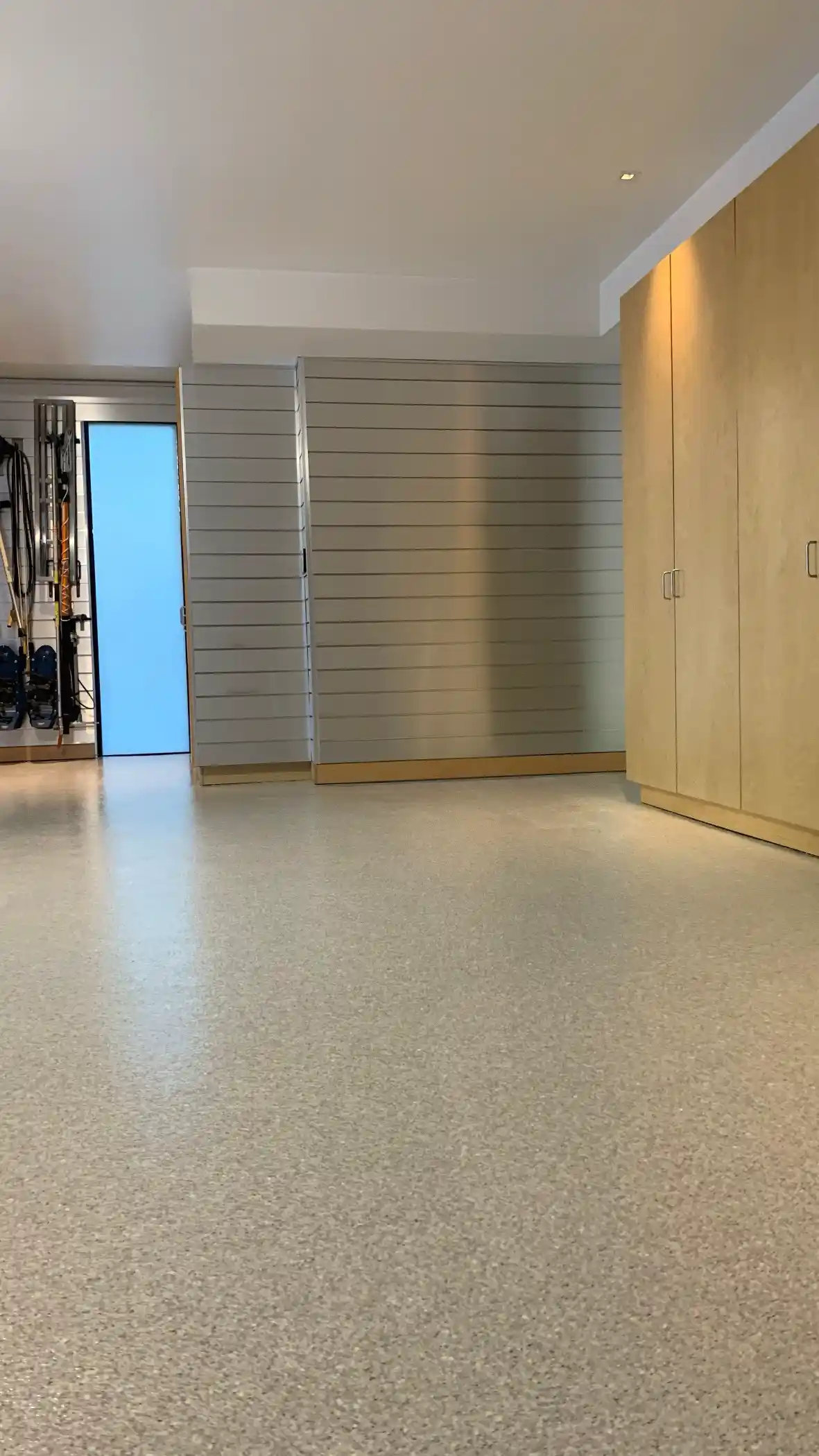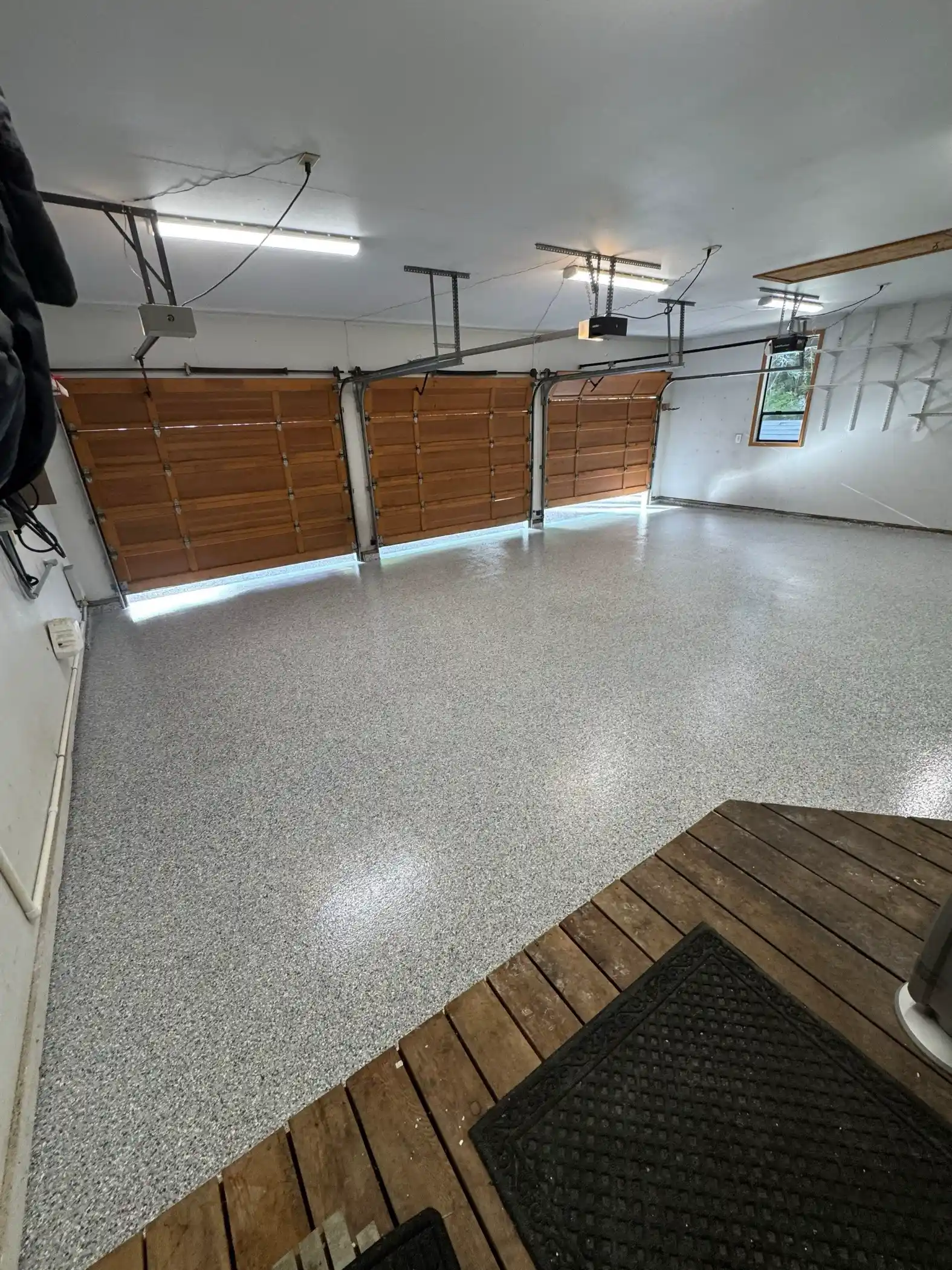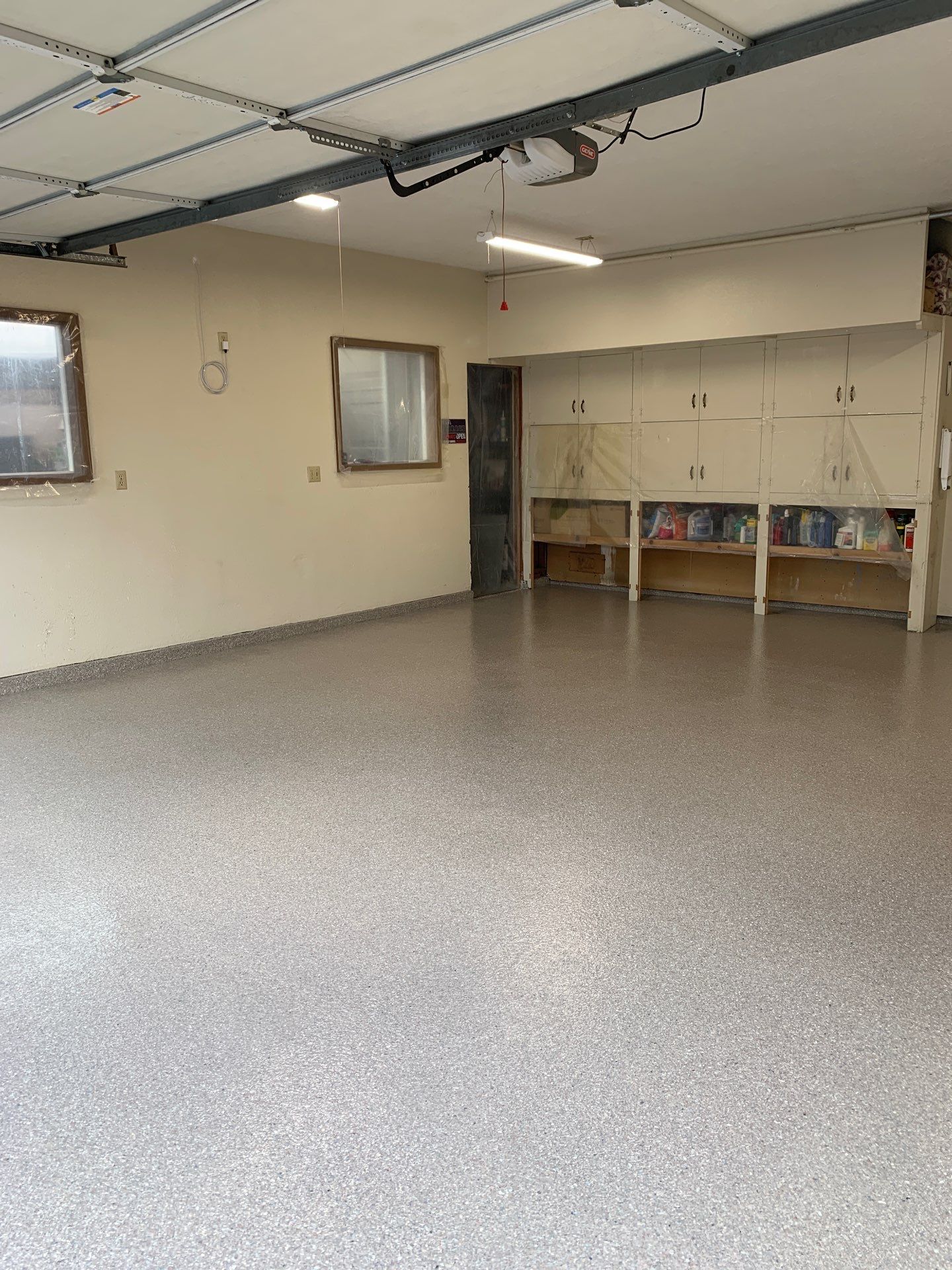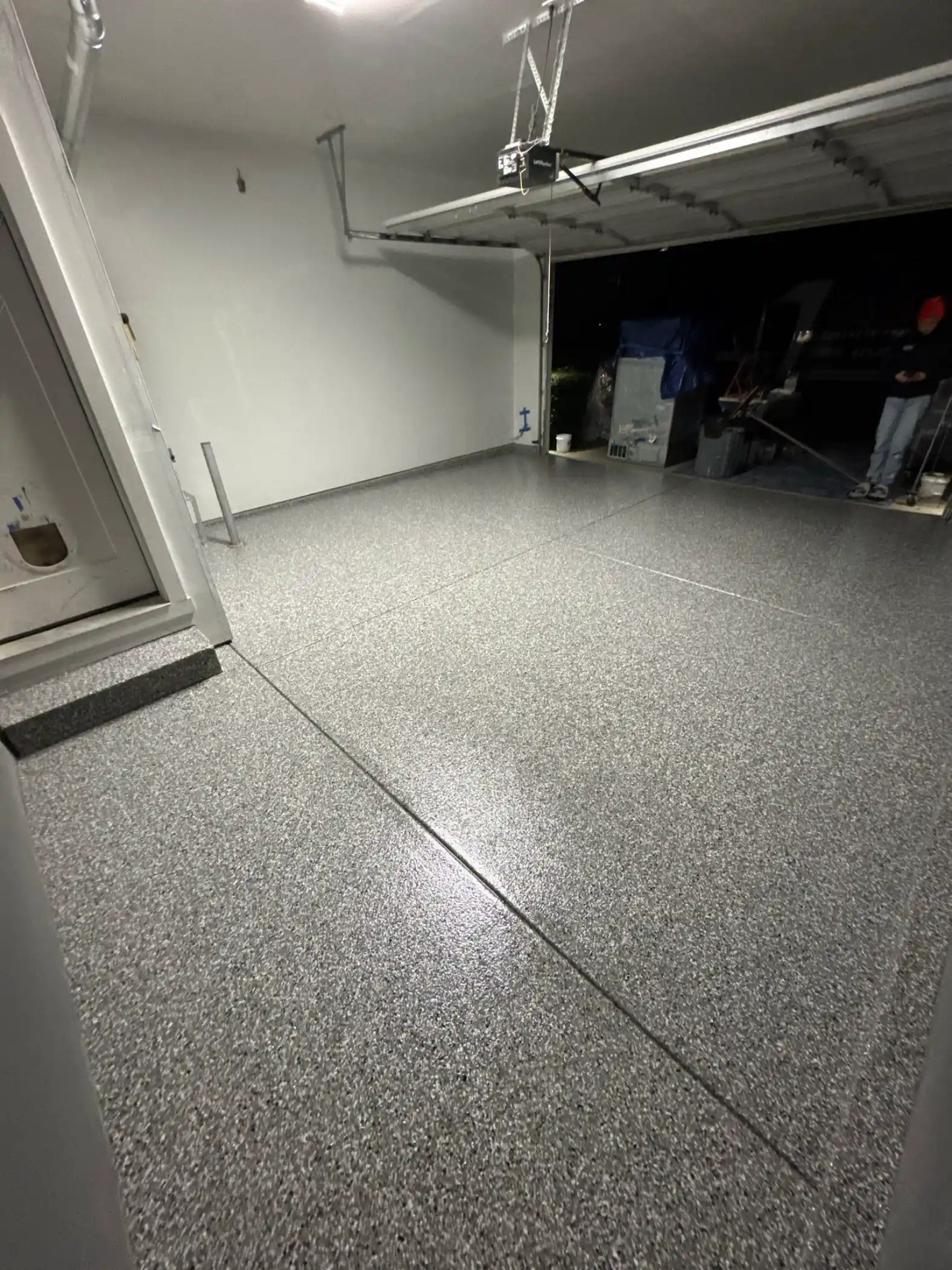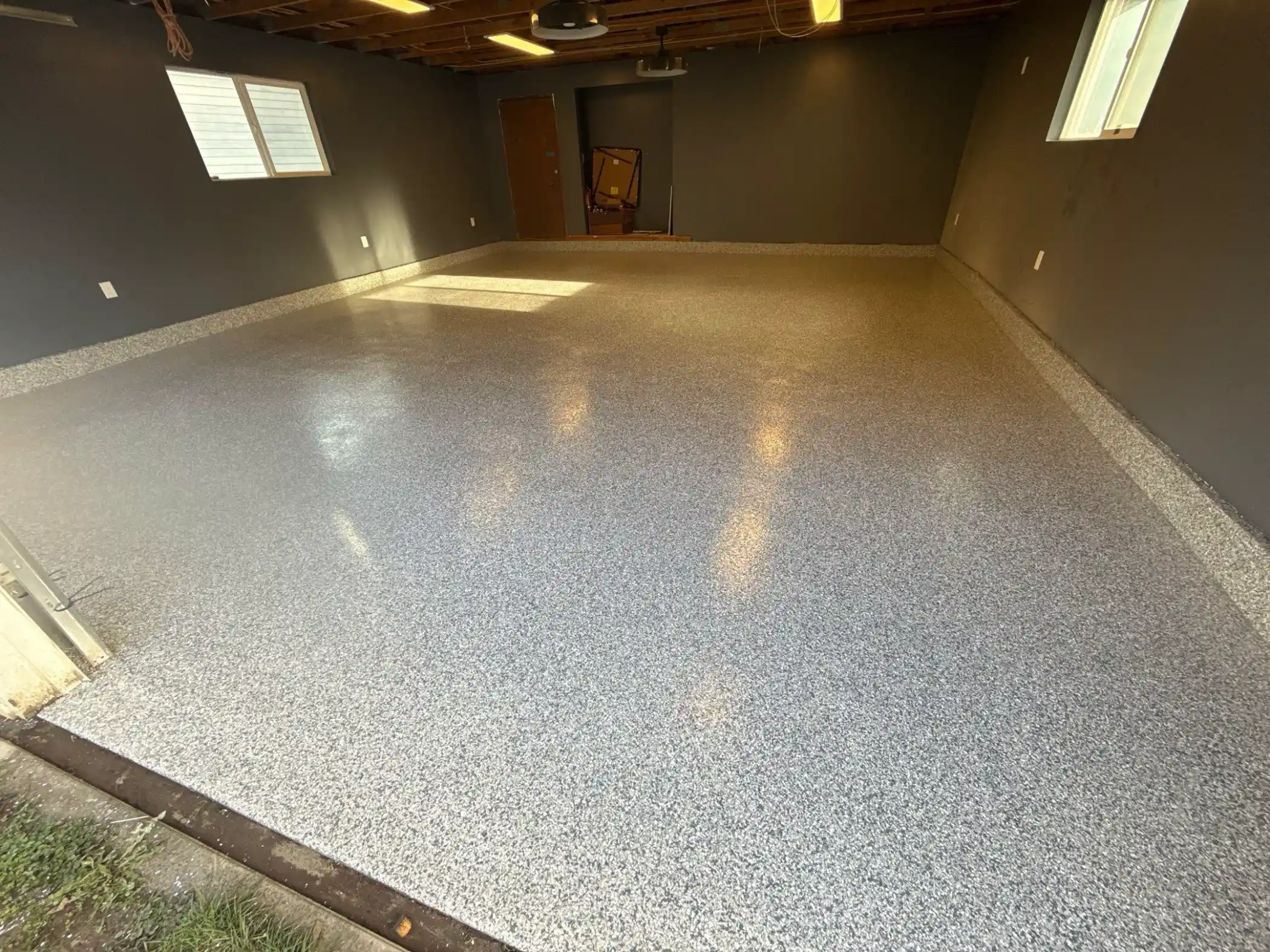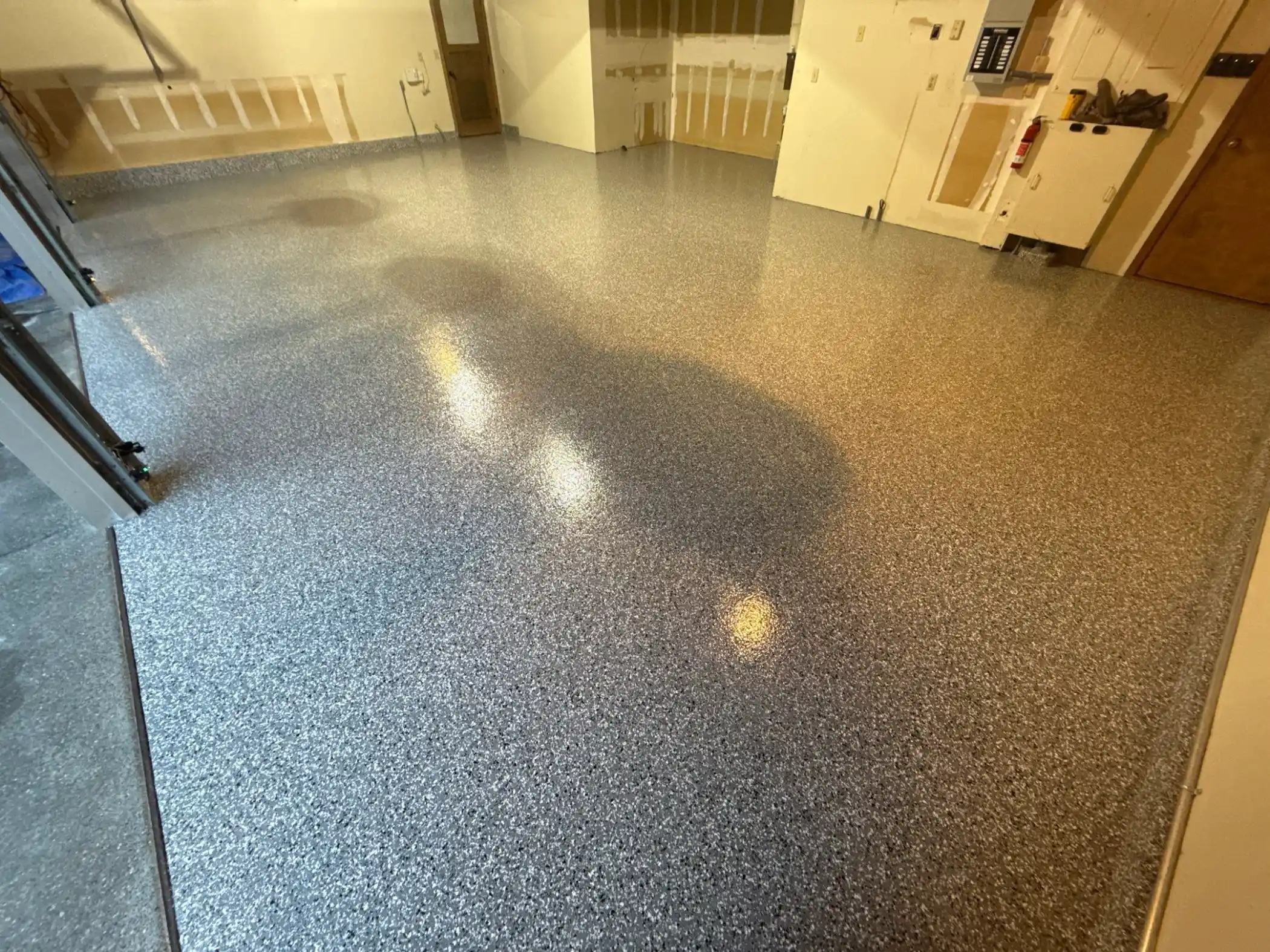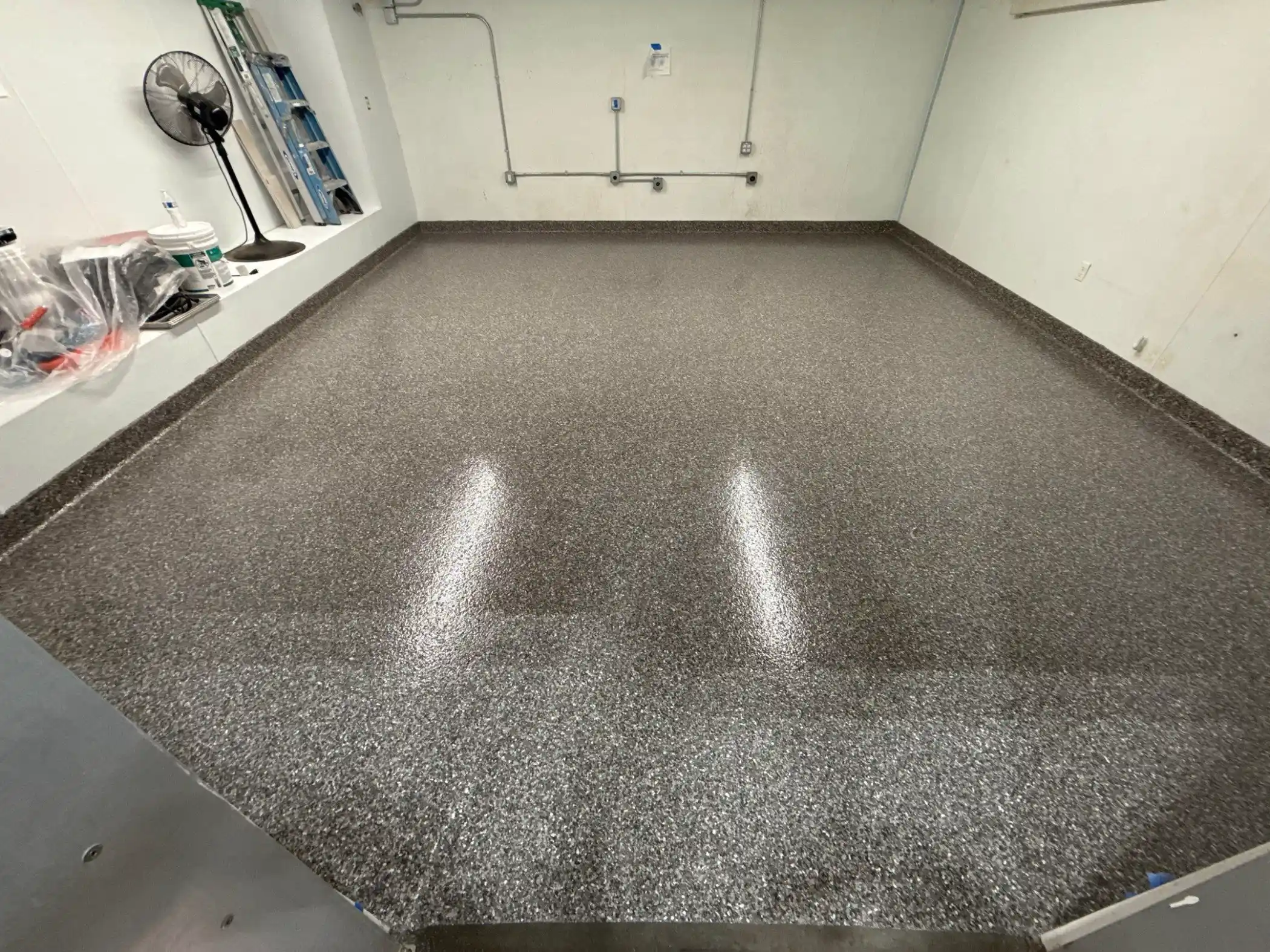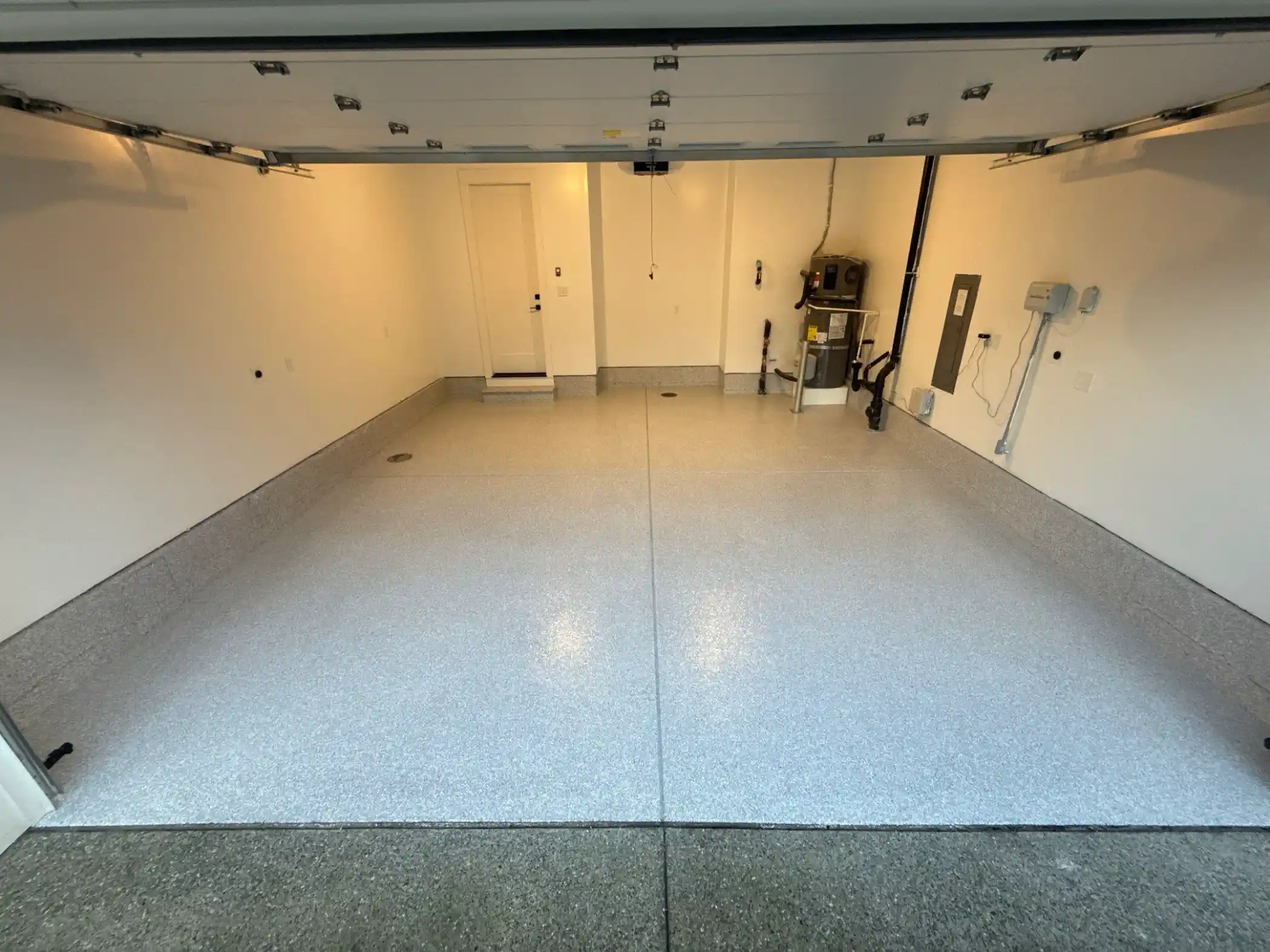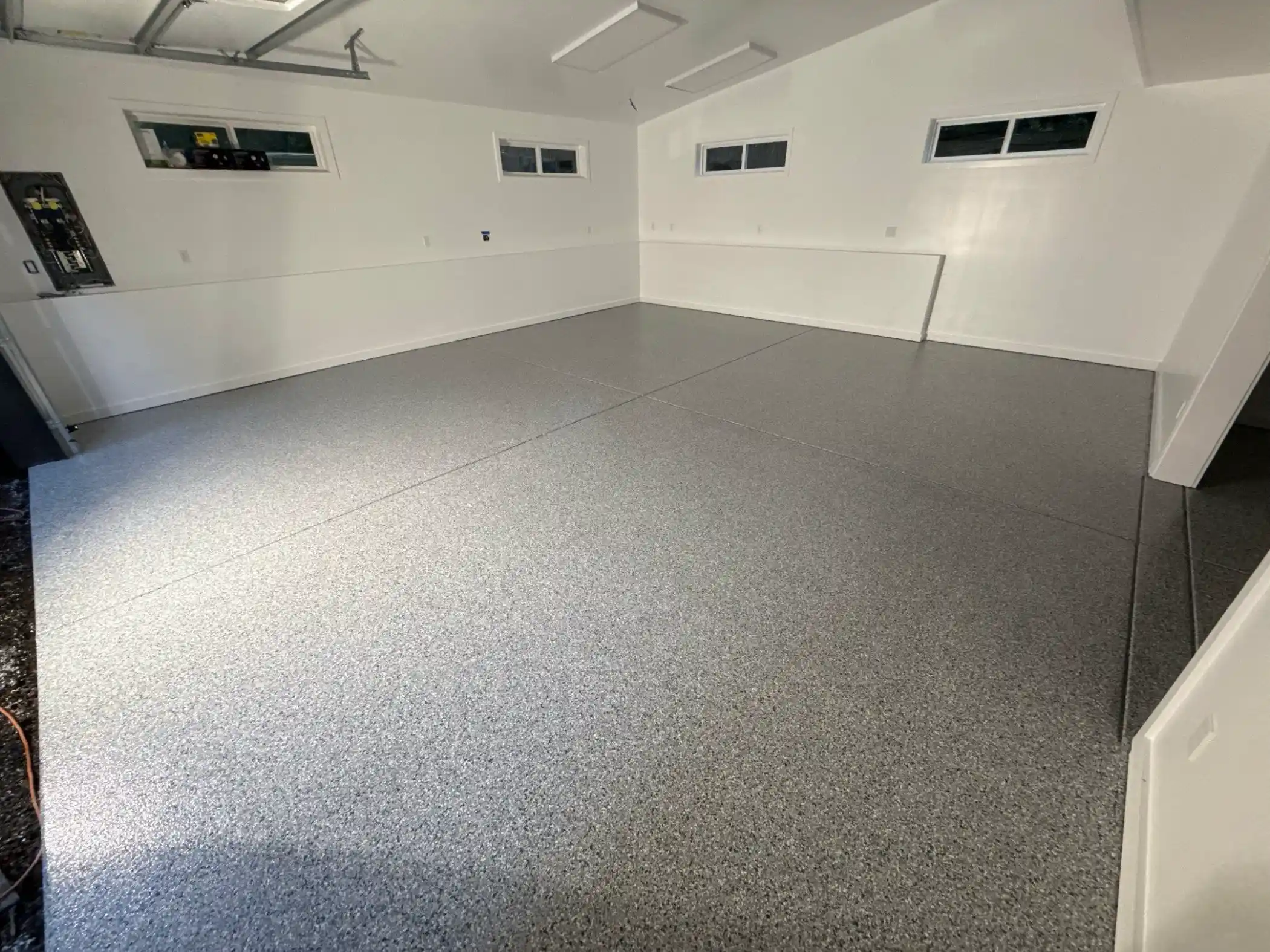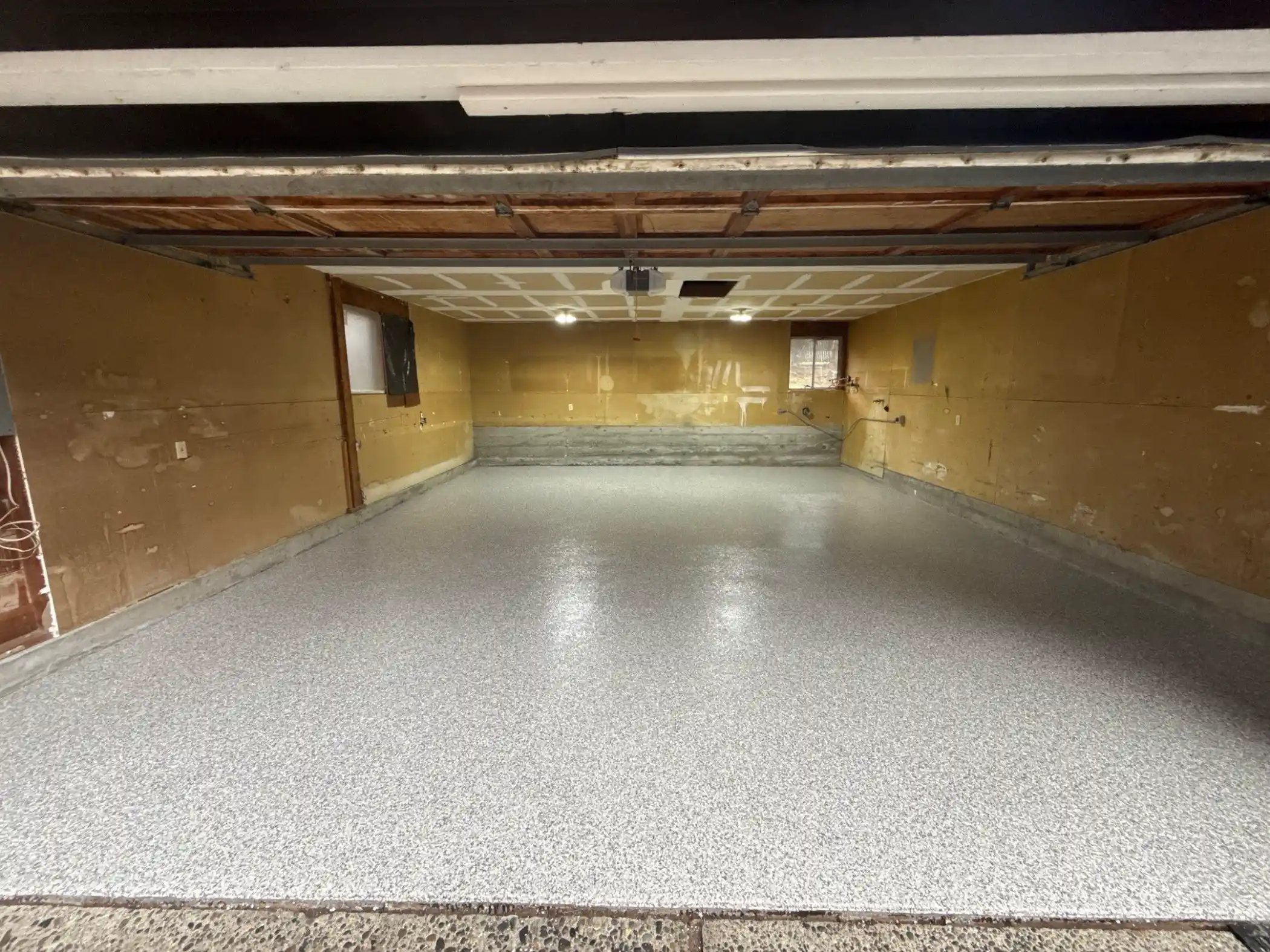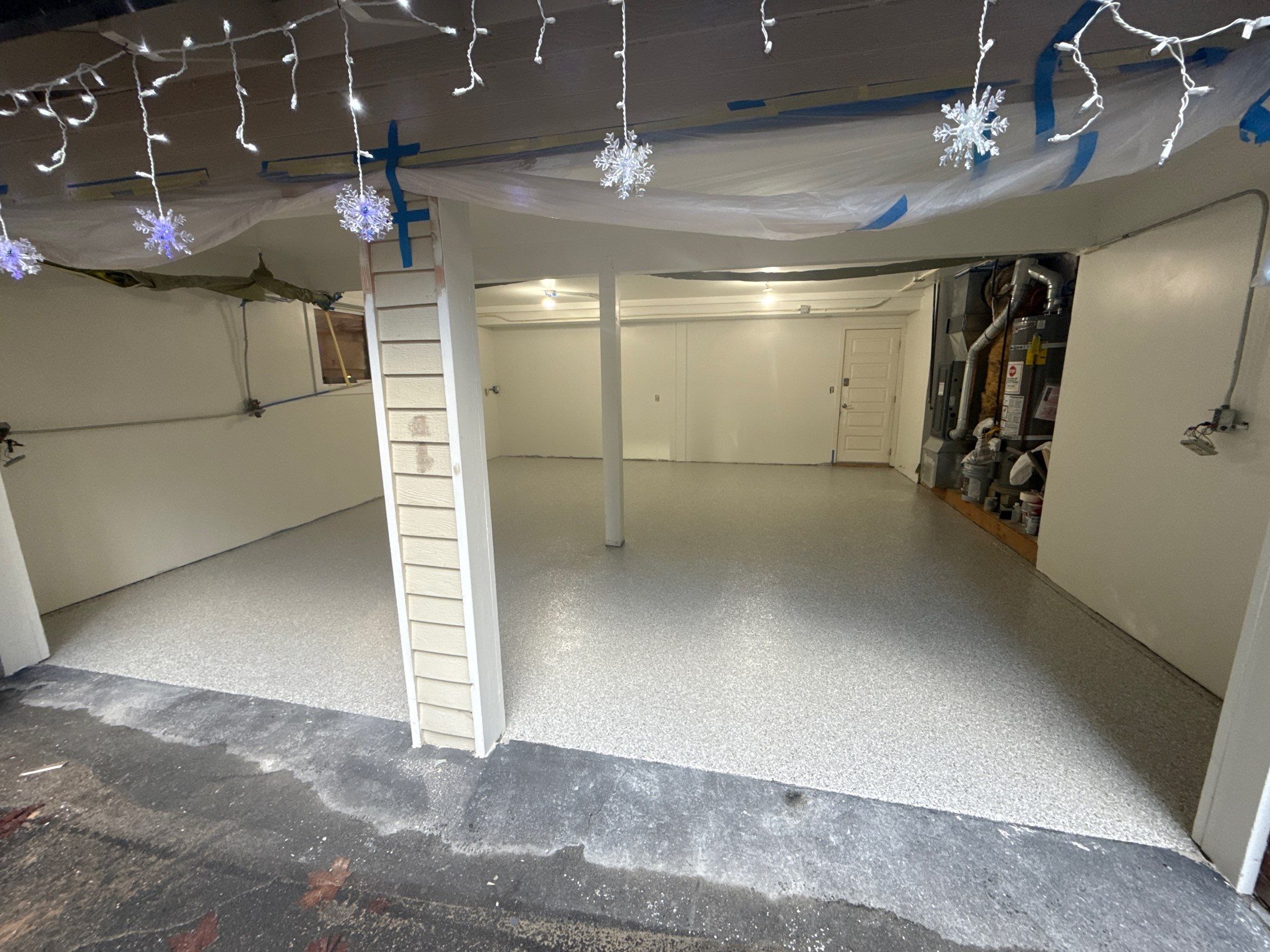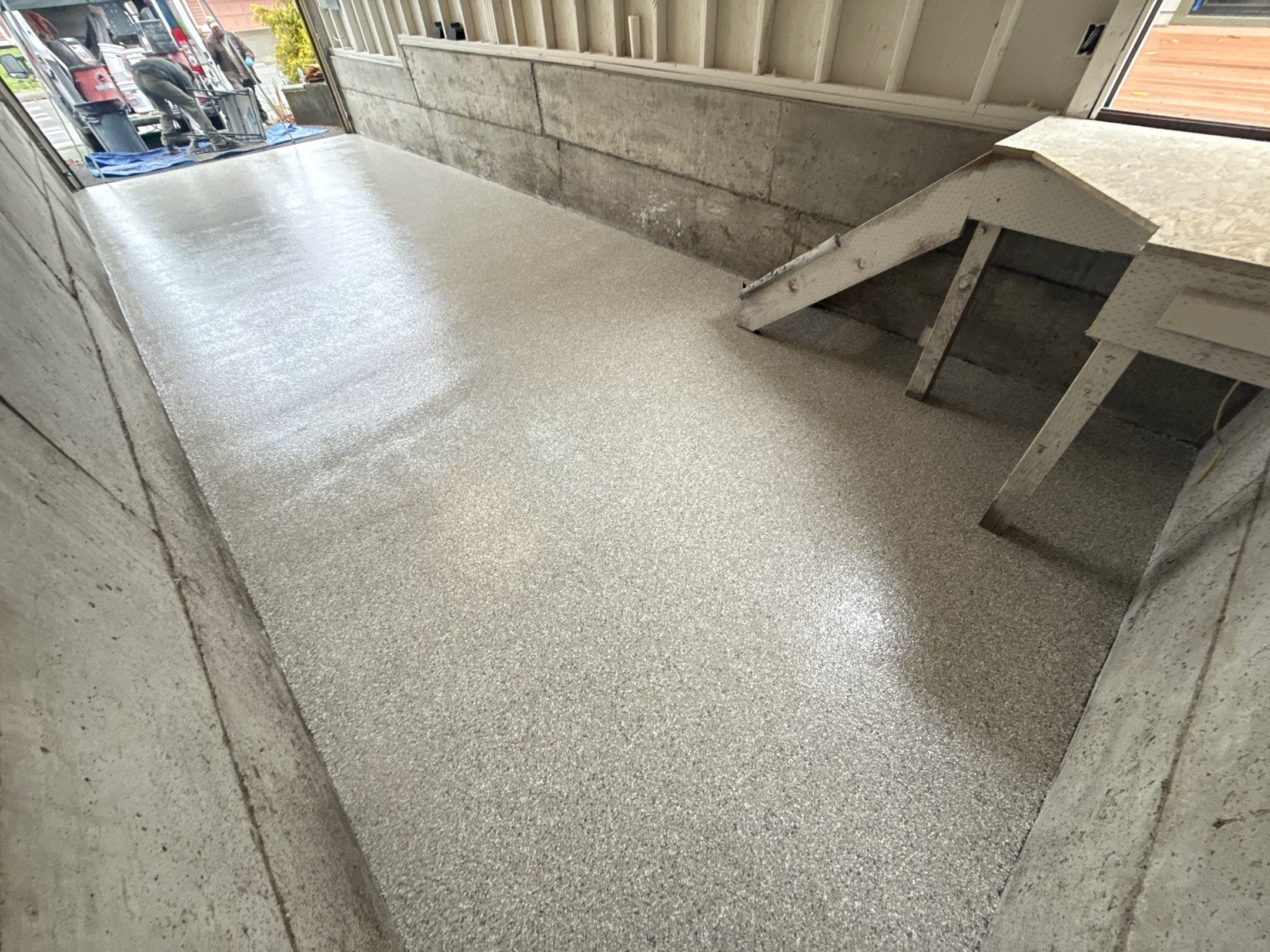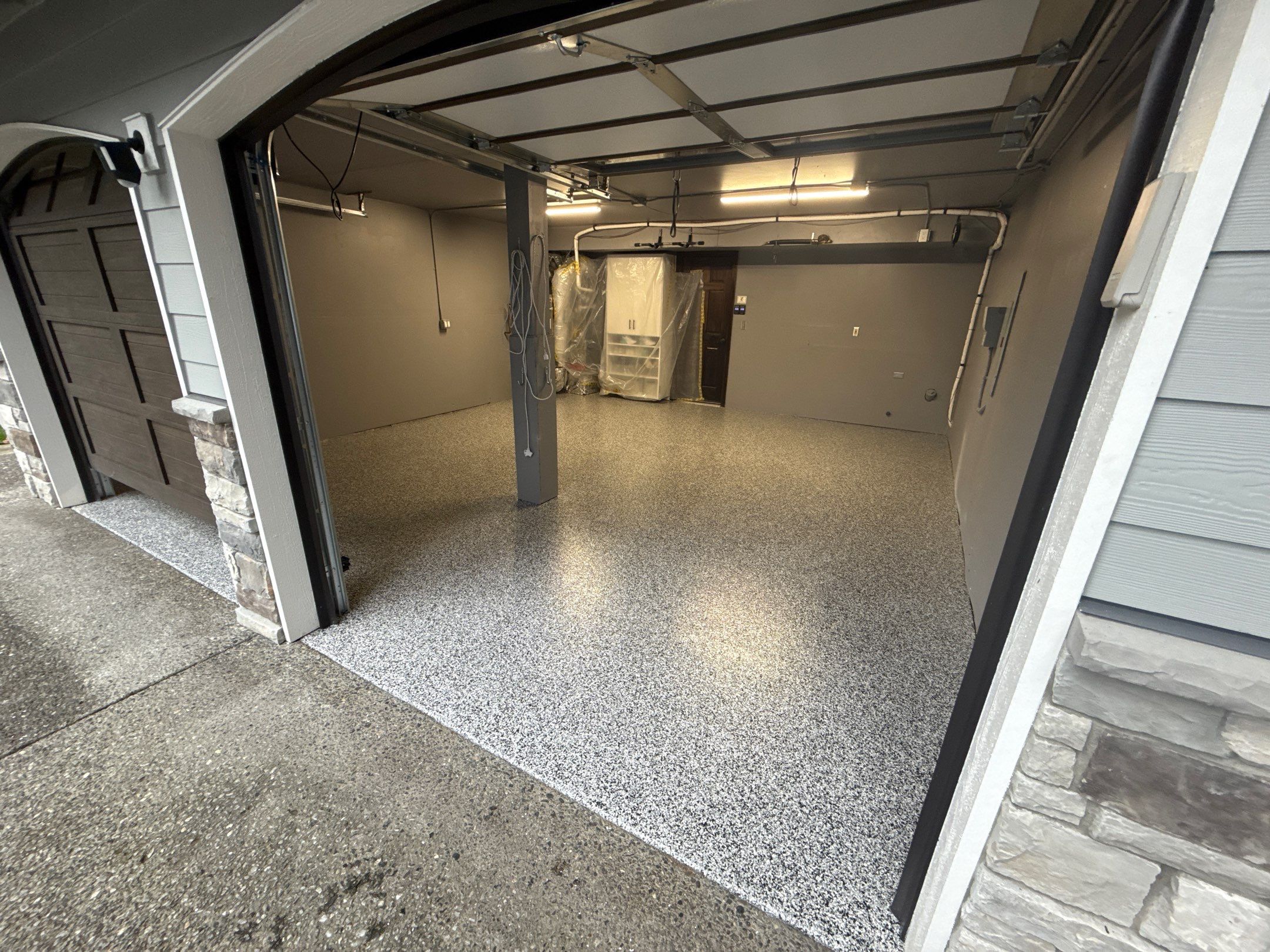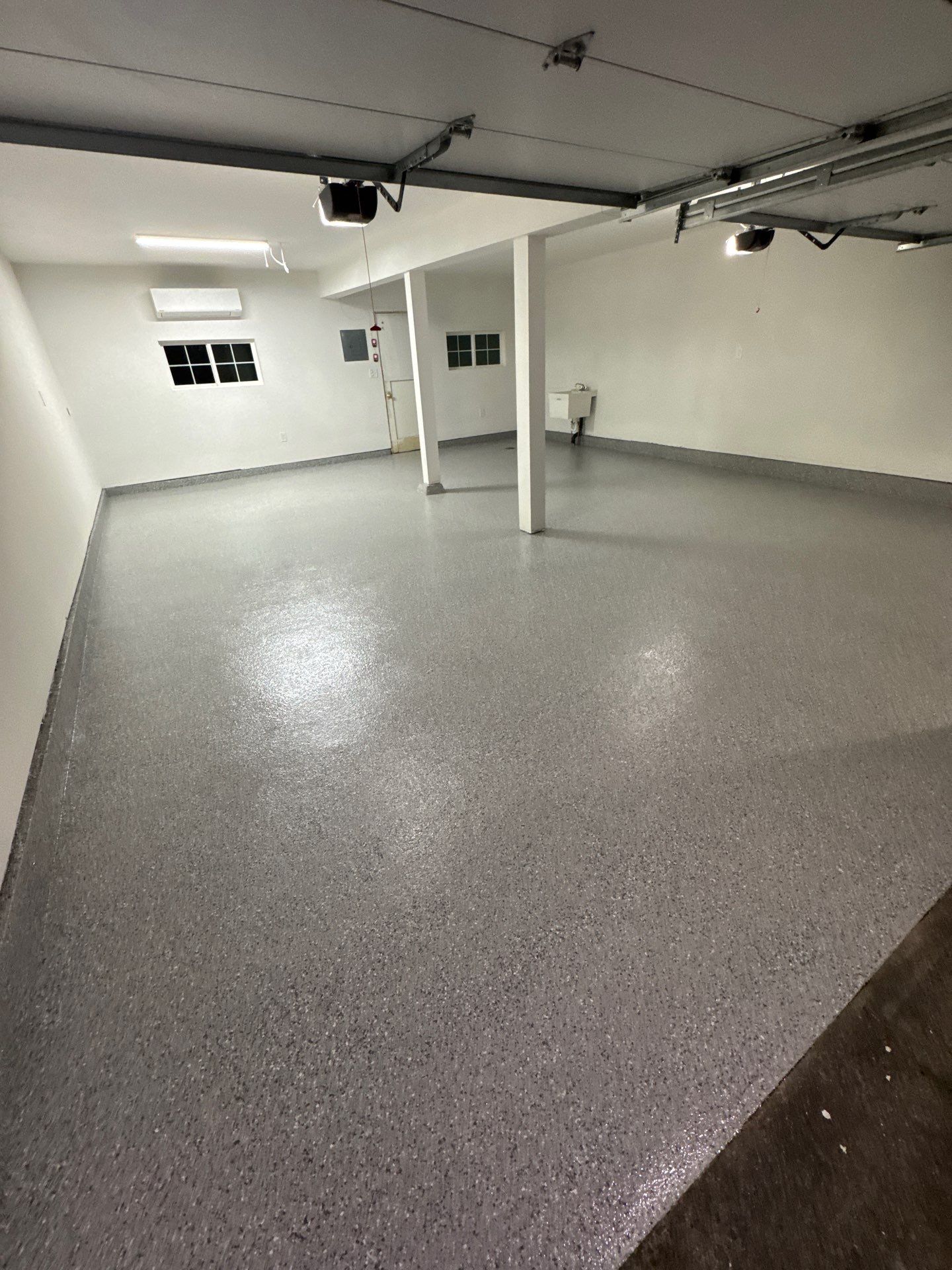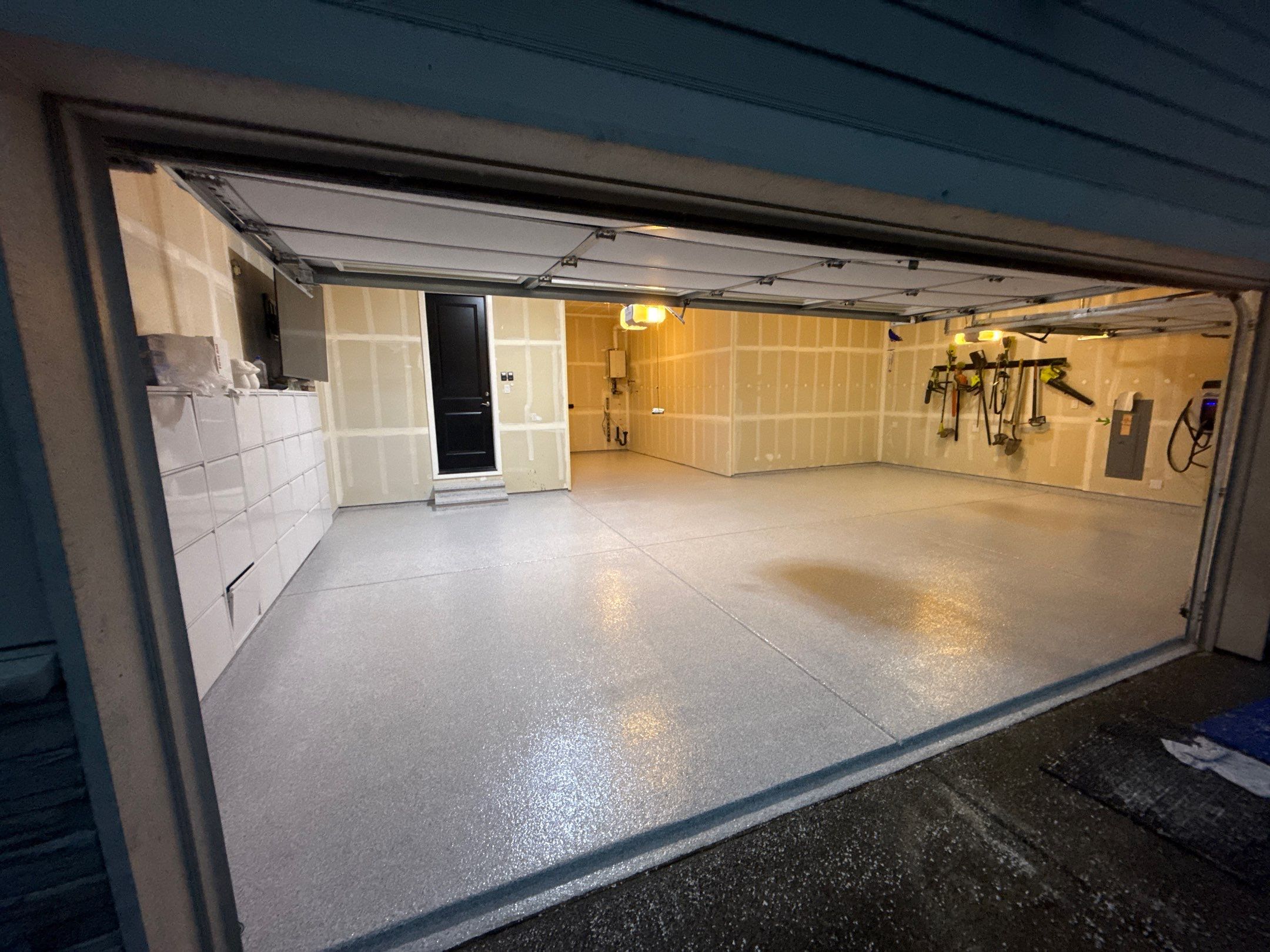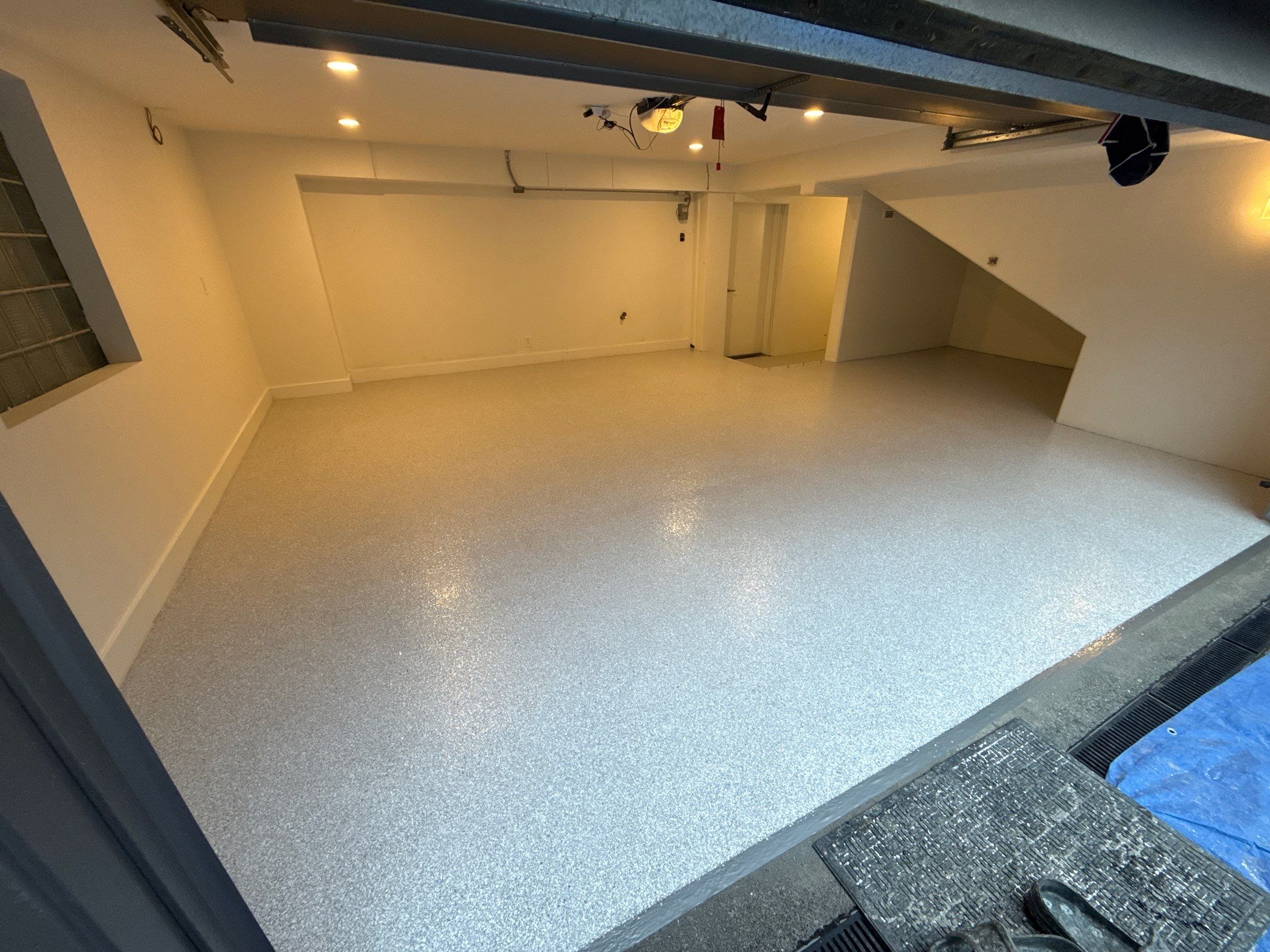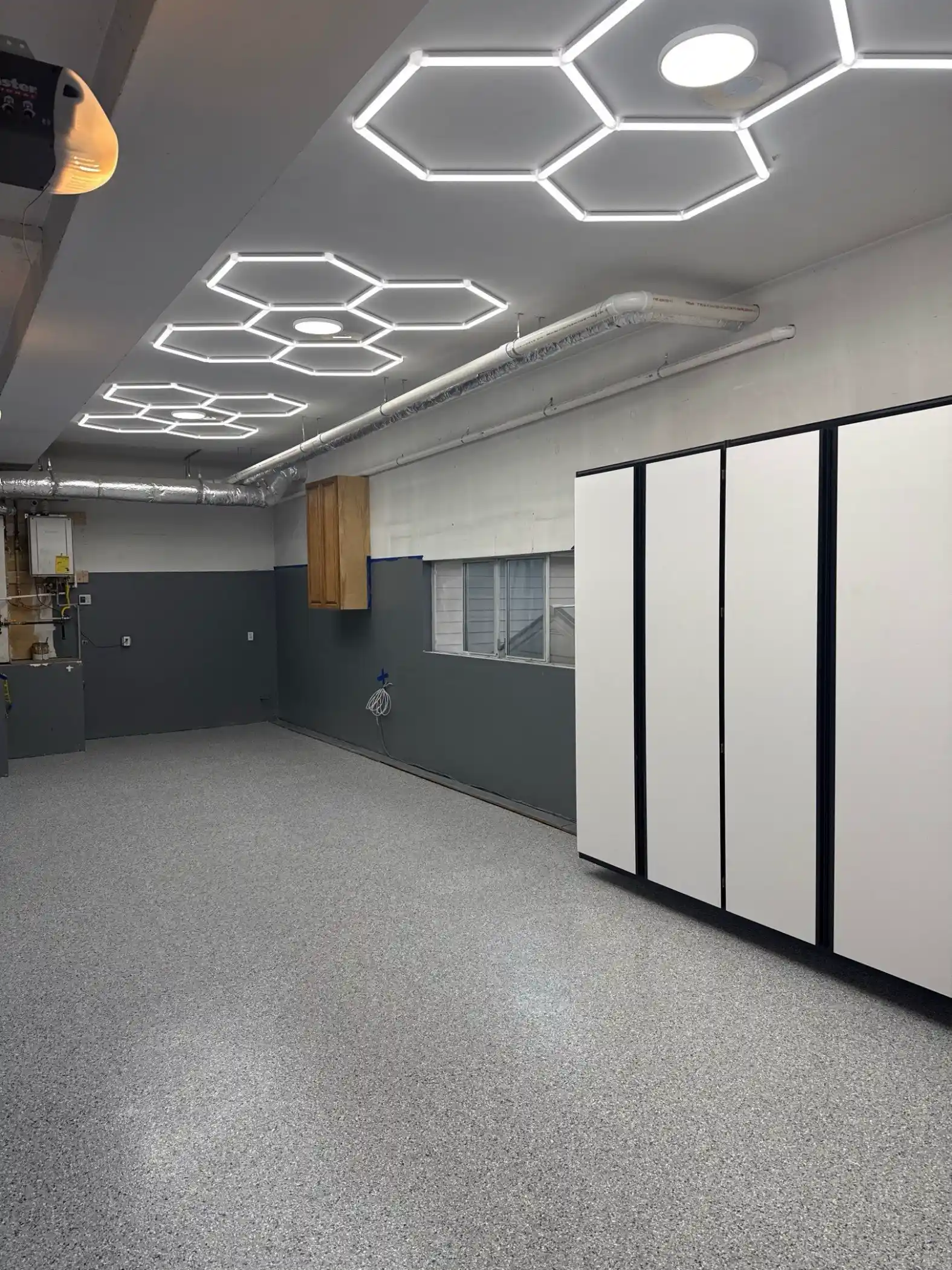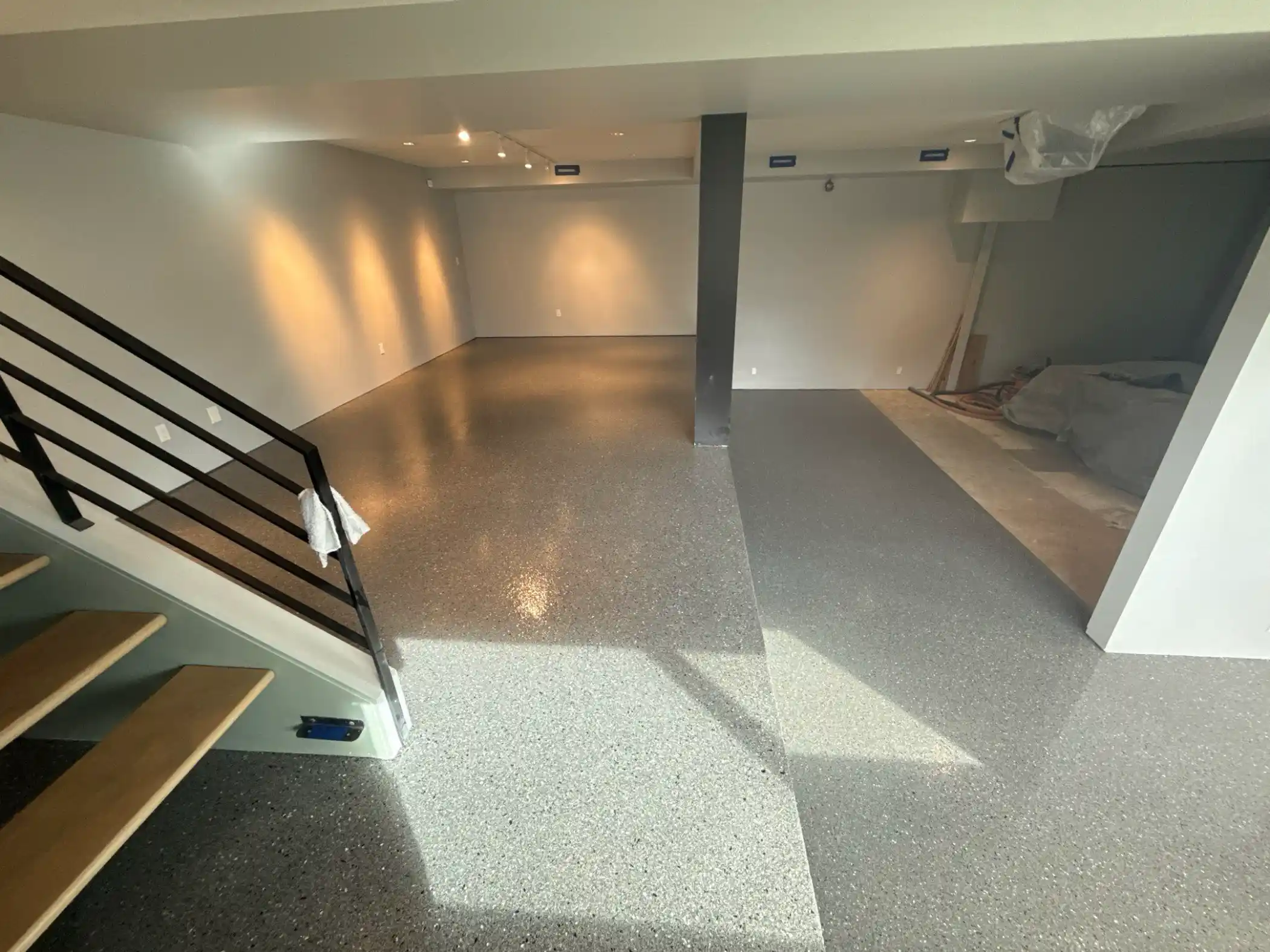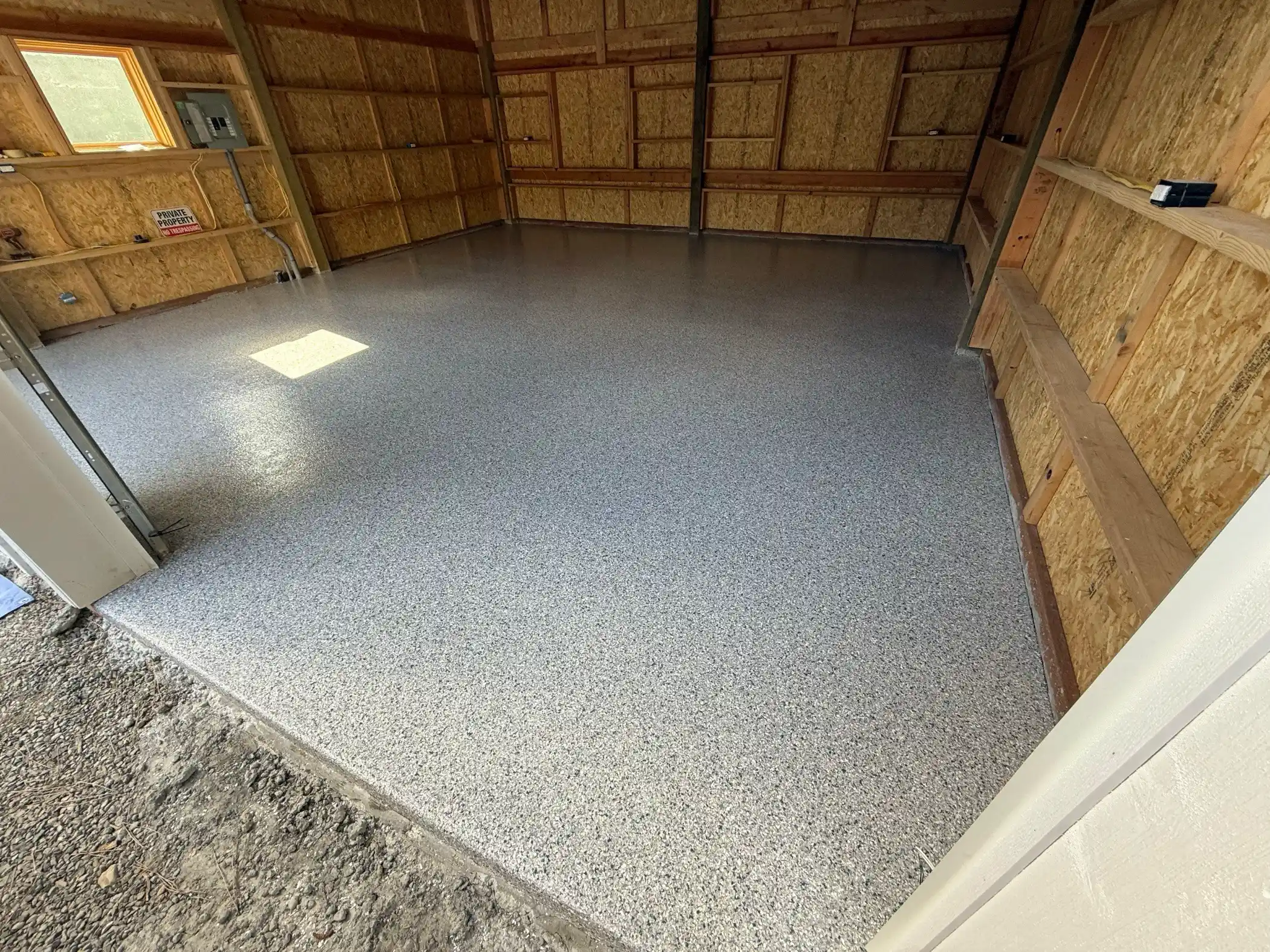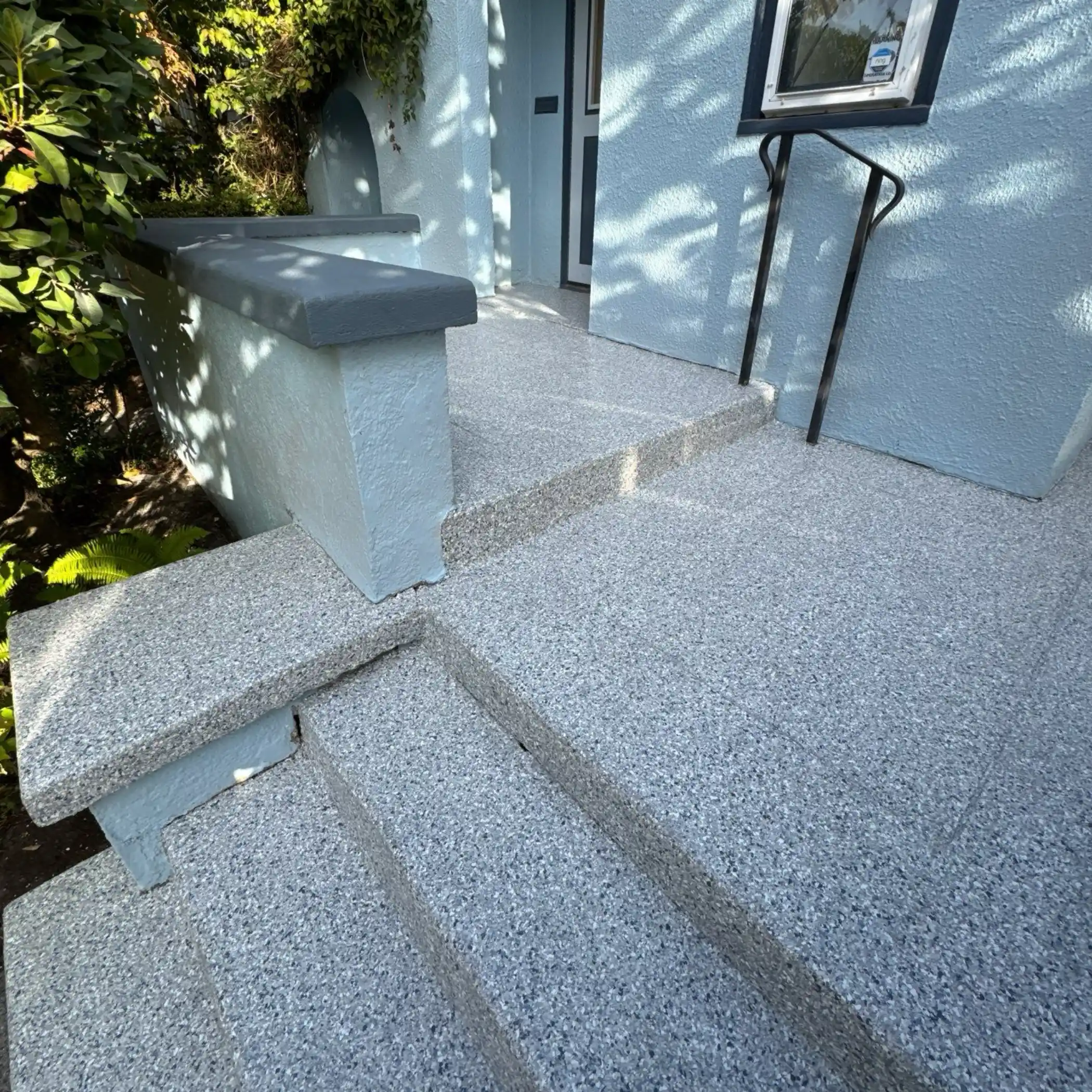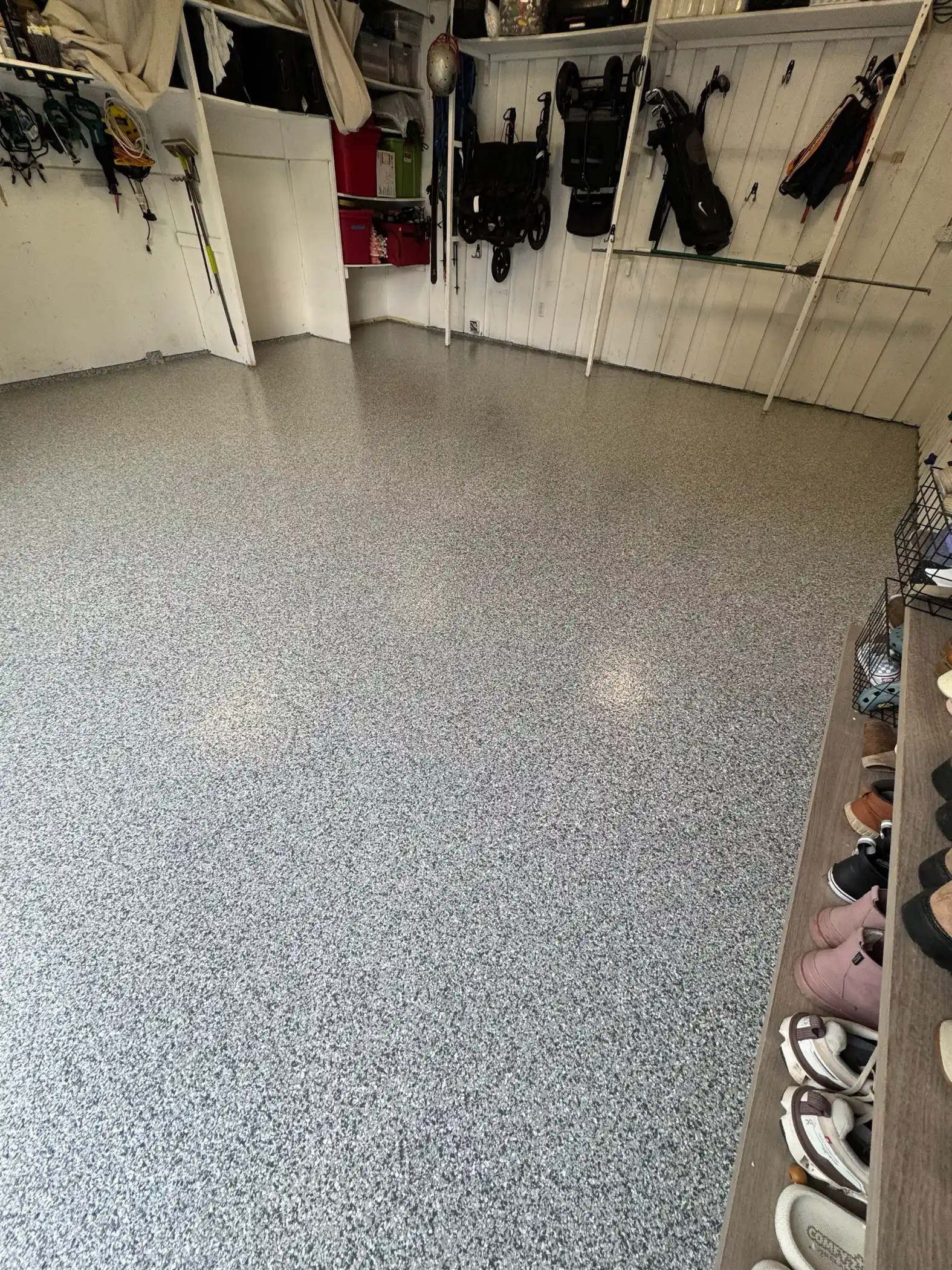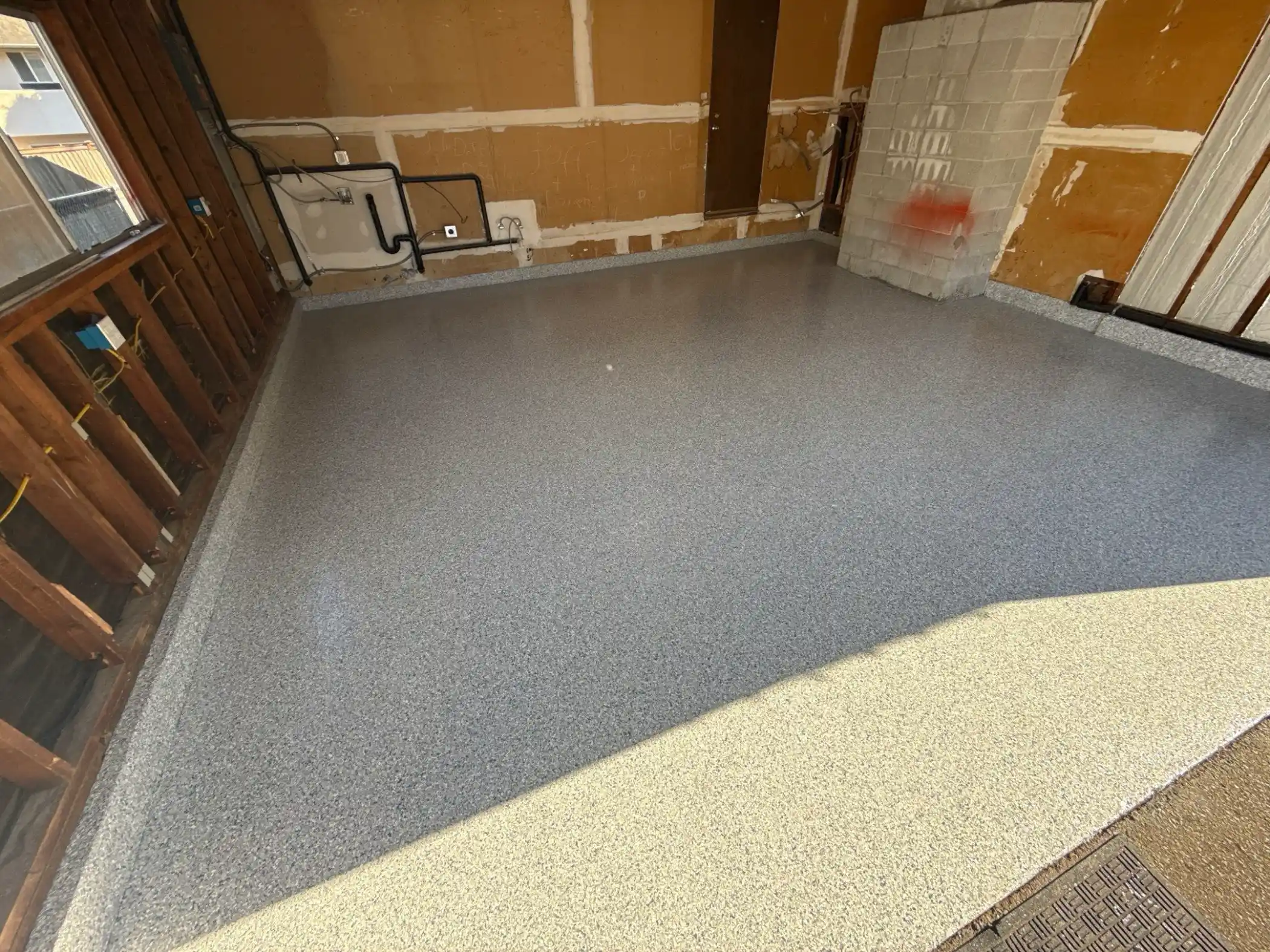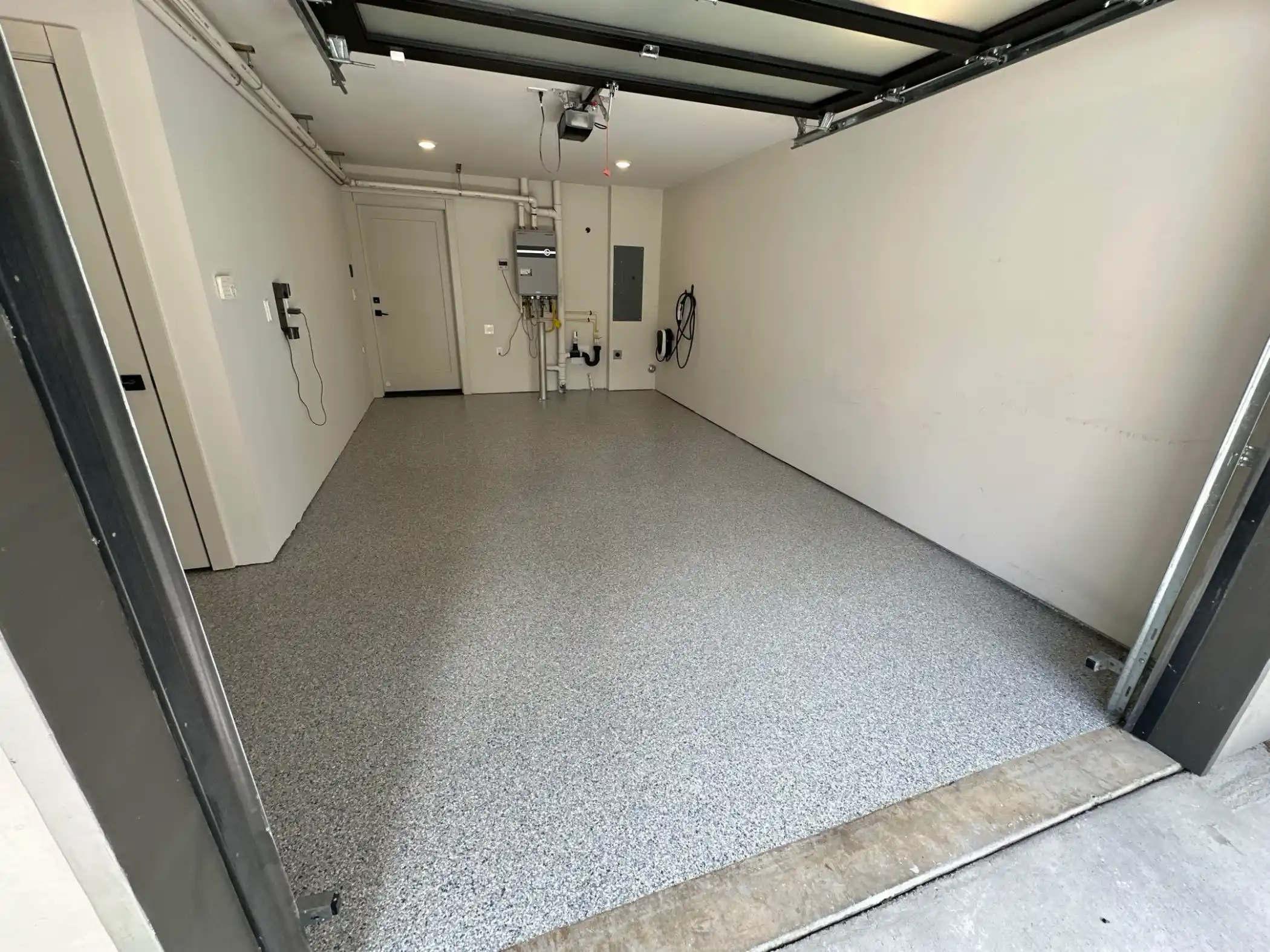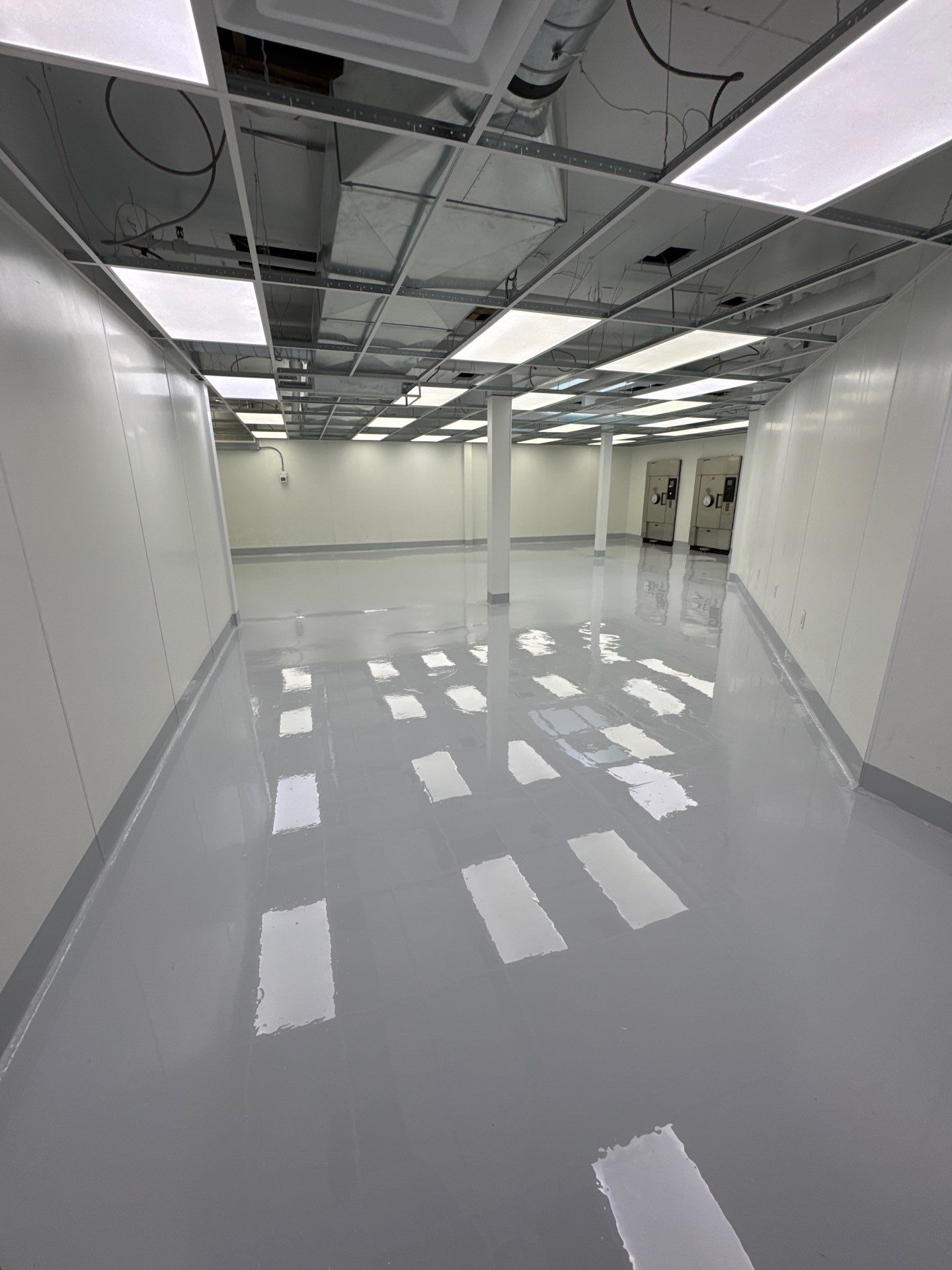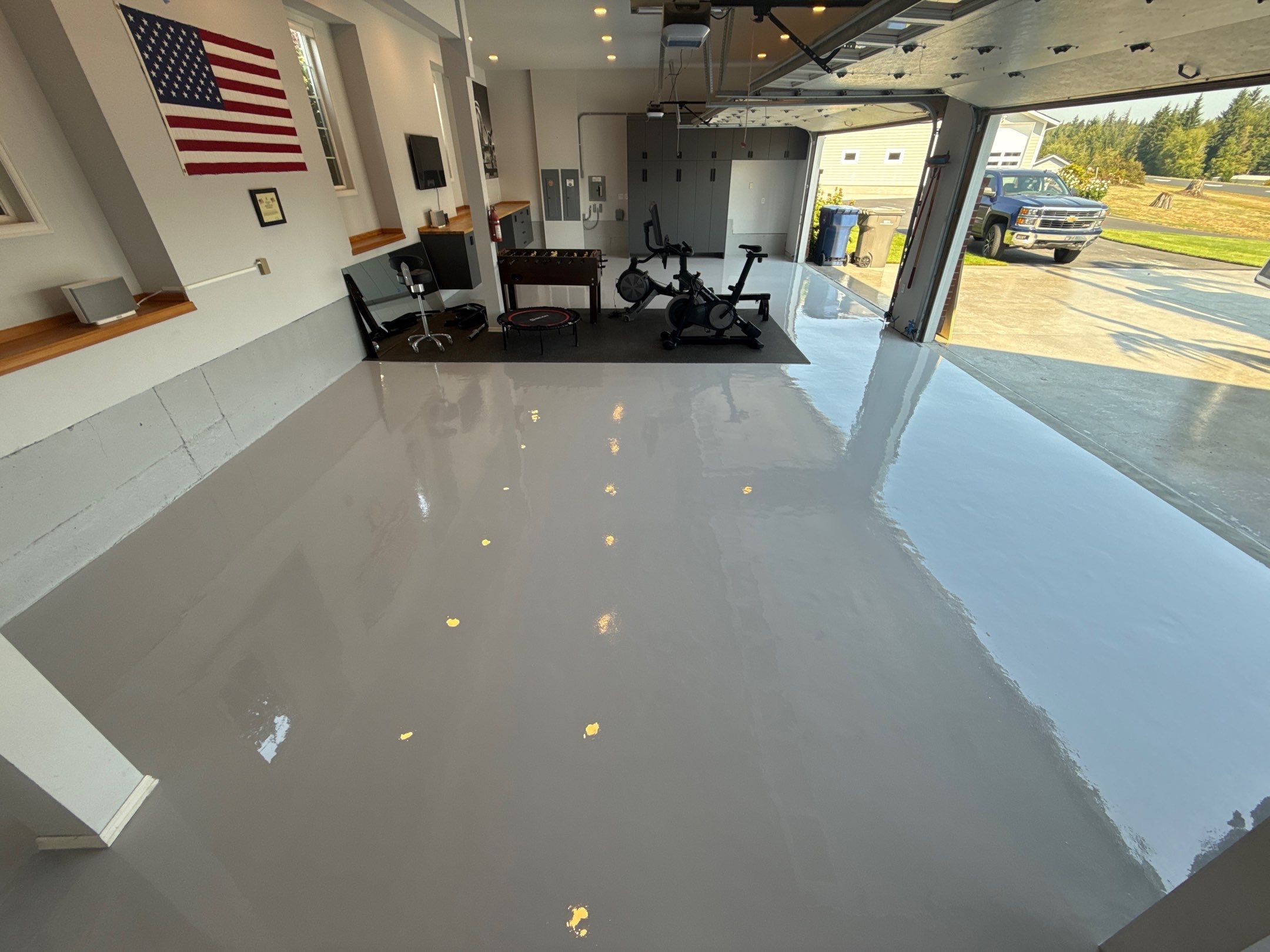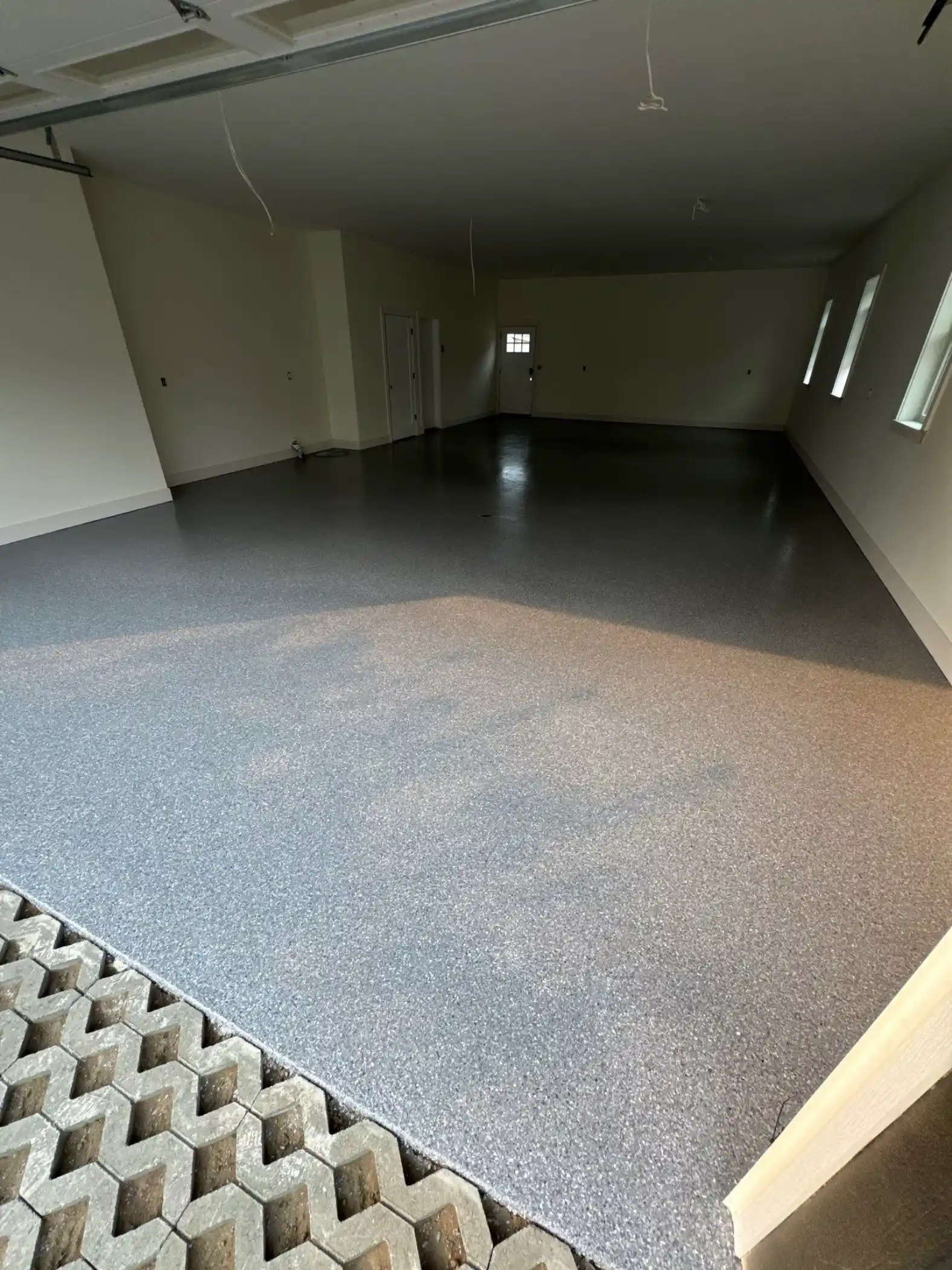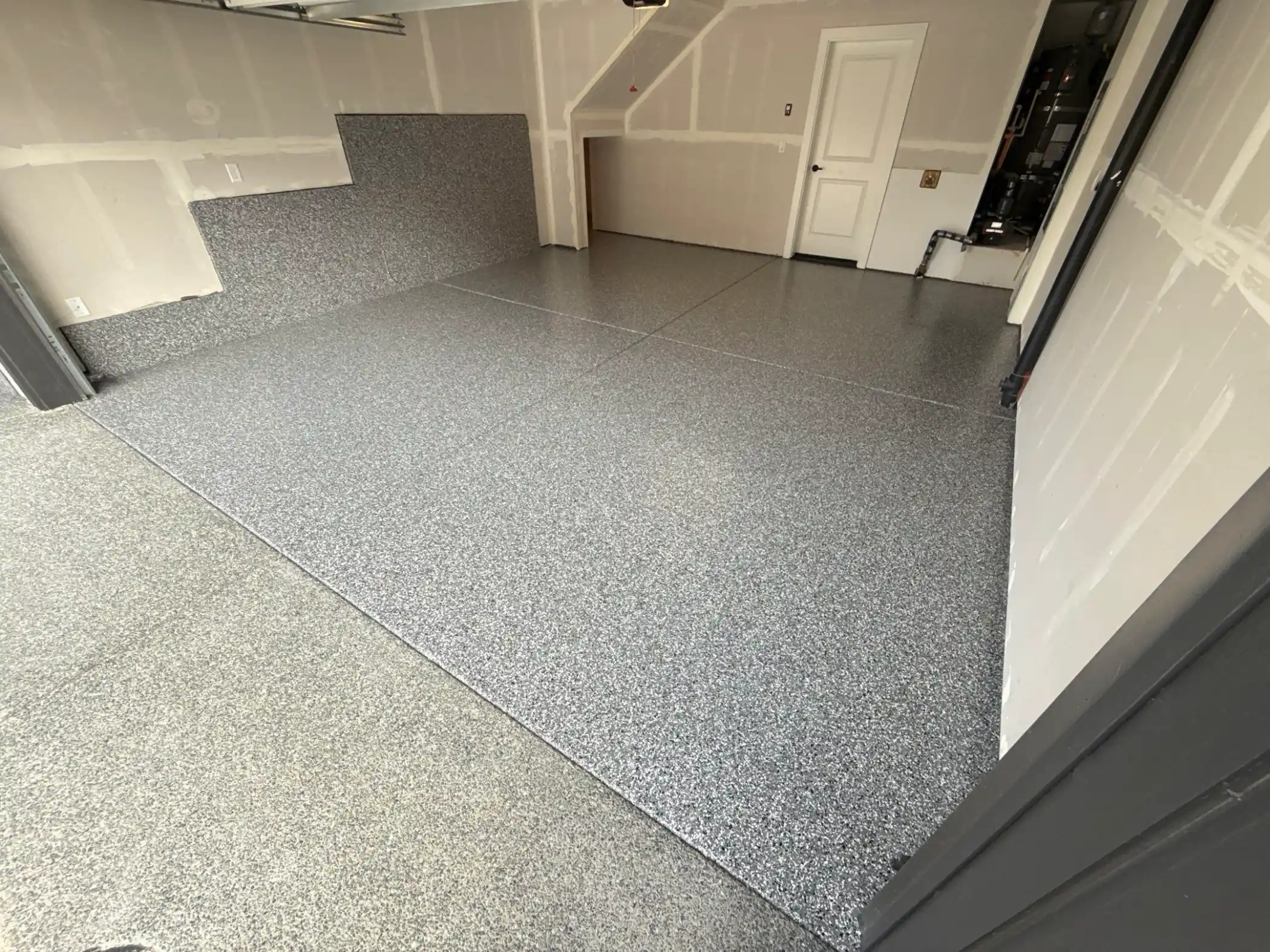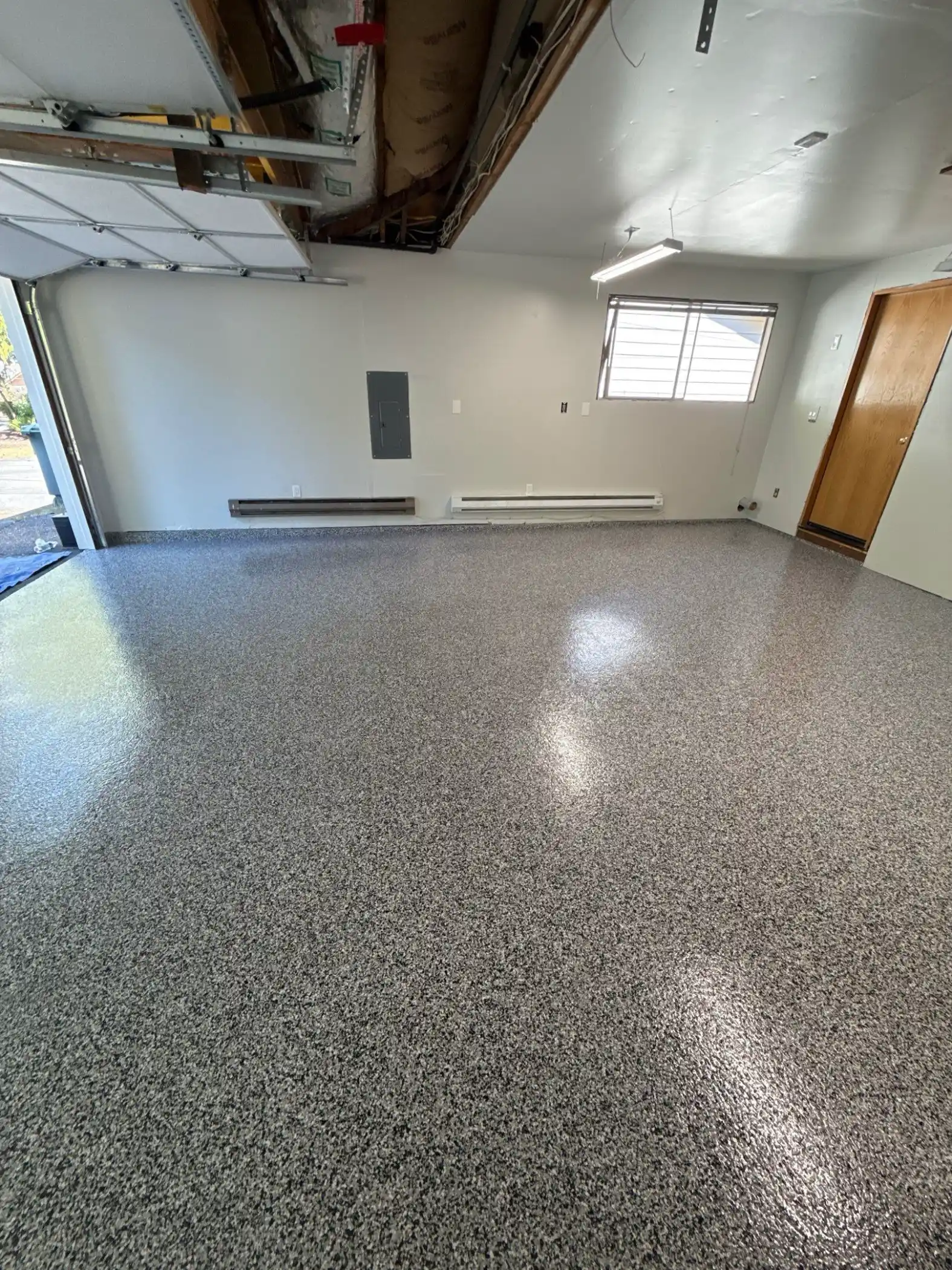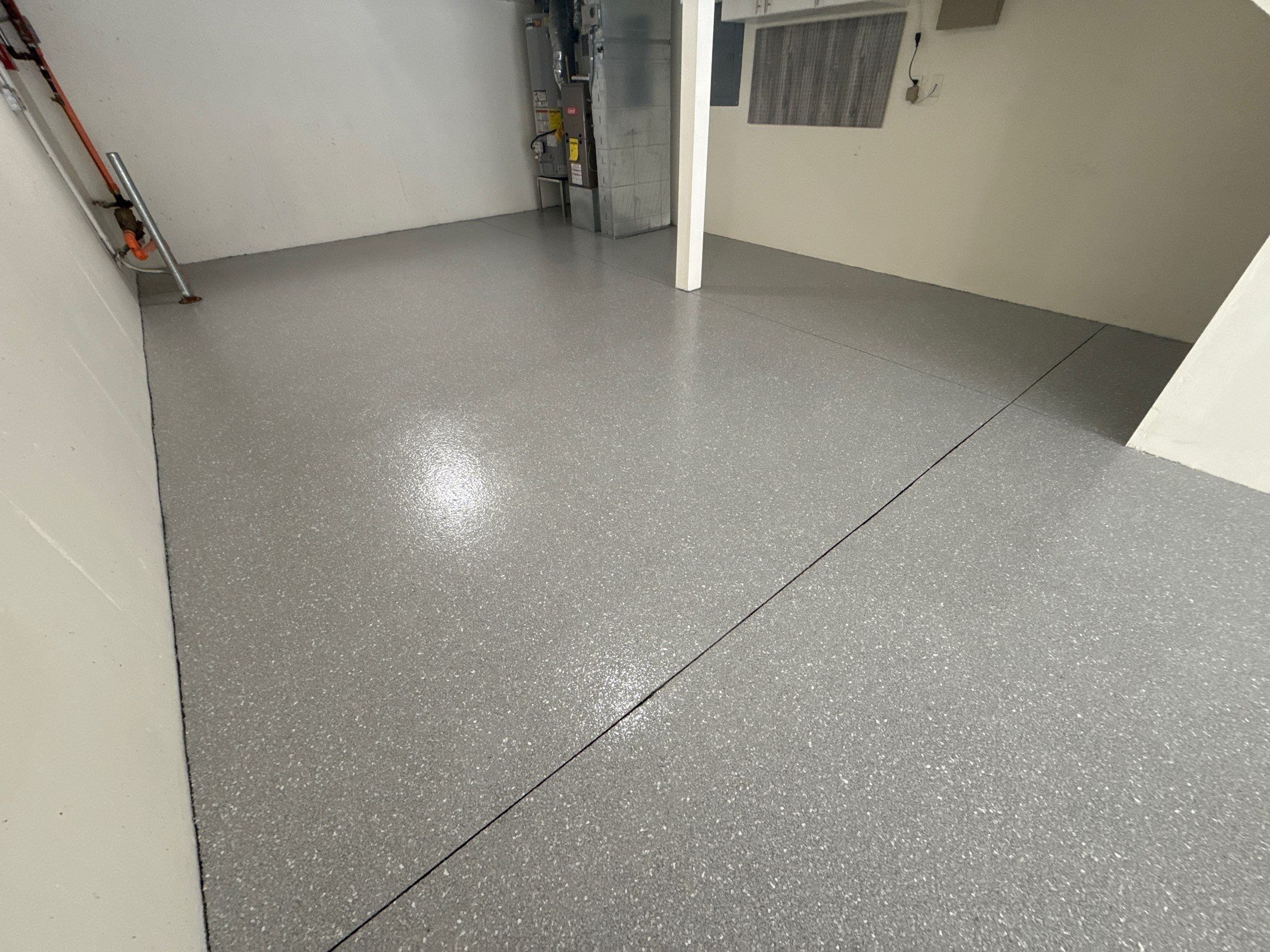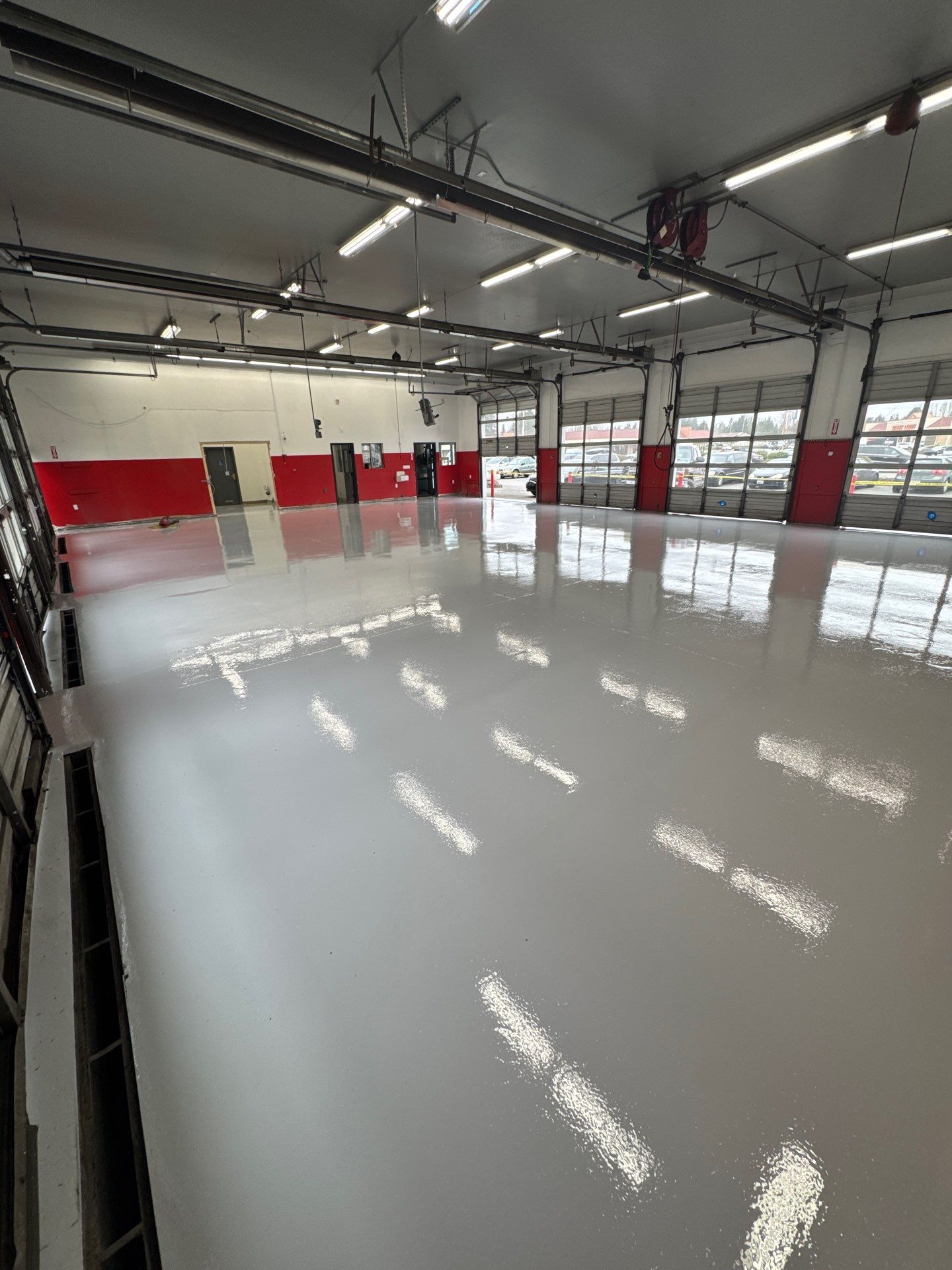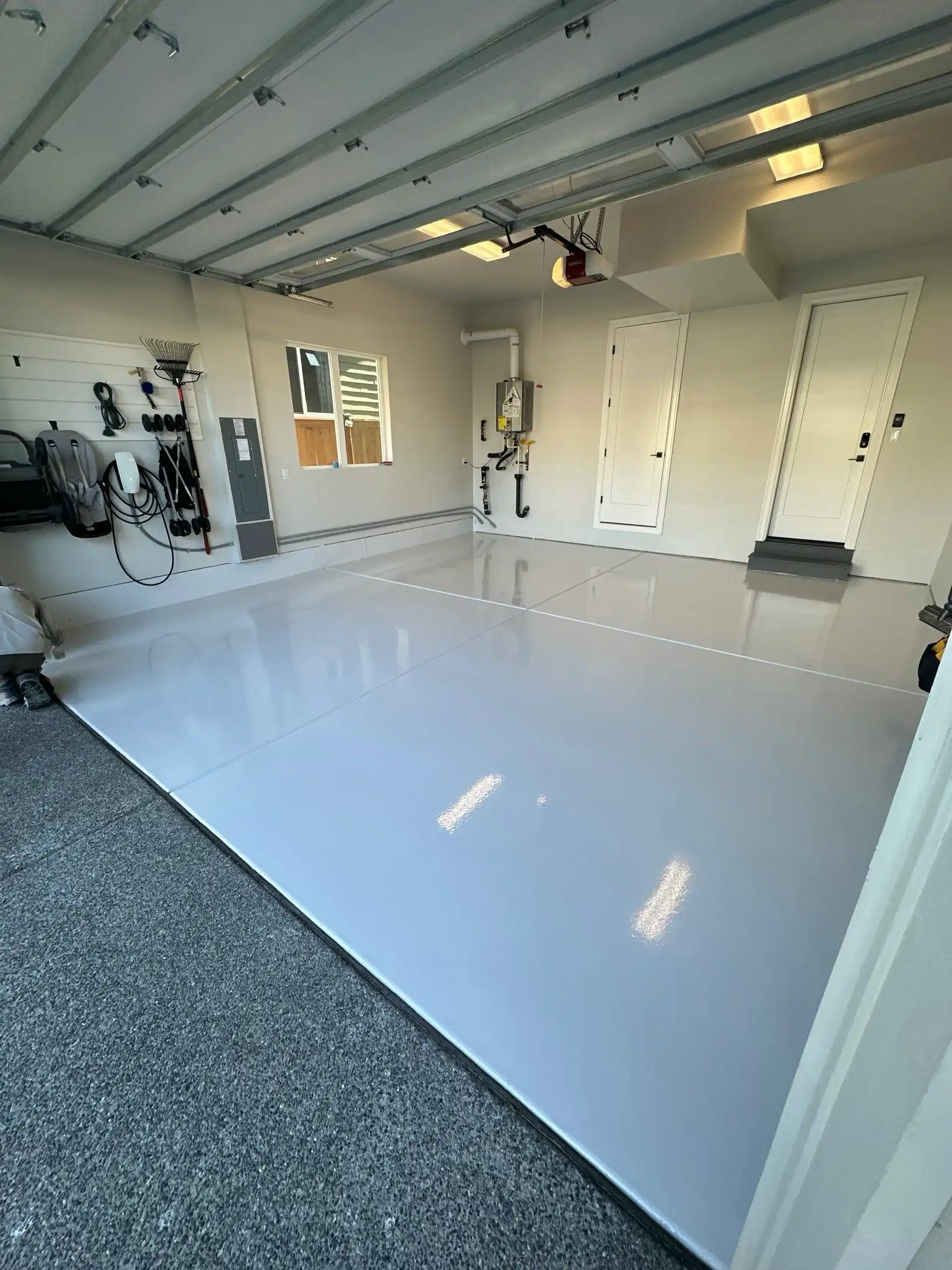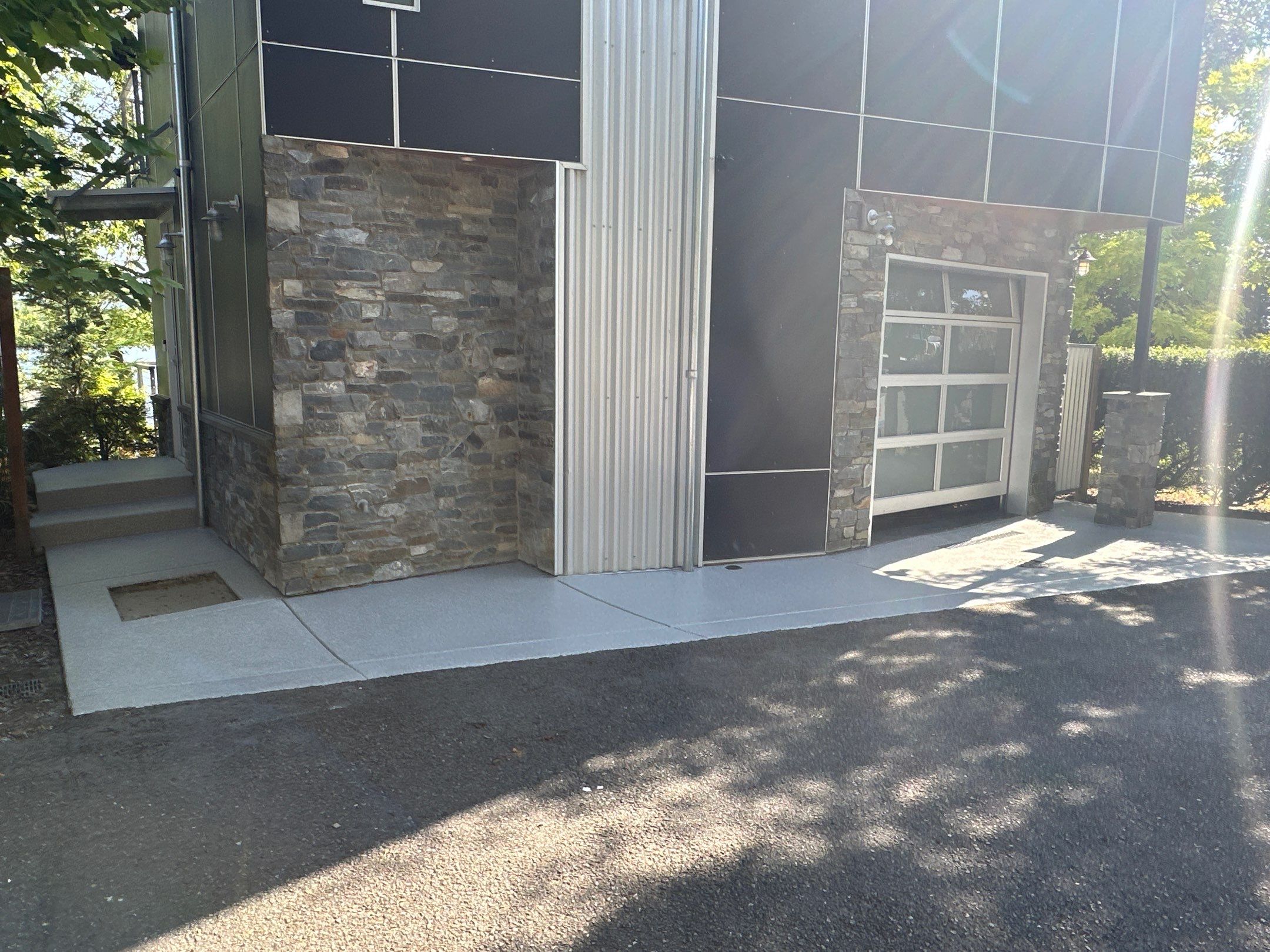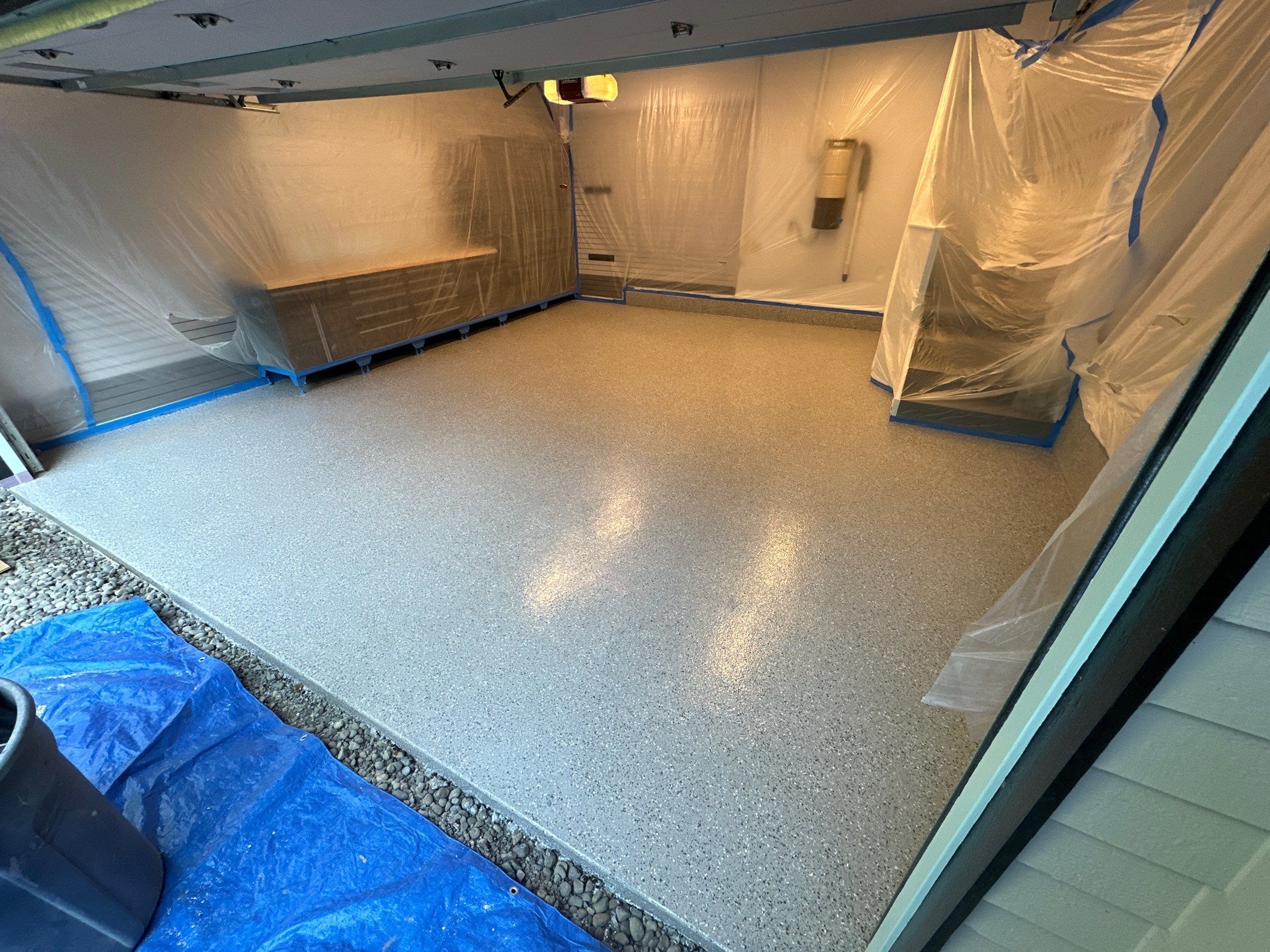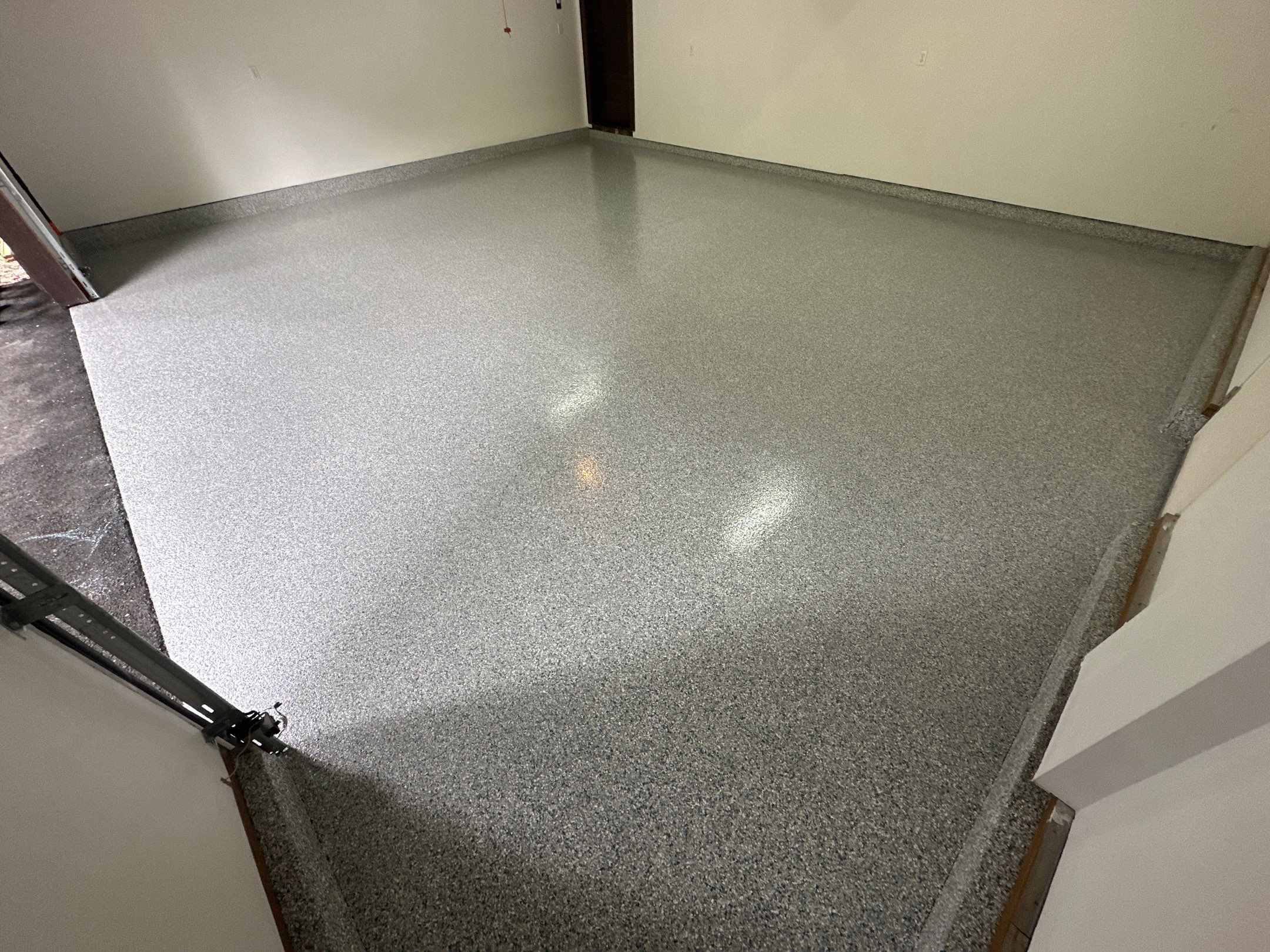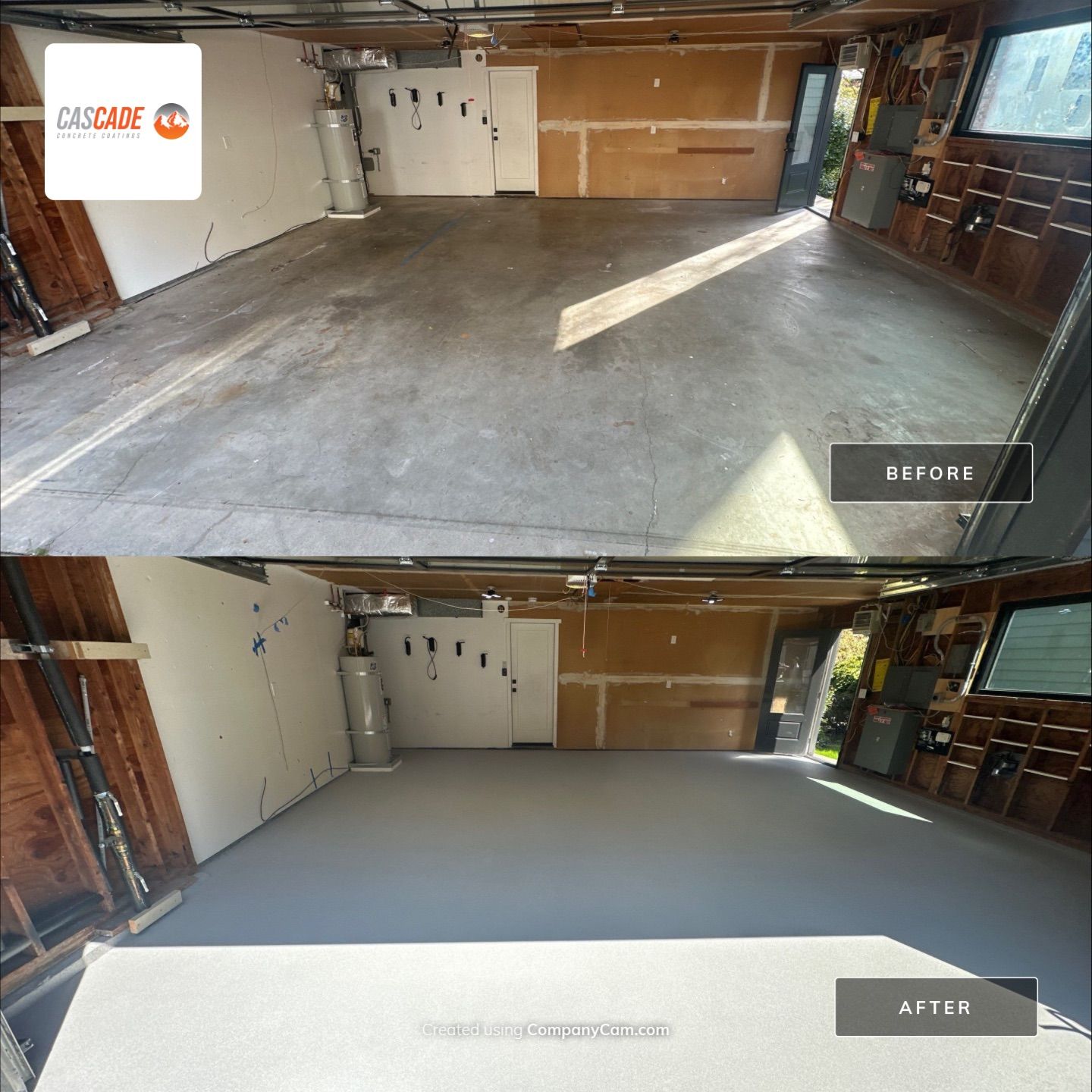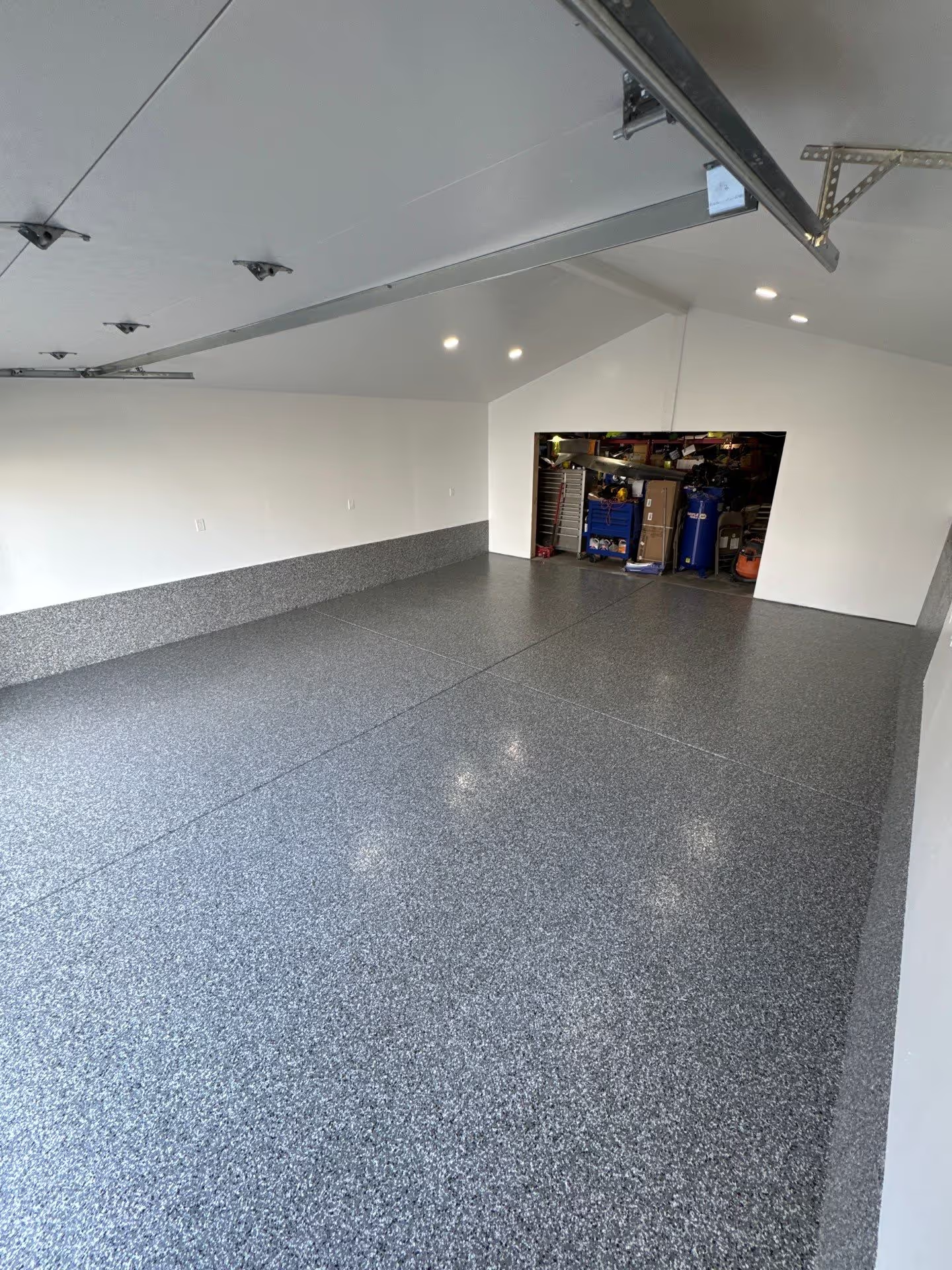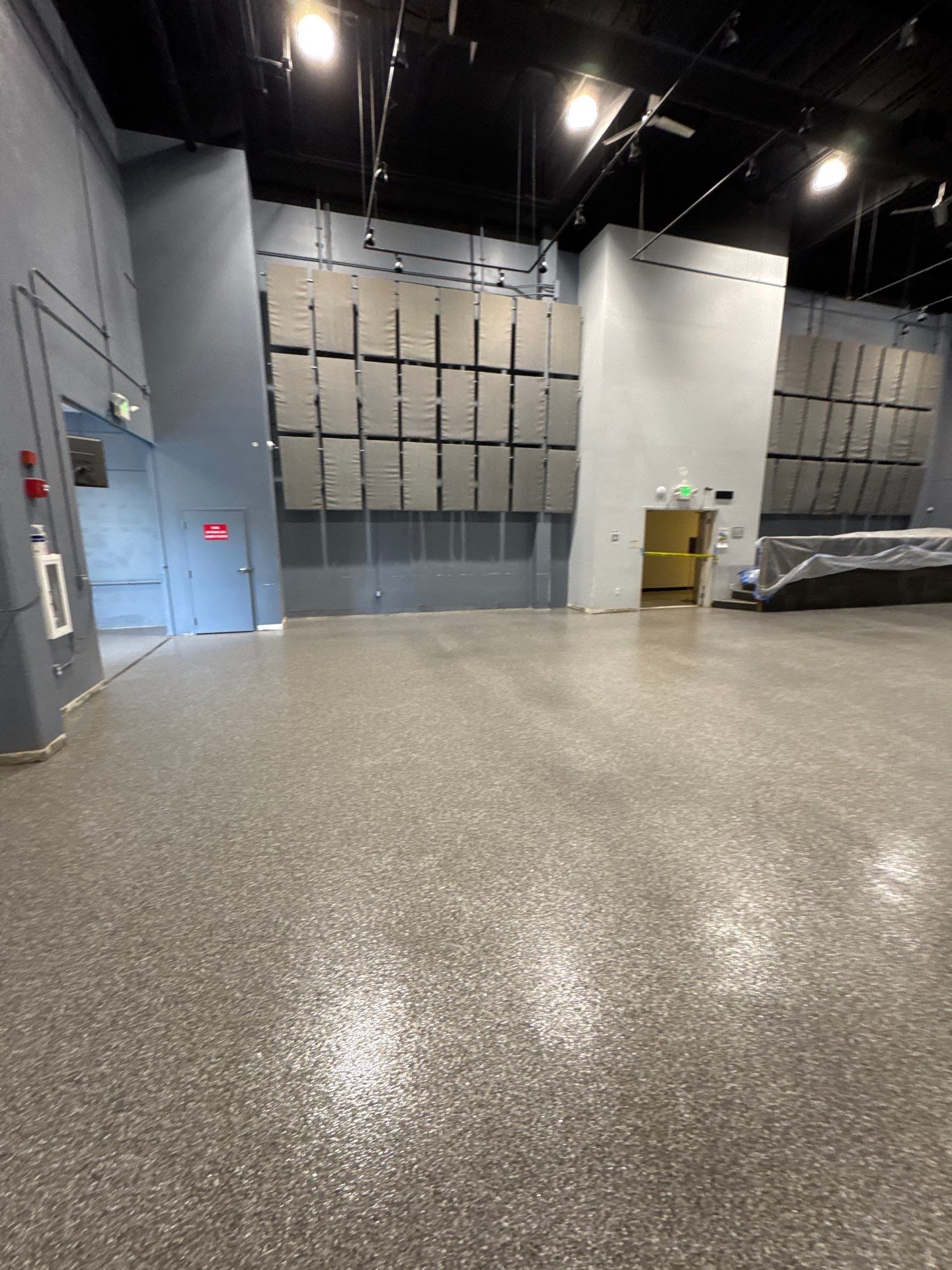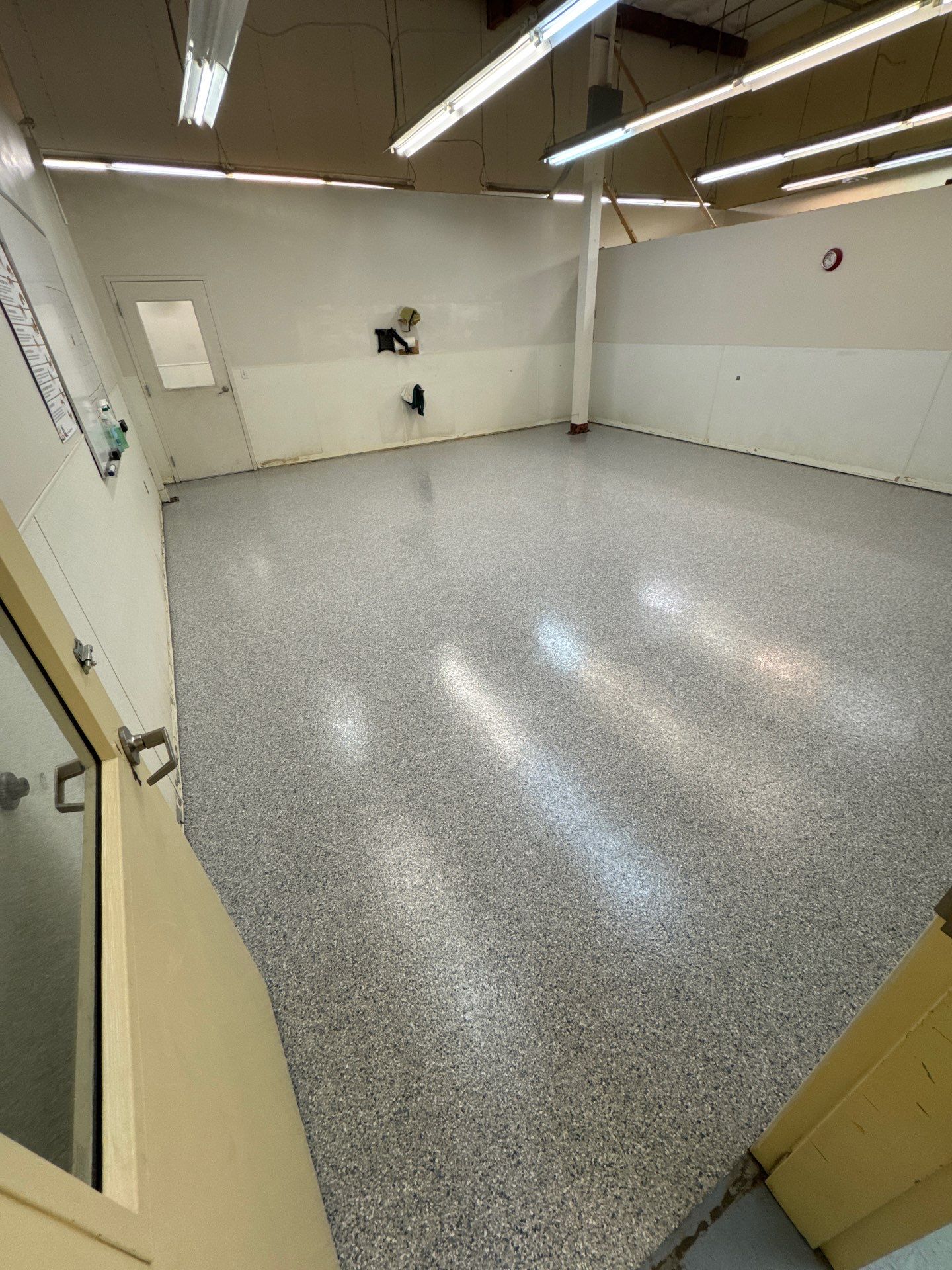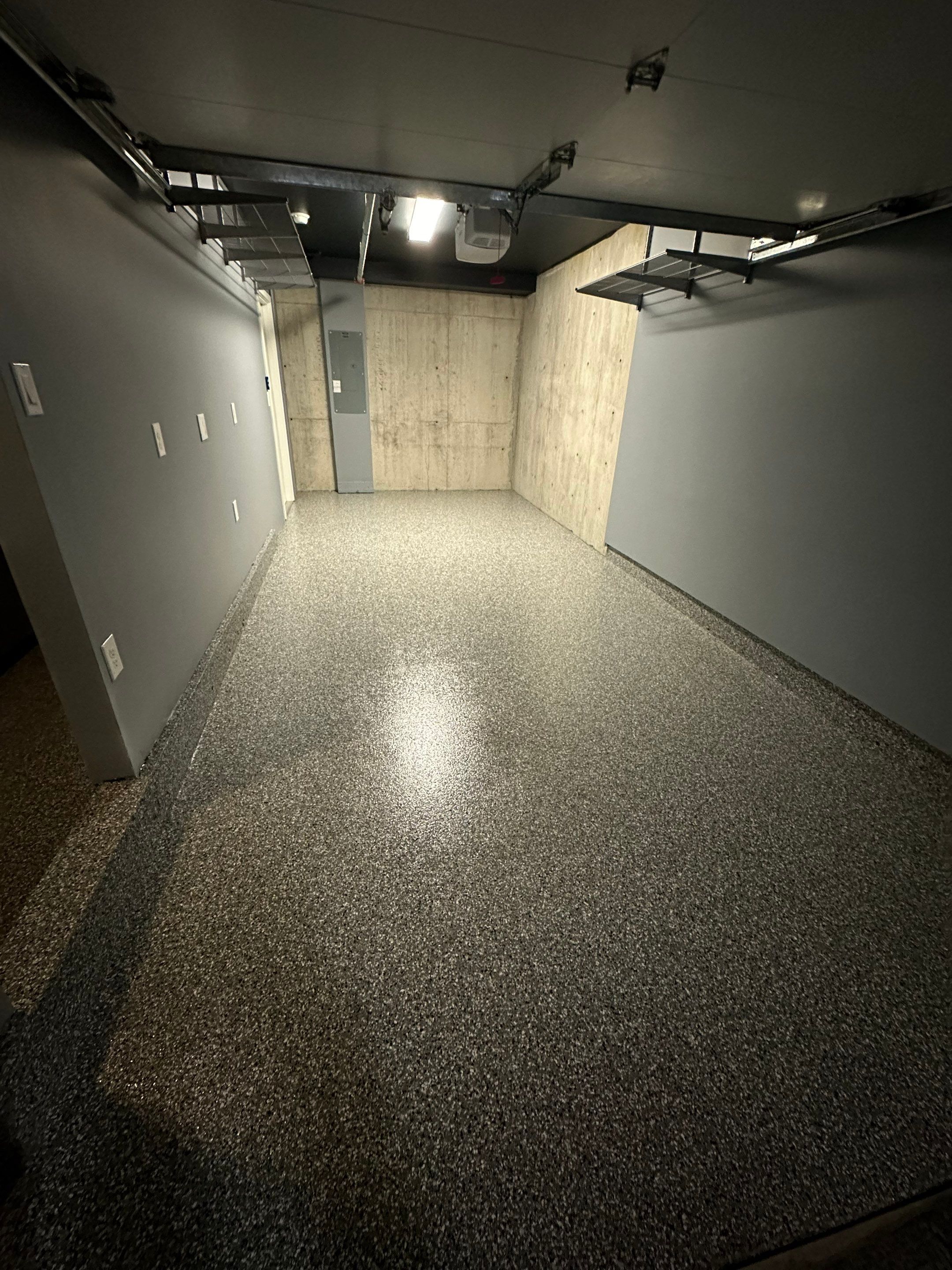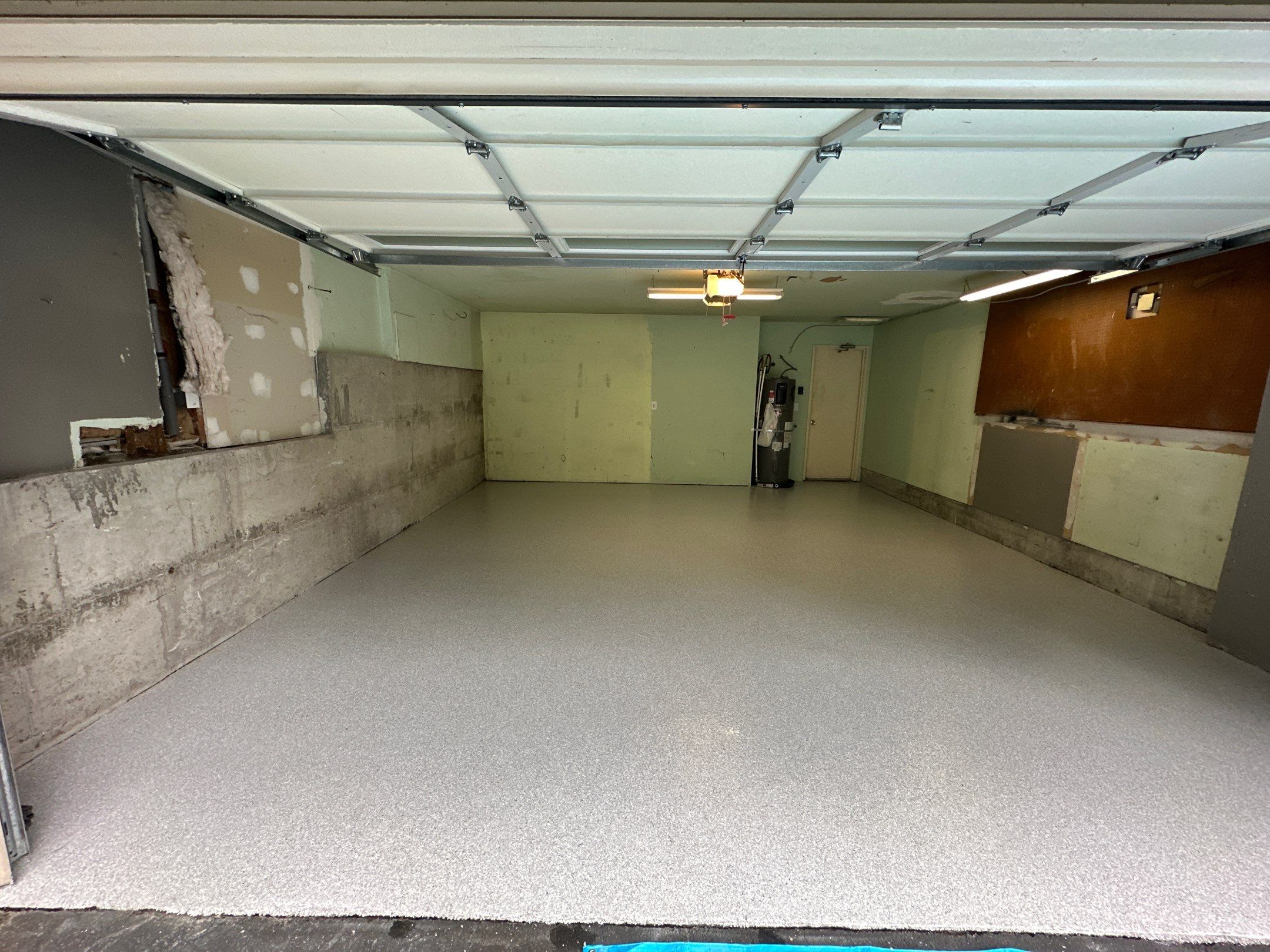
A Seattle garage workroom with cedar walls and a sink kept its natural concrete look under a clear Certified Penntek polyurea grind and clear system.
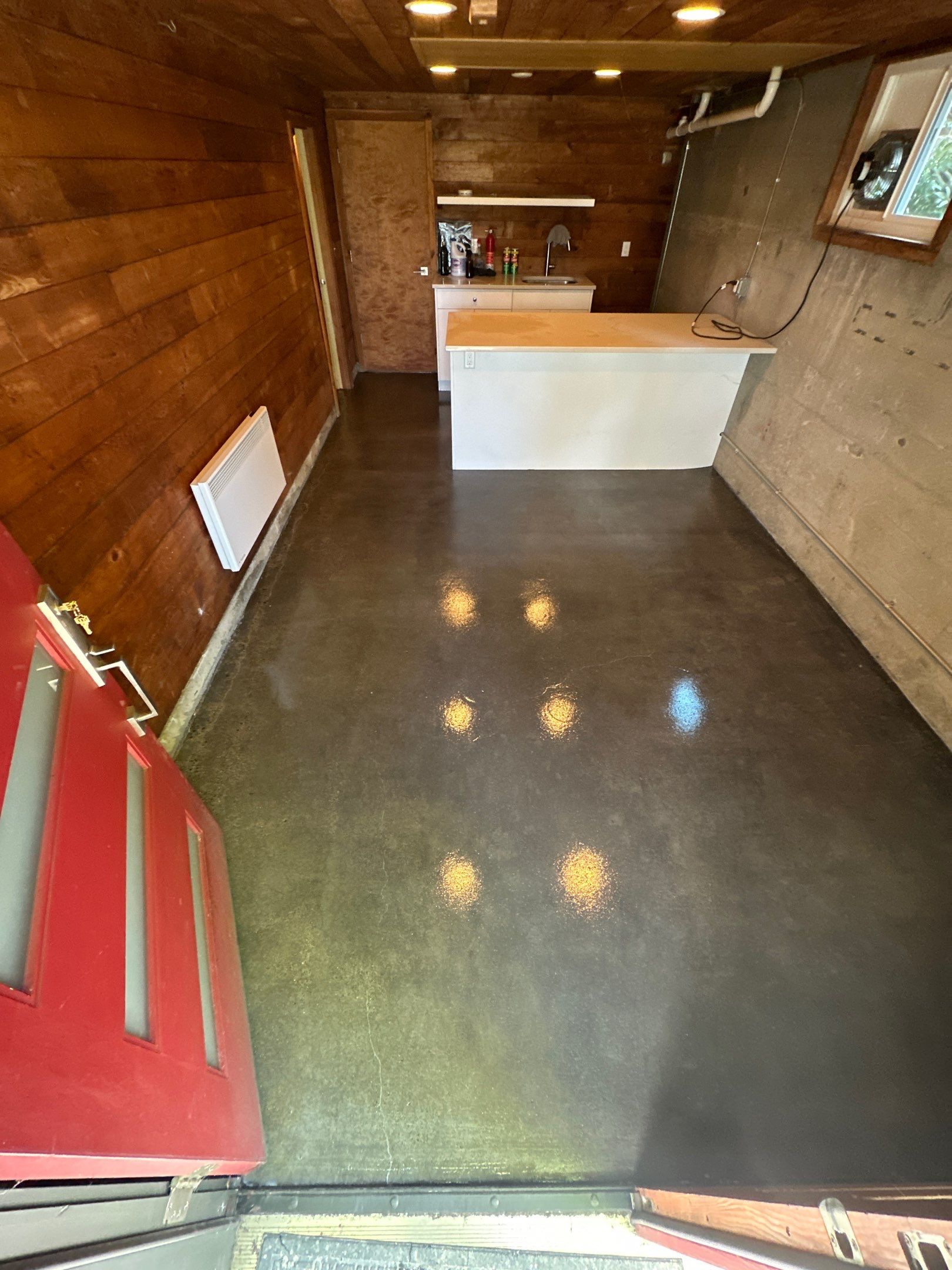

Not everyone wants flake. This Seattle homeowner had a small garage space finished out like a workroom, with cedar-paneled walls, board-formed concrete, white cabinets, a sink and a long island counter. The concrete floor had character worth keeping. What it lacked was protection. It was dusty, porous and already marked with stains and a long crack.
So the plan was simple: keep the look of the concrete, lose the dust. In April 2025 our crew installed a grind and clear coating in Seattle, a clear Certified Penntek polyurea system that shows off the slab underneath instead of covering it up.
We came out for the free consultation in March 2025. With a clear coat, whatever is in the concrete stays visible, so we looked hard at the surface. We found a crack running across the floor, scuffs and spots from years of use, and rough edges where the slab met the walls.
Moisture is the bigger question with a clear system, since there is no colored layer to hide a problem later. The meter read 4.1% in one spot and 4.8% in another. Cascade takes readings in more than one place on every job for exactly this reason. Slabs are not uniform, especially in older Seattle buildings set close to the ground.
Install day was in mid-April 2025, with the cabinets and island already in place. The crew worked around them.
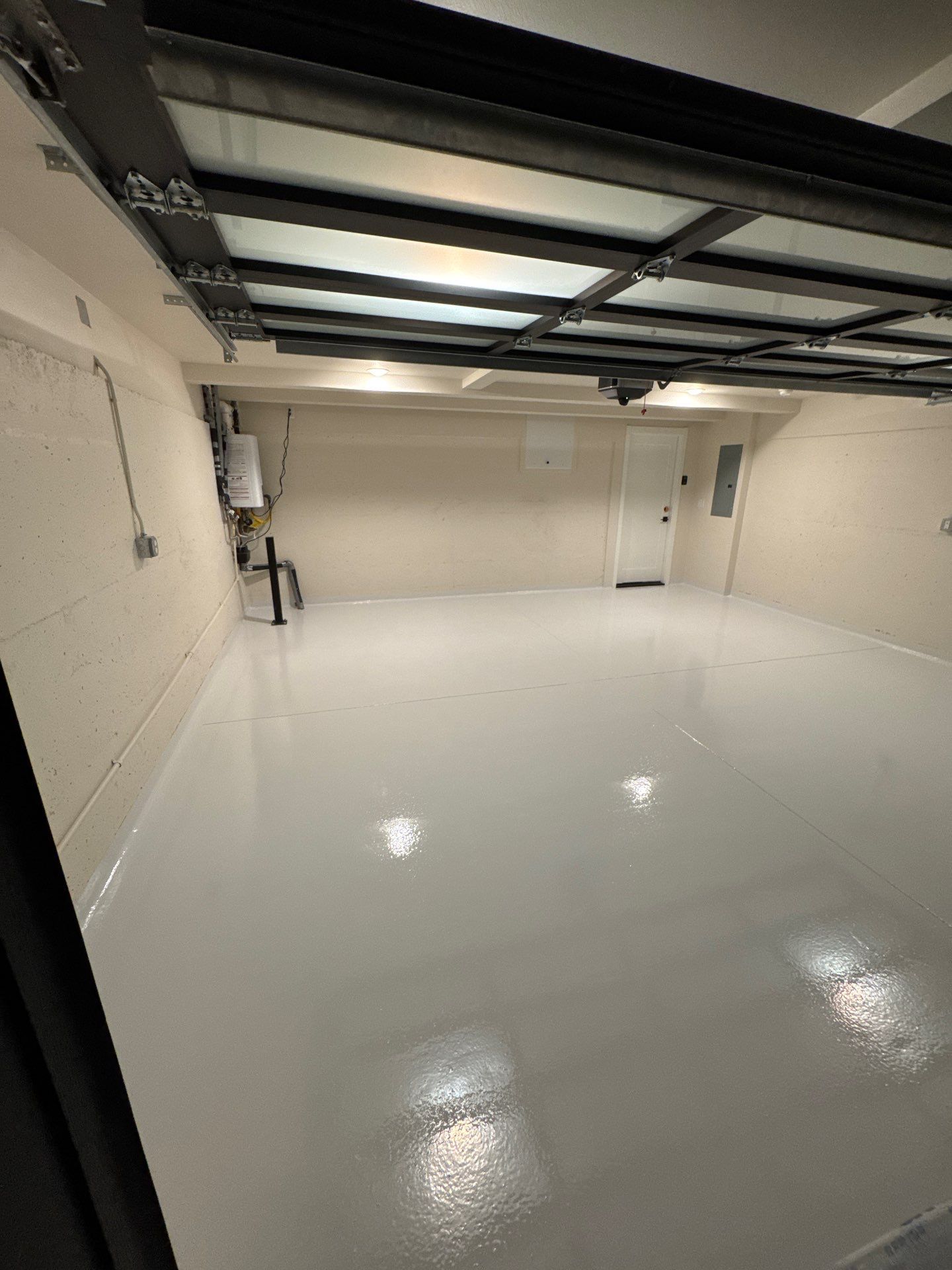
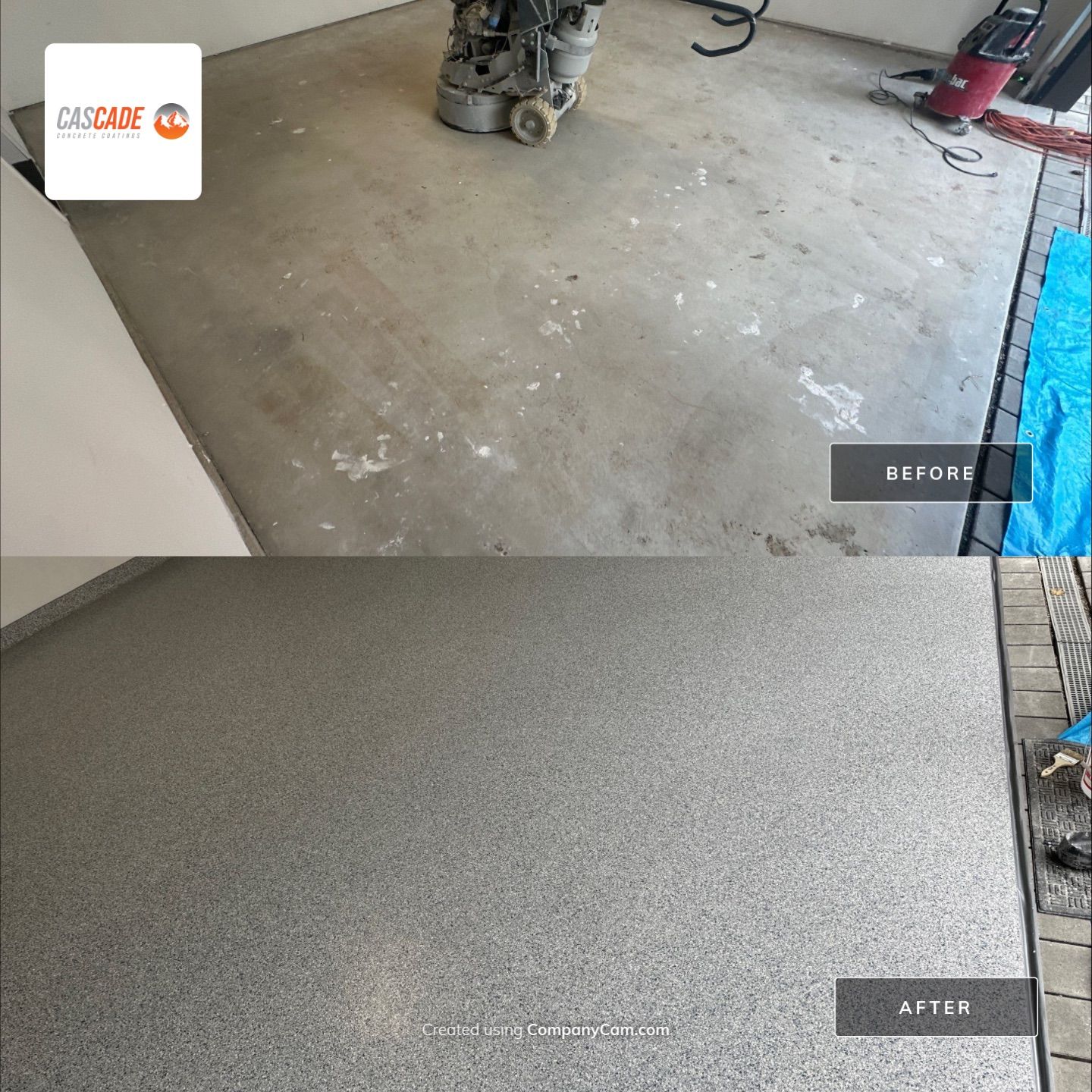
The before and after shot tells most of the story. Flat, chalky gray became a deep, glossy floor with the natural variation of the concrete showing through, and the light from the ceiling now reflects off it.
A clear finish suits a room like this one. The wood paneling, exposed concrete walls and simple cabinets have a workshop feel, and a busy flake floor would have fought with all that. Clear lets the floor match the walls.
It is also honest. A clear coat shows the slab as it is, cracks and patches included. Some people love that. Others would rather hide it under a flake blend. If you are on the fence, our post on choosing a color and finish for your concrete coating lays out the tradeoffs, and the full lineup is on our styles and colors page.
A lot of clear sealers sold for concrete are thin film products. They look good for a season, then they scuff, dull and start lifting where water sits. The Penntek system bonds chemically with the concrete through a silane adhesion promoter, at over 1,300 PSI. Before the coating comes up, the concrete will come up.
The topcoat is non-porous, so oil, cleaners and water stay on top and wipe off. That matters right next to a sink. FadeLock™ keeps it from yellowing or ambering, which is the usual way a clear coat gives itself away over the years. Watch the Penntek Stain Test to see what the surface shrugs off.
Seattle has a lot of older garages, basements and outbuildings with board-formed or hand-finished concrete. Grind and clear is a good fit when the concrete itself is part of the look. It works just as well in a modern build with polished-looking slabs.
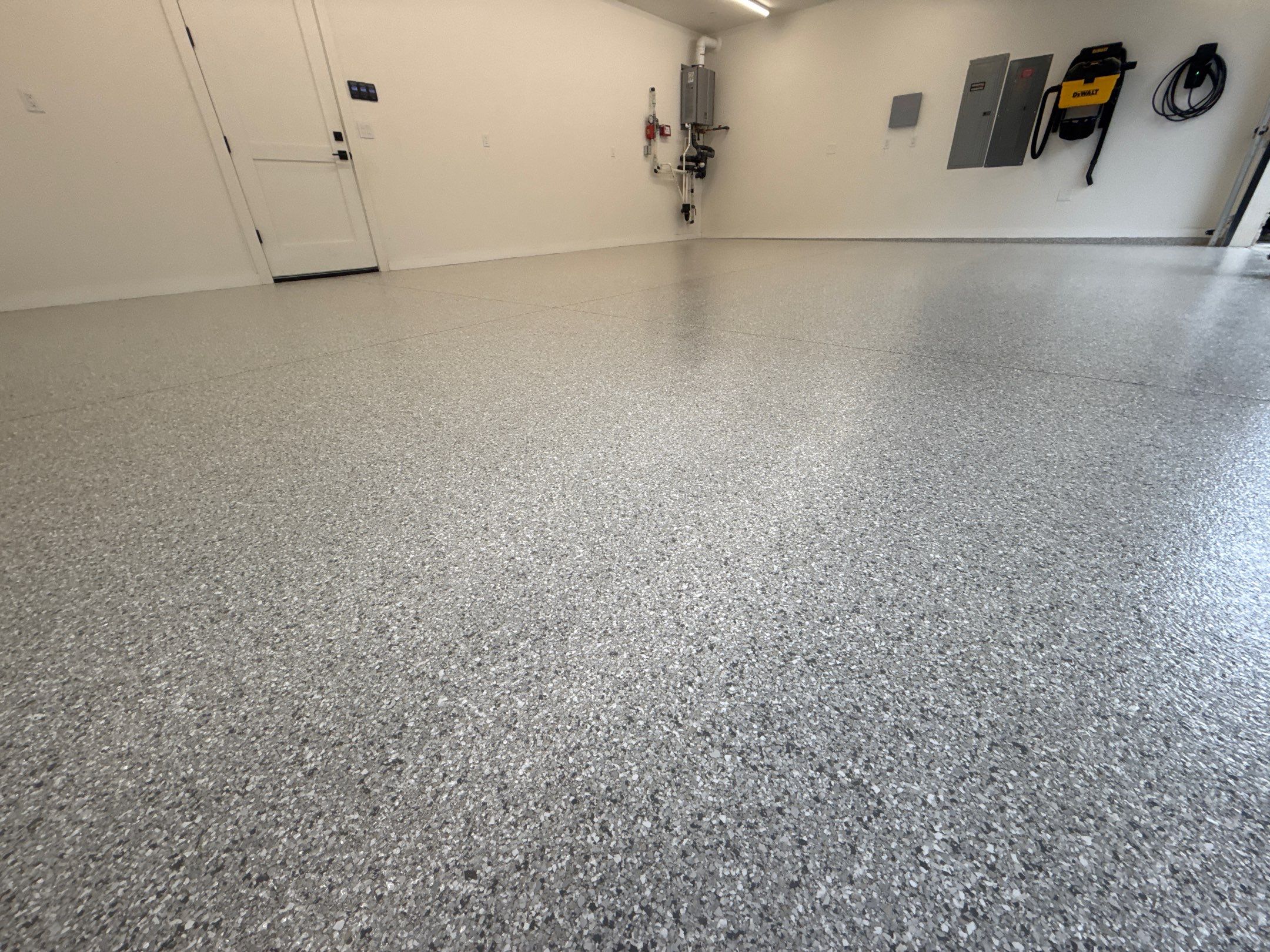
Learn more on our Seattle concrete coatings page. If you want to compare it with a flake finish, look at a nearby Seattle garage turned office in Fieldstone.
It is a concrete coating with no color or flake. The slab is diamond ground, cleaned and coated in clear polyurea and a clear polyaspartic topcoat, so you see the real concrete under a glossy, protected surface.
Yes, to a degree. Cracks are repaired so they are filled and sealed, but with no color layer on top you can still see where they were. If you want cracks hidden, a flake system is the better pick.
Not this system. The polyaspartic topcoat uses FadeLock™ UV stability and passed a 16-hour QUV accelerated UV test. It won't yellow or amber the way many clear epoxies do.
Want to keep your concrete's look and protect it? Book a free in-home quote or call 425-226-6085. We will bring the moisture meter and talk through clear and flake options.
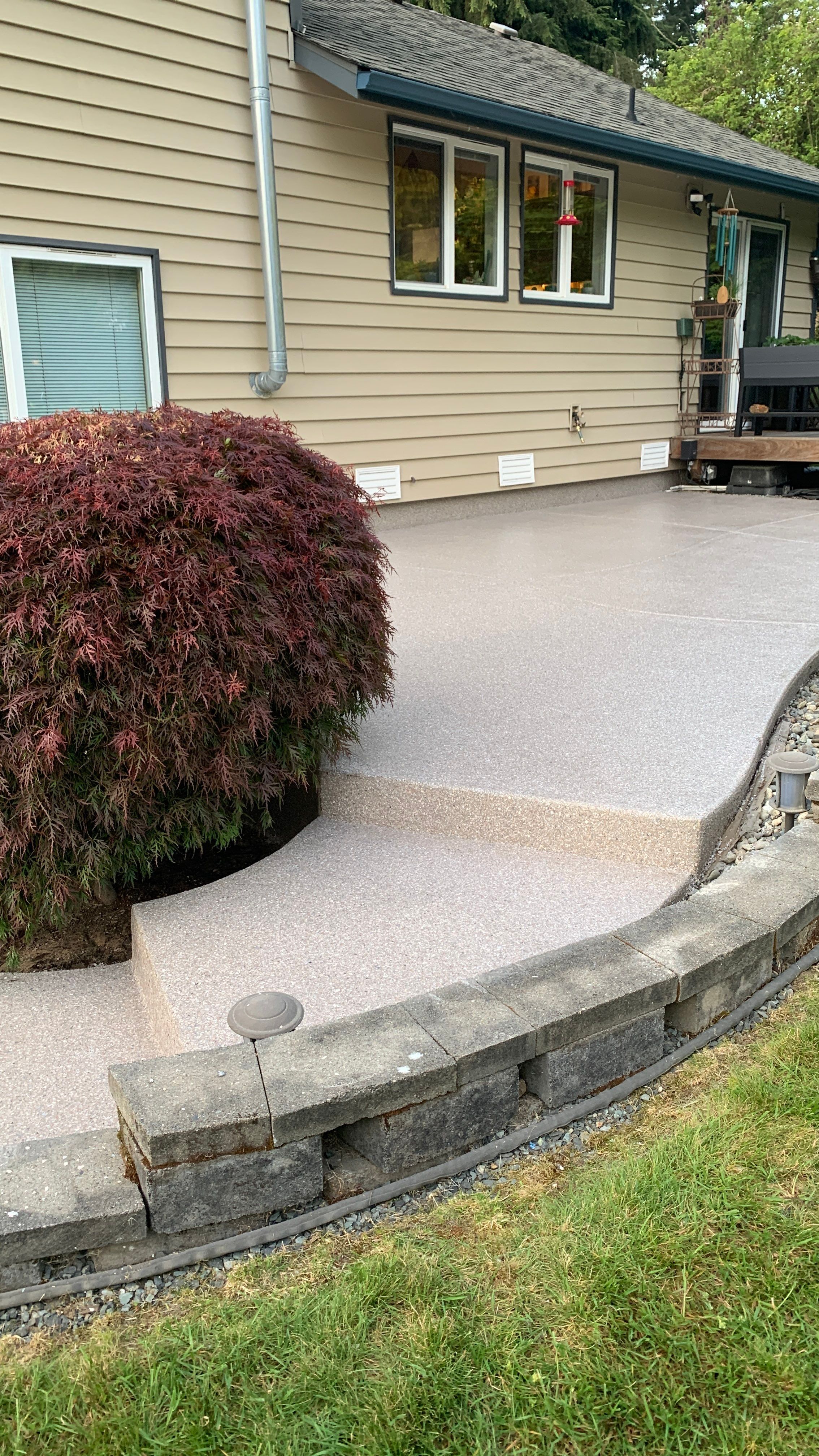
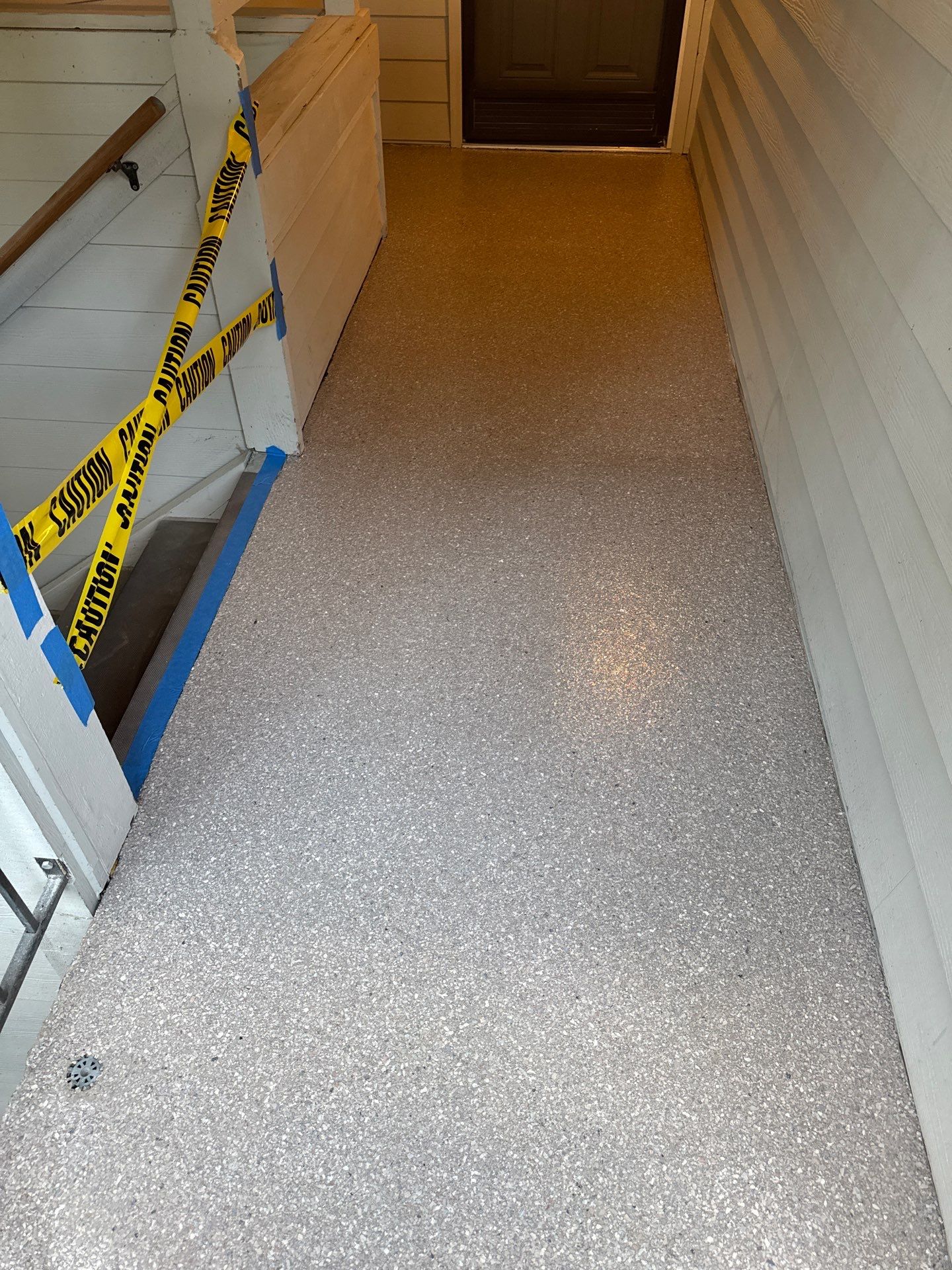
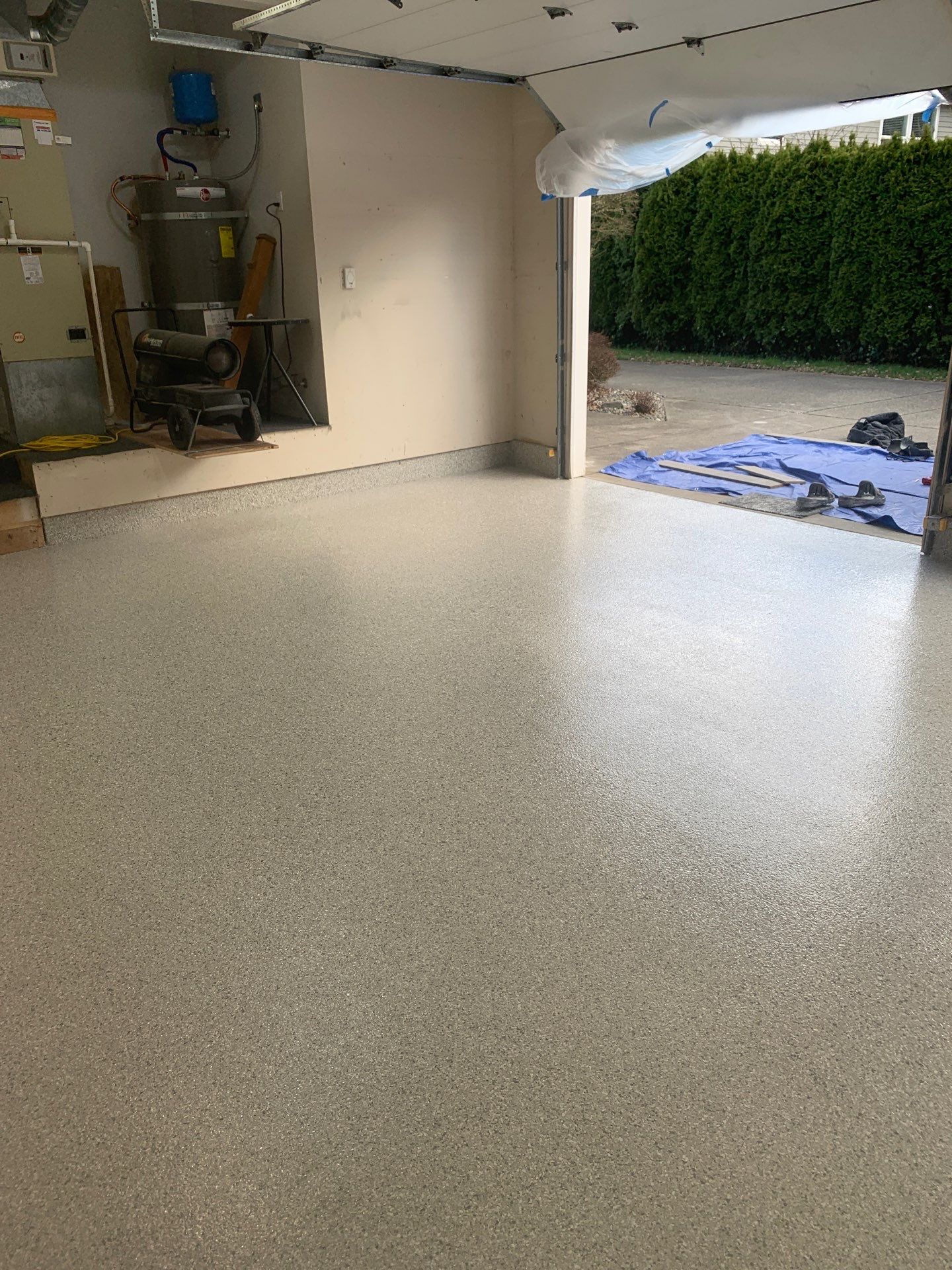
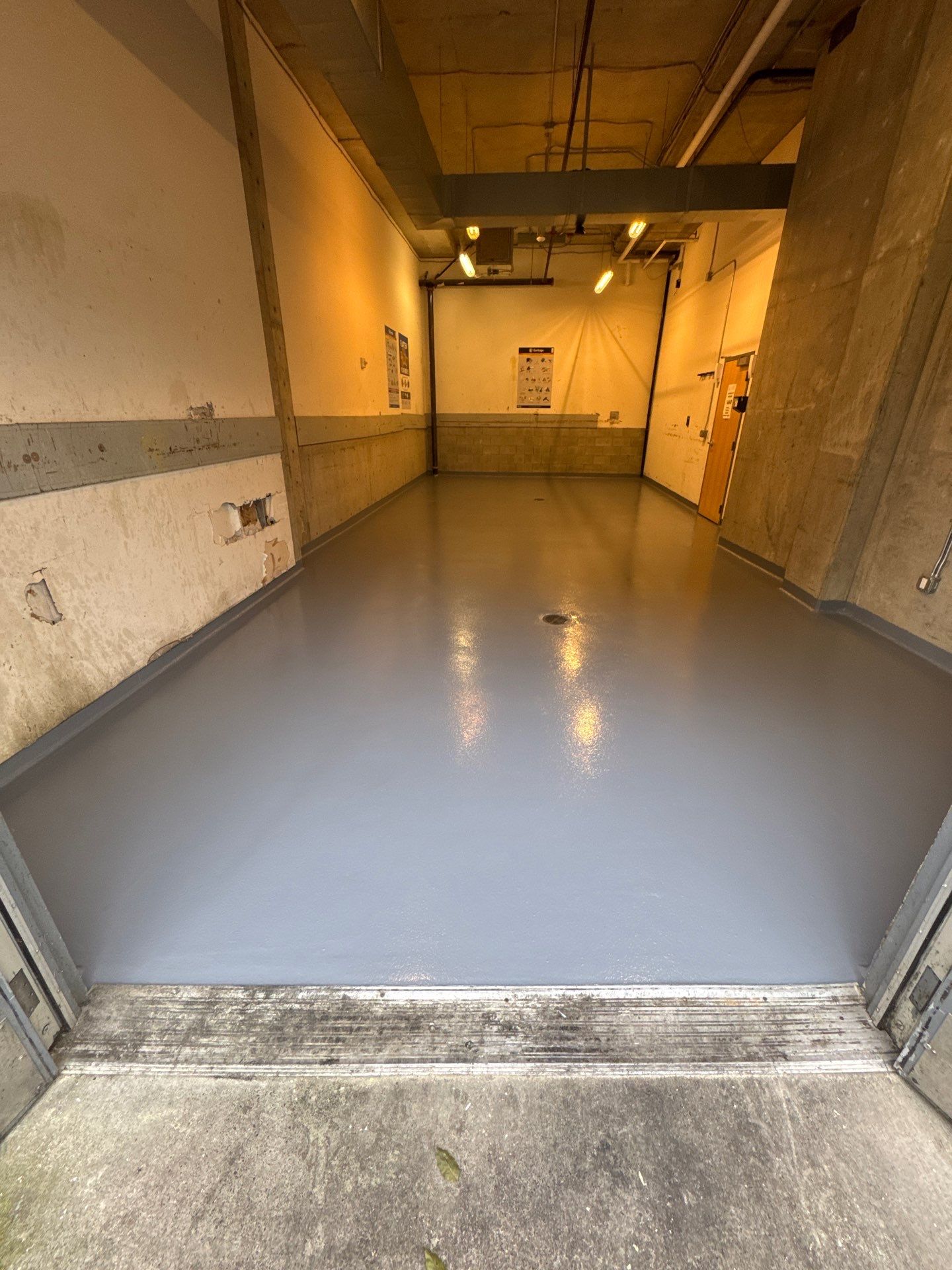
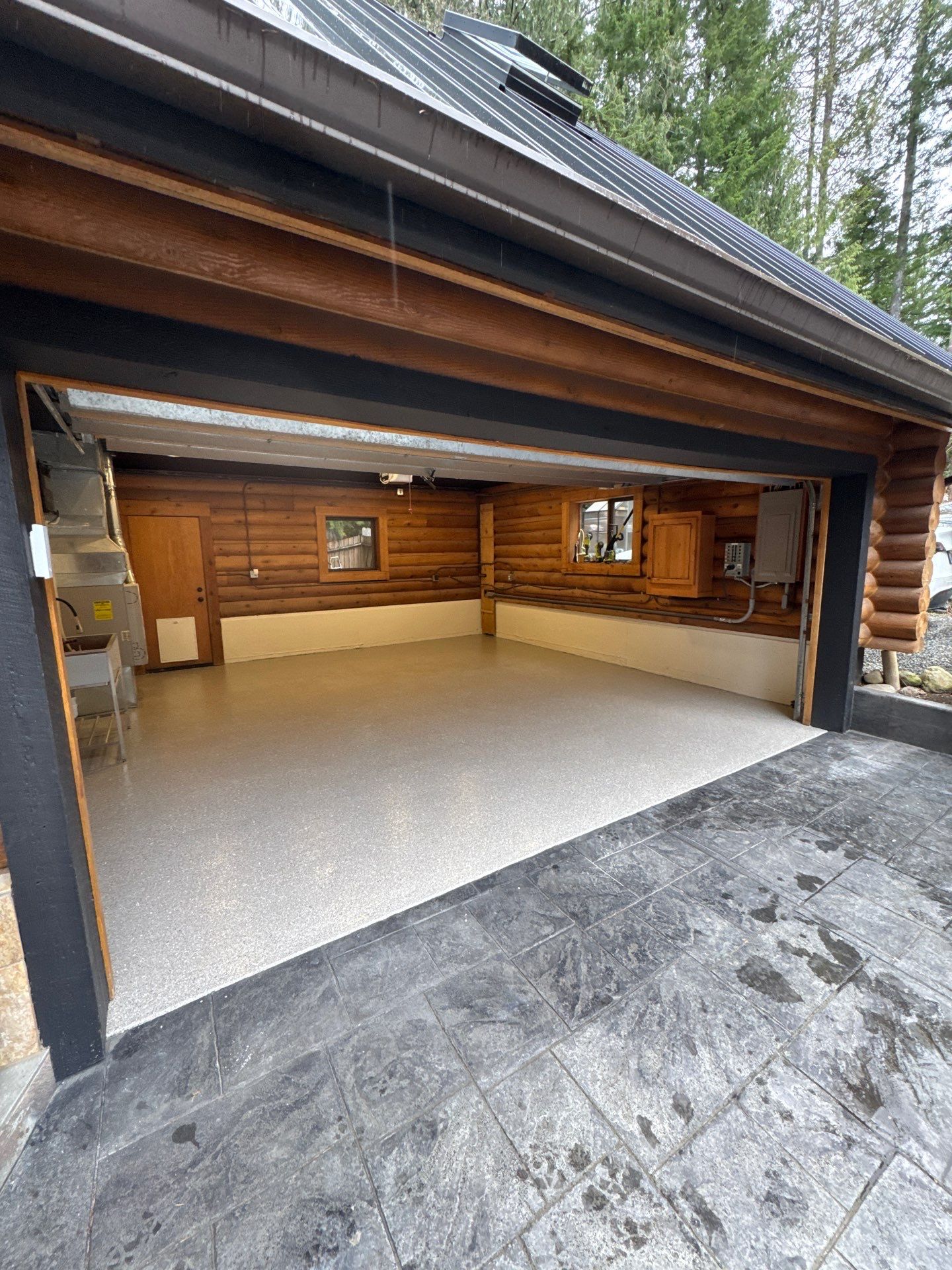
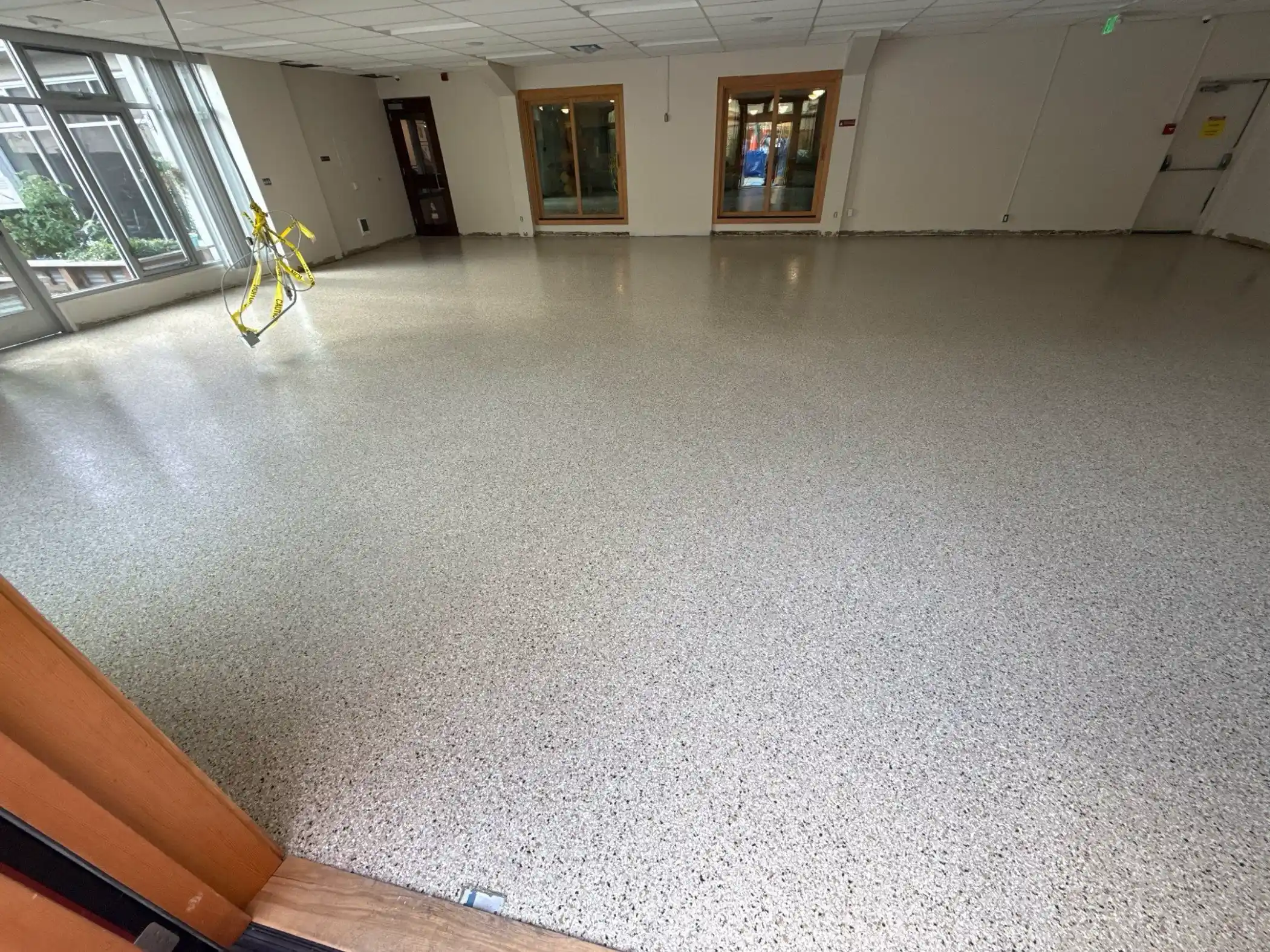
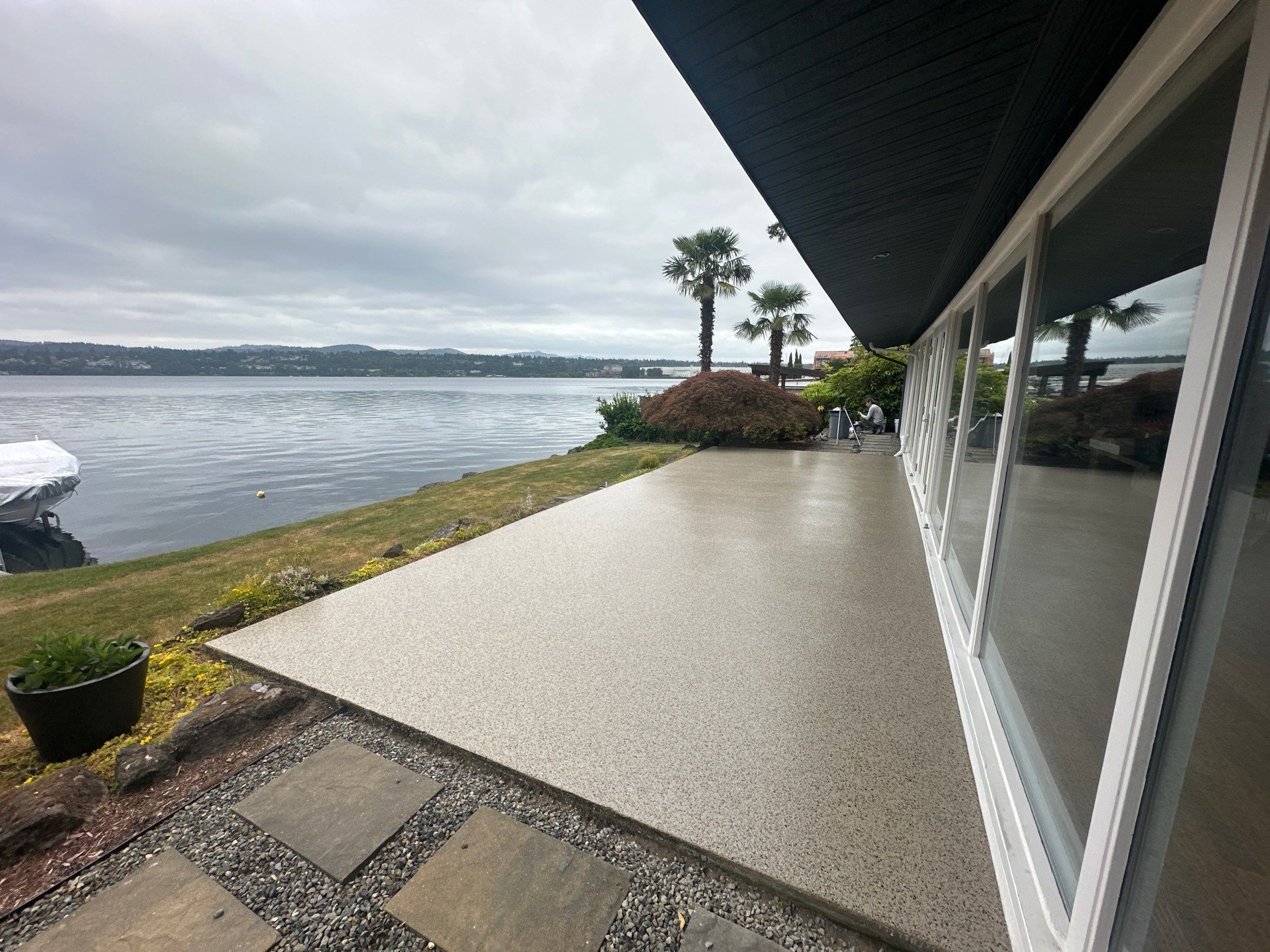
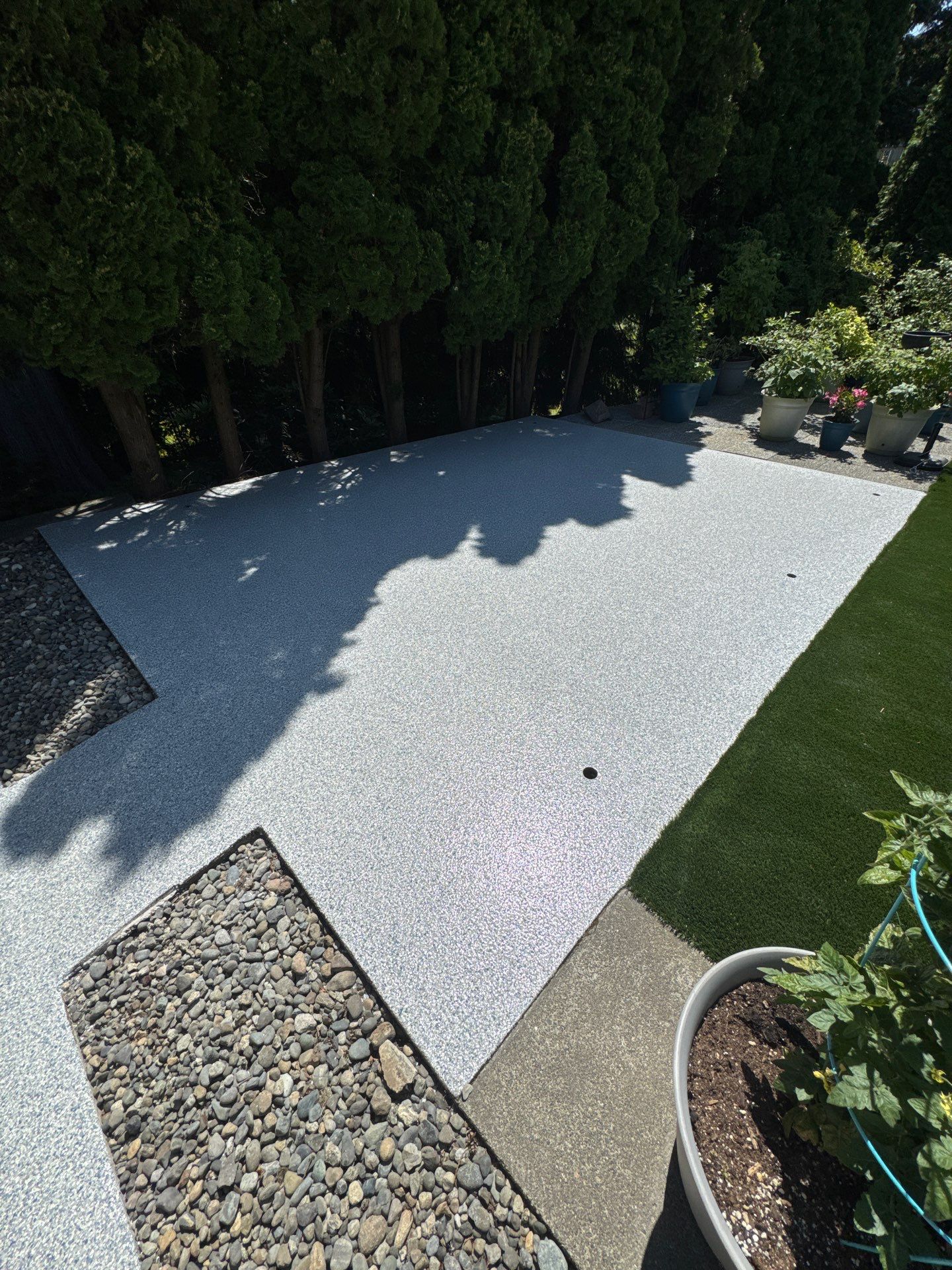
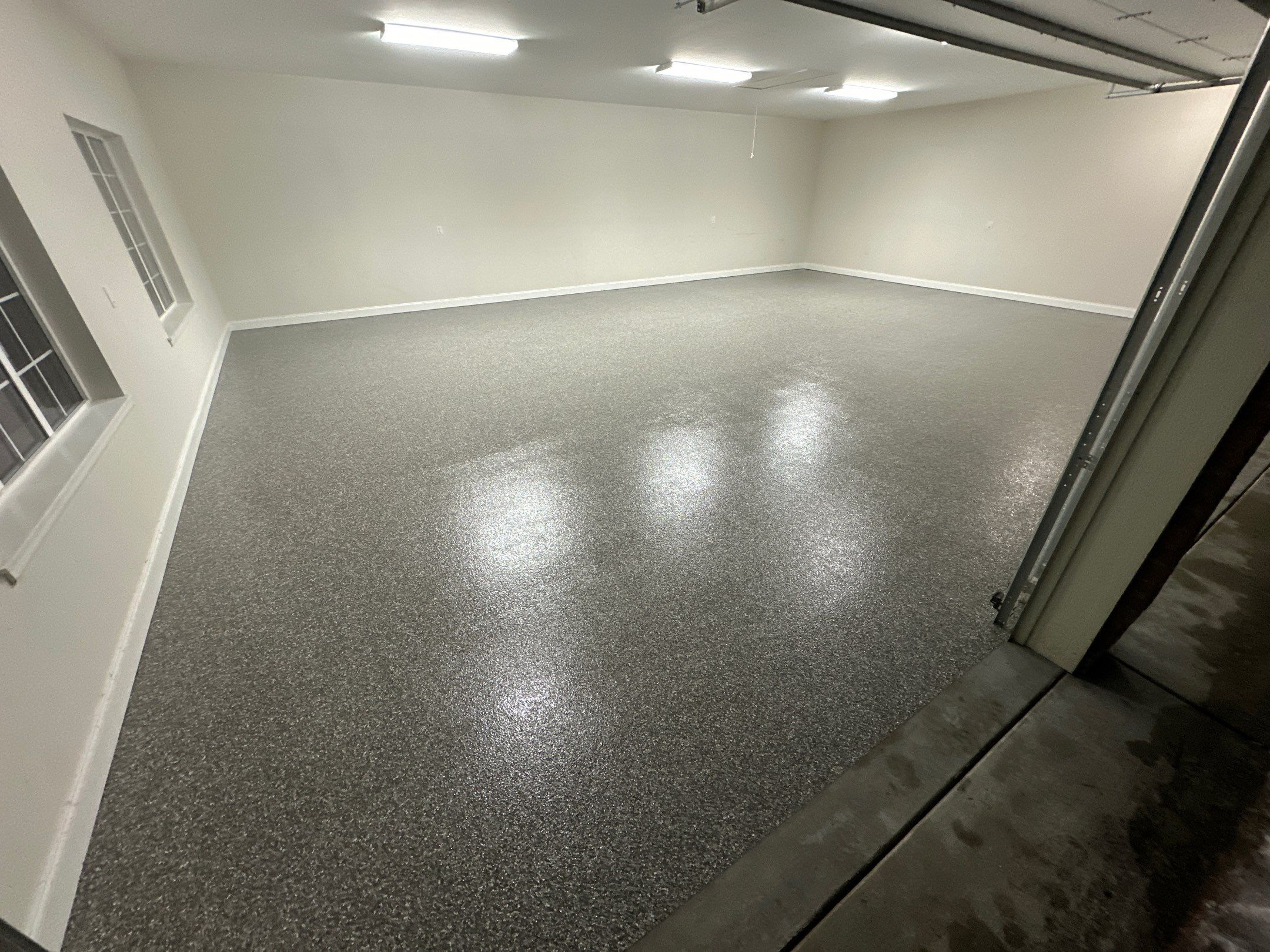
Here's just a few of our previous projects.