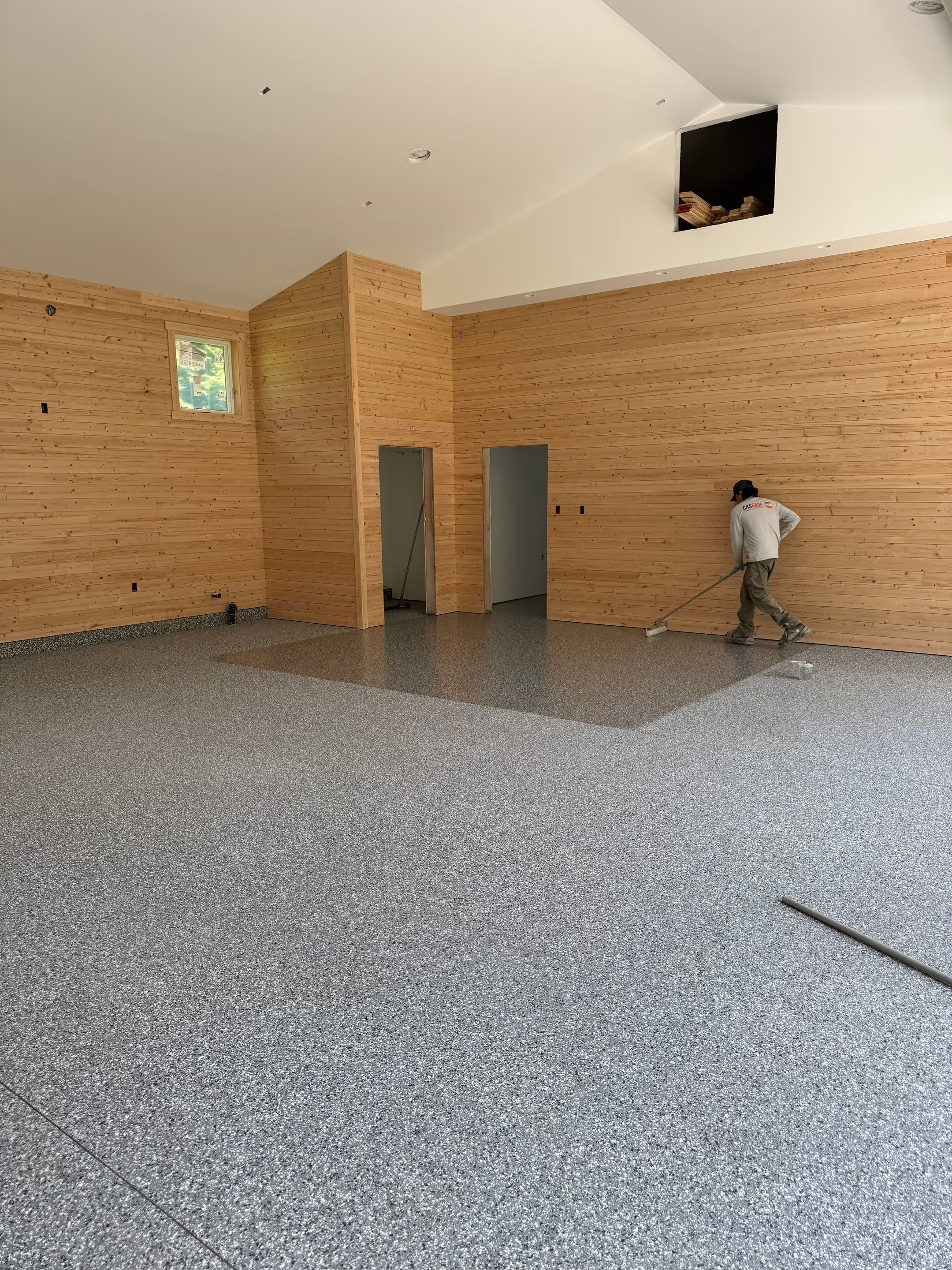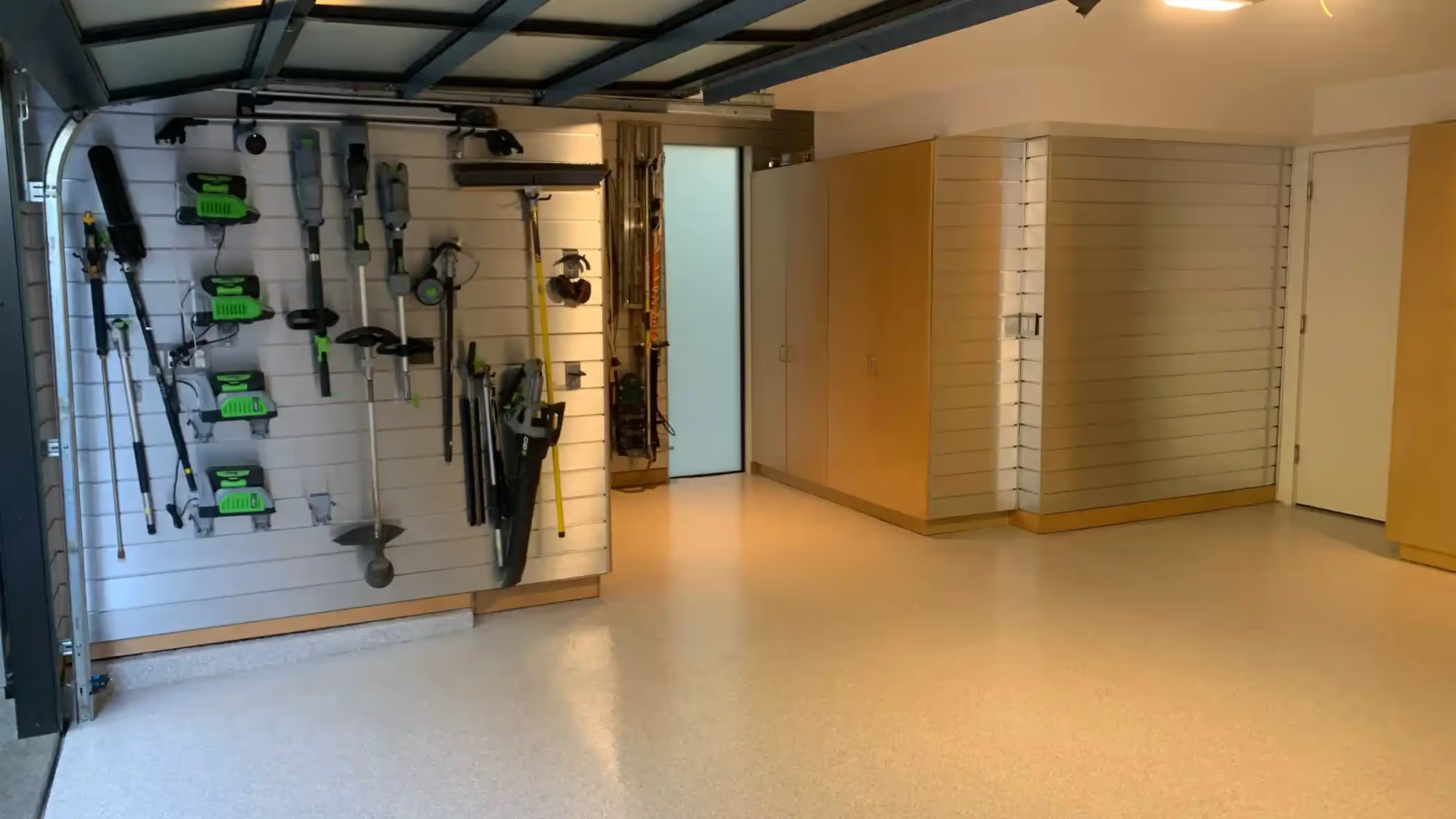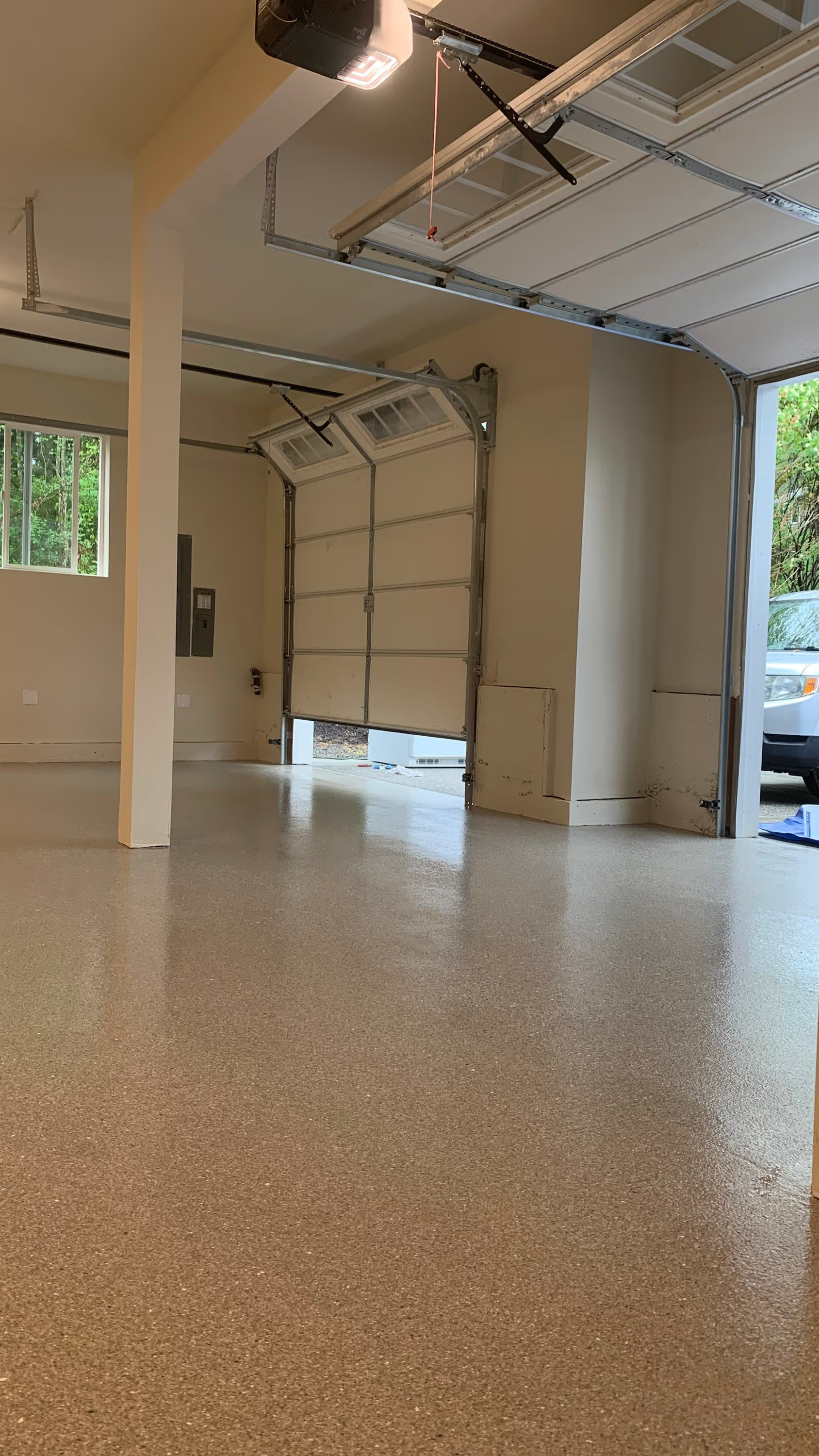
Seattle's unique climate creates distinct challenges for basement concrete that go far beyond what garage floors experience. While garage floor coatings deal primarily with surface-level concerns, basement applications must address hydrostatic pressure, elevated moisture vapor transmission, and the constant battle against water infiltration that defines below-grade spaces in the Pacific Northwest. For homeowners in Bellevue, Kirkland, Redmond, and across the Seattle Eastside, understanding these basement-specific factors is essential before investing in any coating system.
The fundamental challenge with basement floors stems from their location below grade. While garage slabs rest on well-drained aggregate bases exposed to air circulation, basement concrete sits directly against soil that remains perpetually saturated in Western Washington's wet climate.
Understanding Hydrostatic Pressure
Hydrostatic pressure is the force created when water in saturated soil pushes against your basement floor and walls. During Seattle's extended rainy seasons, the water table can rise significantly, creating tremendous upward pressure against your basement slab. This pressure doesn't just push water against the surface—it forces moisture vapor through the concrete's porous structure at a molecular level.
This vapor transmission creates several problems. First, it prevents standard epoxy coatings from adhering properly, leading to bubbling, blistering, and delamination within months of installation. Second, it contributes to basement humidity that promotes mold growth, musty odors, and deterioration of stored items. Third, it gradually weakens the concrete itself through repeated wet-dry cycles.
Seattle's Unique Moisture Challenge
The Seattle area's combination of heavy rainfall, clay-heavy soils, and older homes without modern vapor barriers creates a perfect storm for basement moisture problems. Many homes built before the 1980s lack the comprehensive moisture mitigation systems that newer construction includes. Even homes with perimeter drain systems can experience elevated moisture vapor transmission through the slab itself.
Annual rainfall in Seattle averages 37 inches, but more importantly, it falls consistently from October through May. This sustained saturation keeps groundwater levels elevated for months, maintaining constant pressure against basement floors. Compare this to garage slabs that benefit from surface drainage, airflow, and exposure to drying conditions, and the difference becomes clear.
Before any coating can be applied to a basement floor, comprehensive moisture testing is absolutely essential. Unlike garage applications where moisture testing identifies surface conditions, basement testing must measure moisture vapor transmission rates (MVTR) coming through the slab.
Calcium Chloride Testing
The calcium chloride test measures the pounds of moisture vapor emitted per 1,000 square feet over 24 hours. For basement applications, readings above 3 pounds indicate elevated moisture that requires specialized coating systems. Many Seattle-area basements show readings between 5-12 pounds, which would cause standard epoxy coatings to fail rapidly.
Professional contractors perform multiple tests across the basement floor because moisture transmission varies significantly depending on proximity to exterior walls, floor drains, and crack locations. A single test in the center of the basement won't reveal the full picture.
Relative Humidity Testing
In-situ relative humidity probes provide even more accurate measurements of internal concrete moisture conditions. These sensors are inserted into holes drilled to 40% of the slab depth, where they measure humidity levels within the concrete itself. Readings above 75% RH indicate moisture conditions that require specialized treatment.
This testing becomes particularly critical in Seattle basements because moisture levels can fluctuate seasonally. Testing during summer dry periods may show acceptable levels that spike dramatically during winter rains. Professional installers like Cascade Concrete Coatings consider seasonal variations when recommending systems.
Walk into any big-box hardware store, and you'll find DIY epoxy kits marketed for both garage and basement use. What the packaging won't tell you is that these products are fundamentally inappropriate for below-grade applications with elevated moisture vapor transmission.
The Science of Epoxy Failure
Epoxy coatings create a mechanical bond with concrete, relying on absorption into the surface pores to establish adhesion. This works acceptably on dry garage slabs where moisture vapor transmission is minimal. In basements with elevated MVTR, moisture vapor trying to escape through the concrete encounters the epoxy barrier and becomes trapped beneath it.
As moisture accumulates at the epoxy-concrete interface, it breaks the mechanical bond, causing the classic symptoms of coating failure: bubbling, blistering, peeling, and eventually complete delamination. This process typically accelerates during Seattle's wet season when hydrostatic pressure intensifies.
The failure timeline for standard epoxy in basement applications is remarkably consistent: minor bubbling appears within 3-6 months, widespread blistering develops within 12-18 months, and large sections delaminate within 2-3 years. Homeowners then face the expensive, frustrating process of removing the failed coating before starting over.
The Myth of "Moisture-Resistant" Epoxy
Some epoxy products claim moisture resistance or low-moisture tolerance. These formulations may withstand slightly elevated moisture levels, but they still create the same impermeable barrier that traps vapor transmission. The result is simply delayed failure rather than true moisture compatibility.
Unlike epoxy's mechanical bonding, Penntek polyurea coatings create a chemical bond at the molecular level. This fundamental difference is what makes them suitable for challenging basement applications.
Silane Adhesion Promoters
Penntek's pure polyurea basecoat incorporates enhanced silane adhesion promoters that penetrate into the concrete structure and create covalent chemical bonds with the calcium silicate hydrates that form concrete. These bonds are so strong that the concrete itself would fail before the coating delaminates—the bond becomes stronger than the substrate.
More importantly for basement applications, this chemical bonding process tolerates moisture vapor transmission that would destroy epoxy coatings. The silane molecules can establish their chemical bonds even in the presence of moisture, and once cured, the coating resists moisture fluctuations in the substrate without losing adhesion.
Flexibility and Substrate Movement
Basement floors experience more movement than garage slabs due to several factors: hydrostatic pressure fluctuations, seasonal expansion and contraction from temperature swings, and settling that occurs in below-grade structures. Penntek's flexibility additives allow the coating to endure these dynamic stresses without cracking, chipping, or peeling.
This flexibility is critical in Seattle where temperature differentials between wet winters and dry summers cause significant concrete movement. A rigid coating would crack and fail, allowing moisture penetration that accelerates deterioration. Penntek's engineered flexibility maintains the protective barrier's integrity even during substrate shifts.
A successful basement floor coating in Seattle requires a comprehensive system approach, not just surface-level application.
Step 1: Comprehensive Crack Repair
Crack repair in basements is more critical than in garages because cracks serve as direct pathways for water infiltration. Professional repair involves routing out the crack to create a proper profile, cleaning thoroughly, and filling with flexible polyurea or polyurethane compounds that can accommodate future movement without reopening.
Cracks near exterior walls or floor drains require special attention because they often indicate structural issues or drainage problems that need addressing before coating. Simply coating over these problem areas guarantees future failure.
Step 2: Surface Preparation to ICRI Standards
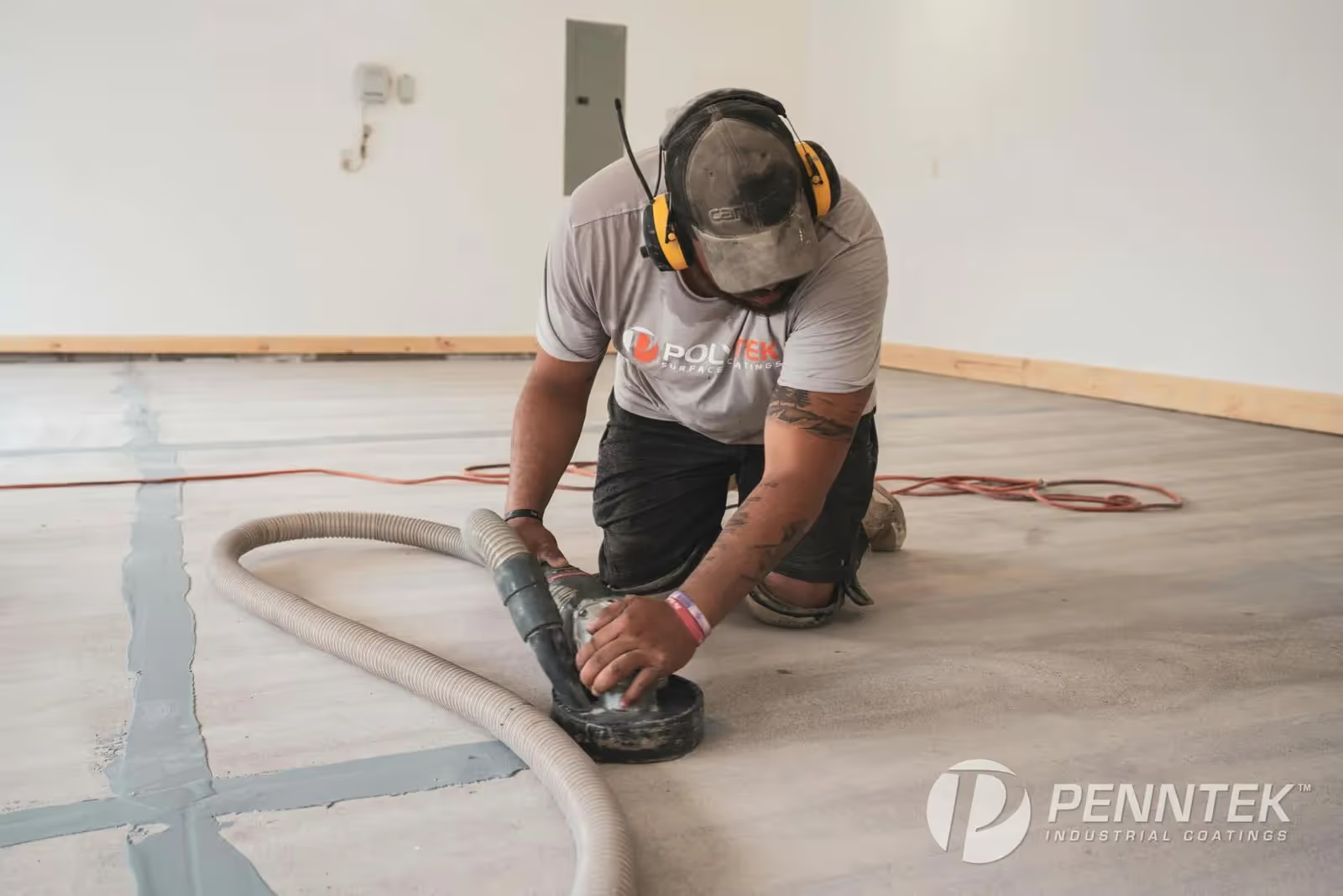
Basement concrete must be prepared more aggressively than garage floors to expose adequate surface profile for the chemical bonding process. This involves diamond grinding to ICRI CSP-3 or higher standards, creating microscopic peaks and valleys that maximize surface area for molecular bonding.
The grinding process also removes surface contaminants, laitance, and carbonation that would interfere with adhesion. For basements, this preparation is even more critical because any weak surface layer will fail under hydrostatic pressure despite proper coating application.
Step 3: Moisture Mitigation Primers
In basements with elevated moisture vapor transmission, specialized moisture-tolerant primers create an initial barrier that helps manage vapor transmission while providing an optimal surface for the polyurea basecoat. These primers penetrate deeply into the concrete structure, reacting with moisture to form a protective matrix.
This primer layer doesn't eliminate moisture transmission—that's impossible without addressing the source—but it manages it effectively enough that the topcoat system can maintain its integrity. Think of it as a pressure relief valve that prevents moisture from accumulating at the coating interface.
Step 4: Pure Polyurea Basecoat
The Penntek polyurea basecoat is the heart of the system's moisture resistance. Applied at the proper thickness—typically 20-30 mils—it creates a flexible, chemically bonded barrier that tolerates the moisture conditions present in Seattle basements.
Application technique is critical for basement floors. The coating must be applied at proper ambient and substrate temperatures (typically 50-90°F), with careful attention to avoiding thin spots that could compromise performance. Professional installers monitor conditions throughout the process to ensure optimal curing.
Step 5: Polyaspartic Topcoat with UV Protection
While basements receive less UV exposure than garages, the polyaspartic topcoat still serves multiple critical functions. Its non-porous surface provides superior stain resistance and easier cleaning compared to bare polyurea. The FadeLock UV protection prevents any discoloration from windows or artificial lighting, maintaining the floor's appearance over decades.
The topcoat's abrasion resistance is particularly valuable in basements used as workshops, gyms, or recreational spaces where foot traffic and equipment movement would quickly wear unprotected coatings.
No coating system can overcome fundamental drainage failures. Before investing in basement floor coating, Seattle-area homeowners must address any active water intrusion issues.
Perimeter Drainage Systems
French drains or exterior waterproofing systems manage groundwater before it reaches your foundation. If your basement experiences standing water during heavy rains, no coating will solve the problem—you need proper drainage first.
However, many Seattle basements with adequate perimeter drainage still experience elevated moisture vapor transmission through the slab. This is where proper coating systems provide value by managing the vapor transmission that remains even with good drainage.
Sump Pump Functionality
Ensure your sump pump operates correctly and has battery backup for Seattle's winter storms that often combine heavy rain with power outages. The coating system protects your floor, but the sump pump prevents catastrophic flooding.
Dehumidification
Even with perfect coatings, Seattle basements benefit from supplemental dehumidification. A quality dehumidifier maintains 50-60% relative humidity, creating comfortable conditions while reducing mold risk. The coating prevents moisture from entering through the floor, while dehumidification manages ambient moisture from other sources.
Learning from others' mistakes can save you thousands of dollars and years of frustration.
Mistake #1: Skipping Professional Moisture Testing
Some contractors offer to "eyeball" your basement moisture conditions or perform cursory tests. This approach guarantees problems. Invest in comprehensive moisture testing before any coating decision. Cascade Concrete Coatings includes thorough testing in every basement evaluation.
Mistake #2: Choosing Based on Price Alone
The hidden cost of cheap garage floor coatings applies even more dramatically to basements. A failed basement coating is more expensive to remove and replace than garage coating because the space must be completely emptied twice. The initial savings evaporate quickly.
Mistake #3: DIY Basement Coating
While some homeowners successfully tackle garage DIY projects, basement coating should always be left to professionals. The moisture management, surface preparation, and application expertise required for successful basement installations justify professional costs. One failed DIY attempt typically costs more than professional installation would have initially.
Mistake #4: Ignoring Seasonal Factors
Basement coating should ideally occur during Seattle's drier months (July-September) when moisture vapor transmission rates are at seasonal lows. Spring installations during peak moisture periods face higher failure risk even with proper systems.
A properly coated basement floor transforms the space from a damp, musty storage area into usable living space. Seattle-area homeowners regularly convert coated basements into:
Home Gyms and Fitness Spaces
The non-slip, cushioned surface works perfectly for exercise equipment, yoga, and fitness activities. The antimicrobial properties of polyurea coatings prevent the mold and mildew that typically plague basement workout spaces.
Workshops and Hobby Spaces
The chemical-resistant surface withstands spills from paints, solvents, and oils. The bright, reflective finish improves lighting in naturally dark basement spaces, making detailed work easier.
Recreation and Entertainment Areas
From home theaters to game rooms, a clean, dry basement floor creates an inviting environment. Parents appreciate surfaces that are easy to clean after children's play, while the durability withstands years of foot traffic.
Additional Living Space
Some Seattle homeowners create guest suites, home offices, or rental units in finished basements. Professional floor coating is essential for spaces where people spend extended time, providing a clean, attractive surface that remains comfortable underfoot.
Basement floor coating costs more than garage coating due to the additional preparation, moisture testing, and specialized materials required. For a typical Seattle basement of 800-1,000 square feet, expect investment in the $4,000-$6,500 range for professional Penntek installation.
This investment pays dividends through:
The complexity of basement coating makes professional installation essential. Certified Penntek dealers undergo rigorous training in moisture management, surface preparation, and application techniques specifically for challenging below-grade environments.
Cascade Concrete Coatings' installation process for basements includes:
This systematic approach ensures your basement coating performs properly for decades, backed by Penntek's manufacturer warranty.
If you're considering basement floor coating for your Bellevue, Kirkland, Redmond, or Issaquah home, the first step is professional moisture assessment.
Contact Cascade Concrete Coatings to schedule your free basement evaluation. We'll perform comprehensive moisture testing, assess your basement's specific challenges, and recommend the optimal coating system for your conditions. Don't trust your below-grade investment to contractors without basement-specific expertise—choose the certified Penntek specialists who understand Seattle's unique moisture challenges.
Transform your basement from a damp storage space into beautiful, usable square footage with confidence that your coating will perform for decades, not just months.