When Seattle homeowners consider garage floor coating, UV protection rarely tops their concern list. After all, doesn't our reputation as the "Rainy City" mean we don't get enough sun to worry about UV damage? This common misconception costs homeowners thousands of dollars when their seemingly durable floor coatings yellow, fade, and deteriorate within just a few years. The reality is that even Seattle's moderate sun exposure causes dramatic damage to unprotected concrete coatings, and understanding the science behind this deterioration is essential before investing in any garage floor system.
Seattle receives approximately 152 sunny days per year compared to the national average of 205. However, UV radiation doesn't require constant direct sunlight to damage concrete coatings. Even on overcast days, UV rays penetrate cloud cover at levels sufficient to break down chemical bonds in unprotected polymers.
The UV Radiation Spectrum
UV radiation consists of three wavelengths: UVA (320-400nm), UVB (290-320nm), and UVC (100-290nm). UVC is blocked by Earth's atmosphere, but UVA and UVB both reach Seattle's garages throughout the year. UVA penetrates deeply into materials and causes gradual molecular breakdown, while UVB has higher energy and causes more immediate surface damage.
Garage door orientation dramatically affects UV exposure. South-facing garages receive significantly more direct sunlight than north-facing ones, but even north-facing garages experience UV damage through ambient light and reflected radiation. During Seattle's long summer days, the sun's high angle allows rays to penetrate deep into garages for extended periods.
Seasonal Variations in UV Intensity
Seattle's UV index peaks at 7-8 during summer months (June-August), classified as "high" exposure requiring protection. Even during winter, the UV index reaches 1-2, which seems minimal but remains sufficient to damage unprotected coatings over time. The cumulative effect of this year-round exposure is what homeowners underestimate.
Consider this: a coating that shows no visible yellowing during its first winter may exhibit significant discoloration by the second summer, as the cumulative UV exposure crosses the threshold where molecular damage becomes visible to the eye.
UV radiation damages concrete coatings through a process called photodegradation, where UV energy breaks chemical bonds in the polymer matrix. This molecular destruction manifests in several visible ways.
Yellowing and Discoloration
The most recognizable symptom of UV damage is yellowing—the transformation of clear or lightly tinted coatings into amber or yellow-toned surfaces. This occurs because UV radiation breaks aromatic rings and other chemical structures within the polymer, creating chromophores that absorb blue light and reflect yellow.
Standard epoxy coatings are particularly susceptible to yellowing because their chemical structure includes aromatic groups that are highly reactive to UV radiation. Within 12-24 months of exposure to Seattle's sun, most epoxy garage floors show visible yellowing, especially in areas receiving direct sunlight through windows or open garage doors.
The yellowing isn't merely cosmetic. It signals deeper molecular damage that compromises the coating's structural properties. As the polymer chains break down, the coating loses flexibility, adhesion, and chemical resistance.
Chalking and Surface Degradation
As UV exposure continues, the damaged polymer surface begins to "chalk"—a powdery residue that forms as the top layer literally disintegrates. Run your hand across a UV-damaged coating, and you'll collect a white or colored powder on your palm. This chalking represents the coating surface breaking down at the molecular level.
Chalking accelerates further deterioration because it roughens the surface, allowing moisture, chemicals, and contaminants to penetrate more easily. What began as a UV-induced surface problem now threatens the entire coating system.
Loss of Gloss and Appearance
UV damage destroys the high-gloss finish that makes new garage floors so attractive. The molecular breakdown roughens the surface at a microscopic level, scattering light rather than reflecting it uniformly. A coating that once gleamed like a showroom floor becomes dull and matte, dramatically reducing aesthetic appeal.
For Seattle homeowners who invest in premium garage floor coatings for their visual impact, this gloss loss represents a complete failure of the coating's primary benefit.
Walk into any big-box hardware store, and you'll find DIY epoxy kits marketed for garage floors. What the packaging rarely mentions is epoxy's fundamental vulnerability to UV radiation.
The Chemistry of Epoxy Yellowing
Epoxy polymers contain bisphenol A (BPA) and other aromatic compounds essential to their curing chemistry. These same compounds make epoxy highly susceptible to photodegradation. When UV radiation hits epoxy, it breaks the aromatic rings, creating oxidized byproducts that appear yellow or amber.
This process is not gradual yellowing that might be acceptable—it's dramatic and irreversible. Testing conducted by Penntek's technical team demonstrated this clearly: when exposed to accelerated UV weathering simulating years of sun exposure, standard epoxy coatings showed severe yellowing and discoloration within hours of testing.
The Acceleration Effect in Mixed Climates
Seattle's climate actually accelerates UV damage through a phenomenon called wet-dry cycling. Summer sun exposure followed by fall and winter moisture creates repeated expansion and contraction in the coating. This mechanical stress combines with UV damage to speed up coating failure.
Moisture infiltrating UV-damaged epoxy causes further problems. Water reaches the compromised epoxy-concrete interface more easily, leading to the bubbling, blistering, and delamination that characterizes epoxy failure.
The Timeline of Epoxy Deterioration
For Seattle garages with moderate sun exposure, the epoxy failure timeline is remarkably consistent:
This timeline assumes moderate exposure. South-facing garages with large windows can experience this deterioration twice as fast.
Understanding why most coatings fail makes Penntek polyurea's UV resistance even more impressive. The FadeLock technology represents a fundamentally different approach to UV protection.
Proprietary UV Stabilizers
FadeLock is Penntek's proprietary additive package integrated directly into the topcoat formulation. Unlike surface-applied UV protectants that wear away with use, FadeLock UV stabilizers are distributed throughout the coating thickness, providing protection that lasts as long as the coating itself.
These stabilizers work through two mechanisms: UV absorption and free radical scavenging. The absorption compounds capture UV energy before it can damage the polymer chains, while the scavenging molecules neutralize free radicals created when some UV does penetrate. This dual-action approach provides comprehensive protection against photodegradation.
The Sunscreen Analogy
Penntek's technical literature describes FadeLock as "sunscreen for your floor," and the analogy is scientifically accurate. Just as sunscreen absorbs and reflects UV radiation to protect your skin, FadeLock protects the polymer coating from UV-induced damage.
The key difference is permanence. Sunscreen washes off and requires reapplication. FadeLock is chemically bonded within the coating matrix, providing permanent protection that never requires renewal or reapplication.
Laboratory Testing Results
Penntek's testing using QUV accelerated weathering equipment demonstrates FadeLock's effectiveness dramatically. In side-by-side comparisons, standard polyurea coatings show measurable yellowing within 8-16 hours of exposure, while Penntek coatings with FadeLock show no visible change even after 72 hours of intense UV exposure simulating years of real-world conditions.
These aren't subtle differences. When test samples are placed side by side, the standard coating appears distinctly yellow-amber while the Penntek sample maintains its original color perfectly. This visual difference represents the protection Seattle homeowners receive from FadeLock technology.
Laboratory testing proves concept, but real-world performance in Seattle's unique climate validates FadeLock's practical value.
South-Facing Garage Case Study
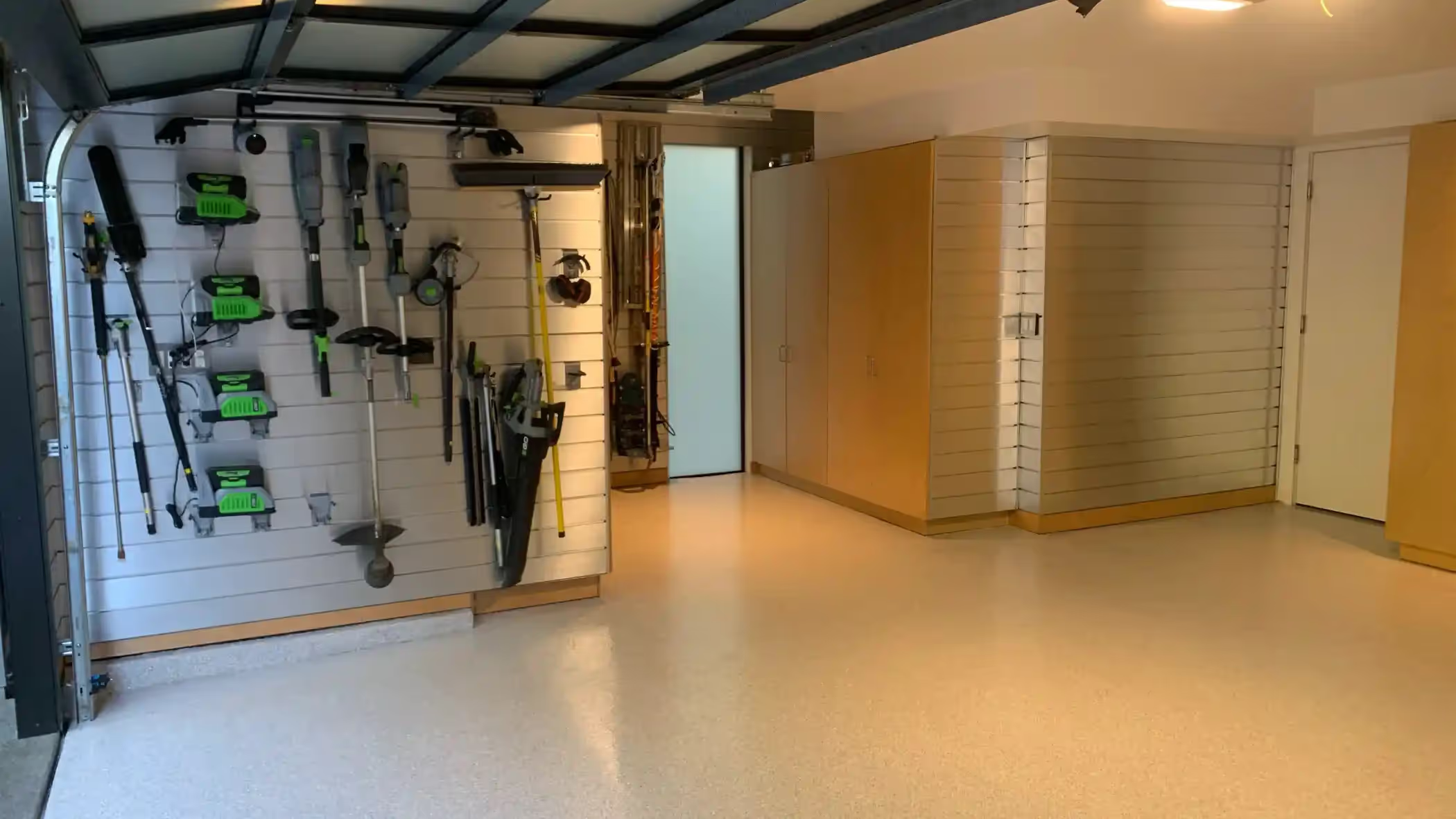
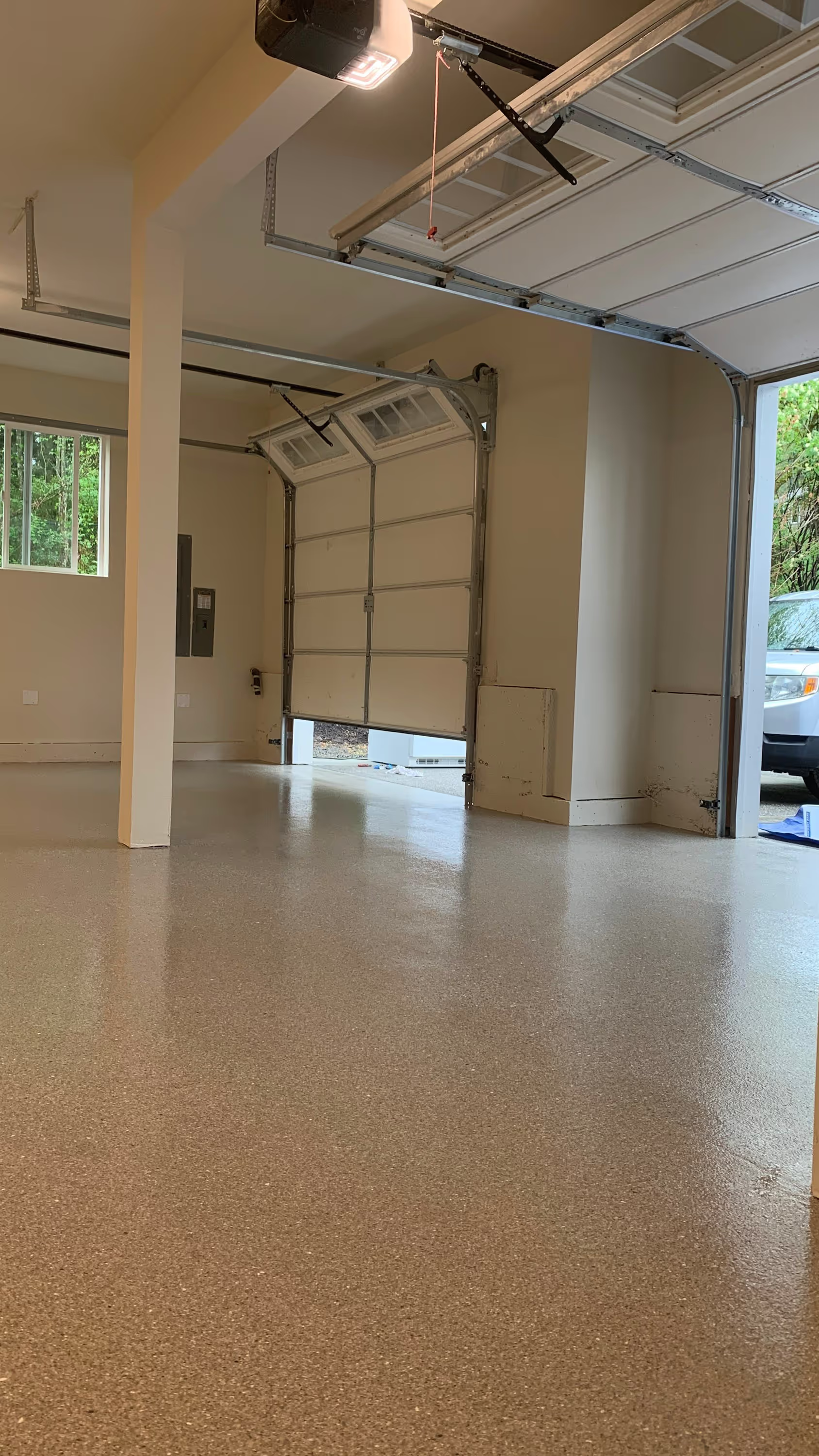
A Bellevue homeowner with a south-facing three-car garage installed a Penntek polyurea coating in 2016. The garage features large windows and faces full southern exposure, receiving maximum UV radiation during Seattle's summer months. After eight years, the coating shows zero yellowing, maintains its original gloss, and performs identically to installation day.
Compare this to the neighbor's epoxy-coated garage installed around the same time. By year two, visible yellowing was apparent. By year four, the yellowing had become severe enough that the homeowner had the epoxy removed and replaced with Penntek—essentially paying twice for the same garage.
West-Facing Garage with Afternoon Sun
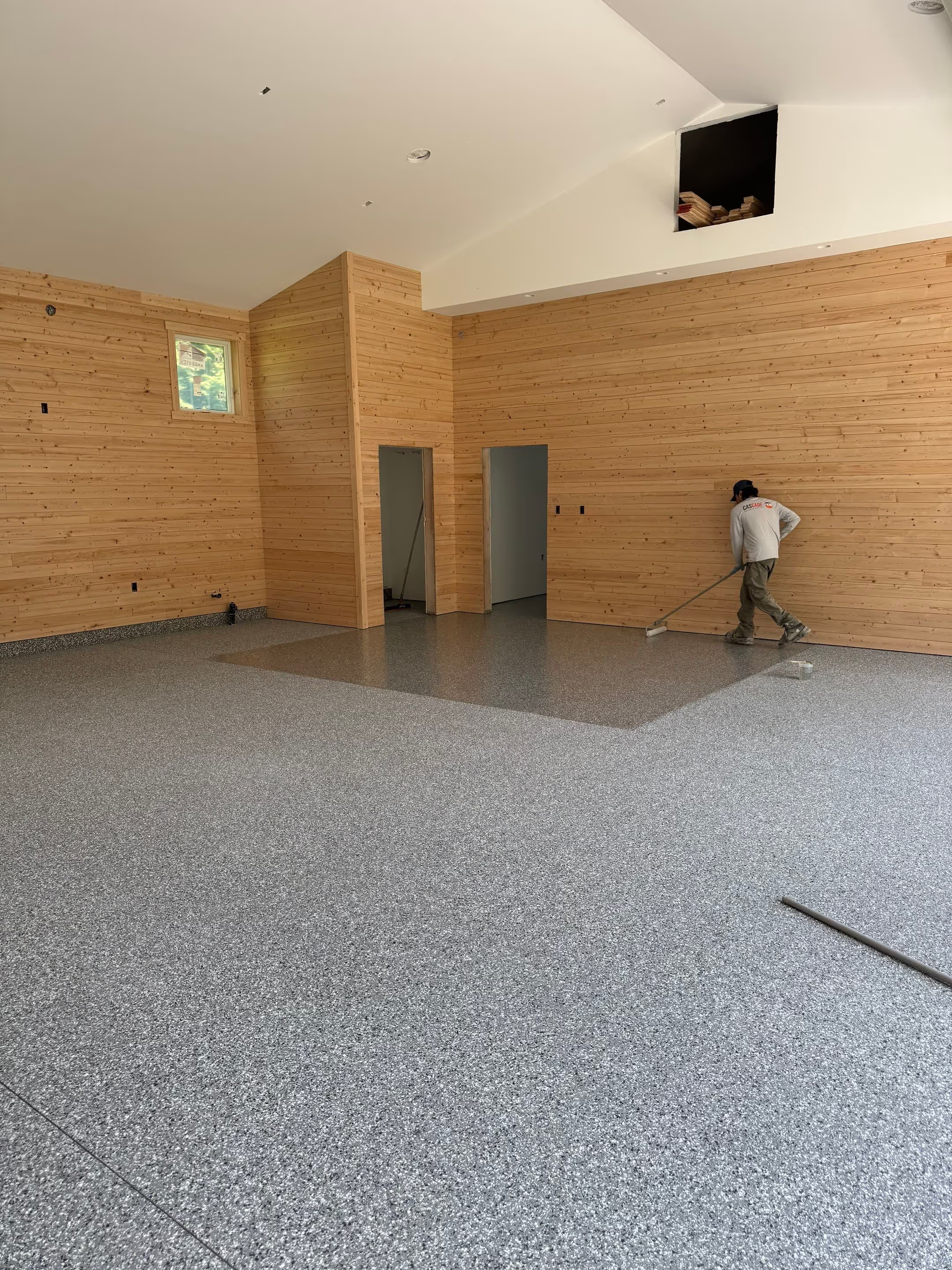
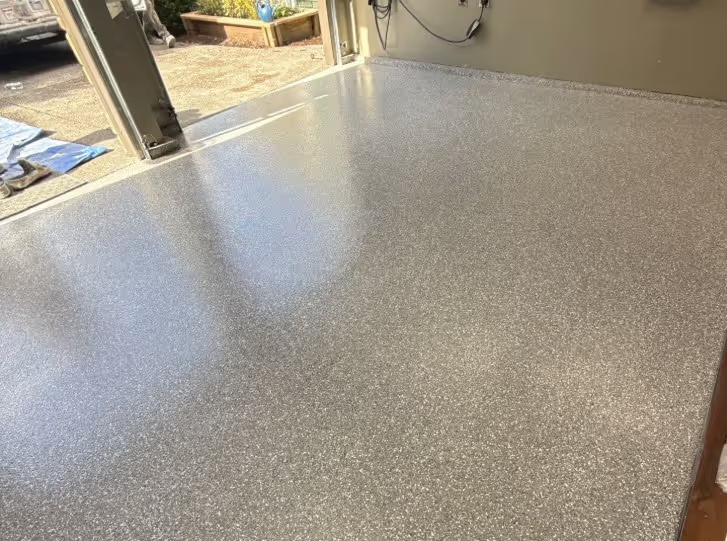
A Kirkland installation from 2015 demonstrates FadeLock's protection in a west-facing garage receiving intense afternoon sun exposure. Nine years later, the Smoke color with black and gray flakes remains as vibrant as installation day, with no color shift, no gloss loss, and no surface deterioration.
The homeowner reports that during summer months, the afternoon sun heats the garage significantly, creating conditions that would rapidly degrade unprotected coatings. The FadeLock technology provides protection even under these challenging conditions.
UV protection isn't only about preventing yellowing—it's about preserving the decorative flakes and base color that make coated garage floors attractive.
Flake Color Integrity
Decorative flakes broadcast into the base coat provide the visual interest that transforms plain coatings into showroom-quality floors. These polymer flakes are equally susceptible to UV damage, and unprotected flakes fade dramatically within a few years.
FadeLock's UV stabilizers in the topcoat filter UV radiation before it reaches the flake layer, preserving color integrity indefinitely. A garage floor with rich, vibrant flakes maintains that appearance for decades rather than fading to washed-out pastels within a few years.
Base Coat Color Stability
Even solid-color coatings without decorative flakes benefit from UV protection. Darker colors like grays and browns can shift tone as UV damage accumulates, while lighter colors often take on yellowish casts. FadeLock prevents these color shifts, ensuring your garage floor looks the same in year ten as it did on installation day.
This color stability is particularly valuable for Seattle homeowners who invest in custom colors and designs. The aesthetic appeal that justified the investment remains intact indefinitely.
UV damage isn't merely an aesthetic concern—it has significant financial implications for Seattle homeowners.
Premature Replacement Costs
When an epoxy or low-quality polyurea coating fails due to UV damage, replacement requires complete removal of the failed coating before installing a new system. This removal process is expensive, labor-intensive, and often damages the concrete substrate, requiring additional repair work.
Removal costs for failed coatings typically range from $2-$4 per square foot, and that's before installing the replacement coating. For a 500 square foot garage, removal alone costs $1,000-$2,000, then you pay again for the new coating installation.
By contrast, a Penntek coating with FadeLock protection lasts 30-40 years without requiring replacement, eliminating these repeated costs entirely.
Home Value Impact
When potential buyers tour your home, a yellowed, deteriorated garage floor signals deferred maintenance and creates negative first impressions. The resale value impact extends beyond the garage itself—buyers assume if you let the garage deteriorate, what else have you neglected?
Conversely, a pristine garage floor that shows no yellowing or deterioration after years of use demonstrates quality investment and proper maintenance, supporting premium pricing when you sell.
Lifetime Cost Analysis
Consider the total cost of ownership over 30 years:
Standard Epoxy Approach:
Penntek with FadeLock:
The UV-protected Penntek coating costs $15,400 less over 30 years while providing superior appearance and performance throughout that period.
Even with FadeLock technology, certain practices optimize long-term UV protection.
Consider Garage Door Position
When possible, keep garage doors closed during peak sunlight hours, especially in south and west-facing garages. While FadeLock provides excellent protection, minimizing exposure extends the coating's already impressive longevity even further.
Window Treatments
Garages with large windows may benefit from UV-filtering window film or treatments. These don't replace the need for UV-stable coatings but provide additional protection for items stored in the garage that may be UV-sensitive.
Regular Maintenance
While UV protection prevents coating deterioration, regular cleaning maintains the surface's appearance and allows you to spot any potential issues early. Simple maintenance practices keep your coating looking showroom-fresh for decades.
Ironically, Seattle's reputation for limited sun exposure provides a false sense of security that leads many homeowners to choose unprotected coatings. They assume UV damage won't affect them in our cloudy climate, then face disappointing yellowing and deterioration within a few years.
Smart Seattle homeowners recognize that even moderate UV exposure causes damage over time, and they invest in proven UV protection from the start. This approach eliminates the frustration and expense of premature coating failure.
Don't learn about UV damage the hard way by watching your garage floor yellow and deteriorate. Contact Cascade Concrete Coatings to schedule your free consultation and see FadeLock's UV protection demonstrated.
We serve homeowners throughout the Seattle Eastside, including Kirkland, Redmond, Bellevue, Sammamish, and Bothell, with professional Penntek installation backed by lifetime warranty.
Your garage floor should look as beautiful in ten years as it does today. With FadeLock UV protection, it will.