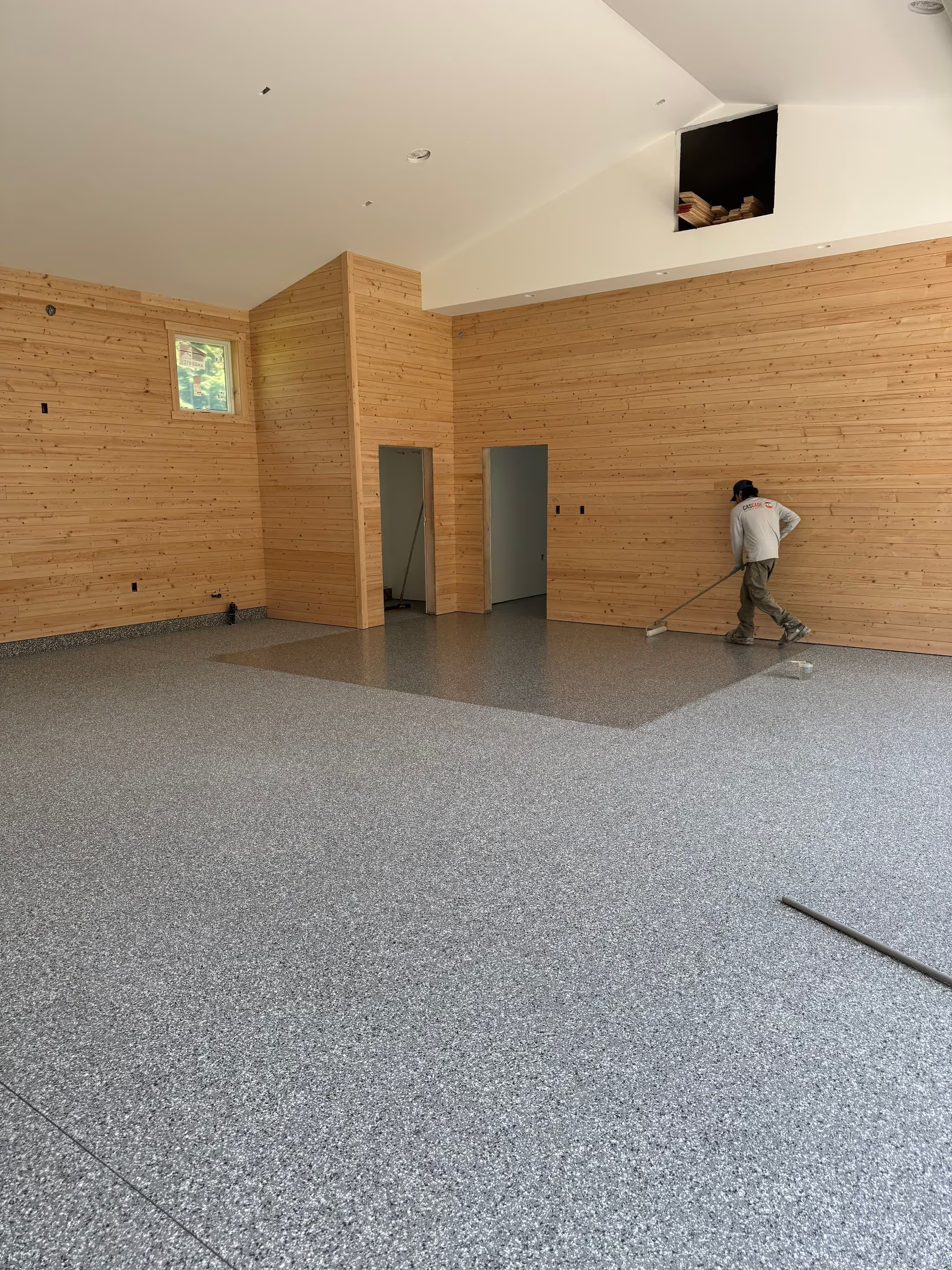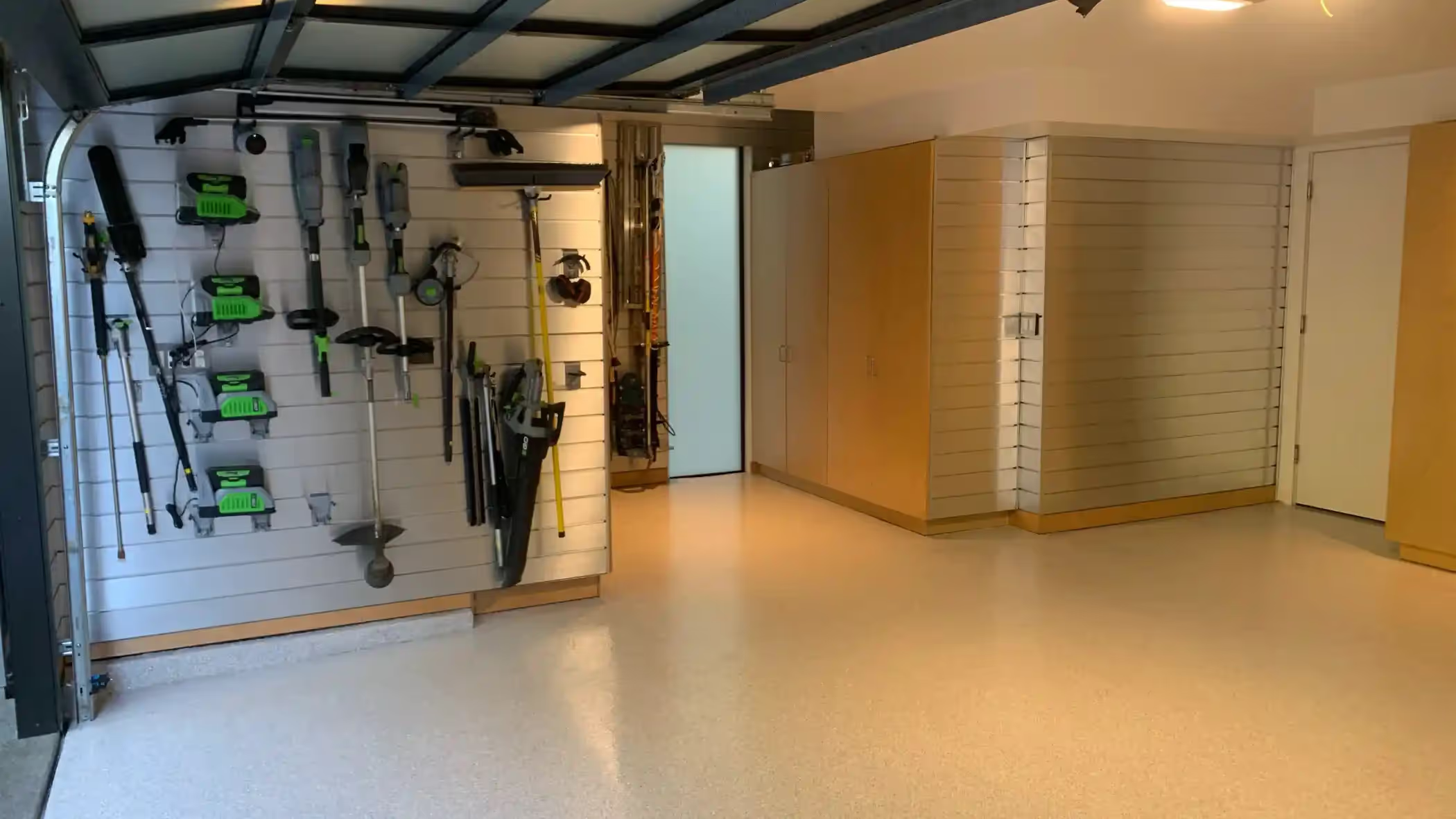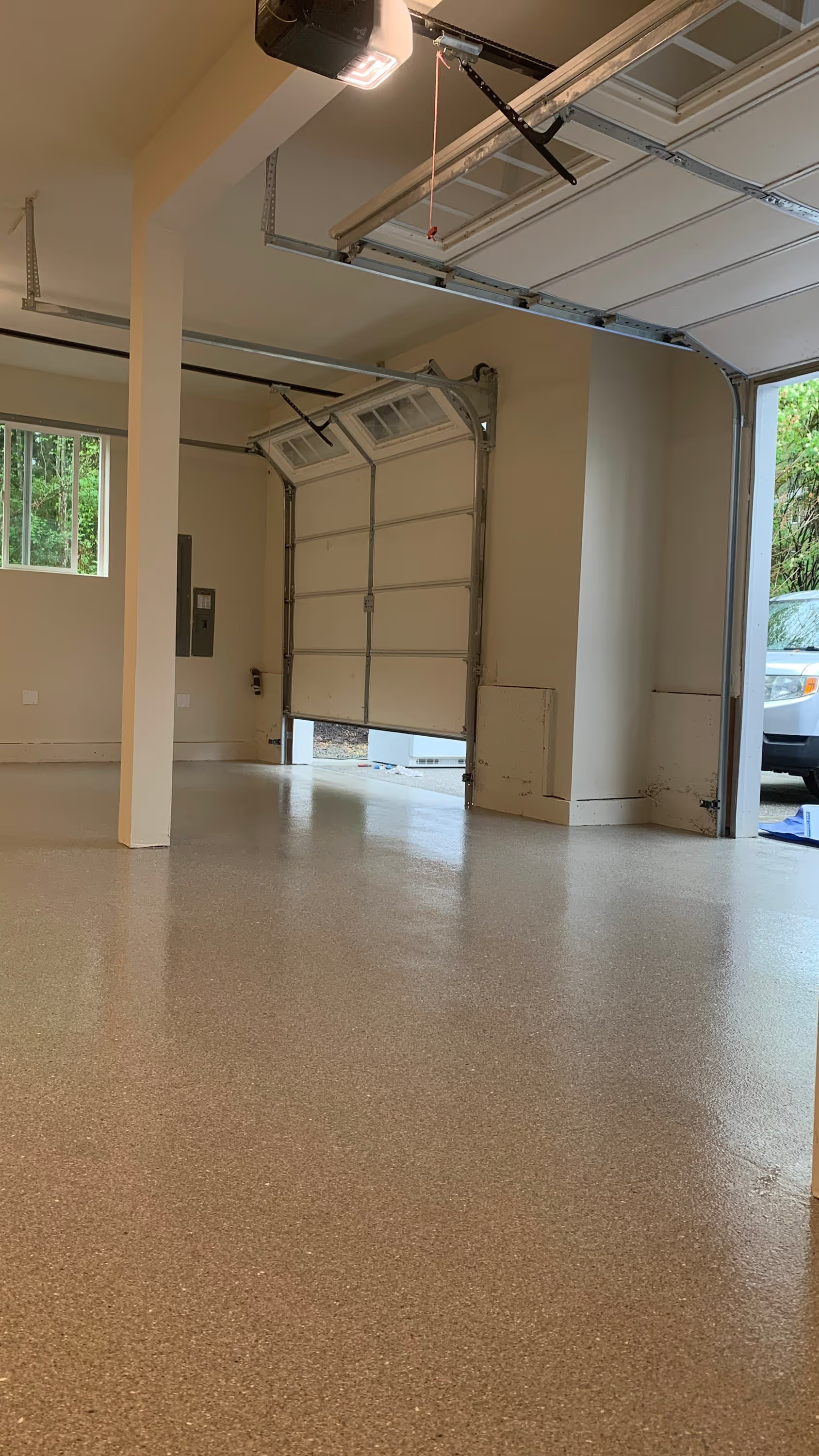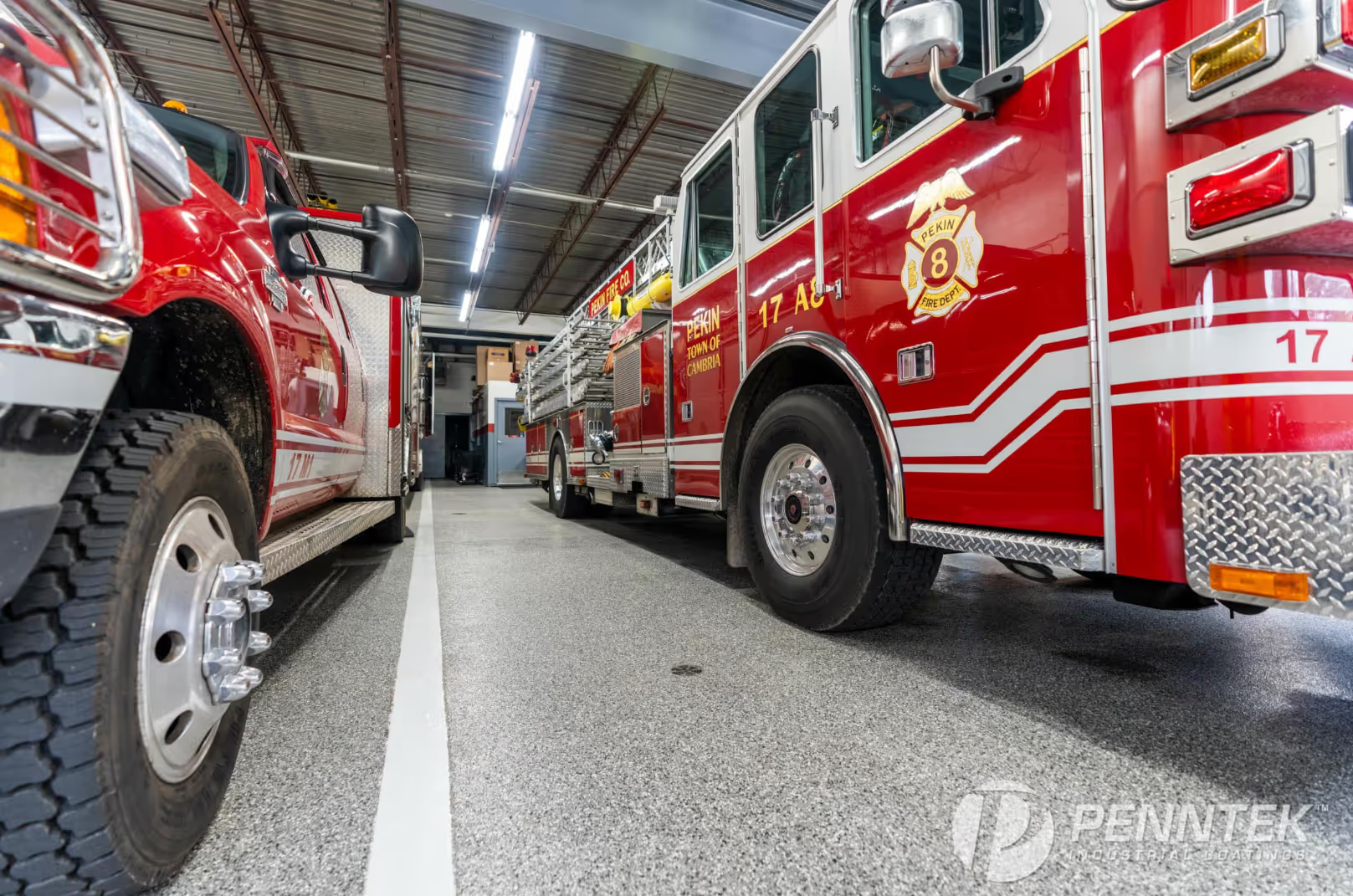
When Jessica and Tom bought their Kirkland home in 2019, the garage floor was stained, cracked, and perpetually dusty. They knew they wanted a coating, so they did what most homeowners do: they got three quotes.
Quote 1: $1,850 from a company offering "quick epoxy installation"
Quote 2: $2,100 from a polyaspartic "one-day floor" company
Quote 3: $3,200 from Cascade Concrete Coatings for a certified Penntek system
The choice seemed obvious. Why pay 73% more when all three companies promised beautiful, durable garage floors?
Five years later, Jessica wishes she'd understood what that price difference actually represented.
Throughout the Seattle metro area, a competitive market for garage floor coatings has emerged. Companies promise beautiful floors at bargain prices. The photos look identical to premium installations. The sales presentations sound convincing. And the initial price? Substantially lower than certified Penntek systems.
What these companies don't advertise is the timeline. Cheap coatings look fantastic for 12-18 months. They look acceptable for another 12-24 months. Then deterioration accelerates. By year 4-5, homeowners face a difficult choice: live with an increasingly ugly floor or pay to have it completely removed and redone.
Let's examine what actually happens over time with different coating systems, using real data from Seattle-area installations.
Year 1: Everyone Looks Good
During the first year, all three coating types perform similarly. The floor looks clean, smooth, and professional. Homeowners feel satisfied with their choice. The garage transforms from an embarrassment into an asset.
This is the honeymoon period. It's also why so many Seattle homeowners fall into the trap—the immediate result looks identical regardless of price point.
Year 2: Subtle Signs Emerge
By month 18-24, careful observers notice differences:
Cheap Epoxy: South-facing garages begin showing yellowing where sunlight enters. Hot tire pickup marks appear where vehicles park after highway driving. High-traffic areas develop slight dulling. Most homeowners rationalize these changes as "normal wear."
Mid-Grade Polyurea: Minimal yellowing, but some homeowners notice the floor doesn't clean as easily as it once did. Chemical spills (oil, gasoline, de-icer) that previously wiped away effortlessly now leave faint shadows. The non-porous surface is becoming slightly more porous.
Certified Penntek: The floor looks essentially identical to installation day. FadeLock UV protection prevents yellowing. The 99% solids pure polyurea formulation maintains its chemical resistance and cleaning properties.
Year 3: Degradation Accelerates
This is when economics shift dramatically:
Cheap Epoxy: Yellowing is now pronounced. Hot tire marks are permanent and multiplying. High-traffic areas show visible wear patterns. Some sections are beginning to peel, particularly near the garage door and in corners where moisture tends to collect. The mechanical bond between epoxy and concrete is failing. Many Redmond and Sammamish homeowners are already researching replacement options.
Mid-Grade Polyurea: The floor remains intact but looks noticeably aged. Colors have faded 15-20%. Chemical resistance is diminishing—gasoline and oil now penetrate the coating if not cleaned immediately. The floor requires more frequent cleaning to maintain appearance. Small chips appear where tools or heavy items have been dropped.
Certified Penntek: Still looks new. Zero yellowing. Zero fading. Chemical spills wipe away easily. The silane adhesion promoter continues strengthening the bond with concrete over time rather than degrading.
Year 4-5: The True Cost Reveals Itself
Cheap Epoxy: Now completely unacceptable. Large sections are peeling. The yellowed color makes the garage look dingy even with excellent lighting. Hot tire marks cover 40-50% of the main traffic areas. Homeowners avoid parking certain vehicles in the garage because they know they'll leave marks.
The coating must be completely removed (which damages the underlying concrete), the concrete must be re-ground and repaired, and a new coating must be applied. Total cost for removal and replacement: $3,800-$4,500 throughout the Bellevue area.
Original coating: $1,850
Removal and replacement: $4,200
Total 5-year cost: $6,050
Mid-Grade Polyurea: Still functional but aesthetically disappointing. The floor has lost its "wow factor." Colors are faded. Stains are increasingly difficult to remove. Many homeowners are considering replacement, though the coating hasn't technically "failed."
Original coating: $2,100
Anticipated replacement year 7-10: $3,500
Projected 10-year cost: $5,600
Certified Penntek: Maintains showroom appearance. The chemical bond is stronger than ever. Colors remain vibrant due to FadeLock technology. The flexibility additives have protected against any cracking from concrete movement. Zero maintenance required beyond normal cleaning.
Original coating: $3,200
Replacement needed: Never
Projected 40-year cost: $3,200
Understanding why cheap coatings cost more requires understanding what you're actually buying.
The Mechanical Bond vs. Chemical Bond Difference
Standard epoxy creates what the coating industry calls a "mechanical bond." Think of it like Velcro—tiny epoxy molecules grip onto the textured concrete surface. This bond works initially but degrades under stress. Temperature fluctuations, moisture intrusion, and UV exposure all weaken mechanical bonds over time.
Seattle's climate is particularly harsh on mechanical bonds. Our seasonal temperature swings cause concrete to expand and contract. Our moist air allows water vapor to penetrate from below. Our surprisingly strong summer UV (yes, even in the Pacific Northwest) breaks down epoxy's molecular structure.
Certified Penntek polyurea creates a chemical bond. The silane adhesion promoter in Penntek's basecoat doesn't just grip the concrete—it bonds at the molecular level with the substrate. This creates a bond that's actually stronger than the concrete itself. The concrete would fracture before the coating separates.
This isn't marketing language. This is measurable chemistry that determines whether your floor lasts 3 years or 40 years.
The Purity Problem: 60% Coating vs. 99% Coating
Many "cheap" coatings achieve their price point through dilution. A product that appears to be polyurea may contain 40-60% filler compounds—essentially inert materials that add volume without adding protection.
These fillers serve the installer's interests (lower material costs, easier application) but harm the homeowner's outcome. Lower solids content means:
Penntek's formulation exceeds 99% pure polyurea solids. You're paying for actual protective coating, not filler designed to stretch the manufacturer's profit margins.
The UV Stability Crisis
Drive through any Seattle suburb and observe garage floors visible through open doors. Notice how many have that characteristic yellow tinge? That's UV degradation of coating chemistry.
Standard epoxy yellows extensively under UV exposure. Mid-grade polyurea yellows less dramatically but still fades significantly. Only polyurea with proprietary UV-blocking additives maintains color integrity long-term.
Penntek's FadeLock technology contains UV-blocking compounds that function like sunscreen for your floor. UV rays don't penetrate to the color flake layer, preventing the yellowing and fading that makes floors look aged and dingy.
Most homeowners make coating decisions based on initial price. Smart homeowners make decisions based on lifetime cost. The difference is substantial.
Scenario: 450 Square Foot Garage, 30-Year Timeline
Cheap Epoxy Path:
Mid-Grade Polyurea Path:
Certified Penntek Path:
The "expensive" premium coating costs $22,250 LESS over 30 years than the "affordable" cheap epoxy. Even comparing to mid-grade polyurea, Penntek saves $11,000 over three decades.
The pure dollar comparison understates the true cost differential. Factor in these often-overlooked expenses:
Time Cost: Each replacement requires emptying your garage completely, storing contents elsewhere (rental unit?), vacating for 24-48 hours during removal and installation, and reorganizing afterward. Value that time at even $25/hour for 20 hours of work, and you add another $500 to each replacement cycle.
Concrete Degradation: Each coating removal damages your concrete slab. Grinding off failed epoxy takes away a thin layer of concrete. After 3-4 removal cycles, your slab is permanently degraded, potentially requiring concrete repair or resurfacing before coating is even possible. This can add $2,000-$5,000 to future replacement costs.
Storage Damage: How much stuff gets damaged, lost, or broken each time you move your garage contents? Tools, sporting equipment, holiday decorations, gardening supplies—all handled multiple times, increasing the probability of damage.
Opportunity Cost: Money spent redoing failed coatings is money you can't invest elsewhere. That $4,300 spent in year 5 could have earned investment returns over 25 years. At modest 6% growth, that's $18,470 in lost investment growth.
Home Value Impact: Real estate professionals consistently note that garage appearance influences buyer perception. A yellowed, peeling garage floor signals maintenance neglect. A pristine garage floor signals quality maintenance. The difference can affect offer prices.
Why don't cheap coating companies advertise their 3-5 year failure rates? Because the business model depends on homeowners not understanding lifetime costs.
These companies profit from short-term thinking. They know most customers will:
It's a churning business model that depends on perpetual customer turnover rather than lifetime relationships.
Certified Penntek dealers take the opposite approach. Our business model depends on installing floors that never need replacement. We profit from the initial installation, then rely on referrals from satisfied customers who tell neighbors, friends, and family about their floors that still look perfect 10+ years later.
If you're getting quotes for garage floor coating throughout Bothell, Kirkland, or Issaquah, watch for these warning signs:
Red Flag #1: Company doesn't test your concrete before quoting. Moisture content and hardness ratings determine proper system selection. Without testing, they're guessing.
Red Flag #2: They can't explain their warranty. Ask specifically: "If your company goes out of business, is my warranty still valid?" Dealer-only warranties become worthless if the company closes. Penntek's limited lifetime warranty is backed by the manufacturer—it remains valid regardless of dealer status.
Red Flag #3: They use generic terms like "industrial epoxy" or "commercial polyurea" without specifying manufacturer or formulation. This often means they're sourcing bulk chemicals from warehouse suppliers and mixing on-site.
Red Flag #4: They dismiss Penntek as "overpriced" without explaining technical differences. Ask them to explain chemical bonding vs. mechanical bonding, or FadeLock UV protection. If they can't explain technical advantages, they don't understand the products they're selling.
Red Flag #5: Pressure tactics around price. "This quote is only valid today" or "We have special pricing available right now" suggests desperation for immediate sales rather than confidence in long-term value.
Jessica and Tom's Kirkland garage story ended with an expensive lesson. They paid $1,850 for cheap epoxy in 2019. By 2023, they paid $4,400 to have it removed and replaced with a certified Penntek system. Their total cost: $6,250.
Had they installed Penntek initially, they'd have paid $3,200 once and been done. They'd have saved $3,050 and countless hours of hassle.
"I thought I was being financially smart," Jessica explained. "I was actually being financially foolish. I didn't understand that cheap coatings are expensive and expensive coatings are cheap when you account for lifetime costs."
Throughout the Seattle area, educated homeowners are learning this lesson—some the easy way (by researching before buying) and others the hard way (by experiencing failure firsthand).
The math is unambiguous. The chemistry is proven. The lifetime cost analysis is decisive.
When you're ready to make the financially sound choice for your garage, contact Cascade Concrete Coatings for a free in-home consultation. We'll test your concrete, explain system options, and provide detailed pricing for the floor coating you'll install once and enjoy for 40 years.
Because the most expensive floor you can buy is the cheap one you have to replace repeatedly.