If your home sits within a few miles of Lake Washington—whether you're enjoying waterfront views in Kirkland, nestled in the hills of Bellevue, or overlooking the lake from Redmond—your garage floor faces moisture challenges that homes just ten miles away rarely encounter. This isn't speculation or marketing exaggeration. The lake effect creates measurable differences in humidity, temperature cycling, and moisture vapor transmission that directly impact concrete floor coating performance and longevity.
DIY garage floor coating failures happen everywhere, but they happen faster and more dramatically in the Lake Washington microclimate. Homeowners who successfully complete DIY epoxy installations in drier climates might achieve 3-5 years before coating failure. That same DIY approach near Lake Washington often fails within 18-36 months, sometimes even faster. Professional installations using inferior products or inadequate moisture management similarly underperform compared to their expected lifespan in drier regions.
Understanding why Lake Washington's proximity creates these challenges—and more importantly, how professional Penntek installations overcome them—helps homeowners make informed decisions that protect their investment. As the certified Penntek dealer serving communities surrounding Lake Washington from Sammamish to Newcastle to Medina, we've completed hundreds of installations specifically designed to handle the unique conditions this beautiful lake creates.
Lake Washington isn't just scenery—it's a massive climate modifier affecting everything within 3-5 miles of its shoreline. Spanning approximately 22 miles long and up to 2.5 miles wide, with a surface area of 34 square miles and maximum depth of 214 feet, the lake contains roughly 18 billion gallons of water. That enormous volume of water creates localized climate effects that meteorologists call "lake effect" phenomena.
Temperature Moderation: Water heats and cools much more slowly than land. During summer, Lake Washington remains cooler than surrounding land, creating temperature inversions and persistent morning fog. During winter, the lake retains heat longer than land, moderating temperature extremes. These temperature differences create air movement, moisture patterns, and humidity variations that affect concrete moisture behavior.
Humidity Enhancement: Large water bodies constantly evaporate moisture into the surrounding air. Lake Washington's 34 square miles of surface area release enormous quantities of water vapor daily. This elevated ambient humidity affects concrete moisture dynamics in ways that extend far beyond obvious waterfront properties. Homes in Kirkland neighborhoods a mile from the lake still experience measurably higher humidity than comparable homes in Kent or Auburn.
Seasonal Moisture Cycling: The lake creates distinctive moisture patterns throughout the year. Summer brings morning fog that deposits moisture on cool surfaces. Fall and winter storms approach from the west, dumping precipitation as they encounter the lake and surrounding hills. Spring warming creates temperature cycling that drives moisture movement in concrete slabs. These patterns repeat predictably, year after year, subjecting concrete floor coatings to moisture stresses uncommon in non-lakeside locations.
Microclimate Boundaries: The lake effect doesn't end abruptly at the shoreline. Measurable effects extend 3-5 miles from the water depending on topography, prevailing winds, and seasonal conditions. This means homes throughout Kirkland, significant portions of Bellevue and Redmond, Medina, Mercer Island, and even parts of Sammamish experience lake-influenced climate conditions affecting their concrete floors.
Most homeowners understand that moisture affects garage floor coatings, but few understand the mechanism or why Lake Washington proximity intensifies the problem. Concrete isn't waterproof—it's porous. Moisture moves through concrete via capillary action and vapor diffusion, and this moisture transmission rate varies dramatically based on environmental conditions.
How Moisture Moves Through Concrete: Ground moisture and water tables transmit moisture upward through concrete slabs via capillary action. Simultaneously, humidity differentials create vapor pressure that drives moisture from high-humidity areas (typically ground beneath the slab) toward low-humidity areas (typically garage interior). This moisture doesn't move as liquid water—it migrates as water vapor penetrating through concrete's porous structure.
Measuring Vapor Transmission: Moisture vapor emission rate (MVER) is measured in pounds per 1,000 square feet per 24 hours. Concrete with MVER below 3 lbs/1000 sf/24 hrs is generally considered acceptable for coating application with standard systems. Higher rates require specialized moisture mitigation systems or extended drying periods. Lake Washington proximity frequently elevates MVER readings even in concrete that appears dry.
The Lake Effect on Vapor Transmission: Higher ambient humidity in Lake Washington communities affects moisture transmission in several ways:
Why This Matters for Coatings: When moisture vapor pressure beneath a coating exceeds the coating's ability to allow moisture passage or resist pressure, coating failure occurs. Moisture accumulating at the concrete-coating interface creates several failure modes:
These moisture-driven failures happen faster and more extensively in Lake Washington's elevated humidity environment compared to drier inland locations.
Kirkland's extensive Lake Washington shoreline means many neighborhoods experience the most intense lake effect conditions. Downtown Kirkland, Juanita, Moss Bay, and Yarrow Bay neighborhoods sit directly on the water, experiencing maximum humidity and temperature moderation effects.
Morning Fog Deposition: Kirkland residents know the pattern well—summer mornings begin with dense fog that doesn't burn off until mid-morning. This fog deposits moisture on every surface, including garage floors, particularly in open or semi-open structures. Concrete absorbs this surface moisture, and repeated cycles over months and years elevate concrete moisture content even in garages that never experience direct rain or snow.
Water Table Proximity: Waterfront properties and near-lake neighborhoods often have water tables within 10-20 feet of the surface rather than the 30-50 feet typical of inland areas. This shallow water table creates constant upward vapor pressure that drives moisture through concrete slabs regardless of surface conditions or weather.
Slope and Drainage Considerations: Many Kirkland homes sit on hillsides sloping toward the lake. While this provides beautiful views, it creates drainage challenges where groundwater flows downhill beneath or around foundations. Even homes with proper drainage systems experience elevated subsurface moisture compared to flat-terrain inland properties.
Historical Construction Practices: Older Kirkland neighborhoods often have homes built before modern vapor barrier standards. Concrete slabs poured directly on earth without 10-mil polyethylene barriers experience significant moisture transmission from below. Retrofitting proper moisture barriers beneath existing slabs is impossible without complete slab removal, so coating selection must compensate for higher moisture exposure.
When we install Penntek systems in Kirkland properties, we account for these elevated moisture conditions through comprehensive moisture testing, appropriate primer selection, and in extreme cases, specialized moisture mitigation systems applied before coating installation.
Bellevue's diverse topography creates varied moisture conditions depending on elevation and lake proximity. Downtown Bellevue and western neighborhoods experience significant lake effects, while eastern Bellevue toward Sammamish transitions toward drier inland conditions.
Downtown and West Bellevue: Areas within 2-3 miles of Lake Washington—including neighborhoods like Meydenbauer Bay, Clyde Hill, and Enatai—experience pronounced lake effects. Morning fog, elevated humidity, and temperature moderation affect these areas almost as intensely as Kirkland waterfront properties. Garage floor coatings here require the same moisture management attention as direct waterfront installations.
Central Bellevue: The plateau area around Crossroads and Wilburton experiences moderate lake effects. Elevation provides some separation from direct lake influence, but the lake's presence 2-4 miles west still affects humidity and moisture patterns. These areas represent a transition zone where professional moisture testing becomes especially important—some properties have manageable moisture levels while others require enhanced moisture management.
East Bellevue and Somerset: Neighborhoods like Somerset, Eastgate, and areas transitioning toward Issaquah experience reduced lake effects due to greater distance and topographic separation. However, these hillside communities face different moisture challenges from runoff, seasonal water table fluctuations, and soil conditions. Moisture challenges exist but stem from terrain rather than lake proximity.
Bellevue's Microclimate Variability: Unlike Kirkland where lake effects are relatively uniform throughout the city, Bellevue's moisture conditions vary significantly by neighborhood. This variability makes professional moisture assessment particularly valuable—assumptions based on neighboring properties may not apply to your specific site.
Redmond's geography creates interesting moisture patterns. The city's western edge borders Lake Sammamish, creating lake effect conditions in those neighborhoods, while central and eastern Redmond transitions toward drier inland climate patterns.
West Redmond and Lake Sammamish: Neighborhoods along Lake Sammamish's eastern shore—including Idylwood, Grass Lawn, and areas around Marymoor Park—experience lake effects from Lake Sammamish similar to what Kirkland experiences from Lake Washington. While Lake Sammamish is smaller (7.3 square miles versus Lake Washington's 34 square miles), it still creates measurable humidity elevation, temperature moderation, and moisture patterns affecting nearby properties.
Central Redmond: The plateau area around downtown Redmond sits higher and farther from water, reducing direct lake effects. However, the broader Puget Sound maritime climate still influences moisture patterns. These areas experience Seattle's rainy climate challenges common throughout Western Washington but without the enhanced lake effect that waterfront areas experience.
Bear Creek Valley: This low-lying area experiences moisture challenges from the creek corridor rather than lake effects. Seasonal groundwater elevation, flood plain proximity, and surface water create moisture management requirements different from but equally important as lake-proximity challenges.
Redmond's Development Patterns: Newer construction in Redmond typically includes proper vapor barriers and modern moisture management features. However, older neighborhoods and custom homes on challenging sites may have elevated moisture conditions requiring professional coating system selection and installation.
Sammamish and Newcastle sit on the plateau between Lake Washington and Lake Sammamish, elevated above both water bodies. While geographic separation reduces direct lake effects compared to shoreline properties, these communities still experience moisture considerations uncommon in truly inland locations.
Elevation Benefits: Higher elevation provides natural drainage and separation from water table influences. This generally creates more favorable moisture conditions for garage floor coatings compared to direct waterfront properties. However, elevation doesn't eliminate moisture considerations—it changes them.
Valley Effects: Both communities have ravines, creek valleys, and low-lying areas where moisture accumulates. Properties on or near these features may have localized moisture challenges despite being on the plateau. Terrain trumps broad geographic location when assessing individual property moisture conditions.
Soil Conditions: Plateau soils vary significantly, with some areas having clay-heavy soils that retain moisture and others having well-draining sandy or gravelly soils. Soil conditions beneath and around foundations affect concrete moisture transmission more than distance from lakes.
Distance from Both Lakes: Sammamish and Newcastle properties sit 2-5 miles from either Lake Washington or Lake Sammamish. This distance means they experience muted lake effects—some humidity elevation and temperature moderation but not the intense morning fog and moisture cycling that waterfront properties face. These communities represent a middle ground between waterfront and truly inland moisture conditions.
DIY garage floor coating kits from big-box retailers include minimal or no moisture testing guidance. Instructions typically advise checking whether concrete "looks dry" or conducting a simple plastic sheet test that's notoriously unreliable. These inadequate testing methods miss the vapor transmission issues that plague Lake Washington installations.
The Plastic Sheet Test Limitations: This common DIY test involves taping plastic sheeting to the floor overnight and checking for condensation. It only detects severe surface moisture issues, missing the subsurface vapor transmission that causes most coating failures. A floor can pass the plastic sheet test while still having MVER readings high enough to cause coating failure within months.
No Vapor Emission Testing: Professional installations use calcium chloride tests or relative humidity probes to measure actual moisture vapor emission rates. These tests reveal subsurface moisture transmission invisible to plastic sheet tests. DIY products don't include this testing because it requires specialized equipment and expertise to interpret results.
Seasonal Timing Mistakes: Many homeowners tackle DIY garage coating projects during dry summer months when concrete appears driest. However, Lake Washington's climate creates year-round moisture cycling. Coatings applied during summer's lowest moisture conditions face rising moisture levels through fall and winter, leading to failure during the wet season.
False Sense of Security: A garage floor that appears dry in August may have MVER readings of 5-7 lbs/1000 sf/24 hrs—well above the safe threshold for standard epoxy systems. Without proper testing, DIY installers proceed unknowingly toward failure. Professional testing would reveal the need for moisture-tolerant systems or extended drying periods.
Proper surface preparation becomes even more critical in Lake Washington's moisture conditions, and this is exactly where DIY installations fall short.
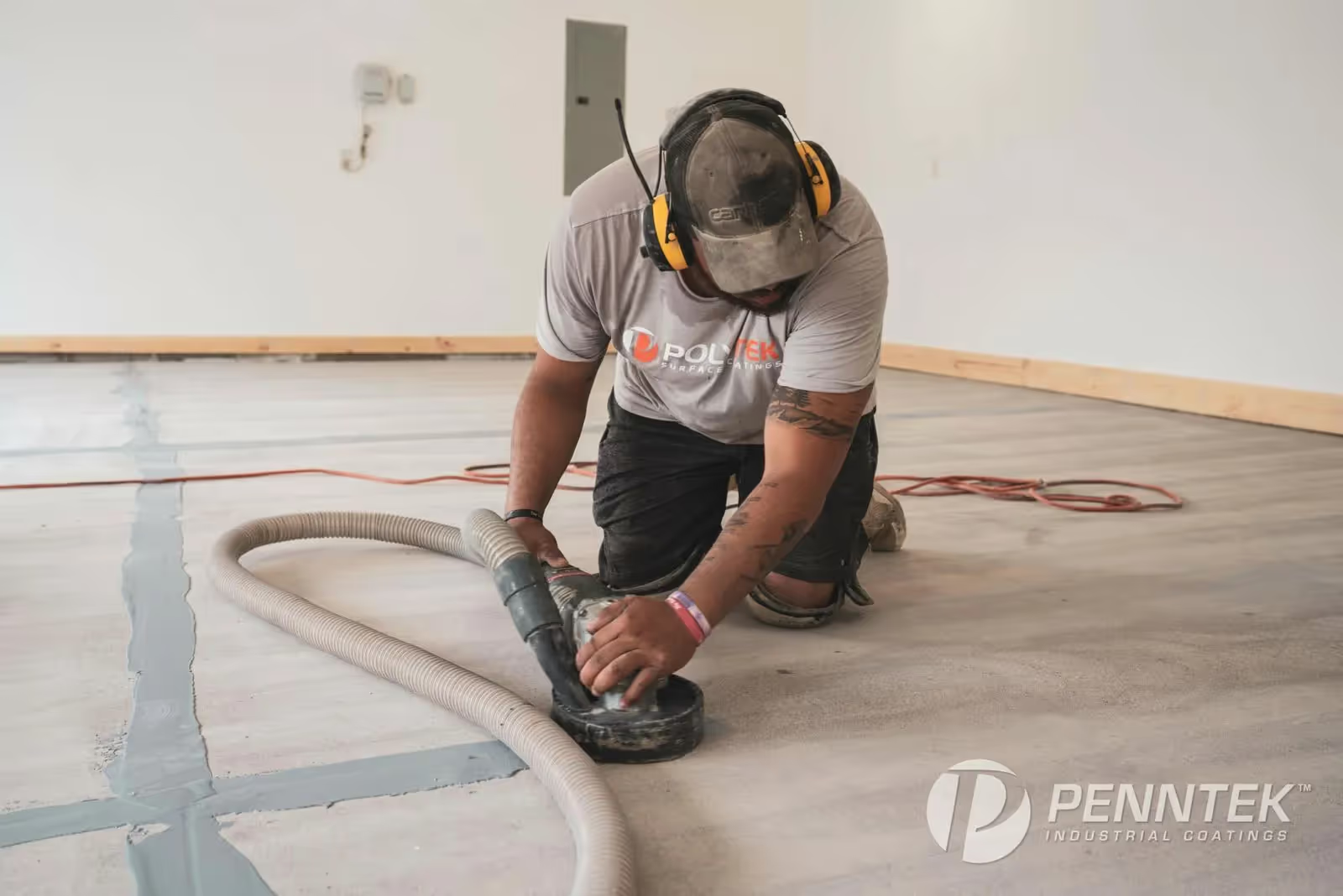
Insufficient Grinding Equipment: DIY rentals provide 50-80 pound grinders that struggle to create adequate surface profiles in hard Pacific Northwest concrete. Professional installations use 600+ pound commercial grinders achieving ICRI CSP 2-3 profiles necessary for coating adhesion. Inadequate surface profile reduces coating adhesion, and reduced adhesion combined with moisture pressure accelerates failure.
Incomplete Contaminant Removal: Moisture moving through concrete carries salts, efflorescence, and alkaline compounds that deposit at the surface. These contaminants interfere with coating adhesion even when invisible. Light DIY grinding often leaves contamination that professional diamond grinding removes. In high-moisture environments like Lake Washington properties, this contamination removal becomes critical to performance.
Humidity During Preparation: Summer fog and morning dew common around Lake Washington create surface moisture that interferes with coating adhesion even when concrete core moisture is acceptable. DIY installers often apply coatings to concrete still damp from morning fog without realizing the problem. Professional installers monitor conditions carefully and delay application when necessary.
Inadequate Drying Time: After cleaning or rain events, concrete surfaces need drying time before coating application. Lake Washington's humidity slows surface drying compared to inland locations. DIY installers following kit instructions developed for average conditions may not allow sufficient drying time for their specific climate.
DIY epoxy kits weren't designed for Lake Washington's moisture conditions. They're formulated for average moisture exposure, not the elevated vapor transmission common in this microclimate.
Moisture Intolerance of Water-Based Epoxy: Most DIY kits use water-based epoxy formulations chosen for low cost, ease of use, and low VOC compliance. These water-based systems have lower moisture tolerance than solvent-based or pure polyurea systems. They're particularly vulnerable to the osmotic blistering and adhesion failure that moisture vapor causes.
Mechanical vs. Chemical Bonding: Epoxy creates mechanical bonds—physical grip on the concrete surface texture. Moisture infiltrating at the bond interface breaks this mechanical grip, causing delamination. Penntek polyurea creates chemical bonds that penetrate into concrete at a molecular level. Chemical bonds resist moisture infiltration far better than mechanical bonds.
No Moisture Mitigation Primers: Professional installations in high-moisture environments often use specialized moisture-blocking primers before coating application. These primers create vapor barriers that protect the coating system from subsurface moisture transmission. DIY kits don't include these primers, leaving coatings vulnerable to the moisture challenges Lake Washington properties present.
Cure Time Vulnerability: Epoxy requires 24-72 hours to cure sufficiently for additional coats, and 5-7 days for vehicles. During this extended cure period, moisture can infiltrate the coating and compromise adhesion. Lake Washington's humidity slows epoxy curing while simultaneously providing moisture that can interfere with proper cure. Penntek's rapid cure chemistry minimizes this vulnerable period—coatings achieve initial cure within hours rather than days.
Every Cascade Concrete Coatings installation begins with thorough moisture assessment using calibrated testing equipment and following industry-standard protocols.
Calcium Chloride Testing: We use anhydrous calcium chloride tests following ASTM F1869 methodology to measure moisture vapor emission rates. These tests involve placing sealed domes containing calcium chloride on the concrete surface for 60-72 hours, then weighing the calcium chloride to determine how much moisture it absorbed. This provides quantitative MVER data revealing subsurface moisture transmission.
Relative Humidity Probe Testing: For properties where calcium chloride tests reveal elevated moisture or where construction history suggests moisture challenges, we use in-situ relative humidity probes following ASTM F2170. These probes measure humidity deep within the concrete slab, providing the most accurate assessment of moisture conditions affecting coating performance.
Multiple Test Locations: We conduct testing at multiple garage locations rather than assuming uniformity. Areas near exterior walls, garage doors, and corners often have different moisture characteristics than central floor areas. Testing multiple locations reveals whether moisture conditions vary across the garage.
Seasonal Considerations: When testing reveals borderline moisture readings, we consider seasonal patterns. Testing during winter's wet season provides conservative results—if moisture readings are acceptable during peak wet conditions, they'll be safe during drier periods. Testing during summer may require adjustment to account for seasonal moisture increases.
Interpretation for Lake Washington Climate: We interpret test results in context of Lake Washington's moisture patterns. A property in Kirkland with MVER reading of 3.5 lbs/1000 sf/24 hrs (slightly above standard threshold) receives different recommendations than an inland property with identical readings. We account for persistent humidity and reduced seasonal drying when making system recommendations.
This testing rigor ensures we select appropriate coating systems for actual moisture conditions rather than making assumptions that lead to failures.
Penntek manufactures multiple polyurea formulations designed for varying moisture conditions. Unlike DIY one-size-fits-all kits, professional installation means selecting the right system for your property's specific conditions.
Standard Penntek System: Properties with MVER below 3 lbs/1000 sf/24 hrs receive our standard pure polyurea system. The chemical bonding and moisture resistance of pure polyurea handles normal moisture conditions far better than epoxy, providing reliable long-term performance.
Moisture-Blocking Primer System: Properties with MVER between 3-5 lbs/1000 sf/24 hrs receive specialized moisture-blocking primers before standard coating application. These primers create vapor barriers that protect coating systems from elevated subsurface moisture transmission. The primer-coating combination handles moisture levels that would quickly destroy epoxy installations.
Advanced Moisture Mitigation: Properties with MVER above 5 lbs/1000 sf/24 hrs or with documented moisture problems require advanced moisture mitigation systems. These might include reactive moisture mitigation products that chemically seal concrete porosity, extended application of moisture-blocking primers, or in extreme cases, installation delays to allow additional concrete drying time.
Flexibility Advantages: Penntek polyurea's superior flexibility compared to epoxy provides additional moisture tolerance. When moisture causes slight concrete movement or minor substrate expansion, flexible coatings accommodate this movement without cracking or delaminating. Rigid epoxy cracks under these conditions, creating entry points for additional moisture infiltration and accelerating failure.
Non-Porous Protection: Penntek's 99% solids pure polyurea formulation creates completely non-porous surfaces that don't absorb moisture from above. This protects against Lake Washington's morning fog, surface condensation, and humidity-driven moisture deposition. While the coating resists moisture from below (subsurface transmission), it also prevents moisture infiltration from above that epoxy's more porous structure allows.
Professional preparation techniques specifically address the challenges Lake Washington moisture creates:
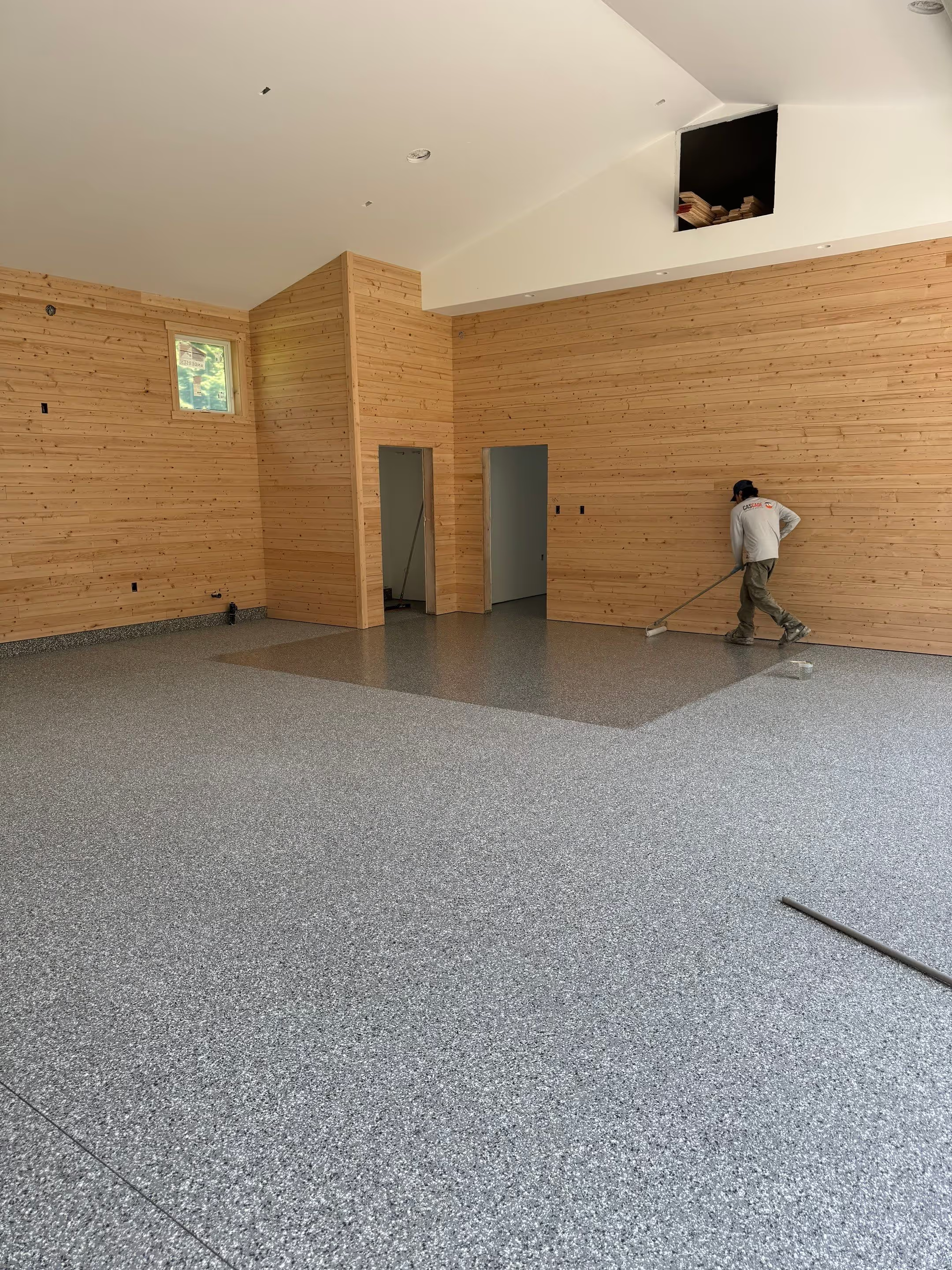
Commercial Grinding Equipment: Our 600+ pound grinders with diamond tooling create proper surface profiles even in hard concrete common throughout the Seattle area. This aggressive preparation removes all contamination and creates the texture necessary for chemical bonding to occur.
Humidity Timing and Monitoring: We schedule installations during optimal weather windows when possible, avoiding periods of high humidity or morning fog. When fog or condensation is present, we allow extra drying time or delay application rather than proceeding on schedule toward certain failure. Professional installers prioritize coating performance over convenience.
Comprehensive Cleaning: After grinding, extensive HEPA vacuuming and tack wiping remove all dust and contamination. In high-moisture environments, surface contaminants are more likely to be damp or contain moisture-carried salts. Our cleaning process ensures completely dry, contamination-free surfaces before coating application.
Moisture-Driven Crack Repair: Cracks in high-moisture environments often have moisture infiltration creating efflorescence (white crystalline deposits) or dampness. We address this moisture before crack repair, allowing cracks to dry thoroughly and treating with moisture-blocking primers when necessary. Standard crack repair over damp concrete fails rapidly—our enhanced preparation prevents this.
Real-Time Adjustments: Our certified installers monitor conditions throughout installation, adjusting techniques based on observed concrete behavior, ambient conditions, and moisture indicators. If concrete shows signs of moisture during preparation, we stop to assess rather than proceeding blindly toward failure.
Understanding the timeline of coating performance helps homeowners evaluate long-term value rather than focusing exclusively on upfront costs:
DIY Epoxy on Lake Washington Properties (0-36 Months):
Budget Professional Epoxy on Lake Washington Properties (12-48 Months):
Penntek Polyurea on Lake Washington Properties (Decades):
The lifetime cost comparison favors professional Penntek installation dramatically. A DIY epoxy coating costing $800 and lasting 2-3 years costs $267-400 annually. A professional Penntek installation costing $8,000 and lasting 30 years costs $267 annually—the same or less annual cost while avoiding the repeated inconvenience of re-coating.
We've completed hundreds of installations specifically in the Lake Washington microclimate, and the performance data tells a clear story. Properties in Kirkland waterfront neighborhoods that received professional Penntek installations in 2010-2012 remain in excellent condition today—14+ years later with no signs of moisture-related failure. Comparable properties where homeowners attempted DIY installations have typically re-coated 3-5 times during that same period.
Case Study: Kirkland Waterfront Property: A homeowner 200 yards from Lake Washington initially attempted DIY epoxy installation in 2015. The coating showed bubbling within 14 months and was completely failed by month 22. In 2017, we installed Penntek with moisture-blocking primer after calcium chloride testing revealed MVER of 4.2 lbs/1000 sf/24 hrs. As of 2026, this installation shows no moisture-related issues and maintains excellent appearance and performance.
Case Study: Bellevue Hillside Home: A property in West Bellevue with seasonal groundwater issues and proximity to Lake Washington (approximately 1 mile) experienced repeated coating failures with three different epoxy contractors over 8 years. In 2019, our comprehensive moisture testing revealed MVER of 5.8 lbs/1000 sf/24 hrs—well above safe thresholds for standard systems. We installed advanced moisture mitigation primer and Penntek coating. Seven years later, the installation shows no moisture issues despite consistently high vapor transmission readings.
Case Study: Redmond Lakeside Property: A Lake Sammamish waterfront property in west Redmond installed professional epoxy coating in 2014 from a quality contractor. The installation failed within 3 years due to moisture issues. In 2018, we installed Penntek with appropriate moisture management after thorough testing. Eight years later, the Penntek installation performs excellently with no signs of moisture-related problems.
These real-world results demonstrate why product selection and moisture management matter enormously in Lake Washington's unique climate conditions.
Lake Washington's temperature moderation creates unique thermal cycling patterns that affect coating performance in ways beyond moisture.
Reduced Daily Temperature Swings: The lake moderates daily temperature variations, preventing the extreme morning-to-afternoon temperature swings common in continental climates. While this sounds beneficial, it creates persistent intermediate temperatures that can be challenging for coating cure and performance.
Seasonal Temperature Patterns: Lake Washington properties experience more gradual seasonal temperature changes than inland areas. The extended shoulder seasons mean concrete experiences more time at temperatures where moisture transmission is active and coating cure is slow. Inland properties have sharper transitions between winter cold (minimal moisture transmission) and summer heat (rapid drying and cure).
Freeze-Thaw Considerations: While the Seattle area doesn't experience severe freeze-thaw cycles, properties near water experience unique patterns. Cool nights combined with humid conditions create frost more frequently than temperature alone would suggest. While rarely severe enough to damage properly-prepared concrete, these freeze-thaw events create minor substrate movement that rigid coatings don't accommodate well.
Penntek's Flexibility Advantage: The superior flexibility of pure polyurea accommodates thermal expansion and contraction that occurs as concrete temperatures cycle. This flexibility prevents the stress cracking that rigid epoxy experiences under thermal cycling, providing another performance advantage in Lake Washington's moderated but variable temperature environment.
Properties near water often have excellent southern or western exposure, and garages with windows or translucent garage doors receive significant sunlight despite being interior spaces.
Reflected Light Intensity: Water reflects sunlight, increasing UV exposure to structures near the lake compared to similar orientations away from water. Garage floors near windows on lake-facing walls receive both direct and reflected UV radiation.
UV Degradation of Coatings: Standard epoxy yellows and degrades when exposed to UV radiation. This aesthetic degradation accelerates near water due to enhanced UV exposure. Even garages that aren't directly waterfront receive elevated UV if they face the lake.
FadeLock UV Protection: Penntek's proprietary FadeLock technology provides superior UV stability compared to epoxy or standard polyurea. This protection maintains coating appearance and prevents yellowing even in high-UV waterfront environments. While UV resistance might seem like a minor consideration, it becomes significant in Lake Washington properties with good light exposure.
We believe in honest guidance even when it doesn't favor professional installation. There are limited scenarios where DIY coating might succeed near Lake Washington:
Even in these limited scenarios, professional Penntek installation provides better long-term value. But we acknowledge that properly-executed DIY installations can achieve 3-5 years of service in ideal conditions.
For the vast majority of Lake Washington properties, professional installation isn't optional—it's the only reliable path to coating success:
For these situations—which encompasses most homes in Kirkland, Bellevue, Redmond, Sammamish, and Newcastle—professional Penntek installation provides the only reliable long-term solution.
Our process specifically addresses Lake Washington moisture challenges:
We've completed successful installations throughout every Lake Washington community, from direct waterfront properties to plateau locations miles from water. This experience means we understand the unique challenges your specific neighborhood presents.
If you're considering garage floor coating for your property in Kirkland, Bellevue, Redmond, Sammamish, Newcastle, or anywhere near Lake Washington, understanding your property's moisture conditions is the critical first step.
Contact Cascade Concrete Coatings to schedule a complimentary consultation including:
Don't make the expensive mistake of choosing coating products or installation methods designed for average conditions when your Lake Washington property faces above-average moisture challenges. Professional moisture assessment costs nothing in the consultation phase but provides invaluable information that can save thousands of dollars in prevented coating failure.
Your Lake Washington property deserves a garage floor coating system designed for its unique microclimate—not an off-the-shelf solution that ignores the moisture realities large bodies of water create. With proper moisture management and Penntek's superior polyurea technology, your garage floor can provide decades of beautiful, functional service regardless of how close you live to this beautiful lake.
Schedule your free moisture assessment today and discover the difference professional expertise makes in Lake Washington's challenging moisture environment.