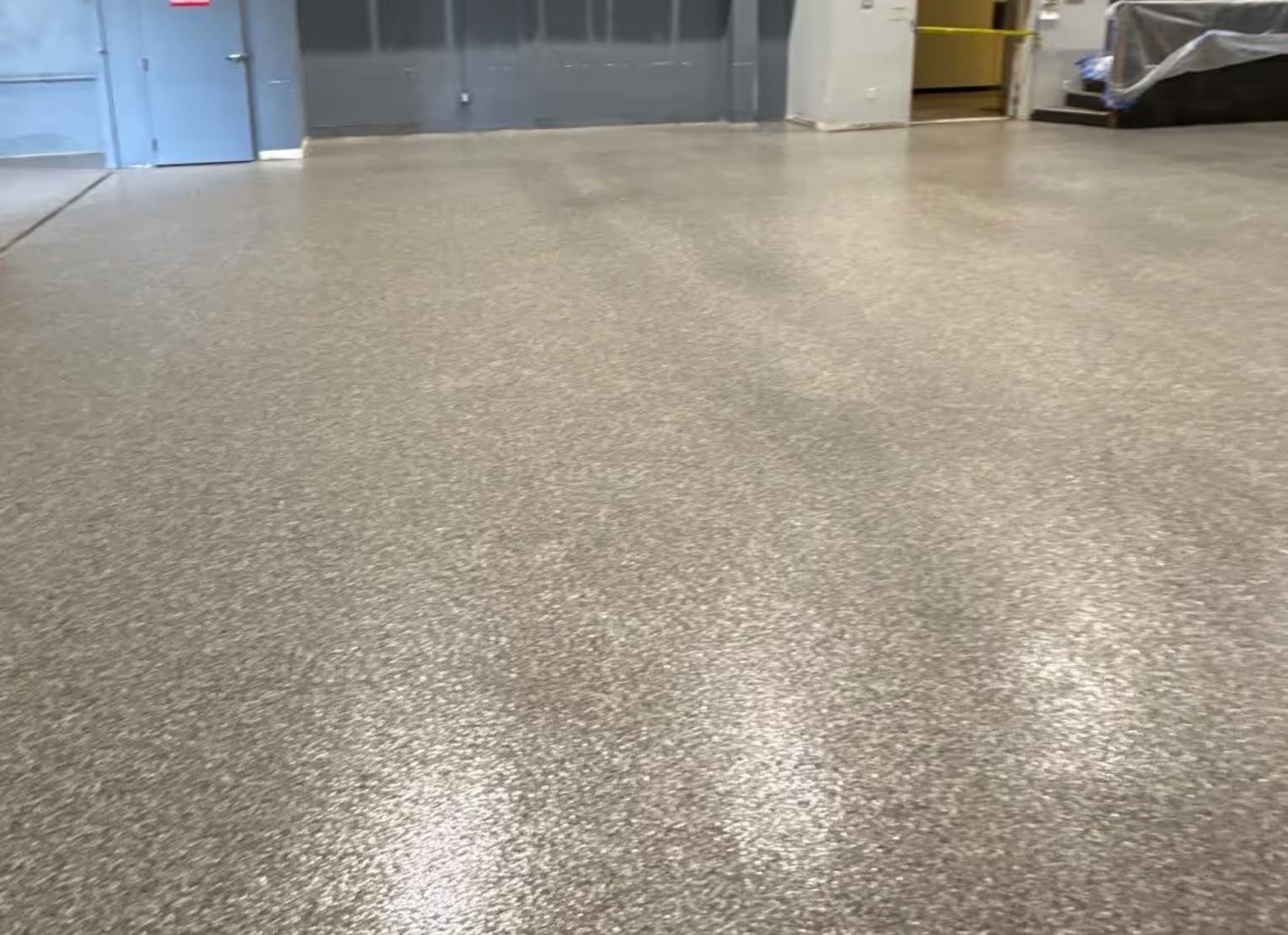
One of the most common questions homeowners ask when considering professional garage floor coatings in Seattle is whether they need a building permit. It's a practical concern—nobody wants to invest thousands of dollars in home improvements only to discover they've violated local codes or created problems for a future home sale. The straightforward answer for most residential garage floor coatings is that permits typically aren't required, but the complete answer involves understanding King County regulations, HOA requirements, and specific circumstances that might change that general rule.
As the certified Penntek dealer serving the Seattle Eastside from Bellevue to Bothell, we've navigated building codes and homeowner association requirements for hundreds of installations across King County and surrounding areas. While concrete floor coatings generally fall outside permit requirements, understanding the regulatory landscape helps homeowners make informed decisions and avoid potential complications.
King County building codes establish permit requirements based on whether a project involves structural modifications, electrical changes, plumbing alterations, or impacts building safety systems. The fundamental question regulators ask is whether the work affects structural integrity, life safety systems, or building habitability.
Building permits are clearly required for:
Concrete floor coatings don't fall into any of these categories. Applying a thin coating to existing concrete doesn't alter structure, doesn't involve systems, and doesn't affect building envelope—it's purely a cosmetic surface treatment similar to painting walls or refinishing hardwood floors.
King County code specifically exempts "maintenance and repair" work from permit requirements when such work doesn't alter building systems or structure. This exemption covers routine maintenance activities homeowners regularly perform without regulatory oversight.
Garage floor coatings qualify under this maintenance exemption because they:
The coating thickness—typically 15-25 mils (less than 1/32 inch)—is so minimal that it doesn't meaningfully affect floor elevation, door clearances, or any dimensional aspect of the garage. This differentiates coatings from floor resurfacing products that add significant thickness or epoxy-mortar systems that build up the surface height.
While standard garage floor coatings don't require permits, certain circumstances might trigger permit requirements:
Electrical Work Conjunction: If you're adding outlets, lighting, or circuits as part of a garage upgrade project, those electrical modifications require permits even though the floor coating itself doesn't. Some homeowners combine floor coating with electrical upgrades, and the electrical work brings permit requirements.
Structural Repairs: If your concrete slab has significant damage requiring structural repair (not just surface crack filling), the structural work might require permit inspection before coating installation. We rarely encounter this scenario, but severely damaged slabs occasionally need engineering evaluation and permitted repair work.
Commercial or Business Use: If your garage serves as a business location or commercial facility rather than residential use, different permitting rules may apply. Commercial floor coatings sometimes trigger business licensing or permit requirements depending on facility type and jurisdiction.
Multi-Family or Rental Properties: Landlords coating garage floors in rental properties should verify whether local rental housing codes require permits or inspections for improvements affecting tenant spaces. Most jurisdictions don't require permits for garage floor coatings even in rentals, but verification prevents potential issues.
Historic Preservation Districts: Properties in designated historic districts may face additional restrictions on modifications, including finishes. If your home is in a Seattle historic district, verify that cosmetic garage improvements don't require review even though they wouldn't typically need permits.
For standard residential garage floor coating projects throughout Sammamish, Kirkland, Redmond, and surrounding communities, permits aren't required and inspections aren't mandated. Homeowners can proceed with confidence that their Penntek polyurea installation complies with applicable building codes.
If building codes generally don't regulate garage floor coatings, why do homeowners in neighborhoods like Newcastle, Sammamish, and Bellevue sometimes face obstacles? The answer is homeowner associations, which maintain regulatory authority over property improvements that goes beyond building codes.
HOAs exist to preserve property values, maintain neighborhood aesthetics, and enforce community standards. Their governing documents—Covenants, Conditions, and Restrictions (CC&Rs)—typically require approval for "exterior modifications" or "improvements visible from neighboring properties or common areas."
Here's where garage floor coatings sometimes create complications: if your garage door opens and the floor is visible from the street or neighboring properties, some HOAs consider the floor coating an "exterior modification" requiring architectural review committee approval. This isn't universal—many HOAs don't regulate garage interiors at all—but it's common enough in upscale Seattle-area communities that homeowners should verify requirements before installation.
HOAs that do regulate garage floor improvements typically impose requirements focused on aesthetics and neighborhood harmony:
Color Restrictions: Some communities restrict garage floor colors to neutral tones (grays, tans, browns) that don't create visual discord when garage doors are open. Bright colors, bold patterns, or highly reflective finishes might face objections even though homeowners love them.
Finish Standards: Certain HOAs specify finish types, usually preferring subtle patterns over bold decorative flakes or solid colors over high-contrast designs. These restrictions aim to maintain consistent neighborhood appearance.
Installation Timing: A few associations restrict contractor access hours or limit disruptive work to specific days/times. This rarely affects floor coating installations since they're relatively quiet and quick, but it's worth verifying if your HOA has strict contractor policy.
Approval Timeline: Most HOAs require submitting improvement applications 30-60 days before work begins. Missing this timeline doesn't necessarily mean denial, but it can delay your project while the architectural review committee considers your application.
Documentation Requirements: HOAs typically want to see project descriptions, color samples, and sometimes contractor information or proof of insurance. Providing thorough documentation accelerates approval.
For homeowners in HOA communities throughout the Seattle Eastside, securing approval rarely creates major obstacles if you approach the process correctly:
Review CC&Rs First: Read your community's governing documents before selecting colors or scheduling installation. Many CC&Rs include language about garage modifications, and understanding requirements upfront prevents problems.
Contact Architectural Review Committee Early: Reach out to your HOA's architectural review contact before finalizing design decisions. Ask specifically whether garage floor coatings require approval and what information the committee needs.
Provide Comprehensive Application: When applying for approval, include detailed information: coating system description, color selections with samples, contractor information, estimated timeline, and photos of similar installations. Thorough applications get approved faster.
Choose Conservative Designs: If your HOA has aesthetic standards, selecting neutral colors and subtle patterns avoids objections. You can always request approval for bolder designs, but conservative choices typically sail through review processes.
Document Approval: Once approved, keep documentation in your home improvement file. Future property sales or HOA leadership changes might prompt questions, and having approval documentation prevents issues.
Consider Timing: Submit applications during review committee regular meeting schedules rather than hoping for special consideration. Committee meetings often occur monthly, so plan accordingly.
We help homeowners throughout Issaquah, Woodinville, and other HOA communities navigate approval processes regularly. We can provide documentation, color samples, and technical specifications that help applications succeed. Many HOAs actually appreciate that homeowners are using certified professional installers rather than attempting DIY projects that might create eyesores.
Washington State requires sellers to complete a seller disclosure statement revealing known material facts about property condition. This disclosure obligation raises a practical question for homeowners who've installed garage floor coatings: must this improvement be disclosed during home sales?
The technical answer is that garage floor coatings don't typically require disclosure as "material facts" affecting property value or habitability. However, practical considerations suggest including them in property improvement documentation:
Positive Selling Points: Quality garage floor coatings represent valuable improvements that appeal to buyers. Real estate agents actively market them as premium features. Including coating information in disclosures or property improvement lists helps buyers appreciate value they're receiving.
Warranty Transferability: Penntek's limited lifetime warranty transfers to subsequent property owners when properly registered. Documenting the installation date, contractor information, and warranty details provides buyers with valuable protection they wouldn't otherwise know existed.
Maintenance Documentation: Including coating information in property disclosures helps new owners understand proper maintenance, which preserves the coating's longevity and appearance. This documentation protects both buyer and seller interests.
HOA Compliance: If your HOA required approval for the coating installation, including that approval documentation in property disclosures demonstrates compliance and prevents potential buyer concerns about unauthorized improvements.
Professional garage floor coatings materially increase home values in competitive Seattle real estate markets. Real estate professionals throughout Bellevue, Sammamish, and Redmond report that homes with premium garage finishes sell faster and command higher prices than comparable properties with bare or poorly-maintained garage floors.
The value impact stems from multiple factors:
Buyer Psychology: Professionally coated garage floors signal that homeowners maintained the property well and invested in quality improvements. This perception creates positive impressions about overall property condition.
Lifestyle Appeal: Many buyers envision using garages for more than vehicle storage—workshops, home gyms, hobby spaces, or entertainment areas. Premium floor coatings make these lifestyle uses more appealing and realistic.
Competitive Advantage: In neighborhoods where many homes offer similar features, a stunning garage floor can differentiate properties and justify premium pricing.
Reduced Buyer Concerns: Bare concrete or deteriorating coatings raise buyer concerns about moisture problems, foundation issues, or deferred maintenance. Professional coatings eliminate these concerns and present garage space as move-in ready.
Real estate agents consistently advise that garage floor coating ROI exceeds costs, particularly in premium Seattle markets. Homeowners investing $6,000-10,000 in Penntek installations typically see $8,000-15,000 in added property value—a significant return that few other improvements deliver.
While building permits don't govern garage floor coatings, environmental regulations do affect coating products sold and applied in Washington State. The state maintains strict volatile organic compound (VOC) limits aimed at protecting air quality and reducing environmental impact.
Washington's VOC regulations establish maximum limits for coating VOC content based on product category. Garage floor coatings fall under "industrial maintenance coatings" category with VOC limits of 340 grams per liter for single-component products and 340 g/L for multi-component products when calculated by the mix ratio.
Penntek polyurea formulations easily meet these requirements with VOC contents well below regulatory limits. The pure polyurea chemistry produces minimal odor and virtually no harmful air emissions during application or curing. This contrasts sharply with solvent-based epoxies that can produce strong odors and elevated VOC emissions that approach or exceed regulatory limits.
For homeowners, this compliance matters beyond regulatory concerns—low VOC coatings mean:
Safer Installation: Reduced exposure to harmful chemicals during application protects installer health and allows homeowners to remain in their homes during installation without concern.
Faster Occupancy: Low VOC coatings off-gas minimal chemicals, allowing safe garage use within hours rather than days of installation.
Environmental Responsibility: Choosing compliant products reduces environmental impact and supports Washington's air quality goals.
No Special Ventilation: Unlike high-VOC epoxies requiring extensive ventilation during application and curing, Penntek installations proceed safely in typical garage ventilation conditions.
We maintain compliance documentation for all coating products we use, and this documentation is available to homeowners who want verification that their installation meets Washington environmental standards.
Older homes built before 1978 potentially contain lead-based paint, and any renovation work that disturbs lead paint triggers EPA Lead Renovation, Repair, and Painting (RRP) Rule requirements. Contractors working on pre-1978 homes must be EPA Lead-Safe Certified and follow lead-safe work practices.
Garage floor coating installations rarely disturb lead paint since we're working on concrete surfaces, not painted materials. However, if your garage floor preparation requires grinding or removing previous coatings that might contain lead, lead-safe practices apply.
We maintain EPA Lead-Safe Certification and follow appropriate protocols when working on older homes where lead paint might be present. This typically involves:
For the vast majority of garage floor coating projects, lead paint isn't a concern because we're coating bare concrete or removing previous non-lead coatings. However, professional contractors working in older homes should have appropriate certifications and follow required protocols.
While permits might not be required for garage floor coatings, contractor licensing and insurance requirements absolutely apply. Washington State requires contractors performing work valued over $1,000 to maintain contractor licenses, liability insurance, and industrial insurance (workers' compensation) coverage.
Homeowners should verify that any contractor they hire maintains:
Active Washington State Contractor License: Verify license status through Washington State Department of Labor & Industries website. Licensed contractors have met bonding, insurance, and testing requirements.
General Liability Insurance: Minimum $1 million coverage protects homeowners if contractor work causes property damage or injury. Request certificate of insurance before work begins.
Workers' Compensation Coverage: Ensures contractor employees are covered if injured during installation. Without this coverage, homeowners could face liability for contractor injuries occurring on their property.
Cascade Concrete Coatings maintains all required licenses, insurance, and bonding. We provide certificates of insurance upon request and ensure homeowners are fully protected throughout the installation process.
Garage floor coatings generally don't affect homeowner insurance policies or premiums. They're considered cosmetic improvements similar to interior paint or flooring upgrades. However, homeowners should be aware of certain insurance-related considerations:
Contractor Damage Coverage: If a contractor damages your property during installation, their liability insurance should cover repairs. This protection represents one reason to hire properly insured professionals rather than attempting DIY installation.
Slip-and-Fall Liability: Properly textured garage floor coatings reduce slip-and-fall risks compared to bare concrete, potentially reducing homeowner liability exposure. While this doesn't directly affect insurance premiums, it provides practical liability protection.
Property Improvement Documentation: Including garage floor coating in property improvement records helps with insurance claims if damage occurs. If a flood or fire damages your garage, having installation documentation helps establish replacement value.
Increased Property Value: Since quality garage coatings increase property value, homeowners might consider whether their dwelling coverage limits adequately reflect improved property value. This typically doesn't require policy modifications since coatings represent relatively minor value increases, but it's worth considering during insurance reviews.
Most homeowners never need to involve their insurance company in garage floor coating decisions. The work doesn't create risks requiring policy modifications, and professional installation by insured contractors protects homeowner interests.
Before scheduling your garage floor coating installation, complete this verification checklist to ensure compliance with all applicable requirements:
✓ Building Code Compliance
✓ HOA Requirements
✓ Contractor Verification
✓ Property Documentation
✓ Product Compliance
Through hundreds of installations across the Seattle Eastside, we've seen homeowners occasionally encounter preventable compliance issues:
Starting Before HOA Approval: Some homeowners schedule installation before securing HOA approval, assuming approval is automatic. This sometimes forces project delays or color changes. Always get approval before scheduling.
Assuming All Contractors Are Licensed: Not all garage floor coating contractors maintain proper licensing and insurance. Verify credentials rather than assuming compliance.
Failing to Document Quality Work: Homeowners sometimes neglect to retain installation documentation, warranty information, and contractor details. This documentation proves valuable during property sales.
Ignoring Color Restrictions: Some homeowners select bold colors without checking HOA requirements, then face rejection or modification requirements. Review restrictions before finalizing design choices.
Attempting Unpermitted Electrical DIY: Homeowners sometimes attempt to add garage lighting or outlets as DIY projects alongside floor coating, not realizing electrical work requires permits even though coatings don't.
As the certified Penntek dealer serving Bellevue, Bothell, Sammamish, Kirkland, Redmond, Issaquah, and surrounding Seattle communities, we take pride in maintaining the highest compliance and quality standards in the industry.
Our commitment to homeowners includes:
Full Licensing and Insurance: We maintain active Washington State contractor licensing, comprehensive liability insurance, and workers' compensation coverage that protects homeowners throughout every installation.
Penntek Certification: Our installers complete rigorous Penntek certification training and maintain ongoing education in proper installation techniques, product knowledge, and industry best practices.
Code Compliance Expertise: We stay current on King County building codes, environmental regulations, and HOA requirements affecting garage floor coatings throughout our service area.
HOA Navigation Support: We provide documentation, color samples, and technical specifications that help homeowners secure HOA approvals. Our experience working throughout HOA communities means we understand common approval requirements and objections.
Comprehensive Warranties: Every installation includes Penntek's limited lifetime warranty that transfers to subsequent property owners and provides long-term protection for your investment.
Professional Documentation: We provide complete installation documentation including product specifications, warranty information, maintenance guidelines, and compliance certifications.
Honest Guidance: If your project requires permits, involves unique circumstances, or faces potential compliance challenges, we provide honest guidance and help homeowners navigate requirements rather than proceeding inappropriately.
The reality is that most Seattle-area homeowners can proceed confidently with garage floor coating installations without permit concerns or regulatory complications. Building codes don't require permits, environmental regulations don't restrict properly-formulated products, and compliance challenges are rare.
However, understanding the regulatory landscape, verifying HOA requirements, and working with properly licensed and insured contractors ensures your project proceeds smoothly from start to finish. You'll avoid potential complications, protect your investment, and create a stunning garage floor that complies with all applicable requirements while adding measurable value to your property.
Contact Cascade Concrete Coatings to discuss your specific situation, verify any compliance requirements unique to your property or neighborhood, and schedule your complimentary consultation. We'll ensure your garage floor coating project meets all applicable standards while delivering the superior quality and longevity that only Penntek polyurea provides.
Your garage transformation is just a phone call away—and yes, you almost certainly don't need a permit.