One of the most common concerns we hear from Seattle-area homeowners considering a garage floor coating is: "I've heard moisture can destroy these coatings. How do I know if my concrete has moisture problems?"
It's a legitimate concern. At Cascade Concrete Coatings, we've seen plenty of failed epoxy floors throughout Bellevue, Woodinville, and the greater Seattle region where moisture was the primary culprit. Blistering bubbles across the surface, coating lifting at the edges, and complete delamination in severe cases are all telltale signs of moisture-related failure.
But here's what most homeowners don't understand: moisture in concrete isn't necessarily a problem. What matters is how your coating system handles that moisture—and that's where the fundamental differences between epoxy and Penntek polyurea become critically important.
Concrete is porous and hygroscopic, meaning it naturally absorbs and transmits moisture. This isn't a defect—it's an inherent characteristic of the material. In the Pacific Northwest, where we receive significant rainfall and experience high humidity, virtually all concrete slabs contain some level of moisture.
Common Sources of Concrete Moisture:
According to the American Concrete Institute (ACI), most concrete slabs experience some degree of moisture vapor transmission, with rates varying based on climate, slab construction, and environmental conditions.
The key to understanding moisture-related coating failure is recognizing how different coating systems interact with moisture vapor.
The Epoxy Problem: Creating a Moisture Trap
Water-based epoxy coatings create an impermeable barrier on top of your concrete. While this might sound desirable, it actually creates a moisture trap. Here's what happens:
Moisture vapor naturally rises through the concrete slab (this never stops—it's physics). When it encounters the impermeable epoxy barrier, it has nowhere to go. Pressure builds underneath the coating as vapor accumulates. Eventually, this pressure overcomes the epoxy's mechanical bond. The coating lifts, creating the characteristic bubbles and blisters you see in failed epoxy floors.
In severe cases, entire sections of coating can delaminate as trapped moisture finds weak points and spreads. This process accelerates in Seattle's wet climate, which is why epoxy floors here often fail faster than in drier regions.
The rigid, brittle nature of epoxy compounds the problem. Even small amounts of moisture-induced movement can crack epoxy, creating entry points for water and accelerating failure.
The Penntek Difference: Working With Moisture Instead of Fighting It
Penntek's polyurea system approaches moisture management completely differently. While still providing excellent surface protection against liquid water and spills, the coating allows controlled moisture vapor transmission.
Think of it like the difference between wearing a rubber raincoat versus a breathable Gore-Tex jacket. Both keep external water out, but only the breathable option allows internal moisture to escape—preventing that clammy, uncomfortable feeling from trapped perspiration.
Penntek's chemistry includes several moisture-management features:
Silane Adhesion Promoter: This proprietary additive creates chemical bonds that actually strengthen in the presence of moisture rather than weakening. Once cured, the polyurea basecoat resists moisture fluctuations in the substrate.
Flexible Polymer Structure: The coating can accommodate minor substrate movement from moisture-related expansion and contraction without cracking or losing adhesion.
Strategic Vapor Permeability: While maintaining surface impermeability to liquids, the system allows controlled vapor transmission, preventing pressure buildup.
Chemical Bonding: Because Penntek bonds at the molecular level rather than mechanically, the bond strength exceeds the concrete's tensile strength. Moisture can't separate what's chemically fused.
Given all this talk about moisture, you might assume extensive moisture testing is required before any coating installation. The reality is more nuanced.
When Moisture Testing Is Critical:
At Cascade Concrete Coatings, we perform moisture analysis as part of every installation assessment. However, extensive testing becomes especially important in these situations:
Testing Methods We Use:
We employ multiple testing approaches to get accurate moisture readings:
Calcium Chloride Test: Measures moisture vapor emission rate from the concrete surface. This ASTM F1869 standard test provides reliable data about surface-level moisture conditions.
Relative Humidity (RH) Testing: Probes inserted into the slab measure internal moisture levels at various depths. This ASTM F2170 test reveals moisture conditions throughout the concrete thickness.
Visual Inspection: Experienced technicians can identify moisture indicators including surface discoloration, efflorescence deposits, previous coating failure patterns, and ambient conditions.
The Penntek Advantage in High-Moisture Situations:
One of the remarkable aspects of Penntek's system is its tolerance for higher moisture levels than traditional coatings. While we still need to ensure moisture is within acceptable parameters, Penntek can be successfully installed in conditions that would guarantee epoxy failure.
This is particularly relevant in the Seattle area, where older homes often have concrete slabs with marginal or non-existent vapor barriers. These slabs consistently show higher moisture readings but can still receive successful Penntek installations where epoxy would fail.
Living in the Pacific Northwest creates unique moisture management challenges that directly impact garage floor coating performance.
Our Rainy Climate:
With Seattle receiving approximately 37 inches of rain annually (and nearby areas like Woodinville, Sammamish, and Issaquah often seeing more), moisture management isn't theoretical—it's essential.
This constant precipitation creates several compounding factors:
Elevated groundwater tables throughout much of the year mean increased moisture vapor transmission through slabs. High ambient humidity accelerates concrete moisture absorption. Seasonal flooding or poor drainage can temporarily spike moisture levels. And wet vehicles drive into garages, introducing additional surface moisture.
Temperature and Humidity Fluctuations:
Seattle's mild but variable climate creates moisture-related challenges:
Winter months bring high humidity and lower temperatures that slow moisture evaporation. Spring rains combine with warming temperatures to increase vapor transmission rates. Summer offers the driest conditions but still maintains significant ambient humidity. And fall transitions create unpredictable moisture patterns.
These fluctuations mean concrete moisture levels vary throughout the year. A coating system must handle this variability without deteriorating.
Unheated Garage Conditions:
Most Seattle-area garages are unheated, creating additional moisture management challenges. Condensation forms when warm, moist air contacts cold concrete, especially during winter. Temperature differentials between the slab and air increase vapor drive. And vehicles bring in moisture from rain, snow, and road spray.
In these conditions, impermeable epoxy coatings fail predictably. Penntek's moisture-tolerant chemistry proves essential for long-term performance.
At Cascade Concrete Coatings, moisture management begins before installation and continues through every phase of our process.
Pre-Installation Assessment:
Every project begins with comprehensive concrete analysis:
We conduct moisture testing appropriate to your specific situation and evaluate drainage conditions around your property. We assess concrete age, condition, and construction details, identify any visible moisture indicators, and determine the optimal Penntek system for your specific moisture conditions.
This scientific approach ensures we're installing the right system rather than a one-size-fits-all solution that might not address your specific moisture profile.
Proper Surface Preparation:
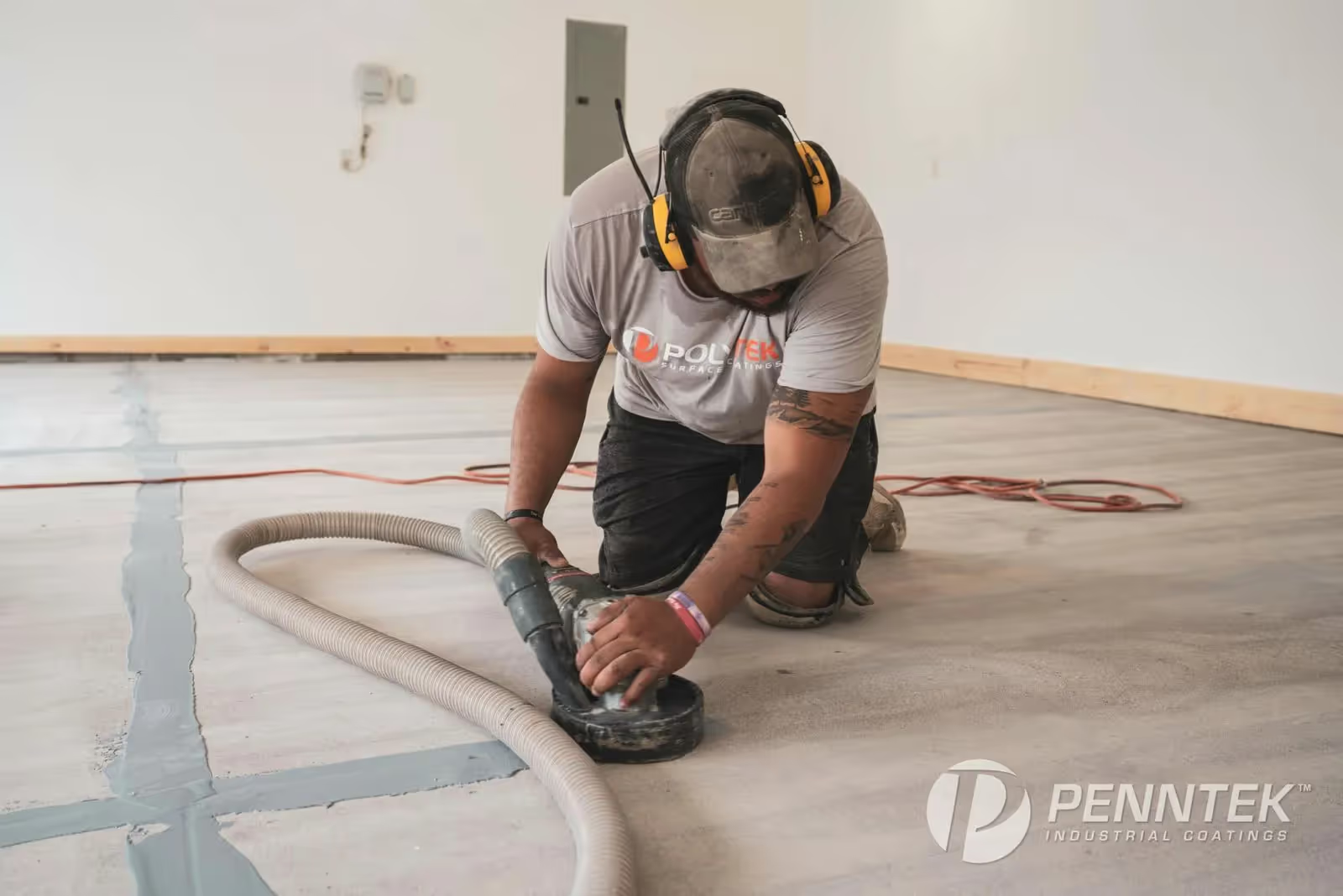
Our professional grinding process does more than create surface profile for adhesion—it also addresses moisture-related issues:
Diamond grinding removes any surface contaminants or sealers that could trap moisture, opens the concrete pores to allow proper bonding and controlled vapor transmission, and creates the optimal surface texture for Penntek's silane adhesion promoter to penetrate and bond.
The 600+ pound grinders we use at Cascade achieve the proper ICRI Concrete Surface Profile (CSP) that lighter DIY equipment simply cannot match. This professional preparation is critical for moisture management.
Strategic System Selection:
Not all concrete requires the same Penntek system. Based on our moisture assessment, we select formulations optimized for your specific conditions:
For standard moisture levels, we use the standard Penntek Evolution system. For elevated but manageable moisture, we employ moisture-mitigating primers and basecoats. And for challenging moisture situations, specialized Penntek formulations provide additional moisture tolerance.
This customization—available only through certified Penntek dealers like Cascade—ensures optimal performance rather than hoping a generic product works in your specific situation.
The proof of any moisture management system is long-term performance in challenging conditions. Throughout the Seattle metropolitan area, Cascade has installed hundreds of Penntek floors in conditions that would guarantee epoxy failure:
Case Study: Bellevue Home Built in 1965
A customer in Bellevue had replaced two epoxy floors over 8 years, both failing with extensive blistering. Moisture testing revealed vapor emission rates that exceeded epoxy specifications but fell within Penntek's tolerance.
We installed a Penntek system with moisture-appropriate preparation. Seven years later, the floor shows zero moisture-related issues—no blistering, no lifting, no delamination. The customer reports the floor looks as good as installation day.
Case Study: Woodinville Property with Drainage Issues
A Woodinville homeowner dealt with seasonal moisture problems that had destroyed an epoxy floor within two years. After improving exterior drainage and allowing the slab to stabilize, we installed Penntek using enhanced moisture-management protocols.
Five years later, even through multiple wet winters, the floor performs perfectly. The flexible, moisture-tolerant Penntek system handles the variable moisture conditions that epoxy could not.
While Penntek handles moisture far better than epoxy, extreme moisture situations still require intervention before any coating installation:
Red Flags Requiring Remediation:
Solutions for Extreme Moisture:
When we encounter these conditions, Cascade recommends addressing root causes before coating installation:
Improve exterior drainage to reduce water infiltration, install or repair vapor barriers beneath the slab (when accessible), seal foundation cracks or sources of water entry, install interior drainage systems if necessary, and allow adequate drying time after remediation.
The good news? These extreme situations are relatively rare. Most Seattle-area garages have manageable moisture levels that Penntek can successfully handle without extraordinary interventions.
The fear of moisture problems prevents many Seattle homeowners from coating their garage floors. This is unfortunate because properly installed Penntek systems successfully perform in conditions that would destroy epoxy—which means most garages are actually excellent candidates for coating.
At Cascade Concrete Coatings, we've learned that moisture concerns usually reflect bad experiences with failed epoxy floors rather than actual coating impossibility. When homeowners understand that premium polyurea systems like Penntek are engineered specifically for moisture tolerance, they realize their "problem" concrete is actually perfectly suitable for coating.
If you're concerned about moisture ruining your garage floor coating, the solution isn't to avoid coating altogether—it's to choose the right coating system and professional installer who understand moisture management.
Cascade Concrete Coatings brings certified expertise in moisture assessment and management, professional-grade surface preparation that optimizes moisture tolerance, Penntek systems specifically engineered for challenging moisture conditions, and proven performance throughout the Seattle area's wet climate.
Don't let moisture concerns prevent you from transforming your garage. Learn more about how Penntek systems differ from moisture-sensitive epoxy, explore our installation process that addresses moisture from the start, or contact Cascade Concrete Coatings for a professional moisture assessment and honest evaluation of your concrete's coating suitability.
Moisture doesn't have to ruin your garage floor—when you choose the right coating system designed to work with it instead of against it.