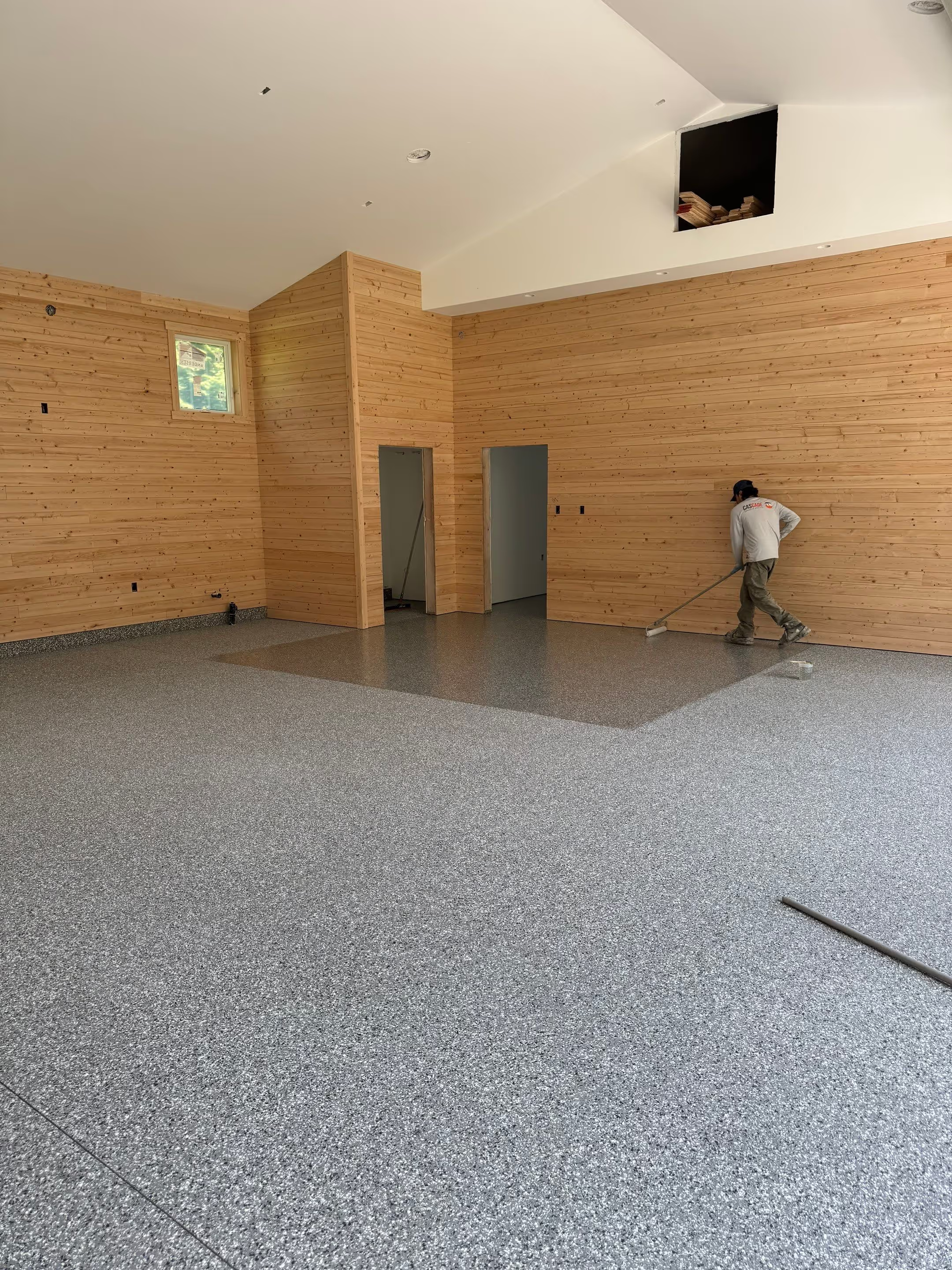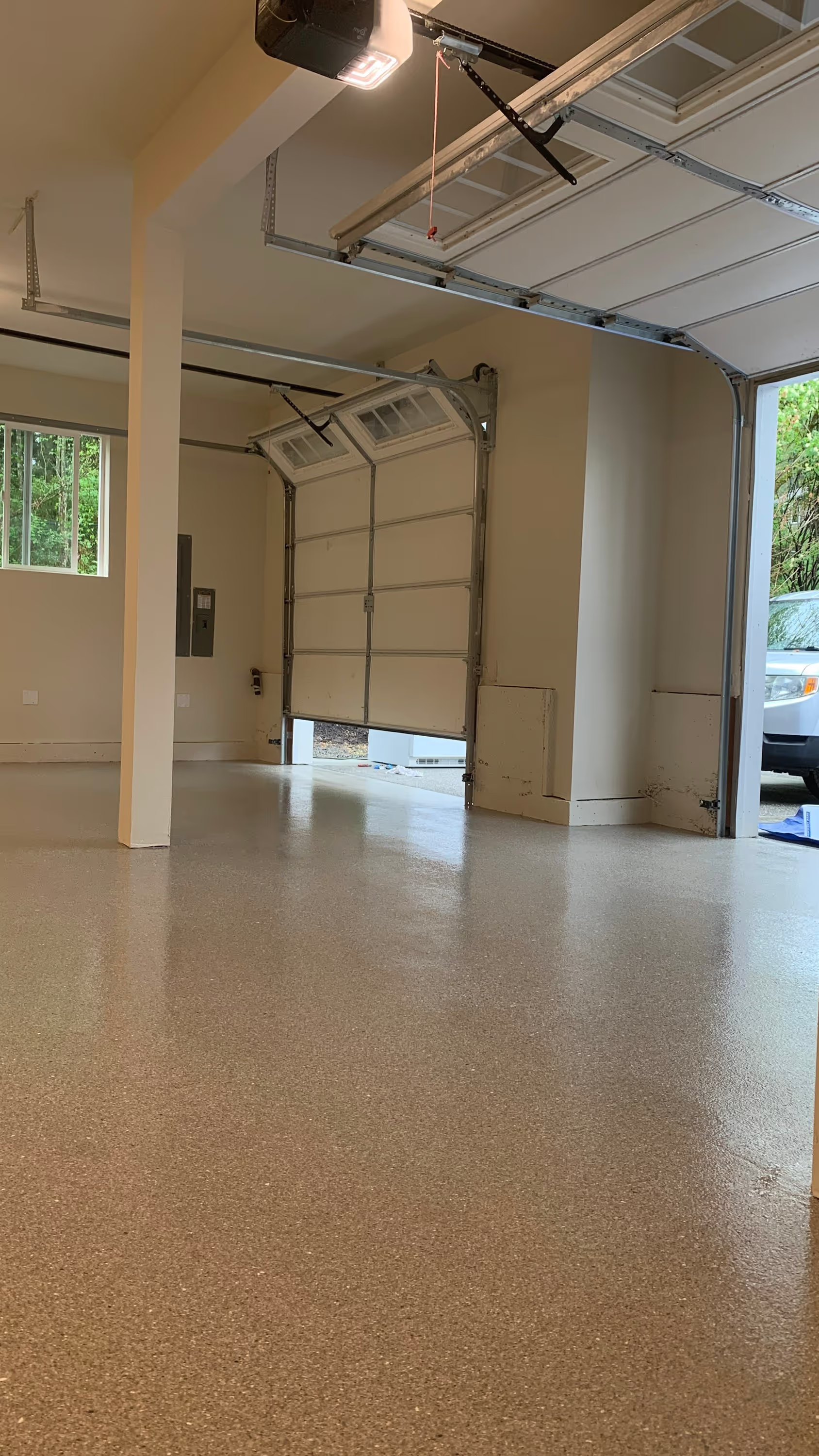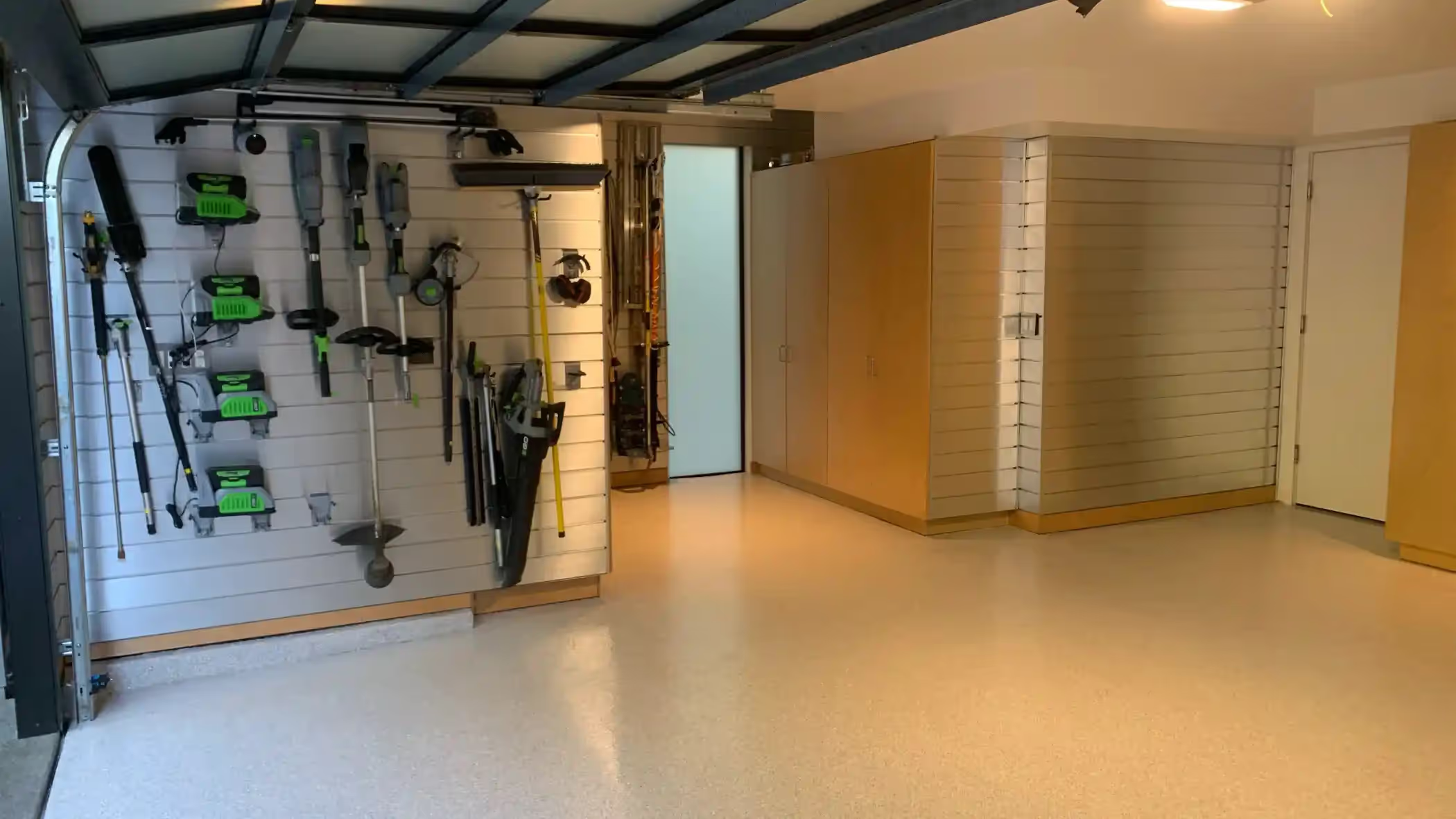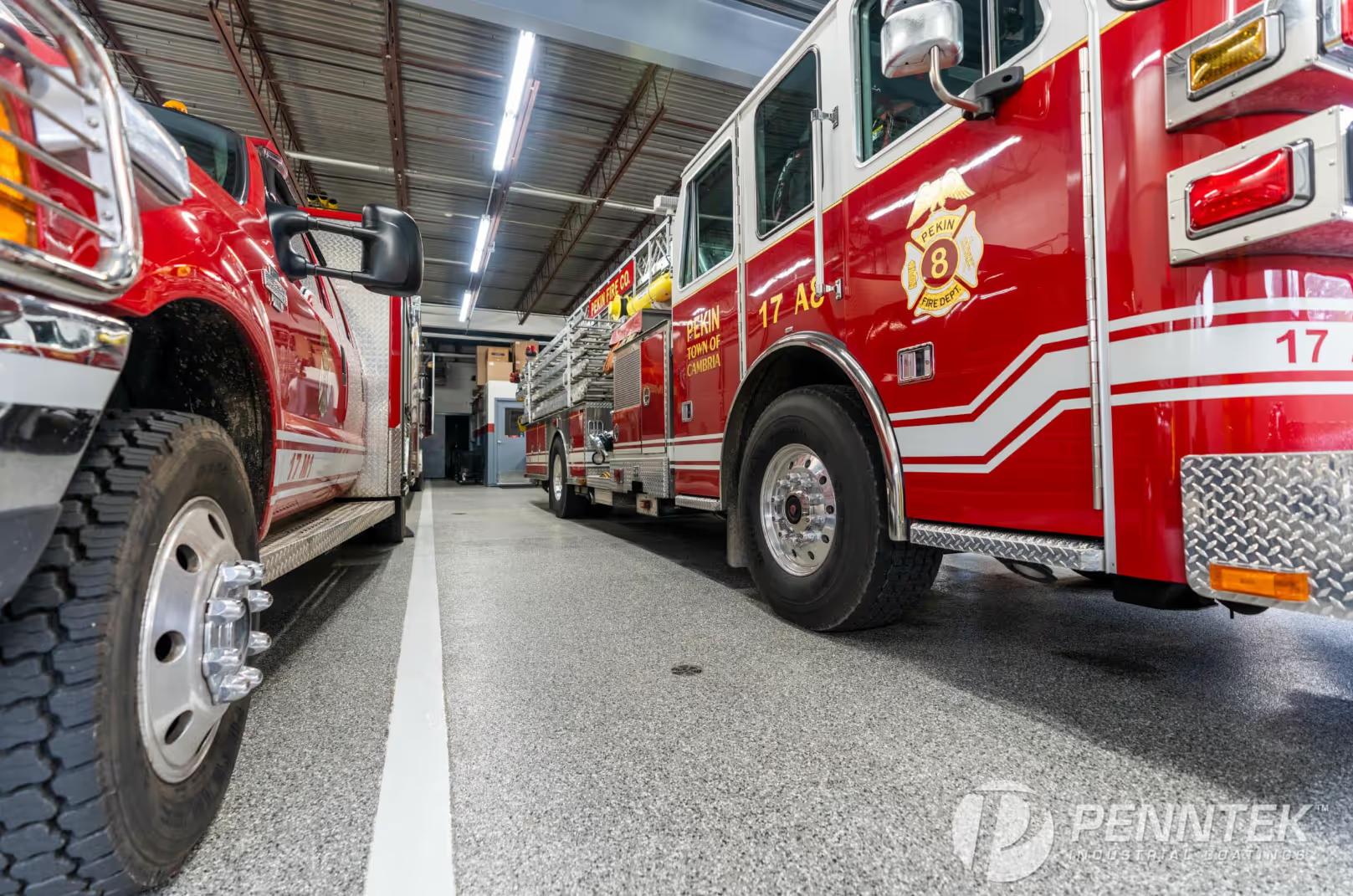
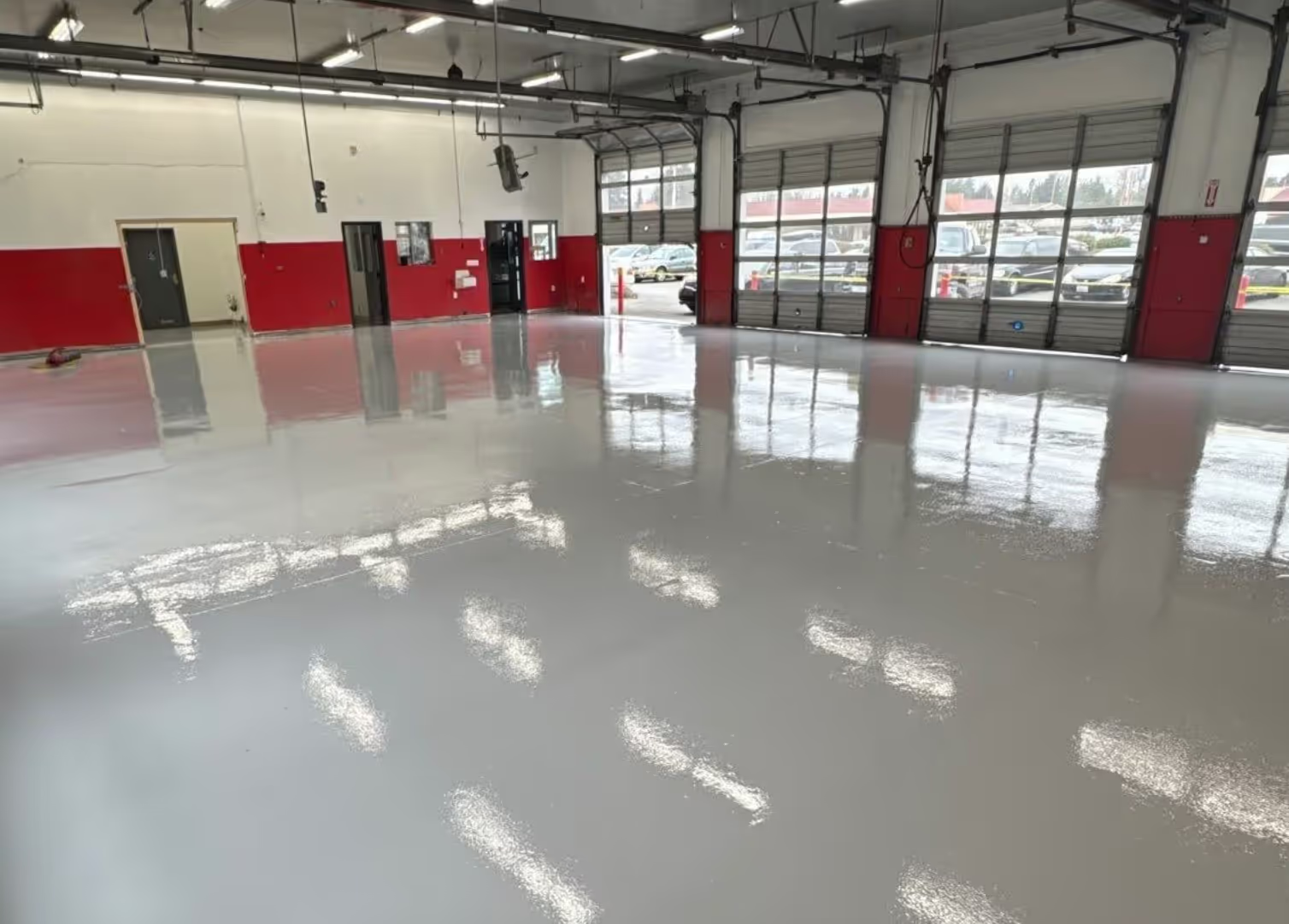
When you're researching concrete floor coatings for your Seattle-area business, you've probably noticed that most contractors advertise residential garage floor services. But can a company that specializes in home garages really deliver the commercial-grade durability your business demands? The short answer is that commercial and residential floor coating projects require fundamentally different approaches, even when using the same Penntek polyurea technology.
As the certified Penntek dealer serving the Seattle Eastside from Bellevue to Bothell, we've completed hundreds of both residential garage floors and commercial facility coatings. While the chemical formulation might be similar, virtually everything else about these projects differs—from substrate preparation to traffic expectations to warranty considerations. Understanding these differences helps business owners make informed decisions that protect their long-term investment.
The most obvious distinction between commercial and residential floor coatings is the sheer volume and type of traffic each must withstand. A residential garage in Sammamish or Kirkland might see two vehicles entering and exiting once or twice daily. A commercial facility processes constant forklift traffic, heavy equipment, delivery trucks, and foot traffic from multiple employees and customers throughout every business day.
This traffic difference translates directly to coating requirements. Commercial applications typically demand thicker coating systems—often 20-40 mils compared to the 15-20 mils standard for residential projects. The broadcast aggregate in commercial installations uses larger, more angular grit to create superior mechanical interlock, and the top coat formulation prioritizes abrasion resistance over aesthetics.
When we install Penntek systems in commercial facilities throughout Redmond and Woodinville, we also consider point loading from equipment stands, rack systems, and heavy machinery. Residential floors experience distributed weight from vehicles, while commercial floors must handle concentrated loads that can exceed 10,000 pounds per square inch in small contact areas.
Residential garages face occasional automotive fluid exposure—motor oil, brake fluid, coolant, and gasoline. These chemicals certainly require resistance, but exposure events are typically small-volume and quickly cleaned. Commercial environments encounter a different magnitude of chemical challenge entirely.
Manufacturing facilities, auto shops, restaurants, and medical facilities each present unique chemical exposure profiles. Commercial kitchens deal with hot oils, acidic cleaning solutions, and sanitizers. Automotive repair facilities see constant exposure to petroleum products, solvents, and battery acid. Medical and veterinary facilities require floors that resist blood-borne pathogens, disinfectants, and pharmaceutical compounds.
Penntek's pure polyurea formulation provides exceptional chemical resistance for both residential and commercial applications, but commercial installations often specify additional protective measures. These might include chemical-resistant primers for especially aggressive environments, increased coating thickness in high-exposure zones, or specialized topcoats with enhanced chemical barrier properties.
The 99% solids formulation in Penntek coatings creates a completely non-porous surface that doesn't allow chemical penetration—a critical advantage over cheaper epoxy alternatives that can absorb chemicals and degrade from within. This chemical impermeability makes Penntek suitable for the most demanding commercial environments while still providing residential customers with garage floors that resist common household chemicals.
The preparation phase differentiates professional installations from failures more than any other factor. Commercial projects demand even more rigorous substrate preparation than residential applications because the consequences of adhesion failure in a business environment carry significantly higher costs.
Residential concrete in established Seattle neighborhoods typically exhibits relatively predictable characteristics. The slabs are 15-30 years old, have undergone normal residential settling, and present moisture levels within manageable ranges. Commercial concrete varies dramatically—from brand new warehouse floors with high moisture vapor emission rates to ancient industrial slabs saturated with decades of oil contamination.
Our commercial substrate evaluation protocol includes comprehensive moisture testing using calcium chloride tests and relative humidity probes, not just simple surface moisture meters. We assess concrete hardness using rebound hammers and scratch tests to determine proper grinding equipment and profiles. We map existing damage, movement joints, and substrate irregularities that might telegraph through the coating system.
The grinding process itself differs substantially. Residential garages typically require ICRI Concrete Surface Profile 2-3 (approximately 60-90 grit sandpaper texture). Commercial applications often demand CSP 3-4 or higher, especially under heavy equipment paths or in areas with oil contamination history. Achieving these deeper profiles requires commercial-grade grinders producing 600+ pounds of downward pressure with diamond cup wheels, not the lighter equipment sufficient for residential work.
We use Scanmaskin grinding systems with HEPA filtration for all our installations, but commercial projects in Issaquah and Bellevue facilities often require multiple grinding passes with progressively finer diamonds to remove contamination layers before creating the final bond profile. This preparation thoroughness explains why commercial projects typically take 2-3 days compared to same-day residential installations.
Residential garage floor coatings in Washington State generally don't require permits or inspections—they're considered cosmetic improvements rather than structural modifications. Commercial installations operate under entirely different regulatory frameworks.
Commercial floor coatings may need to comply with:
Building and Fire Codes: Commercial facilities must meet specific fire resistance and flame spread ratings. Coating systems require documentation of flame spread index and smoke development ratings per ASTM E-84 testing. Penntek systems achieve Class A fire ratings, making them suitable for occupied commercial spaces, but proper documentation and code compliance verification remain essential.
OSHA Safety Requirements: Commercial floors must meet workplace safety standards including slip resistance coefficients, visibility requirements, and chemical resistance appropriate to the facility type. Businesses face liability and compliance issues if flooring doesn't meet these standards.
ADA Accessibility Standards: Commercial facilities must provide appropriate slip resistance while avoiding excessive texture that impedes wheelchair movement or creates tripping hazards. This balance requires careful specification of broadcast aggregate size and distribution.
Environmental and VOC Regulations: Commercial installations may trigger air quality permitting requirements depending on square footage and coating chemistry. Penntek's low-VOC polyurea formulation helps businesses maintain compliance with Washington's stringent air quality standards, but larger projects may still require air quality management plans.
Industry-Specific Requirements: Food service facilities need NSF-approved coatings and antimicrobial properties. Medical facilities require coatings that withstand hospital-grade disinfectants. Manufacturing environments may need ESD (electrostatic dissipative) properties to protect sensitive electronics.
When we complete commercial installations in Seattle, we provide comprehensive documentation including technical data sheets, test results, and compliance certifications that businesses need for insurance, inspections, and regulatory compliance. Residential installations rarely require this documentation level, though we provide lifetime warranty coverage for both application types.
Homeowners selecting garage floor coatings for their Woodinville or Bothell properties prioritize aesthetics alongside durability. The garage has evolved from pure utility space to an extension of the home—a workshop, gym, entertainment area, or showcase for collector vehicles. Consequently, residential customers invest considerable time selecting colors, flake patterns, and finishes that complement their home's style and personal taste.
Our residential clients typically choose decorative flake systems with multiple color blends, creating depth and visual interest. Popular combinations include natural stone appearances for traditional homes, metallic flakes for contemporary spaces, or subtle neutral blends that provide texture without overwhelming the space. The high-gloss topcoat creates a showroom appearance that homeowners love for its reflective, clean aesthetic.
Residential installations also commonly incorporate custom elements like logo inlays, border designs, or contrasting colors for different zones. A homeowner might request a distinct color for their workshop area versus parking spaces, or incorporate their favorite sports team colors. These customizations transform garages into personalized spaces that homeowners genuinely enjoy spending time in.
Commercial floor design follows different principles—functionality first, with aesthetics supporting brand identity and safety requirements. Color selection for commercial spaces typically serves practical purposes: light colors maximize ambient light and improve visibility, safety yellow designates pedestrian pathways or hazard zones, and color coding differentiates work areas or departments.
Commercial clients usually select solid color systems or minimal flake broadcast rather than heavy decorative flakes. This preference stems from several factors: solid colors show less wear in high-traffic patterns, they're easier to maintain and repair if needed, and they present a professional appearance without visual distraction. Manufacturing facilities often prefer gray tones that hide dirt and tire marks. Retail showrooms might choose colors matching corporate branding. Medical facilities typically specify light colors that make contamination visible for immediate cleanup.
The finish selection also differs. While residential customers overwhelmingly prefer high-gloss finishes for their dramatic appearance, commercial facilities often choose satin or semi-gloss finishes. These lower-gloss options show less scuffing and wear, reduce glare under commercial lighting, and provide adequate slip resistance without aggressive texturing.
Safety marking integration represents another commercial-specific design element. We often incorporate safety striping, equipment parking zones, pedestrian walkways, and hazard area markings directly into the coating system during installation. These permanent markings maintain visibility longer than painted lines and don't require ongoing maintenance.
One of Penntek's significant advantages for residential garage floor installations is the ability to complete most projects in a single day. Homeowners throughout the Seattle Eastside appreciate this efficiency—they're not displaced from their garage for extended periods, and the faster cure time means they can drive on the floor within 24-48 hours.
A typical residential installation timeline follows this pattern:
Morning (7:00 AM - 11:00 AM): Garage clearance verification, crack and damage repair, diamond grinding to achieve proper substrate profile, thorough HEPA vacuuming and cleaning.
Midday (11:00 AM - 2:00 PM): Base coat application, decorative flake broadcast, and initial cure period.
Afternoon (2:00 PM - 5:00 PM): Excess flake removal, surface preparation, and topcoat application.
By evening, the floor has achieved sufficient cure for light foot traffic, and vehicles can return within 24-48 hours depending on ambient temperature and humidity. This single-day installation represents a massive advantage over epoxy systems requiring 5-7 days of multi-step application and cure cycles.
Commercial installations require more complex project planning to minimize business disruption. Even though Penntek cures rapidly compared to epoxy, the larger square footage, deeper preparation requirements, and business operations create scheduling challenges.
We typically structure commercial projects in phases:
Phase 1 - Pre-Installation Preparation (1-2 Days): This phase occurs during business hours when possible and includes comprehensive substrate evaluation, moisture testing, repair material preparation, and equipment staging. We mark out work zones, establish safety barriers, and coordinate with facility management regarding power requirements, ventilation, and access restrictions.
Phase 2 - Intensive Preparation (1-2 Days): The grinding, crack repair, and cleaning phases generate noise and dust (despite HEPA filtration) that makes them incompatible with most business operations. We usually schedule these activities during facility downtime—nights, weekends, or planned shutdowns. The extensive preparation commercial floors require explains why this phase typically takes longer than residential projects.
Phase 3 - Coating Application (1-2 Days): The actual coating application proceeds quickly, but we must work in sections to maintain facility access where required. A 10,000 square foot facility might be divided into four sections coated over two nights, allowing partial facility use during business hours.
Phase 4 - Cure and Return to Service (1-3 Days): Penntek's rapid cure allows light foot traffic within 4-6 hours and vehicle traffic within 24 hours, but heavy equipment and full operational loading should wait 48-72 hours for maximum coating hardness.
For businesses that cannot shut down operations, we develop detailed phasing plans that maintain partial facility access throughout the project. A distribution center might have coating applied to half the facility while operations continue in the other half, then switch zones after the first section cures.
Residential garage floor coating pricing in the Seattle area typically ranges from $8-15 per square foot for quality polyurea systems like Penntek, compared to $3-6 per square foot for DIY epoxy kits or low-end contractor installations. This price differential causes many homeowners to focus on upfront cost rather than lifetime value—a decision that often leads to premature coating failure and the expensive re-installation cycle we frequently witness.
The true cost comparison considers expected lifespan, not just initial investment. A $3,000 DIY epoxy floor that fails within 3-5 years costs $600-1,000 annually. An $8,000 Penntek floor lasting 30-40 years costs $200-267 annually—less than half the annual cost of the "cheap" alternative. Factor in the inconvenience, labor, and garage disruption of repeated installations, and professional polyurea represents clear value.
For residential customers, the ROI extends beyond simple coating longevity. A professionally coated garage floor adds measurable home value in competitive Seattle real estate markets. Real estate agents report that homes with premium garage finishes sell faster and command higher prices, particularly in neighborhoods like Sammamish, Bellevue, and Redmond where buyers expect high-quality finishes throughout the property.
Commercial floor coating ROI calculations incorporate additional factors beyond residential considerations. Business owners must evaluate operational disruption costs, employee safety implications, maintenance labor savings, and the professional image projected to customers and clients.
Consider a 5,000 square foot auto repair facility in Kirkland evaluating coating options:
Budget Epoxy Option: $15,000 initial cost, 3-5 year lifespan, requires 5-7 days of facility closure for installation, needs annual maintenance and repair, shows visible wear patterns within 18 months.
Penntek Polyurea Option: $35,000 initial cost, 20-30 year lifespan, installed over 2-3 days during scheduled shutdown, requires only routine cleaning maintenance, maintains professional appearance for decades.
The epoxy option costs $3-5,000 annually over its lifespan. The Penntek option costs $1,167-1,750 annually. The facility will save $1,833-3,250 every year while avoiding the operational disruption of re-coating every 3-5 years—disruption that typically costs businesses $10,000-30,000 in lost revenue and productivity.
Additional commercial ROI factors include:
Maintenance Labor Reduction: Penntek's non-porous surface requires only basic sweeping and occasional mopping compared to epoxy's tendency to stain and require intensive cleaning. Facilities typically reduce floor maintenance labor by 60-70% after Penntek installation.
Safety and Liability: Fewer slip-and-fall incidents on properly textured Penntek floors reduce workers' compensation costs and liability exposure. The antimicrobial properties also reduce disease transmission in medical and food service facilities.
Professional Image: Customers and clients judge business competence partly on facility appearance. Worn, stained, or damaged floors suggest poor attention to detail and create negative impressions that affect purchasing decisions.
Operational Uptime: Penntek's rapid cure minimizes business disruption during installation. The decades-long lifespan eliminates the repeated facility closures required for re-coating with lesser systems.
For commercial facilities, investing in Penntek polyurea isn't just about having a nice-looking floor—it's a strategic business decision that impacts operational efficiency, safety, customer perception, and long-term costs.
Not every contractor qualified for residential garage floor installations can successfully execute commercial projects. Commercial work demands additional capabilities, certifications, and experience that many residential specialists lack.
When evaluating coating contractors for commercial facilities throughout Redmond, Everett, or Bellevue, business owners should verify:
Penntek Certification: Penntek maintains rigorous dealer certification standards that ensure installers understand proper system selection, substrate preparation, and application techniques. This certification particularly matters for commercial projects where installation failures carry much higher consequences than residential applications.
Commercial Project Portfolio: Request references from similar facilities in terms of size, industry, and usage patterns. A contractor with extensive residential experience but limited commercial background may not fully appreciate the preparation thoroughness and specification precision commercial projects require.
Insurance and Bonding: Commercial projects require substantially higher liability coverage than residential work—typically $2-5 million in general liability plus commercial umbrella policies. Verify current certificates of insurance before contract signing.
Code Compliance Knowledge: The contractor should demonstrate familiarity with commercial building codes, fire safety requirements, ADA standards, and industry-specific regulations affecting your facility type.
Project Management Capabilities: Larger commercial projects require formal project management including detailed scheduling, multi-crew coordination, safety protocol implementation, and regular progress communication—capabilities beyond those needed for residential day-projects.
Equipment and Personnel: Commercial installations require industrial-grade equipment and adequately-staffed crews. A contractor equipped for residential garages may not possess the heavy grinding equipment, sufficient personnel, or commercial-scale spray equipment commercial projects demand.
As the certified Penntek dealer serving the Seattle Eastside, we've developed systematic approaches to commercial floor coating that ensure successful outcomes for business clients:
Comprehensive Pre-Installation Assessment: We conduct detailed facility evaluations including concrete testing, moisture assessment, contamination analysis, and operational requirement understanding. This assessment phase ensures we specify the right system and preparation approach for your specific facility.
Detailed Project Planning: We develop formal project plans including phasing schedules, access coordination, safety protocols, and regular progress communication. Business owners receive clear timelines and know exactly what to expect throughout the installation process.
Certified Installation Teams: Our installation crews maintain Penntek certification and receive ongoing training in commercial installation best practices. We don't subcontract commercial work—every project is completed by our employed, trained, and certified technicians.
Code Compliance Documentation: We provide comprehensive documentation including technical data sheets, test results, flame spread ratings, VOC compliance certificates, and warranty information that businesses need for regulatory compliance and insurance requirements.
Flexible Scheduling: We work around your business operations, scheduling intensive preparation work during facility downtime and structuring projects in phases that maintain partial operational access where required.
Long-Term Partnership: Commercial floor coating isn't a one-time transaction—it's the beginning of a long-term relationship. We provide ongoing maintenance guidance, periodic inspections, and responsive support if any issues arise over your floor's 20-30 year lifespan.
Whether you're managing a Seattle-area auto repair facility, retail showroom, warehouse, medical office, or any other commercial space, your floor coating decision significantly impacts operations, safety, costs, and professional image for decades.
The choice between residential-focused contractors and commercial-specialist partners affects outcomes just as dramatically as the choice between epoxy and polyurea chemistry. Commercial facilities demand contractors who understand the unique requirements, regulatory frameworks, installation challenges, and performance expectations commercial environments create.
As business owners evaluate coating options, the key questions should focus on long-term value rather than short-term costs: What's the true annual cost over the coating's lifetime? How will installation disruption impact operations? Does this system meet safety, compliance, and performance requirements? Can this contractor deliver the quality and professionalism my business demands?
For businesses throughout Bellevue, Redmond, Kirkland, Sammamish, Bothell, Woodinville, Issaquah, and the greater Seattle Eastside, Cascade Concrete Coatings brings certified Penntek installation expertise, commercial project management capabilities, and a proven track record of successful commercial installations.
We'd welcome the opportunity to discuss your specific facility requirements, provide a detailed assessment, and develop a coating solution that protects your investment while minimizing business disruption. Contact us today to schedule a complimentary commercial facility evaluation and discover why Seattle-area businesses trust Penntek polyurea for their most demanding floor coating applications.
Your facility deserves more than a residential garage floor solution scaled up—it deserves a properly-specified, expertly-installed commercial coating system designed for decades of reliable performance. That's exactly what Penntek delivers, and exactly what we install every day across the Pacific Northwest.