TLDR: Removing a failed epoxy coating from a two-car garage in the Seattle area costs $300 to $800 in labor before a new coating can be applied. A replacement coating at the same system level runs $1,500 to $2,500, putting the total remediation cost at $1,800 to $3,300 per cycle. Two cycles over 15 years costs $3,600 to $6,600: more than one certified Penntek polyurea installation that carries a lifetime warranty and requires no replacement. This article covers what drives removal costs, how to evaluate whether your floor needs removal versus a coating over the existing surface, and why the replacement math consistently favors a quality system the first time. Get a free in-home assessment from Cascade Concrete Coatings.
The conversation about garage floor coatings in the Seattle area usually starts with the upfront cost. It rarely starts with the replacement cost: until a homeowner is standing in a garage with a floor that is blistering, peeling, and three years old, trying to figure out what it costs to fix it. That is where the real pricing education happens, and it is a more expensive classroom than the first-time decision. For the upfront cost comparison before you commit to any system, see the polyurea cost per square foot guide and the full Seattle garage floor coating cost guide.
[Image placeholder: Failed epoxy garage floor in a Seattle-area home with visible blistering, peeling edges, and discoloration at year 4 | Alt-Text: "Failed epoxy garage floor removal cost Seattle WA - Cascade Concrete Coatings"]
Removal cost is the expense most homeowners do not account for when comparing initial quotes. When a coating fails, it cannot simply be coated over in most cases. A failed, delaminating, or blistering epoxy coating creates a contamination layer that prevents any new coating from bonding correctly. The old coating must come off before anything goes on. That removal is a labor cost that does not exist in the original quote: it is the penalty for choosing a system that failed.
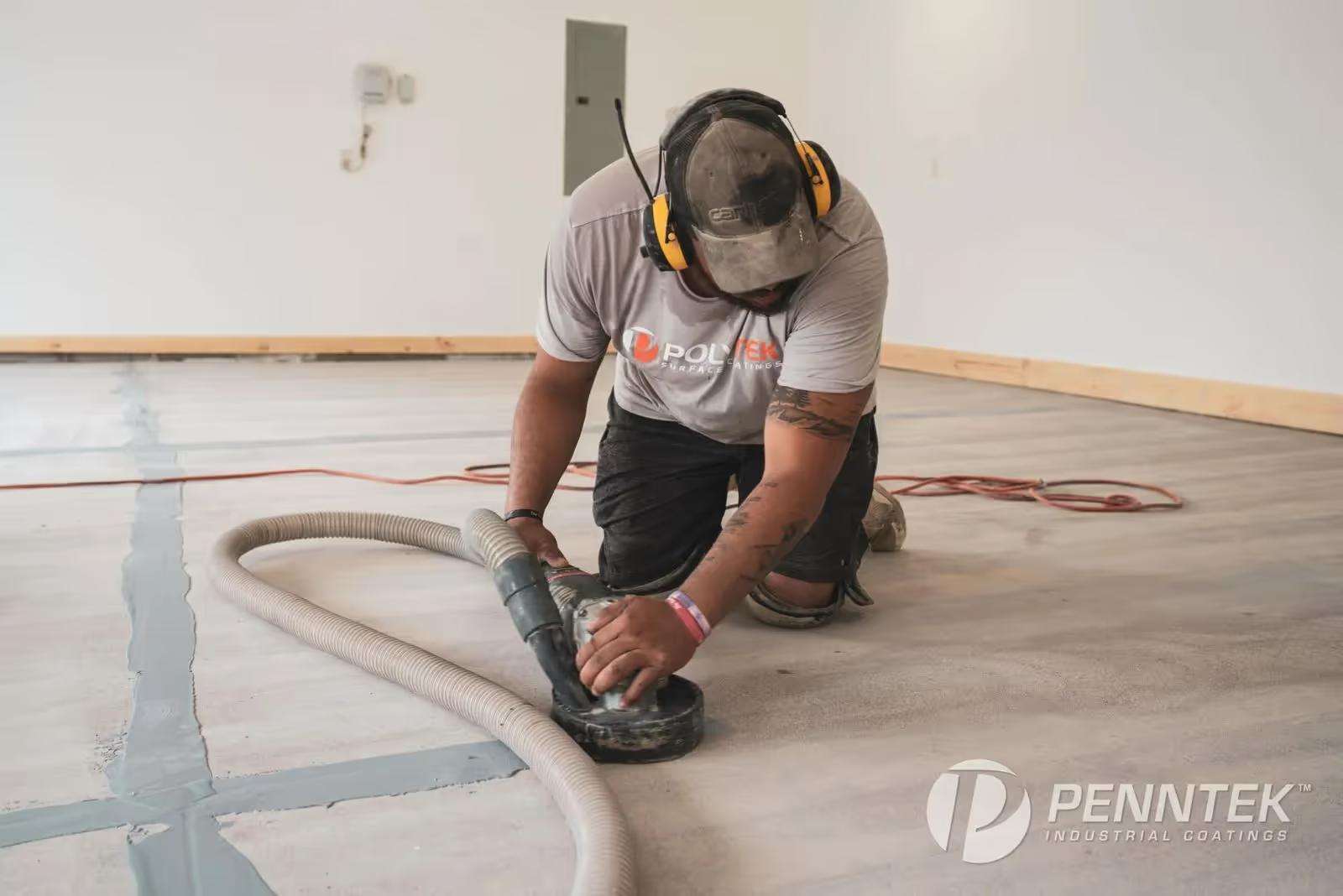
In the Seattle area, professional removal of a failed epoxy coating from a two-car garage (400 to 500 square feet) runs $300 to $800. HomeAdvisor's national flooring removal data confirms this range is consistent with broader market pricing for epoxy removal. The range depends on how thoroughly the coating has delaminated (partially failed coatings are harder to remove than fully failed ones), how many layers of previous coating exist, and the presence of any contamination beneath the failed material. If the removal requires grinding through multiple layers of old coating, the time and equipment cost increase accordingly.
Coating thickness and layers. A single layer of failed water-based epoxy grinds off relatively quickly. A thicker two-part professional epoxy that has partially failed and partially adhered takes longer: the areas where it still grips must be mechanically ground through. A floor that has been coated, failed, and recoated multiple times can have two or three layers that all need to come off before a clean substrate is exposed.
Contamination beneath the failed coating. When an epoxy coating fails due to moisture intrusion, the space between the coating and the slab often harbors moisture and debris. That contamination must be addressed before recoating.
In Bothell, Renton, and lower-elevation neighborhoods where slab moisture runs higher, contamination beneath a failed coating is more common than in drier Eastside markets.
Hot-tire pickup damage. When a coating has failed through hot-tire pickup: where the warm tire pulls chunks of coating off the parking area: those areas often have localized concrete surface damage that requires repair before recoating. The original mechanical bond, when it fails, can pull fine concrete particulate with it, leaving a slightly roughened or pitted zone that needs additional attention.
[Image placeholder: Technician grinding away a failed epoxy coating from a garage floor showing the removal process before recoating | Alt-Text: "Removing failed epoxy garage floor coating Seattle area before Penntek installation - Cascade Concrete Coatings"]
Standard epoxy, two replacement cycles over 15 years:
Initial installation: $1,500. First replacement at year 5 to 7 (removal + new coating): $1,800 to $3,300. Second replacement at year 12 to 14 (removal + new coating): $1,800 to $3,300. Total 15-year cost: $5,100 to $8,100. This does not include the time spent emptying the garage twice, the disruption to parking and storage during two installation periods, or the frustration of a floor that failed.
Certified Penntek polyurea, no replacement cycles:
Initial installation: $2,000 to $4,500. Total 15-year cost: $2,000 to $4,500. Backed by a manufacturer lifetime warranty. No removal cost, no disruption, no second decision. For the per-year cost breakdown of each system, see how long garage floor coatings last in Seattle.
Not every floor with a failing coating requires full removal. If the existing coating is largely intact and still adhered at 80 percent or more of the surface, a professional assessment may determine that grinding through the existing coating and applying a new system is viable.
This scenario is less common than homeowners hope when they contact Cascade. A coating that looks mostly intact on the surface often has compromised adhesion beneath: adhesion that will transfer its failure mode to any new coating applied over it. The assessment determines the answer. What a homeowner cannot do is self-diagnose from a visual inspection alone.
Cascade's free in-home assessment includes evaluation of any existing coating, an adhesion check, and an honest recommendation on whether removal is required or whether a grinding-and-recoat approach is viable. Schedule your free assessment here.
Blistering or bubbling indicates moisture intrusion beneath the coating. This is not a surface repair: the moisture source and the adhesion failure are both present.
Peeling or lifting at the edges indicates mechanical bond failure. Visible yellowing points to UV degradation of the topcoat. Any crack in the coating surface that does not correspond to a crack in the underlying concrete indicates the coating itself has failed structurally. Any one of these is a replacement signal, not a repair signal. For more on what crack patterns indicate about coating condition, see the crack repair and assessment guide.
[Image placeholder: Homeowner inspecting a blistering garage floor with visible adhesion failure: the moment the replacement decision becomes clear | Alt-Text: "Garage floor coating failure signs Seattle WA blistering peeling time to replace - Cascade Concrete Coatings"]
Paint applied over a failing coating will fail at the same rate as the coating beneath it: usually faster, since paint has no meaningful bond to a contaminated or delaminating surface. It addresses the visual problem for a few months and adds to the removal cost when the floor is eventually redone. It is the most expensive temporary fix available.
Partial failure is common with hot-tire pickup: the parking area fails while the rest looks intact. Spot repair is possible if the surrounding coating is genuinely well-adhered, but spot repairs rarely match in appearance.
The same conditions that caused failure in one zone usually create failure in adjacent zones within 12 to 24 months. A full assessment before deciding on spot repair vs. full removal is strongly recommended. Contact Cascade to discuss your specific situation.
Standard homeowner's insurance policies do not cover wear-and-tear failure of a garage floor coating. If the failure is related to a covered event: a plumbing leak that caused moisture damage, for example: a claim may be possible with documentation. In most cases, coating failure is a maintenance cost. This is another reason the upfront investment in a warranted system matters: the warranty is the financial protection against failure cost that insurance does not provide.
Concrete slabs in the Seattle area are typically 4 to 6 inches thick. A professional diamond grind removes approximately 1/16 of an inch of material from the surface. Multiple coating and removal cycles over decades can reduce the surface profile but do not approach a structural concern in any realistic residential timeline. The more practical limit is the condition of the surface after multiple cycles of coating adhesion failure: not the physical thickness of the slab.
Yes. When Cascade assesses a floor with an existing failed coating, the removal cost is identified and included in the written quote as a separate line item. There are no removal cost surprises on installation day.
Request a free assessment and the full scope, including any removal required, will be in the quote before you decide. See also the epoxy vs. polyaspartic vs. polyurea comparison for context on why the system choice at initial installation determines whether you are ever in this conversation again.
Cascade Concrete Coatings serves Woodinville, Kirkland, Redmond, Bellevue, Bothell, Sammamish, Seattle, Issaquah, Everett, and the greater Puget Sound region. Schedule your free in-home assessment today.