TLDR: A standard epoxy coating in an unheated Seattle-area garage lasts 3 to 7 years before blistering, hot-tire pickup, or UV yellowing forces replacement. A certified Penntek polyurea installation carries a manufacturer lifetime warranty and is documented to perform 20 to 30 years. The performance gap is driven by Seattle's ambient humidity, freeze-thaw cycling, and UV exposure: conditions that accelerate every failure mode specific to epoxy. This article explains exactly why coatings fail sooner in Pacific Northwest garages than national guides suggest, what distinguishes a 5-year floor from a lifetime floor, and how to verify any lifespan claim before you commit. Get a free in-home assessment from Cascade Concrete Coatings.
National guides that say "epoxy lasts 10 to 20 years" are not wrong for every market. They are wrong for the Puget Sound region. A garage in Phoenix or Dallas deals with dry heat and low ambient humidity. A garage in Sammamish, Bothell, or Kirkland deals with sustained moisture, moderate but real freeze-thaw cycling, and the kind of temperature swings that stress a mechanical bond in ways a dry-climate slab never experiences. The lifespan question here deserves a Pacific Northwest answer.
[Image placeholder: Before photo of a failed epoxy garage floor in a Seattle-area home at year 4: blistering, yellowing, delamination visible | Alt-Text: "Failed epoxy garage floor Seattle area year 4 blistering yellowing - Cascade Concrete Coatings"]
A concrete coating lifespan is a function of how the coating bonds to the slab, not just what brand is applied. There are two bond types: mechanical and chemical.
Mechanical bond is what standard epoxy creates. The coating grips the roughened surface of the concrete. This bond is physically strong on day one but is vulnerable to disruption: moisture vapor pushing up from beneath the slab can break the grip.
Thermal expansion and contraction cycles cause the coating to work against the bond over time. Hot tires soften the coating at the contact patch and pull it away from the surface.
Chemical bond is what certified Penntek polyurea creates. A silane adhesion promoter prepares the concrete at a molecular level before the polyurea is applied. The coating does not grip the surface: it fuses with it. Polyurea's chemical bonding properties are well-documented in the industry as the primary reason for its performance advantage over epoxy. Vapor pressure, thermal cycling, and tire heat do not disrupt a chemical bond the way they disrupt a mechanical one.
This is why two floors installed on the same day with similar-quality products can perform very differently over time. The bond type determines the failure mode, and the failure mode determines the lifespan.
Moisture transmission. Concrete slabs in King County and Snohomish County carry higher average moisture content than slabs in drier climates. This moisture transmits upward through the slab continuously. Under a mechanical bond, it accumulates and creates the "epoxy blister": the pockets of coating that lift off as moisture pressure builds beneath them. Under a chemical bond with a moisture-tolerant primer, it does not disrupt adhesion.
Freeze-thaw cycling. The Sammamish Plateau and higher-elevation Eastside neighborhoods regularly see overnight lows in the upper 20s Fahrenheit in winter. Concrete expands slightly as moisture in the slab freezes and contracts as it thaws. Epoxy is rigid and brittle in cold temperatures. It does not flex with this movement.
It cracks or debonds at the weakest point in the mechanical bond. Penntek polyurea is engineered for flexibility and maintains its elasticity across the full range of Pacific Northwest temperature conditions.
UV exposure. Standard epoxy is not UV-stable. A garage in Bellevue or Redmond with east- or south-facing windows will show visible yellowing and color shift within 18 to 36 months. Penntek's FadeLock UV technology in the polyaspartic topcoat prevents UV degradation entirely. The color and gloss at year ten look like they did at installation.
[Image placeholder: Side-by-side of a Penntek polyurea floor at year 8 and an epoxy floor at year 3, same garage type, Pacific Northwest setting | Alt-Text: "Penntek polyurea floor 8 years vs epoxy floor 3 years Seattle area garage comparison - Cascade"]
DIY epoxy kits (water-based): 1 to 3 years. These products have lower solids content, are applied without professional grinding, and bond mechanically to an unprepared surface.
Failure typically appears as peeling at the edges and hot-tire pickup in the parking area. For a full comparison of DIY vs. professional outcomes, see the DIY vs. professional Penntek guide.
Professional epoxy (two-part, diamond-ground): 3 to 7 years. Better preparation extends the lifespan significantly over DIY, but the bond chemistry and UV sensitivity remain the limiting factors. Most professionally installed epoxy floors in Seattle-area garages show meaningful degradation by year 5.
Non-certified polyurea or polyaspartic: 8 to 15 years. Performance in this range varies significantly. Non-certified products are not subject to manufacturer quality standards, and some contractors dilute or substitute components to reduce material costs. The range is wide because product consistency is wide.
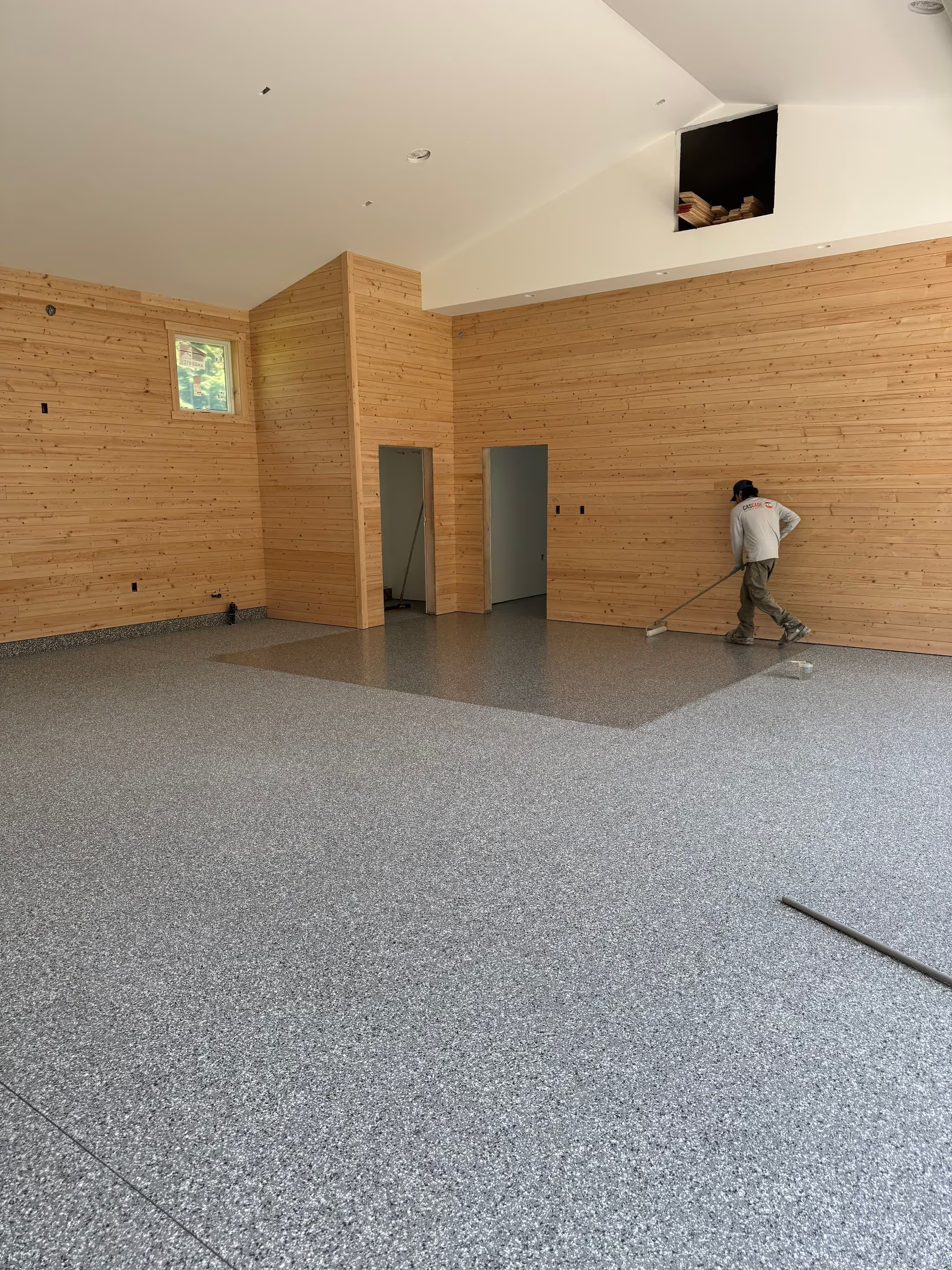
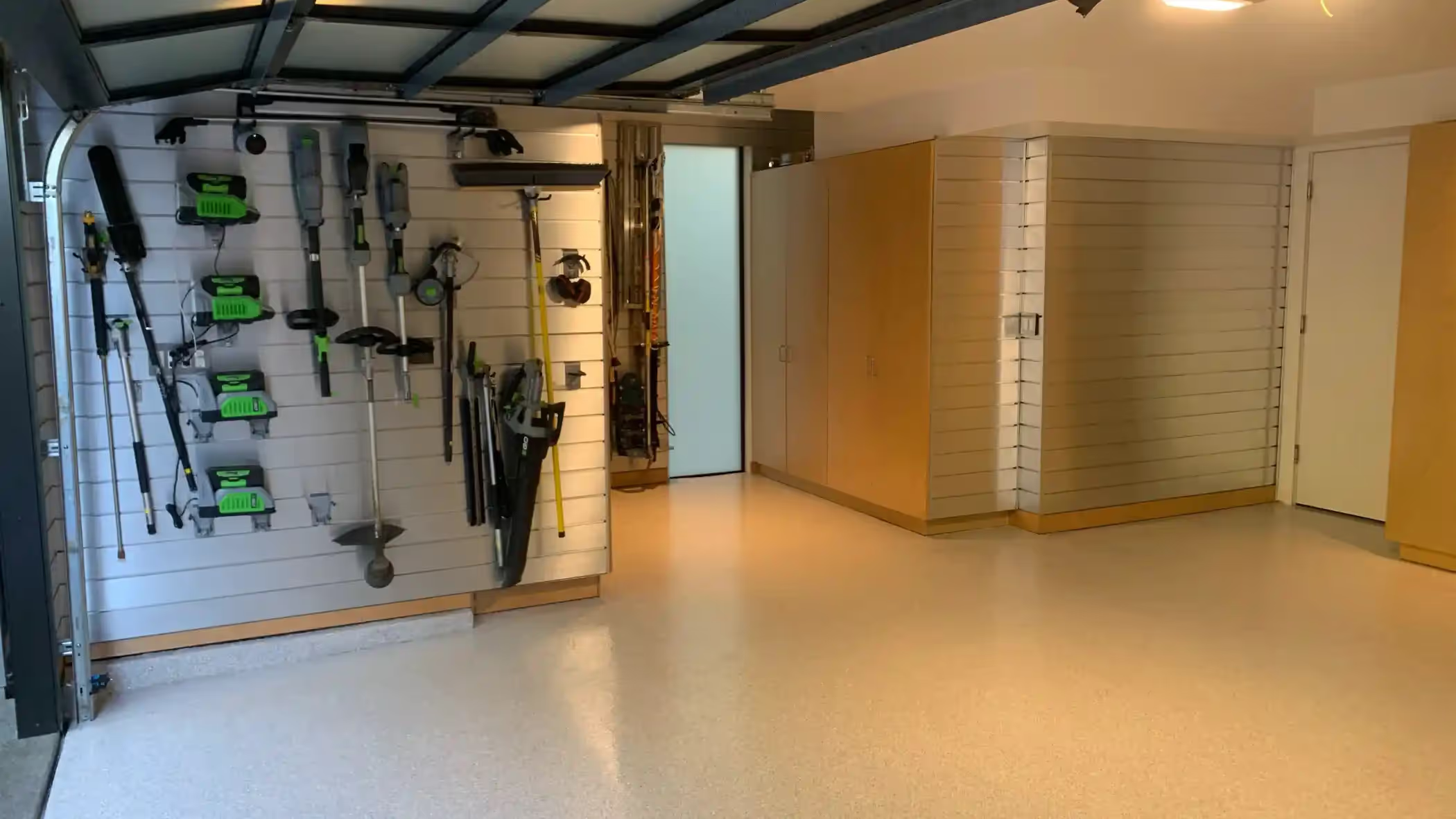
Certified Penntek polyurea: 20 to 30 years, backed by a manufacturer lifetime warranty. The certification system ensures product consistency and installer training standards. Cascade's installations carry this warranty on every project. Learn more about what Penntek certification covers.
Any installer can claim their product "lasts a lifetime." Three questions verify whether that claim is real. First, ask for the warranty document in writing before signing.
Second, ask whether the warranty is from the installer or the product manufacturer. An installer warranty is only as good as the installer's continued existence as a business. A manufacturer warranty from Penntek is backed by the company that makes the chemical system. Third, ask what the warranty covers and what voids it: specifically whether moisture levels discovered after installation affect the warranty terms.
For a broader look at what separates a quality quote from a low-bid one, see the complete flooring options comparison.
[Image placeholder: Close-up of a Penntek warranty document alongside a finished garage floor installation in a Kirkland home | Alt-Text: "Penntek lifetime warranty garage floor coating Kirkland WA - Cascade Concrete Coatings"]
Those estimates typically describe ideal conditions: low humidity, stable temperatures, no UV exposure, and professional installation. An interior commercial floor in a climate-controlled building is a reasonable candidate for the upper end of that range. An unheated residential garage in the Puget Sound basin is not. Local conditions matter more than national averages for lifespan estimates.
Yes. More vehicle traffic means more hot-tire exposure and more thermal stress at the parking area. More foot traffic with grit and debris increases abrasion. A garage used daily as a workshop with regular vehicle parking will degrade a mechanical-bond coating faster than a garage used for storage only. A chemical-bond polyurea coating handles daily-use garage conditions without the same degradation timeline.
The Penntek limited lifetime warranty covers delamination, peeling, and adhesion failure under normal use conditions. Specific terms, exclusions, and transfer provisions are outlined in the written warranty document. Contact Cascade to review the full warranty terms during your consultation.
In most cases, no: not meaningfully. A topcoat applied over a failing epoxy floor will fail along with the substrate beneath it. Once the mechanical bond has been compromised by moisture, blistering, or delamination, the only lasting fix is removal and recoating. See why preparation determines longevity for the mechanics of why coatings fail.
Routine cleaning with a mop and general-purpose cleaner is the full maintenance requirement. The polyaspartic topcoat remains non-porous throughout its lifespan, meaning it does not need periodic resealing the way sealed concrete or polished floors do. There are no strip-and-rewax cycles, no grout line cleaning, and no annual sealer application. For a comparison of maintenance requirements across flooring types, see concrete coatings vs. other flooring options.
Cascade Concrete Coatings serves Woodinville, Kirkland, Redmond, Bellevue, Bothell, Sammamish, Seattle, Issaquah, Everett, and the greater Puget Sound region. Schedule your free in-home assessment today.