TLDR: Epoxy costs $2 to $4 per square foot installed and lasts 3 to 7 years in a Seattle-area garage. Polyaspartic (non-certified) costs $3 to $6 per square foot and lasts 8 to 15 years depending on product quality. Certified Penntek polyurea costs $5 to $9 per square foot, carries a manufacturer lifetime warranty, and is documented to perform 20 to 30 years. All three look similar on day one. The differences become visible between years 2 and 5, when Pacific Northwest moisture, UV exposure, and thermal stress reveal the performance gap between bond chemistries.
This article walks through each system on cost, chemistry, installation, and long-term performance so you can make a direct comparison. Contact Cascade Concrete Coatings for a free in-home assessment.
The confusion in this category is real and understandable. Every company in the Seattle market calls its product the best. "Polyurea" appears on the websites of companies that install very different products. "Polyaspartic" is used interchangeably with "polyurea" in ways that obscure real differences.
This article uses chemistry, not marketing, to separate the three systems. For cost specifics alone, see the polyurea cost per square foot guide. For a broader flooring comparison, see concrete coatings vs. other flooring options.
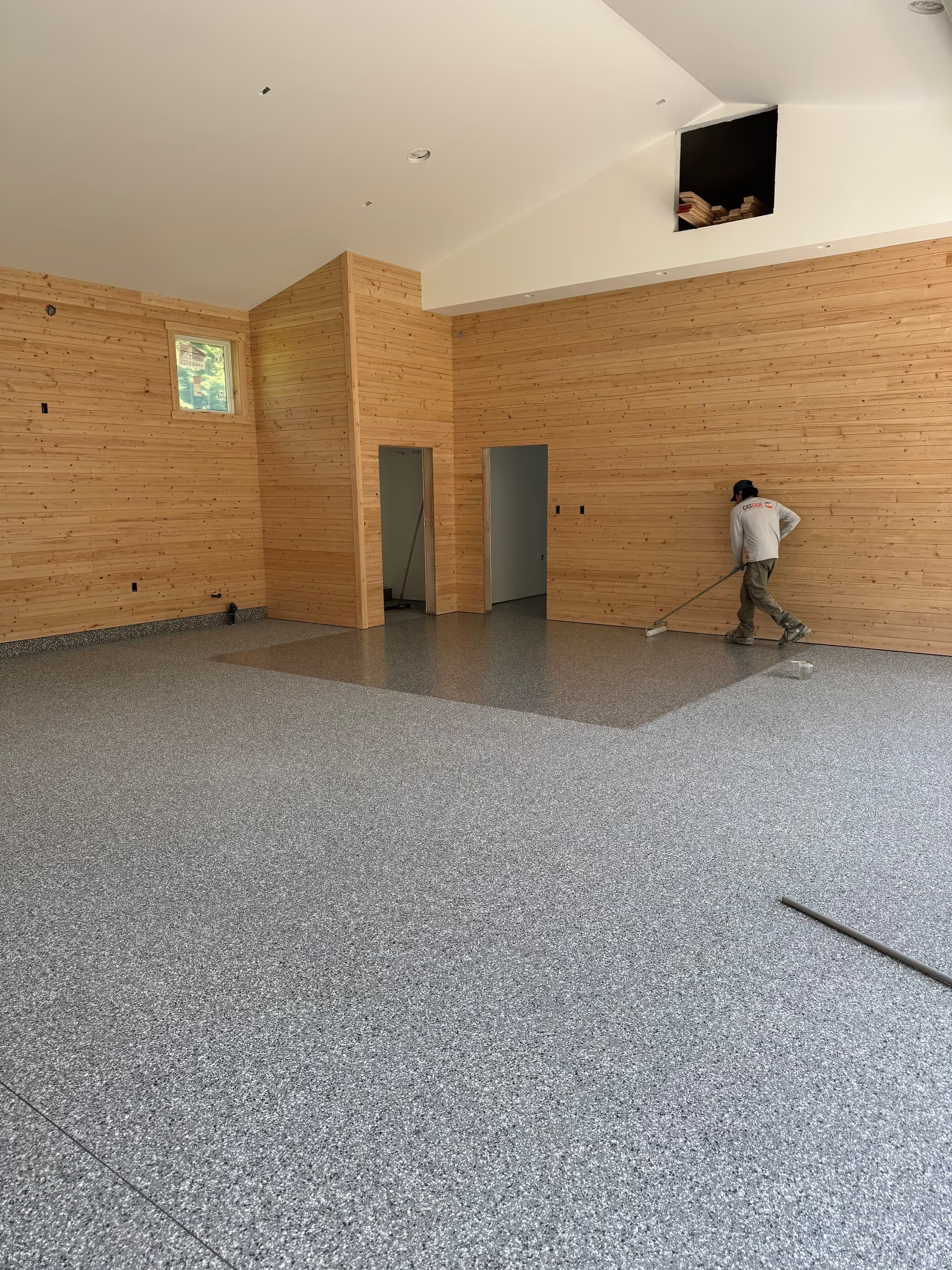
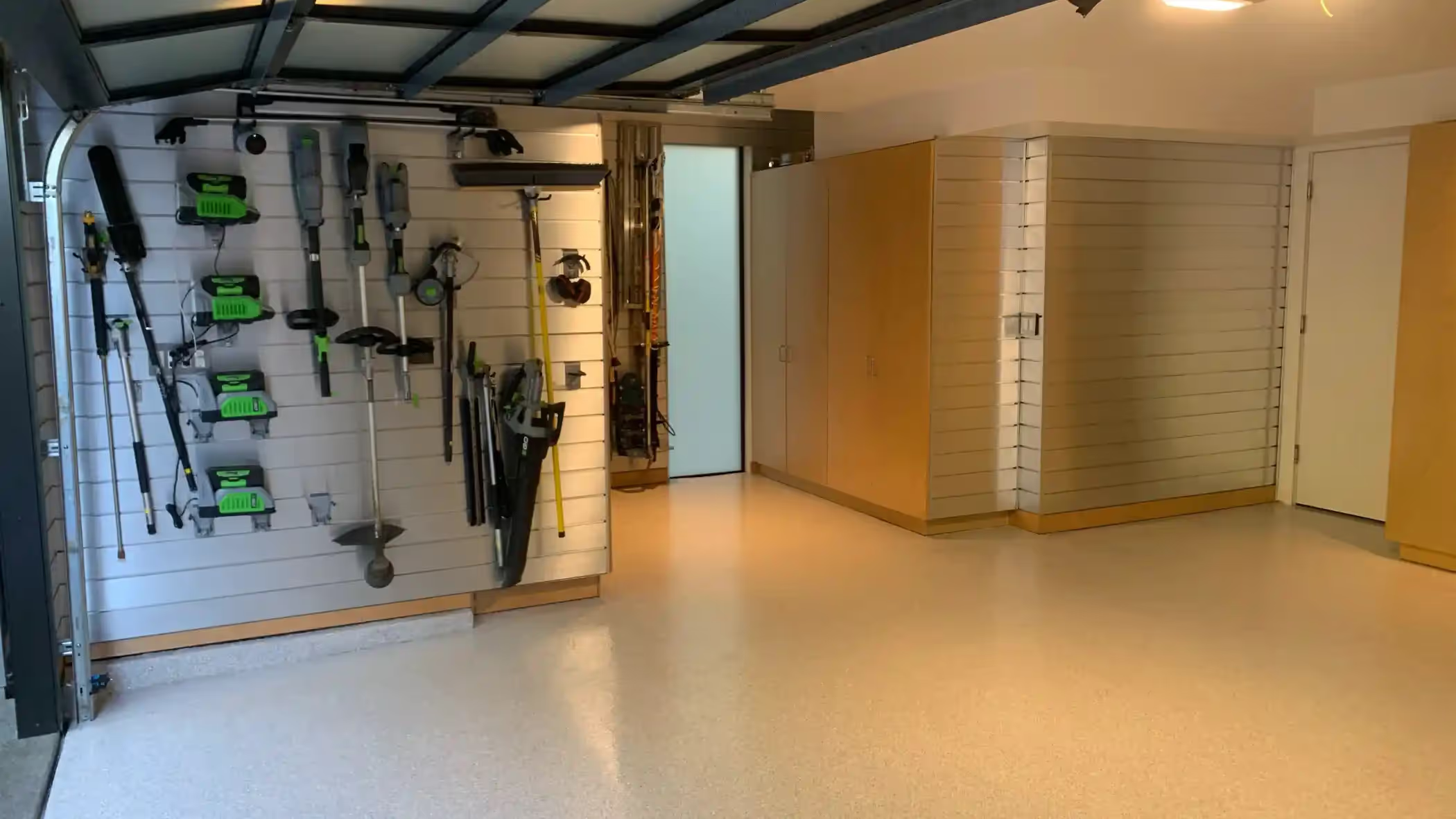
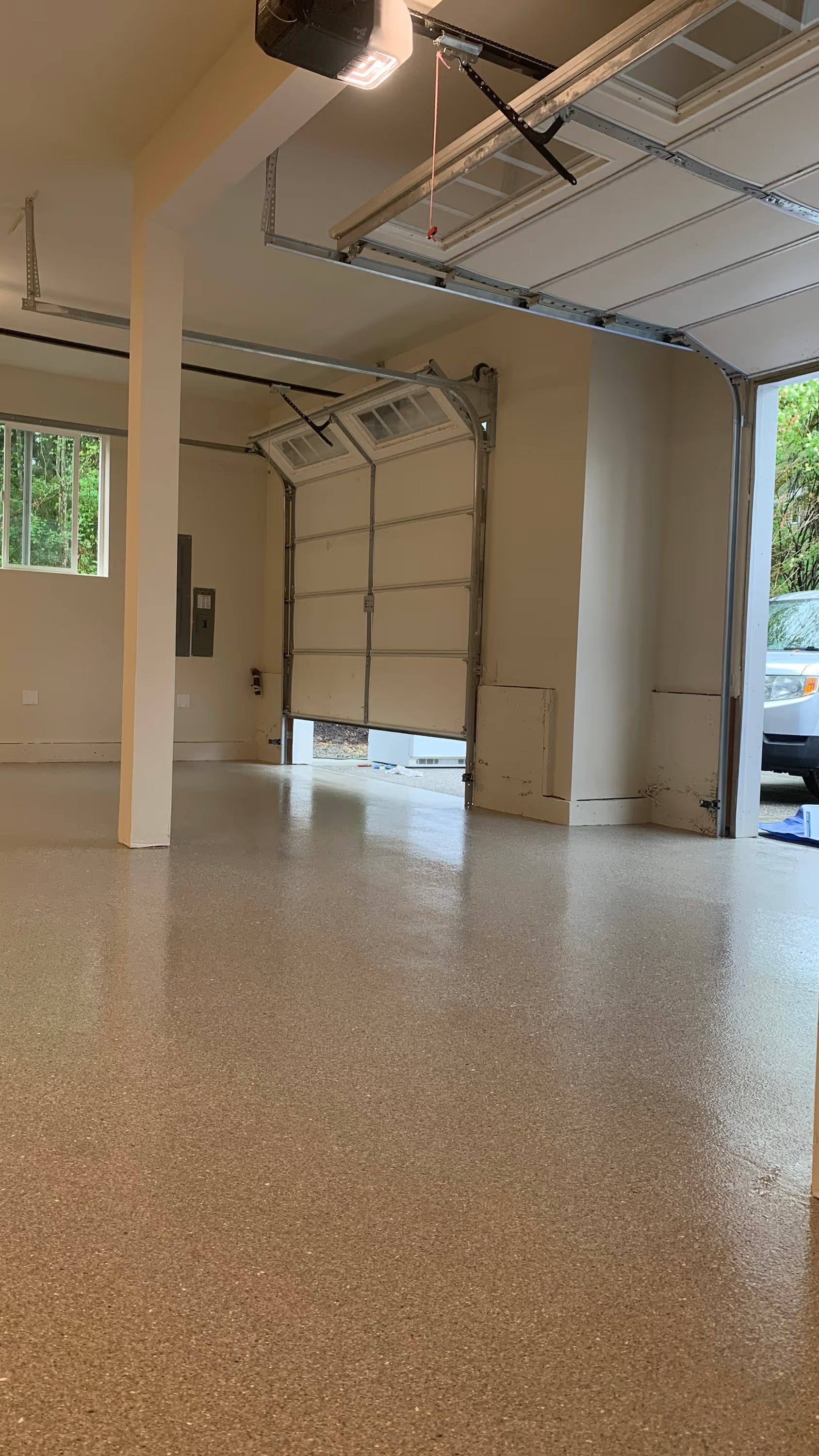
[Image placeholder: Three garage floors side by side: standard epoxy at year 4 showing yellowing, non-certified polyaspartic at year 6, and Penntek polyurea at year 8 still clean | Alt-Text: "Epoxy vs polyaspartic vs polyurea garage floor comparison Seattle WA - Cascade Concrete Coatings"]
Epoxy is a thermosetting resin that creates a mechanical bond with concrete. The coating grips the roughened surface of the slab. It is rigid, relatively brittle, and not UV-stable. When properly installed, it looks excellent. Under Pacific Northwest moisture and temperature cycling, it degrades on a predictable timeline.
Polyaspartic is a subtype of polyurea, but the term is used loosely in the marketplace. A true polyaspartic topcoat is UV-stable and fast-curing: genuinely better than epoxy as a topcoat. The performance issue in non-certified systems is the base coat: many "polyaspartic" installers use an epoxy base coat under a polyaspartic topcoat, which means the UV problem is solved at the surface but the mechanical bond and moisture vulnerability remain at the foundation layer. The system is better than straight epoxy. It is not the same as a full polyurea system.
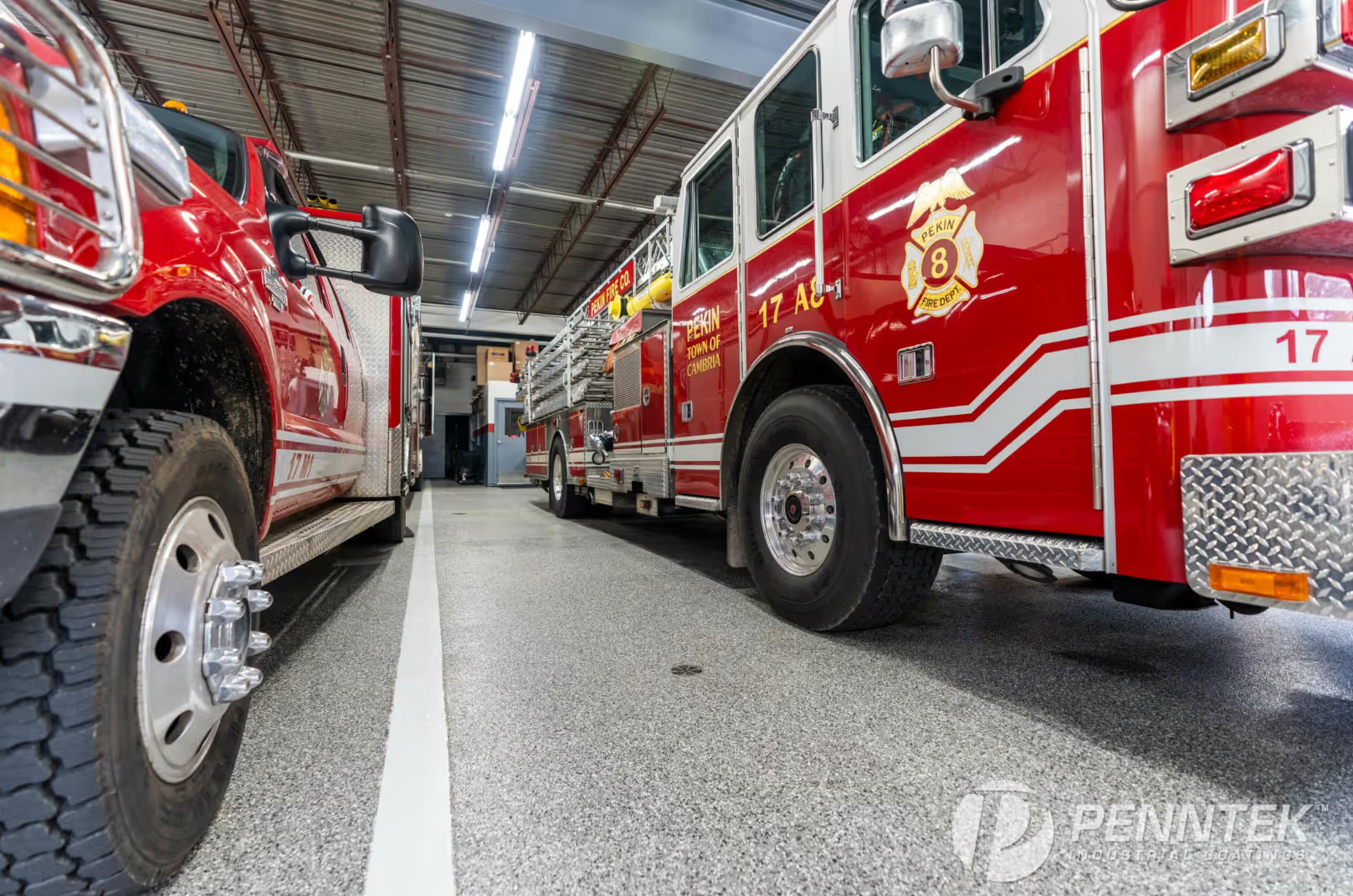
Polyurea is a different polymer chemistry entirely. It is flexible, cures faster than epoxy, creates a chemical bond with the concrete rather than a mechanical one, and is UV-stable when formulated correctly. Certified Penntek polyurea uses a two-component pure polyurea base coat with a polyaspartic topcoat: meaning the chemical bond is throughout the entire system, not just at the surface. Learn more about what separates Penntek's formulation from retail polyurea products.
Moisture resistance. Epoxy's mechanical bond is disrupted by vapor pressure rising through the slab: the primary cause of epoxy blistering in King County and Snohomish County garages. A hybrid polyaspartic system with an epoxy base shares this vulnerability at the bond layer. Certified polyurea with a moisture-tolerant primer creates a chemical bond that vapor pressure does not disrupt. In the high-humidity Puget Sound climate, this is not a minor distinction.
UV stability. Epoxy yellows and dulls under UV exposure within 18 to 36 months. A true polyaspartic topcoat is UV-stable and prevents surface yellowing. A full certified polyurea system (Penntek) uses FadeLock UV technology throughout the topcoat, maintaining color and gloss for the full lifespan of the installation. For any garage in Redmond, Bellevue, or Sammamish with natural light exposure, this is visible within the first two years on an epoxy floor.
Flexibility and thermal tolerance. Epoxy is rigid and becomes brittle in cold temperatures. In garages on the Sammamish Plateau or Issaquah that see lows in the upper 20s Fahrenheit, epoxy contracts with the slab but does not flex: it cracks or debonds. Polyurea is flexible by design and accommodates thermal movement without failure. Industry documentation on polyurea flexibility confirms this as a key performance differentiator.
Cure time. Epoxy requires 24 to 72 hours before vehicle use. Non-certified polyaspartic cures faster but can be sensitive to temperature and humidity during application. Certified Penntek polyurea is walkable in 6 hours and allows vehicle parking in 24 hours, regardless of ambient conditions within a normal installation range.
[Image placeholder: Close-up comparison of a chemical bond cross-section vs mechanical bond cross-section diagram showing why polyurea outperforms epoxy in moisture conditions | Alt-Text: "Polyurea chemical bond vs epoxy mechanical bond concrete coating Seattle - Cascade Concrete Coatings"]
SystemCost Per Sq Ft2-Car Garage (450 sq ft)Lifespan (Seattle)WarrantyDIY Epoxy$0.35 to $0.80 materials$150 to $4001 to 3 yearsNone meaningfulProfessional Epoxy$2 to $4$900 to $1,8003 to 7 yearsInstaller onlyNon-Certified Polyaspartic$3 to $6$1,350 to $2,7008 to 15 yearsInstaller onlyCertified Penntek Polyurea$5 to $9$2,250 to $4,05020 to 30 yearsManufacturer lifetime
The per-year cost math favors certified polyurea in every scenario involving a garage that will be used beyond 7 years. Two epoxy replacement cycles over 15 years cost more than one Penntek installation. For the detailed lifetime cost breakdown, see the full polyurea cost guide.
A significant number of installers in the Seattle metro market describe their product as "polyurea" without being certified dealers for any manufacturer. This is legal: "polyurea" is a chemistry category, not a brand. A non-certified polyurea product may be a genuine polyurea, a diluted polyurea, a hybrid system with an epoxy base, or a polyaspartic product marketed as polyurea.
The practical implication: without certification to a manufacturer's standards, there is no way to verify product consistency, installation standards, or warranty backing. Asking for the manufacturer's name and the installer's certification status are the two questions that separate real polyurea from marketing polyurea. Cascade's Penntek certification is verifiable through Penntek's dealer network.
No. A true polyaspartic topcoat is a high-quality finish coat that outperforms epoxy on UV stability and cure time. The issue is when "polyaspartic" is used as the entire system description while the base coat is epoxy. A full polyurea system with a polyaspartic topcoat: like Penntek: uses the strengths of both chemistries. What to ask: what is the base coat chemistry, and is it polyurea or epoxy?
"Polyurea" has become a marketing term because consumers have learned epoxy is inferior. Some installers use it loosely to describe any coating that is not straight epoxy. Verifying through manufacturer certification is the only reliable way to confirm what is actually being installed. See the DIY vs. professional Penntek guide for more on how to evaluate what each installation level actually delivers.
Both are partially true. Polyurea raw materials genuinely cost more than epoxy. Certified installer training programs represent a real investment by the installer. And yes, some of the premium reflects brand positioning. The most useful test is the 20-year cost comparison: if a certified polyurea installation at $3,500 replaces two epoxy installations at $1,500 each plus removal costs, the premium disappears quickly.
You may get an excellent floor, or you may get one that performs more like a mid-grade polyaspartic. The variance is high because product consistency is not verified. Without manufacturer certification, the installer's word is the only assurance you have on what was actually applied. If the floor fails within a few years, recourse is limited to the installer's business, not a manufacturer warranty.
In most cases, no. A failed or delaminating epoxy coating must be removed before any polyurea system can bond correctly. The old coating creates a contamination layer that prevents adhesion. Cascade's pre-installation assessment includes evaluation of any existing coating and a recommendation on whether removal is required. Contact Cascade to discuss your specific floor.
Cascade Concrete Coatings serves Woodinville, Kirkland, Redmond, Bellevue, Bothell, Sammamish, Seattle, Everett, and the greater Puget Sound region. Request your free in-home quote today.