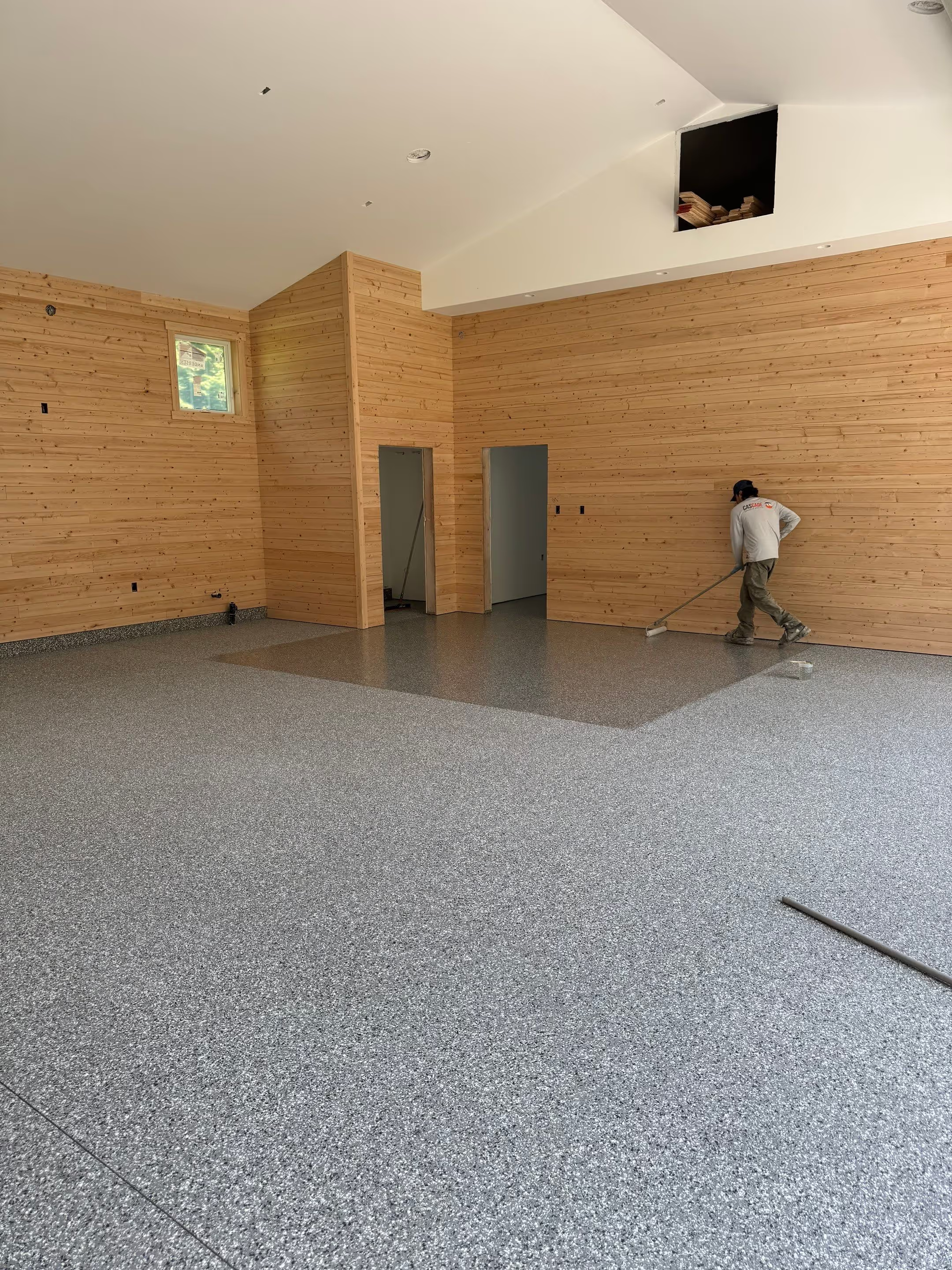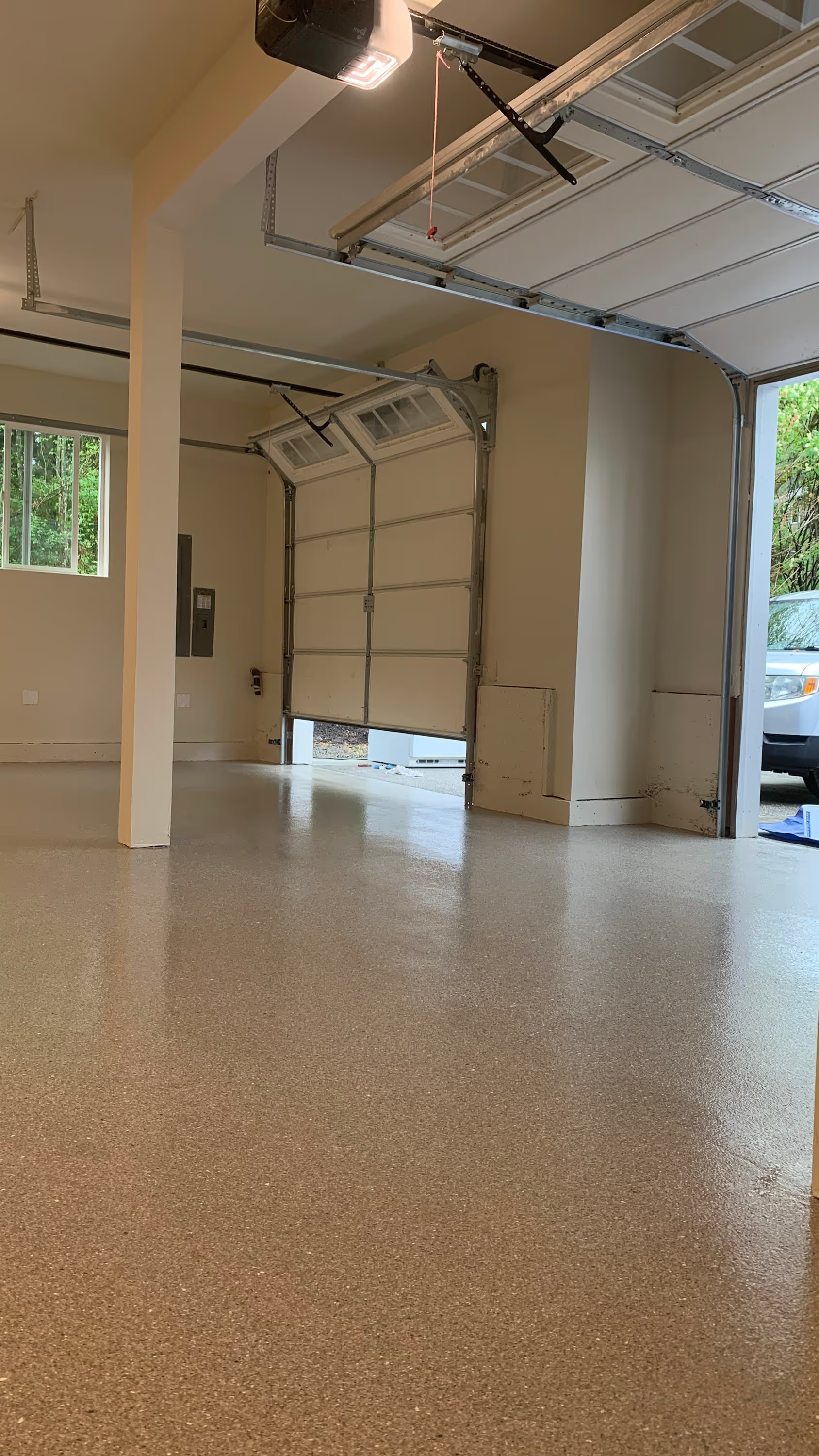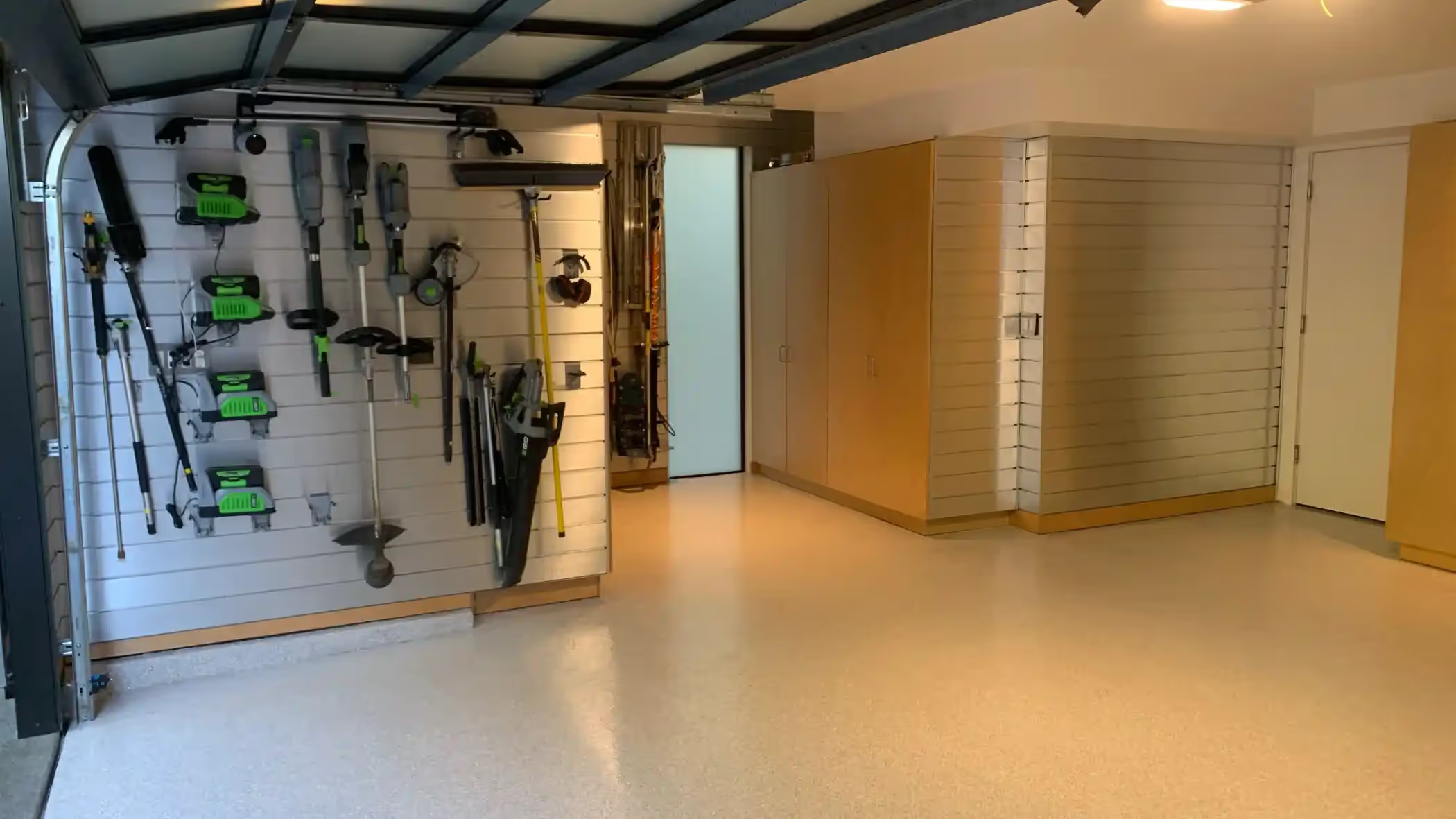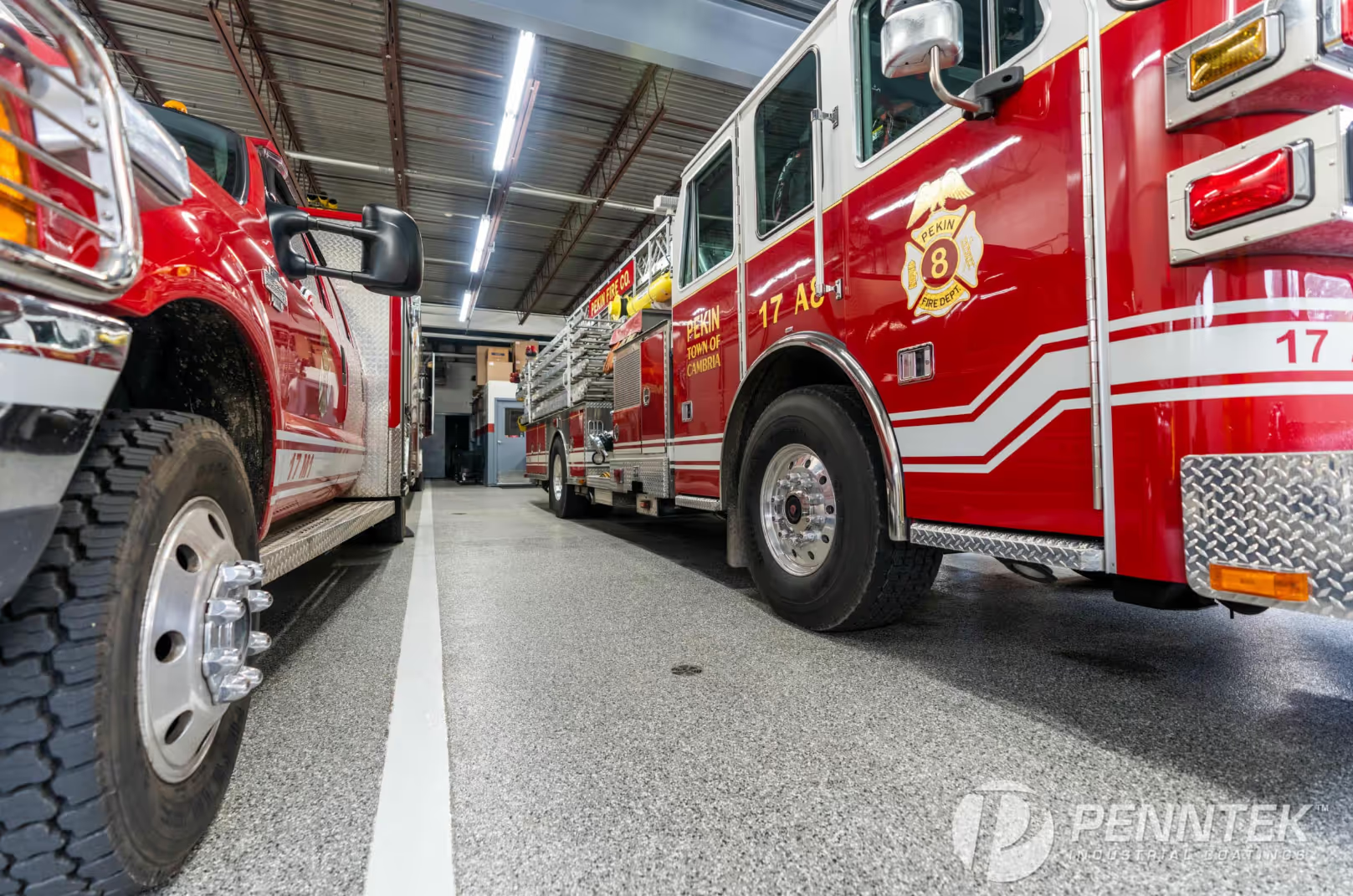
If you've found this article, there's a good chance you're looking at a garage floor that's starting to lift, bubble, or peel — or you've already been through that disappointment once and you're determined not to repeat it. Either situation is frustrating, especially when you paid someone to do the job right.
The good news is that coating failure is almost never a mystery. It comes from a small number of specific causes that are entirely preventable when the right system is installed correctly. Understanding them makes you a smarter buyer — and keeps you from making the same mistake twice.
Here's what actually causes garage floor coatings to fail in Seattle-area homes, and what separates a floor that lasts 30 years from one that starts peeling in 24 months.
Seattle's climate doesn't do any favors for garage floor coatings. Western Washington has significant year-round moisture in the ground, and concrete is porous. It absorbs and transmits that moisture constantly — a process called vapor transmission. When a coating is applied over concrete that hasn't been properly tested for moisture content, the moisture trapped beneath the coating creates hydrostatic pressure that pushes the coating off the slab from the inside.
This is the single most common cause of delamination — the technical term for coating separation — in the Seattle market. It looks like bubbling or lifting, usually starting at the edges or over cracks, and it tends to show up 12 to 24 months after installation when the coating has had time to experience seasonal moisture swings.
The prevention is straightforward: moisture testing before the quote, not after. At Cascade Concrete Coatings, our in-home analysis includes testing your concrete's moisture level as the first step — before we recommend a system or provide a price. Some slabs require a moisture-mitigation primer. Some are fine without one. The only way to know is to test. Companies that skip this step are gambling with your floor's lifespan.
You can read more about this specific issue on our blog: Will Moisture in My Concrete Ruin My Garage Floor Coating?
Proper surface preparation means mechanically grinding the concrete with diamond tooling to open the pores of the slab and create a profile that the coating can penetrate. This isn't optional. It's the foundation of everything.
Grinding is expensive. It requires heavy commercial equipment — the kind of grinder that does this correctly weighs over 600 pounds and uses industrial diamond pads under significant pressure. Companies that cut corners on surface preparation often use lighter equipment, skip sections, or rush the process to fit more jobs into the day.
When the concrete surface isn't properly profiled, the coating sits on top of the slab rather than bonding into it. That's a mechanical adhesion at best — dependent on surface contact rather than molecular penetration. Under the daily stress of vehicle traffic, temperature fluctuations, and chemical exposure, that surface bond fails.
Poor prep is also the reason cracks come back. When existing cracks aren't properly cleaned, filled with polyurea crack filler, and allowed to cure before the base coat is applied, the crack movement continues underneath the new coating and telegraphs through to the surface. Our Issaquah project portfolio shows what thorough crack repair and preparation looks like in practice.
Not every concrete slab is the same. Age, composition, previous sealers, crack history, and moisture levels all affect which coating system will perform best. Applying a standard epoxy system over old, soft concrete or highly porous slabs without adjusting the approach leads to premature failure — not because epoxy is universally bad, but because the system wasn't matched to the substrate.
This is why we test hardness and moisture before we recommend anything. A slab that reads high moisture needs a different base coat than a dry, hard slab. A concrete surface with previous sealer contamination needs a different preparation protocol. Cookie-cutter approaches produce cookie-cutter results — and in concrete coating, that usually means a floor that looks great for 18 months and then starts to show its problems. Our concrete coating process is built around substrate analysis, not one-size-fits-all application.
This one matters regardless of how well the other steps are performed. Epoxy creates a mechanical bond with concrete — meaning it adheres to the surface through physical contact rather than chemical fusion. Under the right conditions, with a perfectly prepared substrate and ideal temperature and humidity, that mechanical bond performs reasonably well for several years.
But epoxy is brittle. It doesn't flex with concrete as the slab expands and contracts through Seattle's temperature swings. It's susceptible to UV light, which causes yellowing and surface degradation over time. And its mechanical bond, by definition, can be separated from the substrate — which is exactly what hot tire pickup, impact, and moisture pressure do over time.
Penntek polyurea forms a chemical bond — the coating's polymer chains link at the molecular level with the concrete's surface. The result is a floor that the concrete would sooner crack than release. Combined with Penntek's built-in flexibility additive that allows the coating to move with the slab, and FadeLock UV protection that keeps colors from yellowing, the system addresses the root causes of failure rather than just applying a better-looking version of the same approach. You can see how a Penntek chemical bond works in our full product overview.
This one is harder to see but common in a competitive market where installers are under pressure to lower prices. Some polyurea products are sold as "certified" or "commercial grade" when they're actually lower-concentration formulations with fillers added to stretch supply and reduce material cost. The floor looks fine on day one. The problems surface in years two through four as the diluted product begins to fail under normal use.
Penntek products are formulated exclusively for Penntek-certified dealers and are not available through any distributor or hardware channel. The certification process includes vetting the dealer before training begins — meaning the company you hire has been vetted by the manufacturer, not just licensed to use the brand name. That's a meaningful layer of quality control that doesn't exist with private-label or bulk-purchased systems.
If you're replacing a failed coating, the decision tree is simple: find out why the first one failed, make sure the next installer addresses those specific causes, and choose a system whose chemistry prevents mechanical bond failure rather than just delaying it.
If you're coating your floor for the first time, now you know what questions to ask. Any installer worth hiring will test your concrete's moisture and hardness before quoting. They'll show you the equipment they use for surface preparation. They'll explain how their coating bonds with the concrete. And they'll back the installation with a warranty that names the manufacturer, not just themselves.
We serve Woodinville, Kirkland, Bothell, Redmond, Bellevue, Sammamish, and the greater Seattle area. A free in-home analysis includes moisture testing, hardness testing, and a full crack assessment — no charge, no pressure to commit. Call us or fill out the form and we'll be in touch the same day.