Last month, a Bellevue homeowner named Mike called us with a problem we hear almost weekly. He'd spent $487 on a DIY epoxy kit from Home Depot, invested his entire weekend applying it, and felt pretty proud of his work. The floor looked great—for about eight months. Then the trouble started.
First came the yellowing near his garage door where sunlight hit the floor. Then he noticed hot tire marks from where he'd parked after his commute. By month fourteen, sections of the coating were peeling up like old wallpaper. Mike had to scrape off the entire floor, re-prep the concrete, and start over. His "$500 solution" ended up costing him over $4,200 when he finally hired professionals to do it right.
Mike's story isn't unique. Throughout the Seattle metro area—from Redmond to Sammamish, Kirkland to Bothell—homeowners are learning an expensive lesson about the DIY epoxy trap.
Walk into any home improvement store in the Puget Sound region and you'll see them: glossy boxes promising a showroom-quality garage floor for under $500. The marketing is compelling. The process looks straightforward. And the price? Unbeatable.
Here's what those boxes don't tell you: the concrete coating industry has a dirty secret. Those DIY epoxy kits work beautifully for about 18-24 months. Then, almost like clockwork, they fail. And when they fail, they don't just look bad—they become a genuine safety hazard.
The reason isn't that homeowners are incompetent. It's that proper concrete coating requires industrial-grade equipment most people don't own, scientific testing most people can't perform, and technical expertise that comes from years of training.
The Pacific Northwest presents unique challenges for concrete coatings. Our combination of moisture, temperature swings, and surprisingly strong UV exposure during summer months creates a perfect storm for coating failure.
Professional installers use moisture meters to test your concrete's vapor emission rate. They perform hardness tests to determine the proper grinding specifications. They analyze your specific slab composition to select the right chemical system. DIY kits? They assume all concrete is identical and all garages have the same conditions.
That assumption costs Seattle-area homeowners thousands of dollars in do-overs.
When we evaluate failed DIY installations throughout Woodinville, Issaquah, and Bellevue, we typically find the same problems:
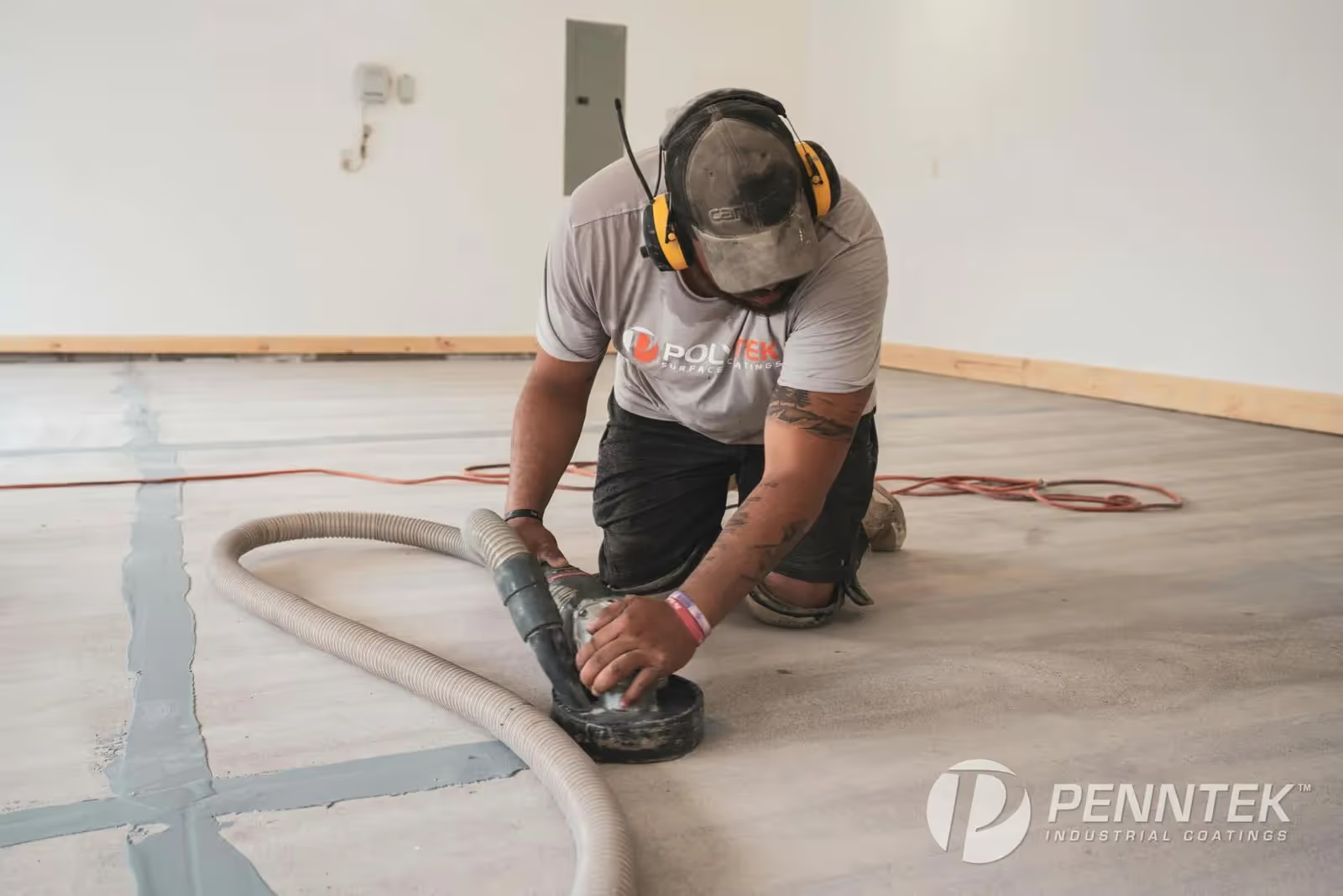
Inadequate Surface Preparation: DIY kits recommend acid etching or light sanding. Professional installations require diamond grinding to achieve ICRI CSP (Concrete Surface Profile) standards. Without proper grinding using 600+ pound diamond tooling, coatings simply can't achieve the molecular-level adhesion necessary for long-term durability.
Wrong Chemical System: Box store epoxy creates a mechanical bond with concrete—essentially gripping onto the surface texture. This bond can be broken. Professional polyurea systems create a chemical bond at the molecular level. The coating becomes part of the concrete structure itself.
Moisture Issues: Seattle's climate means concrete moisture is a constant concern. Professional installers test for this and apply moisture mitigation systems when needed. DIY installers often coat right over moisture problems, leading to bubbling and delamination within months.
Let's run the actual numbers for a typical 400-square-foot Seattle garage:
DIY Epoxy Approach:
Professional Penntek Installation:
When Seattle homeowners view concrete coatings as a 40-year decision rather than a weekend project, the economics become crystal clear. The "expensive" option is actually six times cheaper over the floor's lifespan.
Increasingly, educated Seattle-area homeowners are skipping the DIY experiment entirely and investing in certified Penntek polyurea systems from the start.
The difference between DIY epoxy and Penntek isn't incremental—it's fundamental. Here's what makes Penntek the superior choice:
99% Solids Pure Polyurea Formula: While DIY epoxy contains significant filler content (often 60-70% actual coating material), Penntek's proprietary blend is over 99% pure polyurea solids. This means you're getting actual protective coating, not filler compounds that contribute nothing to performance.
Silane Adhesion Promoter Technology: Penntek's basecoat contains an enhanced silane adhesion promoter that works at the molecular level to create chemical bonds with concrete. Once cured, this polyurea basecoat resists moisture fluctuations in the substrate and actually strengthens over time.
FadeLock UV Protection: Remember Mike's yellowing problem? That's because standard epoxy and even mid-grade polyurea coatings break down under UV exposure. Penntek's proprietary FadeLock technology contains UV-blocking additives that act like sunscreen for your floor, preventing the color degradation that ruins cheaper coatings.
Advanced Flexibility Additives: Concrete expands and contracts with temperature changes. Seattle's seasonal swings from 35°F winters to 85°F summers put tremendous stress on rigid coatings. Penntek's flexibility additives allow the coating to move with the concrete without cracking, chipping, or delaminating.
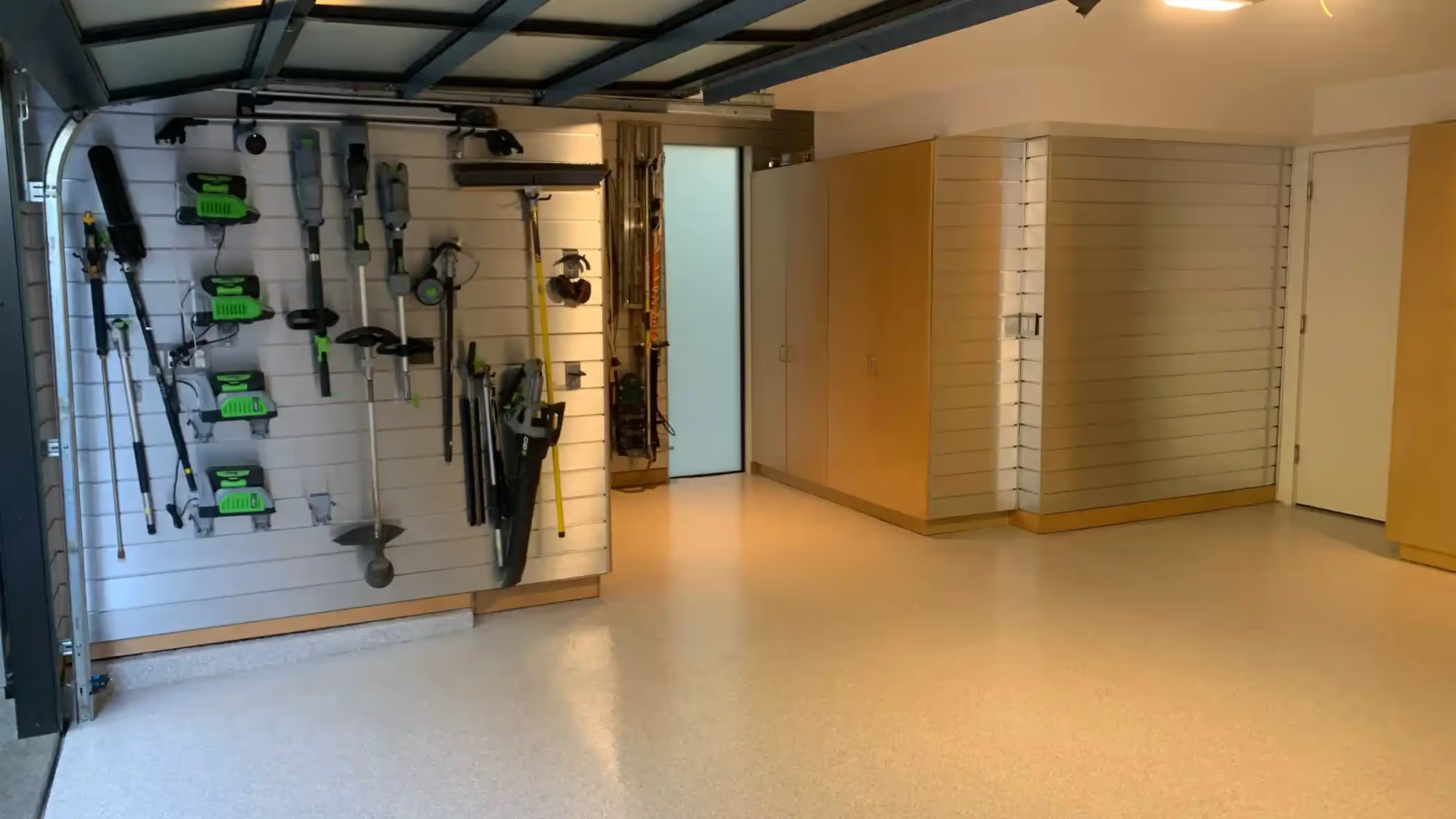
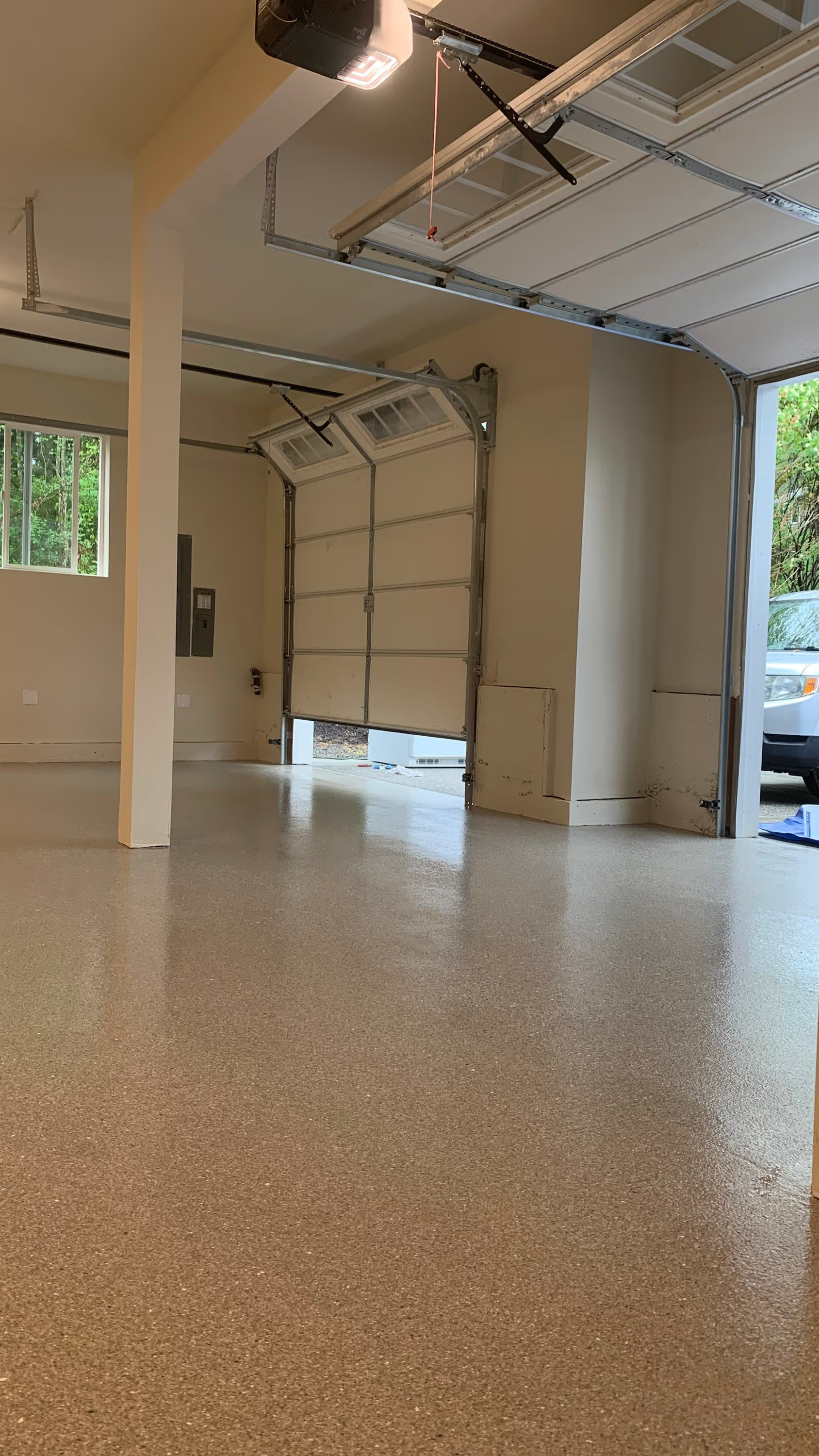
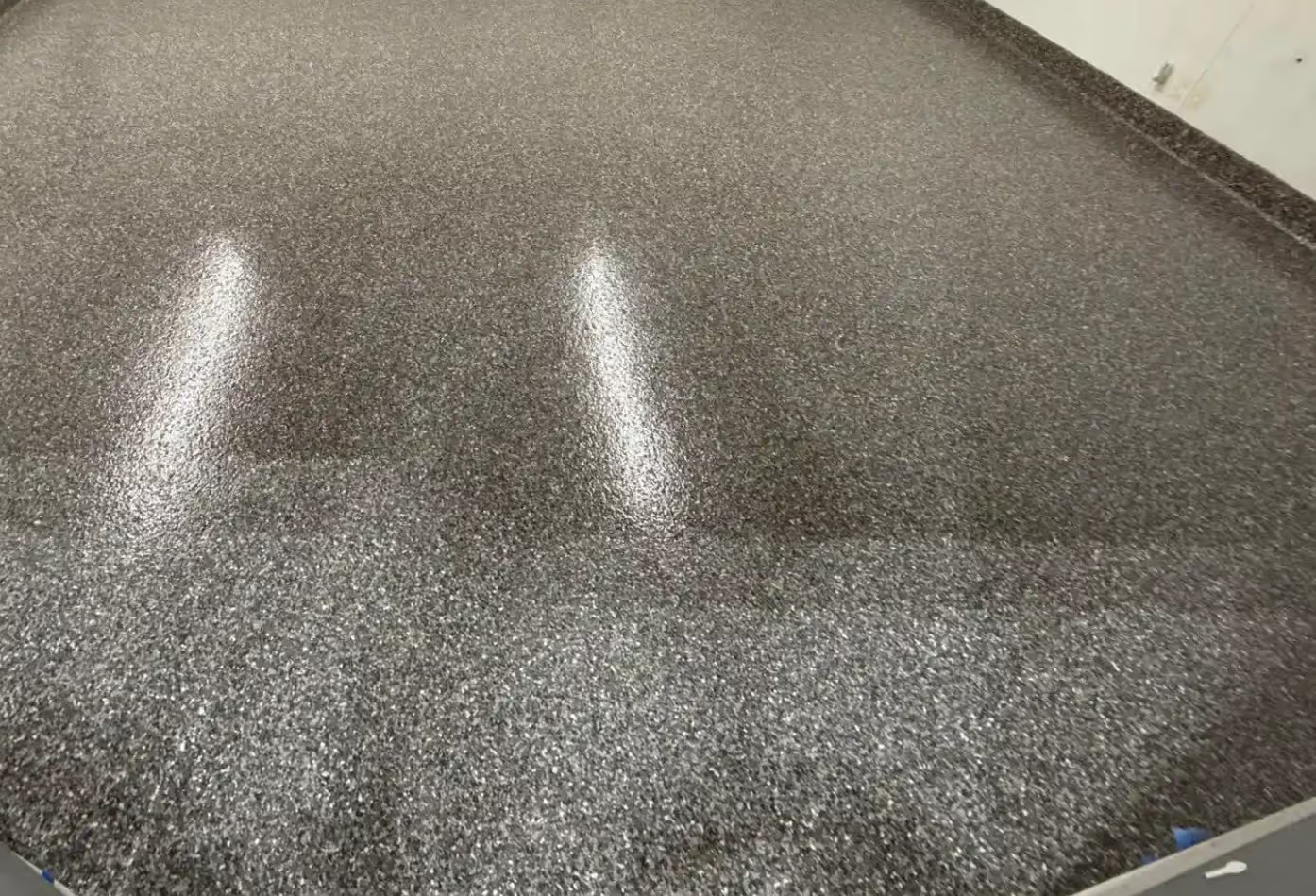
The result? Garage floors throughout Redmond, Sammamish, and Kirkland that maintain their showroom appearance for 30-40 years instead of 18-24 months.
What makes a certified Penntek installation worth the investment? The process reveals why DIY attempts fall short.
Step 1: Scientific Concrete Analysis
Before applying anything to your concrete, certified Penntek dealers test your slab's moisture content, hardness rating, and age-related characteristics. These tests determine which specific Penntek system will perform best in your unique conditions. Our team uses calibrated moisture meters and concrete hardness testers to gather objective data about your garage floor.
DIY kits? They assume all concrete is the same and provide one-size-fits-all products that work optimally in almost no situations.
Step 2: Meticulous Crack Repair
Every crack, pit, and imperfection in your concrete represents a potential failure point. Professional installers don't just fill cracks—they analyze why they formed, determine if they're structural or surface-level, and apply appropriate repair materials that bond with both the concrete and the coating system.
We commonly discover that DIY installers miss 30-40% of concrete imperfections simply because they don't know what to look for or lack proper lighting and inspection protocols.
Step 3: Diamond Grinding to ICRI Standards
This is where DIY attempts fail most dramatically. Box store kits recommend acid etching or light sanding with a pole sander. Professional installations require diamond grinding using industrial equipment exceeding 600 pounds.
The difference isn't subtle. Acid etching creates a surface profile of approximately CSP 1-2 on the ICRI (International Concrete Repair Institute) scale. Professional diamond grinding achieves CSP 3-4, which provides exponentially more surface area for chemical bonding.
Imagine trying to glue two pieces of smooth glass together versus two pieces of rough sandpaper. That's the difference in bonding potential between acid-etched and properly ground concrete.
Step 4: Vacuum and Chemical Preparation
After grinding, professional installers use HEPA-filtered industrial vacuums to remove 100% of concrete dust. Even microscopic dust particles prevent proper adhesion. Then we chemically prepare the surface to accept the polyurea basecoat.
DIY installers typically use a shop-vac and hope for the best.
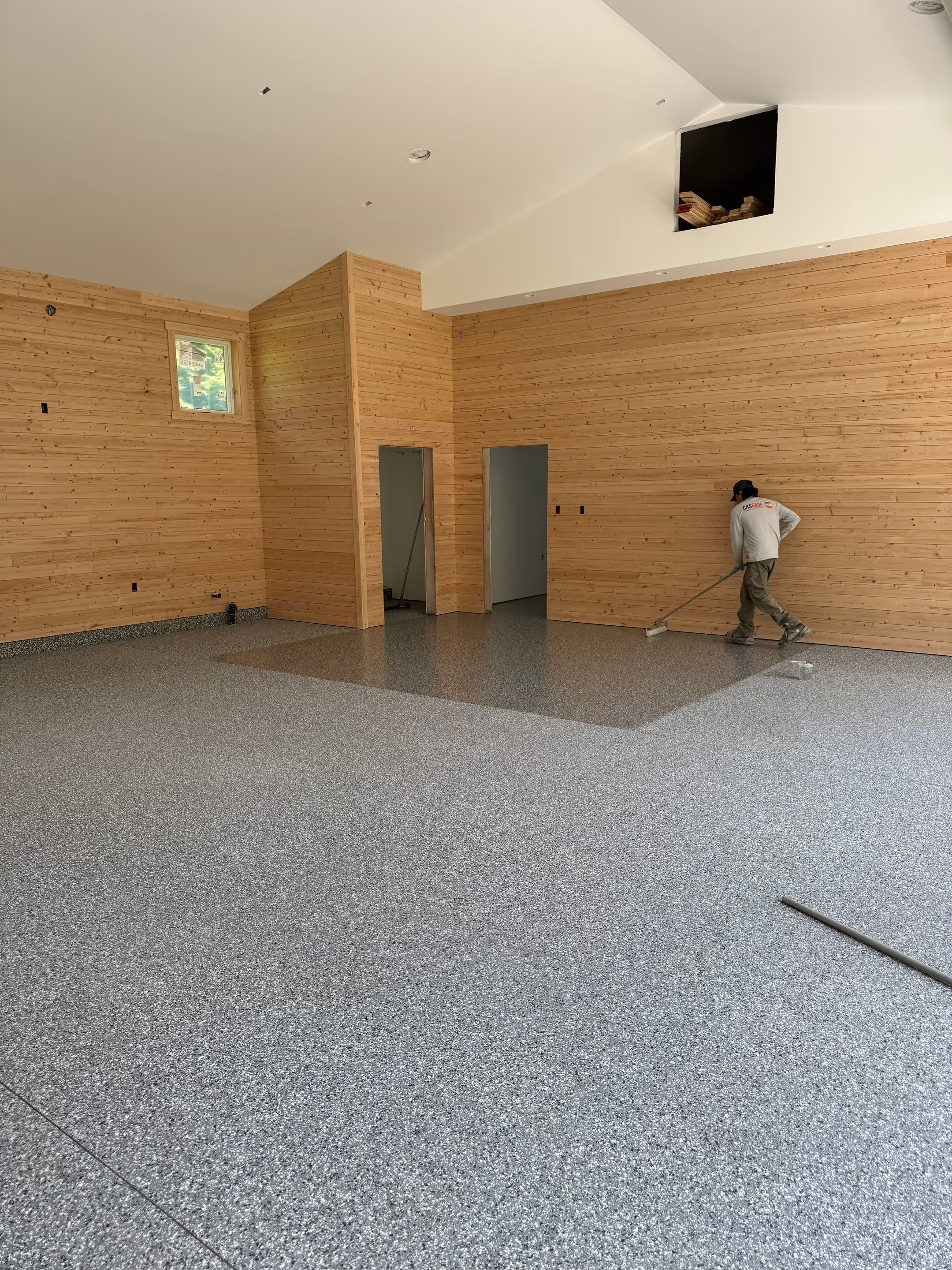
Step 5: Professional Application
Penntek-certified installers receive rigorous training at company headquarters. They learn proper mixing ratios, application techniques, broadcast patterns for decorative flakes, and curing protocols. The certification program is led by technicians who have completed the AMPP (Association for Materials Protection and Performance) Coatings Inspector Certification Program.
This expertise matters. Application thickness, flake coverage, and curing conditions all impact final performance. Get any variable wrong and the floor underperforms, regardless of product quality.
Sarah's Sammamish Garage Transformation
Sarah initially budgeted $500 for a DIY kit. After researching coating failure rates, she decided to invest in a professional Penntek installation. "The price difference seemed significant at first," she explained. "But when I calculated that cheap epoxy would need replacement every 5-7 years, suddenly spending $3,000 for a 40-year floor made perfect financial sense."
Five years later, Sarah's garage floor looks identical to installation day. "My neighbor redid his DIY epoxy twice already," she noted. "He's spent more than I did, and his floor still looks mediocre."
James's Redmond Regret (Then Redemption)
James learned the hard way. His DIY epoxy lasted exactly 19 months before hot tire pickup ruined the appearance. "I was so proud of saving money," he admitted. "Then I realized I'd wasted an entire weekend plus $500 to create a floor that looked progressively worse every month."
After removing the failed epoxy and hiring Cascade Concrete Coatings for a proper Penntek installation, James became an evangelist for professional installation. "The DIY kit was the most expensive 'bargain' I ever bought."
Not all professional installations deliver equal results. If you're ready to move beyond DIY epoxy, here's what to verify:
Certified Dealer Status: Penntek products are formulated exclusively for certified dealers. Many companies claim to use "polyurea" but source bulk chemicals that may contain 40-60% filler content. Verify the installer is a certified Penntek dealer—not just a company that uses "polyurea-based" products.
Proper Equipment: Ask what equipment they use for surface preparation. Reputable installers use diamond grinding systems exceeding 600 pounds, not surface scarifiers or simple floor buffers.
Testing Protocols: Professional installers should test your concrete's moisture content and hardness before recommending a system. If they provide quotes without testing your specific slab, they're guessing about which system will perform best.
Lifetime Warranty: Penntek backs certified installations with a limited lifetime manufacturer warranty. This isn't a dealer warranty that becomes worthless if the company closes—it's backed by the chemical manufacturer directly.
The DIY epoxy trap catches hundreds of Seattle-area homeowners every year. The box makes promises the product can't keep. The process looks simpler than it actually is. And the initial savings evaporate when you're forced to redo everything within 2-4 years.
Smart homeowners throughout Bothell, Bellevue, and Issaquah are skipping the experiment and investing in certified Penntek polyurea systems from the start. They're treating their garage floors as 40-year decisions, not weekend projects.
When you calculate lifetime costs rather than initial expenditure, professional installation isn't expensive—it's the only economical choice.
Your garage deserves better than a coating that fails in 18 months. Your weekends are worth more than scraping off failed epoxy. And your home improvement budget should be invested in solutions that actually last.
Ready to skip the DIY disaster and install the floor you'll still love in 2064? Contact Cascade Concrete Coatings for a free in-home analysis. We'll test your concrete, explain your options, and provide a detailed estimate for a floor coating you'll never need to replace.